
I tested pruners, trowels, hori-hori knives, and full tool kits so you can pick the right gardening tool for your needs. These are the tools I reach for again and again.
I spend a lot of time in the garden and have replaced flimsy tools with a few reliable favorites. For this roundup I focused on durability, materials, and real-world usefulness—tools I actually keep in my bag or belt.
My goal here is practical: which single tools are worth the investment, which full kits will get a beginner started, and which specialty items solve particular chores like deep digging or precise pruning.
I balanced specialist tools (like the Felco pruners and the Hori-Hori knife) against multi-piece kits that prioritize convenience, sizing my recommendations by build quality, longevity, and the tasks I perform most often in my garden.
1. Felco F2 Pruning Shears – 9.25″ Swiss-Made Garden Clippers – Best Overall
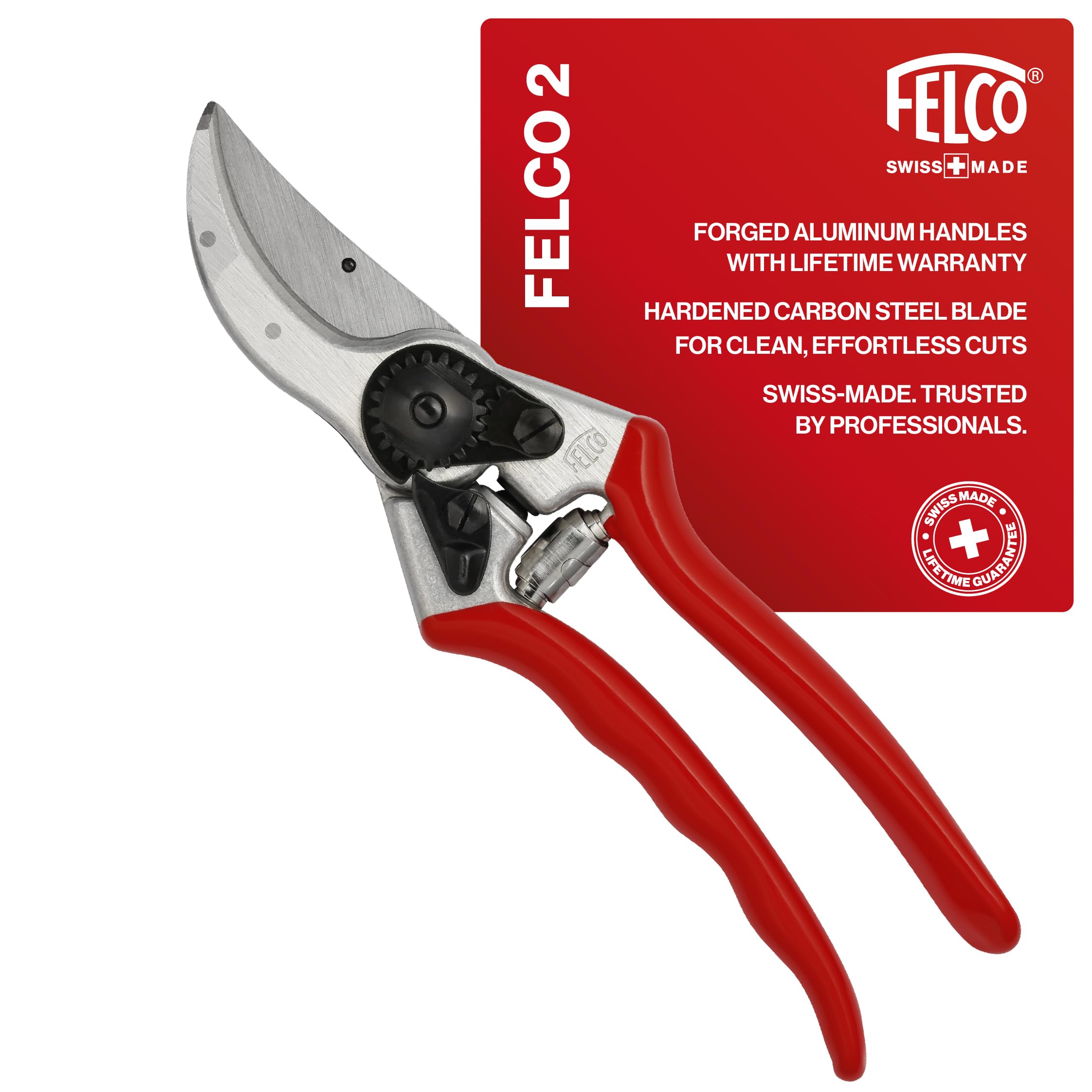
The Felco F2 is my go-to pruner when I need clean, reliable cuts on roses and woody stems.
Why I picked it: Swiss-made precision, replaceable parts, and an ergonomic shape I can use all afternoon.
Best for: Anyone who prunes shrubs, roses, and hardwood stems regularly.
A higher-end investment that I expect to last for years.
Pros
- Swiss precision steel blade
- Lightweight forged-aluminum handles
- Fully replaceable parts
- Comfortable non-slip coating
Cons
- Higher initial cost than budget pruners
- Right-hand original sizing may not fit every hand
My take
When I need a clean, precise cut I reach for the Felco F2. The hardened carbon steel blade slices through branches up to about an inch thick without crushing the stem, which is critical for plant health.
The forged-aluminum handles feel strong but light; after a long pruning session my wrist doesn’t fatigue the way it does with cheap shears. The rubber shock absorber also reduces impact when the blades close, which makes repeated snipping gentler on my hands.
What keeps me using these over the years is serviceability. I can replace the blade, spring, and other parts rather than tossing the tool. That mindset—repair not replace—has made these an easy choice for me even though they cost more up front.
If you prize longevity and precise cuts, these are the pruners I recommend carrying in your toolbelt.
2. Gardening Tools 9-Piece Heavy Duty Garden Hand Tools with Organizer Handbag – Best Value Set
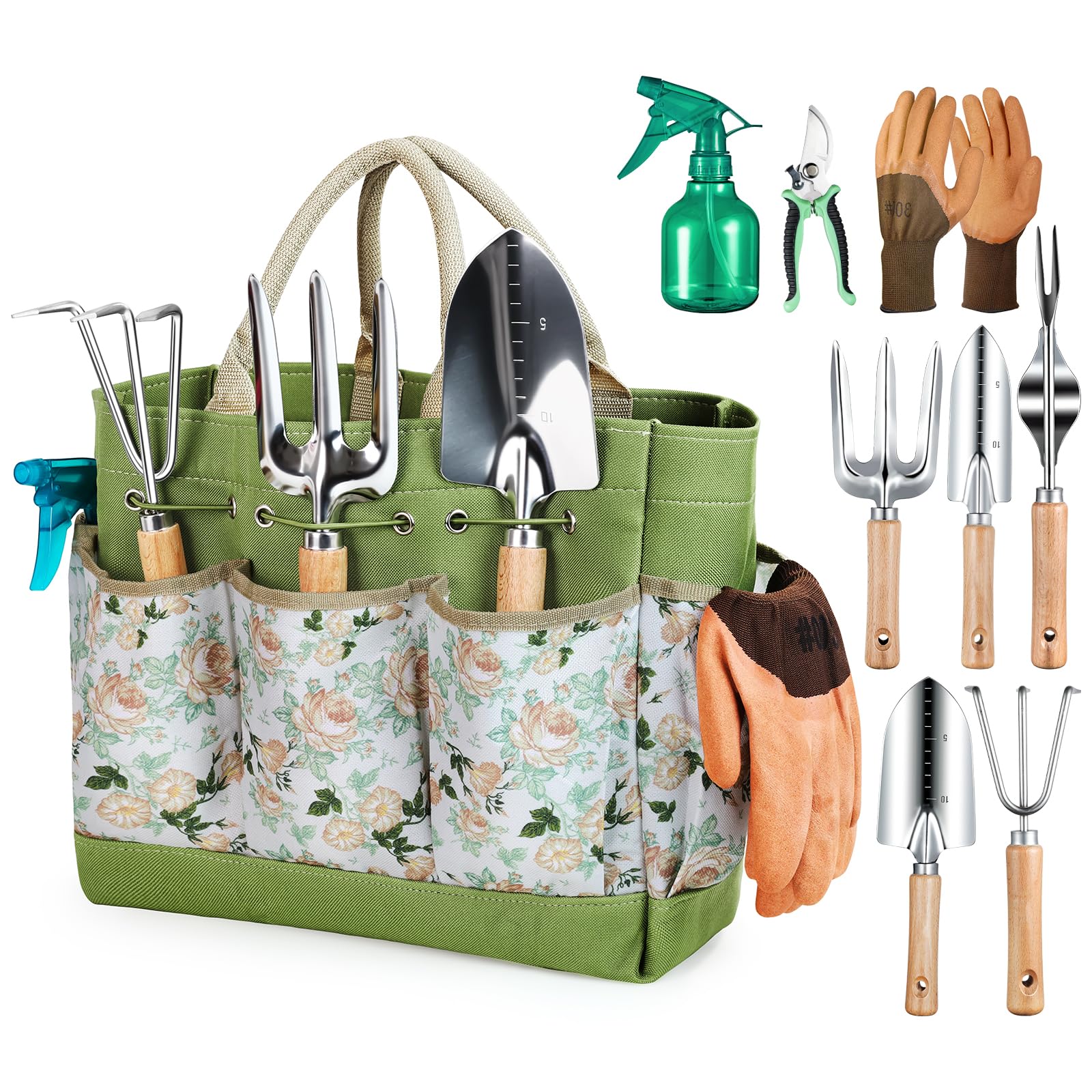
A comprehensive stainless set I use when I want a coordinated kit with a decent tote.
Why I picked it: Stainless-steel tools and a roomy storage bag make this a practical, all-in-one option.
Best for: New gardeners or anyone who wants a ready-to-go kit for small bed work.
A budget-friendly set that covers most everyday tasks.
Pros
- Rust-proof stainless steel tools
- Includes pruning shears and essential tools
- Ergonomic wooden handles
- Sturdy floral tote bag
Cons
- Not as heavy-duty as professional tools
- Wood handles need occasional care
My take
I keep this set on hand for quick garden sessions and for times when I want everything in one place. The stainless-steel heads resist rust, which is useful when I move between beds after a rain.
The tote bag is surprisingly well made and keeps tools organized; I like the external pockets for hand tools and twine. The wooden handles are comfortable, though I oil them now and then to keep them from drying.
For daily light-to-medium tasks—transplanting, weeding, and small digging—this set covers everything I need without the hassle of buying tools individually.
If you want a sensible starter kit that looks tidy in storage and travels well to the plot, this is the set I reach for.
3. Hori Hori Garden Knife [7 Inches, Japanese Stainless Steel] – Best Multipurpose Knife
![Hori Hori Garden Knife [7 Inches, Japanese Stainless Steel]](https://kinrossresearch.com/wp-content/uploads/2026/03/61lqzxzjfcl.jpg)
A versatile hori-hori that I use for digging, cutting roots, and planting bulbs.
Why I picked it: Dual-edge blade, depth markings, and a solid full-tang construction make it endlessly useful.
Best for: Weeding, bulb planting, root cutting, and any small digging jobs.
An affordable specialty tool I consider essential for mixed tasks.
Pros
- Beveled and serrated edges
- Depth measurement on the blade
- Full-tang stainless construction
- Leather sheath included
Cons
- Sharpening stone quality can vary
- Doesn’t uproot some roots like a fork
My take
I use the hori-hori when I want one tool that does many jobs. Its beveled edge slices roots and stubborn stems while the serrated side saws tougher material.
The depth markings are genuinely useful when planting bulbs or measuring soil depth, and the full-tang blade gives me confidence when working in compacted ground.
The included leather sheath keeps the blade safe on my belt and the hardwood handle provides a comfortable grip. I did find one sharpening stone arrived imperfectly packaged in my case, so I keep a backup for long-term edge care.
For versatility and portability, this is the single-tool I grab when I need to dig, cut, and measure without carrying a half-dozen implements.
4. WORKPRO 8-Piece Pink Garden Tool Set with Tote and Gloves – Best for Gifts
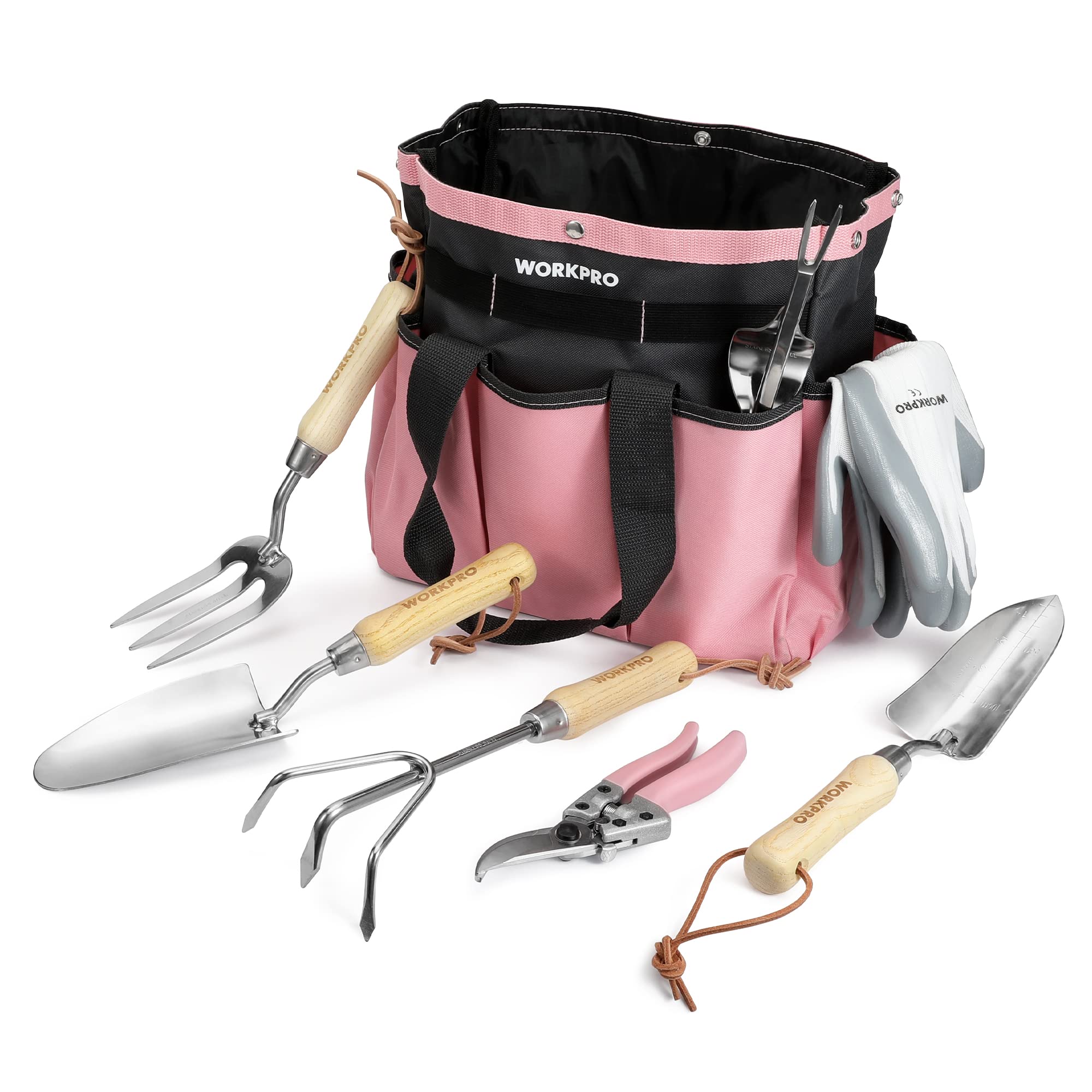
A thoughtfully packaged set with gloves and a roomy tote; I’ve used it for tidy bed maintenance.
Why I picked it: Practical tool selection plus a durable bag and a charitable donation program.
Best for: Gardeners who appreciate a complete kit and a giftable presentation.
A midrange set that balances quality and presentation.
Pros
- Includes gloves and tote bag
- SK5 steel pruner blade
- Ergonomic wooden handles
- Large-capacity organizer tote
Cons
- Not a pro-grade replacement for individual specialty tools
- Gloves are standard fit only
My take
I bought this set when I wanted matching tools and a durable tote for hauling pieces around the yard. The large-capacity bag with many pockets keeps everything organized and makes it easy to carry gloves, twine, and seed packets.
The SK5 pruner blade cuts cleanly for routine trimming, and the wooden handles feel nicer in hand than raw plastic. I appreciated the attention to finish on the handles—they were ready to use right away.
One reason I chose this set is the charitable giving tied to the product; that made it an easy pick when buying a gift for a gardening friend.
Overall, it’s a presentable, practical kit for light to medium garden work and gifting occasions.
5. NAYE Garden Tool Set with Tote, Kneeling Pad, and Gloves – Best for Beginners
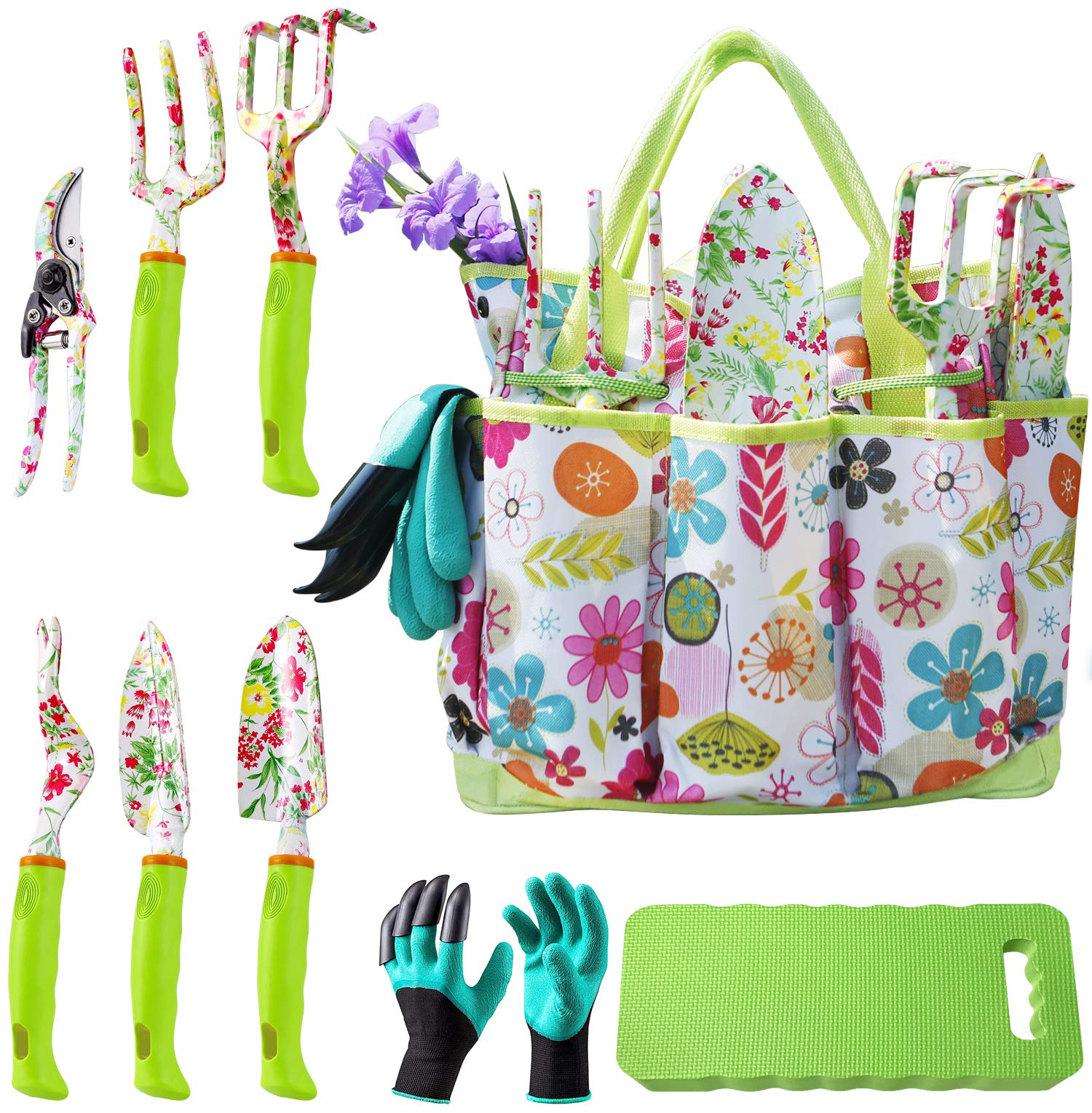
A colorful, complete kit that includes a kneeling pad—perfect for new gardeners and kids.
Why I picked it: All the basics plus a kneeling pad and soft, ergonomic handles.
Best for: Beginners, casual gardeners, and family gardening with kids.
Budget-conscious and full-featured for new gardeners.
Pros
- Includes kneeling pad and gloves
- Lightweight rust-proof aluminum
- Comfortable rubber handles
- Colorful, easy-to-carry tote
Cons
- Bag bottom isn’t reinforced
- Aluminum heads are lighter than steel
My take
I gave this set to a family member who’s new to gardening and it immediately got use. The kneeling pad is a small detail that made long weeding sessions far more comfortable.
The rubberized handles are easy on the hands and helpful for anyone with mild hand fatigue. The set’s variety of tools covers nearly all beginner tasks—transplanting, weeding, pruning, and light digging.
The one real shortcoming I noticed was the tote’s bottom; I added a simple insert to protect the bag from damp soil. Even so, for a starter kit that’s attractive and functional, this set hits the mark.
6. Wilcox All-Pro Garden Tools 202S 14″ All-Pro Trowel – Best Heavy-Duty Trowel
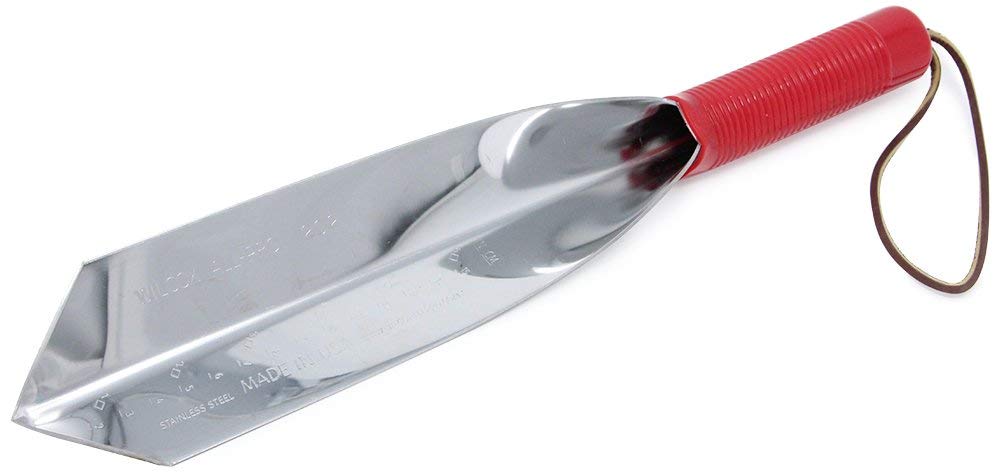
A brutally dependable trowel I use for breaking up hard soil and planting deep bulbs.
Why I picked it: Thick 16-gauge construction and a sharp, beveled edge that cuts through tough ground.
Best for: Heavy soils, bulb planting, and tasks that would break lesser trowels.
A single-purpose, professional-grade tool worth keeping for serious digging.
Pros
- 16 GA stainless steel blade
- Cuts hard, rocky soil
- Depth markings on blade
- Made in the USA
Cons
- Short handle may not suit everyone
- Aesthetic is very utilitarian
My take
This is the trowel I bring when I know the soil will be stubborn. The 16-gauge stainless blade won’t bend under pressure and the sharpened point slices roots and compacted clods where typical trowels fail.
I’ve used the 14-inch length for deep bulb planting and for prying up roots that would usually require a shovel. The molded plastic grip stays secure even when my hands are muddy, and the depth markings are handy for consistent planting.
If you want a pretty tool you’ll look past it; if you want something that survives hard work season after season, this trowel has earned space in my shed.
How I Choose Gardening Tools
Materials and Longevity
I prioritize stainless or hardened carbon steel for blades because they stand up to moisture and stay sharper longer. For handles, I choose forged aluminum or finished wood for strength and comfort.
If repairability matters to you, I prefer tools with replaceable parts so you can keep a tool for years instead of discarding it.
- Stainless steel resists rust and needs less maintenance.
- Carbon steel takes a sharper edge but needs drying and oiling.
- Forged-aluminum handles balance lightness and durability.
- Replaceable parts extend a tool’s useful life.
Single Tools vs. Kits
I recommend investing in one or two excellent specialty tools (a quality pruner and a heavy-duty trowel) and supplementing with a coordinated kit if you need multiple items at once.
Kits are convenient for beginners and make excellent gifts, but pro-grade single tools will outlast set components.
- Buy a good pruner before buying a full set if you prune frequently.
- Pick a heavy-duty trowel for tough soils.
- Choose a kit for portability and organization.
Ergonomics and Comfort
I always test the handle in my hand. Ergonomic shapes, non-slip coatings, and shock-absorbing features make long sessions easier on wrists and hands.
For gardeners with joint issues, softer rubberized grips or contoured wooden handles reduce fatigue.
- Look for non-slip grips for wet work.
- Shock absorbers reduce repetitive-impact strain.
- Consider handle length based on the torque you need.
Maintenance Tips I Follow
I keep blades honed and lightly oiled, wipe tools dry after use, and store metal tools in a dry place to extend life.
For wooden handles I apply a light oil occasionally to prevent drying and cracking.
- Sharpen blades regularly for cleaner cuts.
- Wipe tools dry and oil moving parts.
- Replace worn springs or blades instead of replacing the whole tool.
Frequently Asked Questions
Which pruners should I buy first?
I suggest starting with a quality bypass pruner like the Felco F2 if you prune roses or woody plants often; the cleaner cut preserves plant health and the tool pays for itself through longevity.
Are multi-piece gardening sets worth it?
I find sets useful for beginners and for gifting—they provide instant organization and basic coverage. For long-term use, I combine a set with a couple of higher-end specialty tools.
How do I keep tools from rusting?
I dry tools after use, store them away from moisture, and apply a thin coat of oil to metal surfaces. Stainless tools are lower maintenance but still benefit from cleaning.
Final Take
After using each tool in real garden conditions, I keep a mix of specialist items and a reliable kit in my shed: the Felco F2 for pruning, the Wilcox trowel for tough digging, and a hori-hori for versatile jobs.
If you want one wallet-friendly recommendation, pick a small kit for basics and add one high-quality specialty tool as your needs become clearer.
Whichever combination you choose, prioritizing material quality and ergonomics will save time, frustration, and replacements in the long run.
