
I tested five gel seat cushions across office chairs, car seats, and wheelchairs to find the most supportive, breathable, and portable options for long sits and tailbone pain.
I spend long stretches sitting for work and travel, so I put five gel cushions through real-world tests to see which actually reduce pressure, stay cool, and hold their shape. I evaluated support, cooling, size, non-slip performance, and how easy each cover is to clean.
My goal was practical: cushions that I can move between a desk chair and a car seat, that relieve tailbone or lower-back pressure, and that don’t flatten after weeks of use. Below are the ones that stood out and when I reach for each one.
I ranked these cushions by overall comfort and durability, then by specialty: cooling, breathability, thickness, and orthopedic support so you can match a cushion to your most common seat and pain profile.
1. ComfiLife Gel & Memory Foam Seat Cushion – Best Overall
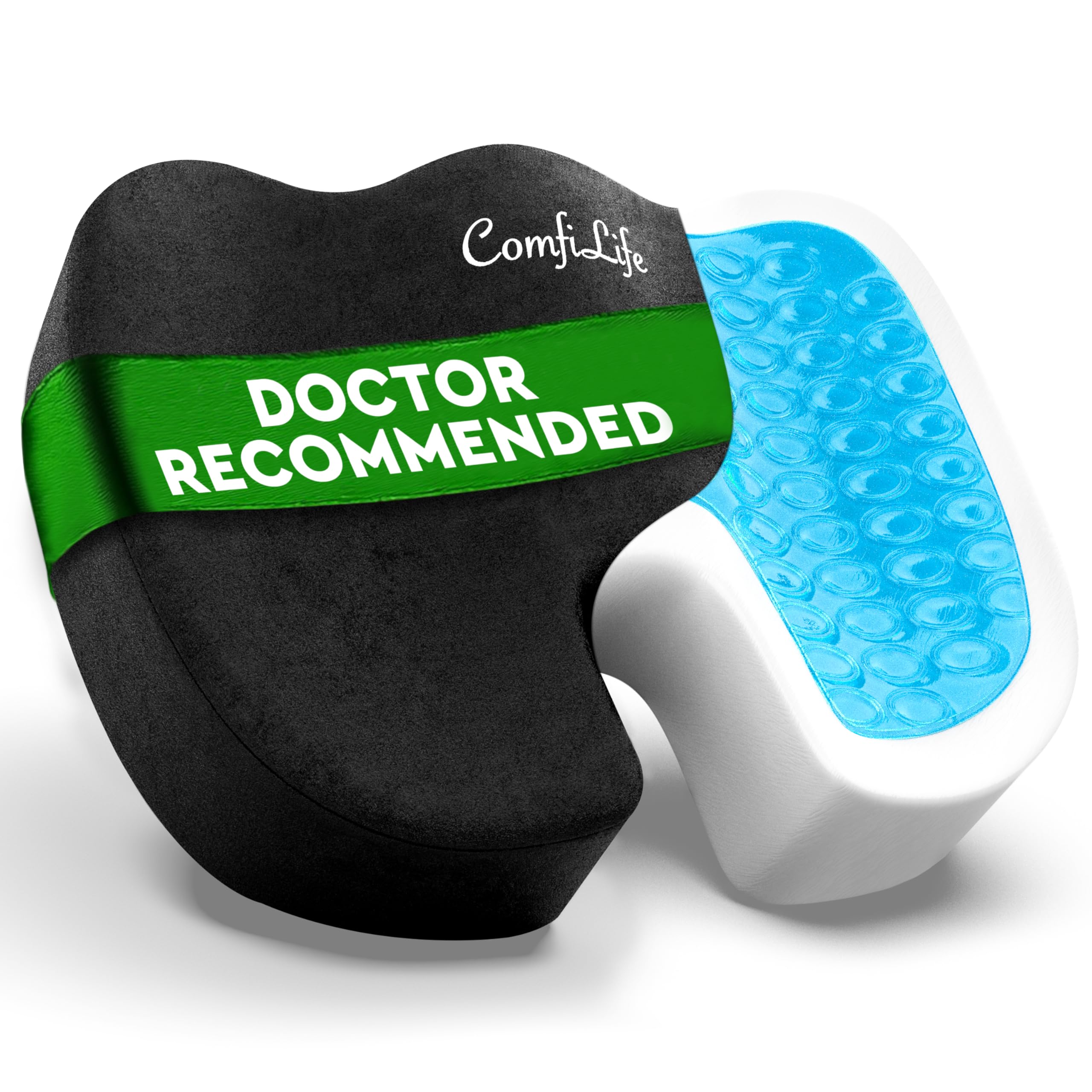
A U-shaped gel memory foam coccyx cushion that balances pressure relief, easy cleaning, and staying put on slick seats.
Why I picked it: All-in-one features: gel layer, durable memory foam, non-slip bottom, and a washable cover.
Best for: Everyday office use, car rides, and anyone wanting dependable tailbone support.
Midrange value for a feature-rich cushion.
Pros
- Ergonomic U-shaped coccyx cutout
- Non-slip rubber bottom
- Machine-washable zippered velour cover
- Built-in handle for portability
Cons
- Cooling gel not dramatically cold
- May feel softer than very firm orthopedic pads
My take
I immediately noticed how the U-shaped cutout changes my posture—my tailbone gets less pressure and I sit more upright without thinking about it.
The gel layer on top tempers the memory foam and helps keep the surface from getting clingy during long sessions, although it never feels ice-cold; expect a moderate cooling effect rather than dramatic chill.
The non-slip rubber underside kept the cushion firmly in place in my office chair and car seat, and the removable velour cover washed easily after a few weeks of use.
Because the foam is resilient, the cushion has held its shape through daily use. I reach for this one when I need reliable support for long workdays or driving sessions.
2. CYLEN Gel Memory Foam Seat Cushion – Best for Cooling and Support
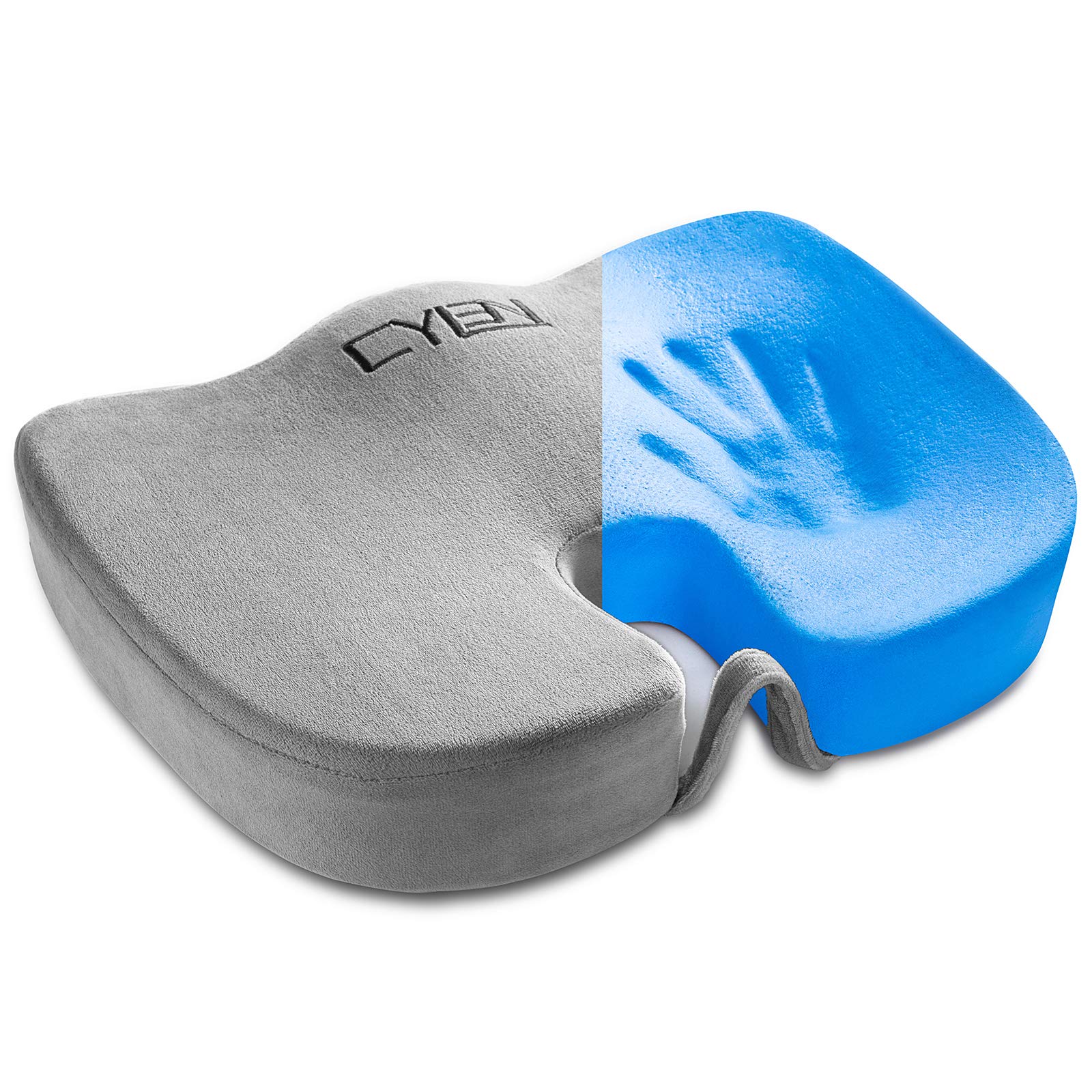
A high-density memory foam cushion with gel infusion and a plush washable cover that aims to limit heat build-up.
Why I picked it: Dense foam plus gel infusion gives firmer support while managing surface temperature.
Best for: People who want firmer, long-lasting support with some cooling benefits.
Solid midrange choice for durability and breathability.
Pros
- High-density supportive memory foam
- Gel infusion helps reduce overheating
- Soft, washable plush cover
- Non-slip rubberized bottom
Cons
- Firmer feel may be too stiff for some
- Can firm up in cold conditions
My take
This cushion stands out for its firmer, high-density feel; I get a noticeable support difference compared with softer memory-foam pads and it helps reduce the ache after long sitting sessions.
The gel infusion cuts down on that trapped heat sensation, and the plush cover feels comfortable against clothing while still being easy to remove and launder.
One caveat: when left in a very cold car the foam becomes firmer until it warms up, so I store it inside when temps plunge.
For drives and desk work where I want more structure beneath me, this has become my go-to.
3. Honeycomb Gel Seat Cushion (Large) – Best for Breathability
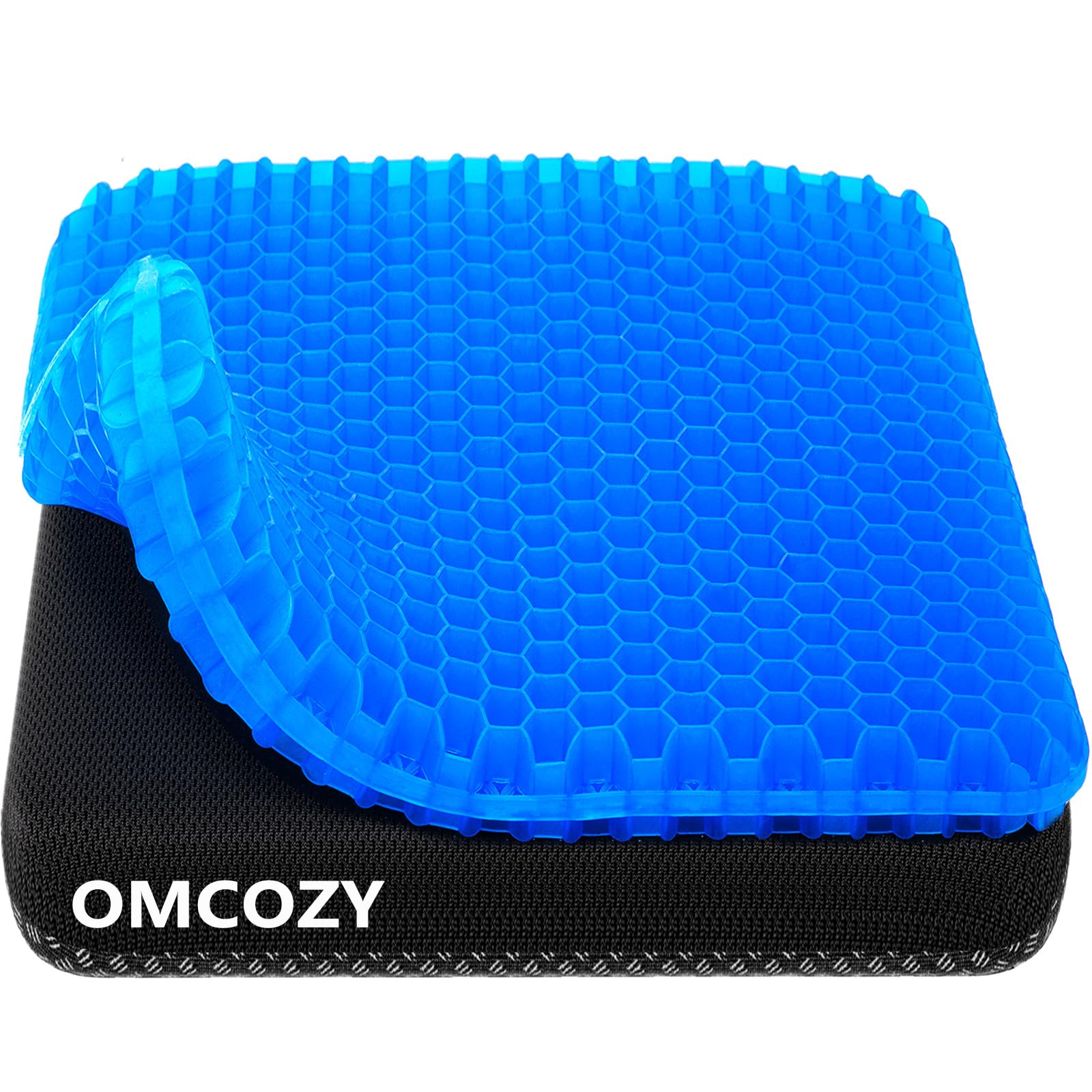
A super-large honeycomb gel pad that prioritizes airflow and pressure dispersion over traditional memory-foam contouring.
Why I picked it: Open honeycomb design maximizes airflow and resists permanent deformation.
Best for: Hot environments, sweaty seats, and anyone who wants generous surface area.
Budget-friendly option for breathability and size.
Pros
- Honeycomb design promotes airflow
- Large surface area for wider seats
- Highly elastic, quickly returns to shape
- Detachable cover with zipper
Cons
- Less contouring than foam cushions
- May not fit some office chair seats perfectly
My take
The honeycomb structure genuinely keeps me cooler than closed-cell foam pads; air channels do a lot of the heat dissipation work during long sessions.
Because the gel is very elastic, the cushion rebounds quickly and resists the flat spots I saw on other cheap pads.
It’s a different sitting experience from a contoured coccyx cushion—pressure is spread across a larger area rather than focused relief under the tailbone—so I prefer it when I need breathability over targeted orthopedic shaping.
Fit can be an issue on narrower chairs; measure your seat first if you have a typical office chair with pronounced armrests.
4. Large Thick Gel Seat Cushion – Best Thick & Supportive
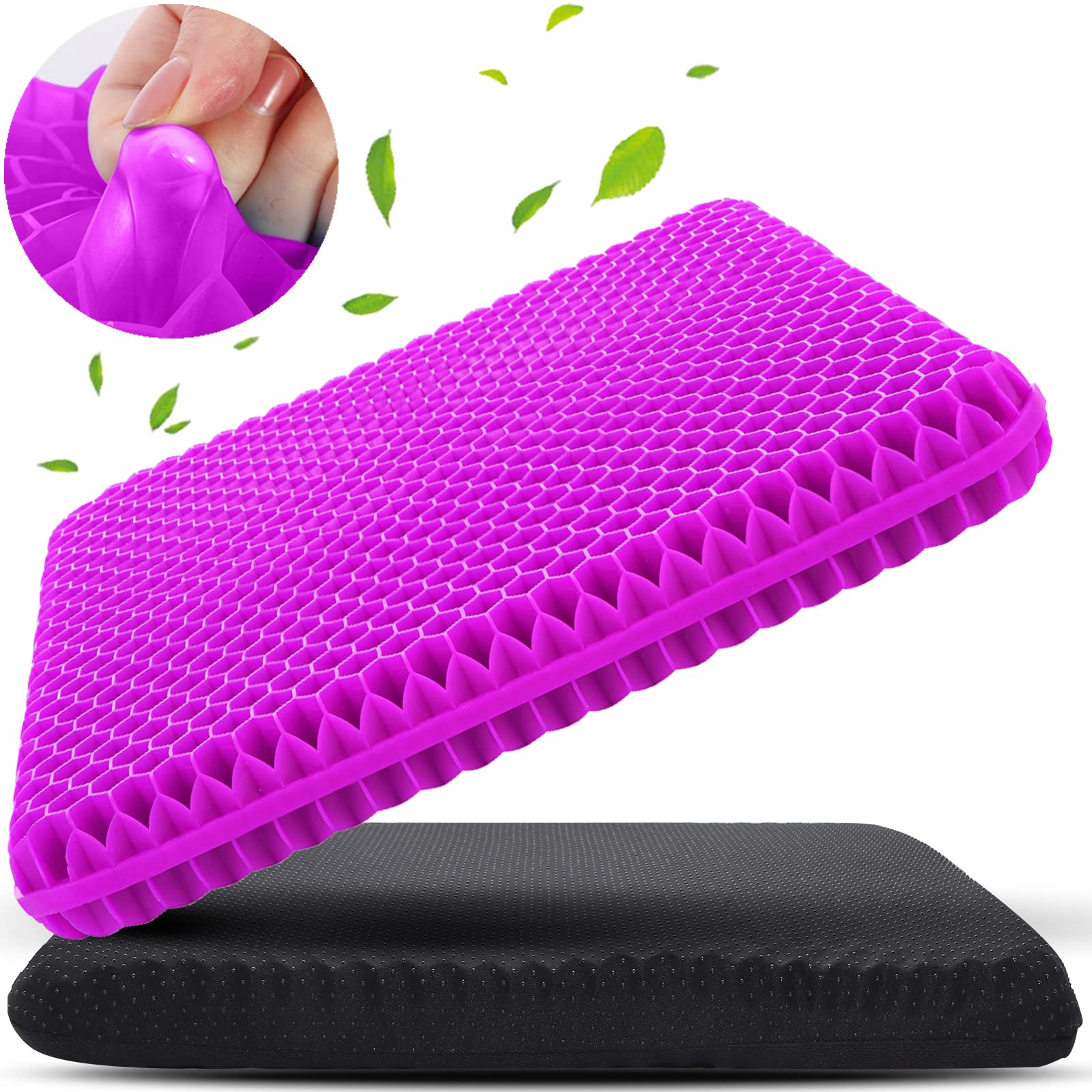
A thicker gel pad constructed from thousands of air columns for softness, cooling, and pressure relief on long sits.
Why I picked it: Thicker profile and air-column construction for cushioned support and comfort.
Best for: Long work shifts, tradespeople with hard seats, and users who want extra padding.
Good value for added thickness and comfort.
Pros
- Thicker than many gel pads
- Air-column design for soft breathability
- Portable—folds for transport
- Pleasant cooling sensation
Cons
- May be too thick for some car seats
- Sizing can feel off on very large wheelchairs
My take
I appreciated the extra thickness on days when I had to sit on hard plastic chairs for long stretches—the cushion takes the sting out of those seats.
The air-column gel construction is noticeably soft and breathable, and I felt less sweat build-up in warm conditions.
Because it’s bulkier, I folded it into my backpack for transport without issue, but it did feel large in tighter vehicle seats.
When I need extra padding for a stiff chair at a jobsite or long meeting, this is the one I grab.
5. Kieba Gel Memory Foam Coccyx Cushion – Best Orthopedic / Firm Support
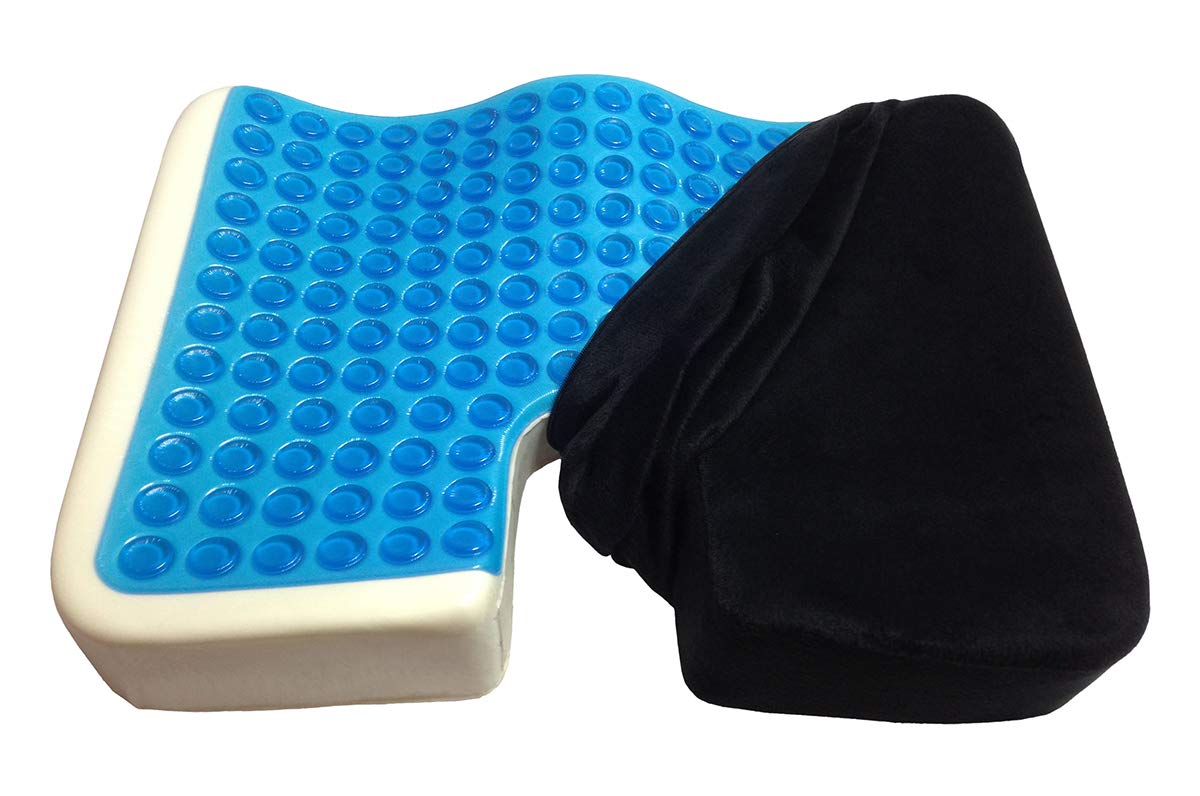
A firm, therapeutic-grade memory foam cushion with gel cooling technology and a removable velour cover, designed for sustained orthopedic support.
Why I picked it: Firm density and larger gel coverage for durable, therapeutic support.
Best for: People needing firmer orthopedic relief and long-term shape retention.
Affordable, firm support with premium materials.
Pros
- Firm therapeutic-grade memory foam
- Wide gel coverage for cooling
- Durable—resists flattening
- Removable machine-washable cover
Cons
- Firmness may be too intense for some
- Shorter length can feel odd for taller users
My take
This cushion feels distinctly firmer than the others and gives me a stable base that reduces lower-back pressure over long sitting periods.
The gel layer does a good job of managing surface heat, and the larger gel coverage on top helps the cushion feel less like a hot block of foam.
Because the foam is dense, it hasn’t lost shape in my weeks of use, which is exactly what I want from an orthopedic pad.
If you prefer a plush, sink-in feel this will be too firm, but for long-term posture and support I found it excellent.
How I Chose and What to Look For
Key features I checked
When testing gel cushions I focus on cooling performance, shape retention, ergonomic cutouts, portability, and how well a cushion stays put on slick seats.
I also consider cover quality—removable, machine-washable covers extend a cushion’s usable life and keep hygiene simple.
- Cooling: Gel layers or open-cell designs that dissipate heat.
- Support: Firm density for posture vs. plush softness for pressure relief.
- Fit: Check cushion width and length for your chair or car seat.
- Stability: Non-slip bottoms or straps keep the pad from sliding.
- Cleaning: Zippered, washable covers are a must for daily use.
Choosing the right shape and thickness
U-shaped coccyx cushions are best if you need targeted tailbone relief and improved posture, while flat honeycomb or column gels are better for breathability and broad pressure distribution.
Thickness matters—thicker cushions provide more protection on hard seats but can alter your leg angle in cars or some office chairs.
- Coccyx cutout: Choose this for tailbone pain or sciatica.
- Thicker pad: Ideal for hard, plastic seating or long drives.
- Low-profile pad: Better for car seats and airplane use.
Care and maintenance tips I follow
I always remove covers and launder according to the label; a clean cover keeps the gel surface fresh and reduces odor.
Avoid folding memory-foam cushions for long periods—store them flat. Gel pads designed to fold are fine but check recovery after unpacking.
- Wash covers on gentle cycles and air-dry when possible.
- Store memory foam flat at room temperature.
- Bring cushions inside from very cold cars to avoid temporary firming.
Frequently Asked Questions
Will a gel cushion fix my lower-back pain?
I use gel cushions to reduce pressure and improve posture, which often helps with lower-back discomfort, but they aren’t a replacement for medical treatment. If you have chronic pain I recommend consulting a medical professional while using a supportive cushion as part of your setup.
Do gel cushions really stay cool?
Some do better than others. Open-cell or honeycomb gels and cushions with wider gel coverage keep airflow and surface temperature down. I found that ‘cooling’ claims vary—expect a noticeable improvement over plain foam, but not refrigeration-level cold.
Can I use a gel cushion in my car?
Yes—most of the cushions I tested work fine in cars. Just check thickness and fit because very thick pads can change your driving posture. Also, store memory-foam cushions inside during cold weather to avoid temporary firmness.
Final Take
I’ve carried and used each of these cushions in real work and travel scenarios. For an all-around performer that balances comfort, cooling, and cleanability I reach for the ComfiLife. If I need firmer orthopedic support I grab the Kieba, and when heat and breathability matter most I choose the honeycomb gel pad.
Match the cushion to your seat and pain profile: coccyx cutouts for tailbone pain, thicker pads for hard chairs, and open-cell gels for hot environments. That simple match makes the biggest difference in daily comfort.
