
I tested four versatile chef's knives to find dependable, well-balanced blades for home and pro kitchens. Here are the ones I kept coming back to and why each earned a spot on my prep station.
I spent hands-on time with four chef's knives that cover the most common needs in a busy kitchen: durability, edge retention, balance, and comfort.
My goal was to pick knives that work for long prep sessions, feel secure in wet hands, and hold a practical edge with routine maintenance.
Below I explain what stood out about each blade and who I think each knife fits best.
I compared these knives by how they felt slicing, dicing, and chopping typical kitchen ingredients, paying special attention to edge out of the box, balance, handle comfort, and how much maintenance each steel needs.
1. Victorinox Fibrox Pro 8″ Chef’s Knife – Best Value Workhorse
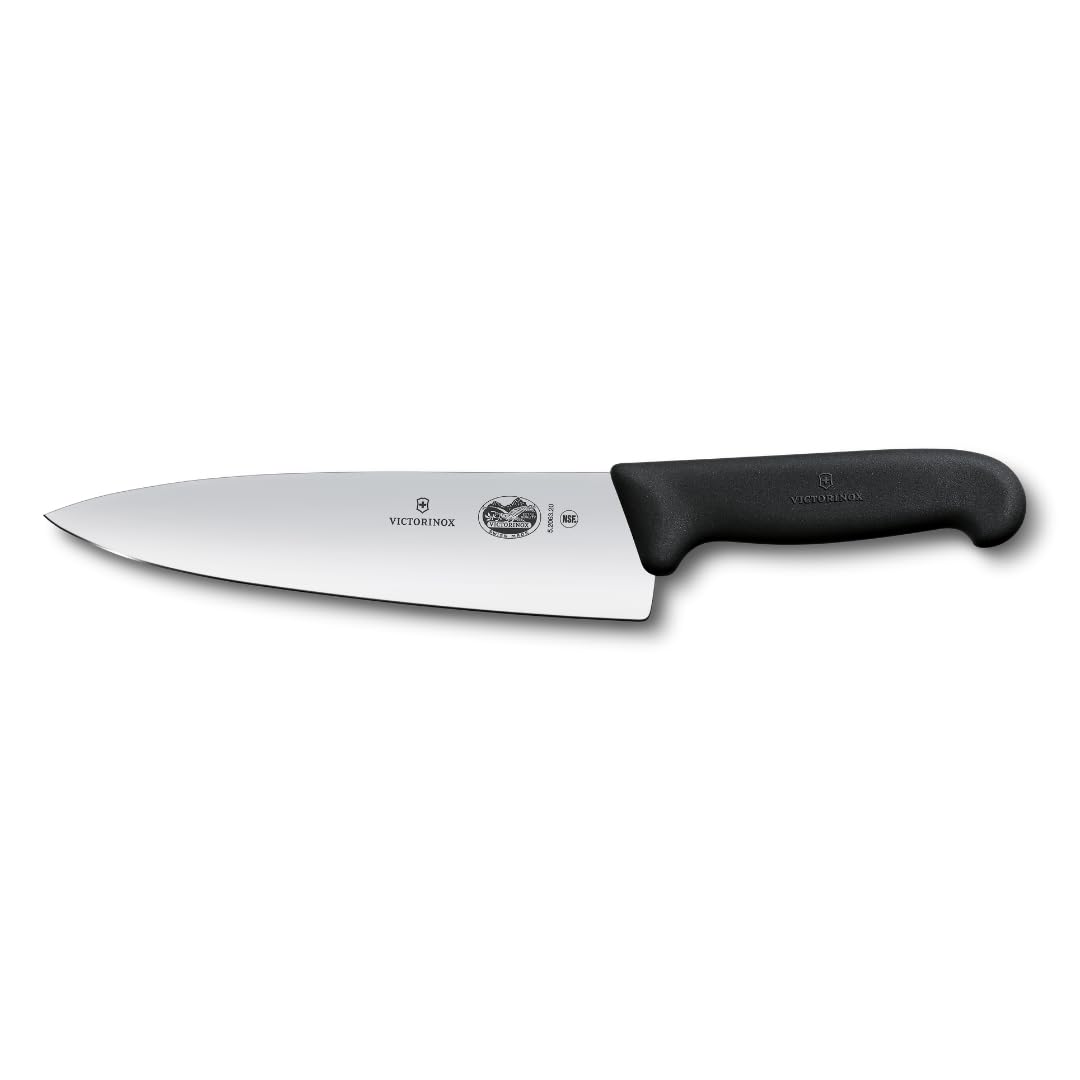
A hardworking, well-balanced 8" chef's knife with a non-slip Fibrox handle and a razor-ready stainless blade that excels at everyday prep.
Why I picked it: Reliable, very sharp out of the box, and ergonomically balanced for long prep sessions.
Best for: Home cooks who want a dependable all-purpose chef's knife without fuss.
Affordable option that delivers professional-level performance for the cost.
Pros
- Very sharp out of the box
- Comfortable non-slip Fibrox handle
- Lightweight and well-balanced
Cons
- Plain finish compared to premium steels
- Not a showpiece
My take
This Fibrox Pro became my go-to when I wanted a no-nonsense chef's knife that performs consistently. The blade arrives laser-tested and feels as sharp as it claims — slicing tomatoes and onions with almost no drag.
The TPE Fibrox handle gives me a secure grip even when my hands are wet, and the knife's balance reduces wrist fatigue during longer prep sessions. It has a bit more heft than some ultra-light blades, which I appreciate for controlled chopping.
Victorinox backs the knife with a long-standing manufacturing reputation, and I found it a very practical, everyday workhorse that I don't hesitate to reach for whether I'm mincing herbs or breaking down a roast.
2. Wakoli EDIB 4-Piece Damascus Knife Set – Best Premium Damascus Set
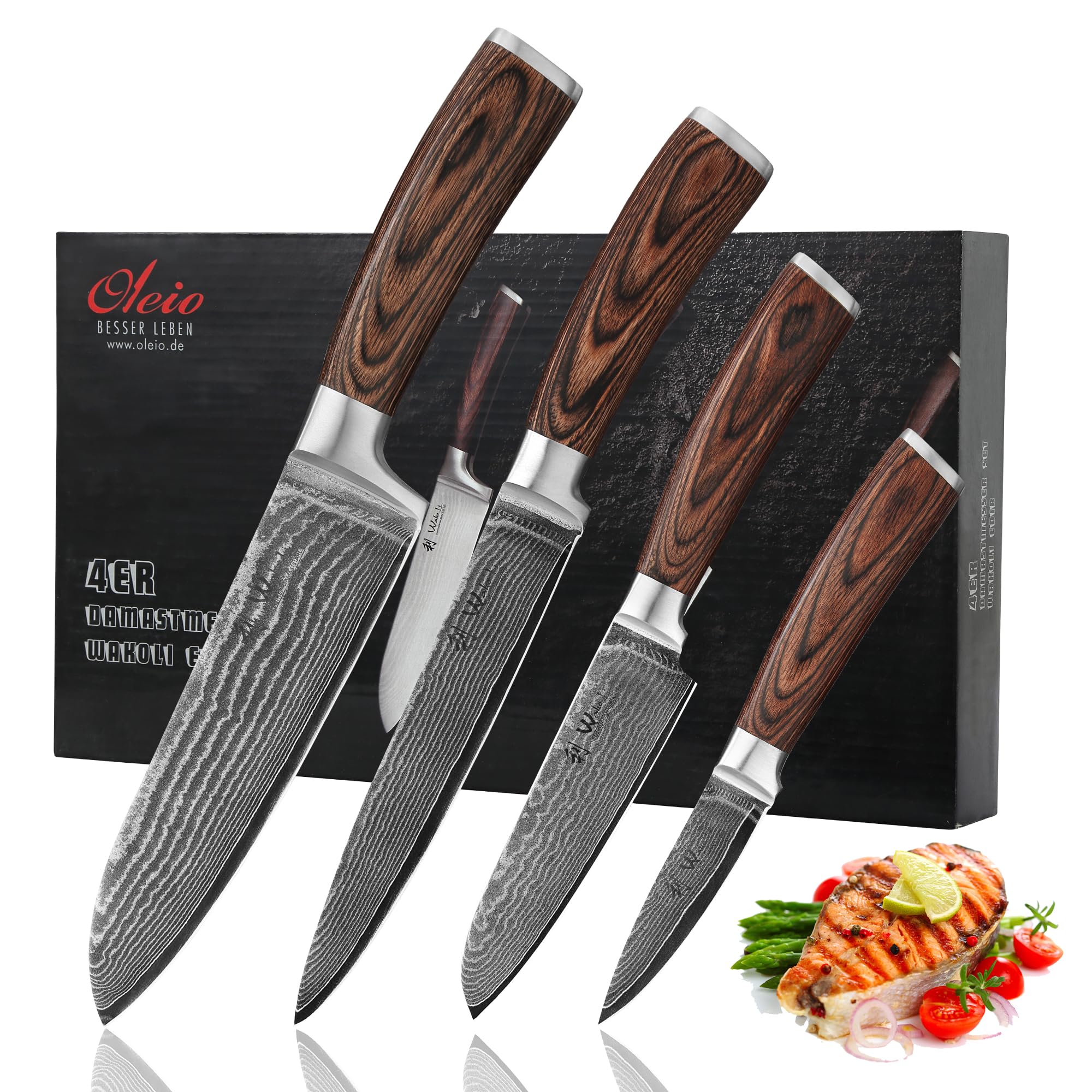
A four-piece Damascus set built around a VG10 core — outstanding edge retention, fine 12–14° factory bevels, and elegant Pakkawood handles.
Why I picked it: VG10 core with 67-layer Damascus delivers long-lasting sharpness and attractive finish.
Best for: Experienced cooks who want precision edges and a presentation-ready set.
A more expensive, premium option focused on performance and aesthetics.
Pros
- VG10 core for long edge life
- Beautiful Damascus pattern
- Comfortable Pakkawood handles
Cons
- Requires hand-washing
- Extremely sharp—handle with care
My take
I keep this Wakoli set at hand whenever I need razor-precise cuts. Each blade's VG10 core and 67-layer Damascus make for a slicing experience that feels effortless and controlled.
The factory angle (about 12–14°) gives these knives a very keen edge that holds up well through extended prep. I noticed finer, cleaner cuts on fish and vegetables compared with my everyday steel.
The Pakkawood handles are well-shaped for long sessions, and the set looks attractive on display or in a gift box. I treat them gently — I always hand-wash and dry these to preserve both finish and edge.
3. Victorinox Swiss Classic 6″ Chef’s Knife – Best Compact/Nimble Knife
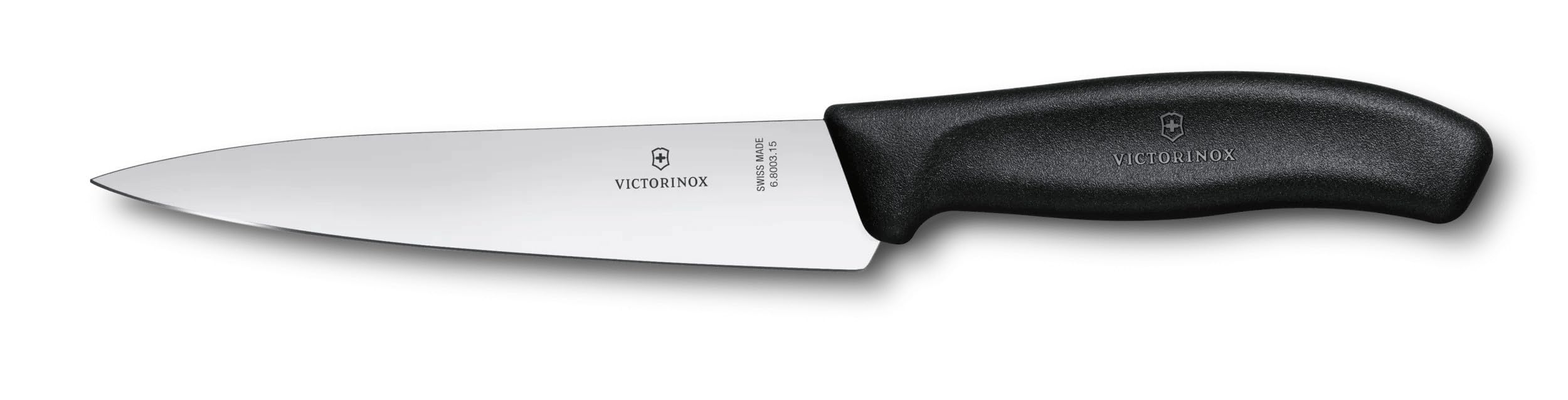
A compact, lightweight 6" chef's knife with a straight edge and ergonomic handle that excels when space or nimbleness matters.
Why I picked it: Small, nimble design with excellent out-of-box edge and a comfortable grip.
Best for: Cooks who prefer a smaller, more maneuverable chef's knife for tasks and tight prep spaces.
Affordable compact option that performs above its cost.
Pros
- Lightweight and nimble
- Excellent factory edge
- Comfortable ergonomic handle
Cons
- Smaller blade limits big cuts
- Not as decorative
My take
I reached for the Swiss Classic whenever I wanted something quicker and lighter than an 8" chef's knife. The thinner blade and gentle curve make trickier tasks — like mincing herbs or trimming produce — feel effortless.
Out of the box the edge was extremely good; it stayed useful through regular home use. Because it's compact and light, it reduces hand fatigue during longer prep sessions and feels particularly friendly for smaller hands.
Although the packaging lists dishwasher-safe, I treat this knife gently and hand-wash it to keep the edge sharper longer. For a compact utility chef's knife, it checks every practical box.
4. Global 8″ Chef’s Knife – Best Lightweight Design
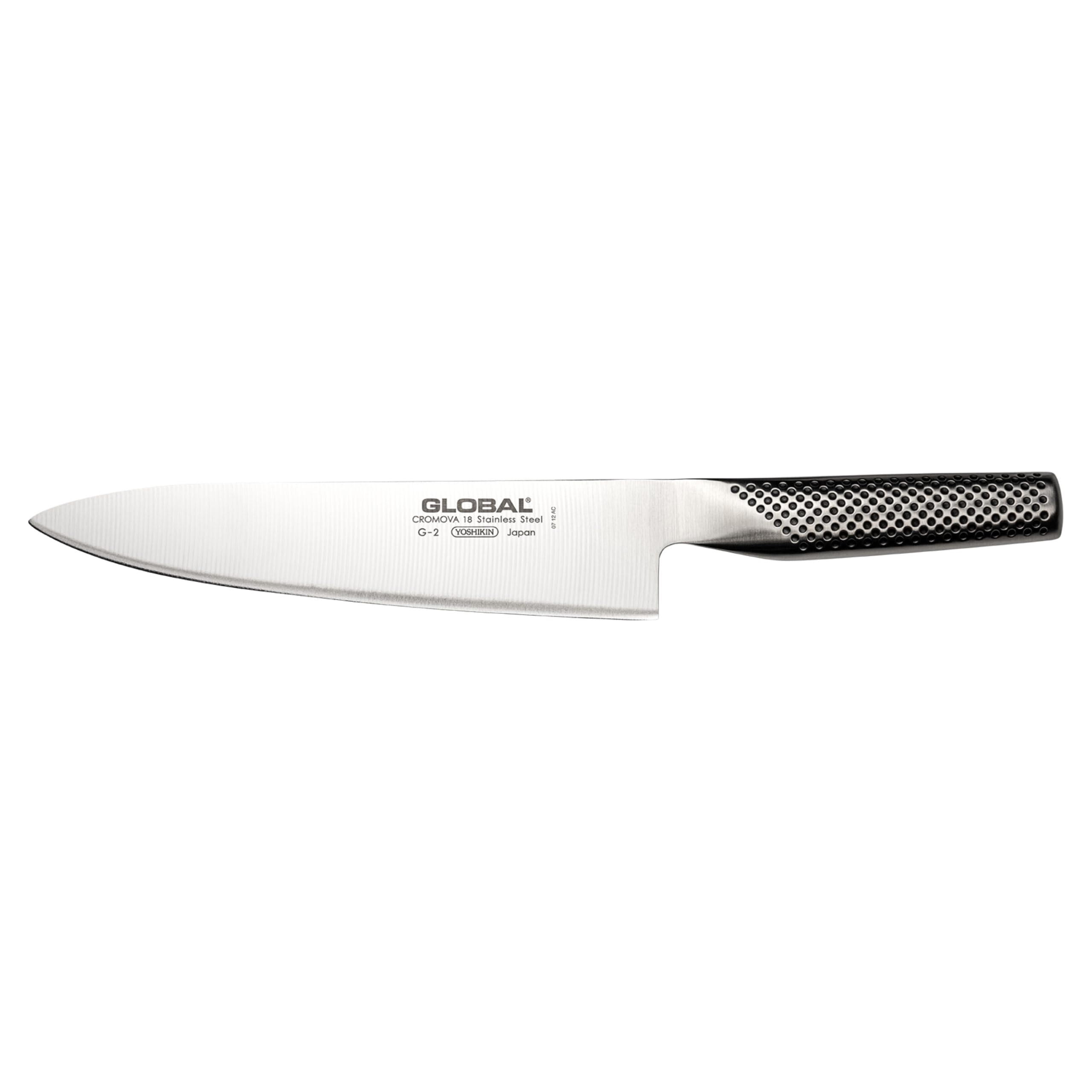
A thin, precisely balanced 8" chef's knife with high-tech molybdenum/vanadium steel and a seamless stainless-steel handle for a sanitary, modern design.
Why I picked it: Face-ground blade and lightweight construction deliver razor-sharp slicing and excellent balance.
Best for: Cooks who want a thin, razor-sharp blade with a seamless metal handle.
Mid-to-upper range — geared toward durability and long edge life.
Pros
- Very thin, razor-sharp edge
- Lightweight and precisely balanced
- Seamless stainless-steel handle
Cons
- Metal handle feels different
- Sharpening needs specific tools
My take
I initially hesitated about the stainless-steel handle, but after using the Global 8" I appreciated how the seamless design feels in hand and cleans easily. The dimpled grip helps prevent slipping during prep.
The blade is face-ground and thin, which I found ideal for fast, precise slicing. It stays sharp longer than many conventional stainless blades when I keep up with routine honing.
Global recommends ceramic or diamond honing tools rather than a traditional steel, and I followed that guidance — the edge stays truer with the recommended maintenance. If you want precision and a lightweight feel, this knife delivers.
How I Choose a Chef’s Knife
Blade steel and edge retention
I look at the steel composition and hardness because that dictates how long the edge will hold between sharpenings. Steels like VG10 and high-grade stainless variants deliver noticeably longer edge life in my experience.
If you want less frequent sharpening, I recommend knives with a hard core or face-ground geometry — they keep a keen edge but may require a whetstone when they eventually need re-profiling.
- VG10 core: excellent edge retention
- Face-ground thin blades: superior slicing, may need specific sharpening
- Softer stainless: easier to re-sharpen but dulls faster
Blade geometry and intended use
I match blade shape to the tasks I do most. A taller, broader blade gives me knuckle clearance for chopping; a thinner blade slices cleaner for fish and vegetables.
For generalist cooking, an 8" chef's knife is the most versatile. I keep a 6" or a santoku close by for nimble tasks or smaller workspaces.
- 8" chef's knife: everyday workhorse
- 6" knife: nimble, good for small hands
- Santoku: flatter profile for push-cutting
Handle comfort and balance
I always test how a handle fits my hand and how the knife balances between blade and handle. A well-balanced knife reduces wrist fatigue and improves control.
Seamless metal handles clean up well and feel sanitary, but they can feel cold or slippery to some. Textured thermoplastic or Pakkawood handles offer a warmer, grippier feel.
- Try the grip: pinch and handle tests matter
- Balance toward the bolster or center reduces fatigue
- Consider handle material for wet prep sessions
Maintenance and care
Even when a listing says dishwasher-safe, I hand-wash and dry most knives to preserve the edge and finish. I find it extends time between sharpening.
I hone regularly and re-sharpen on a whetstone or guided system when needed. Some knives benefit from ceramic or diamond tools per the maker's guidance.
- Hand-wash to preserve edges
- Hone often; stone when a real edge is lost
- Store on a magnetic strip or in a block to protect the edge
Frequently Asked Questions
Are any of these knives dishwasher-safe?
While some listings say dishwasher-safe, I personally hand-wash and dry every knife to keep the edge sharp and protect handles and finishes.
How often do I need to sharpen these knives?
It depends on use and steel. VG10 and the harder face-ground Global blade held an edge longer in my testing; I hone regularly and re-sharpen on a stone only when cutting performance drops.
Which size should I choose for a chef’s knife?
I prefer an 8" chef's knife as the most versatile option; if you want more nimble control or have smaller prep spaces, a 6" model works very well.
Are these all German-made knives?
No — the selection includes Swiss and Japanese-style blades too. Focus on blade geometry, weight, and steel rather than origin when choosing what feels right for you.
Final Take
I kept reaching for the Victorinox Fibrox Pro when I needed a dependable daily workhorse, and the Swiss Classic 6" won me over for nimble tasks.
If I want precision cuts and a set that doubles as a showpiece, the Wakoli Damascus set is the one I reach for. For a thin, modern feel and excellent slicing, the Global 8" is my pick.
Choose the one that matches how you prep: go compact for nimbleness, go Damascus for edge retention and finish, or choose the Fibrox for practical, everyday performance.
