
I tested eight germination kits to find reliable trays, domes, lights, and heat mats that actually make seed starting easier. Here are my go-to picks for different needs and setups.
I start dozens of seeds every season, and over the years I’ve learned which kits consistently get seedlings off to a healthy start. I evaluated build quality, humidity control, drainage, and the practical extras that make setup and transplanting less fussy.
Below I cover the kits I reach for most often — from compact multi-tray packs to all-in-one systems with lights and heat. I explain where each kit shines so you can match one to your space and planting goals.
I compared capacity, dome height, vent control, drainage design, and whether a kit includes lights or a heat mat. If you want fast germination I recommend a kit with adjustable vents plus a heat mat; if you value easy transplanting choose a silicone or larger-cell tray.
1. MIXC Seed Starter Kit (10 Trays) – Best Overall
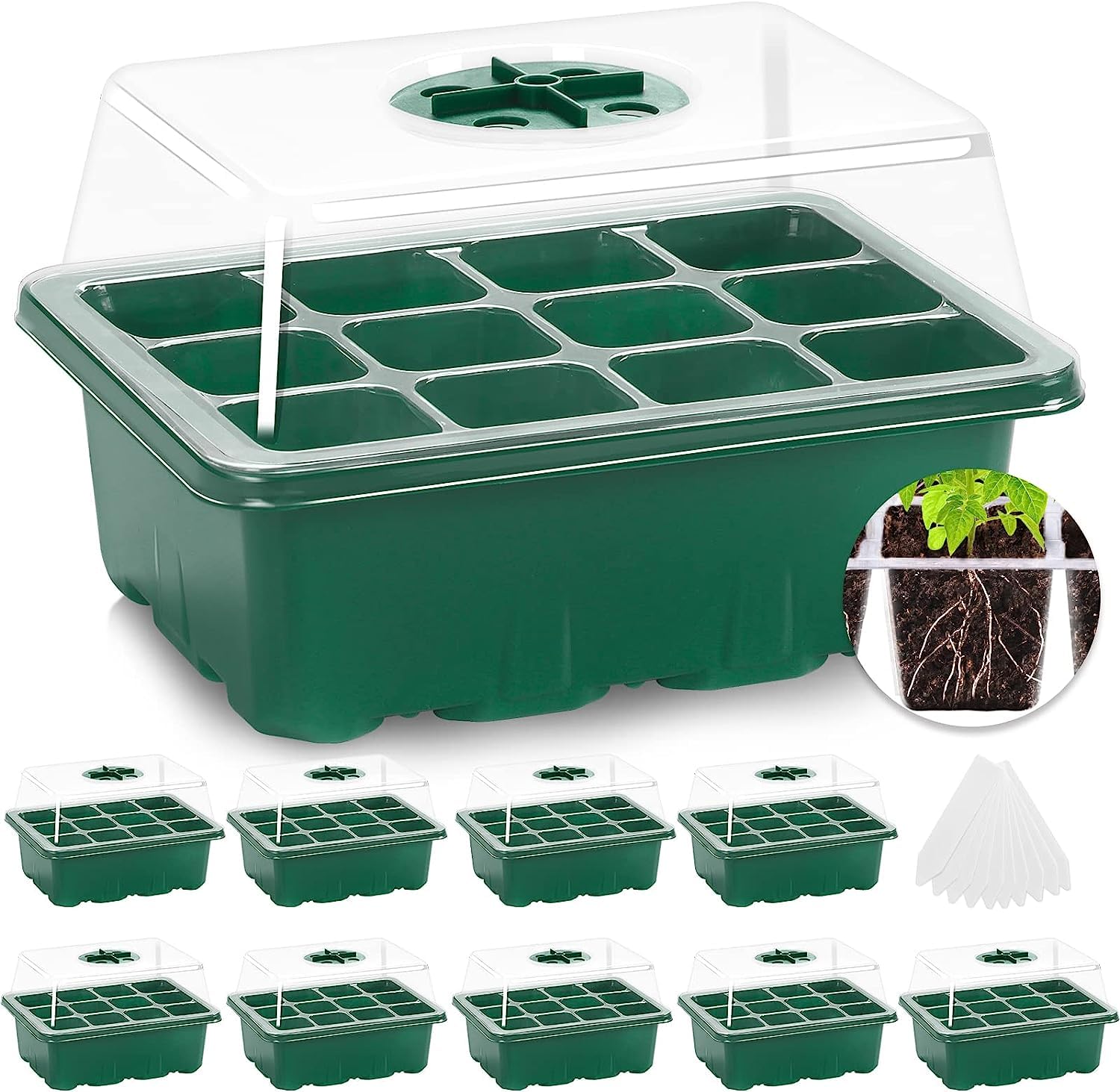
A complete, reusable 120‑cell system with clear domes, adjustable vents, and watertight bases — reliable for season after season.
Why I picked it: Complete kit, sturdy parts, and excellent humidity control.
Best for: Gardeners who start many different seeds at once.
Affordable, high value for parts included.
Pros
- Comes with domes, bases, and labels
- Transparent lids for easy observation
- Adjustable vents for humidity control
- Watertight bases for bottom watering
- Reusable durable plastic
Cons
- Smaller cell size for large seedlings
- Plastic domes can fog in high heat
My take
I rely on this MIXC kit when I need to start a lot of seeds in a compact footprint. The clear domes let me check progress without disturbing the microclimate, and the adjustable vents give enough control to go from full humidity during germination to slight airflow once cotyledons open.
The watertight drip trays make bottom watering simple and clean; I use them with capillary mats and avoid soggy surface soil. The trays themselves are sturdy enough to reuse across seasons, and the included labels save time when I’m juggling varieties.
2. Gardzen 5-Pack Seed Starter Trays (40-Cell) – Best Value for Quantity
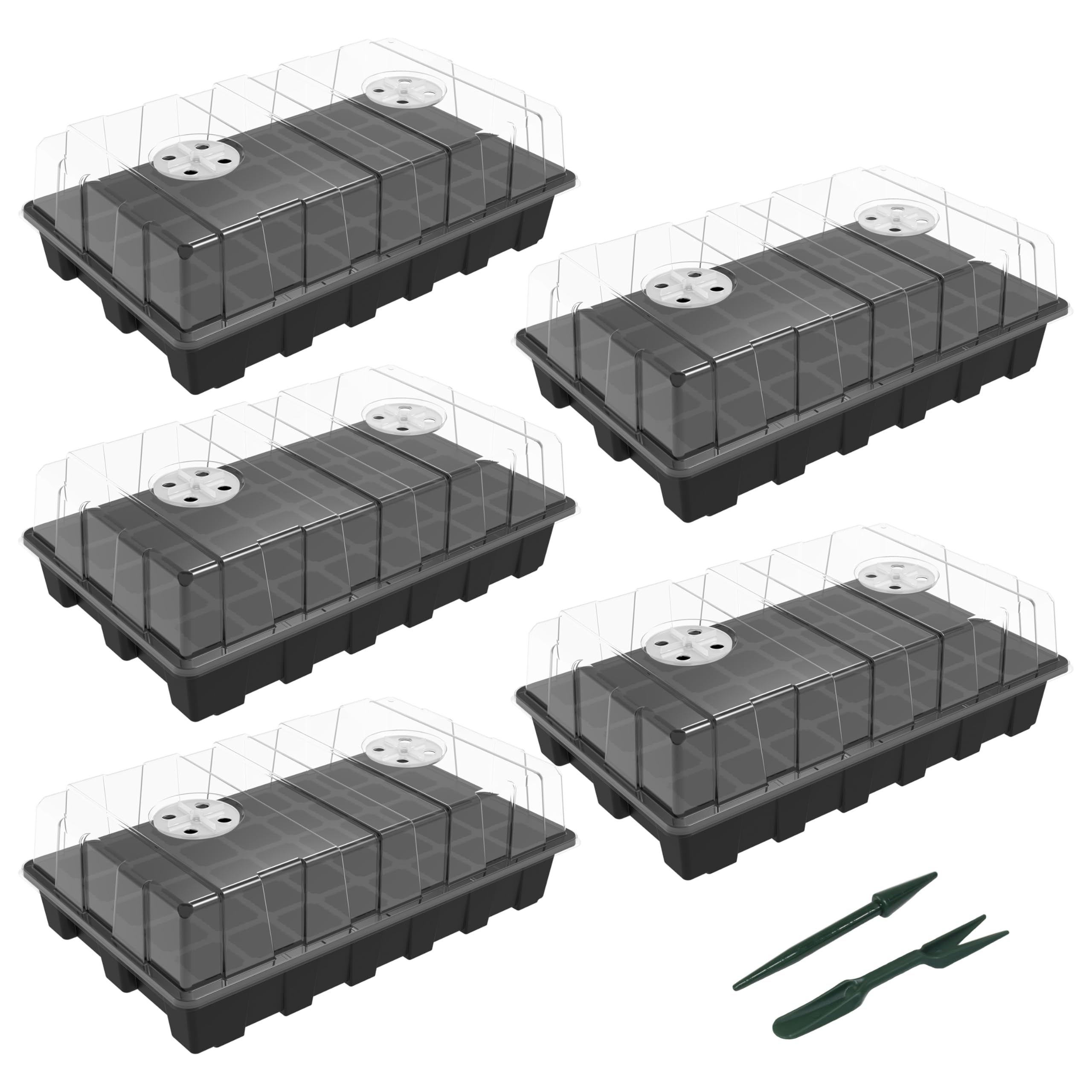
Five 40‑cell kits that give lots of planting spots, with adjustable ventilation and a snug dome fit for steady germination.
Why I picked it: Large capacity and well-fitting domes make batch starting easy.
Best for: People who need many cells for vegetables and peppers.
Great value when you need higher cell count.
Pros
- High total cell count
- Adjustable vents on domes
- Durable plastic construction
- Clear covers for monitoring
- Stackable for storage
Cons
- Bottom tray thinner than premium kits
- Dome fit can be tight to open
My take
When I need volume, the Gardzen five-pack is the quickest way to get lots of seedlings going. Each 40‑cell insert gives me room to separate varieties, and the vents on the domes are simple to adjust for different seed needs.
The set feels sturdy in daily use and cleans up easily. I do pay attention when lifting full trays because the bottom tray is a bit lighter than heavier-duty options, but for large batches this kit is hard to beat.
3. YAUNGEL Seed Starter Trays (Large Cells) – Best for Large Seeds
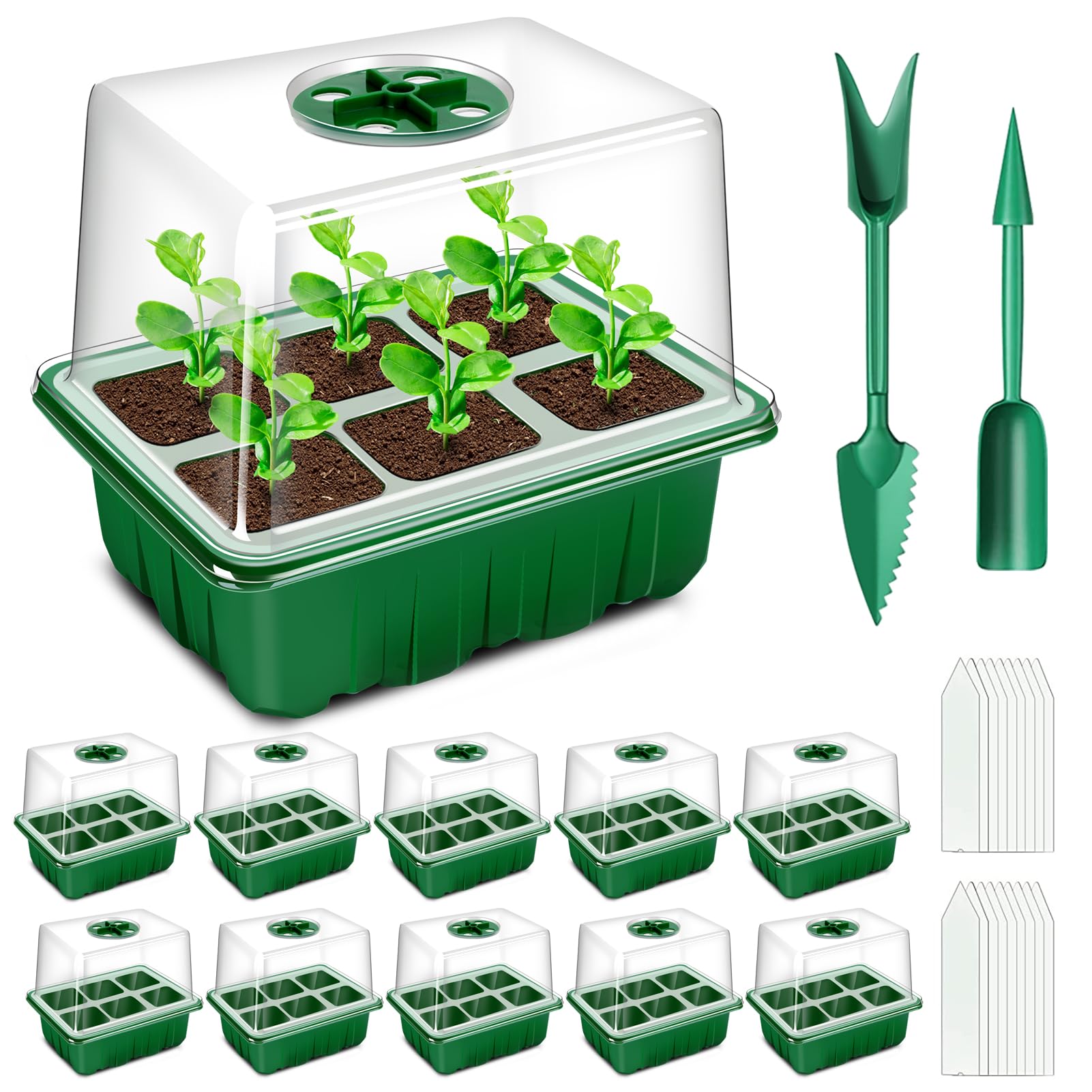
Thicker plastic and oversized cells with a heightened lid — ideal for tomatoes, peppers, and other large-seed crops.
Why I picked it: Large, smooth cells and tall domes for bigger seedlings.
Best for: Starting big seeds and letting seedlings grow longer under cover.
Mid-range, built to last multiple seasons.
Pros
- Extra‑large cell size
- Heightened lids for taller seedlings
- Thicker 0.8mm plastic
- Adjustable humidity window
- Smooth pods clean easily
Cons
- Lids sit on top, don’t snap tight
- Cells may outgrow lid quickly
My take
I use these YAUNGEL trays when I’m starting peppers, tomatoes, or anything with a larger root ball. The roomy cells let roots develop before I transplant, and the heightened lid means I can keep seedlings covered longer without pinching stems.
The thicker material gives me confidence the trays will survive repeated seasons. I also like the smooth pod bottoms — they’re far easier to clean and they work better with capillary mats when I need hands‑off watering.
4. SOLIGT Seed Starter Kit with Light & Heat Mat – Best Starter Kit with Heat & Light
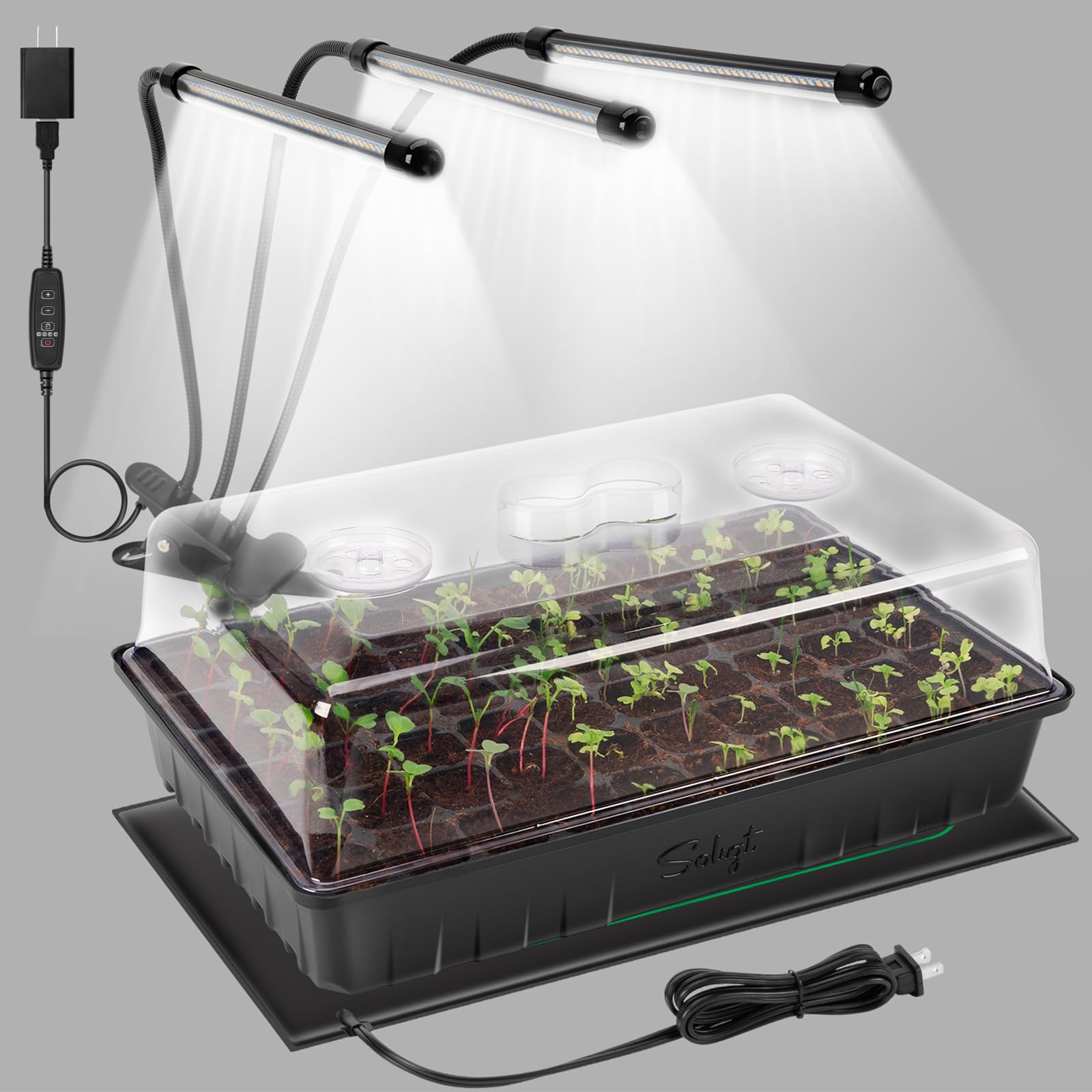
An all‑in‑one system: 60 cells, tall dome, waterproof heat mat, and a clip-on grow light with adjustable brightness and timers.
Why I picked it: Complete indoor setup with heat and lighting in one package.
Best for: Beginners and growers who want integrated heat and light.
More expensive but very complete for indoor starts.
Pros
- Includes heat mat and grow light
- Tall 4.3" humidity dome
- Durable heavy-duty trays
- Multiple light brightness levels
- Waterproof heating mat
Cons
- Light is on the warm side colorwise
- Timer options are limited
My take
I appreciate how this SOLIGT kit covers almost every need — I plug the heat mat in, close the dome, and give slow-germinating seeds the warmth they need. The tall dome is especially useful for seedlings that stretch a bit before I harden them off.
The grow light is convenient and the flexible gooseneck makes positioning easy, though I found the color leans warm and the timer choices are simpler than my separate lights. Overall, the combination of heat and a well-fitting dome speeds germination noticeably.
5. Delxo Seed Starter Kit (10 Trays, 12-Cell) – Best Budget
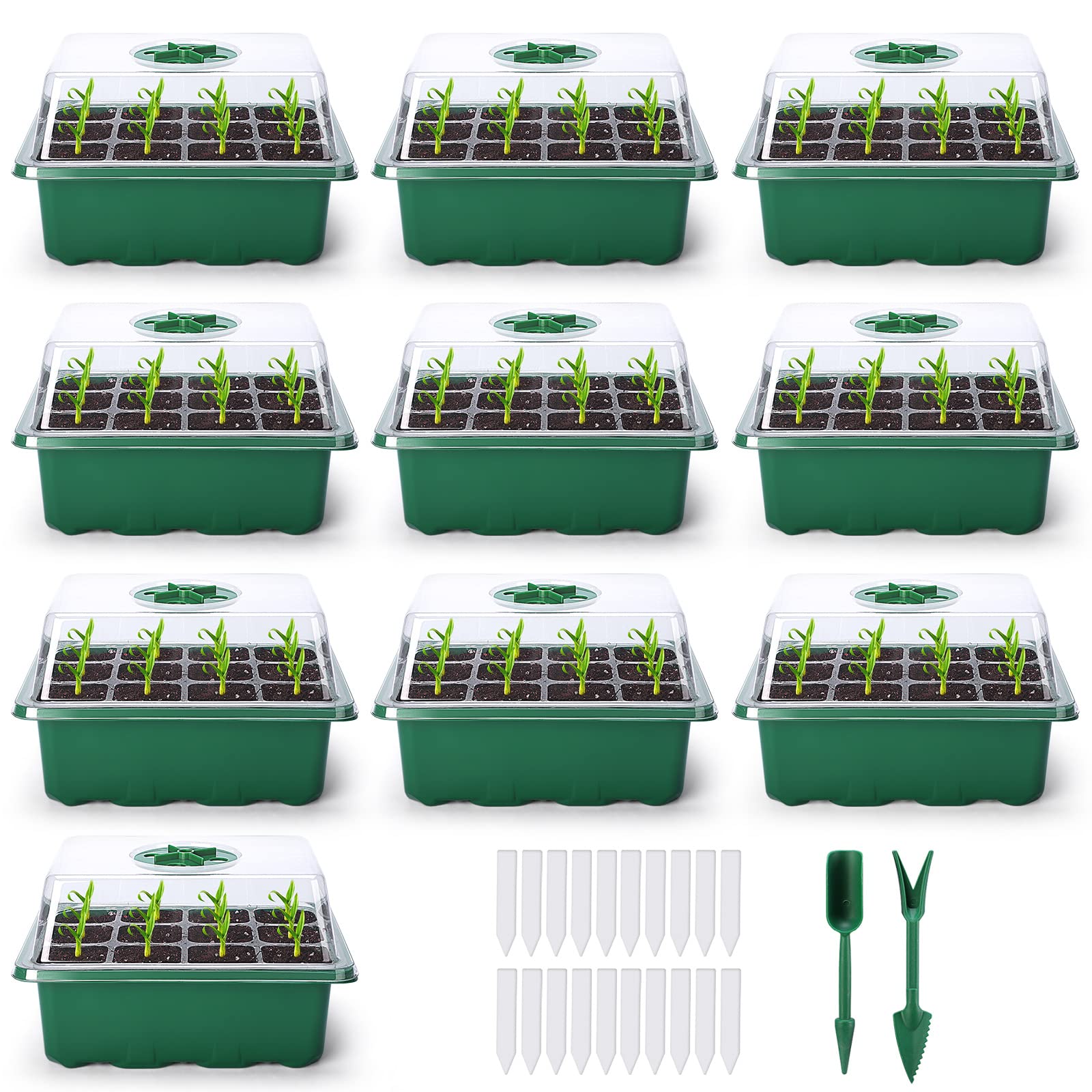
A straightforward 120‑cell starter system with adjustable vents, opaque green bases, and solid construction for cost‑minded gardeners.
Why I picked it: Basic, durable, and includes planting tools and labels.
Best for: Gardeners who want a dependable, inexpensive starter set.
Budget‑friendly without skimping on essentials.
Pros
- Opaque green bases protect roots from light
- Adjustable venting on domes
- Thicker walls than cheap trays
- Includes tags and small tools
- Easy to assemble
Cons
- Thicker walls make transplanting trickier
- Lids sometimes require force to seat vents
My take
This Delxo kit is my go‑to when I need a no‑frills, dependable starter system. The green bases help keep root zones shaded and temperatures steadier, and the adjustable vents behave as expected when switching from germination to growth.
The construction feels heavier than typical bargain trays, though the thicker cell walls mean I need to be a bit more careful when popping seedlings out. For planting lots of common vegetables and herbs, it’s a good, affordable choice.
6. YJXFON 2-Pack Seed Starter Kit (80-Cells) – Best for Indoor Lighting
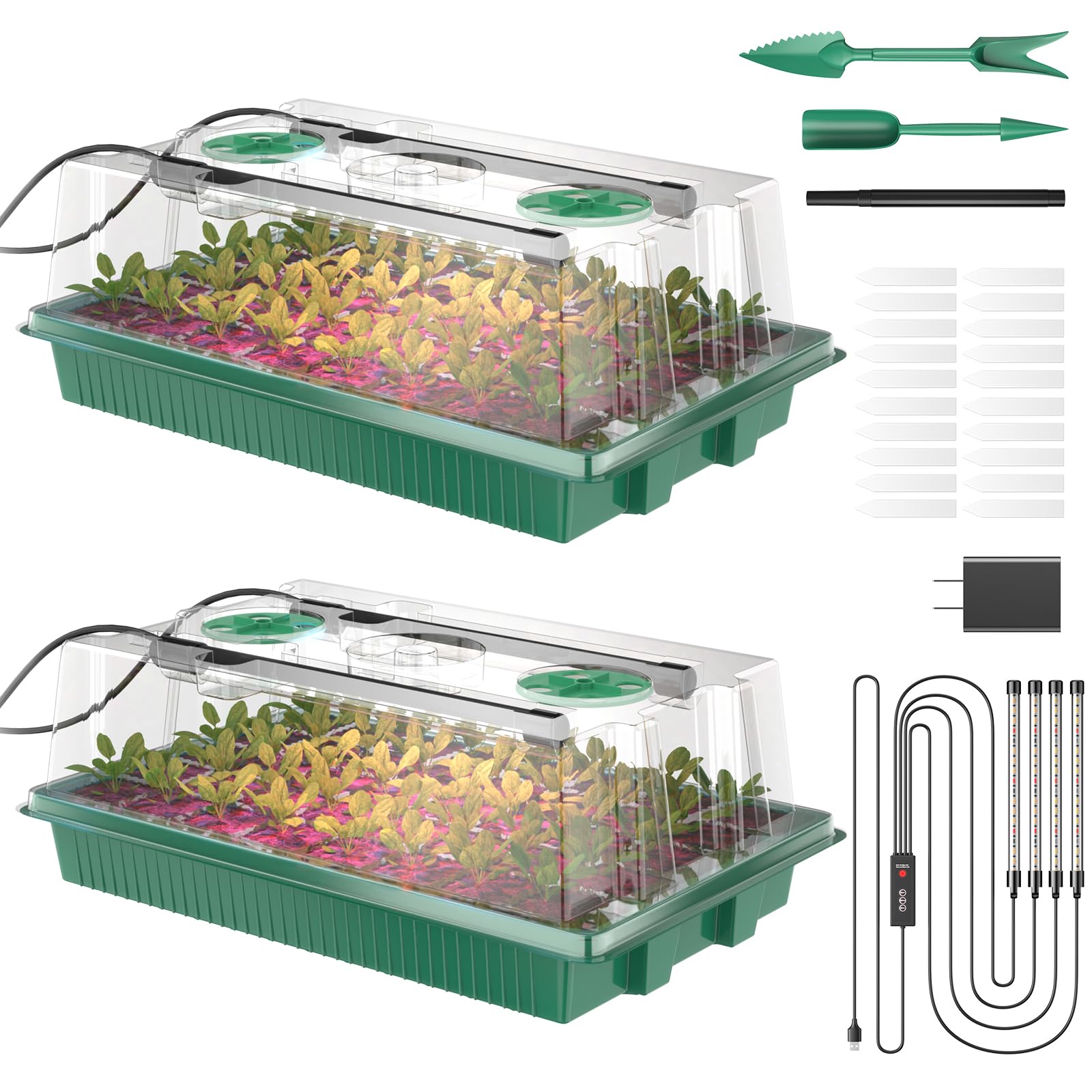
Two 40‑cell trays with full‑spectrum strip lights, adjustable brightness and timers, plus domes and base trays — solid for year‑round indoor starts.
Why I picked it: Integrated strip lights and timers that simplify indoor growing.
Best for: Growers starting herbs and vegetables indoors year-round.
Good mid-range option with included lighting.
Pros
- Full‑spectrum strip lights included
- Adjustable brightness and timers
- Clear domes with vents
- Reusable and eco-friendly materials
- Complete kit with labels and tools
Cons
- Light attachment can be finicky
- Trays sit snugly, tricky to open in tight spaces
My take
I like using the YJXFON kit when natural light is lacking — the full‑spectrum strips do a reliable job of replacing daylight for seedlings. The ability to set brightness and timing keeps young plants from stretching and helps establish sturdy growth.
The silicone‑style base and clear outer shell make water management straightforward, though I did find the lights sit a bit snugly in some setups. For indoor seed starting during darker months, this kit lifts a lot of the guesswork.
7. BlumWay Seed Starter Tray with Adjustable Lights – Best for Spectrum Control
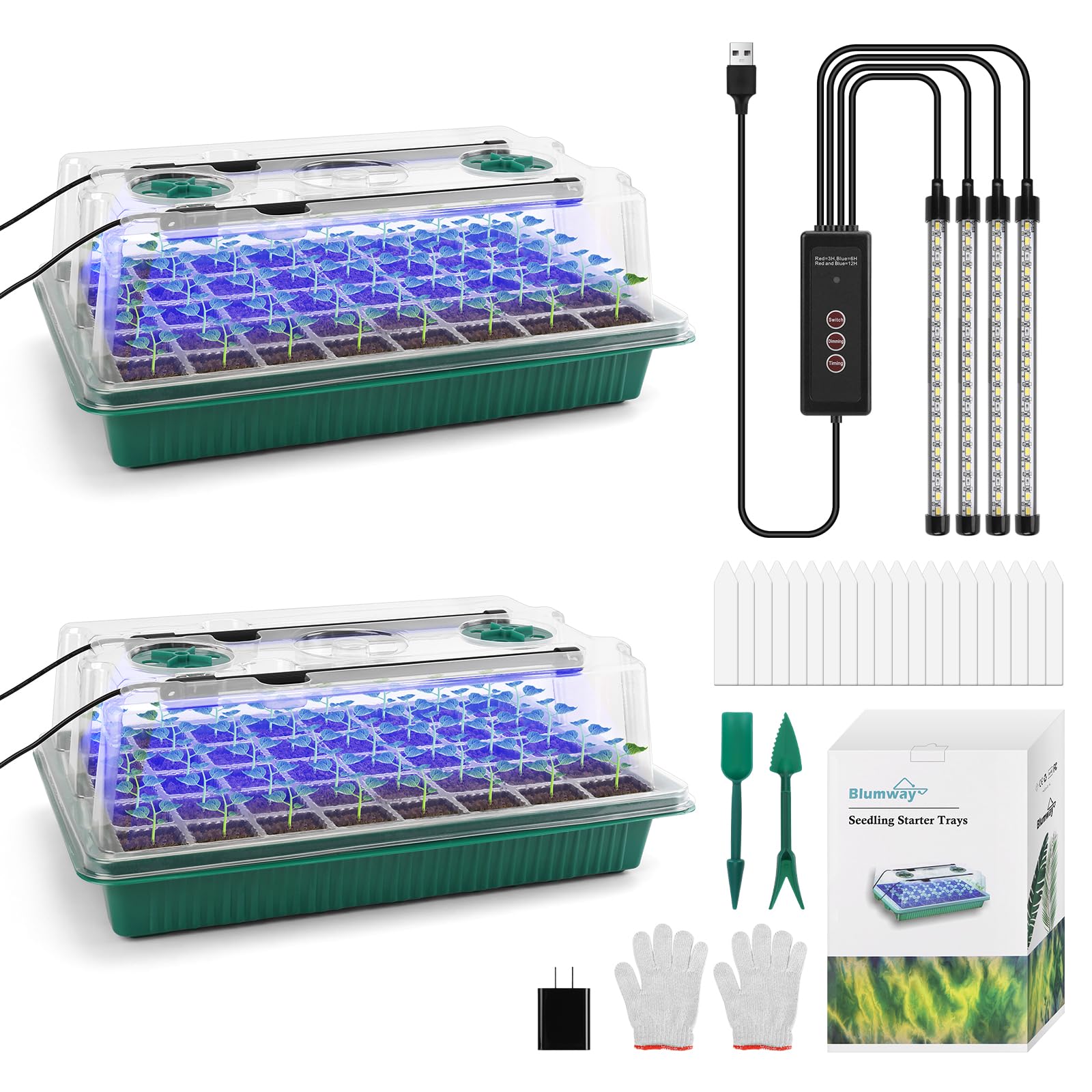
Two 80‑cell trays with 360° spectrum lighting, multiple timing modes, and adjustable humidity — geared toward growers who want fine control over light.
Why I picked it: Extensive light modes and timing choices for different stages.
Best for: Growers refining light schedules for seedlings.
Mid-range with advanced light control.
Pros
- Multiple light modes and timers
- USB or AC power options
- Adjustable venting on domes
- Clear durable materials
- Wide spectral coverage
Cons
- Difficult to remove seedlings intact
- Bottom tray could be thicker
My take
When I need to dial in light for delicate seedlings, I reach for the BlumWay kit. The multiple modes and timing functions let me simulate morning light or full daylight hours, and the USB power option makes placement flexible.
The kit is easy to set up and the spectrum coverage is excellent, though I’ve had to be careful pulling seedlings out — some varieties are touchier to transplant. For controlled indoor grows, the light options are the main selling point.
8. Flexible Silicone 48-Cell Seed Starter Kit – Best for Easy Transplanting
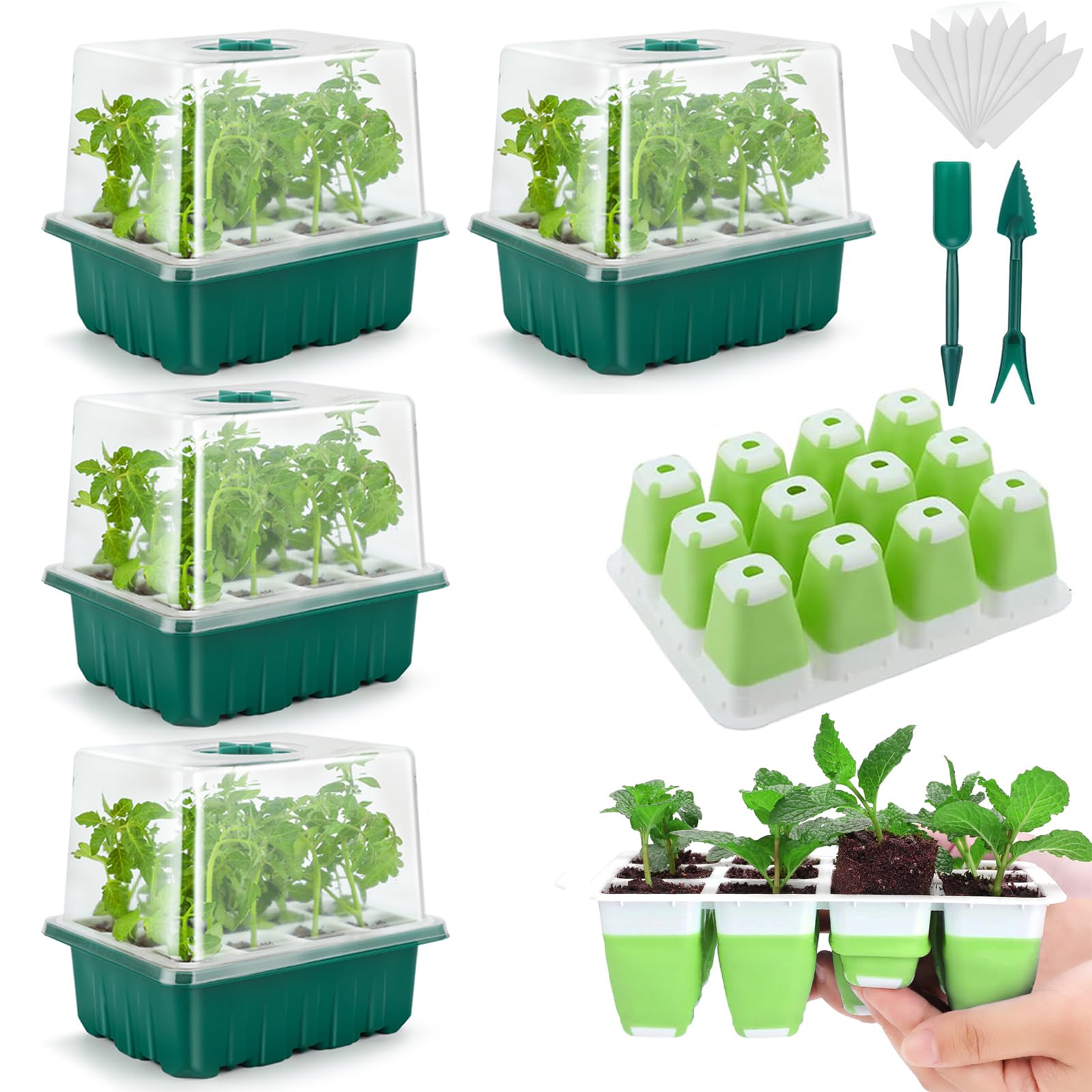
Silicone-backed cells that pop out cleanly, tall dome, and smart drainage grooves — a great pick where intact root plugs matter.
Why I picked it: Silicone bottoms let me remove seedlings without root damage.
Best for: Plants that hate root disturbance and delicate transplants.
Practical mid-price option focused on transplant ease.
Pros
- Silicone pop‑out bottoms
- Deep drainage grooves
- Tall dome for extra headroom
- Dishwasher safe and BPA‑free
- Includes labels and planting tools
Cons
- Lid and base feel thinner
- Lights (if included) may not seat well
My take
I bought these silicone‑bottom trays specifically to protect roots during transplanting, and they deliver — the whole plug comes out intact far more often than with rigid pods. That’s saved me seedlings that would have suffered from root disturbance.
The deep grooves and raised rim reduce spills while maintaining aeration, and the tall domes provide enough vertical space for a lot of common seedlings. If smooth transplanting is a priority, these trays are worth it.
How I Choose a Germination Kit
Tray size and cell count
I match cell size to plant type: small cells for microgreens and herbs, larger cells for tomatoes and peppers. Be realistic about how many seedlings you want to manage at once.
Think about reuse — sturdier trays last longer and give better value over seasons.
- Small cells (12–40) work for herbs and small flowers
- Large cells (40+) are better for big-seeded vegetables
- Stackable sets save space when storing between seasons
Dome height and humidity control
I choose domes with adjustable vents so I can keep humidity high during germination and introduce airflow as seedlings develop.
Height matters if you plan to leave seedlings under cover for longer. Taller domes reduce stem‑bending and humidity‑shock when you remove the lid.
- Adjustable vents prevent mold and damping off
- Tall domes give seedlings room to grow before transplanting
- Clear domes allow observation without disturbing humidity
Lights and heat mats
If I’m starting seeds in low light or in winter, I always add a full‑spectrum grow light. Timers and brightness control let me mimic natural daylight cycles.
A heat mat is my go‑to for peppers and other heat‑loving seeds — consistent bottom heat improves germination speed and uniformity.
- Full‑spectrum lights prevent leggy seedlings
- Timers simplify daily light cycles
- Waterproof heat mats are safer and easier to clean
Materials and transplanting
I prefer thicker plastics for durability, or silicone bottoms for easy plug removal. Smooth pod bottoms also work better with capillary mats.
Consider how you’ll transplant: heavier cell walls can make popping plugs harder, while silicone and thin walls make removal easier.
- 0.8mm and up plastic lasts multiple seasons
- Silicone bases reduce root disturbance
- Smooth pod bottoms are easier to clean
Extras I value
I look for included labels, small planting tools, and watertight bases — they save time and avoid an extra trip to the garden store.
If you need volume, a multi‑tray pack will be more efficient than buying single units.
- Labels and dibbers speed up organized planting
- Watertight bases simplify bottom watering
- Consider storage needs for multiple trays
Frequently Asked Questions
When should I remove the dome from my seedlings?
I keep the dome closed until cotyledons open and the first true leaves appear, then I gradually open vents over several days to harden seedlings to lower humidity before full removal.
Do I need a heat mat for all seeds?
I use a heat mat for warm‑temperature seeds like peppers and basil; many vegetable and flower seeds germinate fine at room temperature without added heat.
How do I avoid disturbing roots during transplant?
I water the tray thoroughly beforehand, then either use silicone pop‑out trays or gently squeeze the bottom of individual cells to ease seedlings out with the root plug intact.
Final Take
After testing these kits in different setups, I can say there’s a clear best match for every need: volume, large seeds, integrated light and heat, or gentle transplanting.
Pick the kit that matches your seed types and indoor conditions, and you’ll spend more time enjoying healthy seedlings and less time troubleshooting basic setup problems.
