
I tested eight brush sets across gouache, watercolor and acrylic to find dependable options for detail, washes, miniatures and travel. Here are the brushes I kept reaching for in the studio.
I spend a lot of time mixing gouache and painting across paper and board, so choosing brushes that hold pigment, keep a point, and survive frequent rinsing matters to me.
For this roundup I focused on tip retention, water and paint holding, ferrule construction, handle comfort, and how the brushes behave with gouache’s thicker body.
Below I break down the sets I used most, from massed-detail packs to precision minis and synthetic sable alternatives, and explain which one I reach for depending on the job.
If you want a huge variety of fine tips, go for multi-pack sets; if you need sable-like performance without the fuss, choose the bionic/synthetic options. I kept different sets for washes, edge work, and tiny miniatures.
1. BOSOBO Pointed-Round Brush Set (20 pcs) – Best Starter Pack for Detail
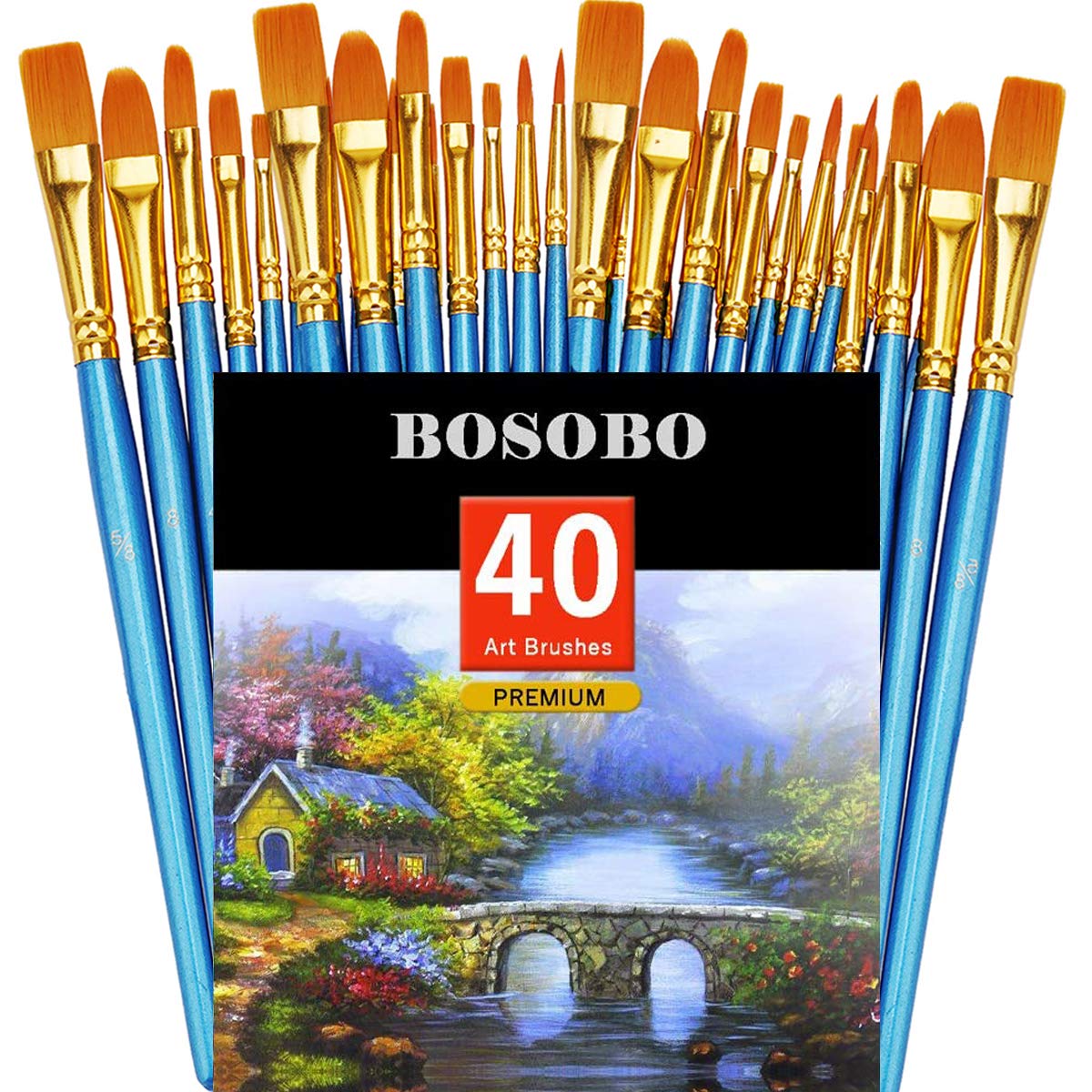
A very large set of pointed-round nylon brushes that delivers wide size variety for fine work and everyday gouache sessions.
Why I picked it: Huge assortment of pointed tips for precision and layered gouache work.
Best for: Beginners and hobbyists who want many sizes for detail painting.
Extremely budget-friendly value pack.
Pros
- Broad size selection
- Good point retention
- Durable nickel ferrules
- Easy to clean
- Comfortably lightweight handles
Cons
- Handles are basic wood
- Not natural-hair performance
My take
I kept this BOSOBO pack in my drawer for tiny accents, highlights and patterning because the pointed-rounds span everything from 2/0 to a broad round. The bristles are synthetic nylon but they spring back well after rinsing, which makes them surprisingly useful with thicker gouache mixes.
Cleaning is straightforward — warm soapy water reshapes the tips and the ferrules have stayed tight through repeat use. I wouldn’t pick these as my primary brushes for painterly wet-on-wet washes, but for fine edges, dot work and miniature touches they’re my go-to when I need lots of sizes at once.
2. ARTIFY 18-Piece Brush Set with Case and Accessories – Best Travel Kit
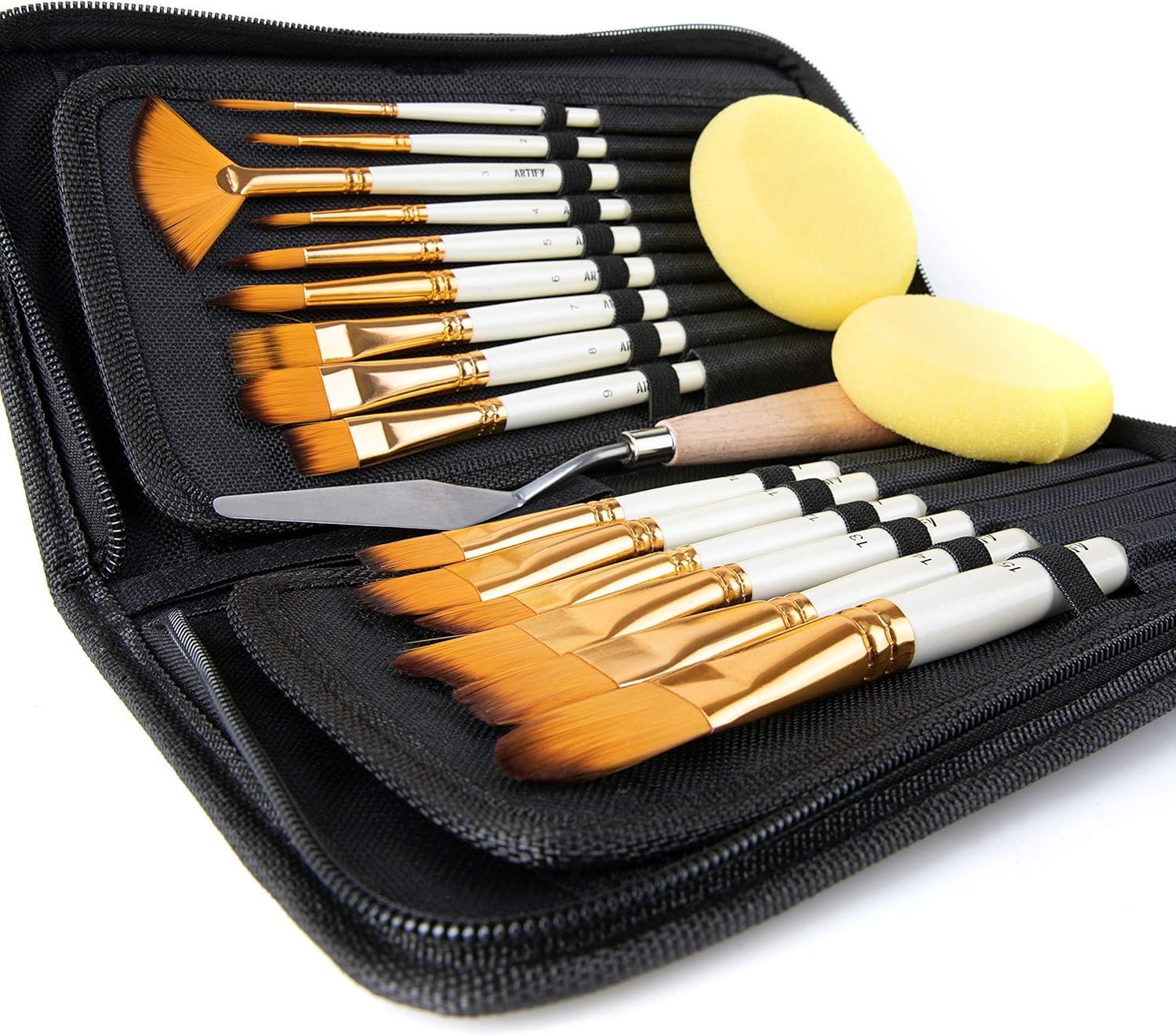
A practical, travel-ready kit with many brush shapes plus a palette knife, sponges and a pop-up case that doubles as a stand.
Why I picked it: Complete kit that travels well and doubles as a working stand.
Best for: Mobile painters and plein air gouache sessions.
Practical midrange all-in-one kit.
Pros
- Includes palette knife and sponges
- Case converts to pop-up stand
- Water-resistant handles
- Wide range of brush shapes
Cons
- Some brushes feel stiff at first
- Inspect fan brush on arrival
My take
I appreciated this set whenever I painted on location. The case folds into a pop-up stand so I can swap brushes quickly, and the palette knife and sponges are useful extras I actually used in the field.
A couple of brushes arrived a little stiff straight out of the package, but they relaxed after a few uses. The triple-coated handles resist water, which means I can rinse brushes aggressively without the wood swelling, and the reinforced ferrules kept everything secure during repeated cleaning.
3. Transon Artist Brush Set (12 pcs) – Best All-Rounder
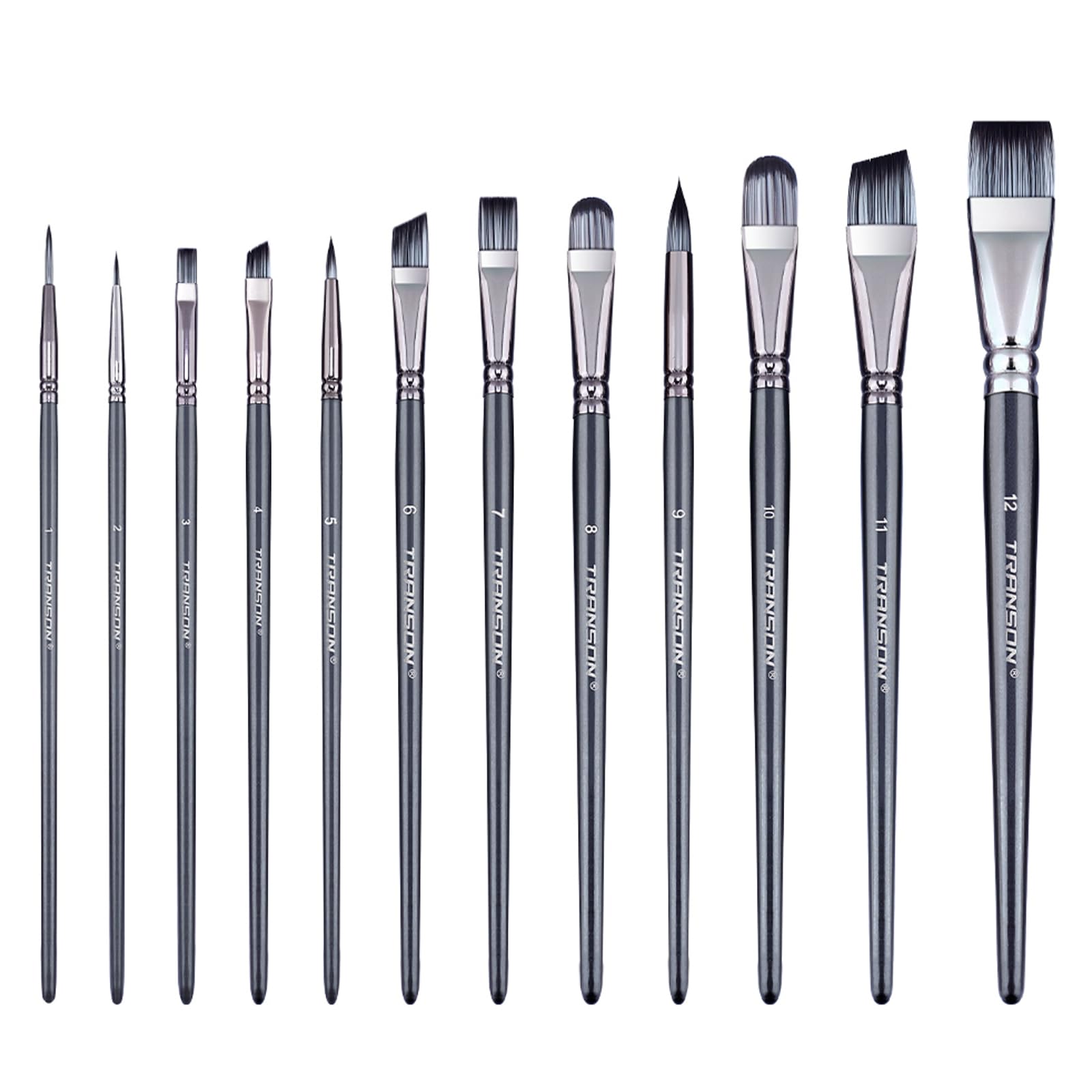
A versatile 12-piece set with flats, filberts and rounds that offers balanced snap and reliable performance for water media and gouache.
Why I picked it: Balanced snap and shape retention across common brush shapes.
Best for: Everyday studio work with gouache and water-based paints.
Solid quality at a modest cost.
Pros
- Good snap for water media
- Variety of useful shapes
- Double-crimped ferrules
- Comfortable lacquered handles
Cons
- Not ideal for ultra-fine micro detail
- Not premium natural hair
My take
I reach for this Transon set when I want dependable performance for backgrounds, glazing and controlled washes. The taklon-like nylon holds a useful amount of water and pigment while still keeping a defined tip for edges.
The handles have a smooth lacquer finish and the ferrules are solidly double-crimped, so I’ve had no issues with loose hairs or splaying after several months of regular use. For general-purpose gouache painting this is the set I default to.
4. Transon Artist Brush Set (12 pcs) – Best Backup or Gift Set
The same versatile 12-piece Transon kit, a great backup studio set or thoughtfully packaged gift for new gouache painters.
Why I picked it: Versatile, reliable set that makes a handy spare or present.
Best for: Gifting or adding a second studio set for different palettes.
Dependable value for a spare or gift.
Pros
- Well-made for the price
- Good variety of shapes
- Comfortable to hold
- Easy to clean
Cons
- Limited ultra-fine options
- Basic travel protection
My take
Because I paint in multiple colors at once, I like keeping a second Transon set dedicated to a particular color family; it saves cleaning time. The set’s variety — flats, filberts, rounds and liners — makes that strategy practical.
If you want a presentable set without spending big, this Transon kit looks and performs better than other entry-level kits I’ve used, and it held up when I lent it to studio guests.
5. D’Artisan Shoppe Miniature Detail Brush Set (12 pcs) – Best for Miniatures
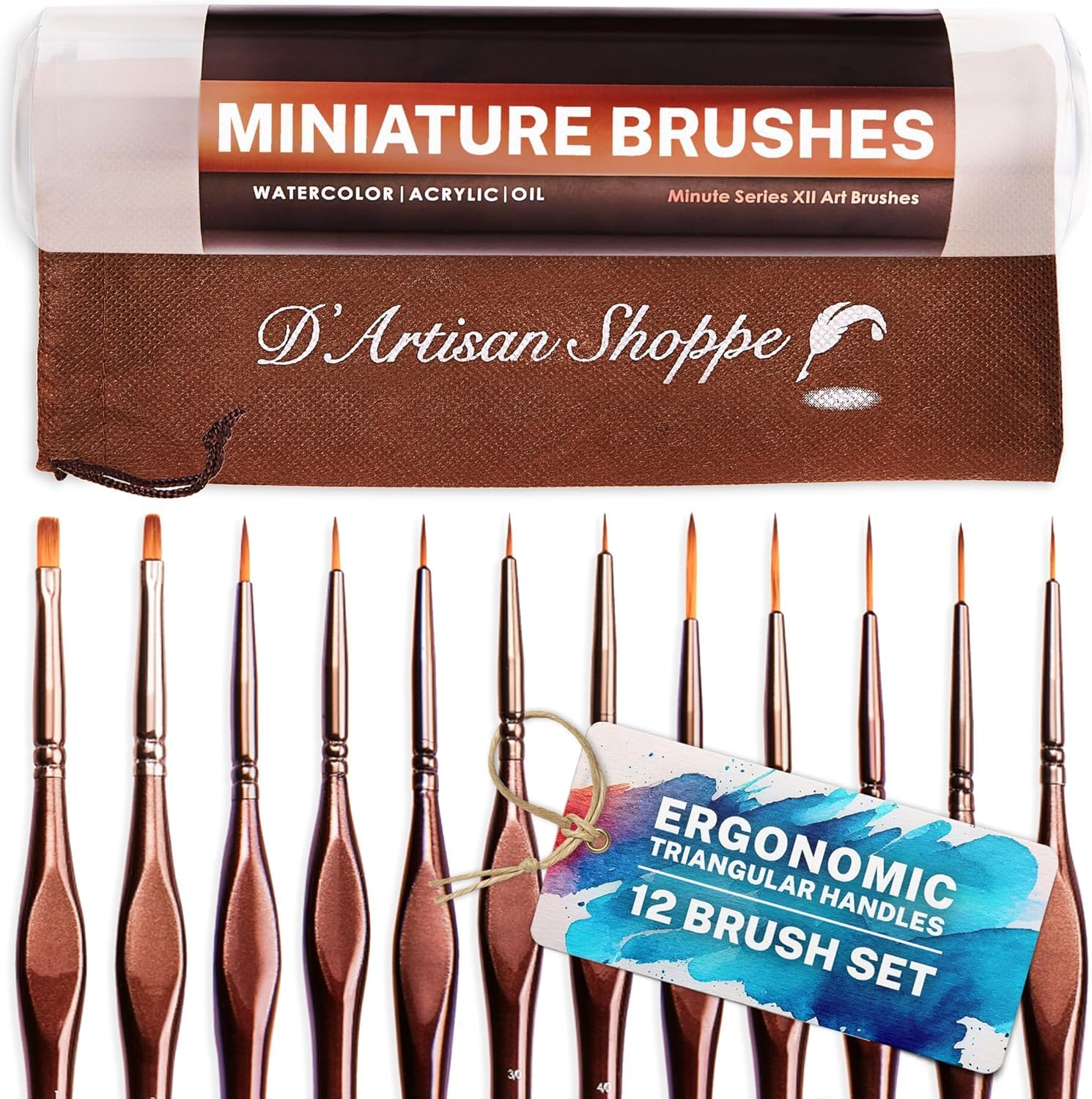
A focused set of ultra-fine brushes with triangular ergonomic handles and protective case designed specifically for miniatures and precision gouache work.
Why I picked it: Specialized fine tips and ergonomic triangular handles for steadier control.
Best for: Miniature painters, model work, ultra-fine gouache detail.
A specialized detail set at a premium-for-purpose price.
Pros
- Ultra-fine sizes 0000–1
- Triangular ergonomic handles
- Protective storage case
- Synthetic tips mimic sable
Cons
- Handles may not fit standard holders
- Few larger brushes included
My take
When I’m painting tiny faces and armor highlights on minis, these are the brushes I reach for first. The pointed rounds are incredibly thin and hold a sharp tip even after repeated dips in gouache.
The triangular handles are a small but meaningful design win: they don’t roll off the table and the grip reduces fatigue during long, focused sessions. The included case keeps tips safe between uses, which matters for travel and storage.
6. Filbert Synthetic Brush Set (12 pcs) – Best Filbert Set
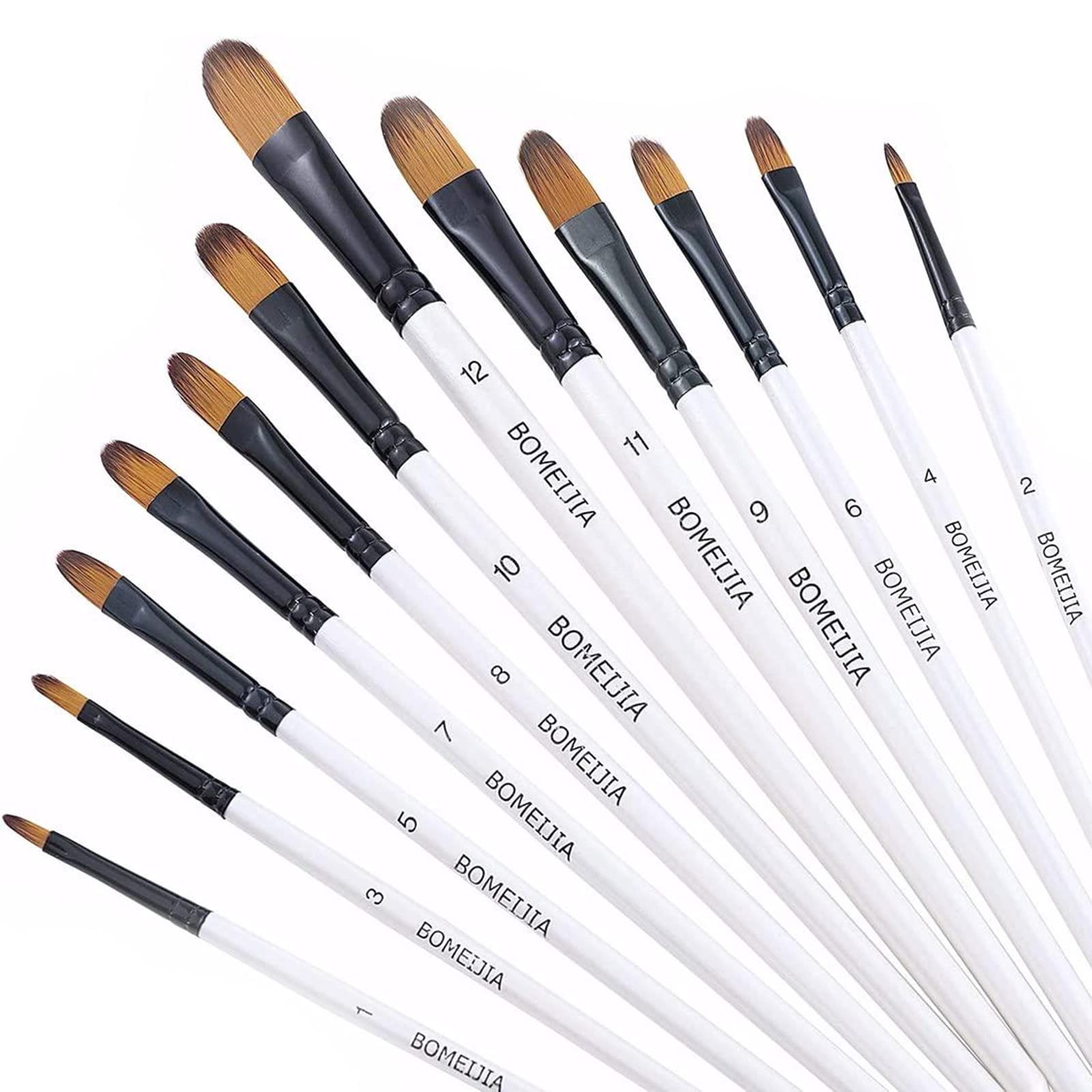
A filbert-focused 12-piece set that excels at petals, soft blends and rounded strokes in gouache and acrylic.
Why I picked it: Filbert shapes made specifically for smooth blends and petal work.
Best for: Floral painting and soft-edge techniques in gouache.
Budget-friendly filbert-focused set.
Pros
- Perfect for petals and blends
- Range of filbert sizes
- Soft yet resilient bristles
- Aluminum crimped ferrules
Cons
- Thin handle diameter
- Occasional minor handle warp
My take
I used this filbert set for floral studies and gouache blending, and they do the job well — the rounded edge creates soft petals and smooth transitions with minimal fuss.
The bristles are soft but resilient, holding shape through multiple washes. The handles are on the slim side, which some painters might find less comfortable for long sessions, so I alternate them with fuller-handled brushes.
7. Transon Fine Detail Brush Set (8 pcs) – Best for Extra-Fine Detail
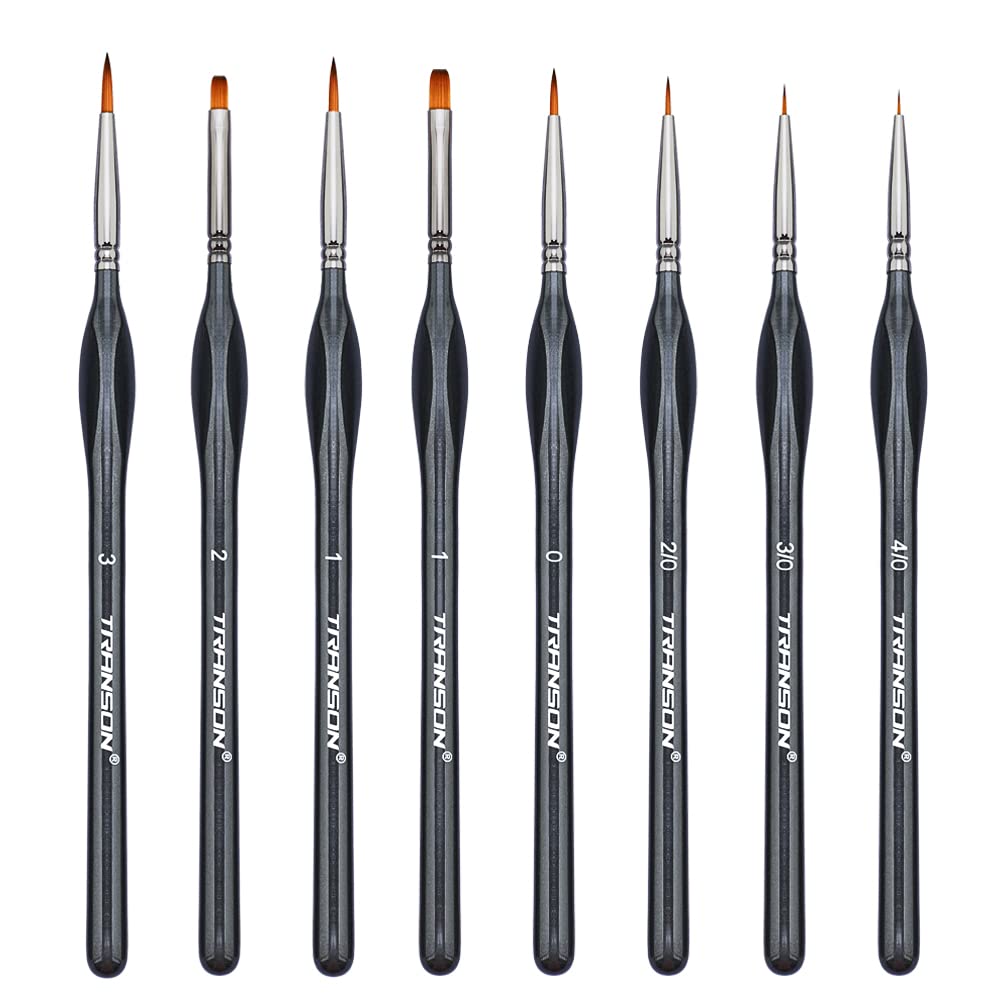
A compact eight-piece detail set with triangular handles and extremely fine liners for micro work on miniatures and precise gouache lines.
Why I picked it: Extremely fine tips and ergonomic triangular handles for precise control.
Best for: Minute details, model accents, and fine gouache lines.
Low-cost specialist detail set.
Pros
- Very fine liner tips
- Ergonomic triangular handles
- Stays pointy after cleaning
Cons
- Too small for washes
- Limited brush variety
My take
I reserve this Transon detail set for the smallest tasks — lettering, pupils, and micro-highlights. The tips are fine and maintain their point when handled gently.
Packaging arrived with extra protection on each brush and the triangular handles offer a controlled grip that helped me steady long, thin strokes. These aren’t workhorse wash brushes, but they’re indispensable for precision.
8. ARTIFY Bionic Hair Watercolor & Gouache Brushes (12 pcs) – Best Synthetic Sable Alternative
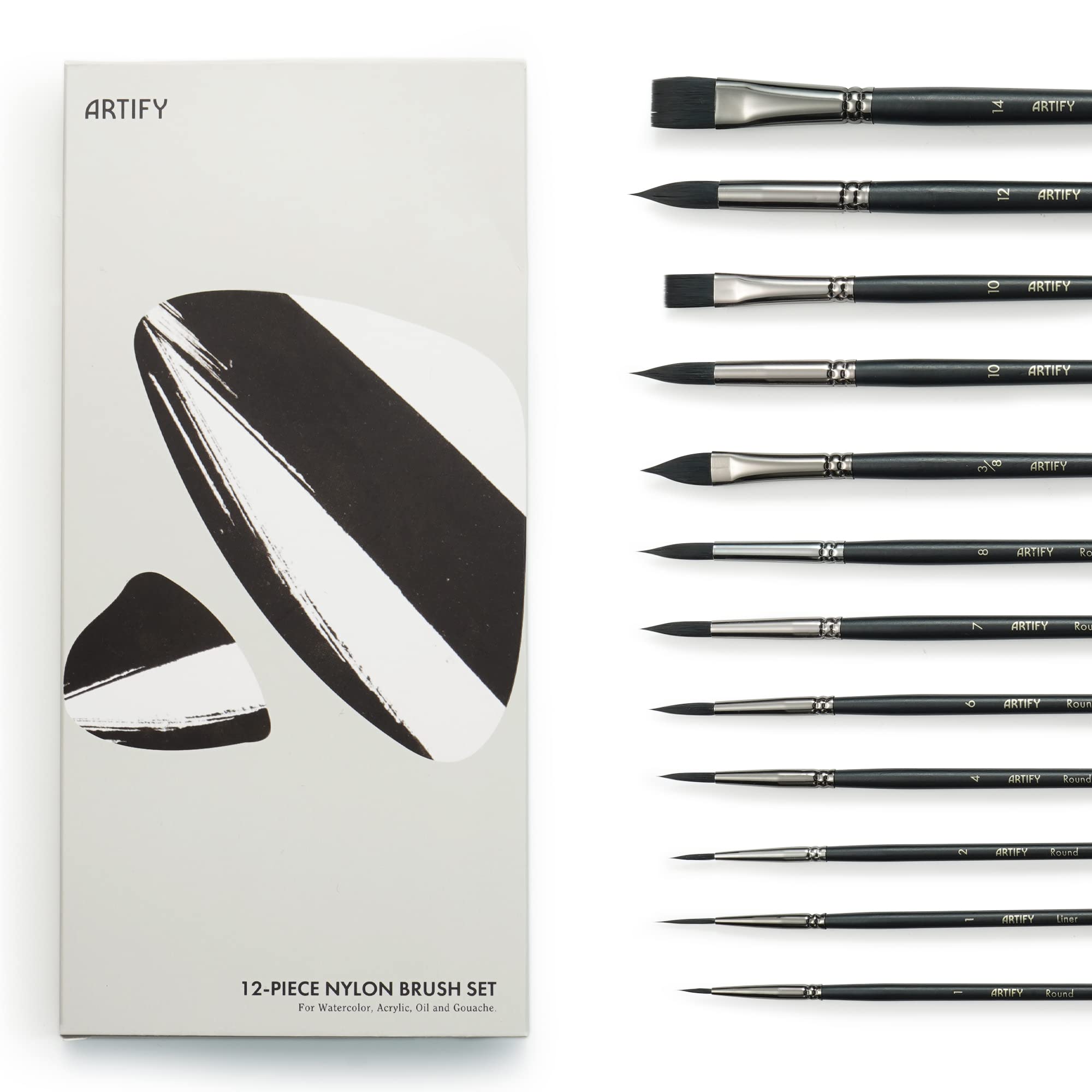
A 12-piece set built with advanced bionic synthetic bristles designed to mimic sable’s water retention and tip integrity for tricky gouache techniques.
Why I picked it: Bionic fibers give sable-like water holding and sharp tips without animal hair maintenance.
Best for: Artists who want sable performance without natural-hair care.
Midrange—performance-oriented synthetic option.
Pros
- Excellent water retention
- Sharp points without fraying
- Triple-coated, water-resistant handles
- Balanced snap and control
Cons
- Fewer very large wash brushes
- Not actual natural sable
My take
I reached for these ARTIFY brushes when I needed sable-like behavior for glazing and fine washes in gouache. The micro-tapered fibers hold water and release pigment smoothly, which makes long controlled strokes and wet-on-wet transitions feel more natural.
Tip integrity impressed me — the points stayed clean through multiple sessions and avoided the splitting I sometimes see in cheaper synthetics. If you want the look and feel of sable without the upkeep, these are the closest synthetic option I kept using.
How I Choose Gouache Brushes
Bristle Type
I consider bristle material first: natural sable still beats most synthetics for water retention and delicate glazing, but modern bionic and premium nylon bristles bridge the gap with far less maintenance.
For gouache I often prefer synthetic or bionic bristles because they handle frequent rinsing and thicker pigments without the upkeep natural hair needs.
- Synthetic (nylon/taklon): durable, low-maintenance, good for detail
- Bionic: mimics sable’s water hold and point, less upkeep
- Natural (sable): top water retention, needs careful cleaning
Shapes and Sizes
I match brush shape to technique: rounds and pointed rounds for detail and lines, filberts for petals and soft transitions, flats for blocking and broad strokes, and liners for hairlines or lettering.
If I’m packing a travel kit I pick a few flats, a couple of pointed rounds, and a liner — that covers most gouache approaches.
- Round/pointed-round: lines, details
- Filbert: soft edges and petals
- Flat/cat’s tongue: washes and edges
- Liner: fine continuous lines
Ferrules and Handles
I look for double-crimped or reinforced ferrules to avoid loose hairs and consistent alignment. Ferrules that stay tight save headaches in the long run.
Handle length matters for control — short handles work best for tabletop gouache and miniatures, long handles if you paint standing or at an easel.
- Double-crimped ferrules prevent shedding
- Short handles for detail, long handles for easel work
- Water-resistant finish prevents swelling
Care Tips
I clean gouache from brushes immediately with lukewarm soapy water and reshape the tip; leaving brushes in water ruins the shape and handle finish.
Rotate dedicated sets for color families to reduce constant cleaning, and store brushes head-up or in a case to protect tips.
- Rinse and reshape right after painting
- Avoid soaking handles
- Store protected to preserve points
Frequently Asked Questions
Can synthetic brushes work well with gouache?
Yes — I use synthetic and bionic brushes for gouache regularly. Modern synthetics hold pigment and spring back well, and bionic fibers in particular mimic natural-hair water retention while being easier to maintain.
Which brush shapes do I need for gouache?
I keep pointed rounds for lines and detail, filberts for soft transitions and petals, flats for blocking and edges, and a liner for fine continuous strokes. That combination covers most gouache techniques.
How should I clean brushes after gouache sessions?
I rinse brushes in lukewarm soapy water immediately after use, reshape the tip with my fingers, and air-dry them head-up or flat in a protected case. I never leave brushes soaking in water.
Final Take
I always keep at least one multi-size pack and one precision set in my studio — they serve very different roles in gouache painting.
If you want one recommendation for everyday gouache, I reach for the Transon 12-piece as the most dependable all-rounder. For miniature work I rely on the D’Artisan set, and for sable-like performance without the fuss I use the ARTIFY bionic brushes.
Choose the set that matches your workflow — volume and variety for busy detail work, or a smaller, higher-performance set for polished, controlled finishes.
