
I tested a range of grill gloves for heat resistance, grip, fit and cleaning. These are the pairs I reached for again and again for smoking, frying, and everyday grilling.
I spent time using these gloves on smokers, grills, ovens and fryers to find which designs actually stand up to real heat and messy jobs.
In this roundup I focus on protection, grip, fit and how easy each pair is to clean — the things that matter when you’re handling hot meat, cast iron or boiling liquids.
I compared neoprene, silicone and aramid (Nomex/Kevlar-style) constructions so you can see trade-offs between maximum heat resistance, dexterity, and ease-of-cleaning.
1. RAPICCA Neoprene Heat-Resistant Grill Gloves (14-inch) – Best for Deep-Frying
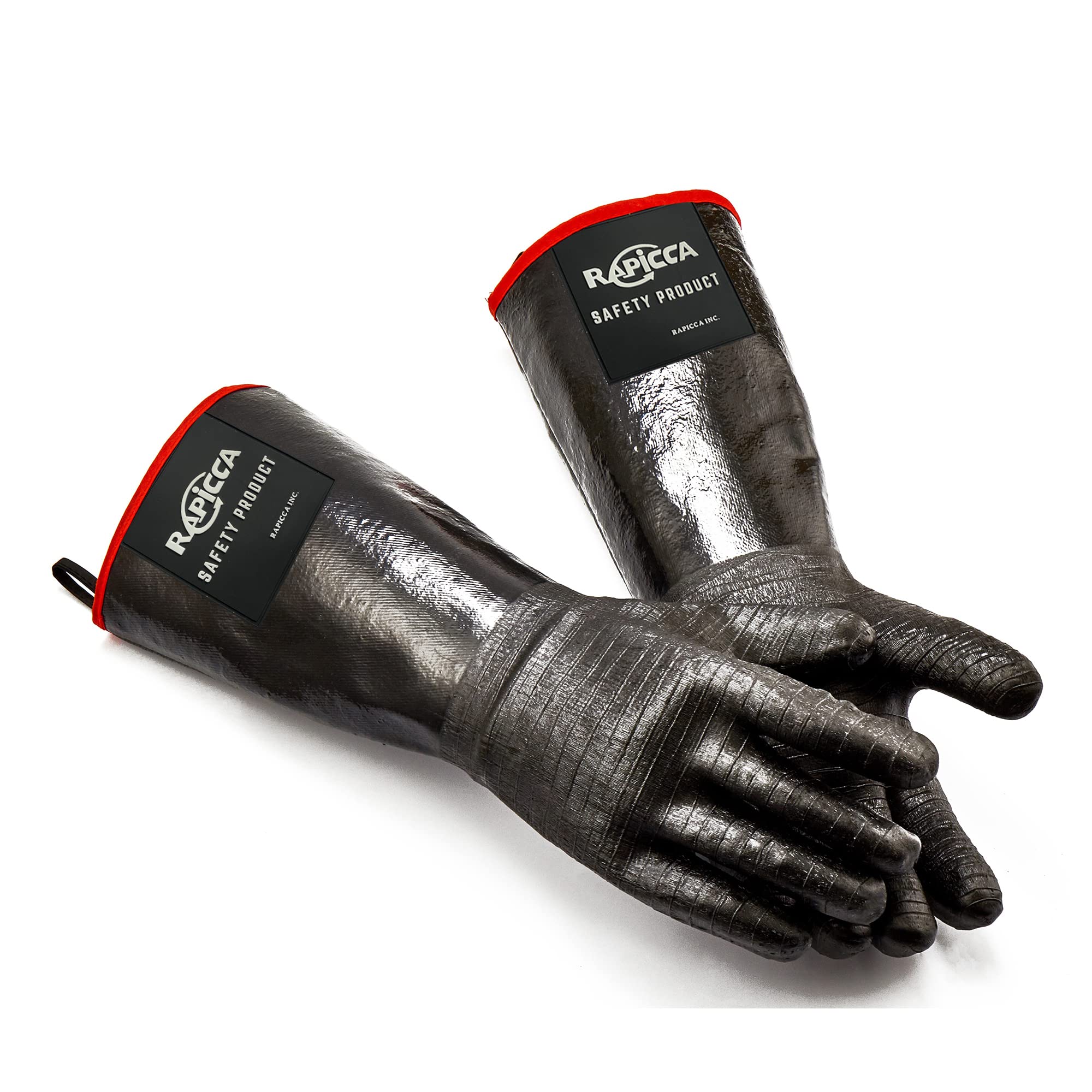
Full-neoprene gloves that keep water, oil and steam off my hands and forearms during frying, rotisserie work and smoking.
Why I picked it: Neoprene waterproofing and a long cuff make these my go-to for wet, greasy tasks.
Best for: Handling hot, wet or greasy meat and safely managing deep-fry and steam.
Midrange cost for a solid waterproof, heavy-duty glove.
Pros
- Waterproof neoprene exterior
- 14-inch cuff protects forearms
- Textured palm for better grip
- Easy to rinse clean
Cons
- Can feel warm during sustained holds
- One-size tends toward XL
My take
I reach for these when I’m dunking, basting or pulling large cuts off a smoker. The food-grade neoprene keeps boiling water and oil from soaking through, and the long cuff protects my wrists and lower forearm—useful during rotisserie or fryer work.
Grip is surprisingly secure thanks to the textured palm; I was able to handle greasy brisket without the meat slipping out of my hands. They’re thicker than some silicone options, which reduces fingertip dexterity but increases confidence when I’m moving heavy pans.
Cleaning is a breeze: I soap and rinse them like any kitchen glove and hang them up to dry. For me the main compromise is fit—this pair skews large, so I’d avoid them if you have small hands.
2. RAPICCA Neoprene Grill Gloves (14-inch) – Best Mid-Forearm Protection
A waterproof, insulating full-neoprene glove I use when I need spill and steam protection across my forearm.
Why I picked it: Strong steam and liquid protection with a comfortable insulated liner.
Best for: Smokers, rotisserie tasks and any wet-heat jobs.
Moderately priced for full-neoprene protection.
Pros
- Excellent liquid and oil resistance
- Insulated double-layer liner
- Secure textured grip
Cons
- Less precise for fine tasks
- Feels warm after long holds
My take
When I’m carving a turkey or pulling ribs, these give me the confidence to work near steam and hot oil. The double-layer liner makes them easy to slide on and off while still providing insulation.
I’ve noticed some heat transfer if I hold a very hot item for long stretches, but for typical grill and smoker tasks they stop the discomfort I used to get from occasional splatters and steam.
They clean up quickly and don’t hold stains. If you need waterproof protection across the forearm, these are one of the more practical options I own.
3. Loveuing Silicone Oven Gloves (Five-Finger) – Best for Flexibility
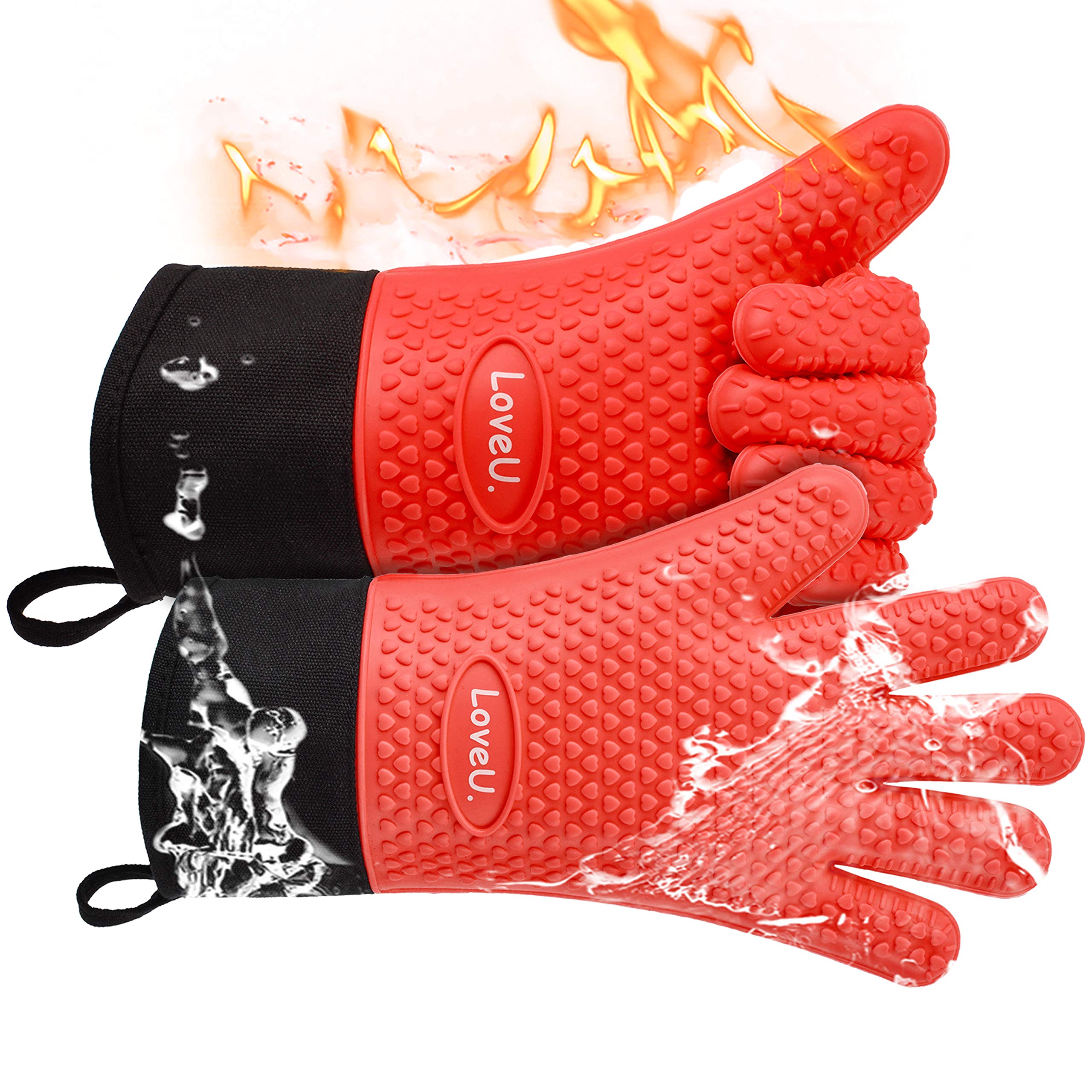
Five-finger silicone gloves with a soft cotton liner that give me more dexterity for baking and smaller tasks.
Why I picked it: Five-finger design and soft liner make awkward pan and tray handling simple.
Best for: Baking, oven work and projects where finger control matters.
Affordable option for a flexible, dishwasher-safe silicone glove.
Pros
- Individual fingers for dexterity
- Food-grade silicone surface
- Dishwasher safe
Cons
- Can feel bulky like 'muppet hands'
- May run large for smaller hands
My take
I use these in the oven and for smaller grill jobs because the five-finger shape lets me grab muffin tins, cake pans and small cast-iron skillets without clumsy fumbling.
The silicone exterior resists heat and liquids, and the inner jersey liner keeps my hands comfortable during longer tasks. They’re the pair I grab when dexterity matters more than maximum insulation.
Cleaning is effortless — I throw them in the dishwasher or wash by hand and they look fresh afterward. If you want a glove that feels more like a hand than a mitten, this is the one I recommend.
4. Kitchen Perfection Silicone Oven Gloves (Orange) – Best Value Set
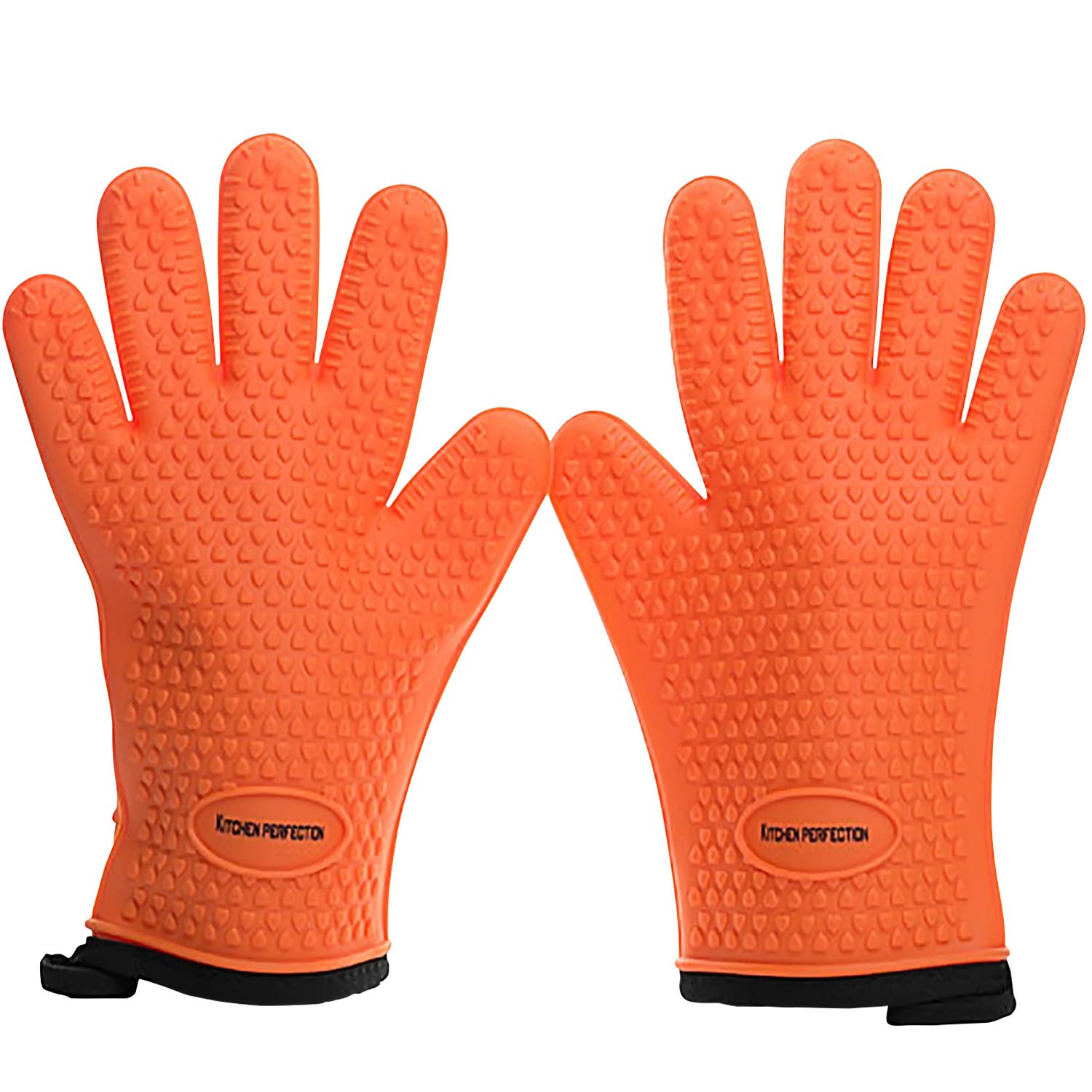
Silicone-over-cotton double-layer gloves that balance heat protection, flexibility and easy cleaning while including handy extras.
Why I picked it: Solid insulation with a cotton liner and bonus hangers/ebooks make this a complete kit.
Best for: Everyday grilling and oven use where versatility is important.
Good value when you want extras and a comfy liner.
Pros
- Double-layer silicone and cotton
- Comfortable interior liner
- Includes hangers and recipe ebooks
Cons
- Slightly oversized for tiny hands
- Gets warm on prolonged holds
My take
I appreciated how these gloves balanced protection and comfort—thick silicone outside with a soft cotton liner inside. They handle grill grates and hot pans well for short to medium-length holds.
Small bumps on the surface help with grip on slippery roasts or pans, and I used them as trivets when I needed a quick oven pad. The included hangers make storage easy and the extra recipe ebooks were a nice bonus.
If you want a dependable glove that’s easy to clean and comfortable for repeated use, this set is a practical pick.
5. Grill Armor Aramid Heat-Resistant Gloves (Fingered) – Best for Extreme Heat
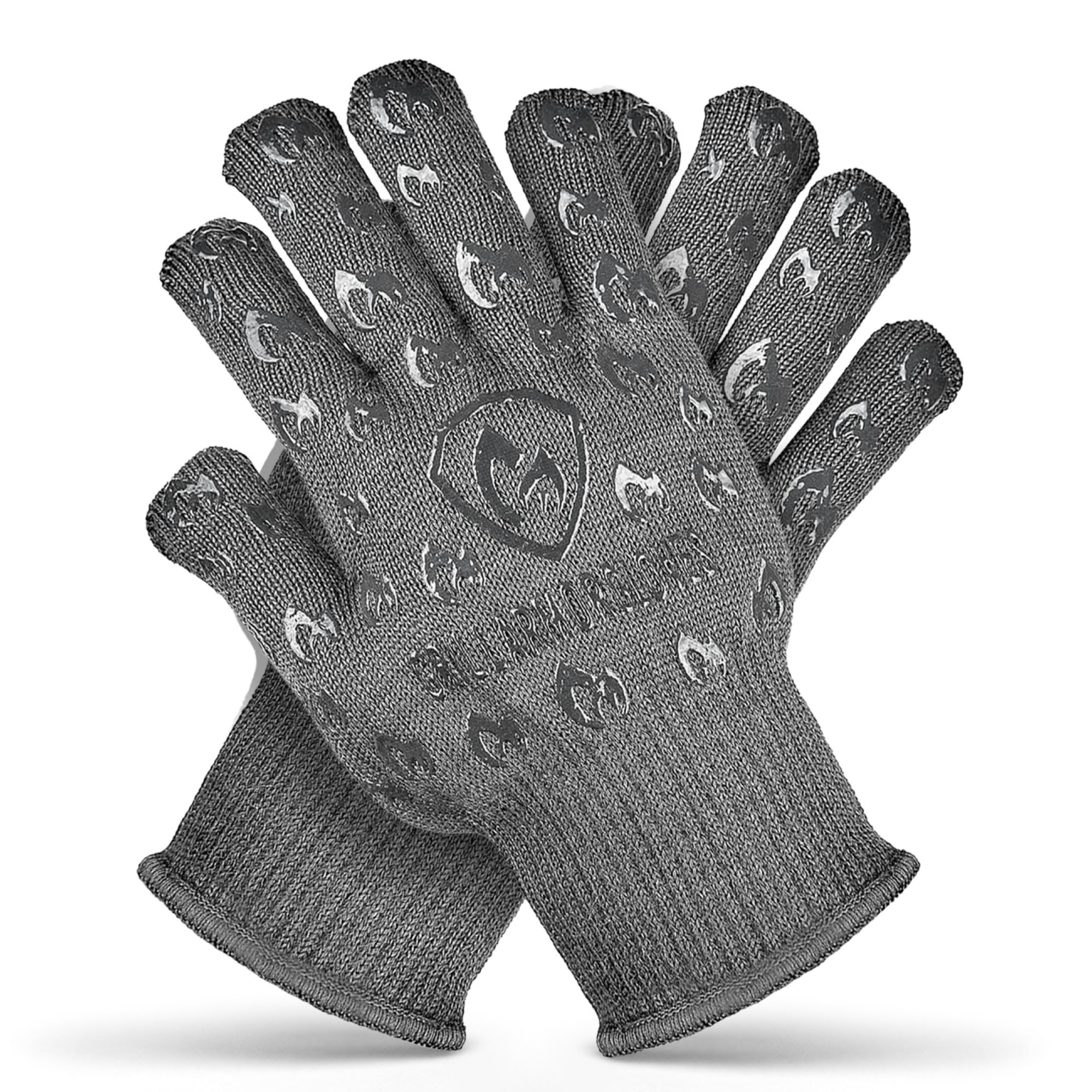
Aramid-fabric gloves (Nomex/Kevlar-style) with EN407 claims that I trusted for higher-heat tasks and direct flame handling.
Why I picked it: Aramid construction gives real flame-resistant performance and fingered control.
Best for: High-heat grills, open flames and tasks requiring cut resistance.
Priced for premium aramid construction and certified protection.
Pros
- Aramid fabric for flame resistance
- Individual fingers for secure handling
- Textured silicone grip
Cons
- Still warm if holding very hot items long
- Thick construction reduces fine touch
My take
When I need material that stands up to open flame and very hot ovens, I reach for this aramid pair. The textile construction is noticeably different — more like what pros use for heat and cut protection.
Fingered design plus the silicone grip lets me handle both large and small foods without slipping. The cotton inner lining keeps my hands comfortable during longer sessions.
These are the ones I pick for tasks where heat and abrasion resistance are the priority rather than ultrafine fingertip feel.
6. Kitchen Perfection Silicone Oven Gloves (Black) – Best All-Purpose Black Pair
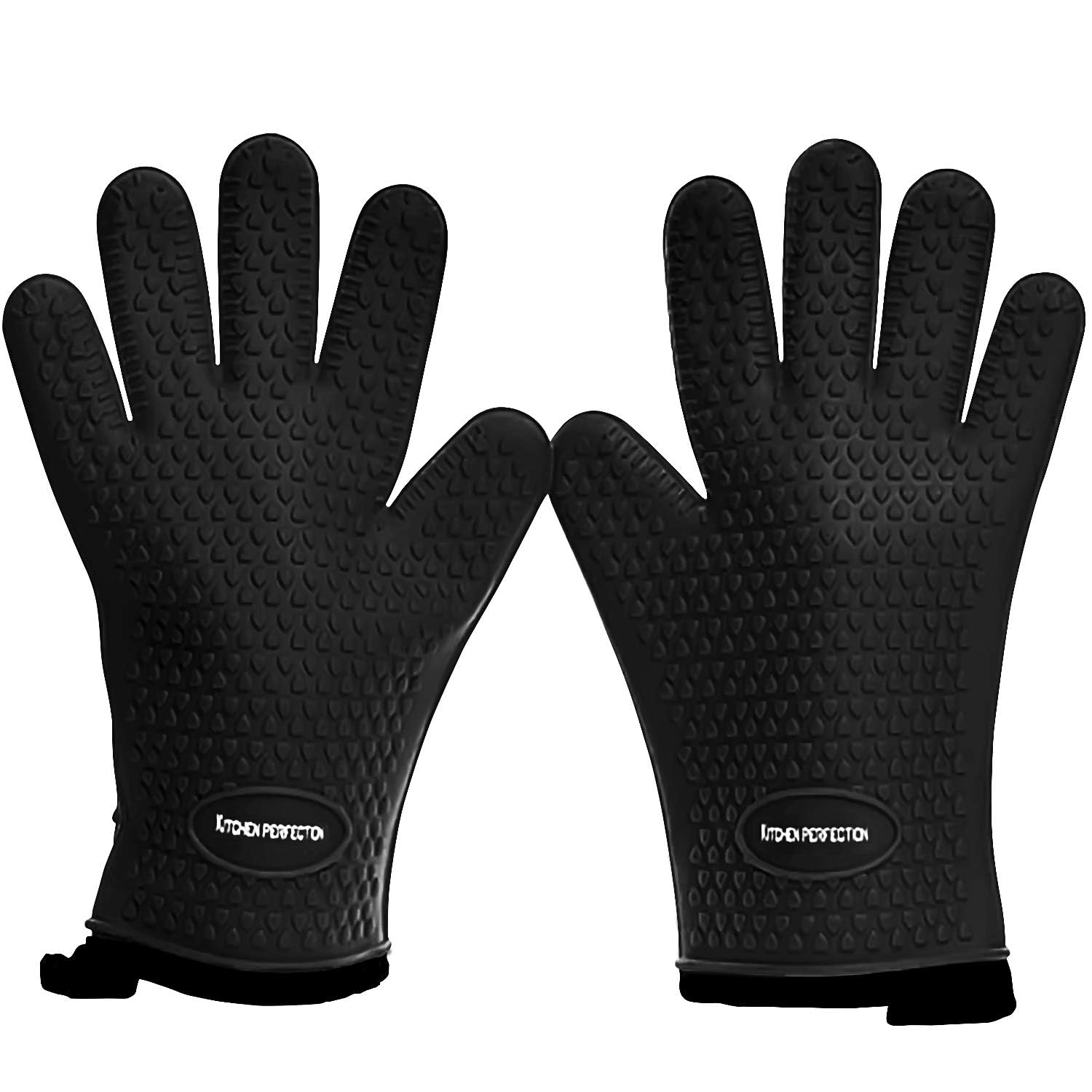
The same double-layer construction as the orange set, in a darker color that hides use and adapts well between grill and kitchen duties.
Why I picked it: Comfortable lining and flexible silicone make these a versatile daily pair.
Best for: General grilling, smoker work and kitchen tasks.
Comparable value to the orange set; choose color preference.
Pros
- Durable and easy to clean
- Flexible for small and large items
- Comfortable inner liner
Cons
- Can be a bit slippery with grease
- Large size may not suit small hands
My take
I rotate these in when I need an every-day pair that’s easy to clean and versatile between oven, grill and smoker chores. They’re flexible enough for moving brisket and also comfortable for oven trays.
They do sometimes get slick if heavily greased, but a quick rinse restores the grip. The cotton liner keeps them from feeling plasticky even after extended wear.
For a reliable, all-purpose glove I find myself reaching for this black set more than once a week during grilling season.
7. Aillary Neoprene Heat-Resistant Grill Gloves (14-inch) – Best Neoprene Alternative
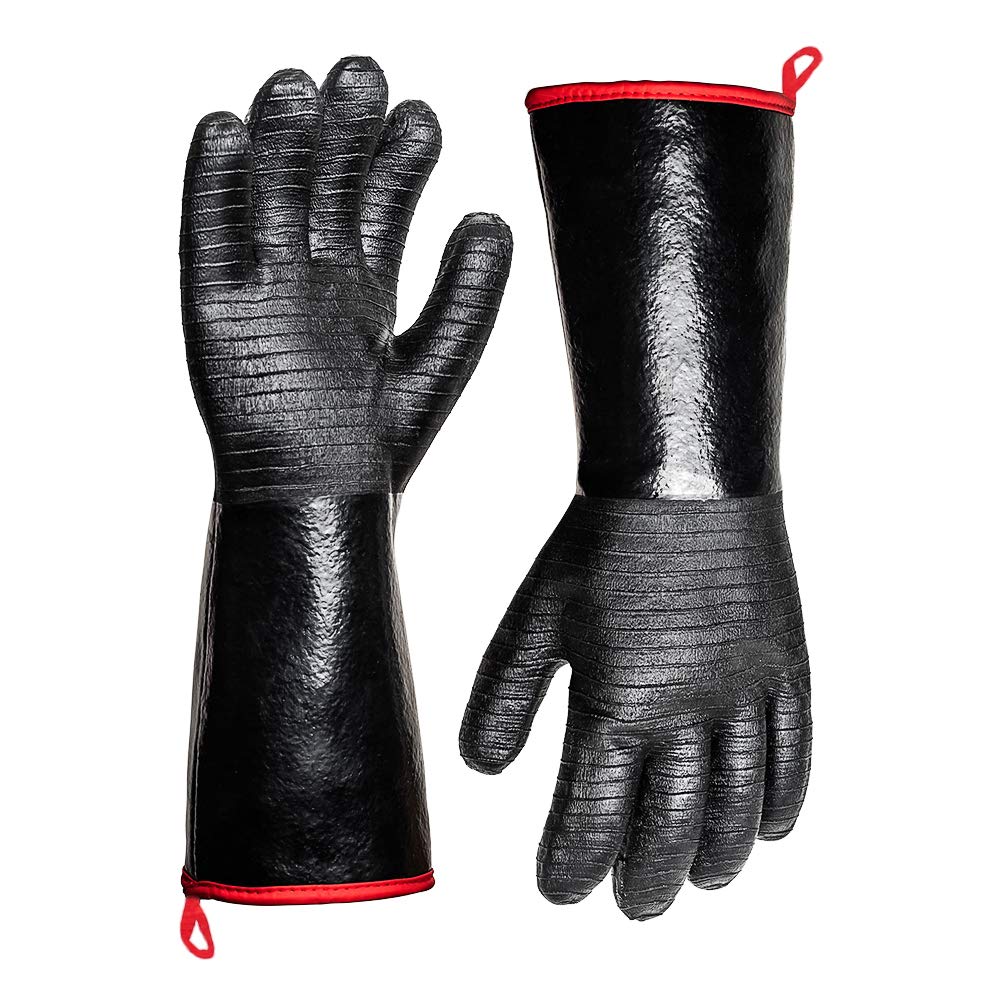
Neoprene-coated gloves that mirror the heavy-duty protection of full neoprene designs while offering a soft liner and storage loop.
Why I picked it: Good protection for prolonged smoker tasks and easy storage with the built-in hanger loop.
Best for: Handling large smoker roasts, hot grates and wet cooking jobs.
Budget-friendly option for full-neoprene performance.
Pros
- 14-inch coverage for forearm protection
- Non-slip textured surface
- Easy to clean and hang to dry
Cons
- Initial chemical odor reported by some
- May feel stiff at first
My take
These neoprene gloves are my choice when I’m moving large items on the smoker. The long cuff saves me from steam and flare-ups that would otherwise singe my forearms.
The textured surface gives a confident hold on cast-iron and heavy roasts. They arrive a bit stiff, but they loosen with normal use and remain easy to maintain — soap, rinse and hang.
Note: I did notice an initial factory odor on one pair, so I let them air out before first use. After airing, performance was unchanged and durability held up across multiple cooks.
8. Kitchen Perfection Silicone Oven Gloves (Gray) – Best for Baking & Larger Roasts
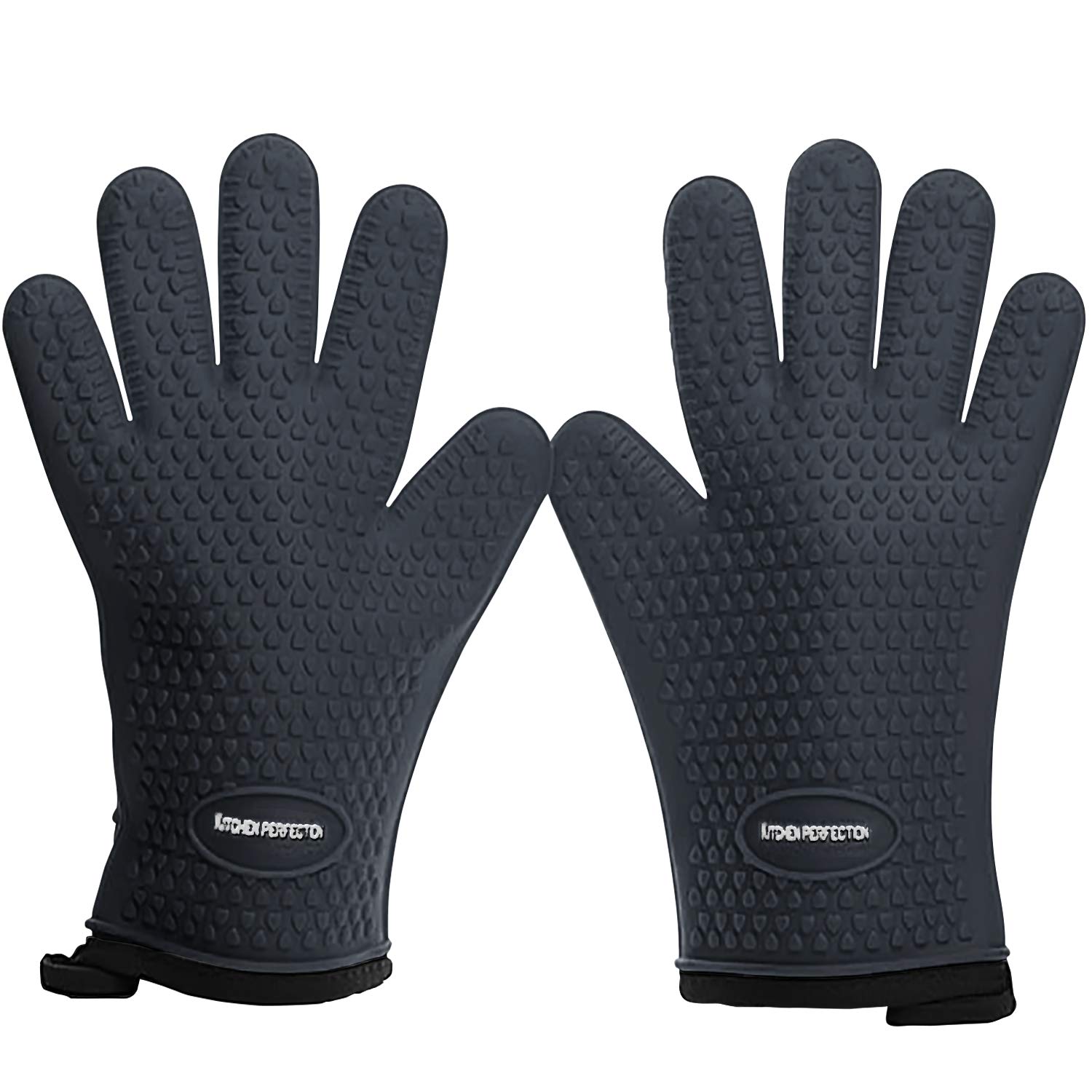
Gray silicone gloves with cotton lining that handle both oven work and large smoker items while hiding wear and stains.
Why I picked it: Versatile protective pair that’s easy to clean and comfortable over long cooks.
Best for: Lifting turkeys, pans and larger smoker pieces with fewer spills and easy cleanup.
Competitive pricing for a durable silicone and liner construction.
Pros
- Good coverage and grip bumps
- Comfortable liner for long use
- Simple to wash and reuse
Cons
- A little bulky for tiny hands
- Grip takes getting used to
My take
I used this gray pair for turkey roasts and big briskets; they handled lifting and flipping without the fear of slippage. The bumps across the palm help once you get a feel for them.
They’re easy to clean after greasy jobs — I simply wash them like dishes and hang them to dry. Fit felt roomy for some, so they’re not my choice if you want a snug, tactile glove.
Overall, they’re a dependable middle-ground between heavy insulation and everyday kitchen practicality.
How I Choose Grill Gloves
Material and Heat Protection
I match material to the task: aramid for direct flame and welding-like conditions, neoprene for liquid and steam protection, and silicone when I want a balance of heat resistance and easy cleaning.
Pay attention to the manufacturer’s temperature claims, but expect real-world transfer when you hold very hot items for long durations.
- Aramid (Nomex/Kevlar-style) = best for flame and cut resistance.
- Neoprene = waterproof protection for fryers and steam.
- Silicone = easy cleaning and good short-term heat protection.
Fit and Dexterity
If I’m working with small pans, tongs or carving, fingered gloves give me the control I need. Mitt-style designs trade dexterity for insulation and are better for simply removing hot trays.
Try to match glove size to your hand. Many models are one-size-fits-most but lean large; narrower hands can find fingered silicone more manageable.
- Five-finger gloves = better control for small tasks.
- Thicker full-gloves = better insulation but less precision.
- Long cuffs protect forearms from splatter and steam.
Grip and Surface
A textured or bumped surface matters when handling greasy meat or slippery pans. I favor raised dots or textured palms for a secure hold.
Smooth silicone can be slippery with oil, so expect to clean and re-grip more frequently unless the surface has traction features.
- Textured palms reduce slippage on wet food.
- Raised bumps act like a trivet when needed.
- Avoid gloves with slick surfaces if you cook greasy foods often.
Cleaning and Care
I prefer gloves that rinse clean or go in the dishwasher. Neoprene and silicone are the easiest to maintain; textile-heavy gloves can trap grease and require deeper washing.
Air dry gloves fully before storage to avoid lingering smells or mildew.
- Silicone and neoprene: quick soap-and-rinse or dishwasher.
- Aramid/textile: machine wash according to label; avoid harsh detergents.
- Air out new gloves if they have a factory odor.
Frequently Asked Questions
Are the temperature claims (like 932°F) accurate in real use?
Temperature claims refer to short-duration exposure or testing standards. In my experience, gloves that advertise very high temps protect well for quick handling, but you will feel heat if you hold a glowing-hot surface for extended periods. Choose aramid-based gloves for direct flame and neoprene for steam or boiling liquids.
Can I wash these gloves in the dishwasher or washing machine?
Silicone and neoprene gloves clean easily in the sink or dishwasher. Textile-lined or aramid gloves usually require machine washing on a gentle cycle; always follow the maker’s care instructions to preserve insulation and texture.
Which glove type is best for frying turkeys and dunking?
I use neoprene for frying or dunking since the waterproof coating handles hot liquids and steam without soaking through. Make sure the cuff is long enough to protect your forearm during dunking.
Will these gloves protect against cuts as well as heat?
Most silicone and neoprene gloves focus on heat and liquid protection, not cut resistance. If cut protection matters, pick an aramid or purpose-built cut-resistant glove with reinforced palms.
Final Take
I keep at least two styles on hand: a fingered silicone pair for dexterous oven work and a long-cuff neoprene or aramid pair for heavy smoker and fryer jobs.
Pick the material that matches what you do most often—waterproof neoprene for steam and frying, silicone for cleaning and flexibility, and aramid if you frequently work with very high flames.
After testing these options, I feel confident recommending a glove that fits your primary tasks rather than chasing high temperature numbers alone.
