
I tested A-frames, tripods, and multi-guitar racks to find dependable stands that protect instruments, save space, and stay ready to play. Here are the options I reach for in my studio and at gigs.
I keep guitars out and available so I actually play them. That meant finding stands that balance protection, stability, and convenience.
I spent time with lightweight A-frames, padded tripods, and a collapsible multi-guitar rack to see what worked for acoustics, electrics, and storage needs.
Below I explain where each stand shines, the practical trade-offs I ran into, and which one I grab depending on the situation.
I compared portability, padding, footprint, and how each stand interacts with different guitar shapes so you can match a stand to your instruments and routine.
1. Amazon Basics Adjustable A-Frame Guitar Stand – Best Overall
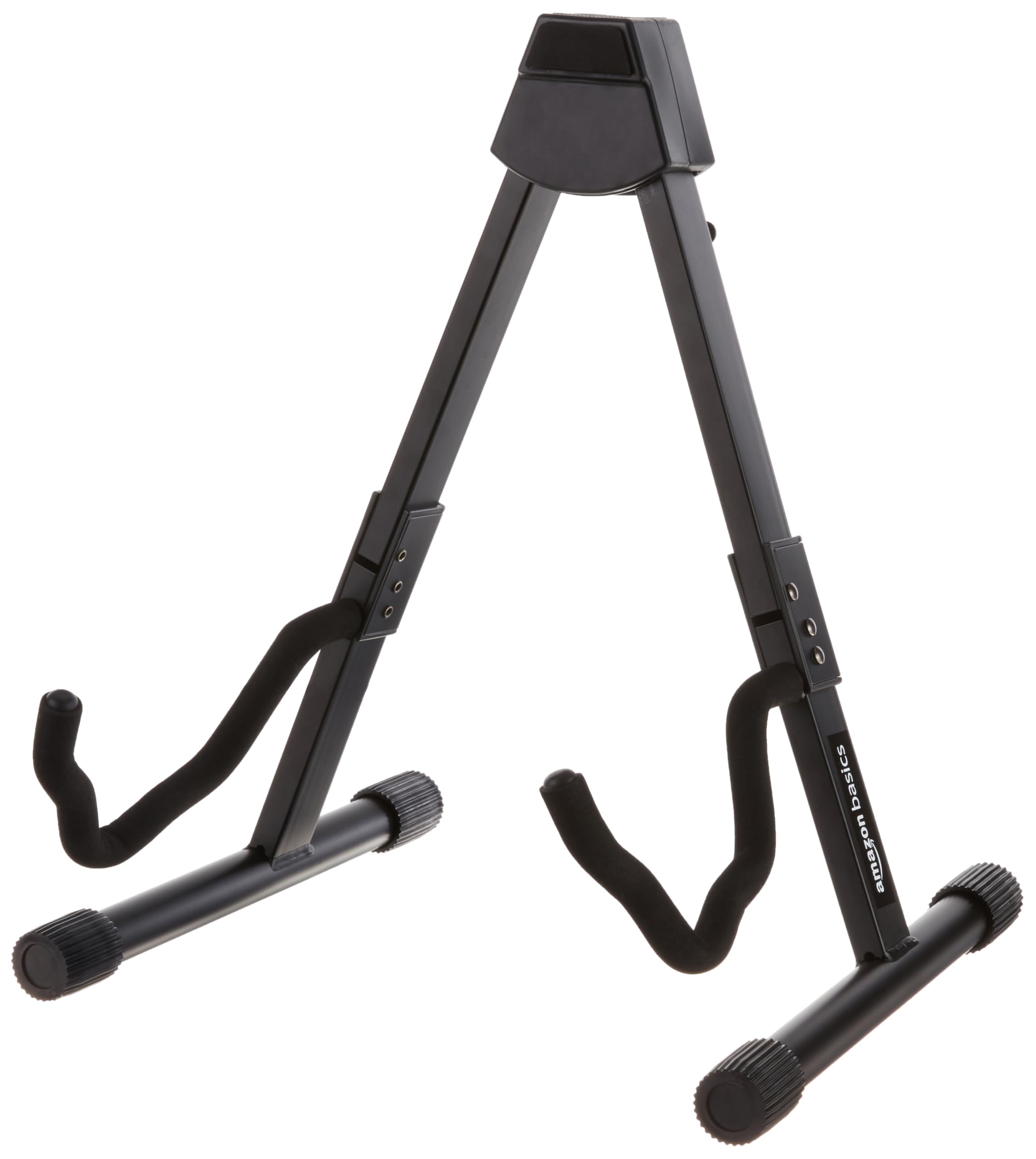
I rely on this A-frame as my go-to everyday stand because it’s simple, sturdy, and quick to deploy around the house.
Why I picked it: Sturdy, no-fuss A-frame that fits most acoustics and electrics.
Best for: Keeping a guitar ready to play in living spaces and practice areas.
An affordable, everyday option that balances quality and simplicity.
Pros
- I value the quick, no-assembly setup
- I like the soft foam contact points
- I appreciate the folding, travel-friendly design
- I trust the non-slip rubber feet for stability
Cons
- I found smaller-body electrics sit very deep
- I noticed possible balance issues with some neck joints
My take
I use this stand in multiple rooms because it opens and is ready instantly. The steel frame feels surprisingly solid for a lightweight, folding A-frame.
The three-width settings let me adapt the cradle to different body shapes, and the foam padding keeps finishes safe when I set a guitar down quickly between takes.
One important caveat I ran into: guitars with smaller bodies—many electrics—tend to sit deeper so the apex pad sometimes supports the neck area rather than the body. That can make balance a little precarious on some asymmetrical neck joints, so I check how each electric sits before leaving it unattended.
Overall, I reach for this when I want something unobtrusive that protects instruments and folds flat for storage or travel.
2. RockJam A-Frame Guitar Stand – Best for Beginners
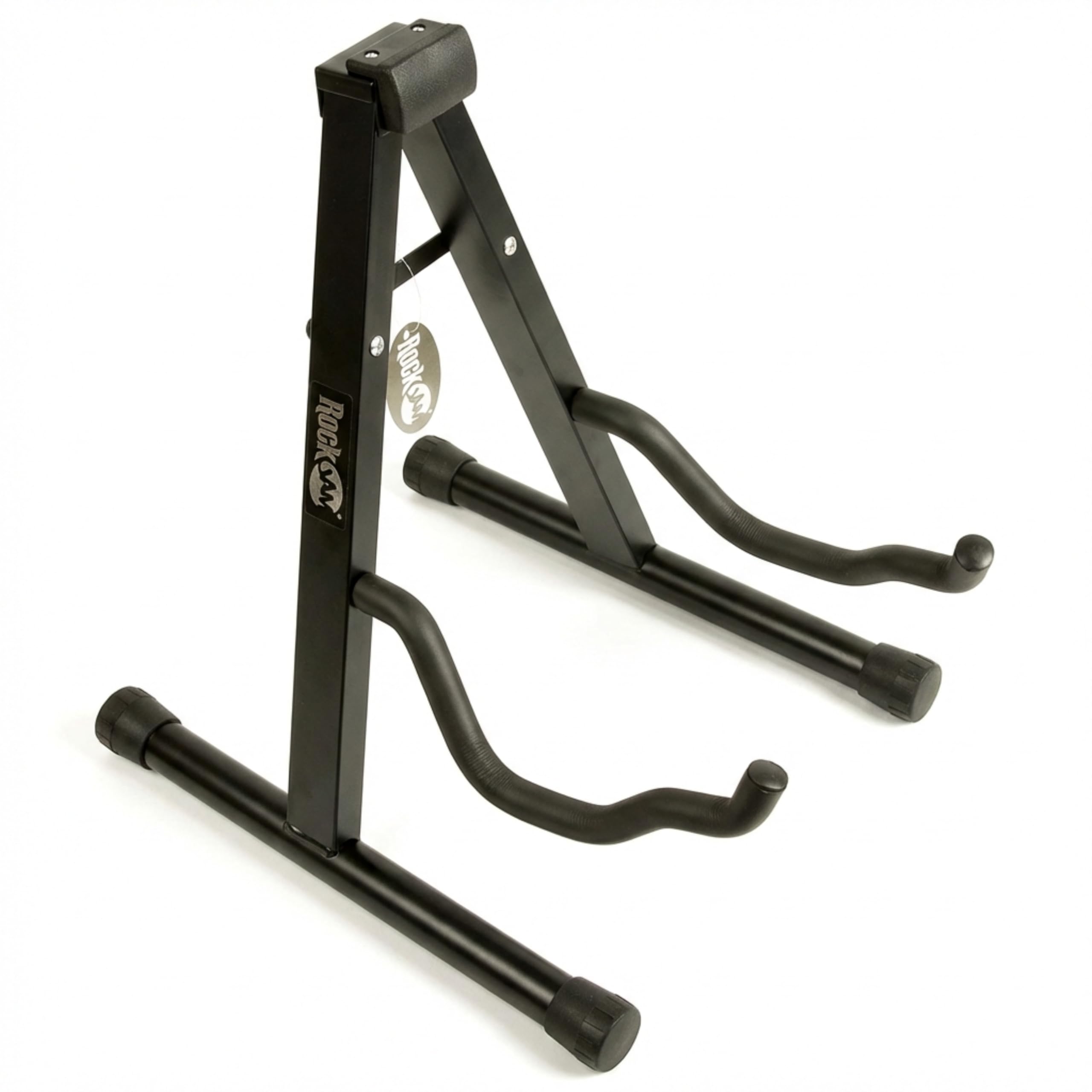
I pick the RockJam when I want a lightweight, well-padded stand that comes with a little extra value for new players.
Why I picked it: Light, well-padded A-frame that includes practice extras for students.
Best for: New players or anyone who wants a portable stand with bonus learning tools.
A budget-friendly, feature-packed choice that pairs stand utility with beginner content.
Pros
- I appreciate the neoprene and foam padding
- I like that it folds flat for gigs and storage
- I found it stable on most floors
- I welcome the included plectrums and app content
Cons
- I experienced a tip-over risk if bumped hard
- I’d prefer a little more weight for ultra-stability
My take
I used the RockJam A-frame for both acoustics and electrics and found it very capable. The neoprene and foam padding protect the guitar where it matters, and the rubber feet keep the stand from sliding on laminate or hardwood.
The stand is lightweight and folds flat in seconds, so I take it to lessons or rehearsals without adding bulk to my bag.
When someone accidentally bumped the headstock in my session, the guitar did fall—so I treat this as a lightweight, portable option rather than a full-time security solution in high-traffic rooms.
I also liked the small extras bundled with the stand; the included learning app and picks made it an easy pick when I was outfitting a beginner’s setup.
3. OnStage XCG4 Velveteen Tubular Guitar Stand — 2-Pack – Best Padded Tripod
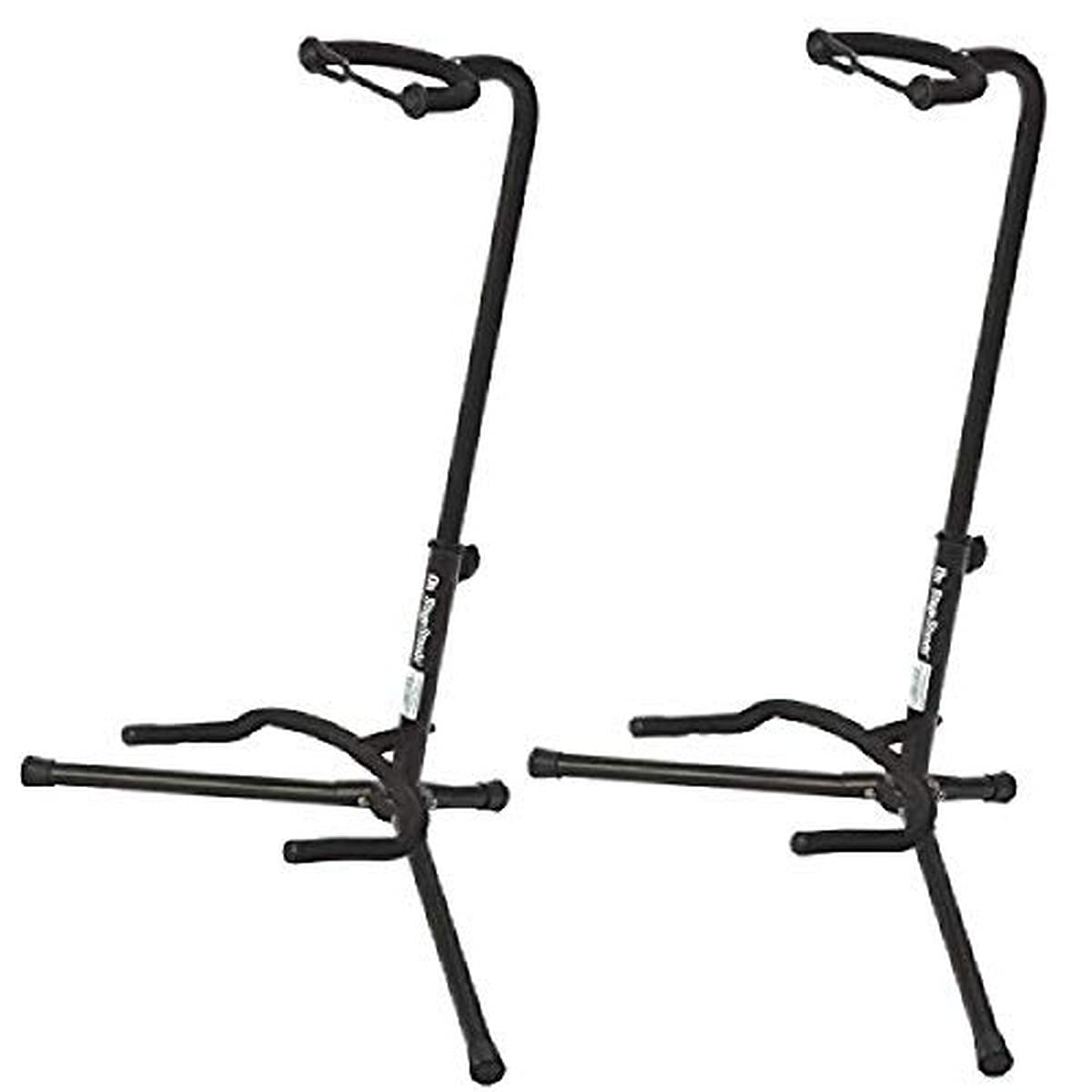
I use the OnStage tripods when I want velveteen padding and a more protective upper yoke—especially handy when I need two reliable stands.
Why I picked it: Velveteen padding and locking features that protect finishes and prevent rotation.
Best for: Owners who want plush padding and extra security for individual guitars.
A practical midrange choice, especially good when buying multiple stands at once.
Pros
- I value the velveteen contact points for finish protection
- I like the friction locking knob for secure positioning
- I found the stepped yoke keeps guitars from sliding
Cons
- I noticed some instability if nudged from the side
- I found the legs take up more floor space
My take
I appreciated the velveteen EVA rubber on the OnStage stands; they feel gentle on a guitar’s finish and look a bit more refined than basic foam.
The friction locking knob and V-groove design help prevent rotation, so once I set the height the upper yoke stays put even during quick changes.
Assembly was straightforward, though the tripod’s rear leg can be stubborn when folding it out the first few times.
These take up a little more footprint than an A-frame, and they’re a touch more vulnerable to side pushes, so I wouldn’t put them in a narrow, high-traffic corridor. For studio use or a living room where they won’t get knocked, they’re my favorite for finish-sensitive instruments.
4. Rok-It 7-Space Folding Guitar Rack – Best for Multiple Guitars
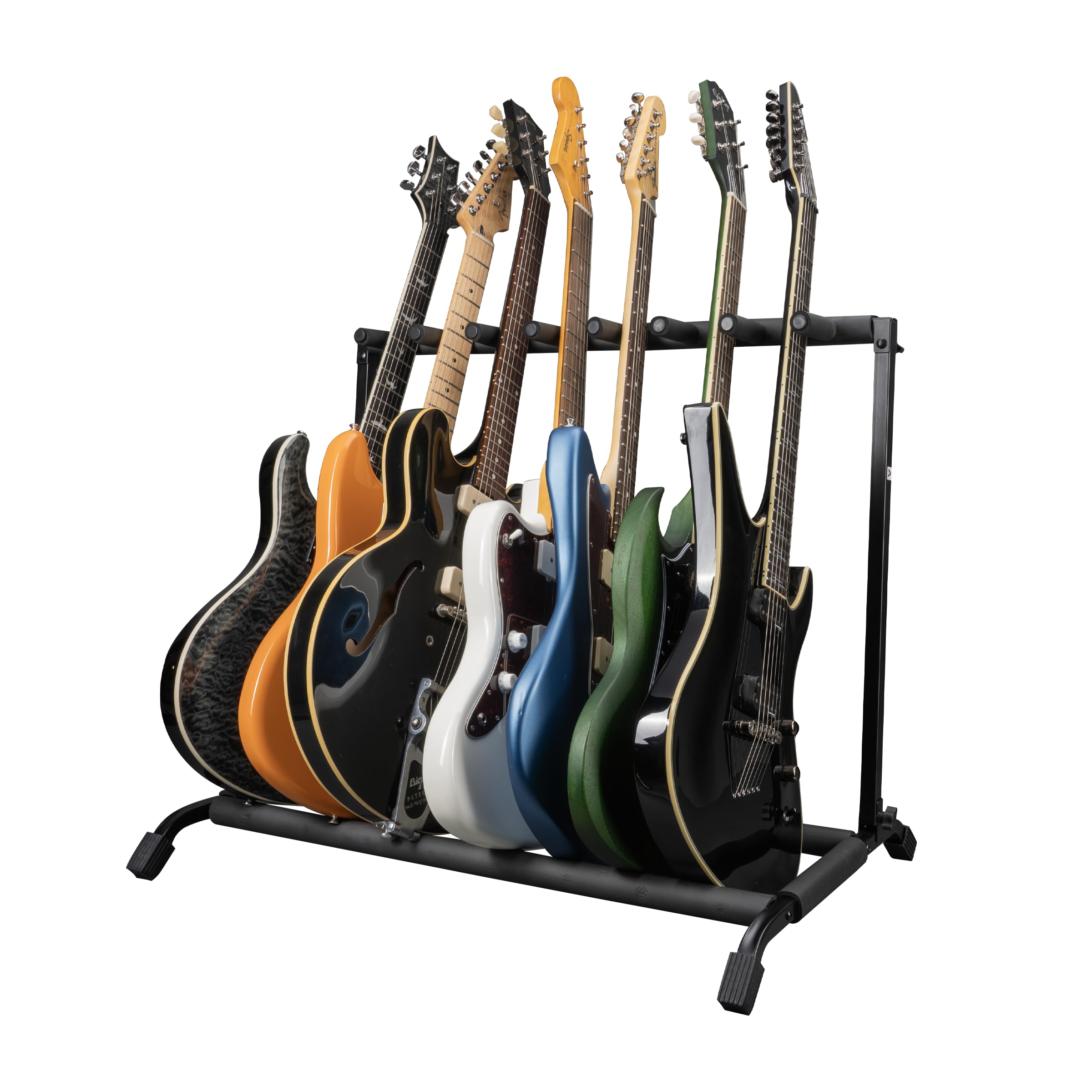
I turn to the Rok-It rack when I need organized, compact storage for multiple guitars without sacrificing protection or easy access.
Why I picked it: Collapsible rack that holds multiple instruments with thick foam padding.
Best for: Bands, studios, or collectors who need to store several guitars efficiently.
A value-driven multi-guitar solution that saves space and protects finishes.
Pros
- I like the thick foam-padded cradles for finish protection
- I appreciate the solid steel construction for multiple guitars
- I value the collapsible design for storage and transport
Cons
- I found neck cradle prongs could be longer for some instruments
- I needed to allow extra depth for acoustic neck overhang
My take
I assembled the Rok-It in minutes and appreciated how compact it collapses for storage. The steel frame feels robust, and the foam padding protects finishes on every cradle.
I currently keep several acoustics on mine; they sit securely and I can move guitars on and off without wobble. For my small studio the rack beat leaning instruments against walls and saved a lot of space.
A few practical notes from my use: the neck prongs are a bit short for some headstocks, so I added simple pipe insulation to lengthen them for certain guitars. Also, if you store basses or big acoustics, allow a few extra inches behind the advertised depth for headstock clearance.
All told, when I need to keep multiple instruments accessible and organized, this rack is the one I reach for.
How I Choose Guitar Stands
Stand Type and Where I Use It
I start by matching stand type to the room and routine. A-frames are my go-to for casual, everyday placement because they fold flat and tuck away easily. Tripod yoke stands feel more secure for delicate finishes and when I need height adjustability. Multi-rack systems win when I must store several guitars without clutter.
- I choose A-frames for portability and quick access.
- I pick tripods for finish-sensitive instruments and adjustable height.
- I use racks when I need to store multiple instruments neatly.
Protection: Padding and Finish Safety
I never compromise on padding where the instrument contacts the stand. Velveteen or neoprene surfaces reduce abrasion, while thicker foam keeps edges from creating pressure points.
If I have vintage lacquer finishes, I avoid unknown padding formulas and test contact points briefly to ensure compatibility.
- I look for velveteen, neoprene, or dense EVA foam contact points.
- I test contact surfaces on a small area for vintage or delicate finishes.
Stability and Footprint
I check how a stand behaves when bumped and how much floor space it consumes. Lighter stands are convenient but may tip if placed in high-traffic areas. Heavy or wide-footprint models are better for busy rooms or when I store multiple guitars together.
- I prefer rubber feet for anti-slip performance.
- I avoid narrow or top-heavy stands in hallways and small spaces.
Capacity and Compatibility
I measure my guitars or test how each model sits in the cradle. Some electrics sit deeper in A-frames and may rest on the neck joint, so I verify balance before leaving them unattended. For racks, I check headstock clearance and overall width to fit acoustic or bass necks.
- I ensure the cradle fits the widest and narrowest instruments I own.
- I allow extra depth behind racks for long headstocks or basses.
Portability and Storage
I factor whether I'll move the stand between gigs, lessons, and home. Folding designs that collapse flat are my favorite for travel. If I need a permanent studio solution, weight and robustness take precedence over compactness.
- I choose folding stands for portability.
- I pick heavier racks for stable studio storage.
Frequently Asked Questions
Will an A-frame damage my guitar finish?
I avoid damage by checking the contact material—foam, neoprene, or velveteen—and testing it briefly on a non-visible area. Many A-frames use safe padding, but I treat vintage lacquer finishes with extra caution.
Which stand type is best for frequent gigging?
I prefer lightweight folding A-frames for gigging because they’re fast to deploy and pack away. If I need extra finish protection on stage, I bring a velveteen-padded tripod for my favorite instrument.
Can a multi-guitar rack fit in a standard closet?
I have fit collapsible racks into standard closets, but I always measure depth and allow a few extra inches for headstock overhang—especially for acoustics and basses.
Final Take
I choose a stand based on how I use my guitars day-to-day: A-frames for fast access and portability, tripods for finish-sensitive instruments, and folding racks when I need to store multiple guitars.
If I had to pick one for most households, the Amazon Basics A-frame balances reliability and convenience. For organized storage or studio needs, the Rok-It rack is my steady solution.
Whichever I reach for, I focus on padding, stability, and proper fit so my instruments stay safe and ready to play.
