
I tested eight heavy-duty shelving units for strength, ease of setup, and real-world usefulness. These are the racks I kept coming back to for garages, pantries, and commercial-style storage.
I spend a lot of time rebuilding and organizing utility spaces, so I bought and tested a range of heavy-duty shelving systems to see what actually works. My focus was on load capacity, adjustability, ease of assembly, and how each rack behaves in everyday use.
In this roundup I cover everything from inexpensive plastic shelves that snap together to commercial-grade steel racks that handle pallets and big bins. I note where each shelf shines and the trade-offs I ran into while installing and using them.
I compared these units on three practical axes: usable load (per shelf and total), real-world mobility (casters vs. leveling feet), and installation friction (tool-free vs. more involved assembly). If you want a mobile pantry, pick a wheeled unit with locked casters; if you need maximum load per shelf, prioritize industrial steel and leveling feet.
1. Amazon Basics 5-Shelf Steel Wire Rack – Best Overall
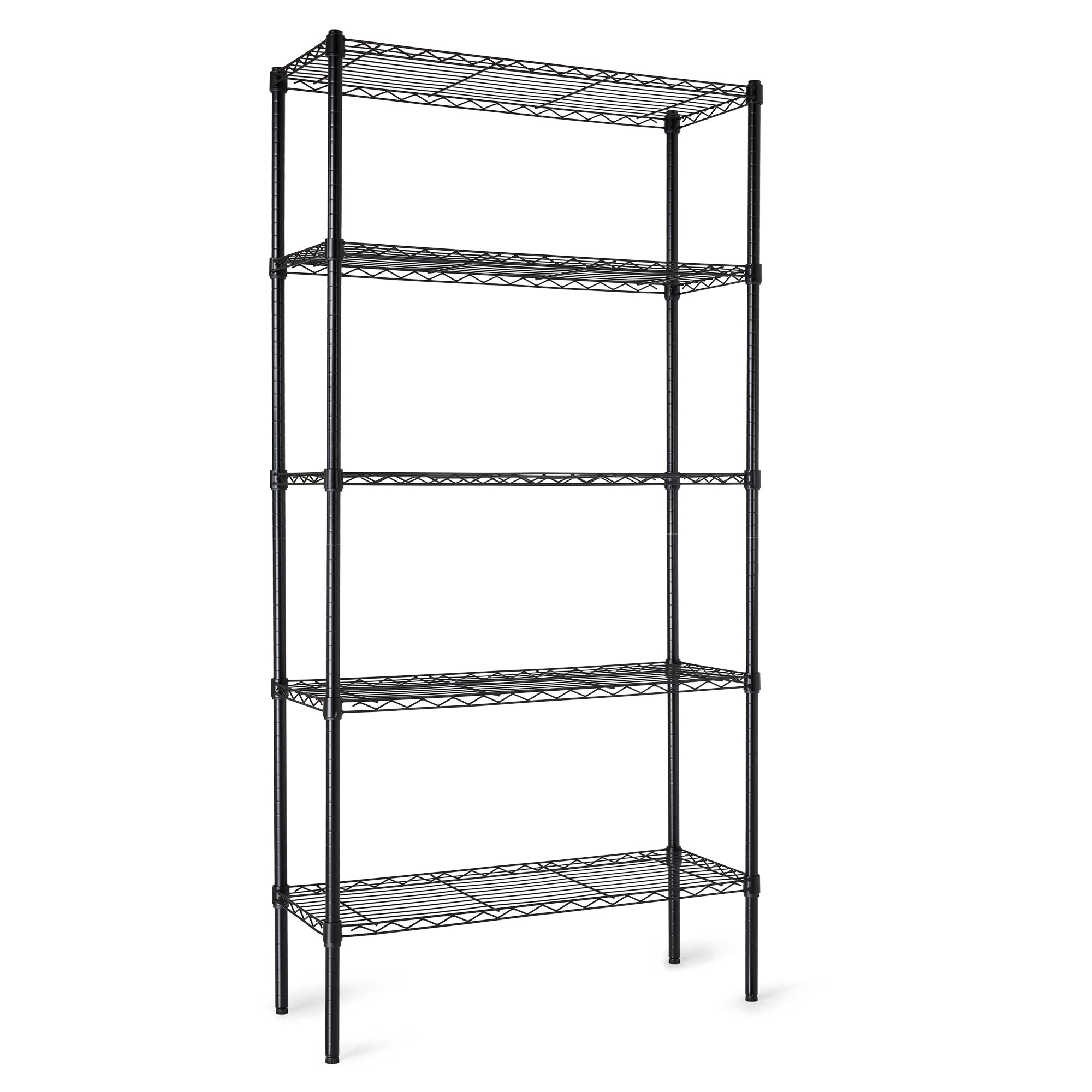
A no-frills, heavy-duty 5-shelf wire rack that balances high load capacity with easy assembly and a clean black finish.
Why I picked it: High per-shelf capacity plus simple, tool-free assembly and adjustable shelf heights.
Best for: Garages, pantries, and utility rooms needing strong, configurable shelving.
Great value for heavy-duty steel shelving.
Pros
- 350 lb capacity per shelf
- Adjustable in 1-inch increments
- Tool-free assembly
- Clean black finish
Cons
- A bit wobbly when empty
- Plastic split sleeves can be fiddly to seat
My take
I assembled this Amazon Basics rack quickly; the system uses split sleeves you stack on the poles, then slide the shelves down over them. A rubber mallet helps, but no special tools are required.
Once loaded, the unit becomes rock-solid — I’ve stored heavy canning jars and kitchen appliances on it without worry. The black finish looks tidy in both garage and pantry locations.
If you want straightforward heavy-duty performance without frills, this is the rack I reach for most often.
2. Seville Classics 5-Tier Wire Shelving (30×14) – Best for Mobility
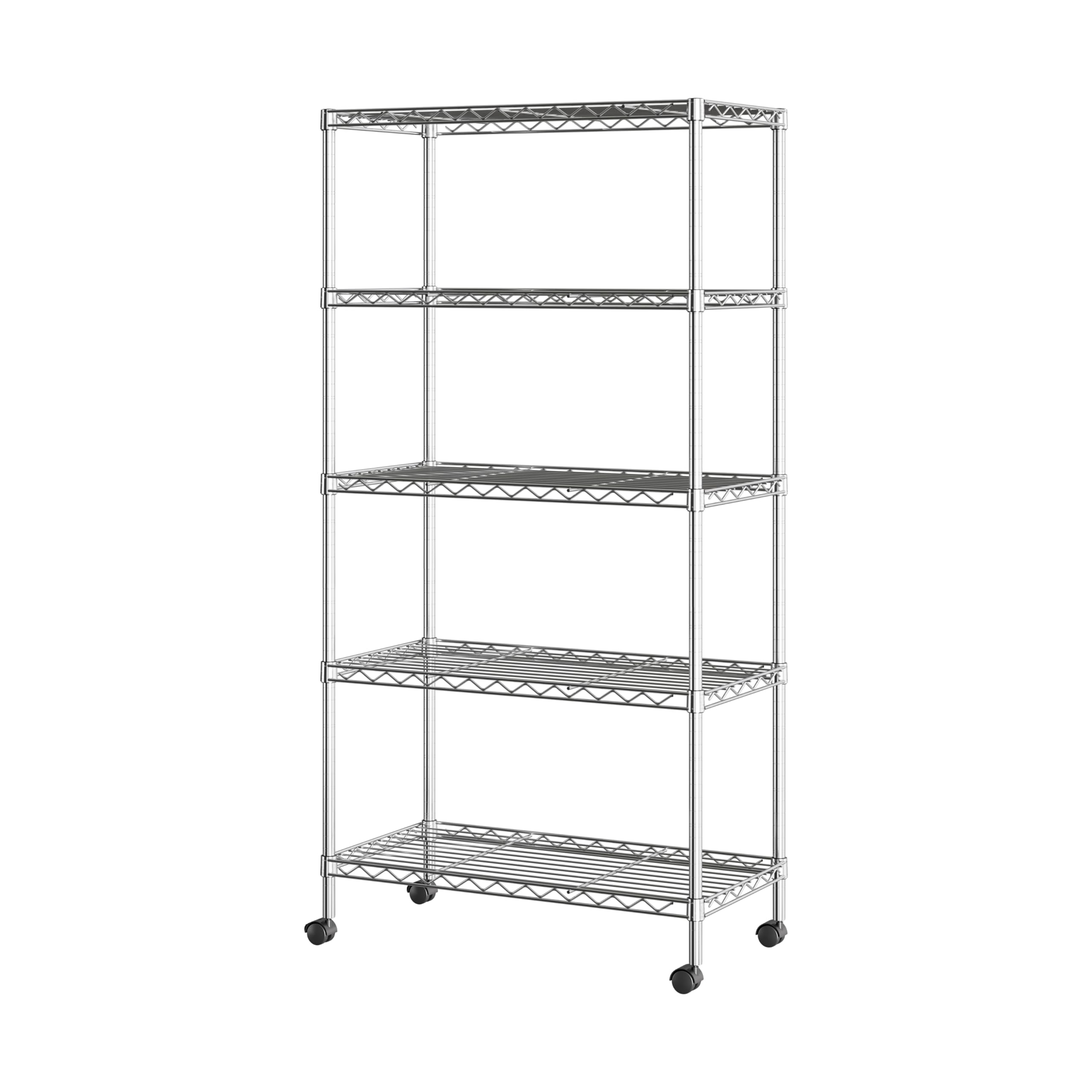
A compact, mobile 5-tier wire shelving system with locking casters and adjustable shelves for tight spaces.
Why I picked it: Locking wheels plus adjustable shelves make it versatile for rooms that need occasional repositioning.
Best for: Bathrooms, pantries, small garages, and apartments where mobility matters.
Well-priced for a wheeled, adjustable steel shelving unit.
Pros
- Includes locking casters
- Adjustable 1-inch increments
- Good compact footprint
- Easy tool-free assembly
Cons
- Much lower total capacity on casters
- Narrow shelves limit very large items
My take
I put this Seville unit in a small bathroom and appreciated how quickly I could roll it into place and lock the casters. The 30 x 14 footprint fits narrow spots where bulkier racks won't.
On leveling feet each shelf supports a robust load, but I paid attention to the much lower total capacity when the unit is on wheels — I avoid piling very heavy items when it’s mobile.
Adding shelf liners made sliding bins and small items easier; overall this one is my pick when I need mobility without sacrificing much strength.
3. Seville Classics 5-Tier Steel Wire Shelving – Best for Pantries
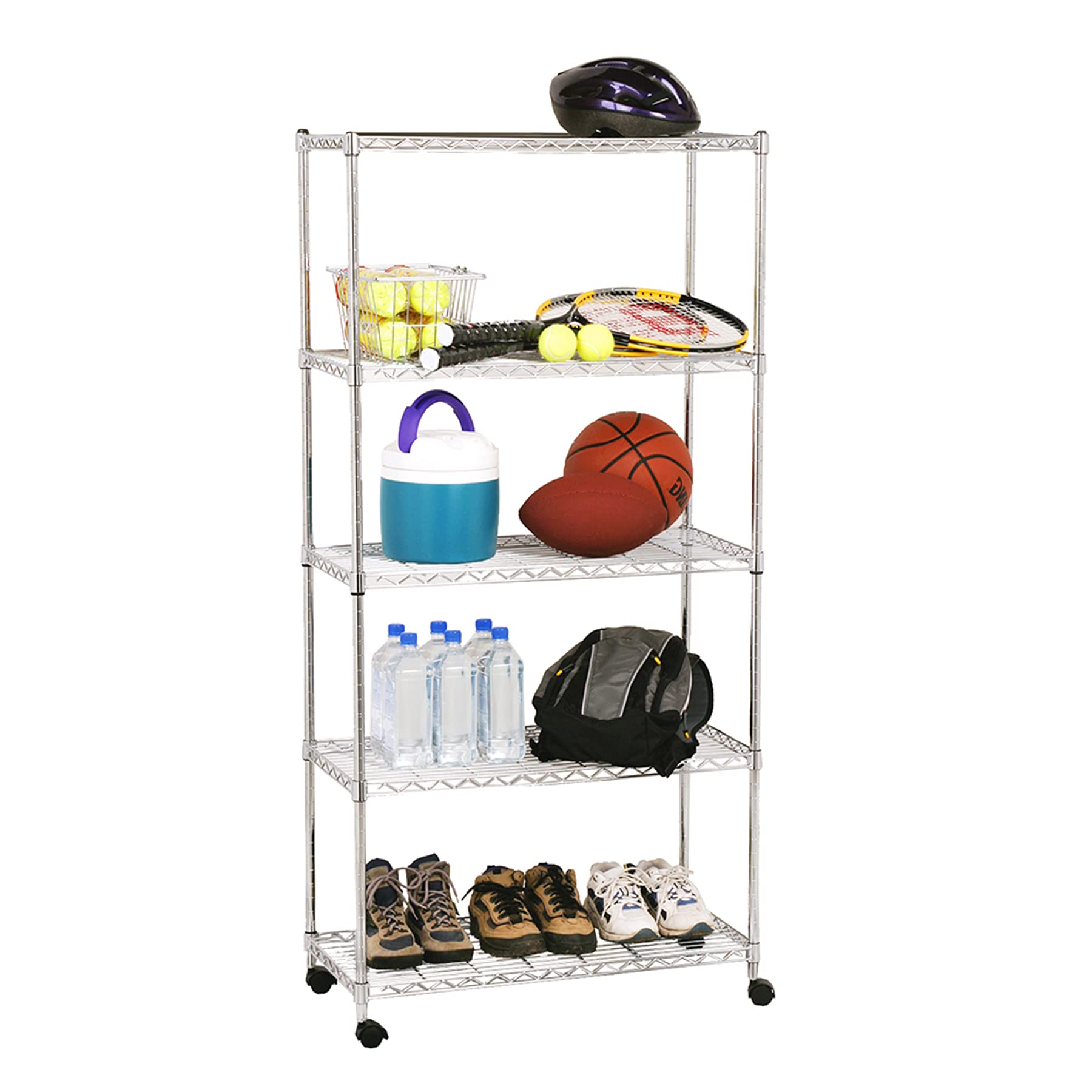
A plated-steel 5-shelf unit that balances corrosion resistance with easy assembly and pantry-friendly dimensions.
Why I picked it: Zinc/plated finish for a cleaner look and corrosion resistance in dry home environments.
Best for: Pantries and utility corners where a medium-strength, clean-looking rack is preferred.
Mid-range option with plated finish for longer life.
Pros
- Plated steel resists corrosion
- 300 lb per shelf on feet
- Fits odd corners well
- No tools required
Cons
- Not the heaviest-duty option
- Casters reduce safe load significantly
My take
I used this Seville Classics unit in an awkward kitchen corner where the plated finish and 30-by-14 shelves fit perfectly. It’s not the absolute heaviest-duty shelf, but for pantry goods and light appliances it’s ideal.
Assembly is fast once you learn the ring/stop system for consistent shelf spacing. The plated finish wipes clean easily and looks better than bare steel in a living space.
For a pantry solution that blends durability with a tidy appearance, this one checks the boxes for me.
4. Sterilite 4-Shelf Plastic Organizer – Best Budget Plastic
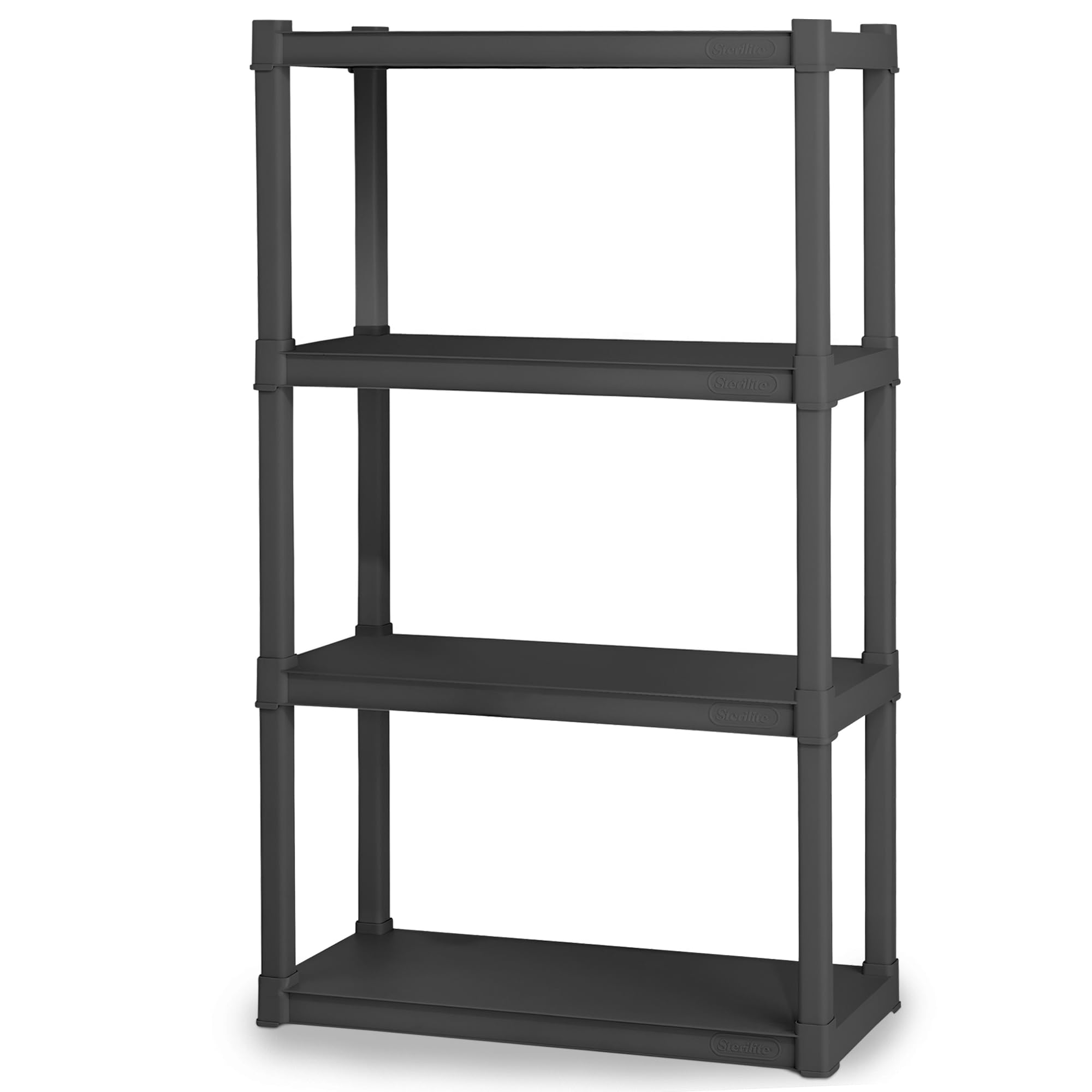
A lightweight, tool-free plastic shelving unit that snaps together fast and won’t rust — ideal for lighter loads and frequent moves.
Why I picked it: Tool-free snap assembly and rustproof plastic construction make it extremely convenient.
Best for: Laundry rooms, light garage duty, and moving situations where portability and rust resistance matter.
Economical and practical for light-to-moderate storage needs.
Pros
- Tool-free snap assembly
- Won’t rust
- Lightweight and portable
- Solid shelf surfaces
Cons
- Only 50 lb per shelf
- Plastic flexes under heavy loads
My take
I like these Sterilite units because they come together in minutes and are easy to move around. The tubular frame snaps in place and the solid plastic shelves resist denting and rust.
They aren’t for pallet-level loads, but I comfortably stored heavy jars and bins on them in a laundry room and workshop. If you need rustproof, fuss-free shelving that you can reconfigure quickly, these are great.
I’ve pulled several out when moving between homes — their light weight is a real advantage.
5. Seville Classics UltraDurable 5-Tier Steel Rack – Best Heavy-Duty
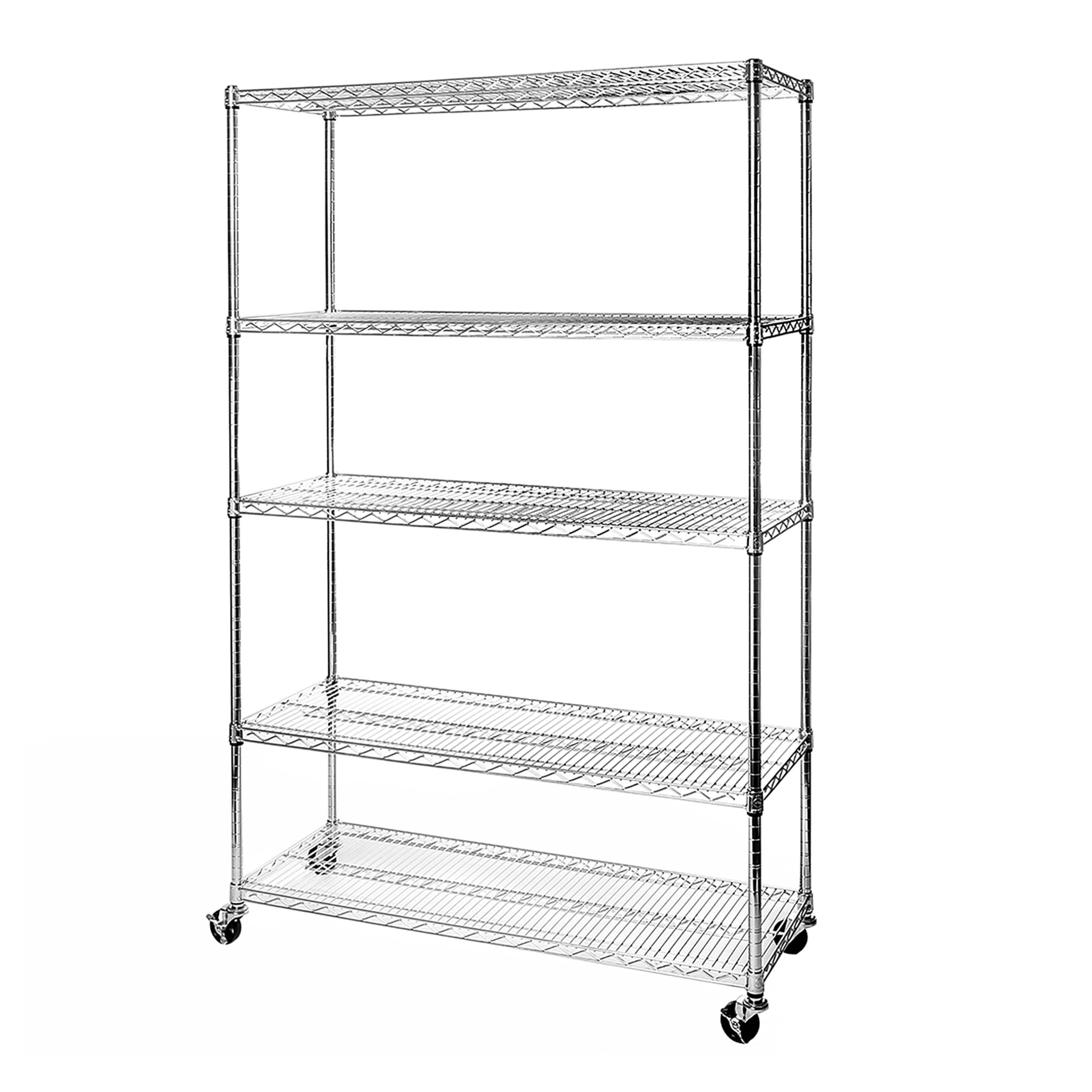
A commercial-grade, NSF-certified 5-tier steel unit that handles massive loads per shelf and is built for demanding environments.
Why I picked it: Very high per-shelf capacity and NSF certification for dry food equipment use.
Best for: Workshops, commercial kitchens, and heavy storage applications needing maximum per-shelf strength.
A more expensive, commercial-grade choice for heavy workloads.
Pros
- 800 lb per shelf on leveling feet
- NSF certified for dry environments
- Large, durable casters
- Industrial-strength construction
Cons
- Heavy to move and assemble
- Takes significant floor space
My take
I chose this Seville UltraDurable rack when I needed a shelf that could actually handle pallet-style loads and oversized bins. The build is noticeably heavier than mid-range racks.
Assembly takes longer and the individual pieces are hefty, but once assembled it feels nearly bulletproof. I used large casters to move it around my garage; when set on leveling feet it supports enormous weight per shelf.
If you need industrial performance at home or in a commercial space, this is the unit I’d pick.
6. Meet-Perfect 6-Tier Heavy-Duty Wire Shelving – Best Tall Storage
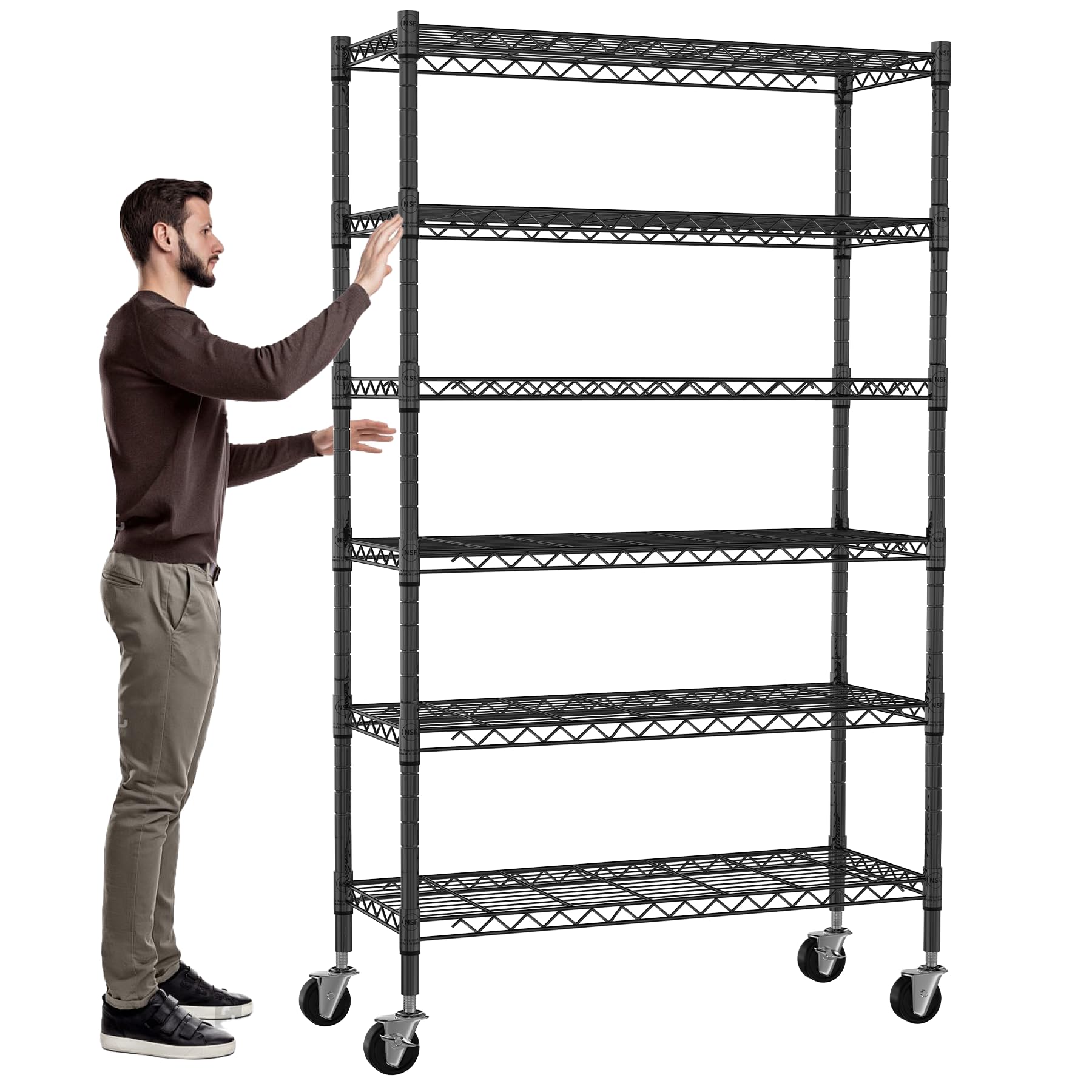
A tall 6-tier shelving system with high total capacity and locking wheels that works well in garages and high-ceiling storage areas.
Why I picked it: Tall footprint and high total load capacity—great for stacking big bins and seasonal gear.
Best for: Garages and basements where vertical storage wins and you need several deep shelves.
Good capacity for the price, especially for tall storage solutions.
Pros
- 350 lb per shelf rating
- Tall six-tier design
- Locking casters included
- Adjustable shelf positions
Cons
- Takes two people to assemble comfortably
- Occasional shipping-bent shelf
My take
I bought multiple units of this Meet-Perfect shelving for my garage and used them side-by-side. The tall profile lets me stack large totes and seasonal decorations without wasting vertical space.
Assembly is straightforward but I recommend having a step stool and a second person for the top shelves. One unit showed a slight bend from shipping but it didn’t affect load performance.
For anyone who needs tall, mobile storage with substantial capacity, these delivered the best balance of height and strength.
7. Finnhomy 8-Tier Wire Shelving (72in) – Best for Maximum Shelves
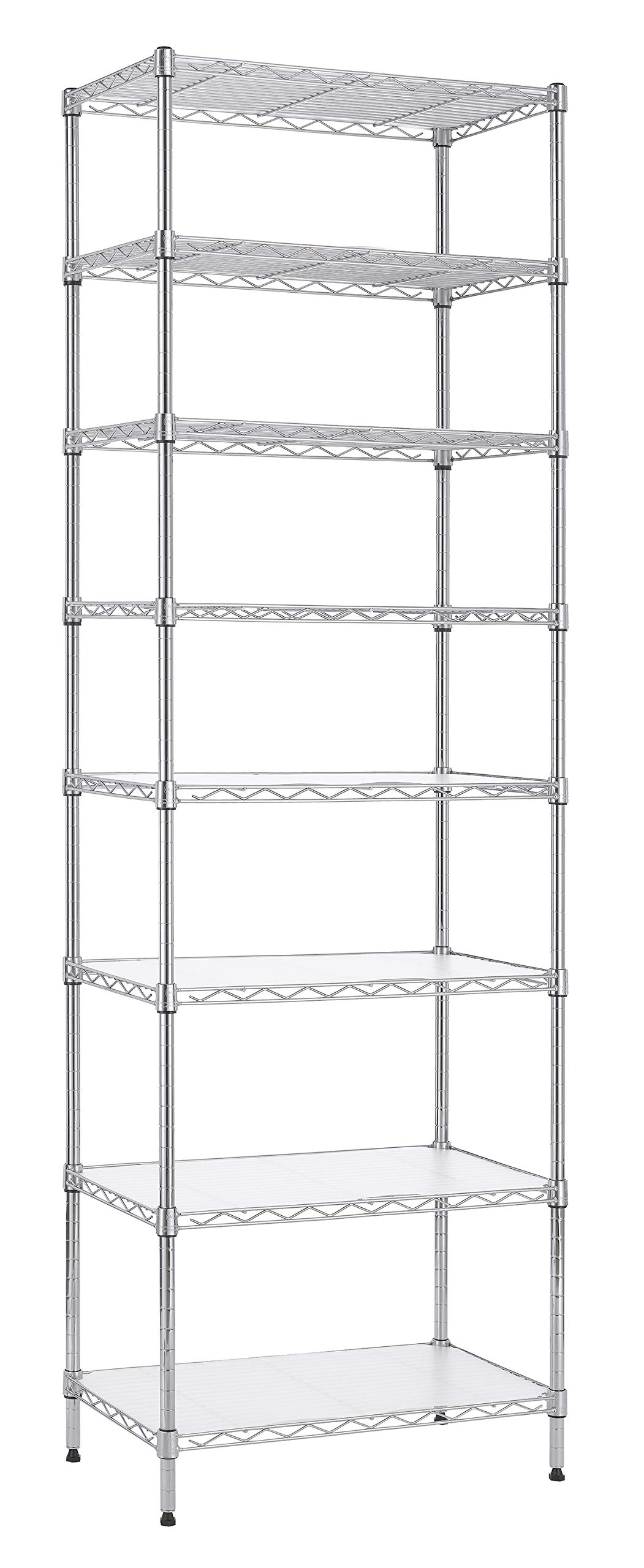
An 8-tier, NSF-certified shelving solution with many narrow shelves and included PE mats to stop small items from slipping through.
Why I picked it: Maximizes shelf count in a narrow footprint and includes liners for small items.
Best for: Closets, pantries, and tight spaces where many small shelves beat a few deep ones.
Cost-effective for a tall, multi-shelf configuration.
Pros
- Eight adjustable shelves
- PE mats included
- NSF certified
- Narrow footprint saves space
Cons
- No casters included
- Takes time to assemble
My take
I used the Finnhomy 8-tier units in a closet where height mattered more than depth. The included PE mats are a welcome touch — they keep small cans and bottles steady and prevent items from tipping between wires.
Assembly took longer than simpler racks, but the end result is a very tidy, space-efficient organizer. I anchored one unit to the wall for peace of mind.
If you want the most shelf surface area for pantry-style storage, this is the setup I recommend.
8. Origami R5 4-Shelf Folding Steel Rack – Best Folding Option
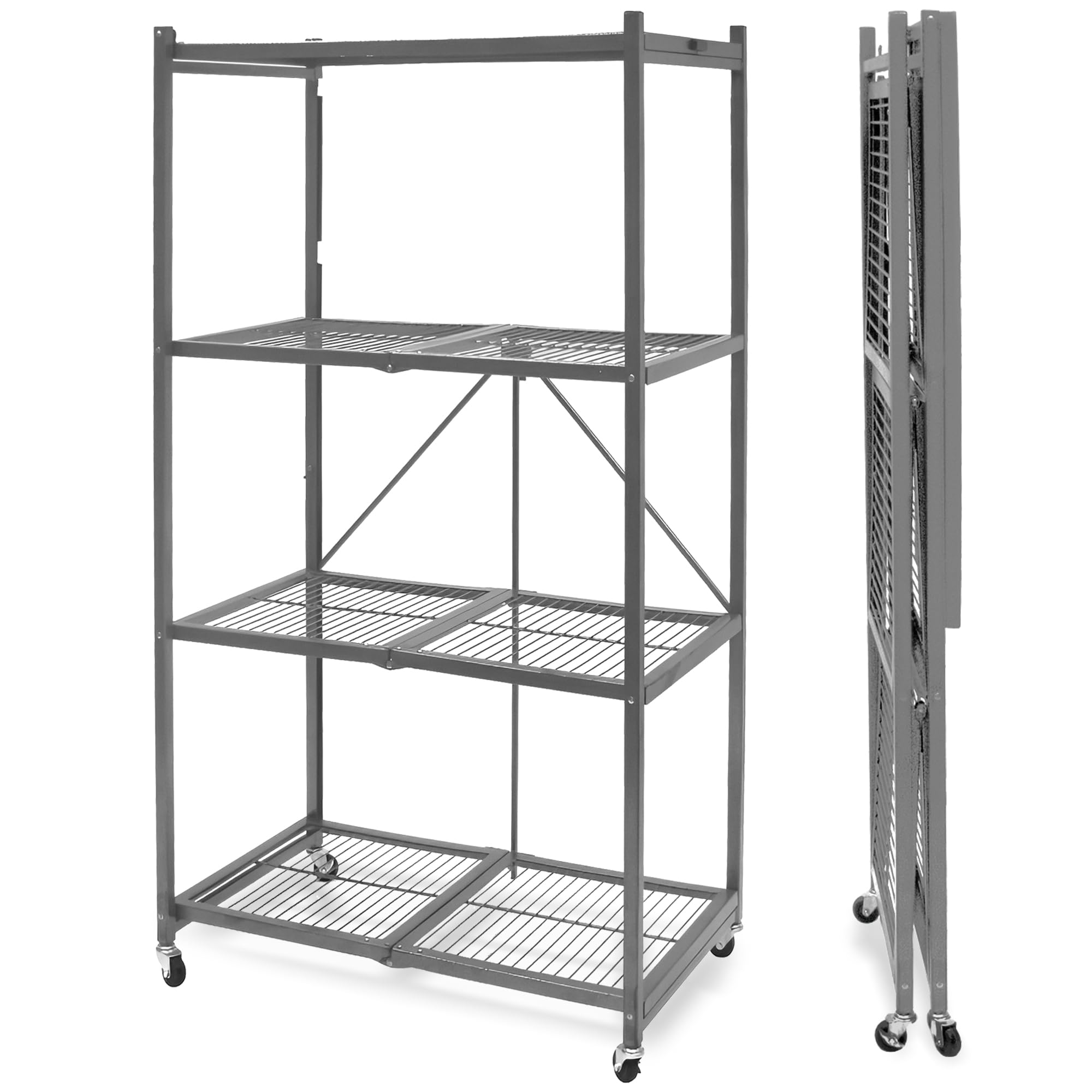
A pre-assembled folding steel rack that unfolds and locks in seconds — ideal when portability and rapid setup matter most.
Why I picked it: Unique fold-flat design and near-instant setup with the durability of powder-coated steel.
Best for: Moving situations, storage units, and anyone who needs fast setup and takedown.
Pricier but unmatched for foldability and portability.
Pros
- Sets up in under a minute
- Folds flat for transport
- Sturdy once latched
- Includes casters
Cons
- Reduced load capacity when on wheels
- Higher cost than basic racks
My take
I keep an Origami R5 in my toolkit for temporary storage needs because it unfolds and locks in place almost instantly. There’s no fiddly assembly — just screw on casters or feet and you’re done.
When used with its feet it supports much heavier shelf loads than when it’s on casters, so I plan placements accordingly. For moving, storage units, or temporary displays, nothing else beats the convenience of this design.
I bought several of these over time — they’re the ones I reach for when I need speed and portability without compromising on durability.
How I Choose Heavy-Duty Shelving
Load Capacity and Feet vs. Casters
I always check both per-shelf and total capacity and compare the ratings for units on leveling feet versus casters. Wheels make a shelf useful for repositioning, but most manufacturers reduce safe load when a unit is mobile.
If I plan to store very heavy items, I prefer leveling feet and larger-diameter poles that distribute weight evenly.
- Prioritize per-shelf rating for concentrated loads (motors, appliances).
- Use casters only for light-to-moderate mobile loads.
- Choose larger casters if you expect lot of movement over uneven floors.
Material and Finish
I match the finish to the environment: painted or plated steel for dry living spaces and NSF/certified finishes if food storage is involved. Powder-coated or plated surfaces are easier to wipe clean and resist rust in heated, dry areas.
Plastic shelves won’t rust and are lighter, but they have lower per-shelf capacity and can flex under sustained heavy loads.
- Plated steel or chrome for corrosion resistance in dry areas.
- Powder-coated steel for industrial robustness.
- Plastic for lightweight, rust-free needs.
Assembly and Practical Setup Tips
I plan assembly based on how many people I have available and whether I’ll need a step ladder. Tall units often need two people for the top shelves, while folding units like Origami need almost no setup time.
I also recommend adding shelf liners for wire racks to keep small items stable and prevent tipping.
- Have a rubber mallet on hand for slip-sleeves.
- Measure doorway and ceiling clearances before buying.
- Anchor very tall or heavily loaded units to the wall for safety.
Real-world Considerations
I try to visualize how I’ll load and reach the shelves. Deep, wide shelves are great for bins; narrow, tall shelves are better for canned goods and small boxes.
Think about cleaning and airflow — wire shelves ventilate and are easy to sweep, while solid shelves catch spills but block airflow.
- Choose wire shelves for airflow and easy clean-up.
- Solid shelves are better for small items and spills.
Frequently Asked Questions
Can I put large appliances or heavy tools on these racks?
I place appliances on units rated for at least the weight per shelf the appliance exerts. For concentrated loads (microwaves, compressors), I prefer steel racks on leveling feet with higher per-shelf ratings rather than mobile units.
Are locking casters safe for fully loaded shelves?
I use locking casters for light-to-moderate loads and avoid moving a fully loaded industrial rack on casters. Manufacturers often specify much lower total capacity when a unit is on wheels, so I follow those limits.
Do I need shelf liners for wire racks?
I usually add liners when storing small cans, bottles, or boxes that might tip or slide between wires. PE mats or purpose-made liners make the shelving much more versatile for pantry-style storage.
Should I anchor tall shelving to a wall?
I anchor tall or heavily loaded units as a safety precaution, especially in homes with children or pets. Anchoring is quick and gives me confidence when I stack bins high.
Final Take
After testing these units in garages, pantries, and storage moves, I know there’s no one-size-fits-all shelf. I pick a unit based on whether I need mobility, maximum per-shelf strength, or the convenience of quick setup.
Measure your space, decide how heavy the loads will be, and choose the style that fits those priorities — I’ve included options above that fit every common need.
