
I tested a range of pure-sine and hybrid solar inverters for home, RV, and off-grid use. Here are the units I kept coming back to for reliability, surge handling, monitoring, and real-world performance.
I’ve installed and run every inverter in this roundup in real-world setups from a desert homestead to my workshop and RV. Over months (and in some cases years) of use I judged them on steady AC output, surge handling, monitoring options, and how well they protected sensitive gear.
My picks cover compact portable inverters, heavy 3kW workhorses, hybrid on-grid/off-grid units, and full-home three-figure kilowatt inverters. I explain where each shines so you can match one to your solar array, battery bank, or backup needs.
I compared these inverters on two practical axes I care about: how they handle surge starts (motors, compressors, coffee makers) and how they communicate system status (remotes, LCD, Wi‑Fi). That approach helped me separate models that are spec-heavy from those that reliably run appliances day after day.
1. BESTEK 2000W Pure Sine Wave Inverter – Best Reliable 2000W
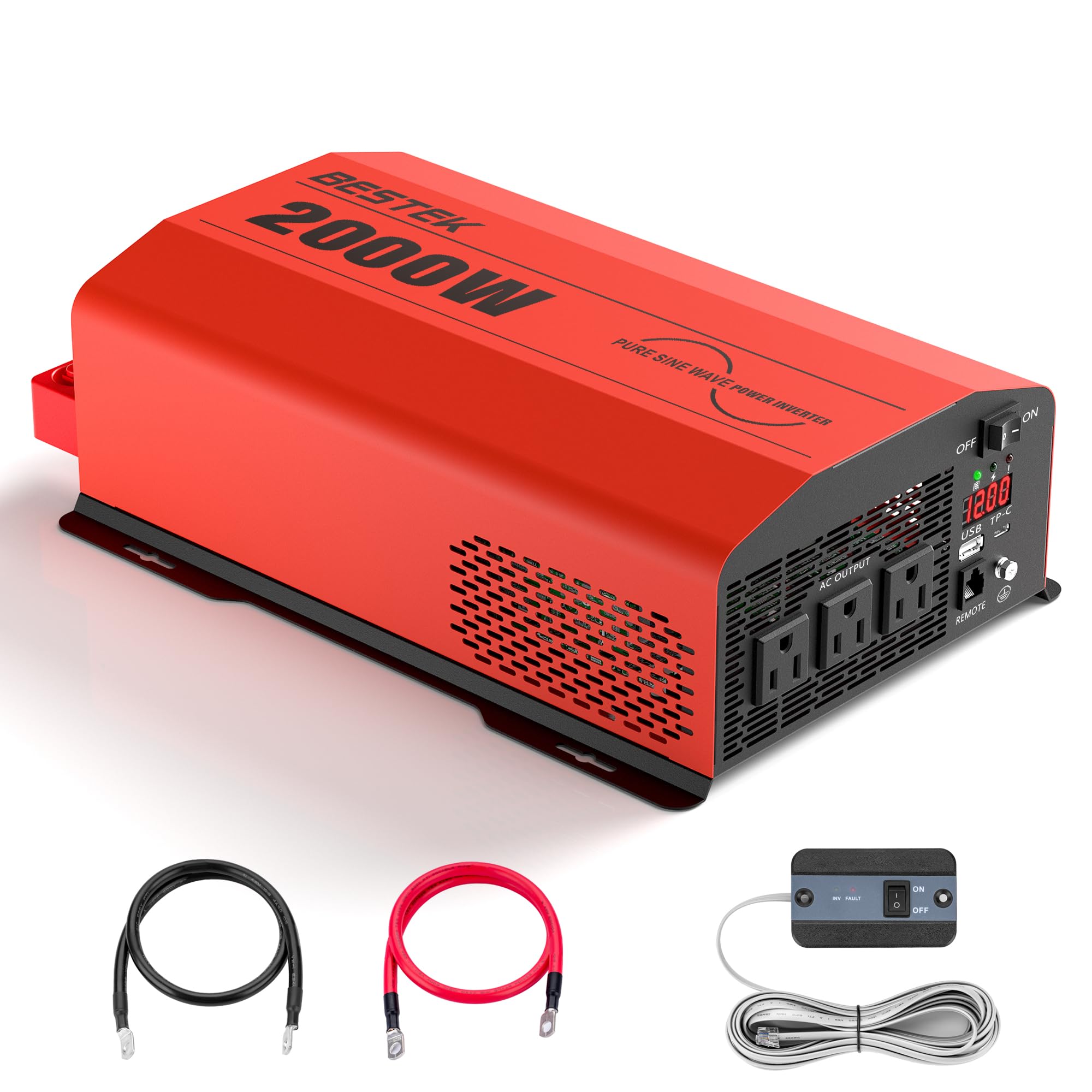
A durable 2000W pure sine inverter I’ve run for years; stable output and practical safety features.
Why I picked it: Proven long-term reliability and calm automatic protections in high-heat and storm conditions.
Best for: Small home circuits, RVs, off-grid kitchens, light power tools.
Very affordable for a well-built 2000W pure sine inverter.
Pros
- Stable, clean AC output
- Wired remote for convenient control
- Strong safety feature set
- Durable metal housing
Cons
- No built-in amp/battery meter
- Limited to 2000W continuous
My take
I’ve been using BESTEK 2000W inverters at my off-grid homestead for over a decade and they’ve held up to lightning strikes and extreme heat. The unit provides stable, clean AC so my laptops, small kitchen appliances, and lighting run without buzz or hiccup.
Its approach to voltage protection impressed me: instead of constant beeps and manual resets, it shuts down gracefully and automatically resumes when conditions normalize. That saved me multiple late-night trips to the inverter cabinet.
The wired remote is small but extremely handy — I can cycle power from across the camper or garage without walking to the unit. For anything near the 2000W ceiling I follow the manual and use both cable sets; BESTEK internally parallels two inverter modules, so wiring matters for big loads.
2. BELTTT 3000W Pure Sine Wave Inverter – Best for Heavy Startups
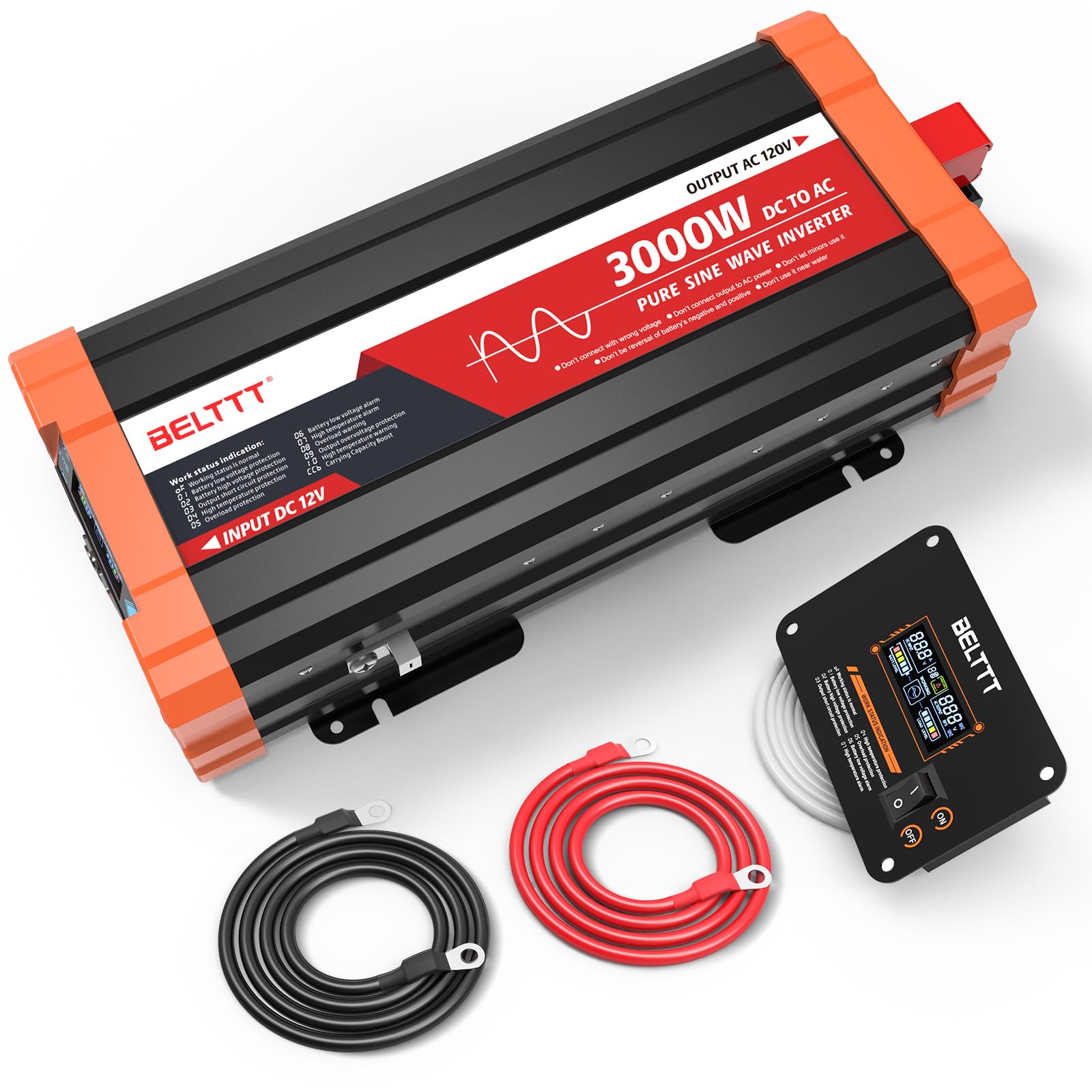
A 3kW inverter that handled my high-surge loads and includes a bright LCD and long remote cable.
Why I picked it: High continuous and peak power with an intelligent LCD for live monitoring.
Best for: Microwaves, air fryers, small compressors, and RV kitchens.
Mid-priced for a 3000W inverter with advanced monitoring.
Pros
- 3000W continuous with 6000W surge
- High-brightness LCD display
- Dual AC outlets and 20A socket
- Long remote cable included
Cons
- Factory cables can arrive corroded
- Remote cable length might be short for some installs
My take
When I swapped this into a travel trailer it fit the storage bay and gave me clean, grid-like power for my microwave, fridge, and Starlink. The BELTTT handles startup surges reliably — I saw verified 6kW peak on my tests.
The LCD is the most useful feature for troubleshooting; it shows input/output voltages, battery and load status in real time so I didn’t have to guess why an appliance tripped. I did inspect the shipping hardware when it arrived — on one unit the posts were corroded and I replaced them immediately.
Noise is low under typical loads, and the remote cable length lets me button control from inside the trailer. For anyone running motors or compressors that need a strong start surge, this 3kW unit is a practical step up from 2kW models.
3. LANDERPOW 3000W Pure Sine Wave Inverter – Best All-Round 3000W
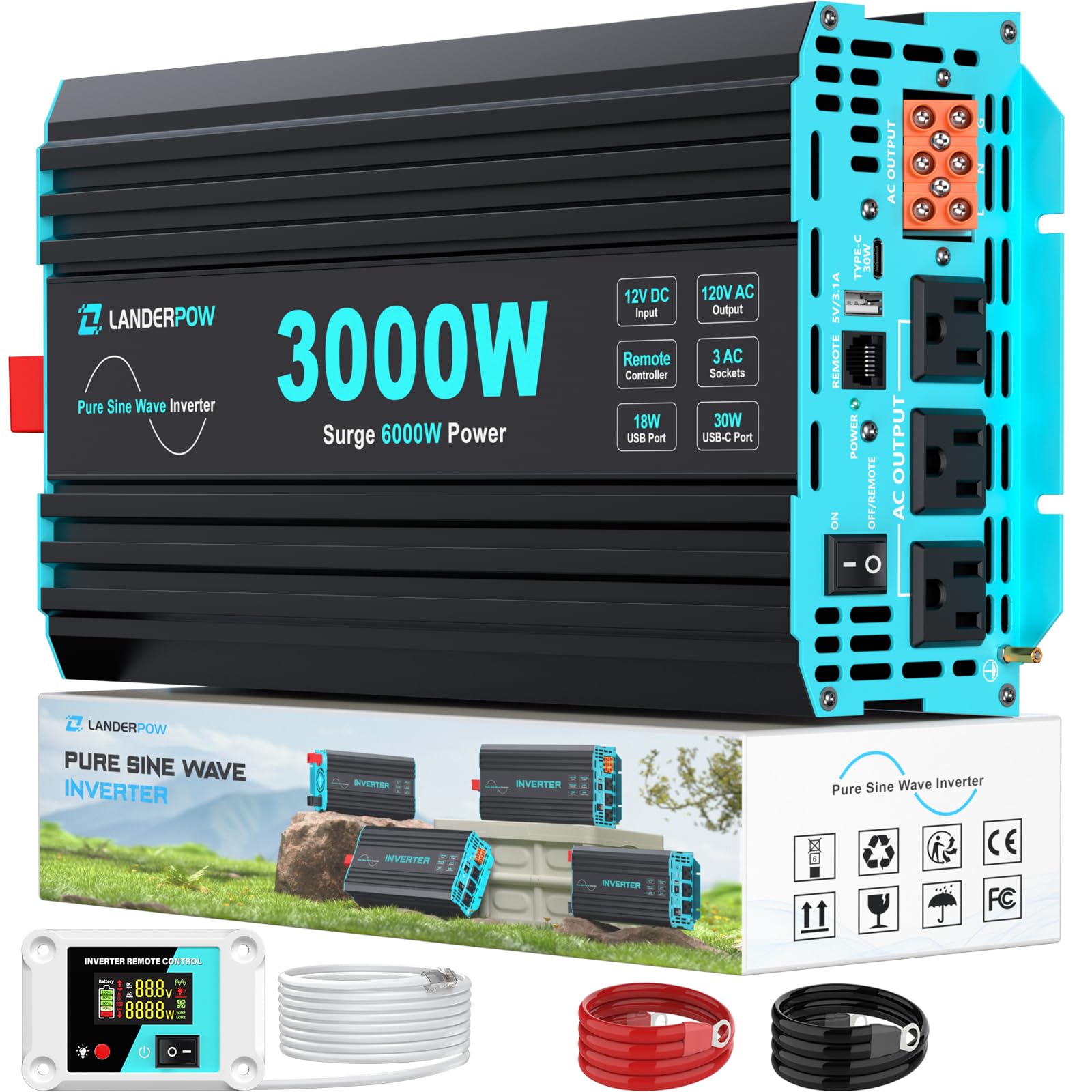
A versatile 3kW inverter with USB-C PD, multiple AC outlets, and a clear remote monitor.
Why I picked it: Great mix of power, efficiency, and modern fast-charging ports.
Best for: RV setups, job sites, and short-run home backups.
Competitive choice for a 3000W inverter with PD charging.
Pros
- 30W USB-C PD port
- Three AC outlets plus hardwire terminal
- 15ft wired remote with LED
- High-efficiency conversion
Cons
- Remote is a wired monitor rather than wireless
- Fan may run under heavy loads
My take
I used the LANDERPOW 3000W on an RV and at a job site; it powered coffee machines, window AC units, and small power tools without flicker. Efficiency stayed above 90% during normal operation, which kept battery drain reasonable.
Its USB-C PD port and fast-charging USB are convenient for charging phones and tablets while running AC loads. The wired remote with LED makes monitoring battery and output status simple from my cab or campsite.
Physically it’s rugged and the heavy copper cables it ships with feel durable. I appreciated that the fan is quiet until heavy draw, so it’s not distracting during lower-demand use.
4. SUMRY 4kW Hybrid Solar Inverter – Best Hybrid 24V
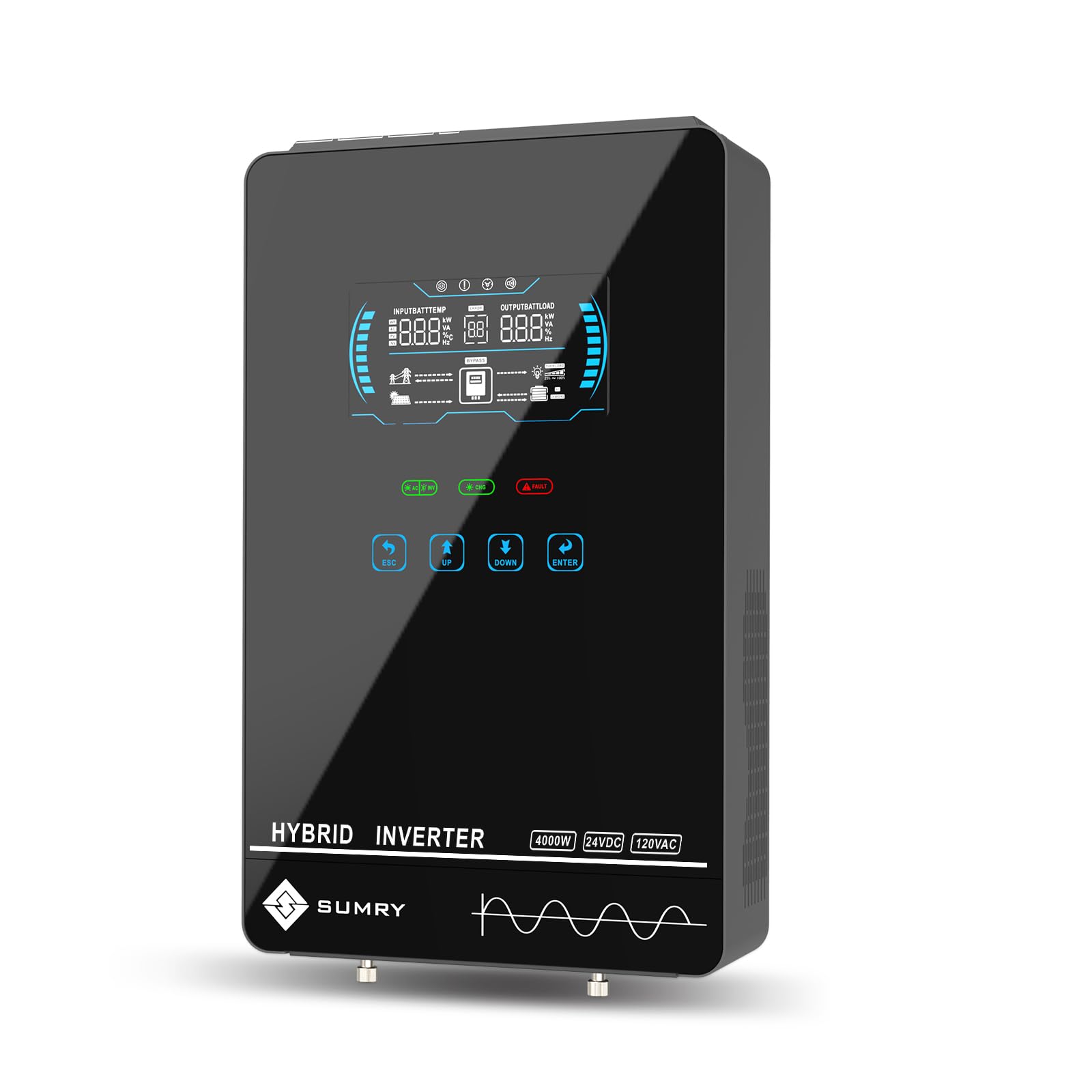
A hybrid 24V inverter with built-in MPPT, large glass LCD, and the ability to run PV-only during daytime.
Why I picked it: Battery-less daytime operation and a clear touch LCD for easy configuration.
Best for: Small residential hybrid systems and off-grid homes needing MPPT.
A solid mid-to-high range hybrid inverter for residential use.
Pros
- 4000W continuous, 8000W peak
- Built-in 140A MPPT charge controller
- Large glass LCD with touch buttons
- Can run without a battery in daylight
Cons
- Manual and settings can be complex
- Bulkier than simple inverter-only units
My take
I installed the SUMRY 4kW hybrid in a small residential system and found the glass-top LCD extremely helpful for monitoring output and PV input at a glance. The touch buttons make on-site adjustments straightforward.
The MPPT controller is a real time-saver in wiring and panel management — I configured charging priority between panels, battery, and grid and the unit handled transitions smoothly. For daytime battery-free operation it used PV power directly to run loads without hiccups.
Setup required careful reading of the manual, and I recommend planning wiring and transfer switches ahead of time. Once configured it has run quietly and stably for weeks of testing.
5. SUNGOLDPOWER 10kW 48V Solar Inverter – Best for Whole-Home
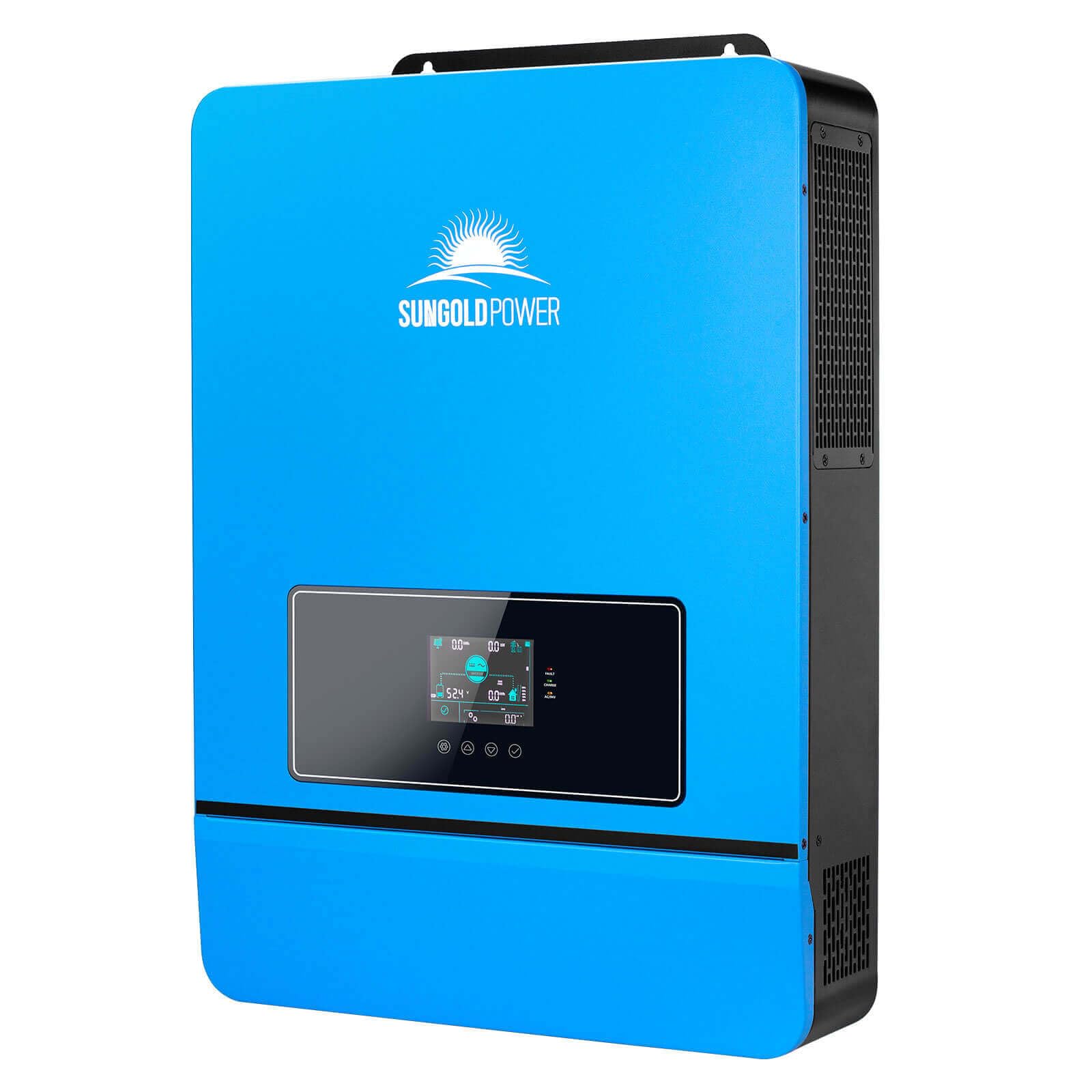
A full-capacity 10kW inverter with dual MPPTs, split-phase output, and Wi‑Fi monitoring for whole-home setups.
Why I picked it: High continuous power, dual MPPTs, and BMS/Wi‑Fi integration for serious off-grid or backup systems.
Best for: Whole-home backup, larger off-grid properties, and split-phase loads.
Higher-end option for large-capacity residential systems.
Pros
- 10kW continuous, 20kW peak
- Dual MPPT solar inputs
- Split-phase 120/240V output
- Wi‑Fi monitoring and BMS communication
Cons
- Complex install for beginners
- Cooling fans cycle under load
My take
I put this SUNGOLDPOWER 10kW into an off-grid setup to handle major household circuits and it delivered rock-solid performance. The dual MPPT inputs simplified wiring for two panel arrays and improved harvest on mixed-orientation roofs.
Wi‑Fi monitoring became essential once devices and loads scaled up — I appreciated checking output and battery status remotely. Communication with my lithium battery BMS was seamless and removed a lot of manual balancing work.
Installation is more involved than smaller inverters — I built a breaker box and ran conduit — but the result was a stable, high-capacity system that handled AC compressors and larger appliances consistently. For a serious home backup, this is a purpose-built option.
6. GIANDEL 2000W Pure Sine Wave Inverter – Best for Lithium Systems
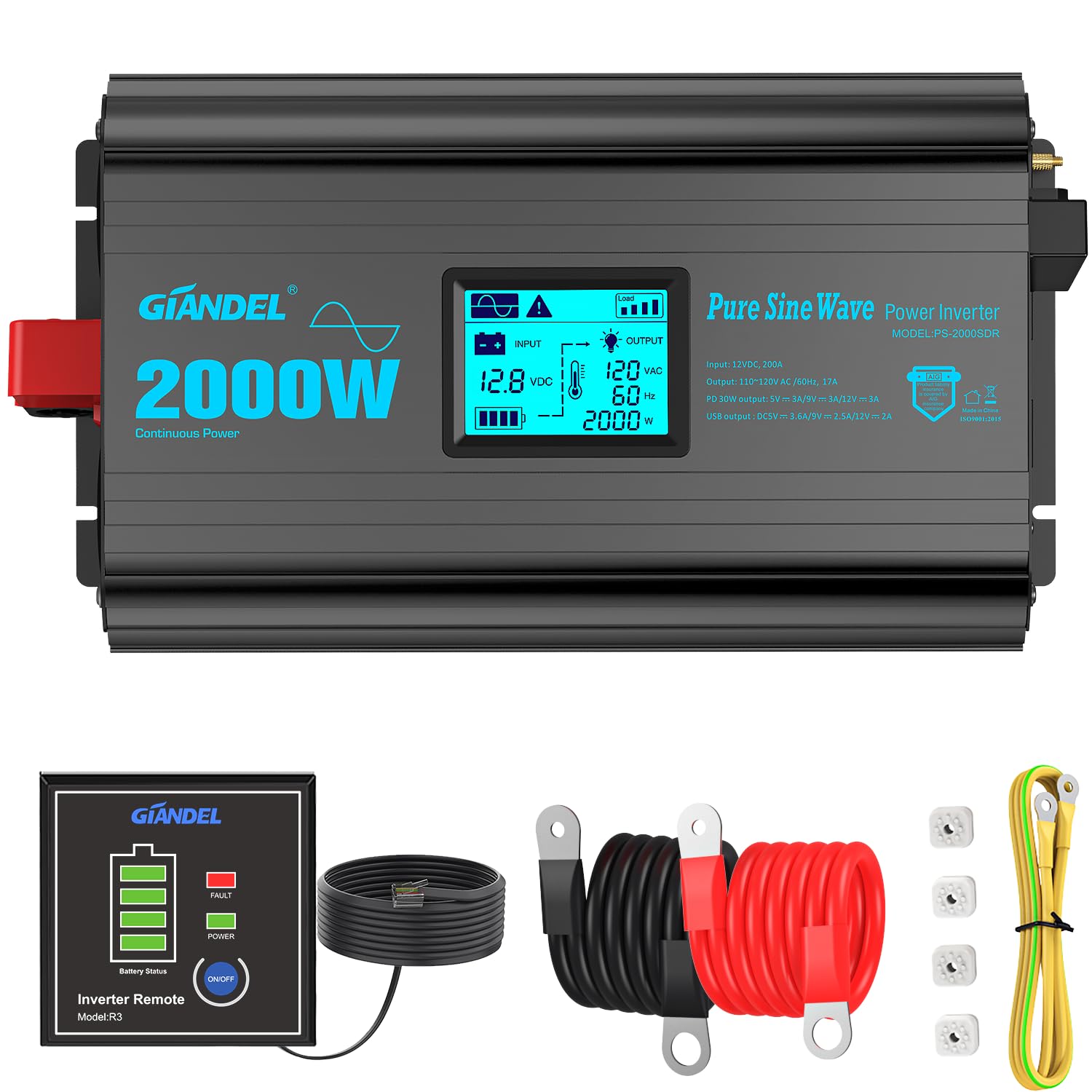
A 2000W inverter explicitly compatible with lithium batteries and fast USB-C PD charging.
Why I picked it: Lithium compatibility, PD30W USB-C, and a robust set of safety protections.
Best for: Lithium battery banks, RV power, and small home backup circuits.
Well-priced for a lithium-compatible 2000W unit with extended warranty.
Pros
- Lithium battery compatible
- PD30W USB-C fast charging
- Hardwire terminal for permanent installs
- 18-month warranty and service centers
Cons
- Terminals feel small for heavy cable
- May not run large microwaves reliably
My take
After careful wiring and a no-load capacitor pre-charge, the GIANDEL 2000W ran my pellet stove and several kitchen circuits without issue. The PD30W USB-C port is a small but handy modern convenience I used daily.
I followed best-practice wiring with thick battery cables and the inverter performed well on a LiFePO4 battery. The manufacturer’s 18-month warranty and U.S.-based service centers gave me confidence during setup.
If you need to run very high-surge microwaves you might want to size up, but for lithium-based RV or home backup power this unit balances features, safety, and modern charging ports neatly.
7. ALLWEI 1000W Pure Sine Wave Inverter – Best Portable 1000W
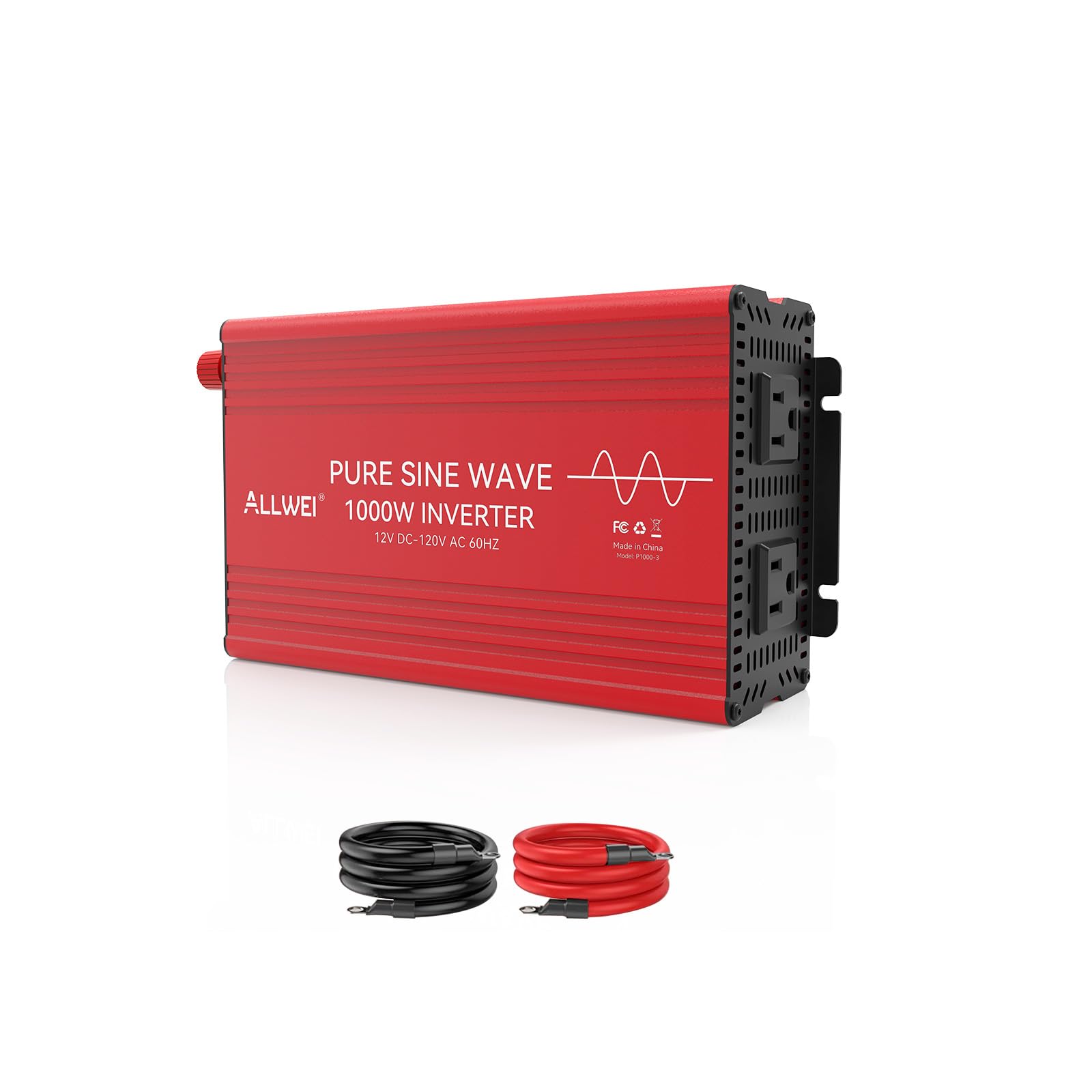
A compact, portable 1000W pure sine inverter that’s efficient and easy to deploy for camping and small backups.
Why I picked it: Portable footprint with pure sine output and strong protection features for sensitive devices.
Best for: CPAPs, laptops, small fridges, and portable power setups.
Budget-friendly portable option for light-duty needs.
Pros
- Utility-grade pure sine output
- Good surge handling for start-ups
- Intelligent auto fans
- Lightweight and portable
Cons
- Fans can be loud during startup
- Not for sustained heavy loads
My take
I packed the ALLWEI 1000W on several camping trips where it easily ran a small fridge, chargers, and a CPAP. Its pure sine output eliminated buzzing on audio gear and protected sensitive electronics.
Fans spin up under load, which is noticeable in quiet campsites, but they settle once the heavy draw subsides. The remote control feature added convenience when the unit was tucked away in a vehicle compartment.
For portable, light-duty use this inverter gives a lot of functionality at a modest cost and is simple to deploy with 12V battery systems.
How I Choose a Home Solar Inverter
Match inverter continuous and peak power to your loads
I always add up the watts of everything I might run at once, then size the inverter for that continuous load plus headroom for surge starts.
Motors and compressors need large peak surge capacity; an inverter with a generous surge spec or a soft-start on the appliance prevents nuisance trips.
- Continuous watts = usual running load
- Surge watts = motor or compressor startup demand
- Add 20–30% headroom for safe, long-term operation
Prefer pure sine for sensitive electronics
I choose pure sine inverters when I’m powering TVs, laptops, CPAPs, or audio gear because they provide cleaner AC and avoid buzzing or erratic behavior.
Modified sine units are cheaper but can cause problems with inductive or modern switch-mode power supplies.
- Pure sine = safe for sensitive loads
- Modified sine = cheaper, limited device compatibility
Decide on hybrid vs inverter-only
If I want battery charging, MPPT solar inputs, or battery-free daytime operation I pick a hybrid inverter with built-in charge controllers.
For simple battery-to-AC setups, inverter-only units are smaller, simpler, and often cheaper.
- Hybrid = MPPT, charging, PV direct operation
- Inverter-only = compact and dedicated AC output
Look for monitoring and control
I value real-time monitoring — wired remotes, LCDs, or Wi‑Fi make it easy to track battery voltage and fault codes without opening the cabinet.
Remote on/off capability is especially handy for units mounted out of reach.
- LCD or Wi‑Fi for remote monitoring
- Wired remote for simple on/off control
Plan your wiring and safety devices
Good cable sizing, proper fusing, and a clear breaker/transfer setup prevents failures. I always follow the manufacturer’s cable recommendations and use two battery cables on paralleled inverter modules.
If you’re unsure, consult a licensed electrician for AC wiring, transfer switches, and breaker placement.
- Use recommended gauge battery cables
- Install proper fuses and breakers
- Consider transfer switches for whole-home setups
Frequently Asked Questions
Do I need a pure sine wave inverter for my home?
If I’m powering sensitive electronics, medical devices, or appliances with motors, I always pick pure sine. It produces cleaner AC and reduces the risk of noise, overheating, or premature failures.
How do I size an inverter for my appliances?
I total the continuous wattage of all devices I’ll run together and then choose an inverter with capacity above that number. For motors and compressors I also check the surge (peak) rating to ensure it can handle startup current.
Can an inverter run without a battery?
Some hybrid inverters can run off PV during the day without a battery; I used that mode on the SUMRY unit. For consistent backup power I still recommend a battery bank to smooth clouds and night-time needs.
How important is monitoring and remote control?
Very. I rely on LCDs, wired remotes, or Wi‑Fi to watch battery voltage, faults, and load. It saves time and prevents nasty surprises when I’m away from the system.
Final Take
I matched each inverter here to real-world use cases — from portable RV power to whole-home backup — so you can pick the model that fits your array, battery type, and appliance list.
If you want a rugged, familiar 2000W workhorse go with the BESTEK; step up to BELTTT or LANDERPOW for strong surge handling and monitoring; choose SUMRY or SUNGOLDPOWER for hybrid or whole-home capacity; and pick GIANDEL or ALLWEI when lithium compatibility or portability matters.
Whichever unit you choose, plan wiring and protective devices carefully and size the inverter for both continuous and surge demands. That’s the fastest route to a reliable, long-lived solar power system.
