
I spent extensive hands-on time with a range of bedroom humidifiers — from portable top-fill units to whole-house systems — and I’m sharing which models worked best for different needs, plus practical tips so you pick af
I tested humidifiers across bedrooms, living rooms, and whole-home setups so I could recommend products that actually solve dry-air problems overnight and beyond.
My approach was simple: run each unit in realistic bedroom conditions, check noise and mist behavior at night, watch run time between refills, and assess maintenance and controls.
Below are the models I kept coming back to depending on room size, noise tolerance, and how hands-off I wanted the setup to be.
I compared coverage, run time, noise, maintenance burden, and any extra features (purification, app control, whole-house compatibility). I prioritized units that made sleeping, breathing, or plant care noticeably better without demanding constant attention.
1. BLUEAIR 2-in-1 Purify + Humidify: Air Purifier and Humidifier with HEPASilent™ and 360° InvisibleMist™ Technology – Best All‑in‑One Humidifier & Purifier
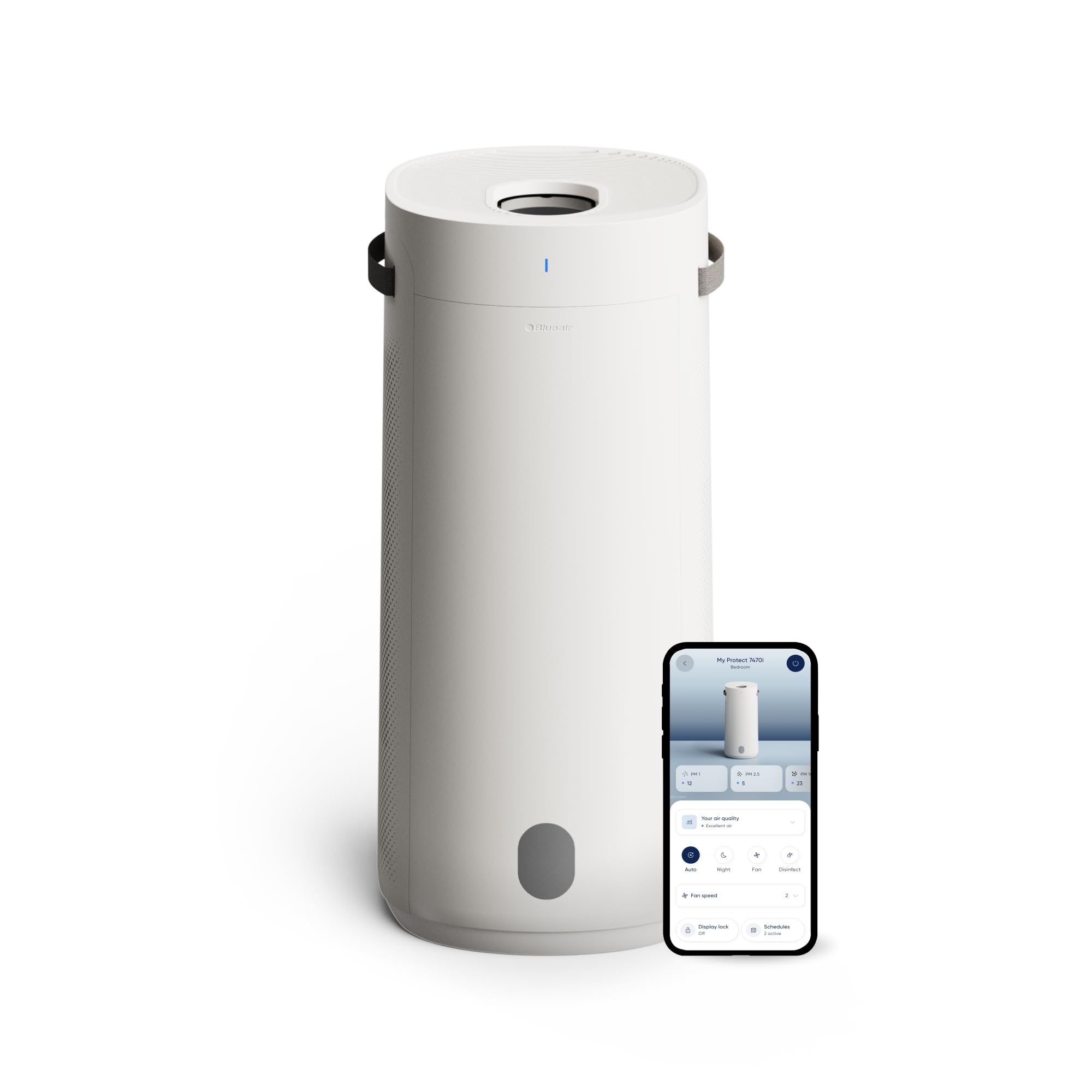
A premium two-in-one that both purifies and humidifies large spaces, with top-fill LED refill, pump-assisted wick, and app control.
Why I picked it: Combines HEPA-level purification with robust humidification and convenient top-fill refill in one unit.
Best for: People who want clean and balanced air in larger bedrooms or open living-bedroom spaces.
Premium, higher-cost option.
Pros
- Purifies and humidifies in one device
- Innovative top-fill LED refill
- App control and AutoHydrate feature
- Powerful coverage for large rooms
Cons
- Premium price point
- Larger footprint than bedside units
- Regular maintenance required for wick
My take
I used this Blueair unit in a large bedroom and living area where I wanted both cleaner air and steady humidity. The dual-action design is the defining feature — it genuinely feels like two appliances working together rather than a compromise.
Refilling through the LED top made daily top‑offs quick, and the built-in pump keeps the 360° wick evenly saturated so I didn’t get the musty odors that plague lesser designs. The AutoHydrate and app control let me set a humidity target and leave it alone for long stretches.
On higher speeds it moves a lot of air and truly covers large spaces; Blueair claims fast purification and in my sessions the room air felt noticeably fresher in short order. Expect this to be a more premium, higher-maintenance option, but worth it if you want both purification and humidification in one elegant package.
2. DREO Humidifiers for Bedroom, 3L Top Fill 30H & 26dB Quiet Runtime – Best Quiet Top‑Fill Humidifier
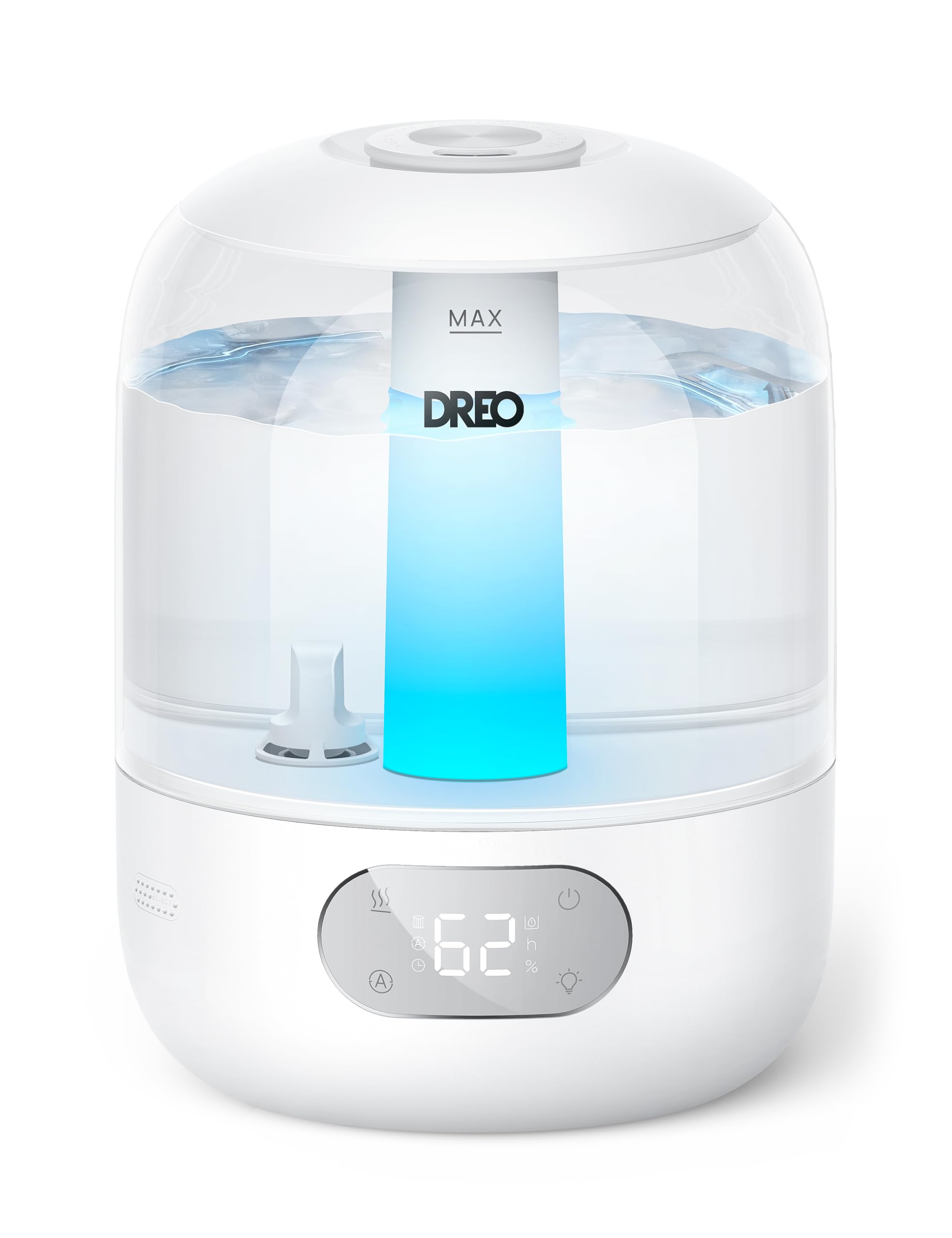
A compact, top-fill ultrasonic humidifier with a 3L tank, very low sleep-mode noise, and an aroma pad for occasional essential-oil use.
Why I picked it: Long run time, very quiet sleep mode, and a user-friendly top-fill design for bedside use.
Best for: Small-to-medium bedrooms, nursery use, and anyone who hates noisy humidifiers at night.
Affordable, budget-friendly option.
Pros
- Whisper-quiet in sleep mode
- Top-fill is easy and neat
- Long runtime in low mode
- Aroma pad for essential oils
Cons
- Hygrometer can read inaccurately
- Display colors can be bright at night
My take
I relied on this 3L DREO unit in a small bedroom for weeks and appreciated how quietly it ran through the night. At 26 dB in sleep mode it’s effectively silent compared with many ultrasonics.
The top-fill tank is genuinely convenient — no lugging the reservoir to the sink — and the 30‑hour runtime in low settings meant fewer midnight refills. It pushed a steady, fine mist and the 360° nozzle helps direct output where I wanted it.
Two caveats from my experience: the built-in humidity readout sometimes reported higher than my reference hygrometer, so I used manual settings when precision mattered; and the color-coded display can be distracting in a very dark room. Overall, this is the best compact, quiet option I used for bedside comfort.
3. Venta LW45 Original Humidifier – Filter-Free Evaporative Humidifier for Spaces up to 600 ft² – Best Filter‑Free Evaporative Humidifier
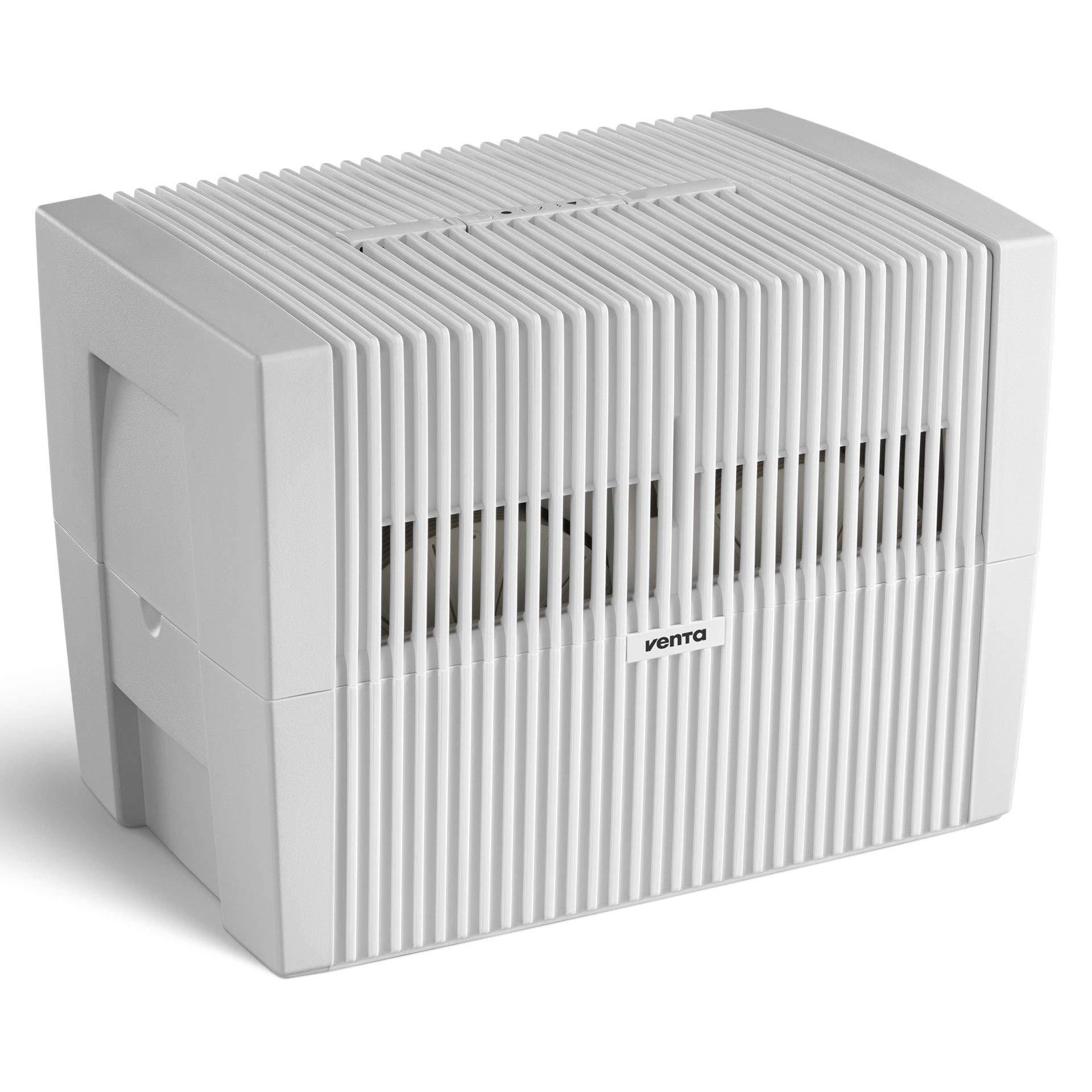
A filter-free evaporative system that offers mist‑free humidification for large rooms and naturally avoids wetting furniture, designed to maintain healthy humidity ranges.
Why I picked it: Evaporative, mist-free humidification that works continuously and is safe to run with tap water.
Best for: Large bedrooms, open floor plans, and people who prefer steady, natural humidification.
Higher-end, long-term investment.
Pros
- Mist-free evaporative output
- Safe with tap water
- Designed for large rooms
- Reduces static and preserves wood
Cons
- Slow to reach target humidity
- Requires regular cleaning to avoid build-up
- Bulky for small bedrooms
My take
I put the Venta LW45 in a large open-plan bedroom and found it excels at gentle, consistent humidification without spraying visible mist. That makes it easy to place near furniture without worry.
Because it’s evaporative, expect a ramp-up period: the unit humidifies the room and the surrounding surfaces, and it can take several days to bring everything up to the target level. Once established, it held a comfortable humidity with minimal intervention.
Maintenance is simple but essential — I saw the reservoir collect debris over time, so regular cleaning keeps performance steady. If you want steady, natural humidification across a large space, this is the model I kept returning to.
4. AprilAire 500M Whole-House Humidifier, Manual Compact Furnace Humidifier for Homes up to 3,600 Sq. Ft. – Best Whole‑House Humidifier
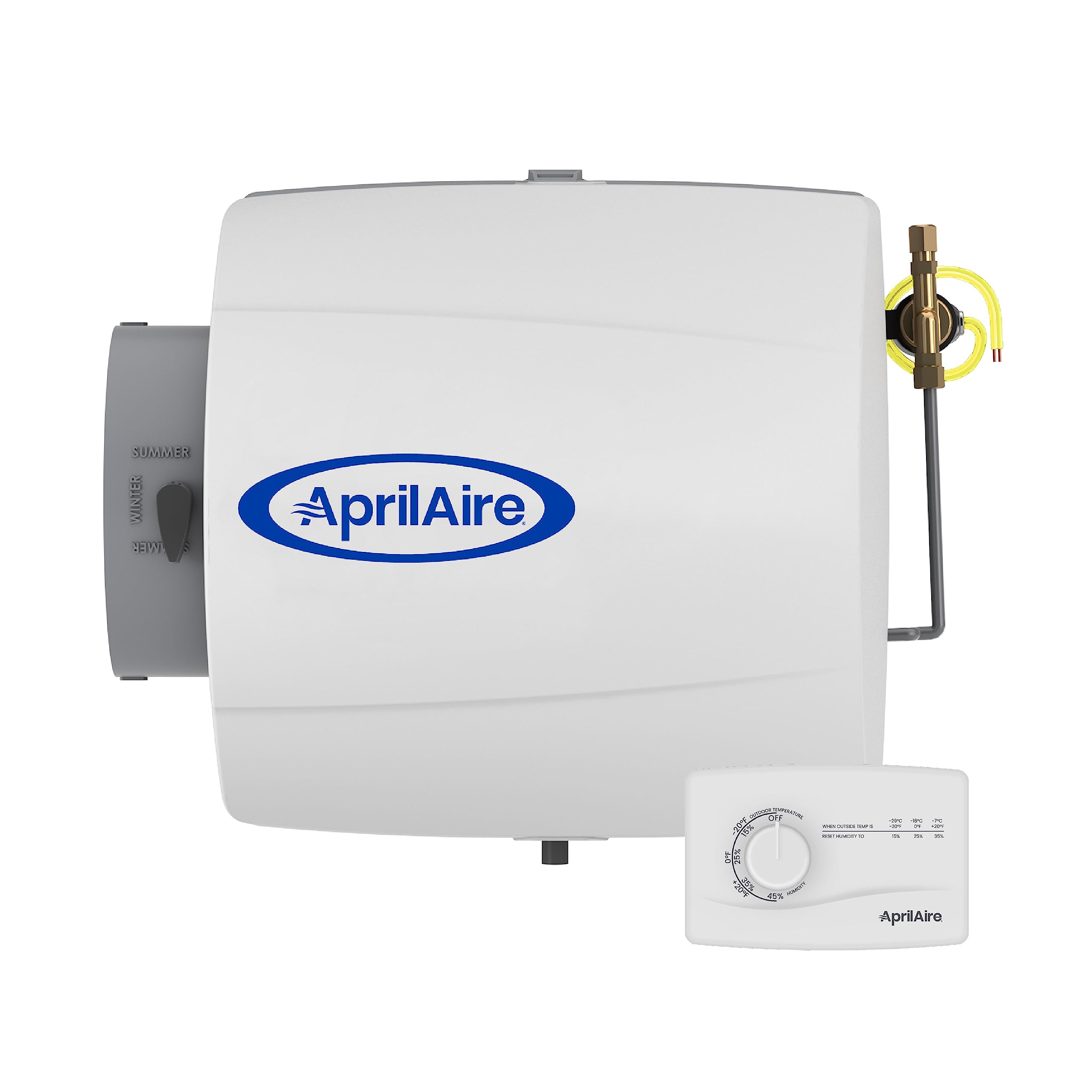
A robust evaporative whole‑home humidifier that integrates with your furnace to deliver high-capacity humidity control throughout a house.
Why I picked it: High capacity and proven whole‑house performance for homeowners who want centralized humidity control.
Best for: Homeowners with forced-air furnaces who need whole-house humidity control in cold months.
Whole-house, professional-level investment.
Pros
- Covers up to 3,600 sq. ft.
- High 12 gallons/day capacity
- Durable, built-in humidifier control
- Made in the USA
Cons
- Requires installation or DIY skills
- Runs only when furnace fan runs
- Moderate operational noise
My take
I installed the AprilAire 500M on a forced-air system and it transformed dryness across an entire house. The unit’s capacity means I can set a target humidity and let the system work without daily attention.
Installation is approachable for a capable DIYer but does demand time and planning — I spent effort aligning wiring and plumbing to the furnace. Once connected, the manual control is straightforward and the unit reliably keeps whole‑house humidity within a comfortable range.
The one operational quirk I dealt with is that the humidifier only runs when the furnace fan is operating; if you want humidity when the furnace is off you’ll need a workaround. For whole‑home humidity that’s effective and low-maintenance once installed, this is the system I recommend.
5. DREO Smart Humidifiers for Bedroom, 6L Top Fill Supersized Cool Mist Humidifier – Best Smart, Large‑Capacity Humidifier
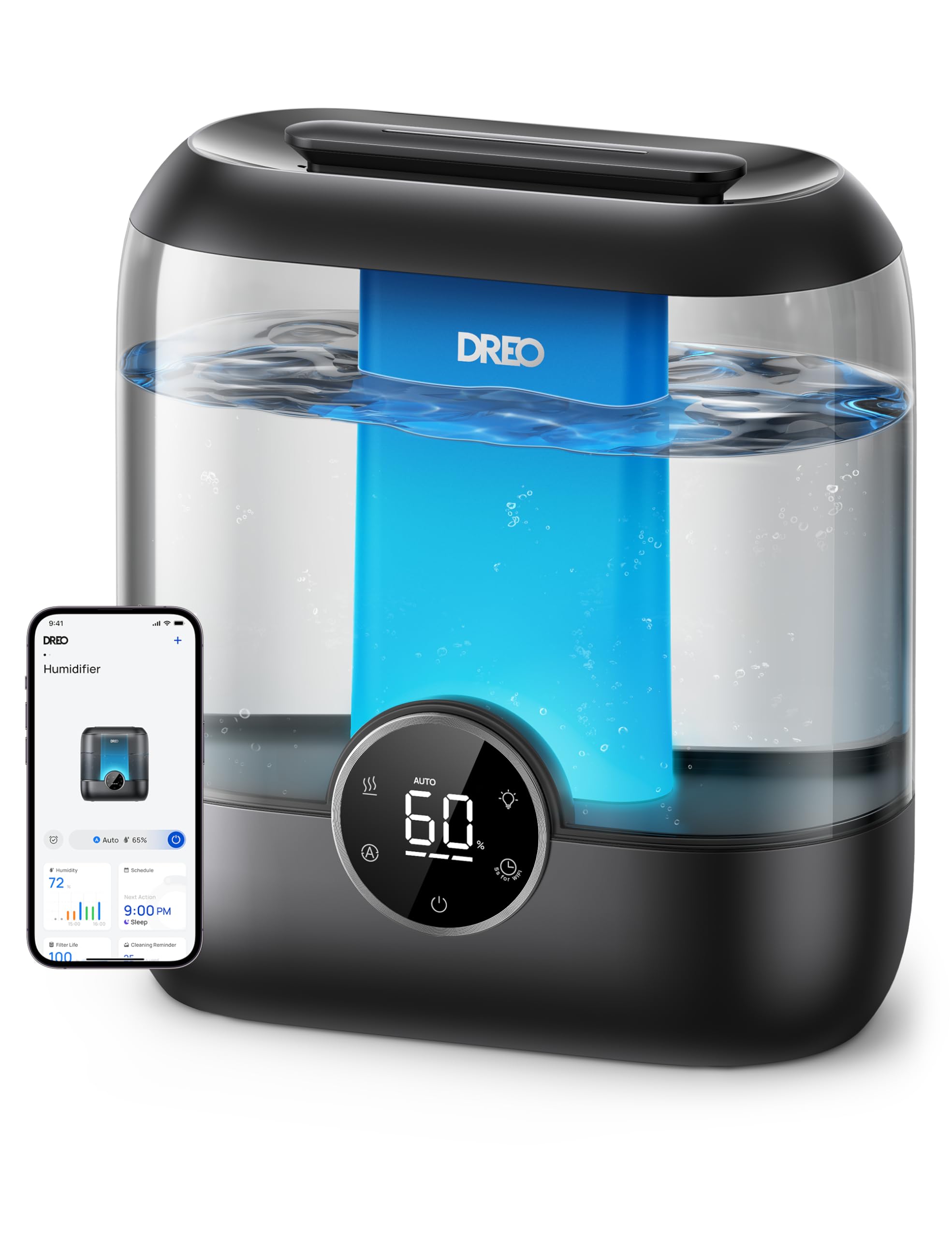
A feature-rich smart humidifier with a 6L tank, app and voice control, long runtime, and a strong ultrafine mist for large rooms and plant care.
Why I picked it: Massive tank and reliable app control make it ideal for set-and-forget bedroom use.
Best for: Large bedrooms, plant owners, and anyone wanting app or voice control.
Mid-priced smart option.
Pros
- Huge 6L tank, long runtime
- App and Alexa voice control
- Adjustable wide nozzle
- Very quiet even at higher output
Cons
- Internal hygrometer can be inaccurate
- Takes significant space on a nightstand
My take
I used the 6L DREO unit as my primary bedroom humidifier and appreciated the sheer convenience: the tank lasts for days and the top-fill lid makes refills painless.
App integration and Alexa control let me set humidity targets and schedules remotely, which I found handy when I wanted the room at a certain level before bedtime. The mist output is powerful yet remains quiet — I rarely noticed noise even on higher settings.
One practical note from my testing: the internal humidity reading tended to be higher than independent hygrometers, so I manually adjusted targets to match true room levels. If you want a smart, high-output unit you can mostly forget about, this is the one I recommend.
6. AprilAire 4655 Manual Whole-House Duct or Wall Mounted Humidifier Control Humidistat – Best Humidistat / Controller
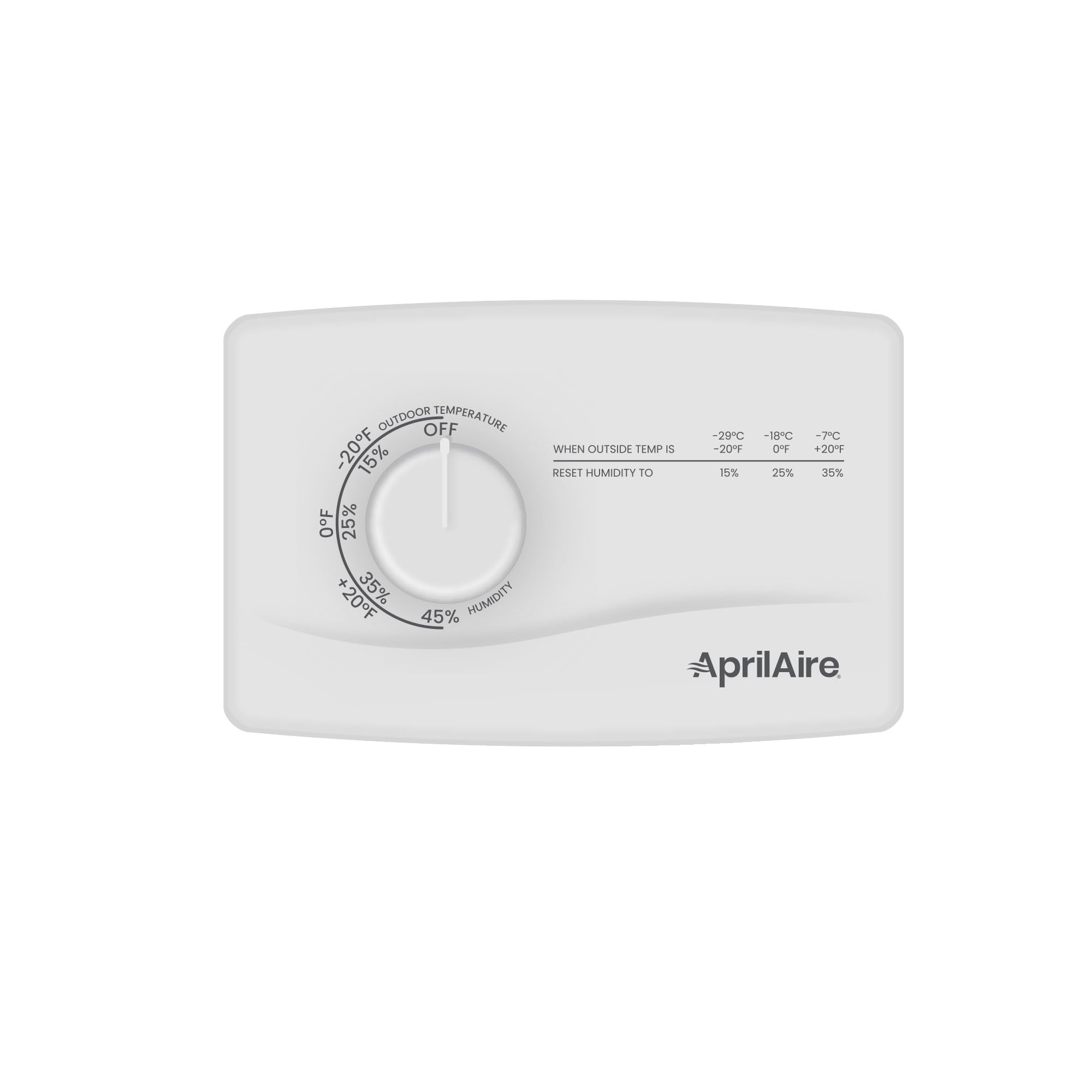
A simple, reliable humidistat designed for AprilAire whole-house humidifiers that offers manual dial control and duct or wall mounting.
Why I picked it: Simple, effective humidity control that pairs with AprilAire systems and is easy to install or replace.
Best for: Homes with an AprilAire whole-house humidifier needing straightforward manual control.
Low-cost, essential accessory.
Pros
- Easy dial control
- Duct or wall mount
- Compatible with AprilAire systems
- Low-voltage 24VAC design
Cons
- Basic interface only
- Requires wiring or installation
My take
When my older humidistat failed I swapped in the AprilAire 4655 and appreciated how straightforward the unit is. The dial control gives direct, dependable humidity setting without fuss.
Installation required basic wiring but was otherwise quick; if your furnace has a labeled HUM circuit you’ll likely avoid extra components. This is the practical controller I used to keep whole‑house humidity stable and predictable.
It’s not flashy, but it works: accurate to within a few percentage points and built specifically to pair with AprilAire hardware, making it a sensible replacement or upgrade for whole‑home setups.
How I Choose a Bedroom Humidifier
Room size and coverage
I match humidifier capacity to the room size first. Tank volume, mist output (ml/hr), and stated coverage give me a quick read on what will maintain humidity overnight.
For small bedrooms a 1–3L top‑fill ultrasonic is usually enough; for large rooms or open plans I favor evaporative or high-output ultrasonics with bigger tanks.
- Under 300 sq ft: compact 2–3L units are fine
- 300–600 sq ft: look for 300 ml/hr or evaporative designs
- Whole-house: choose furnace-mounted systems for central control
Noise and sleep
I test noise at night. Models that advertise 25–30 dB are effectively silent in my experience and ideal for light sleepers.
If noise bothers you, pick a model with a clearly published sleep/noise mode or an evaporative design that runs quietly.
- 26 dB or lower: excellent for bedrooms
- Noise increases with output; test both low and high settings
Refill convenience and runtime
Top-fill tanks make life easier — I never want to carry a filled reservoir across the house. Larger tanks reduce refill frequency and are better for overnight use.
Consider runtime claims versus your real-world schedule and whether you want a set-and-forget solution.
- Top-fill for bedside convenience
- 4L+ tanks for multi-night runtime
- Auto shutoff prevents dry-run damage
Maintenance and water
I prefer units that are easy to disassemble and clean. Ultrasonics need regular rinsing; evaporative units may need occasional descaling or water-treatment.
If your tap water is hard, I recommend occasional use of distilled water or following the manufacturer's cleaning schedule to reduce deposits.
- Empty and dry tank daily for hygiene
- Clean wicks or drum every 1–2 weeks
- Use distilled water if your tap is hard
Smart features and sensors
I like app control and schedules for convenience, but I verify the built-in hygrometer against a separate sensor since some units read high.
Auto modes are handy when sensors are accurate — otherwise manual control is more reliable.
- App and voice control for remote schedules
- Verify internal humidity readings with a secondary hygrometer
Frequently Asked Questions
Where should I place a bedroom humidifier?
I place humidifiers on a stable surface a few feet from the bed and away from walls or electronics. For ultrasonics, I point the nozzle to avoid directly wetting furniture. Whole‑house units go on the furnace as directed.
How do I avoid over-humidifying my bedroom?
I set a target humidity (around 40–50%) and use auto mode or a separate hygrometer to monitor. If the room edges feel damp, reduce output or shorten run periods.
Do I need to use distilled water?
I use distilled water when my tap water is hard to limit mineral deposits and white dust. Many units will run on tap water, but cleaning becomes more frequent with hard water.
How often should I clean my humidifier?
I empty and rinse tanks daily or every other day, and do a deeper clean of wicks or internal parts every 1–2 weeks depending on use and water quality.
Are smart humidifiers worth it?
I find smart humidifiers useful for scheduling and remote control, especially if you want a room ready at bedtime. Verify sensor accuracy before relying solely on auto modes.
Final Take
I tested compact bedside units, large-room models, and whole-house systems so you can pick the right tool for your space and habits.
If you want an all-in-one that cleans and humidifies, the Blueair is the most capable. For quiet bedside performance on a budget, the 3L DREO is my go-to. For whole‑house control, I prefer AprilAire’s 500M paired with the 4655 humidistat.
Use the buying guide above to match coverage, noise tolerance, and maintenance to your lifestyle, and don’t forget a secondary hygrometer to verify humidity readings.
