
I tested six countertop hydroponic systems so you don’t have to. From compact 6‑pod units to app‑connected 12‑pod setups, here’s what worked best for different kitchens and growing goals.
I’ve spent weeks running these hydroponic systems side‑by‑side, cycling seeds, and harvesting herbs and greens so I can tell you what actually works on a kitchen counter.
In this roundup I focused on real use: setup time, how fast seeds sprouted, how well lights and pumps performed, tank sizes and how often I refilled, and which units are fuss‑free versus feature‑heavy.
If you want fresh basil, continuous lettuce, or an efficient seed starter, I’ll explain which system fit each job and why.
I compared footprint, pod count, light power and adjustability, reservoir size, and any smart features. For quick herbs I favored compact, low‑maintenance units; for larger harvests I leaned toward 12‑pod systems with bigger tanks and taller lights. App connectivity and build quality tipped the balance for more serious growers.
1. AeroGarden Harvest Indoor Garden Hydroponic System (6 Pods) – Best Overall
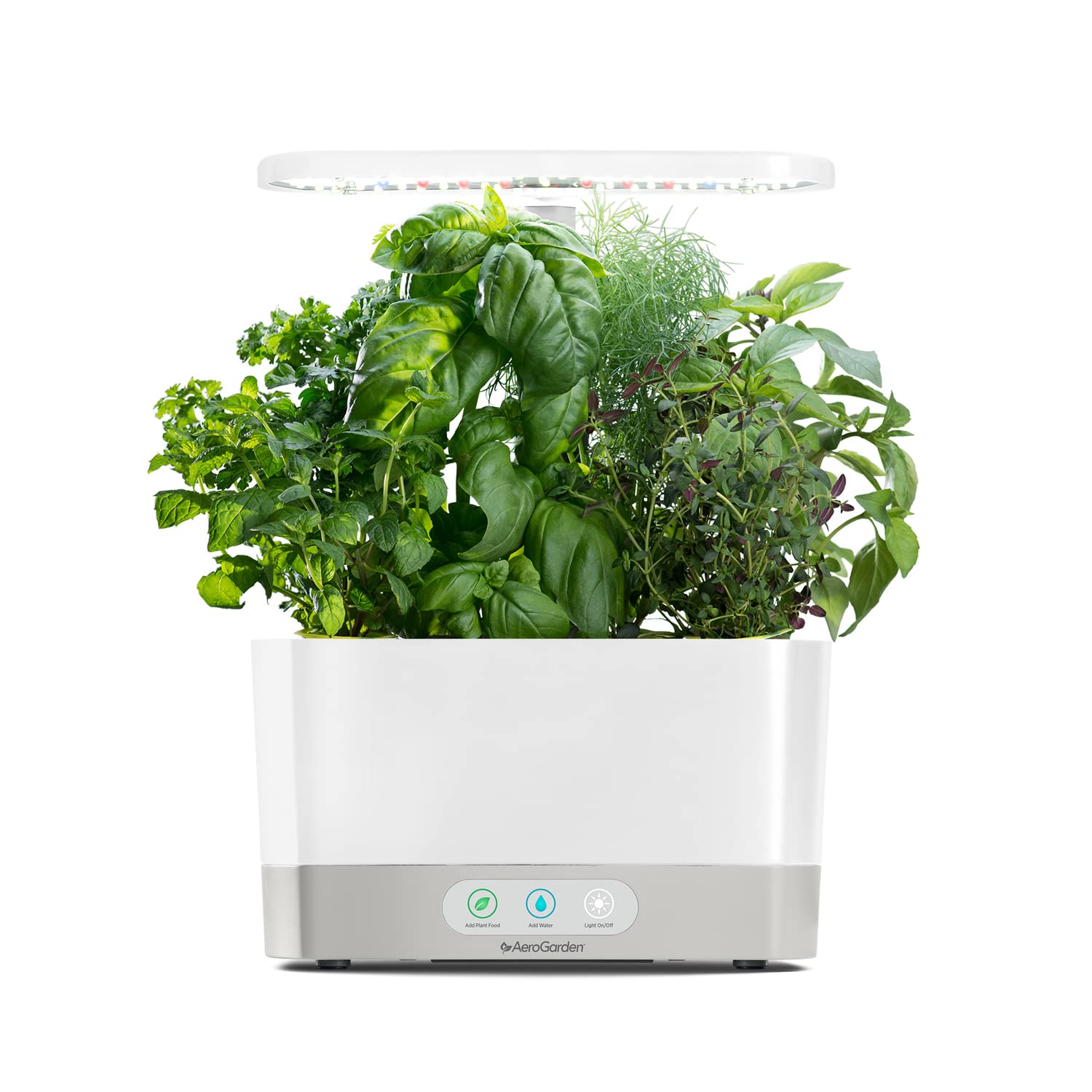
A compact, nearly plug‑and‑play hydroponic garden that grows six herbs or greens with a bright full‑spectrum 20W LED and an easy reminder panel.
Why I picked it: Compact footprint, strong 20W full‑spectrum light, and a genuinely simple control panel.
Best for: Countertop herb gardeners who want fast, low‑effort results.
Affordable for a reliable countertop hydroponic system.
Pros
- Compact, countertop friendly
- Powerful 20W full‑spectrum LED
- Touch control with reminders
- Comes with starter herb pod kit
Cons
- LED can be very bright
- Occasional pump trickle noise
My take
This was the first unit I set up and it proved why AeroGarden has a loyal following. Out of the box it’s basically plug, drop in the seed pods, and go. The 20W full‑spectrum LED is noticeably bright and the automatic timer removes any guesswork.
I consistently got rapid germination and vigorous growth—my dill and basil exploded in a way that outpaced soil starts. The illuminated touch panel that reminds me to add water and plant food actually saved me from overthinking care.
There are a couple trade‑offs: the light is bright enough to light a kitchen at night, so I screened it for evening hours, and you can hear a small water trickle from time to time. Even so, for a low‑maintenance indoor herb source I returned to this unit again and again.
2. iDOO Hydroponics Growing System Kit (12 Pods) with Fan and 22W LED – Best Value 12‑Pod
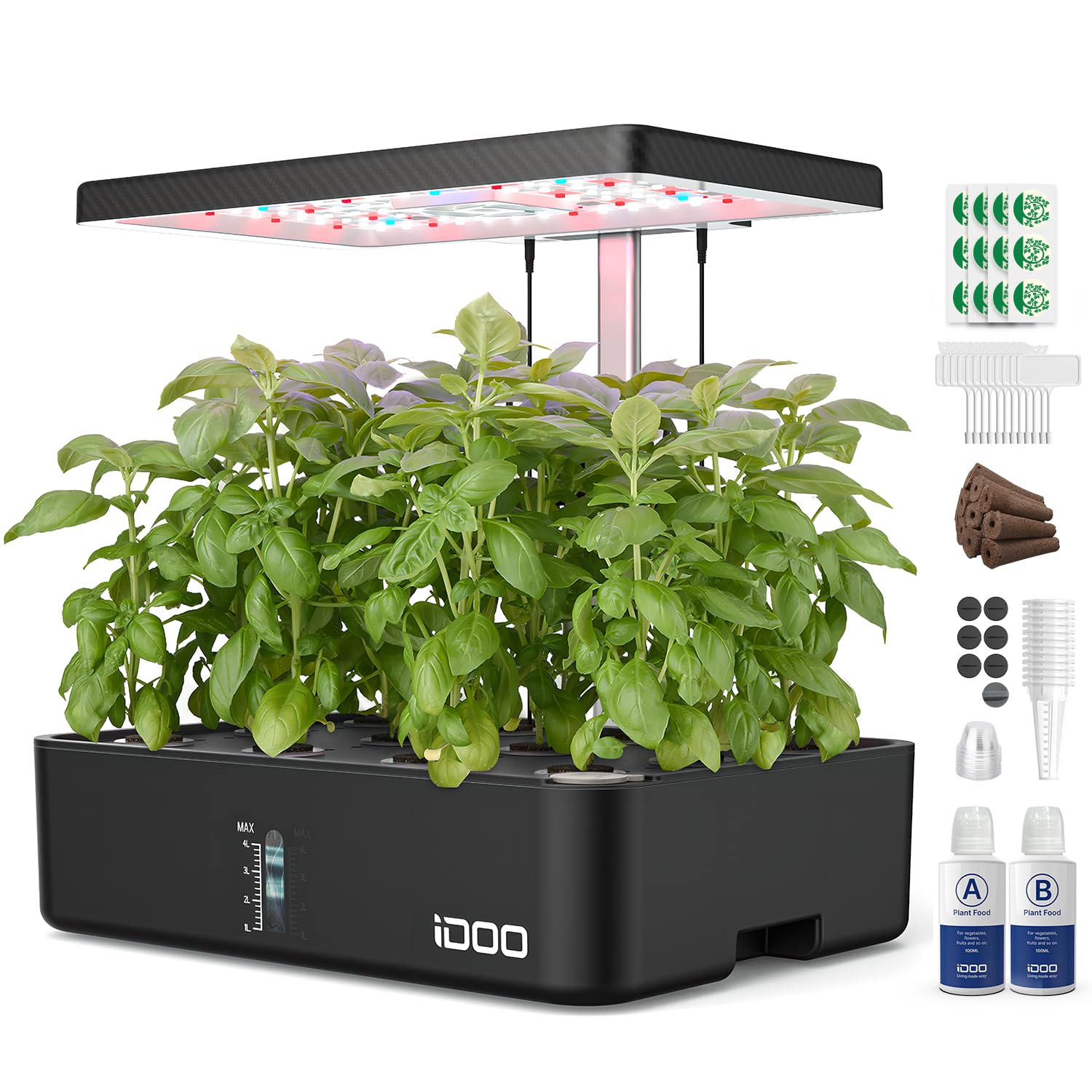
A practical 12‑pod system with dual light modes, built‑in fan, a 4.5L tank, and fast germination—an excellent value if you want more plants than a six‑pod unit.
Why I picked it: Twelve planting stations, two light modes, and a large water tank make it great for bulk growing.
Best for: People who want to grow lots of herbs or seedlings at once.
Excellent mid‑range value for a 12‑pod system.
Pros
- Grows 12 plants simultaneously
- Vegetable and flower light modes
- Built‑in fan for airflow
- Large 4.5L water tank
Cons
- Power cord runs short
- Manual has minor typos
My take
I got this going in under an hour. The instructions were straightforward and the unit felt solid—plastic parts, metal support rod, and a bright 22W LED panel.
My arugula sprouted in about one and a half days, and several basils began poking through within three days. The little upper fan and the pump aerating the water appear to speed things up: I noticed noticeably faster early growth compared with my soil starts.
A few practical notes: the visual water window is genuinely useful and the 4.5L reservoir let me go a week or two without refilling during early growth. The only real annoyance was the short power cord—plan placement accordingly or grab an extender.
3. Ahopegarden Indoor Garden Hydroponics Growing System (10 Pods) – Best for Salad Greens
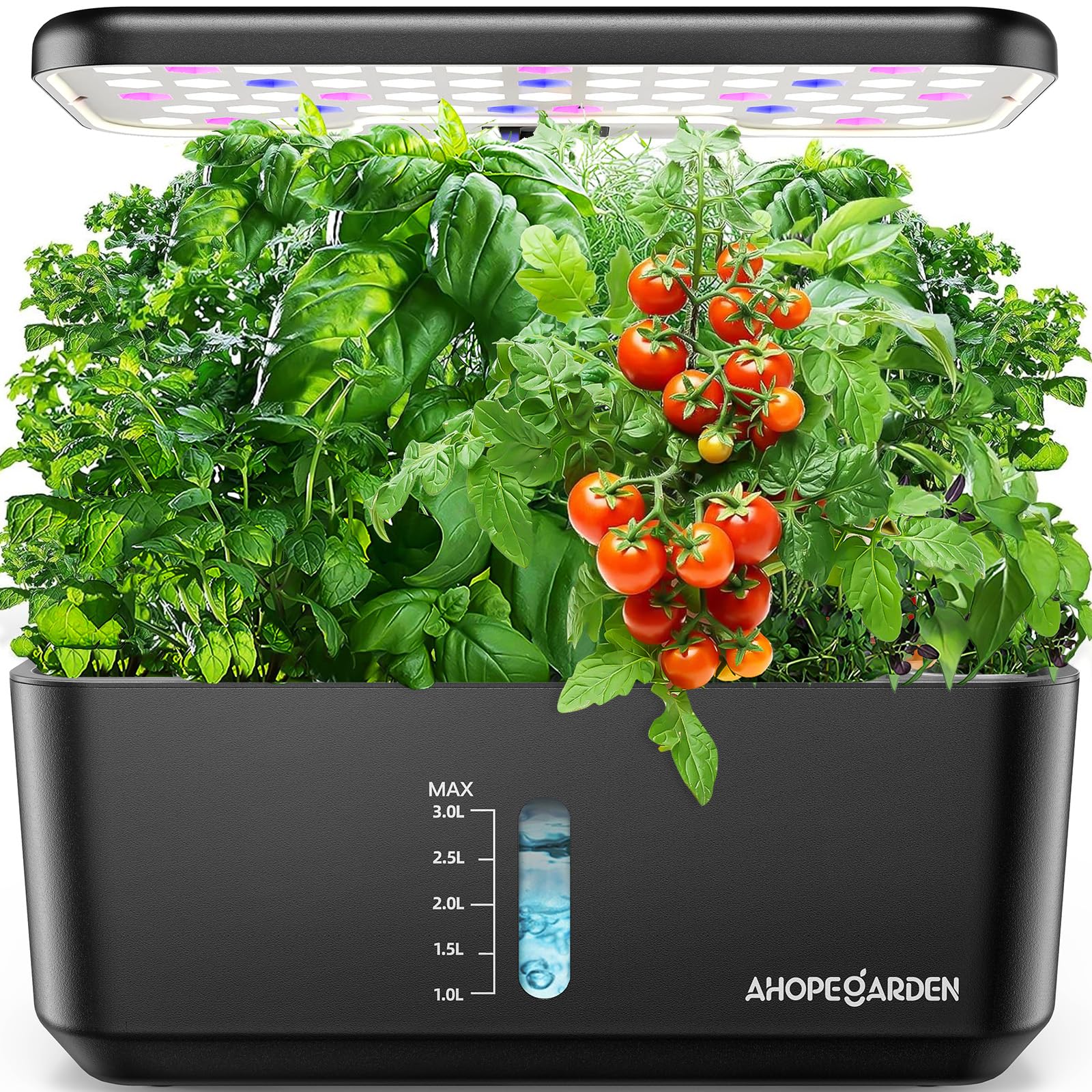
A 10‑pod countertop kit with an adjustable light up to 14.5 inches, a water level window, and two light modes that help me grow lettuce and herbs quickly.
Why I picked it: Good middle ground: more stations than a six‑pod, tall adjustable light, and easy water monitoring.
Best for: Growing small salads and multiple herbs for family use.
Fairly priced for a 10‑pod system.
Pros
- Ten growing stations
- Height adjustable to 14.5 inches
- See‑through water level window
- Two light modes for different crops
Cons
- Plants can grow fast and crowd
- Light timer fixed at 16/8
My take
I bought this to produce quick lettuce and herbs and it delivered. Assembly was quick and the large water tank hardly dropped during the first two weeks, which made maintenance easy.
The adjustable light tower is helpful—lettuce and larger greens had room to reach nearly 14 inches without shading neighbors. The dual modes for veg versus flower/fruit gave me control when I tried peppers as an experiment.
One heads‑up: everything grows fast. I had to prune and harvest earlier than I expected or plants crowded each other. If you want continuous small harvests, rotate crops or pull heavier feeders out early.
4. Click & Grow Indoor Herb Garden Kit with Grow Light (3 Pods Included) – Best for Simplicity
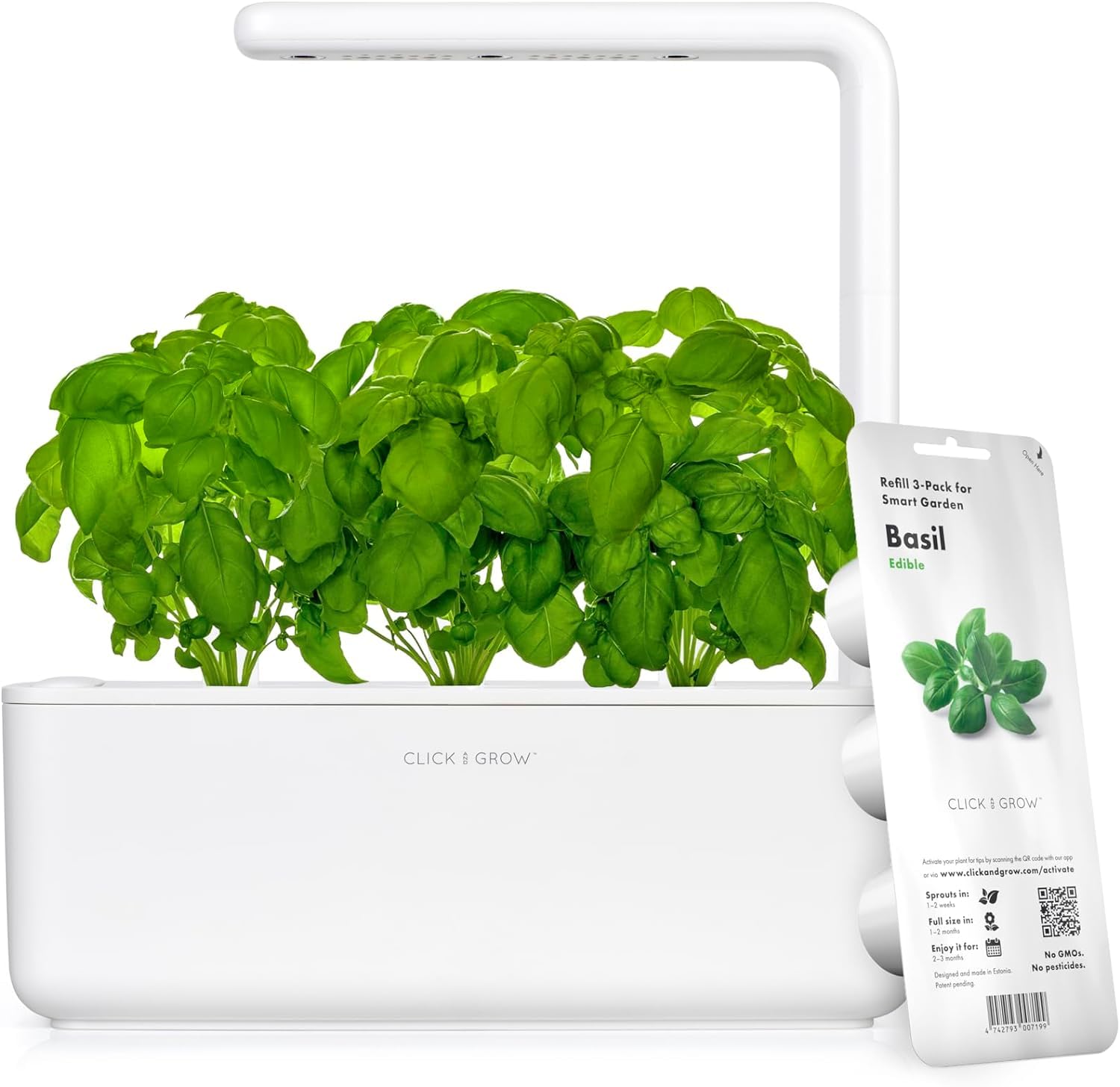
A very simple, stylish smart garden that uses pre‑seeded plant pods and an integrated timer—perfect when you want a nearly hands‑free experience and attractive design.
Why I picked it: Minimal fuss—no timers to program or fertilizer to measure, and a wide selection of pre‑seeded pods.
Best for: People who want an attractive, low‑maintenance planter for windowsills or offices.
A premium option for ease and style.
Pros
- Extremely easy to use
- Attractive, compact design
- Large library of ready pods
- Built‑in timer for lights
Cons
- Smart soil can get moldy
- Water fill opening is small
My take
I set Click & Grow up in my dim office and watched tiny sprouts within a few days. The real advantage is how little I had to do: drop in pods, fill the reservoir, and the system’s built‑in routines handled the rest.
The design is sturdy and attractive on a windowsill; I liked that it doesn’t have a glaring LCD to worry about. I did notice some mold developing on the smart soil over time in high‑moisture scenarios—nothing catastrophic, but worth monitoring and occasional cleaning.
For someone who wants the experience of growing without fiddly maintenance or dosing nutrients, this felt delightfully hands‑off and reliable.
5. LetPot LPH-SE Hydroponics Growing System (12 Pods) with App & Wi‑Fi – Best Smart/Connected
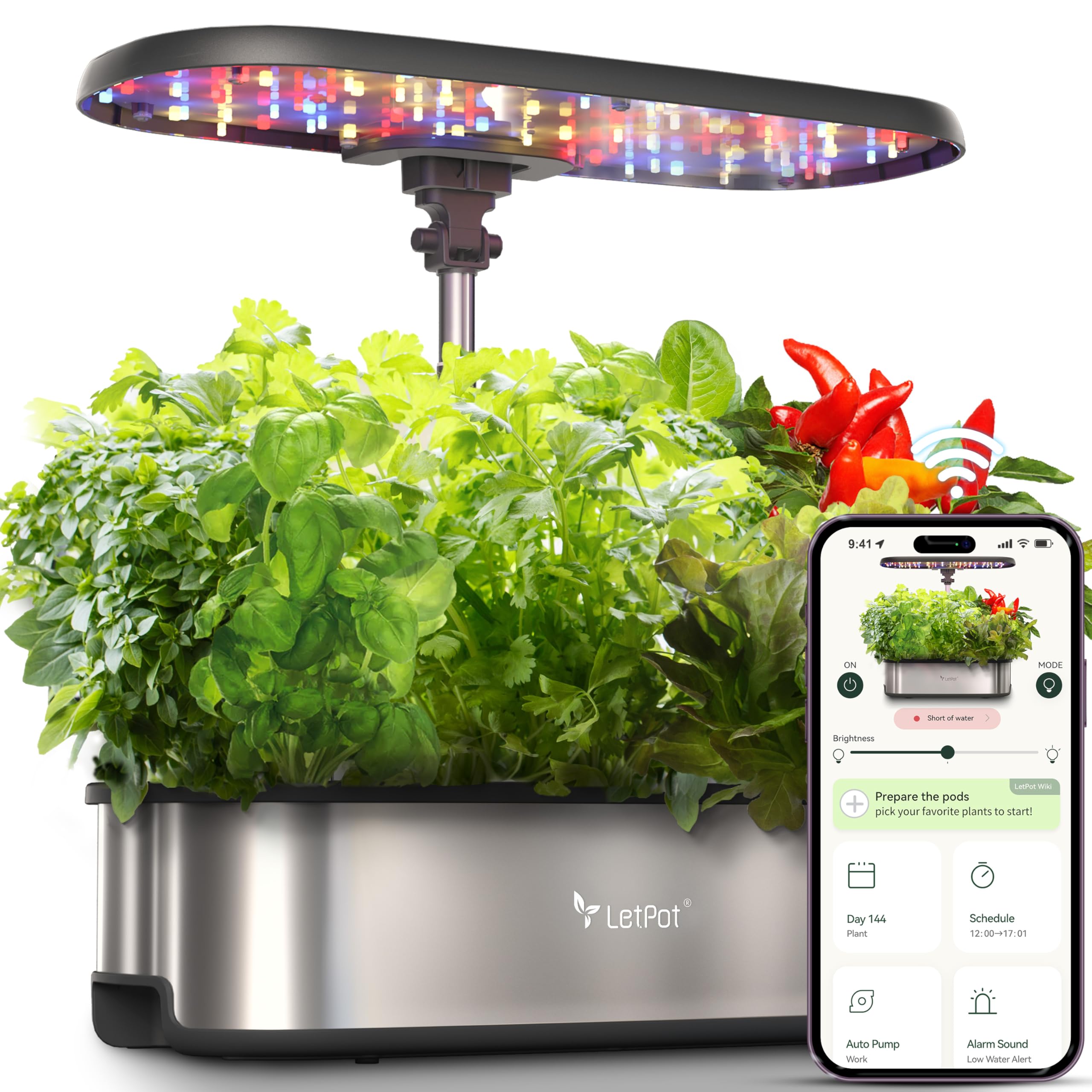
A feature‑packed 12‑pod system with a 24W LED, 5.5L reservoir, stainless steel outer shell, and app control—made for growers who want remote scheduling and data.
Why I picked it: App control, tall adjustable light, and robust build quality for serious indoor gardening.
Best for: Propagators and tech‑minded growers who want remote control.
A higher‑end pick for app features and build quality.
Pros
- App and Wi‑Fi control
- Powerful 24W full spectrum LED
- Large 5.5L water tank
- Stainless steel double‑layer design
Cons
- App can be unreliable
- Higher learning curve
My take
I used this LetPot primarily as a seed starter and propagator and got excellent germination and rooting rates. The hardware feels premium, cleanup is simple, and the light tower extends far enough for taller seedlings.
The app gives real flexibility: I could set custom light schedules and record growing days, which I appreciated when juggling multiple batches. That said, the app connection dropped often for me and required a power cycle to restore—an annoyance if you rely on remote control.
If you want a sleek, powerful system and can tolerate occasional connectivity hiccups, this is my go‑to for heavier lifting and longer growth cycles.
6. Ahopegarden Indoor Garden Hydroponics Growing System (12 Pods, Matte Black) – Best Budget 12‑Pod
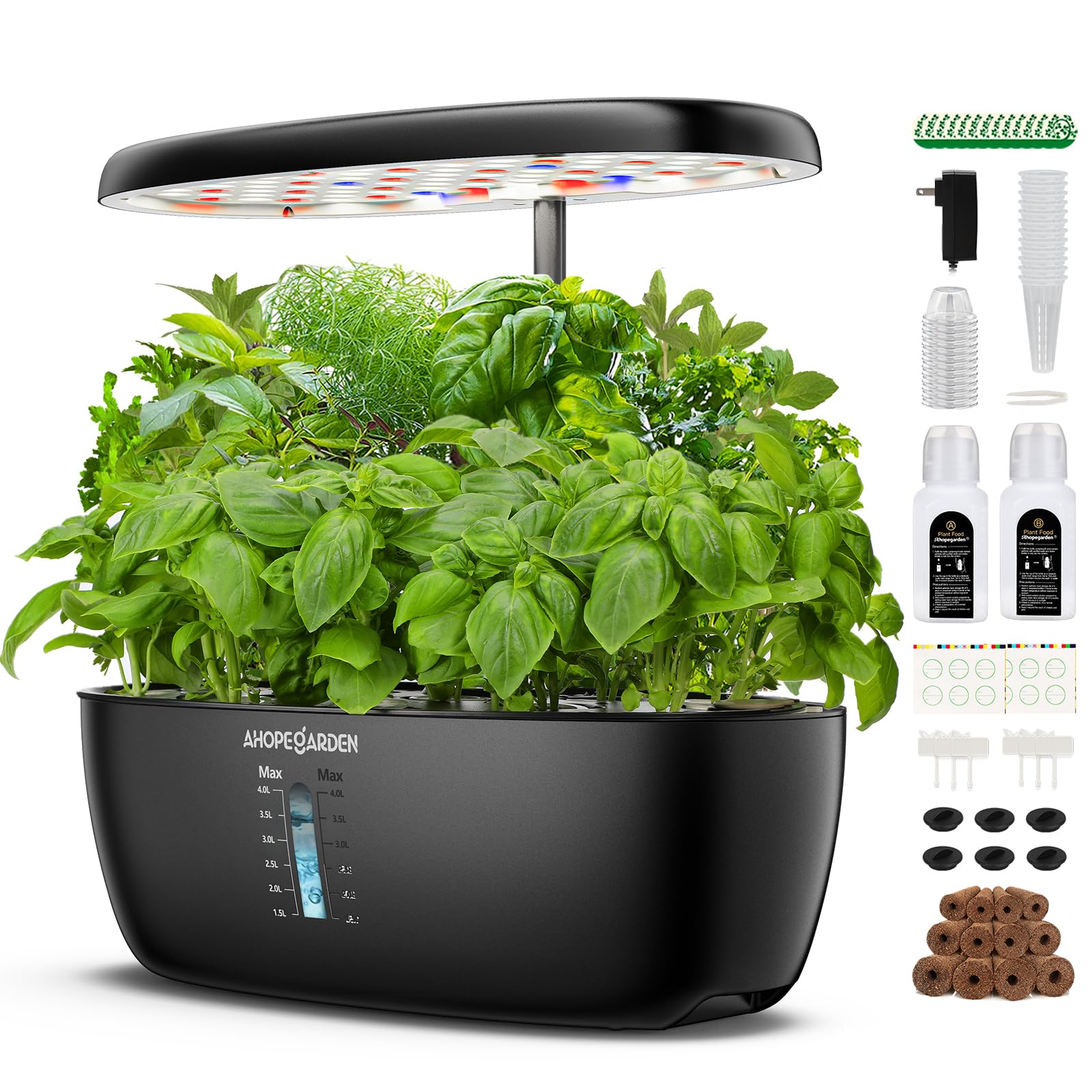
A 12‑pod system that gives you plenty of planting stations, a water window, quiet pump circulation, and adjustable light—an economical way to scale up indoor growing.
Why I picked it: Twelve pods, visual water window, and a silent pump make this a practical budget pick.
Best for: Forgetful waterers and families who want a steady supply of herbs.
Budget‑friendly option with solid features.
Pros
- Twelve grow stations
- Quiet circulation pump
- See‑through water window
- Vegetable and flower modes
Cons
- Light post not as smooth to adjust
- 22‑hour timer can be intense
My take
I’m not great at watering and this unit made indoor gardening painless. The reservoir stayed full long enough that I could forget about topping up for weeks at a time during early growth stages.
The pump is whisper‑quiet—so quiet I had to lift the lid to confirm it was running. Basil and parsley thrived in my unit and I harvested enough basil in a couple months to offset the cost of the kit and seeds.
The telescoping light felt a bit stiff at first, but once set it stayed put and gave bright, even coverage. For a low‑cost, high‑capacity setup this was one of the most practical units I used.
How I Pick Hydroponic Systems
Pod Count and Harvest Goals
I always choose a pod count based on how much fresh food I want. A 6‑pod unit keeps one or two people stocked with herbs; 10–12 pods are better when I want regular small salads or to start many seedlings.
- 6 pods: great for herbs and small kitchens
- 10–12 pods: best for families and frequent harvesting
- Use extra pods for staggered plantings to avoid crowding
Light Power and Height Adjustability
I pay attention to LED wattage and how high the light can extend. Taller lights let me grow lettuce, larger greens, and some fruiting plants without shading the rest.
- 20–24W LEDs give robust growth for most herbs
- Adjustable towers let you grow up to 14–30 inches tall
- Look for dual light modes if you plan to flower plants
Reservoir Size and Maintenance Interval
My rule is: larger reservoirs equal less fuss. If I’m away a week, I want a tank that won’t drop below the recommended level.
- 4–5.5L tanks commonly let you go 1–3 weeks between refills
- A visible water window is hugely convenient
- Silent pumps make long‑term use pleasant indoors
Smart Features vs Reliability
I like app control for scheduling, but I don’t buy it unless the app is stable. Manual timers and simple reminders often beat flaky connectivity in daily use.
- Choose app control if you need remote scheduling
- Prefer manual timers if you want rock‑solid reliability
- Check whether a unit records plant progress or only schedules lights
Space, Design, and Light Spill
I consider where the system will live. Bright grow lights can light a kitchen at night—plan placement or screens if you don’t want light spill.
- Measure cabinet clearance at full light height
- Expect bright LED glow in small rooms
- Matte or stainless finishes integrate better into modern kitchens
Frequently Asked Questions
Are these systems hard to set up?
I found most of them very easy to set up—usually plug in, insert pods, add water, and start. Some larger units took a bit longer to assemble but none required special tools.
How often do I need to add water and nutrients?
That depends on tank size and plant load. With 4–5L reservoirs I went a week or two before topping up in early growth; heavy feeders needed more frequent attention. I followed the included feeding schedule for best results.
Can I grow tomatoes or peppers in these units?
You can start tomatoes and peppers as seedlings, and taller towers (or systems with high reach) handled early growth. For mature fruiting plants you’ll likely need transplanting to larger grow spaces eventually.
Is app control worth it?
App control is useful for custom light schedules and tracking, but I only recommend it if the app is reliable. I enjoyed the LetPot’s features but had to tolerate occasional disconnects.
Final Take
I came away with a simple rule: pick the system that matches how much you want to harvest and how much tinkering you enjoy.
For low effort and consistent herbs, I kept returning to the AeroGarden Harvest and Click & Grow. If I wanted more volume or to run multiple batches, the iDOO, LetPot, and 12‑pod Ahopegarden options were the better fit.
Whatever you choose, these systems let me grow fresh greens year‑round and brought real, usable harvests to my kitchen counter.
