
I tested a range of countertop and outdoor compost bins so you can pick the right system for your kitchen or garden. I focus on odor control, ease of emptying, materials, and whether a system fits my lifestyle.
I tried countertop buckets, a bokashi starter kit, a garden tumbler, and large outdoor bins to see what actually makes home composting workable. My goals were simple: keep smells contained, make emptying painless, and use durable materials that survive daily use.
Across these picks I prioritized charcoal or hemp filters, removable liners, tight lids, and thoughtful features like spigots or sliding access doors. I also tested how each bin handled common hassles—gnats, leaks, and frequent emptying—so you can decide quickly which approach fits your kitchen and garden.
If you want simple countertop convenience, choose a stainless or plastic-lined pail with a charcoal filter; for finished compost at a faster rate, go with a tumbler; if you compost meat and dairy indoors, opt for a bokashi kit.
1. EPICA Countertop Compost Bin – Best Overall Countertop
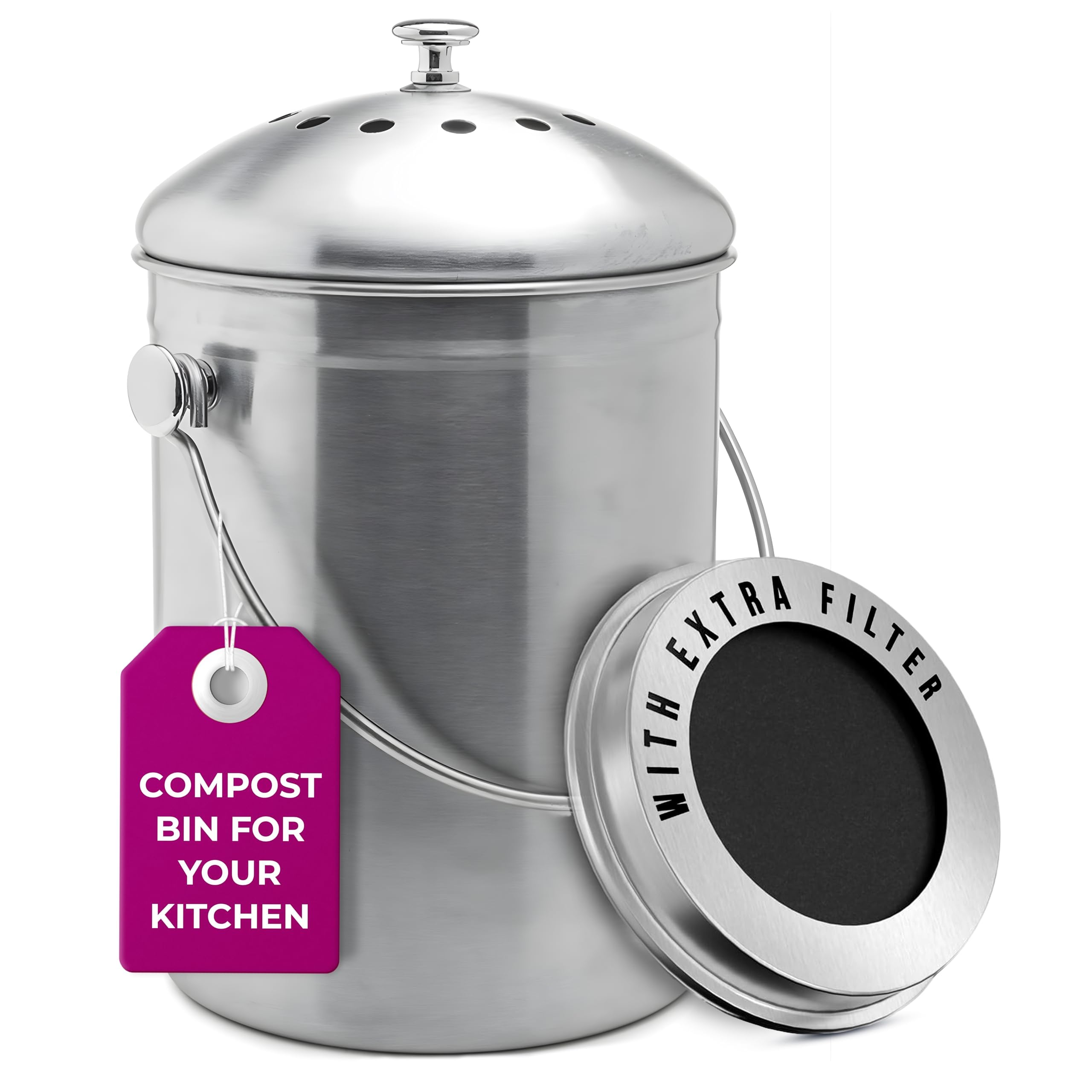
A sturdy stainless-steel kitchen pail with an airtight lid and replaceable activated-charcoal filter that keeps odors locked in.
Why I picked it: Very durable stainless body, dishwasher-safe one-piece design, and an effective charcoal filter.
Best for: People who want a long-lasting, attractive countertop pail that hides odors.
Affordable midrange counter composter.
Pros
- Durable high-grade stainless steel
- One-piece, leak-resistant construction
- Replaceable activated-carbon filter
- Dishwasher-safe interior
Cons
- Smaller capacity for heavy veggie users
- Handle can feel a bit basic
My take
I kept this on my counter for weeks and appreciated how it looked and behaved. The stainless finish resisted scratches and the one-piece design made rinsing and dishwasher cycles easy.
The charcoal filter truly reduced kitchen odors; I could forget the bin for a few days without a smell problem. If you cook and juice heavily, expect to empty it more often than someone who produces less scrap.
Emptying is straightforward and the sturdy build feels like it will hold up for years. For me this was the most balanced countertop option between durability and day-to-day convenience.
2. Utopia Kitchen Stainless Compost Bin – Best Under-Sink Option
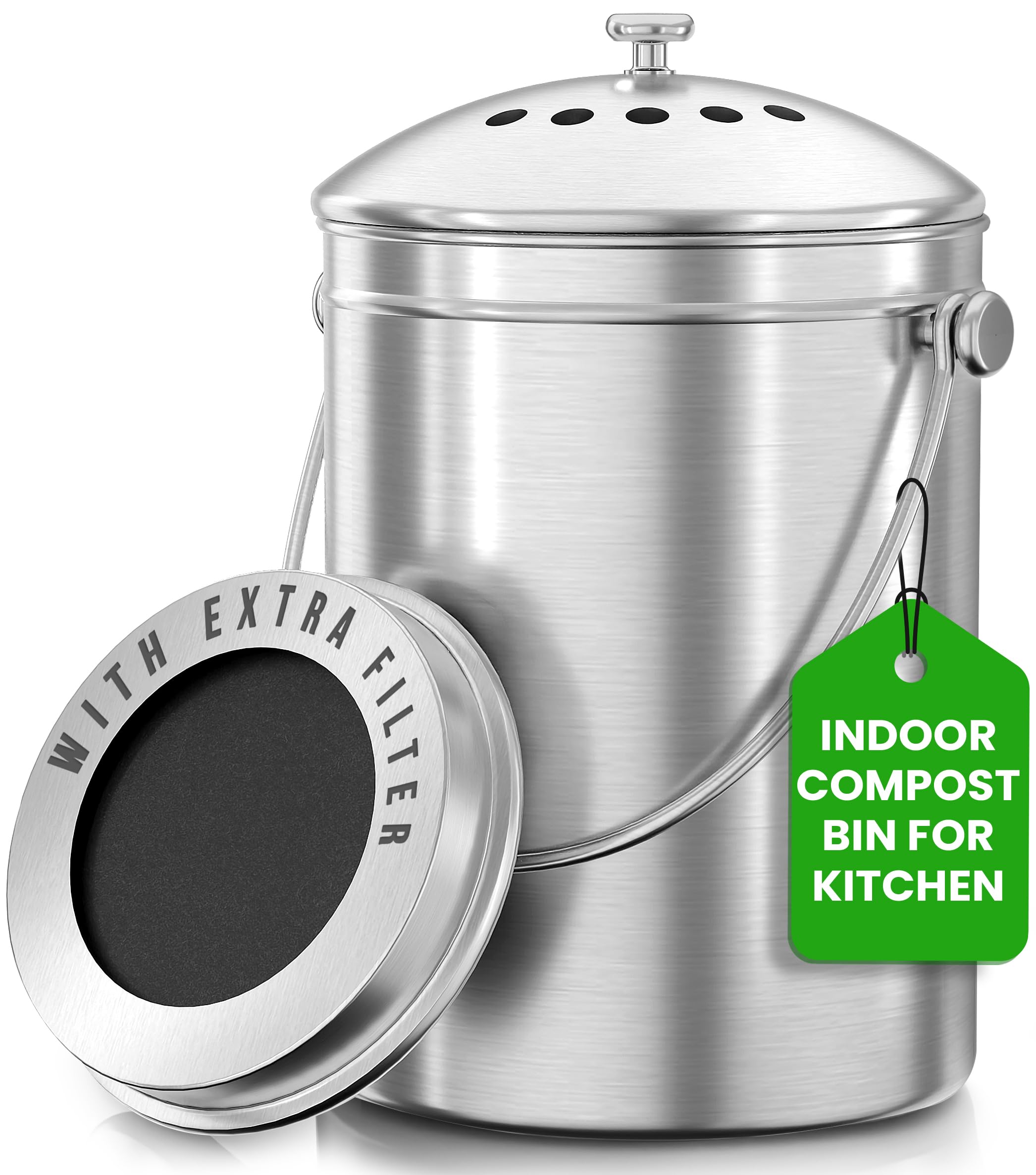
A slim stainless steel countertop or under-sink pail with charcoal filters and a sleek look that hides scraps well.
Why I picked it: Slim footprint, extra filter included, and flexible placement under sink or on counter.
Best for: Kitchens where space is tight or a discreet under-sink solution is needed.
Reasonably priced for a stainless indoor bin.
Pros
- Slim footprint for tight spaces
- Comes with an extra charcoal filter
- Stylish finish complements kitchens
- Easy to clean with warm soapy water
Cons
- Lid can be a tight fit at times
- Gnats can get under some circumstances
My take
I appreciated how neatly this slips under my sink or sits on a counter without drawing attention. The charcoal filter traps most odors and the paint finish seemed robust during normal use.
On occasion the lid felt snug around the rim, which is great for smell control but takes an extra second when I toss scraps while cooking. I also encountered a potential gnat issue—if you leave highly attractive food exposed for long stretches, I remedied it by adding a piece of cling wrap under the lid.
Overall, this is a practical option when counter space is limited and you still want a metal, easy-to-clean container.
3. Miracle-Gro Compost Tumbler – Best Tumbler for Gardens
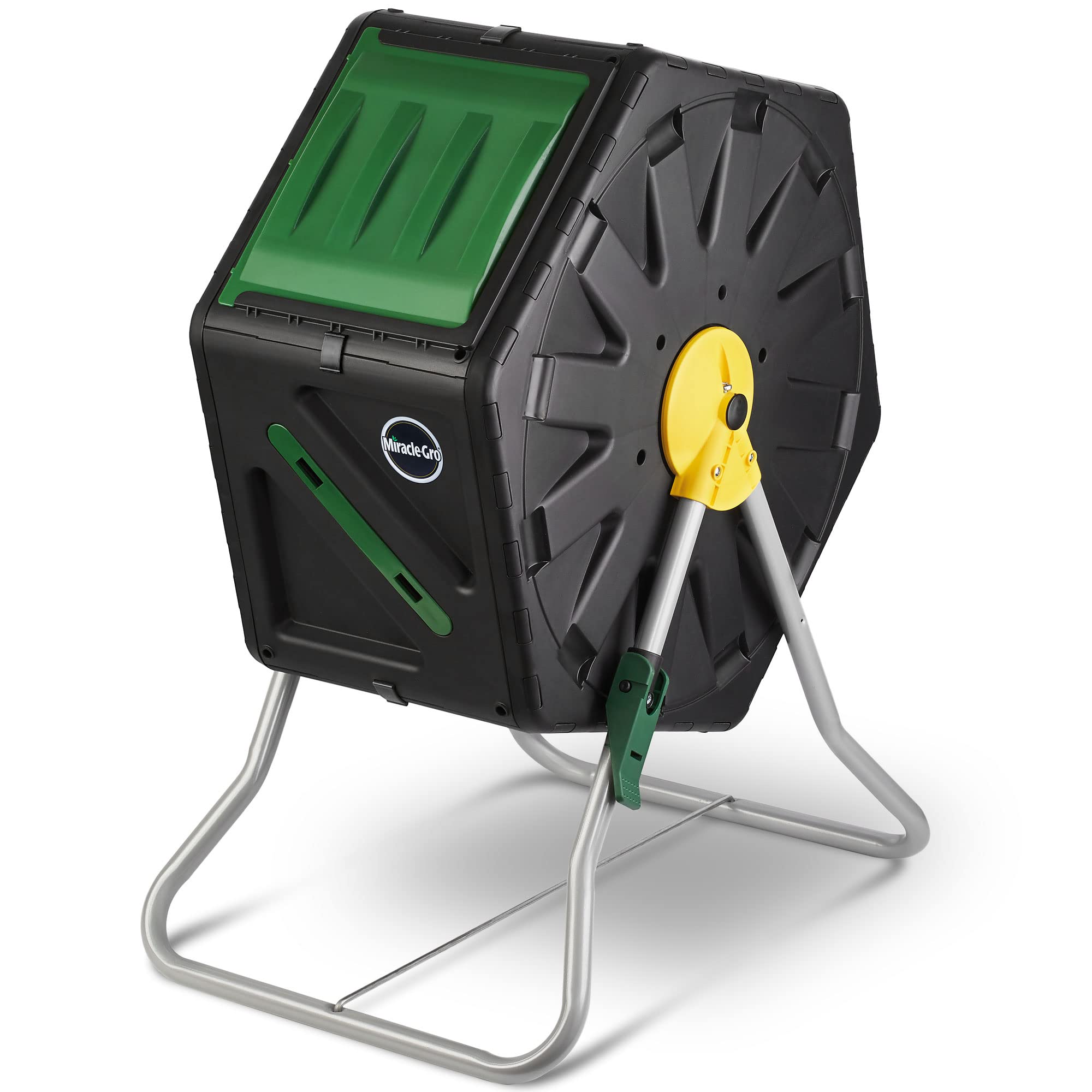
A single-chamber, 18.5-gallon outdoor tumbler that speeds decomposition with internal mixing bars and easy spins.
Why I picked it: Fast breakdown thanks to aeration system and rotating barrel design.
Best for: Home gardeners who want quicker, hands-off outdoor compost without a big footprint.
Midrange outdoor tumbler investment.
Pros
- Internal mixing bars speed decomposition
- Sturdy galvanized base and tight seals
- UV-protected, food-grade plastic
- Included gloves for handling
Cons
- Assembly clips can be fiddly
- Online instructions only, no paper guide
My take
This tumbler lives in my yard and I found it noticeably faster than a static pile. A few spins every few days mixed materials well and cut down the wait time to finished compost.
Assembly required some patience—the snap clips need alignment and a bit of finesse, which I learned quickly. Once together it felt solid and the seals kept pests out.
If you want active composting without turning a heap by hand, this tumbler is a compact, effective solution for small yards.
4. Redmon 65-Gallon Outdoor Compost Bin – Best Large Outdoor
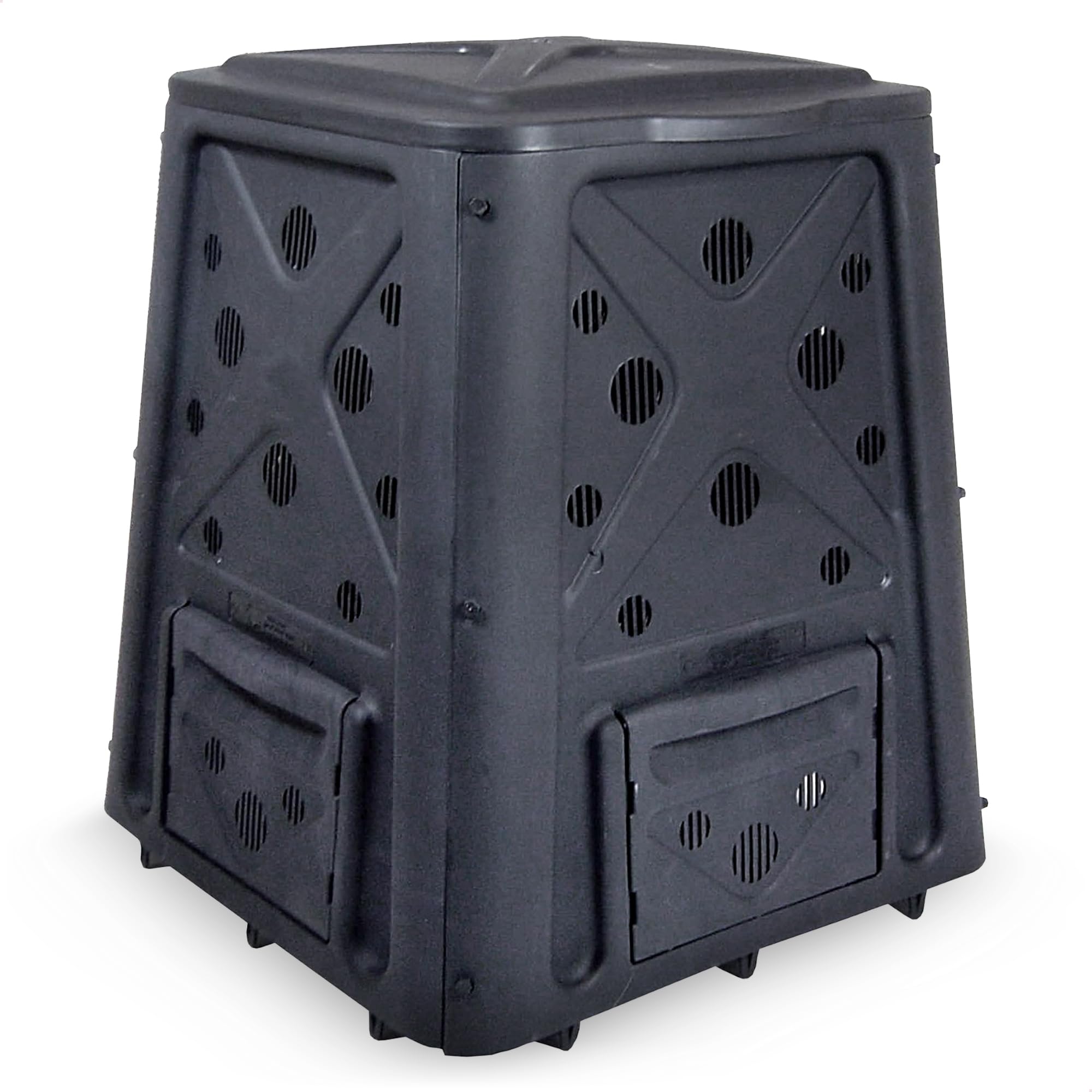
A roomy 65-gallon outdoor bin made from recycled plastic with vent holes, a lift-off lid, and four access doors for easy harvesting.
Why I picked it: Big capacity, sturdy recycled construction, and convenient access doors for removing finished compost.
Best for: Households producing lots of yard and kitchen waste who need a simple outdoor solution.
Budget-friendly large outdoor bin.
Pros
- Very large 65-gallon capacity
- Made from recycled materials
- Four sliding doors for easy access
- Tool-free assembly
Cons
- Top lid is lift-off, not hinged
- Composting speed varies by aeration
My take
I set this bin up in a tucked corner of my yard and found the size ideal for steady garden use. It assembled quickly and felt thicker than I expected.
The side vents and the four access doors make harvesting finished compost easy—no digging through the whole pile. The lid lifts off completely, which some will like and others will find inconvenient when adding new materials.
For anyone wanting a low-fuss outdoor container that holds a lot, this Redmon unit does the job without drama.
5. Bamboozle Countertop Compost Bin – Best Eco Material
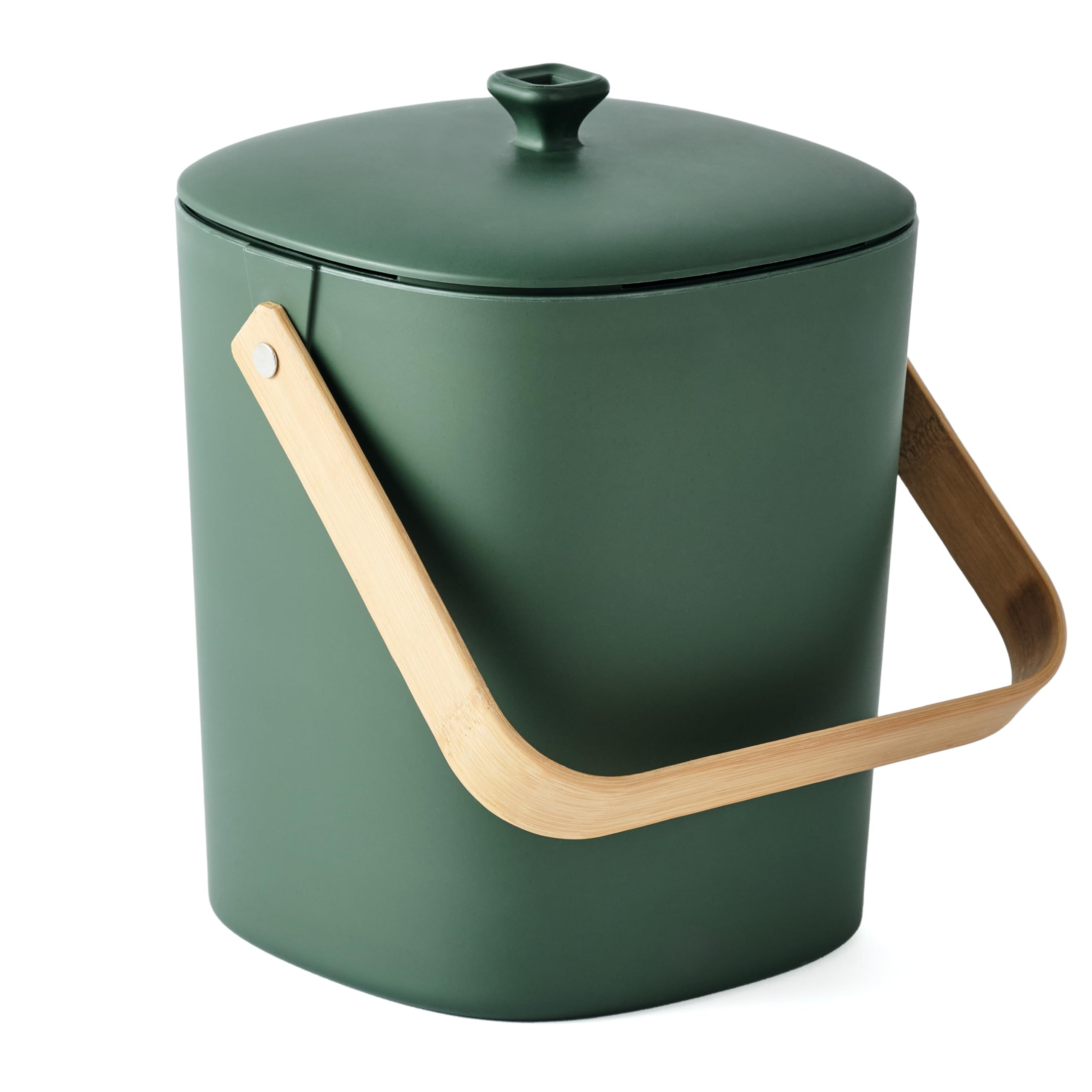
A one-gallon countertop pail made from plant-based Astrik material with hemp-based filters and a stylish finish.
Why I picked it: Unique plant-based construction and attractive design for eco-minded kitchens.
Best for: People who prefer a non-plastic, well-designed countertop bin.
Premium-feel eco option.
Pros
- Made from plant-based Astrik material
- Hemp-based replaceable filters
- Dishwasher-safe and easy to clean
- Sleek, minimalist design
Cons
- Smaller one-gallon capacity
- Some reports of long-term splitting
My take
I liked the look of this bin on my counter—the color and finish feel thoughtful and modern. The hemp-based filter did a good job of keeping odors at bay for typical household scraps.
The plant-based material is sturdier than I expected, but some users reported splitting after extended use, so I recommend checking it periodically for stress points.
If you value sustainable materials and a design-forward pail, this one delivers style and functionality, especially in smaller kitchens.
6. All Seasons Indoor Bokashi Composter Kit – Best Bokashi Kit
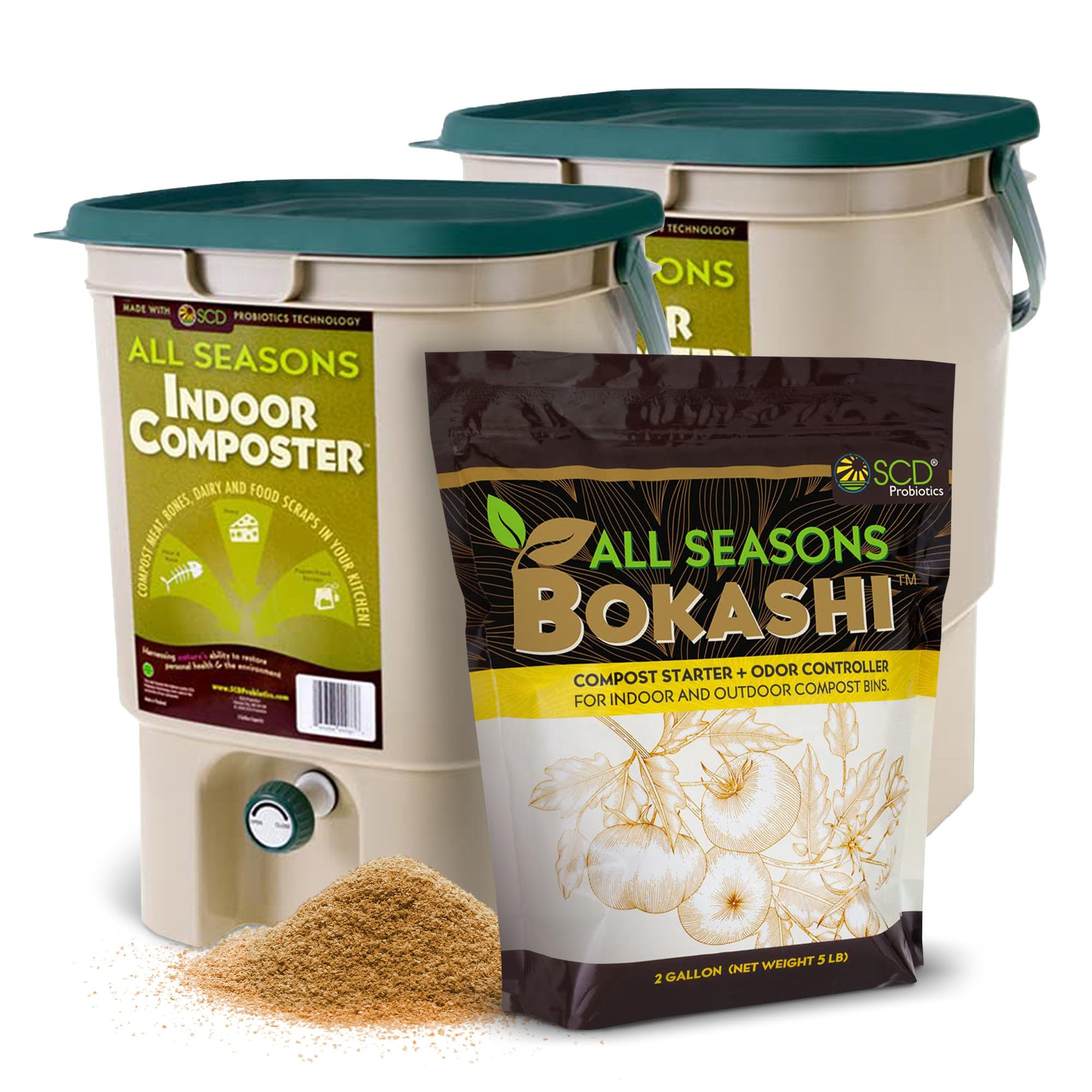
Two family-sized buckets with a Bokashi bran starter, a spigot for draining compost tea, and airtight lids for fermenting food waste indoors.
Why I picked it: Complete bokashi starter set that lets me ferment meat and dairy indoors without odors.
Best for: People wanting to ferment all food scraps, including meat and dairy, before outdoor composting.
Higher upfront cost but includes bokashi starter and two buckets.
Pros
- Includes two 5-gallon buckets
- Bokashi bran for fermenting scraps
- Strainer and spigot for compost tea
- Tight-sealing lids prevent pests
Cons
- Requires commitment to bokashi routine
- Smells when emptying if not handled carefully
My take
I use bokashi when I want to handle meat, dairy, or oily scraps without attracting pests. The fermentation process sequesters smells and speeds later breakdown once added to soil or a compost pile.
Having two buckets is essential—I let one ferment while filling the other. The included spigot made collecting compost tea easy and less messy than I expected.
This kit gave me a reliable indoor solution through winter, but it does require a consistent routine and some follow-through when it’s time to bury or transfer the fermented material.
7. 3-Liter Small Indoor Compost Bin – Best Compact Countertop
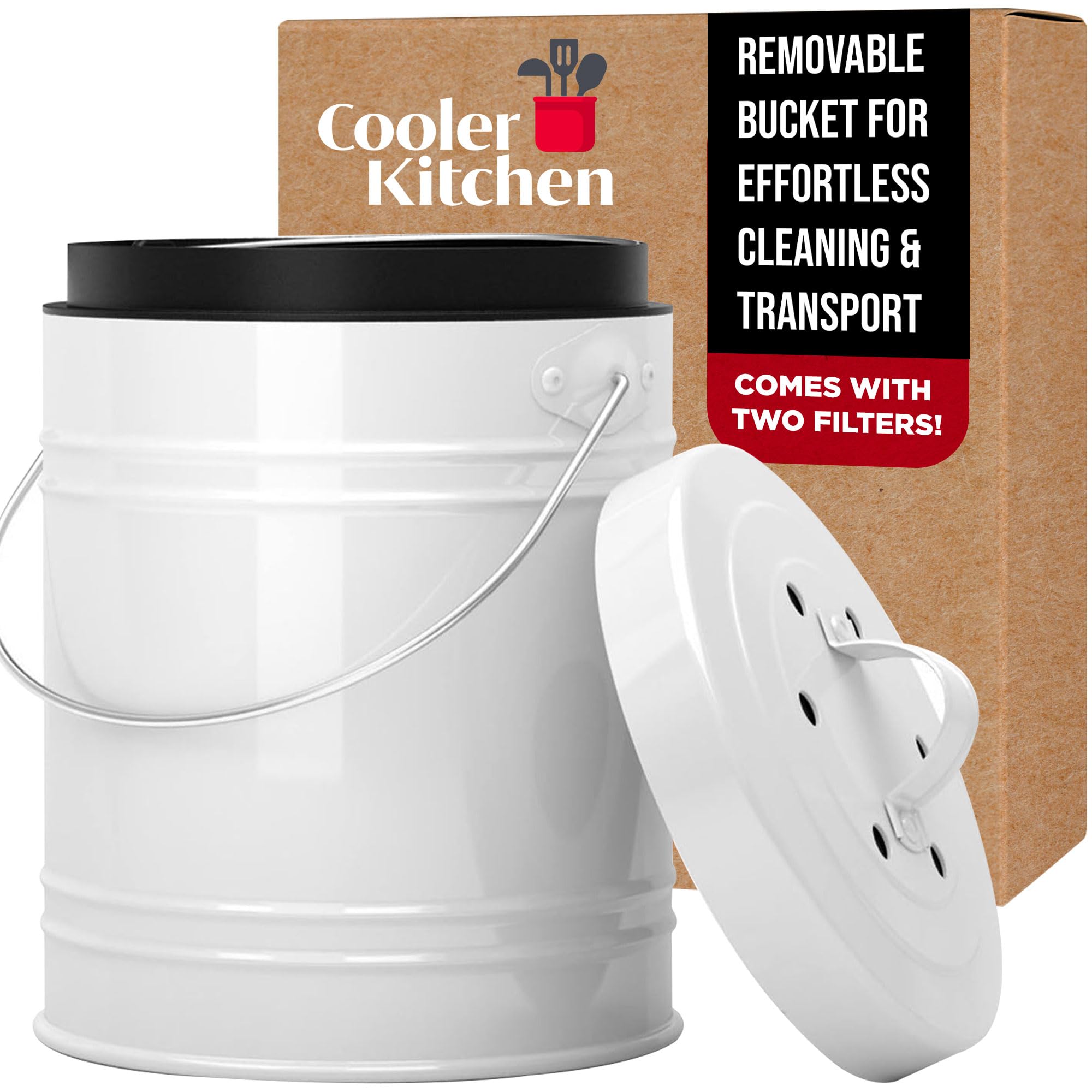
A compact countertop bucket with an inner removable liner, thick charcoal filter, and one-handed lid operation for quick kitchen use.
Why I picked it: Tiny footprint, removable liner, and easy one-handed lid make it a practical small-bin choice.
Best for: Singles, apartments, or anyone who wants a tiny, no-fuss countertop pail.
Most budget-friendly compact option.
Pros
- One-handed lid operation
- Removable inner liner for mess-free emptying
- Comes with two charcoal filters
- Dishwasher-safe liner
Cons
- Very small capacity for busy cooks
- Occasionally missing filters in some packages
My take
I kept this smaller bin near my prep area and liked how light it is to lift and carry to my compost pile. The inner plastic liner snaps out cleanly and has a handle for easy transport.
The charcoal filter keeps odors to a minimum, though the small size means frequent emptying if you cook a lot. It’s a great discrete option for a household that produces modest scraps.
If you want something effortless that won’t dominate your counter, this compact pail is a smart pick.
8. AuldHome Enamelware Compost Bin – Best Farmhouse Style
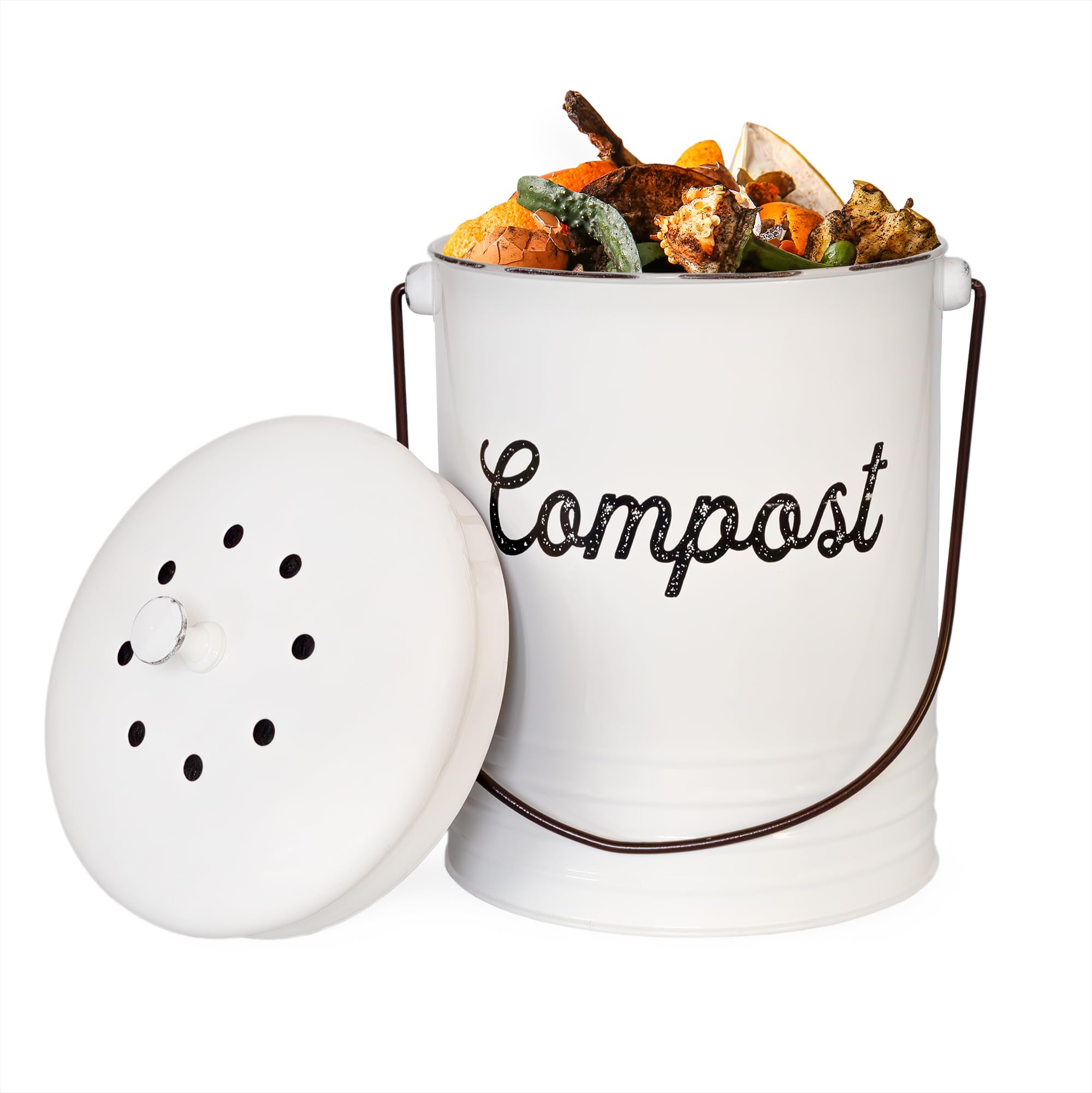
A 1.3-gallon enamelware pail with a vented lid and three charcoal filters that combines farmhouse looks with practical odor control.
Why I picked it: Attractive enamel finish, multiple replacement filters included, and a vented lid for airflow.
Best for: Kitchens where style matters as much as function.
Style-forward countertop choice.
Pros
- Charming enamel farmhouse look
- Includes three charcoal filters
- Durable steel construction
- Vented lid and sturdy handle
Cons
- Inner bucket may be slightly undersized
- Filter sits loosely in some lids
My take
I liked putting this on my counter—its enamel look suits farmhouse and modern kitchens alike. The included filters meant I had a few months of use before replacements were necessary.
The inner plastic bucket is handy but a bit smaller than the outer can, which reduces total usable volume if you rely on it. The filter isn’t locked into place in the lid, but in my experience it stayed put during normal use.
For someone who cares about kitchen aesthetics without compromising basic odor control, this bin strikes a nice balance.
How I Choose an In-Home Composting Bin
Key features I look for
I assess bins by capacity, odor control, material durability, and how easy they are to empty and clean.
I also consider your routine: quick countertop collection, indoor bokashi fermentation, or outdoor tumblers and bins all serve different needs.
- Capacity: Match the pail size to how much you cook—tiny bins suit singles; 1–1.5 gallon pails work for small families.
- Odor control: Look for replaceable charcoal or hemp filters and tight-fitting lids.
- Materials: Stainless resists rust; plant-based and enamel finish options are lighter and more aesthetic.
- Emptying: Removable liners or sliding access doors make disposal painless.
- Special systems: Bokashi lets you ferment meat and dairy indoors; tumblers speed composting outdoors.
Pest and smell prevention tips I use
I layer paper napkins or dry leaves with wet scraps to reduce fly attraction, and I change filters or wash lids regularly.
If gnats become a problem, I use cling film under the lid temporarily or keep the bin in a cooler spot until I empty it.
- Replace filters per manufacturer guidance to avoid smell buildup.
- Rinse or run inner liners through the dishwasher for hygiene.
- For bokashi, maintain anaerobic conditions and follow ferment times closely.
Frequently Asked Questions
Can I compost meat and dairy indoors?
I don't recommend open indoor bins for meat and dairy; instead I use a bokashi kit that ferments those scraps anaerobically before burying or adding to an outdoor pile.
How often do I need to change charcoal filters?
In my experience filters last a few months under normal household use; check the smell and swap them once they no longer neutralize odors effectively.
Are countertop compost bins dishwasher safe?
Many inner liners and one-piece pails can go in the dishwasher—I always check the manufacturer's care notes, but several options I tested cleaned up easily in a dishwasher cycle.
Final Take
I recommend countertop stainless or plant-based pails if you want easy daily collection and strong odor control, the bokashi kit if you need to handle meat and dairy indoors, and the tumbler or large outdoor bin if your goal is faster, larger-scale compost production.
Pick the approach that fits how you cook and how much scrap you produce—then set a simple routine for emptying and filter changes so composting becomes effortless.
