
I tested compact ironing mats and pressing pads so I could recommend the right option for washer-top touch-ups, sewing projects, and travel. Here are the mats that stood out for stability, heat handling, and portability.
I switched from a full-size ironing board to portable mats years ago and never looked back. In cramped laundry rooms, dorms, and my sewing studio, a well-chosen mat saves time and protects surfaces.
I evaluated six mats that cover a range of materials and uses: silicone-coated magnetic pads for quick dryer-top touch-ups, reversible quilted pads for general use, and dense wool pressing mats for professional pressing and quilting work.
Below I explain how each mat performed in real use, who I think it’s best for, and the little trade-offs I encountered so you can pick the right fit for your workflow.
I compared size, surface material, stability (magnets or backing), included accessories (silicone rests, scorch mesh), heat handling, and suitability for sewing/quilting when forming these picks.
1. Gorilla Grip Ironing Mat – Best Overall
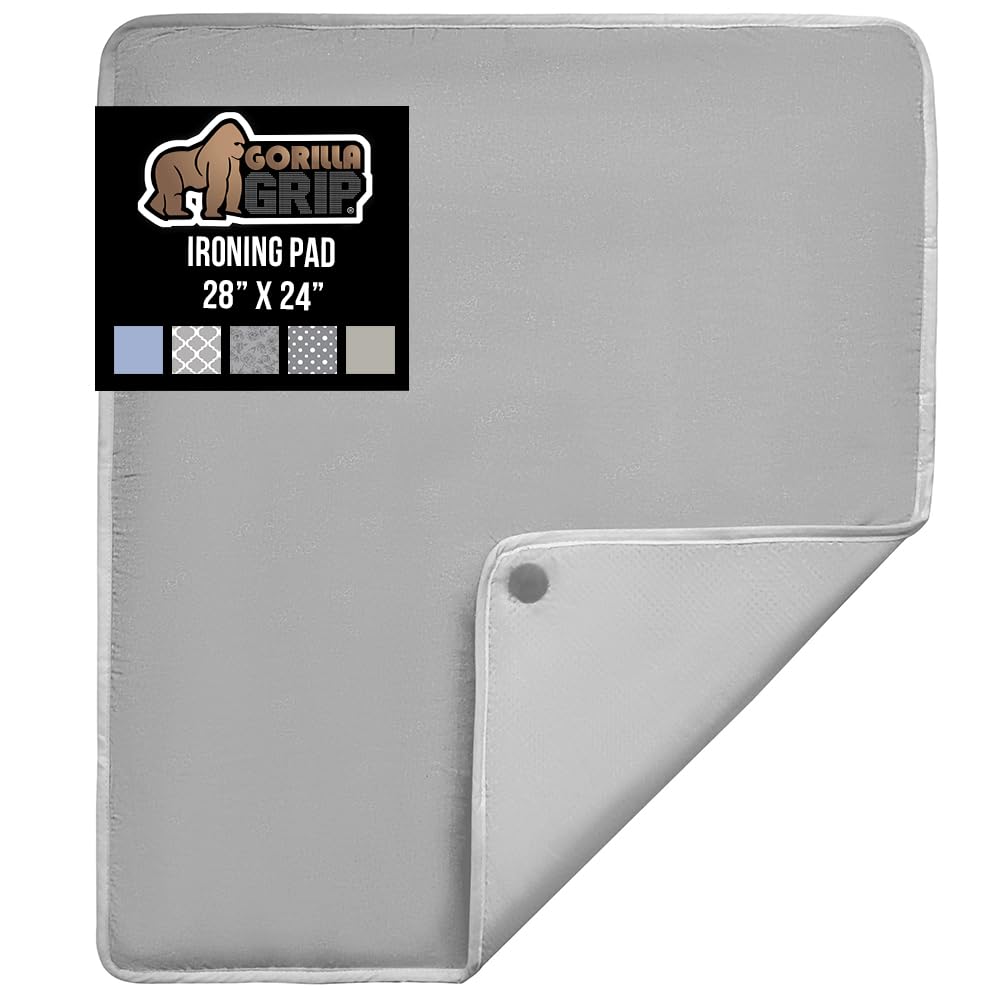
I relied on this heavy‑duty silicone‑coated mat when I wanted a durable, stay‑put surface that handles high heat and quick touch‑ups.
Why I picked it: Reflective silicone surface, six embedded magnets, and thick padding for fast wrinkle removal.
Best for: Top‑of‑dryer touch‑ups and quick travel‑ready ironing.
A solid mid‑range, long‑lasting alternative to a full ironing board.
Pros
- Silicone surface that reflects heat
- Heat resistant up to 400°F
- Six embedded magnets hold in place
- Extra thick padded barrier
- Large, foldable portable size
Cons
- No dedicated iron rest included
- Silicone can attract lint
My take
I reach for the Gorilla Grip mat when I need fast, reliable results on top of my dryer or countertop. The silicone coating feels different from cotton pads — it reflects heat rather than absorbing it, so my iron glides smoothly and I often finish seams quicker.
The six magnets and a slip‑resistant backing kept the pad steady on metal appliances during the times I ironed shirts and thin trousers. The padding is thicker than many other portable pads, so I never worried about lumps or marks from the surface underneath.
In daily use I appreciated the durability and the high heat rating; it handled my higher‑temperature settings without distress. If you want a place to rest a hot iron, plan to use a separate silicone rest because this mat doesn’t include one.
2. Handy Laundry Magnetic Ironing Mat – Best Compact Mat
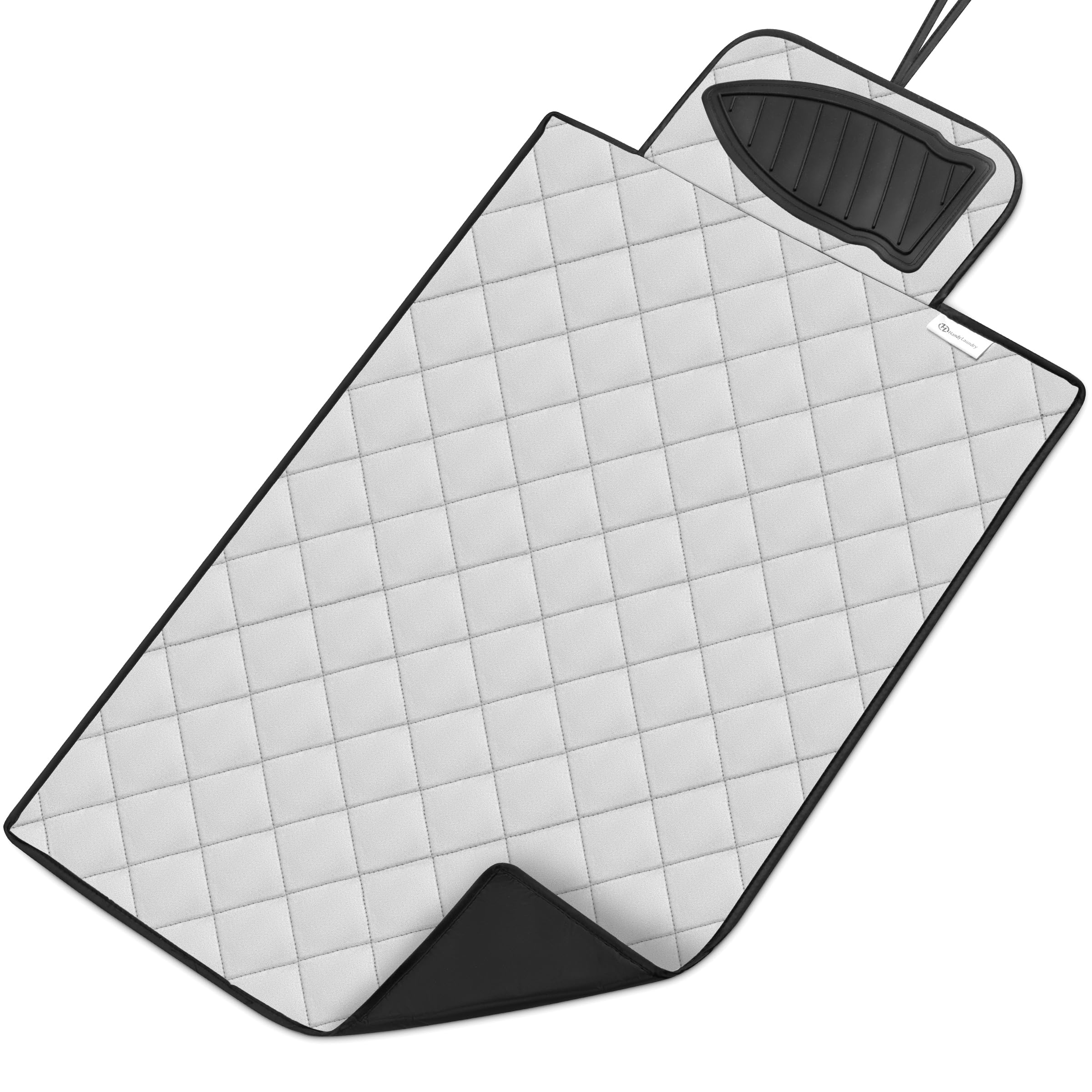
I kept this lightweight cotton mat in my laundry room for quick jobs and travel because it folds small and includes a slip‑resistant iron rest.
Why I picked it: 100% cotton surface with a double‑sided silicone iron rest and compact foldability.
Best for: Small apartments, dorms, and travel where storage is limited.
An affordable, space‑saving pick with a useful iron rest.
Pros
- 100% cotton ironing surface
- Double‑sided silicone iron rest
- Compact and lightweight
- Folds for small storage
Cons
- Magnets limited to corner points
- Smaller overall working area
My take
I like this mat for quick touch‑ups because it unfolds instantly and fits where a board won’t. The cotton surface behaves like a normal ironing board cover, so I didn’t need to change my technique.
The double‑sided silicone rest is the feature I used most — it gave me a safe place to set the iron between passes and its textured surface cools slightly faster. Because the magnets are sewn into the corners rather than forming a full magnetic backing, I still repositioned the mat occasionally on narrow dryer tops.
For travel or anyone who wants the simplest, most compact option, this one balances performance and portability well.
3. Upgraded Portable Ironing Mat (3‑Piece Set) – Best Set for Versatility
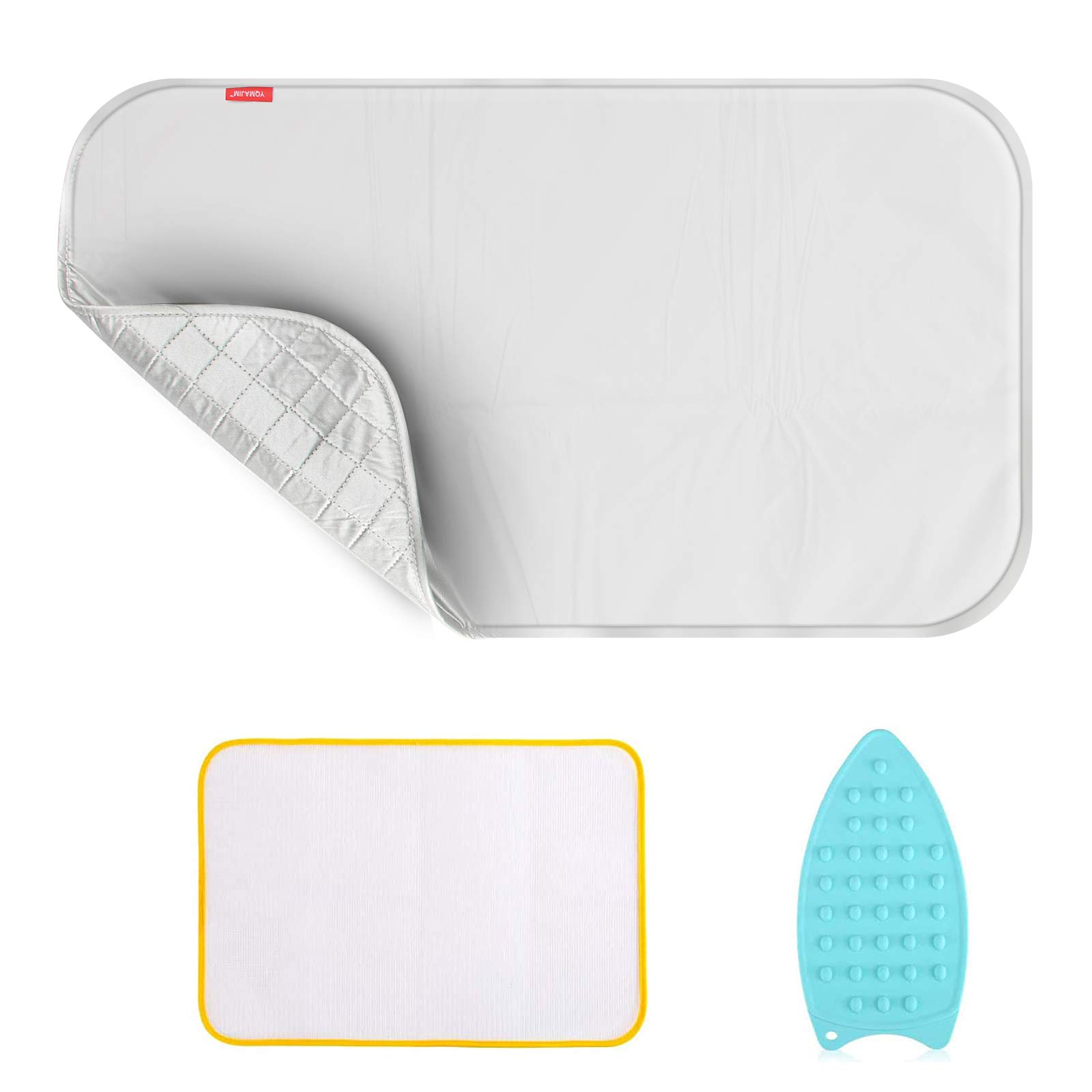
I appreciated this kit for its thicker pad, reversible surfaces, and the included silicone rest plus protective scorch mesh when I needed extra options for delicate or detailed work.
Why I picked it: Thicker second‑generation pad, reversible sides, and included iron rest and scorch mesh.
Best for: Sewing, crafts, and anyone who wants accessories included.
A practical choice that bundles tools for sewing and pressing.
Pros
- 20% thicker than earlier versions
- Reversible surfaces for different fabrics
- Includes silicone iron rest
- Comes with protective scorch mesh
Cons
- Scorch mesh may not tolerate very hot irons
- Can retain dampness after steam use
My take
I used this three‑piece set on my countertop and found the extra thickness reassuring when I was pressing seams for sewing projects. One side is quilted for heavier fabrics and the other is smooth for delicate garments, which I switched between depending on the task.
The included silicone iron rest is handy and the protective scorch mesh is a thoughtful addition for finishing delicate fabrics. In one extended session I noticed the mesh didn’t hold up to a very hot soleplate, so I recommend testing temperatures on scrap fabric first.
This set folds and stores easily, and I liked having the accessories packaged with the mat — they saved me an extra trip to buy press cloths and rests.
4. Houseables Ironing Mat – Best for Washer/Dryer Tops
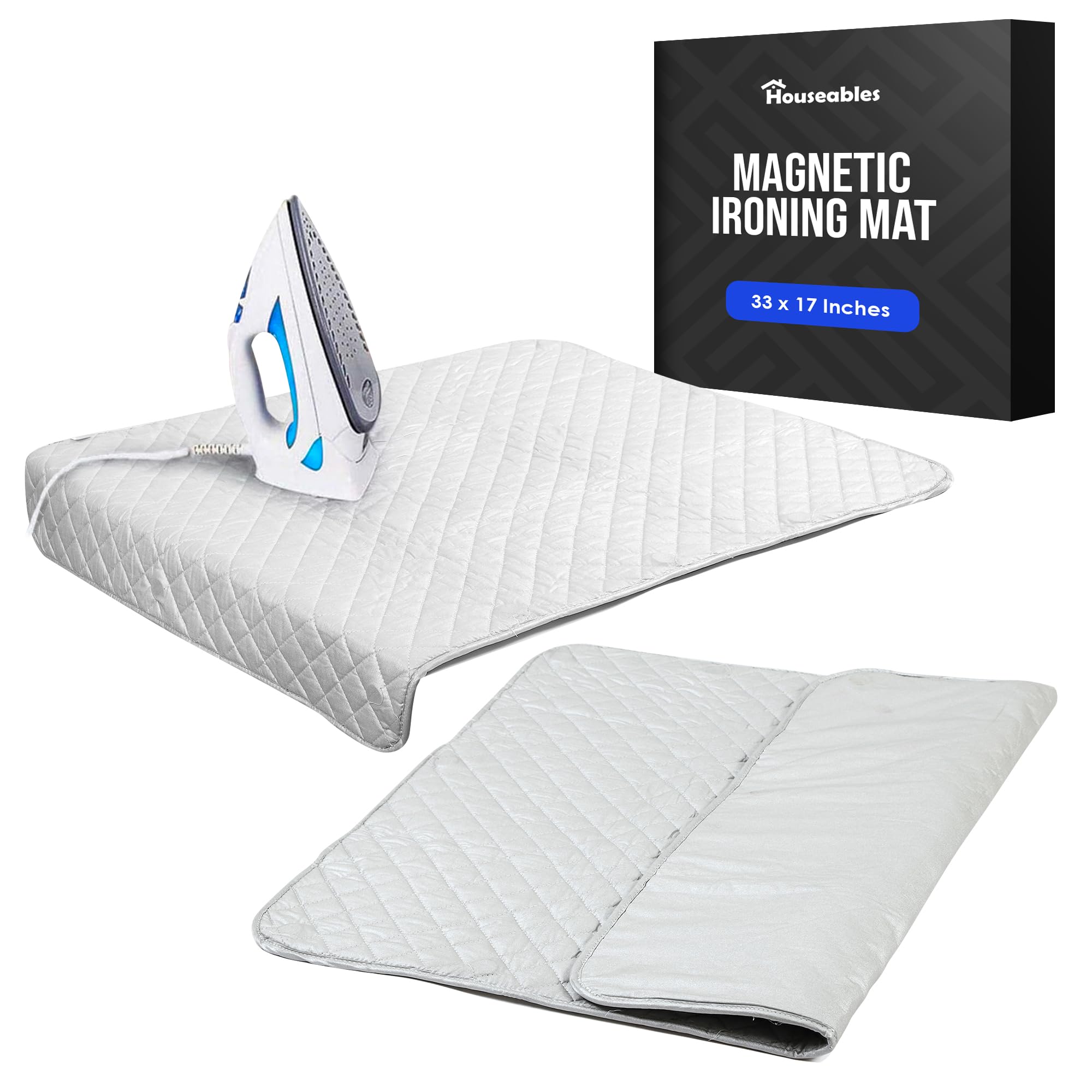
I used this wide, magnetized polyester‑cotton pad when I needed a reliable washer‑top work surface that rolls or folds for storage.
Why I picked it: Long, narrow shape fits washer/dryer tops and strong corner magnets hold it steady.
Best for: Laundry room touch‑ups where a washer‑top solution is preferred.
A budget‑friendly, practical choice for regular dryer‑top use.
Pros
- Fits most washer/dryer tops
- Strong corner magnets
- Quilted polyester‑cotton padding
- Lightweight and portable
Cons
- Rated for lower heat than silicone mats
- Can slide on non‑metal surfaces
My take
I used the Houseables pad primarily on my dryer and it performed exactly as advertised: it transforms a washer or dryer top into a workable ironing surface. The quilted padding felt durable and absorbed the pressure of the iron without showing lumps.
The magnets in each corner are strong, so the mat stayed put on metal appliances — but I did notice it could slide on bare wood or other non‑metal surfaces. Keep that in mind if you plan to use it on a countertop.
Because the listed safe temperature range is lower than some silicone mats, I reserve my highest heat settings for the silicone‑coated pads and use this one for everyday touch‑ups and travel.
5. Rdutuok Wool Pressing Mat – Best Wool Pressing Mat
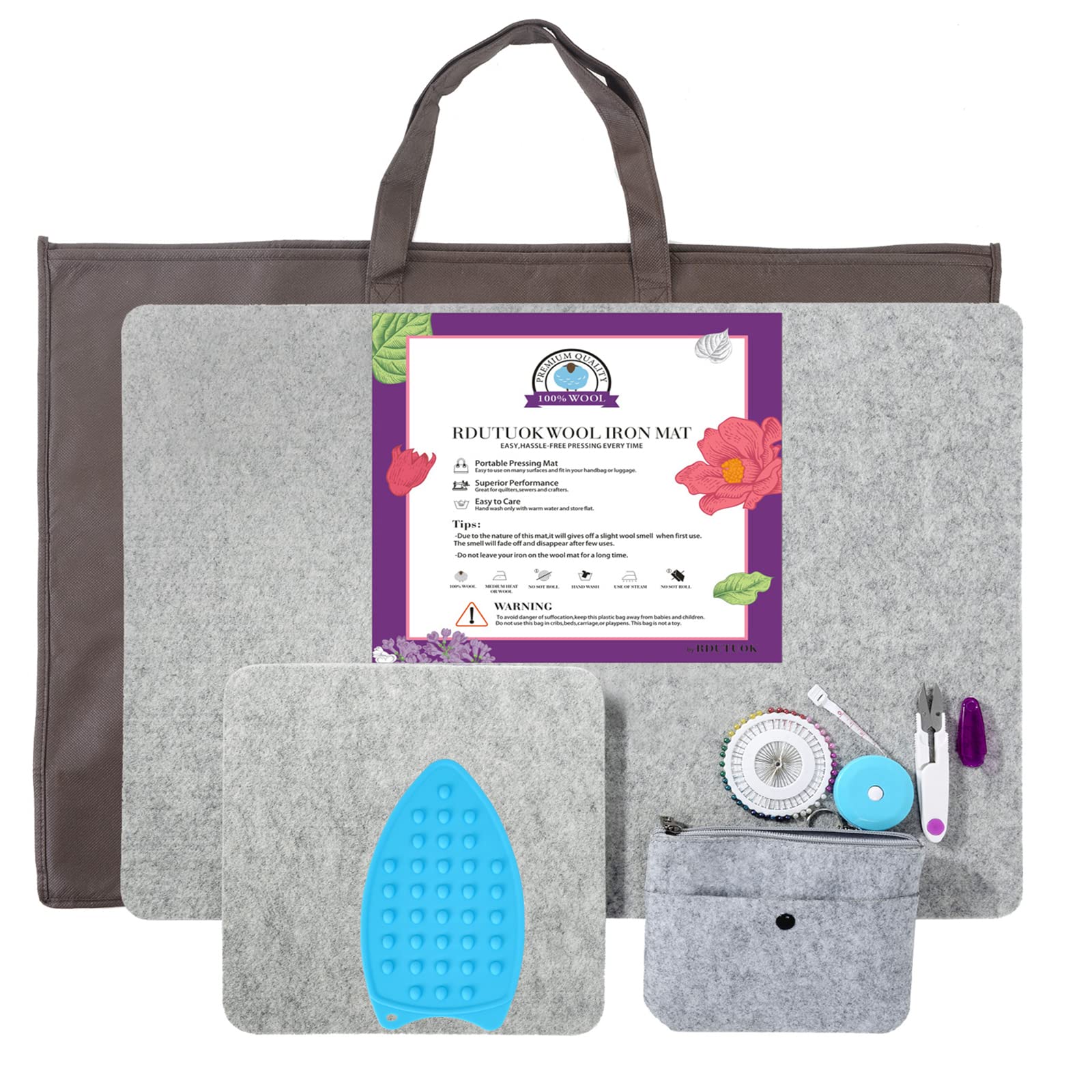
When I need professional pressing power for quilting and garment work, I turn to this dense 100% New Zealand wool mat for its heat retention and steam handling.
Why I picked it: Dense New Zealand wool concentrates heat and dramatically improves pressing quality.
Best for: Quilters and sewists who need a proper pressing surface.
A more expensive, professional‑grade option for serious pressing work.
Pros
- 100% dense New Zealand wool
- Excellent heat retention
- Available in multiple sizes
- Rolls for portability with included bag
Cons
- Higher cost than fabric pads
- Attracts pet hair and lint
My take
I keep this wool pressing mat on my sewing table for garment work and quilting. Wool absorbs and radiates heat in a way that lets me press seams cleanly without flipping the piece multiple times, which saves time on large projects.
The thickness is immediately noticeable and the mat handled steam well without showing signs of damage. Because it’s wool, it will pick up stray threads and pet hair if you don’t store it upright, so I keep it in its carry case between sessions.
This is the mat I reach for when appearance matters — collars, seams, and quilt blocks look crisper off this surface than from any thin portable pad I’ve used.
6. Zomoneti Wool Pressing Mat – Best Small Wool Mat
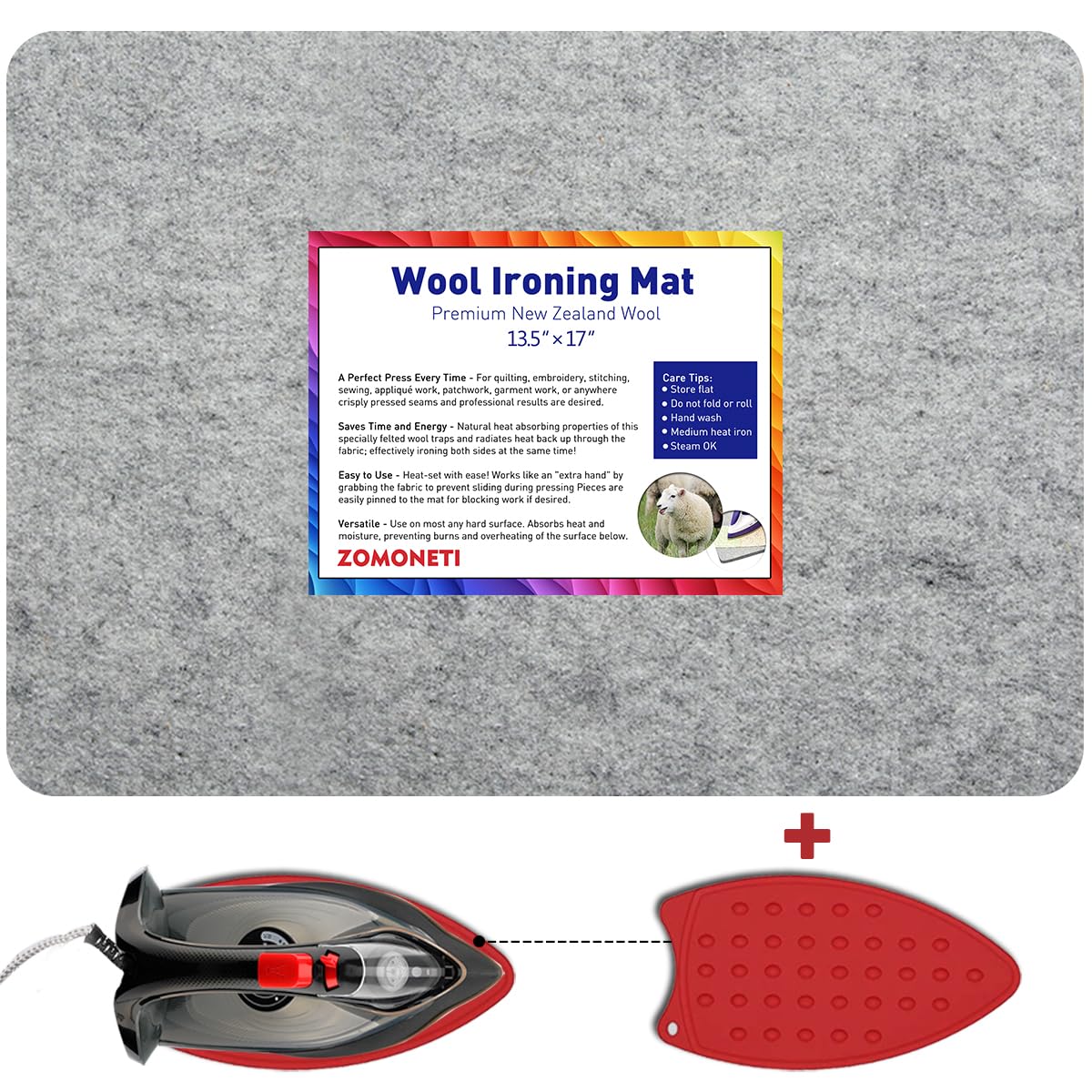
I chose this compact felted wool pad for detailed pressing, and I appreciated the half‑inch thickness and included silicone rest for small projects and travel.
Why I picked it: Dense 100% New Zealand wool in a compact, portable size with a bonus silicone iron rest.
Best for: Detailed work, sleeves, collars, and travel pressing.
A cost‑effective wool option for detailed pressing tasks.
Pros
- 100% New Zealand wool
- 1/2 inch thick heat retention
- Portable and easy to clean
- Includes silicone iron rest
Cons
- Not recommended to iron directly on mat
- Needs protective layer when using heavy steam
My take
I use the Zomoneti mat for sleeve and collar work where a full board is overkill. The felted wool holds heat and lets me press small areas quickly, which is ideal for craft classes or on‑the‑go sewing.
The included silicone rest is a welcome bonus for safety and convenience. I followed the care guidance and avoid machine washing; a rinse and air dry works fine when the mat needs cleaning.
One caution: steam passes through wool more readily than thick silicone pads, so I always add a protective layer underneath when using heavy steam to protect the surface beneath.
How I Choose an Ironing Mat
Material matters: silicone, cotton, and wool
I evaluate mats first by surface material because it dictates heat behavior and the types of jobs the mat excels at.
Silicone‑coated mats reflect heat and make the iron glide; they’re great for fast touch‑ups. Cotton quilted pads feel most like a traditional board cover. Wool pressing mats hold and radiate heat back into fabric, which I prefer for sewing and quilting.
- Silicone: fast wrinkle removal, glide, high heat tolerance
- Cotton/quilted: familiar feel, good for everyday ironing
- Wool: best for steam, professional pressing, and quilting
Stability: magnets and backing
I always check how the mat stays in place. Embedded magnets or a slip‑resistant backing prevent shifting while I press.
If you’ll use the mat on a washer or dryer top, strong corner magnets are invaluable.
- Magnets at corners work best on metal appliances
- Full magnetic backing offers extra hold but isn’t always needed
- Slip‑resistant backing helps on non‑metal surfaces
Accessories and extras
I prefer mats that include a silicone iron rest and, for sewing, a scorch mesh or press cloth. These accessories protect delicate fabrics and give a safe place for a hot soleplate.
A reversible or double‑sided surface extends the mat’s usefulness across different fabrics.
- Silicone iron rests create a safe, textured holding spot
- Scorch mesh protects delicate fabrics from direct heat
- Reversible surfaces let you switch between smooth and quilted faces
Size, storage, and portability
Think about where you’ll use the mat. I prefer wider pads for garment work and compact mats for travel. Many fold or roll for storage; wool often needs to be stored flat or rolled carefully.
If you plan to carry the mat, check for included bags or the ability to roll without damage.
- Measure appliance tops if you plan to use a washer/dryer surface
- Choose rollable mats for travel and lightweight options for dorms
- Wool mats are portable but need mindful storage to avoid creases
Care and safety
I treat each mat according to its material: avoid machine washing wool, don’t leave the iron resting on the mat for prolonged periods, and test high heat settings on scrap fabric first.
When using steam, I add a protective layer underneath thin pads to prevent moisture transfer to the surface below.
- Wool: rinse and hang dry; avoid machine washing
- Silicone/cotton: spot clean as needed and air dry
- Always test temperature and avoid leaving the iron face down
Frequently Asked Questions
Can I use steam on these ironing mats?
I use steam on wool and thicker pads without issue, but I recommend adding a protective layer under thinner cotton or silicone pads because steam can pass through and reach the surface beneath.
Will an ironing mat protect my countertop from heat?
In my experience thicker pads and wool mats provide reliable protection; thinner mats still protect against direct heat but I avoid the highest temperature settings without a protective press cloth or mesh.
How should I clean and store a wool pressing mat?
I rinse wool mats by hand and hang them to dry, never machine wash them. I store them rolled or upright in their bag to keep dust and pet hair off until the next use.
Do magnetic mats work on all surfaces?
I found magnets work well on washer and dryer tops or any metal surface; on wood or non‑metal counters you’ll want a slip‑resistant backing or to secure the mat so it doesn’t shift.
Final Take
I’d choose a silicone‑coated magnetic mat for fast laundry room touch‑ups, a reversible quilted pad for everyday ironing, and a wool pressing mat for sewing and quilting projects.
Think about where you’ll use the mat most and match the material and stability features to that environment. Each mat here solved a different problem in my workflow, so pick the one that fits the way you press.
