
I tested seven santoku knives across steels, sizes, and budgets to find blades that stay sharp, feel balanced, and make everyday prep faster.
I spent time cooking with seven santoku knives so I could recommend options that work in real kitchens. I evaluated edge hold, balance, handle comfort, and how each blade behaved on vegetables, herbs, and meats.
This guide highlights knives that stood out for long-lasting sharpness, precision work, or straightforward value. I also explain how I compared them and what to look for when choosing a santoku.
I compared these santokus by testing slice-and-chop tasks, checking edge retention after repeated use, and judging balance and handle comfort for extended prep sessions.
1. Tefal Ice Force Santoku Knife – Best Overall
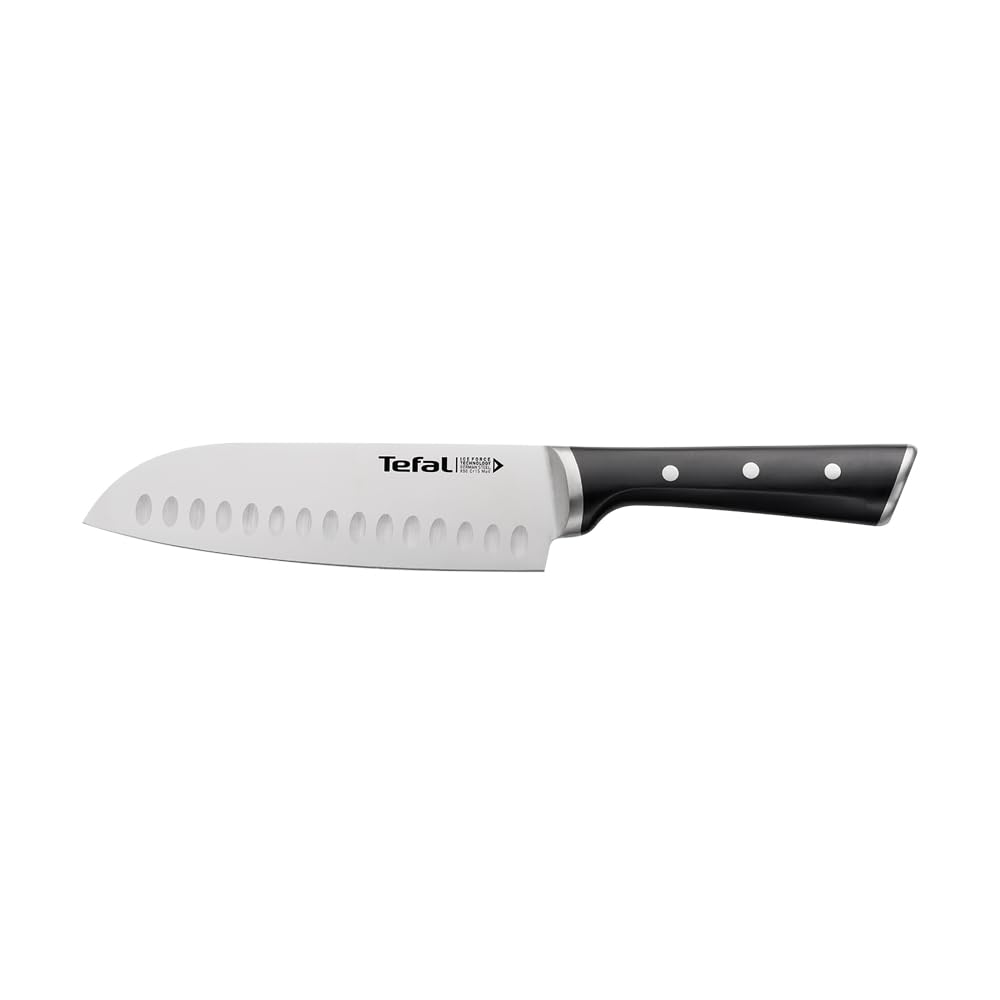
A modern, durable santoku that holds an edge reliably thanks to a cryogenic-hardened German stainless blade and thoughtful ergonomics.
Why I picked it: Outstanding edge retention and a solid, durable build make it my go-to for heavy daily prep.
Best for: Home cooks who want long-lasting sharpness and a dependable workhorse knife.
Mid-range with long-term value
Pros
- Cryogenically hardened blade for long edge life
- Durable German stainless steel
- Comfortable ergonomic handle
- 10-year warranty
Cons
- Handle feels plastic rather than premium
- Slightly heavier than compact santokus
My take
This Tefal is the knife I reach for when I need a blade that stays sharp through heavy use. The Ice Force process that cools the blade makes a tangible difference: the edge held up across multiple vegetable and meat prep sessions with minimal touch-ups.
I appreciate the German stainless for corrosion resistance and the way the blade slices without excessive drag. The handle is ergonomic and secure in my hand, though it’s plastic rather than a higher-end material — functional, not fancy.
If I had to sum it up: reliable edge retention, robust construction, and modern styling. It works exactly like a dependable daily santoku should.
2. imarku 7-inch Santoku Knife – Best Value
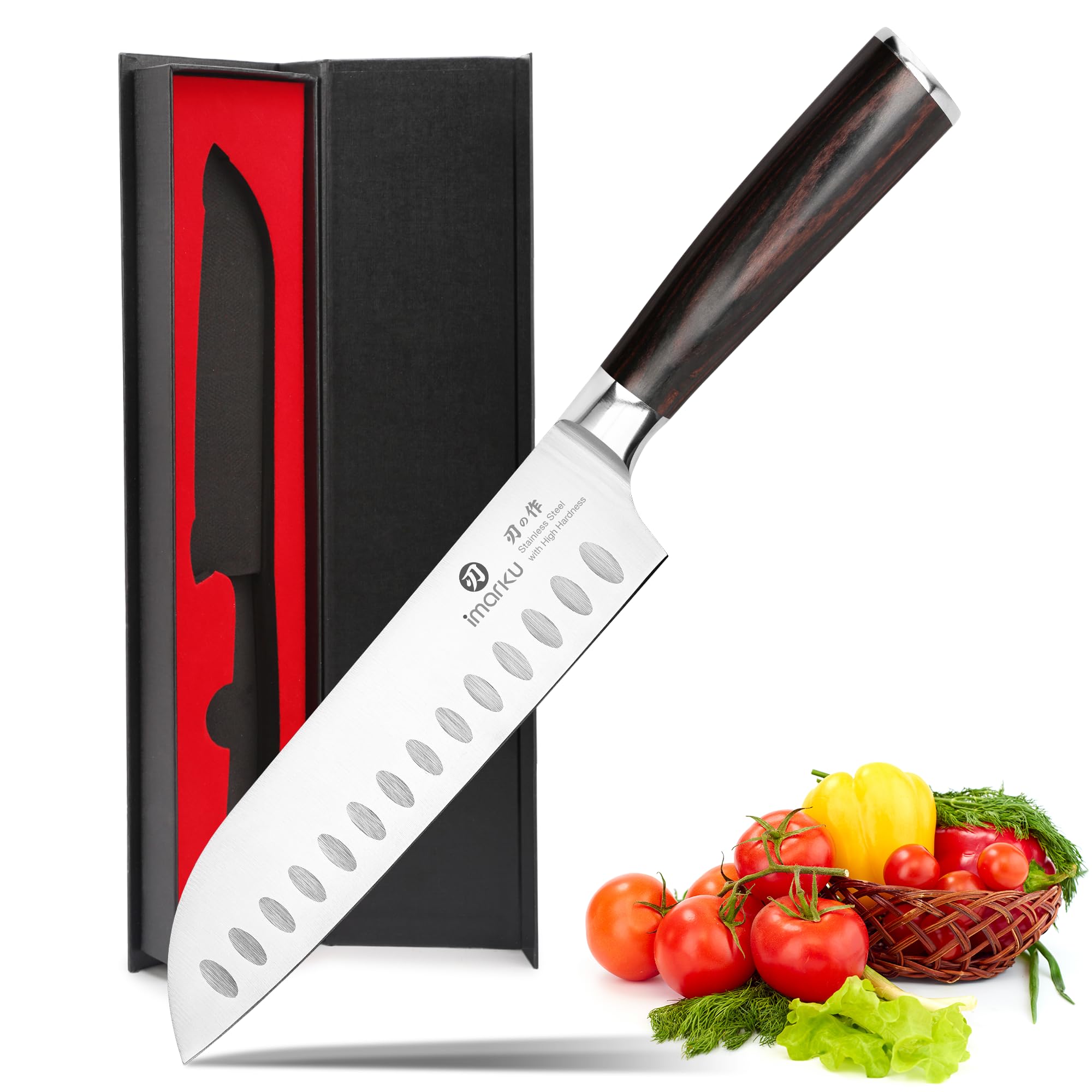
A sharp, well-balanced santoku that delivers professional-feeling performance at an affordable price.
Why I picked it: Great sharpness and a hollow edge that prevents sticking make it an excellent value pick.
Best for: Home cooks who want a sharp, versatile knife without spending a lot.
Budget-friendly
Pros
- Very sharp out of the box
- Hollow edge reduces food sticking
- Comfortable pakkawood handle
- Lightweight and well balanced
Cons
- Edge may need occasional honing
- Not a premium steel composition
My take
I found this imarku to be impressively sharp for the price. The 7-inch blade and hand-polished edge make quick work of vegetables and boneless meats, and the scalloped hollows really cut down on food sticking.
The pakkawood handle fits my hand comfortably and keeps fatigue low during longer prep. If you want crisp slices and a knife that’s easy to control, this one delivers strong performance without a premium tag.
Expect to touch it up occasionally, but overall it’s a dependable utility santoku I’m happy to keep in the drawer.
3. Wakoli EDIB Damascus Santoku Set – Best for Precision
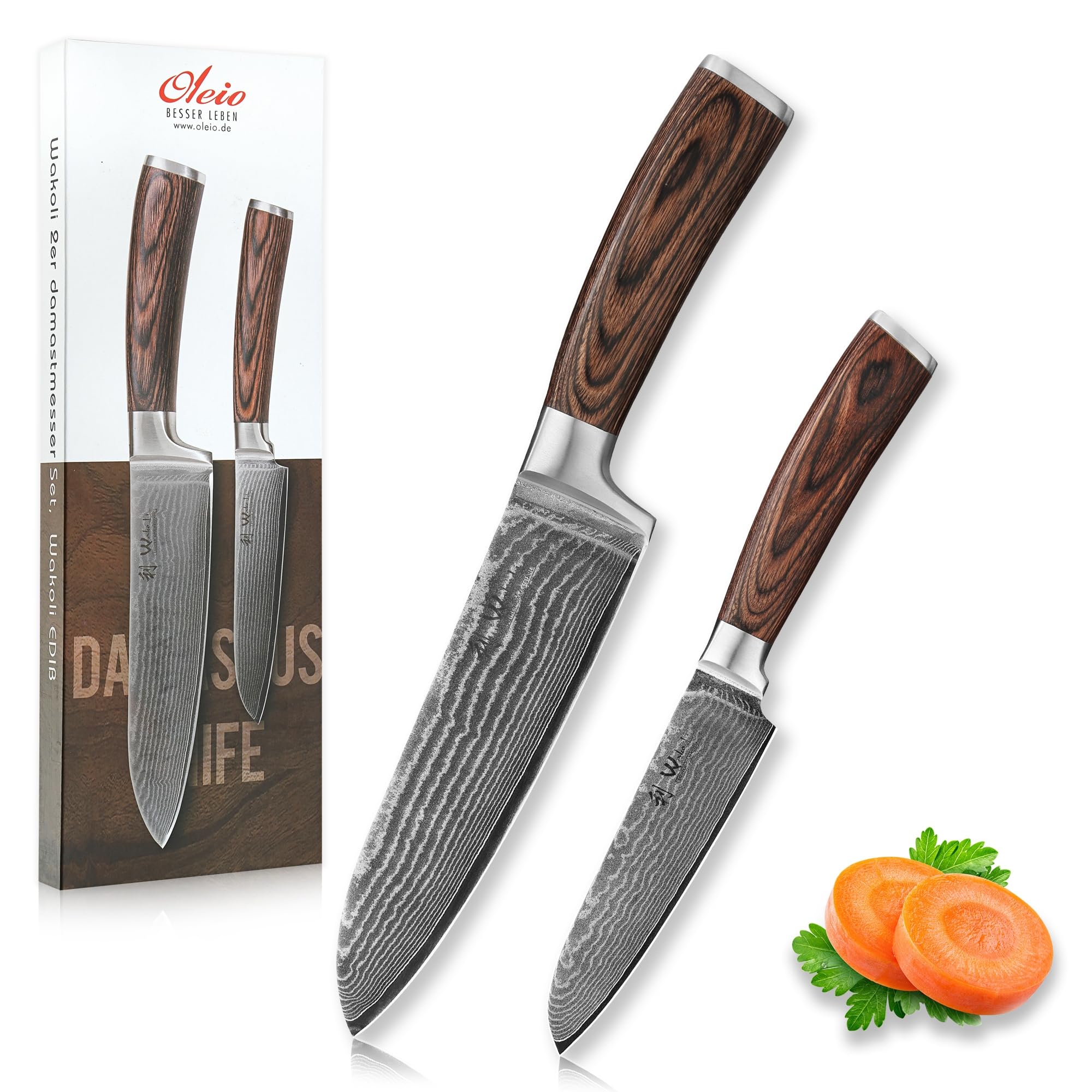
A 2-piece Damascus set built around a VG10 core for razor-sharp edges, precise control, and elegant presentation.
Why I picked it: Exceptional edge geometry and balance make these the clearest choice for precision slicing and delicate work.
Best for: Enthusiasts and cooks who want razor-sharp, well-balanced knives for fine work.
Premium
Pros
- 67-layer Damascus with VG10 core
- Honed at a narrow 12–14° angle
- Excellent balance and control
- Beautiful finish and gift-ready
Cons
- Very sharp—requires careful handling
- Damascus pattern more subtle than some expect
My take
The Wakoli set felt built for precision from the first cut. The VG10 core and multi-layer Damascus construction produce a keen edge that stays true, and the 12–14° honing delivers slicing performance that’s noticeably finer than thicker-angled blades.
Handles are comfortably ergonomic and the weight distribution gives me control whether I’m mincing herbs or making thin veggie ribbons. These knives are the ones I turn to when I need surgical, consistent cuts.
They also look elegant on the counter, making them a practical choice for both use and presentation.
4. imarku 7-inch Hollow-Edge Santoku – Best Hollow-Edge
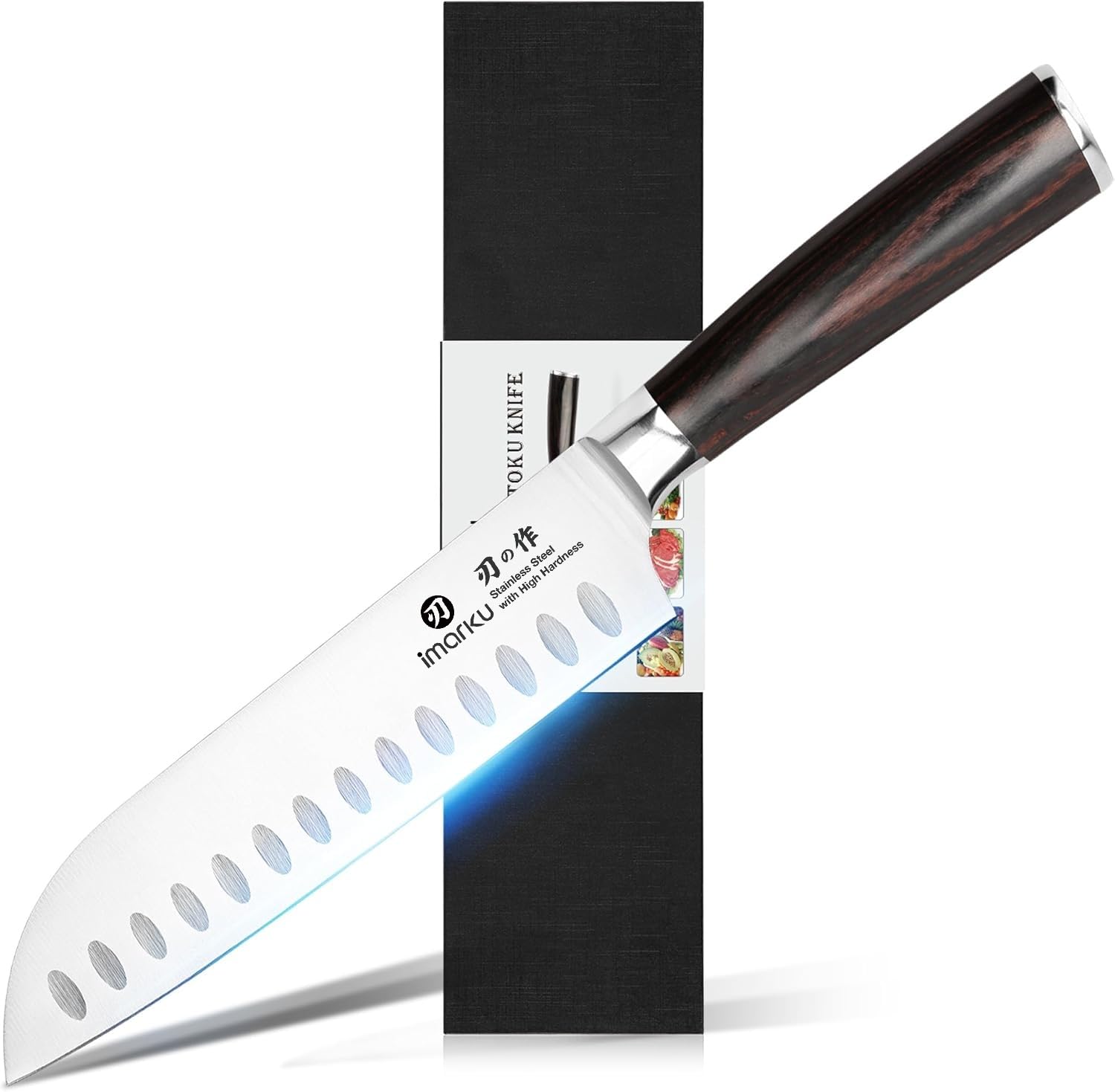
A hollow-edge imarku santoku focused on reducing stick and delivering a crisp, reliable edge for everyday chopping.
Why I picked it: Hollow scallops make slicing sticky ingredients faster and cleaner.
Best for: Anyone who frequently slices sticky or thin items like cucumbers and cheese.
Affordable mid-range
Pros
- Hollow design reduces sticking
- Well-honed edge for clean slices
- Ergonomic pakkawood handle
- Gift-ready packaging
Cons
- Not suited for chopping bones
- Edge can roll if abused
My take
I use this hollow-edge imarku when I want the blade to glide through wet or sticky foods without dragging. The scalloped depressions create small air pockets that noticeably reduce cling.
The balance and handle comfort let me work quickly without wrist strain. I treat this as a precision utility: great for soft meats, vegetables, and cheese, but I avoid using it to hack at bones or hard shells.
For routine prep where sticking is an issue, this model saves time and feels reliable every time I reach for it.
5. Wakoli EDIB Small Santoku – Best Small Santoku
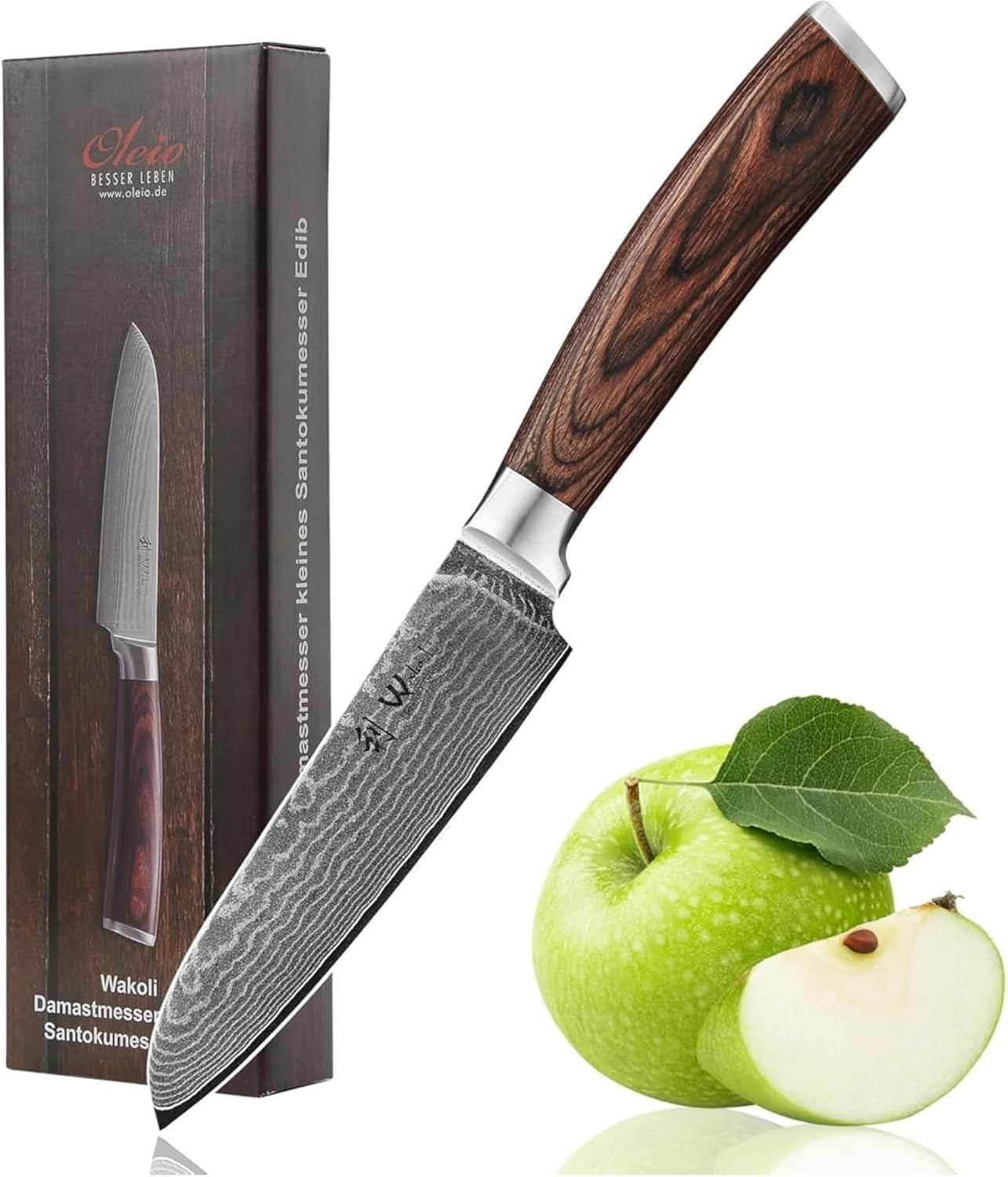
A compact Damascus small santoku that excels at detailed tasks like herbs, garlic, and small produce.
Why I picked it: Compact blade and VG10 core give fine control and long edge life for precision trimming.
Best for: Detail work, herbs, and cooks who prefer a smaller utility blade.
Mid-range
Pros
- Compact for precise control
- VG10 core with Damascus build
- Honed at a narrow angle
- Comfortable pakkawood handle
Cons
- Limited reach for large items
- Requires careful maintenance
My take
This small Wakoli santoku is my go-to when I need accuracy: trimming herbs, peeling ginger, or doing garnish work. The shorter blade gives excellent control and less overcutting than a larger chef’s knife.
Edge retention is strong thanks to the VG10 core and narrow sharpening angle, so I don’t find myself re-profiling it often. The handle feels balanced in hand and reduces fatigue during precision prep.
If you want a precise companion blade rather than a full-size workhorse, this one shines.
6. DDF iohEF 7-inch Santoku – Best Budget Starter
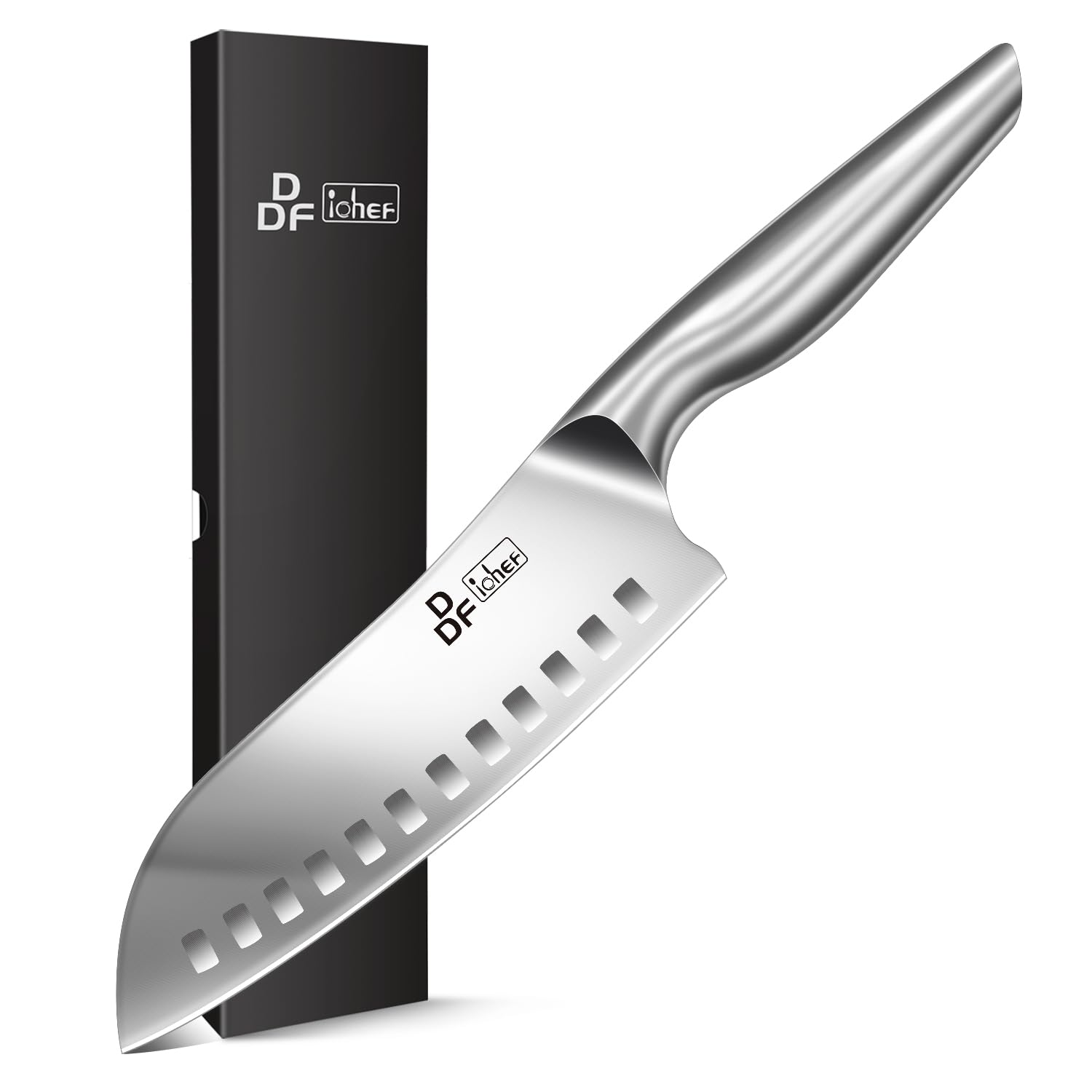
A very affordable Japanese stainless santoku that surprised me with its sharpness and balance for everyday tasks.
Why I picked it: Low cost but solid performance makes it a good entry option for new cooks.
Best for: First-time buyers and cooks who want capable performance on a tight budget.
Very affordable
Pros
- Sharp out of the box
- Well balanced and lightweight
- Double-edged for ambidextrous use
- Stainless construction
Cons
- Steel not as high-end as premium knives
- Long-term corrosion performance unknown
My take
I didn’t expect much until I tried this knife — it cut vegetables and ginger with ease and felt comfortable in my hand. The balance is good for a budget blade and the double-edged geometry works for left- and right-handed grips.
The advertised hardness and stainless composition give it respectable durability for everyday prep. I would recommend treating it like any budget steel: hand-wash and hone when needed to keep that keen edge.
Overall, it’s a practical starter santoku that performs well above what the price might imply.
7. imarku 7-inch Santoku (Pakkawood) – Best Gift Option
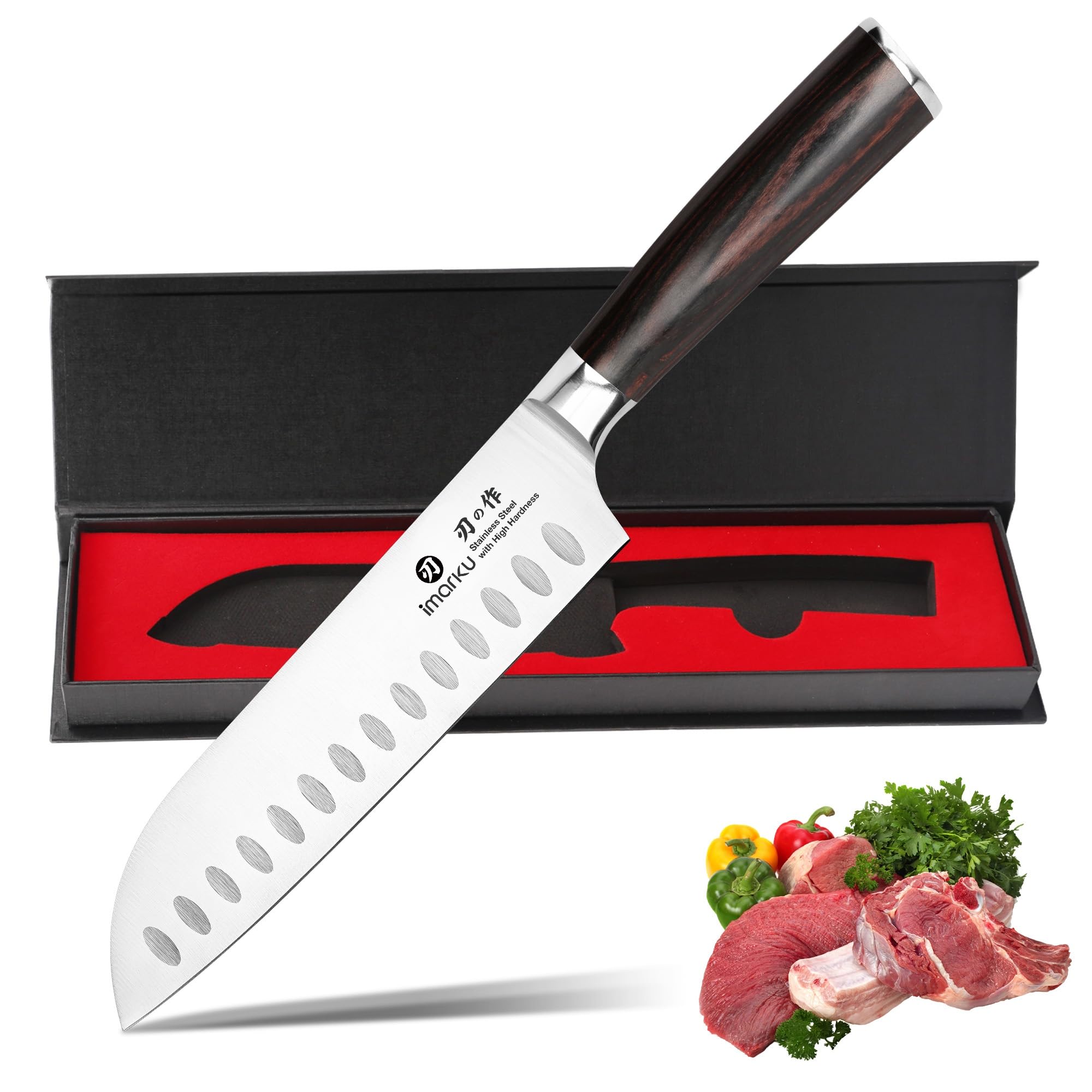
An attractive, well-made santoku packaged nicely — a reliable everyday blade that also makes a thoughtful present.
Why I picked it: Balanced performance and presentation make it an easy gift choice.
Best for: Gifting or adding a reliable, handsome santoku to your set.
Affordable to mid-range
Pros
- Nice balance of blade and handle
- Comfortable ergonomic grip
- Sharp and ready to use
- Attractive packaging
Cons
- Edge geometry slightly conservative
- Not a specialty steel
My take
I keep one of these imarku knives on my gift shelf because it consistently arrives sharp, well-balanced, and nicely presented. The pakkawood handle looks good and feels secure during long prep sessions.
It’s not the most exotic steel, but the everyday performance is solid and it works for most kitchen tasks without fuss. If I’m giving a practical, high-impact gift, this is a knife I choose.
How I Choose a Santoku Knife
Blade steel and construction
I prioritize steels and constructions that match how I cook. VG10 cores and multi-layer Damascus offer a good balance of edge retention and beauty, while German stainless variants offer corrosion resistance and durability for heavy use.
If I want very low maintenance, I lean toward stainless alloys; for finer edges and precision I look for VG10 or higher-hardness cores.
- VG10/Damascus: sharp, excellent edge retention
- High-carbon stainless: affordable and sharp, needs care
- Stainless German steels: durable and corrosion-resistant
Edge angle and sharpness
I check the factory angle: a 12–14° per side edge slices thinner and feels keener, while 15–18° edges are tougher and easier to maintain.
Narrow angles give razor performance but need more frequent touch-ups. Choose based on whether you want precision or low-maintenance durability.
- 12–14°: best for precision slicing
- 15–18°: more forgiving, easier to resharpen
Handle, balance, and comfort
I test how a handle sits in my palm and how the knife balances. A good santoku should feel like an extension of my hand and let me maintain control for long prep sessions.
Pakkawood handles often hit a sweet spot: they look warm, resist moisture reasonably well, and provide grip without being slippery.
- Try before you buy when possible
- Look for comfortable contours and secure grip
- Balance point should be near the bolster
Size and purpose
I choose blade length to match what I cook most: smaller santokus (4–6 inches) for precise work and larger 7–8 inch blades for everyday all-purpose use.
Think about how you prep: a smaller knife is better for herbs and small produce; a larger one reduces the number of passes on bigger items.
- Small (4–6" ) for precision
- Medium (7" ) for versatile daily use
- Large (8"+) for bigger cutting tasks
Maintenance and warranty
I always hand-wash and dry my knives and use a whetstone or fine ceramic rod to maintain the edge. Warranty terms can indicate the manufacturer’s confidence in construction.
If you want low maintenance, favor stainless alloys with corrosion resistance; if you want ultimate sharpness, accept a bit more upkeep.
- Hand-wash and dry to extend blade life
- Use proper stones or hones for your steel
- Check warranty for long-term peace of mind
Frequently Asked Questions
How should I sharpen and maintain a santoku?
I sharpen on waterstones or a fine stone at the blade's factory angle and hone regularly with a ceramic rod. I always hand-wash and dry my santoku and store it on a magnetic strip or in a block to protect the edge.
Can I use a santoku for bones and heavy chopping?
I avoid using santokus to chop bones or frozen items. They’re designed for slicing, dicing, and mincing—if you need to break down bones frequently, I recommend a heavier cleaver or butcher's knife.
Which santoku edge angle is best?
I prefer a 12–14° per side angle for precision slicing and a 15–18° angle for everyday durability. Choose based on whether you prioritize sharpness or lower-maintenance toughness.
Final Take
After testing, I kept knives from different categories: a durable everyday Tefal for heavy prep, a Wakoli Damascus set for precision, and imarku models that balance sharpness and value. Each knife performs well in the roles I described.
Decide what matters most—edge performance, maintenance, or budget—and pick the santoku that fits your kitchen rhythm. I’ve highlighted where each model excels so you can match a knife to how you actually cook.
