
I tested seasoning kits, a jerky cannon, and a few ready-made jerky options so you can pick what fits your process and flavor preferences.
I make jerky regularly and have tried everything from single-flavor cure packets to full variety kits and a jerky extruder. In this roundup I share the products I reach for when I want reliable seasoning, useful accessories, or a ready-to-go treat for my dog.
My picks cover wet marinades, dry seasoning for ground meat, a tool that speeds up snack-stick production, and a simple dog jerky I trust when I want a limited-ingredient treat.
If you want to flavor whole-muscle or wild game, the Hi Mountain and LEM seasoning packs are my go-tos; if you work primarily with ground meat, the Nesco packets and LEM Jerky Cannon make the process faster; and for a ready-made pet treat I use the Wag chicken jerky.
1. Wag American Chicken Jerky Dog Treats – Best Dog Treats
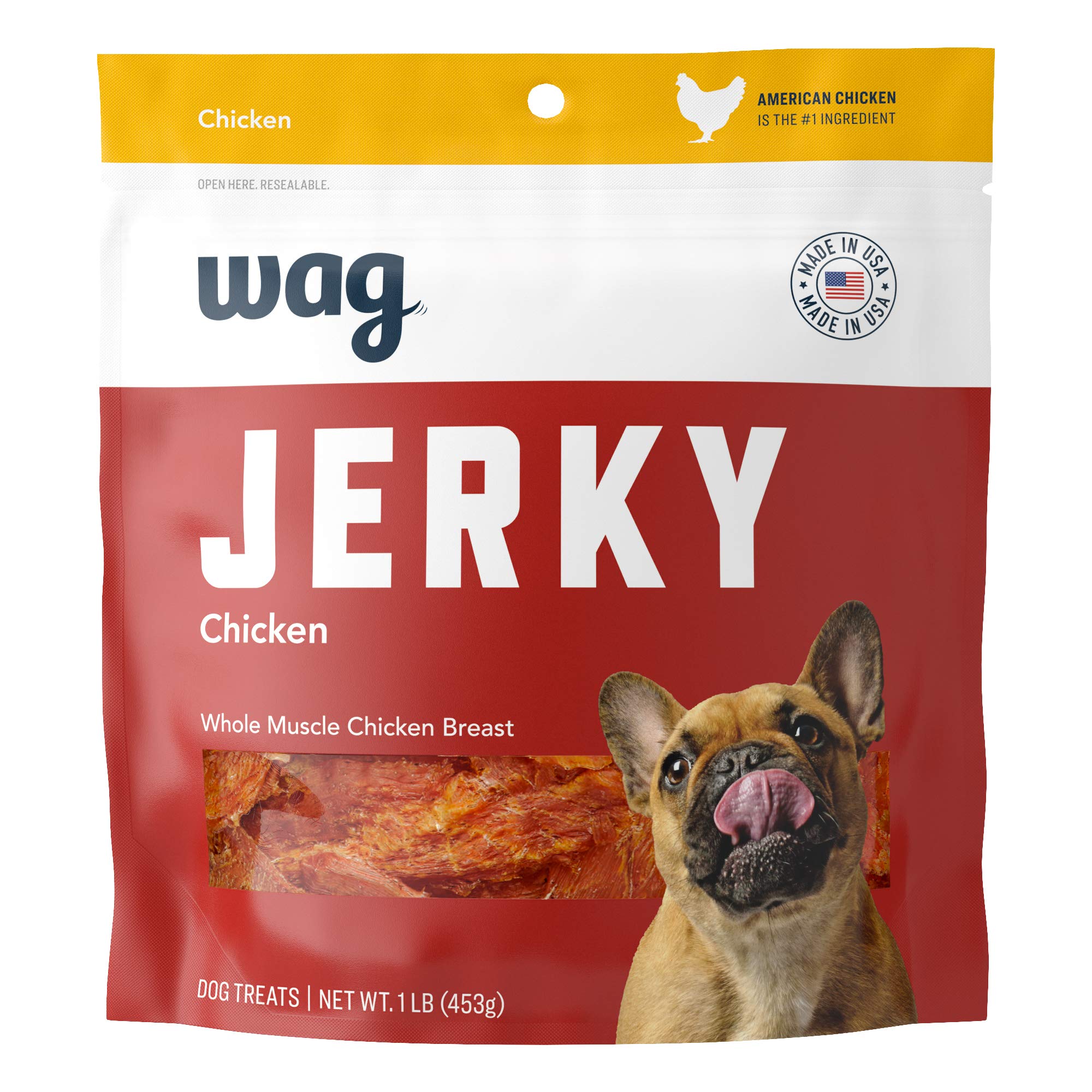
Limited-ingredient, whole-muscle chicken jerky that's made in the USA and sold in a resealable bag.
Why I picked it: Real whole-muscle chicken first, simple ingredient list, and a resealable bag for freshness.
Best for: Dog owners who want single-ingredient style treats made in the U.S.
Affordable, everyday dog treat option.
Pros
- Whole-muscle chicken first ingredient
- Limited-ingredient formula
- Resealable bag for freshness
- Chewy texture my dogs enjoy
Cons
- Piece thickness can vary
- Some pieces can be very firm
- Needs cutting for very small dogs
My take
I picked these because whole-muscle chicken is the first ingredient and they’re made in the USA. In my experience the pieces smell fresh and my dogs (and surprisingly my cat) find them very enticing.
The texture leans chewy rather than brittle, so I can tear or cut pieces easily for training or small treats. That said, I’ve had bags with inconsistent thickness—some pieces are thick and tough, so I break those into smaller bits for my smaller dog.
The resealable bag keeps the jerky fresher between uses, and the limited-ingredient list (no corn, soy, wheat, artificial colors, or flavors) is why I keep a bag on hand when I want a simple, trusted treat.
2. Hi Mountain Jerky Variety Seasoning Kit – Best Variety Pack
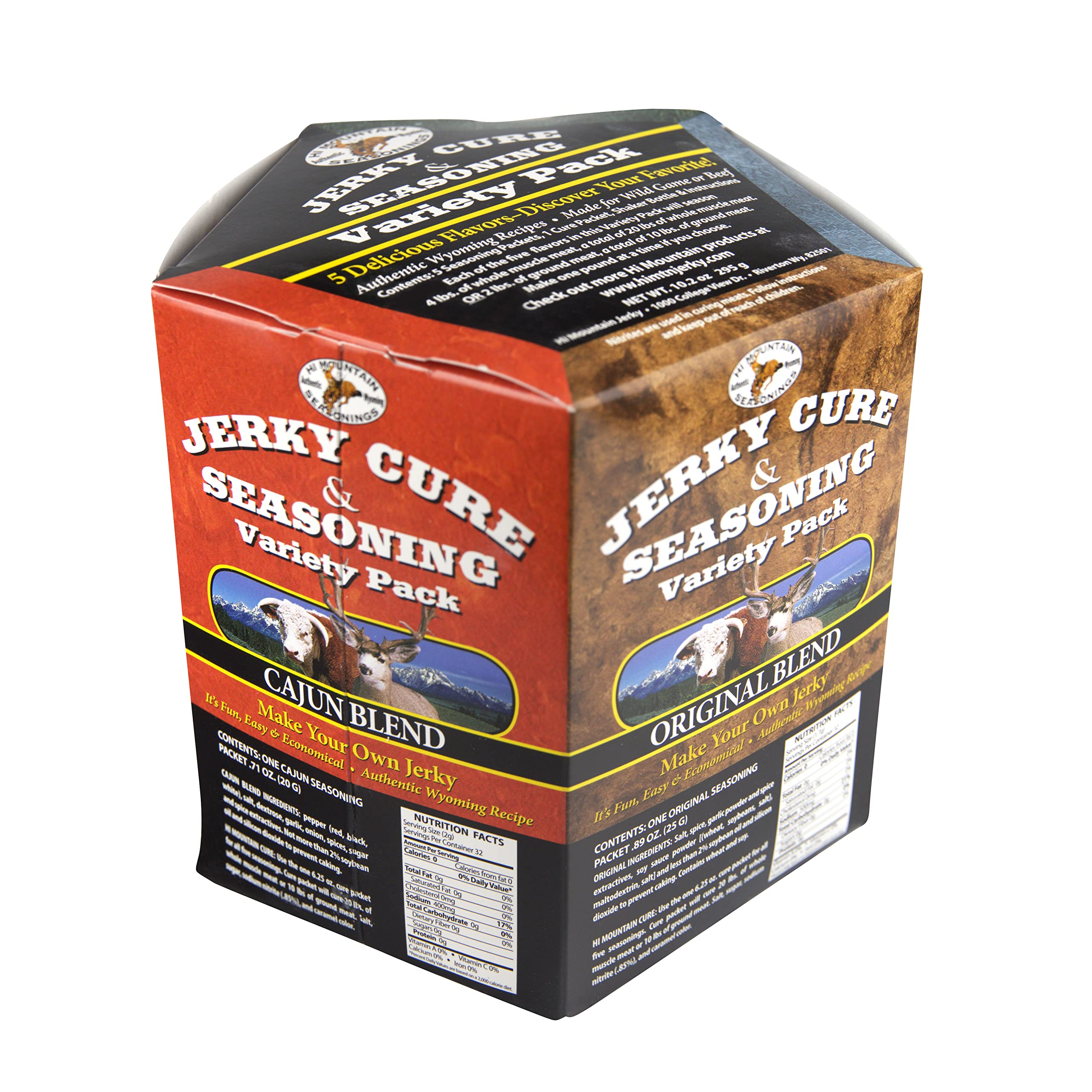
Five classic Western flavors with a cure packet, shaker bottle, and instructions — good for sampling multiple jerky profiles.
Why I picked it: Five distinct flavors plus cure and shaker let me sample styles without committing to a single blend.
Best for: Home makers who want a quick way to test multiple jerky flavors.
Good value for experimenting with several flavors.
Pros
- Five complementary flavors
- Includes cure and shaker bottle
- Works with oven, smoker, or dehydrator
- Seasons up to 20 lbs of meat
Cons
- Cure can make jerky overly salty
- One-off packaging issues reported
- Some flavors are stronger than others
My take
I like that this kit bundles Original, Mesquite, Hickory, Cracked Pepper & Garlic, and Cajun so I can rotate flavors between batches. The included cure and shaker bottle make mixing and portioning straightforward.
On my first run I found the prescribed amount of cure produced a very salty result, so I now use roughly half the cure for most recipes and still get safe preservation with better balance. That adjustment saved a batch for me.
The blends work with whole muscle or ground meat, and I’ve used them in the oven and dehydrator with consistent flavor. If you want to taste-test different profiles without buying multiple single-flavor packs, this sampler is the easiest route.
3. LEM Jerky Cannon (Anodized Aluminum) – Best for Ground Meat
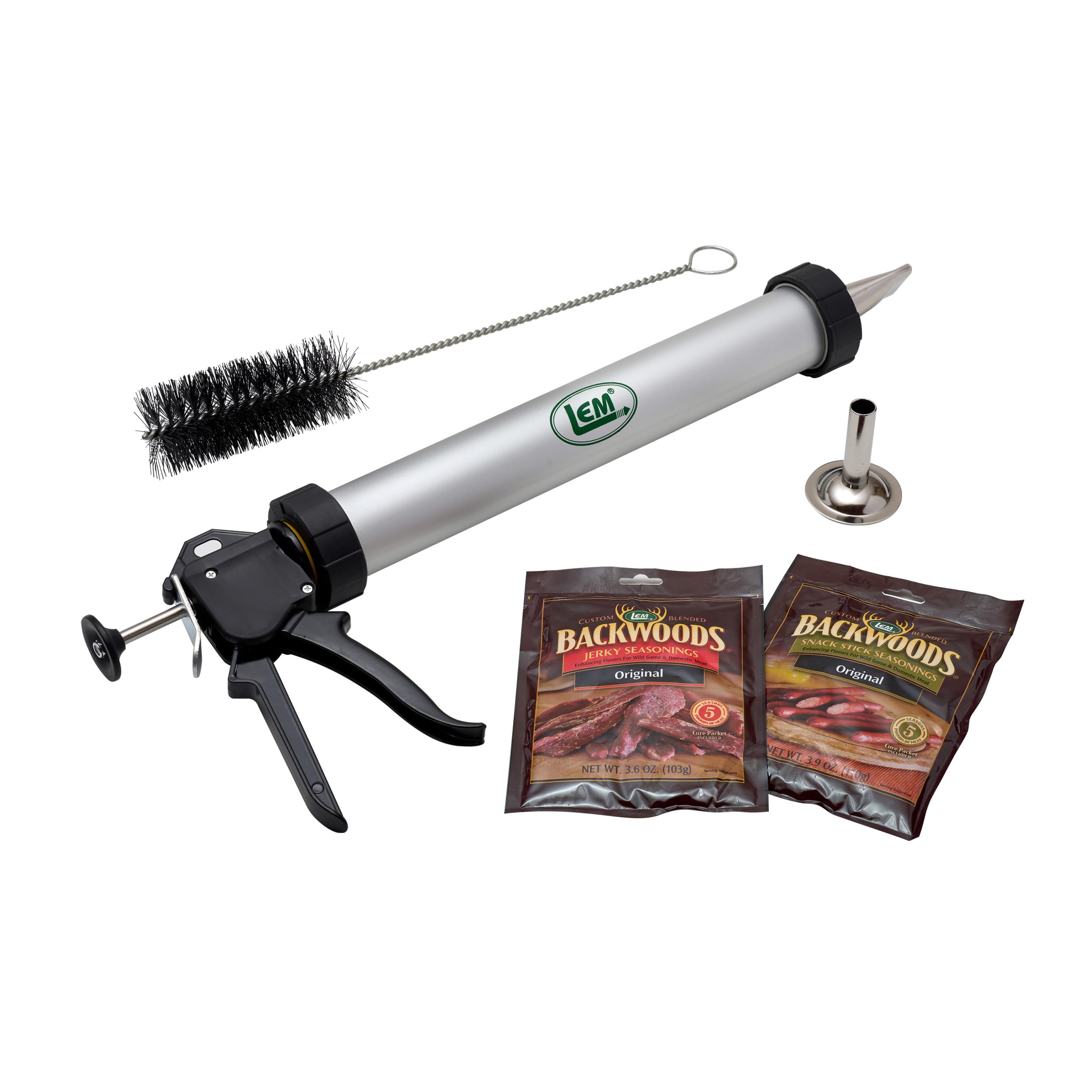
A heavy-duty jerky gun that extrudes flat jerky and snack sticks, plus nozzles, a brush, and seasoning packets to get started.
Why I picked it: Sturdy construction and smooth extrusion make short work of ground-meat jerky and snack sticks.
Best for: Anyone turning ground meat into jerky or snack sticks quickly and consistently.
Higher upfront cost but saves time and ingredients long term.
Pros
- Solid anodized-aluminum construction
- Makes flat jerky and snack sticks
- Includes two stainless nozzles
- Fast extrusion and easy cleaning
Cons
- Takes a learning curve to load cleanly
- Real capacity slightly under advertised
- Single barrel—refill between batches
My take
I depend on this cannon when I make jerky from ground beef or turkey. It’s built like a tool—sturdy barrel, stainless rod, and a trigger that extrudes meat smoothly with minimal clogging.
Loading takes a little technique (I now load upright and tamp tightly), but once I got the process down I can run several pounds in minutes. The included flat and round nozzles let me alternate between snack sticks and flat jerky without swapping equipment.
Cleanup is straightforward: disassemble, give the parts a quick scrub with the supplied brush, and it’s ready for the next batch. The gun holds slightly less than the stated 1.5 pounds if I want zero air pockets, but that’s a minor trade-off for the speed it delivers.
4. LEM Backwoods Jerky Seasoning Variety Pack – Best Spicy Variety
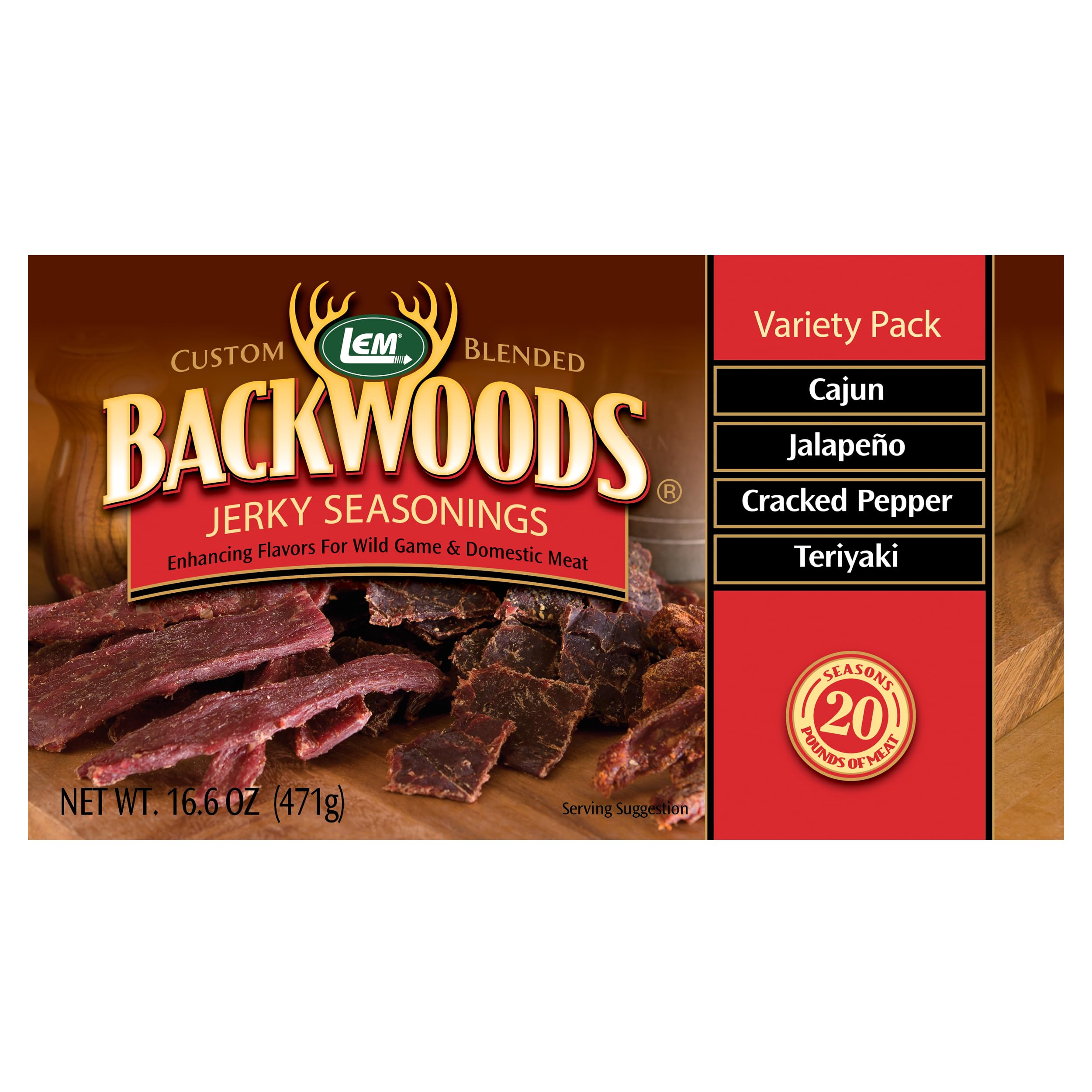
Four bolder flavors—Cajun, Jalapeno, Cracked Pepper, and Teriyaki—with pre-measured cure packets for straightforward batching.
Why I picked it: Bold, spicy-focused blends and pre-measured cure packets make consistent batches easy.
Best for: People who like spicier jerky and want simple portioning for large batches.
Mid-range option for bulk jerky making.
Pros
- Four spicy-forward flavor options
- Pre-measured cure in every pack
- Works for ground meat or sliced strips
- Designed to season up to 20 pounds
Cons
- Teriyaki contains soy, wheat, and MSG
- Cracked Pepper contains mustard
- Full cure can yield overly salty jerky
My take
I reach for Backwoods when I want big, punchy flavors—Cajun and Jalapeno add heat while Cracked Pepper gives a sharp bite and Teriyaki offers a sweeter profile.
The pre-measured cure simplifies portioning across multiple pounds of meat, which I appreciate when producing larger batches. I do, however, dial back the cure compared with the package directions to avoid a salty finish, especially with ground-meat methods.
If you have food-allergy considerations, note that Teriyaki contains soy and wheat and Cracked Pepper lists mustard—those specifics determine which packets I use for mixed-family batches.
5. Hi Mountain Original Jerky Seasoning Kit – Best Classic Flavor
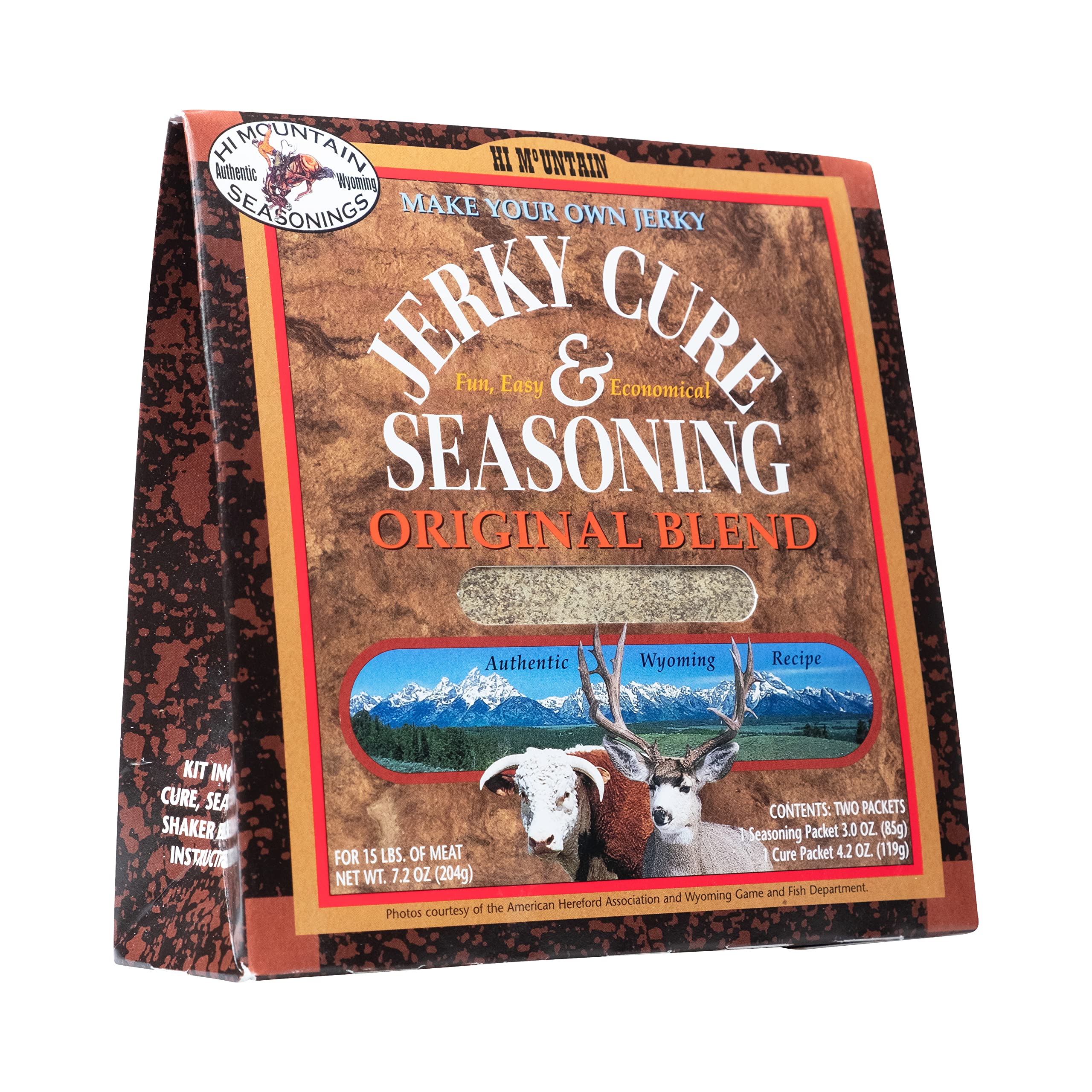
The Original Blend gives a traditional jerky flavor profile with seasoning, cure, and a shaker bottle for easy mixing.
Why I picked it: Balanced, time-tested original flavor that adapts well across beef and wild game.
Best for: Makers who want a dependable, classic jerky profile for game or beef.
Solid budget-friendly choice for everyday jerky batches.
Pros
- Classic, balanced flavor
- Includes cure and shaker bottle
- Good for wild game and beef
- Straightforward instructions
Cons
- Watch dehydration—can over-dry
- Single-flavor box limits variety
My take
This Original Blend is my go-to when I’m working with venison or a good cut of beef. It strikes a classic balance—salt, garlic, and spice—without overpowering the meat.
The kit’s shaker and cure packet make it easy to mix just enough for small or medium batches. I find that careful dehydration is the key here; I intentionally stop earlier than some instructions to keep the jerky tender and flexible.
For anyone who wants a reliable all-around seasoning without fuss, this kit covers the basics and adapts well across different meats.
6. Nesco Original Jerky Seasoning 3-Pack – Best No-Fuss Packets
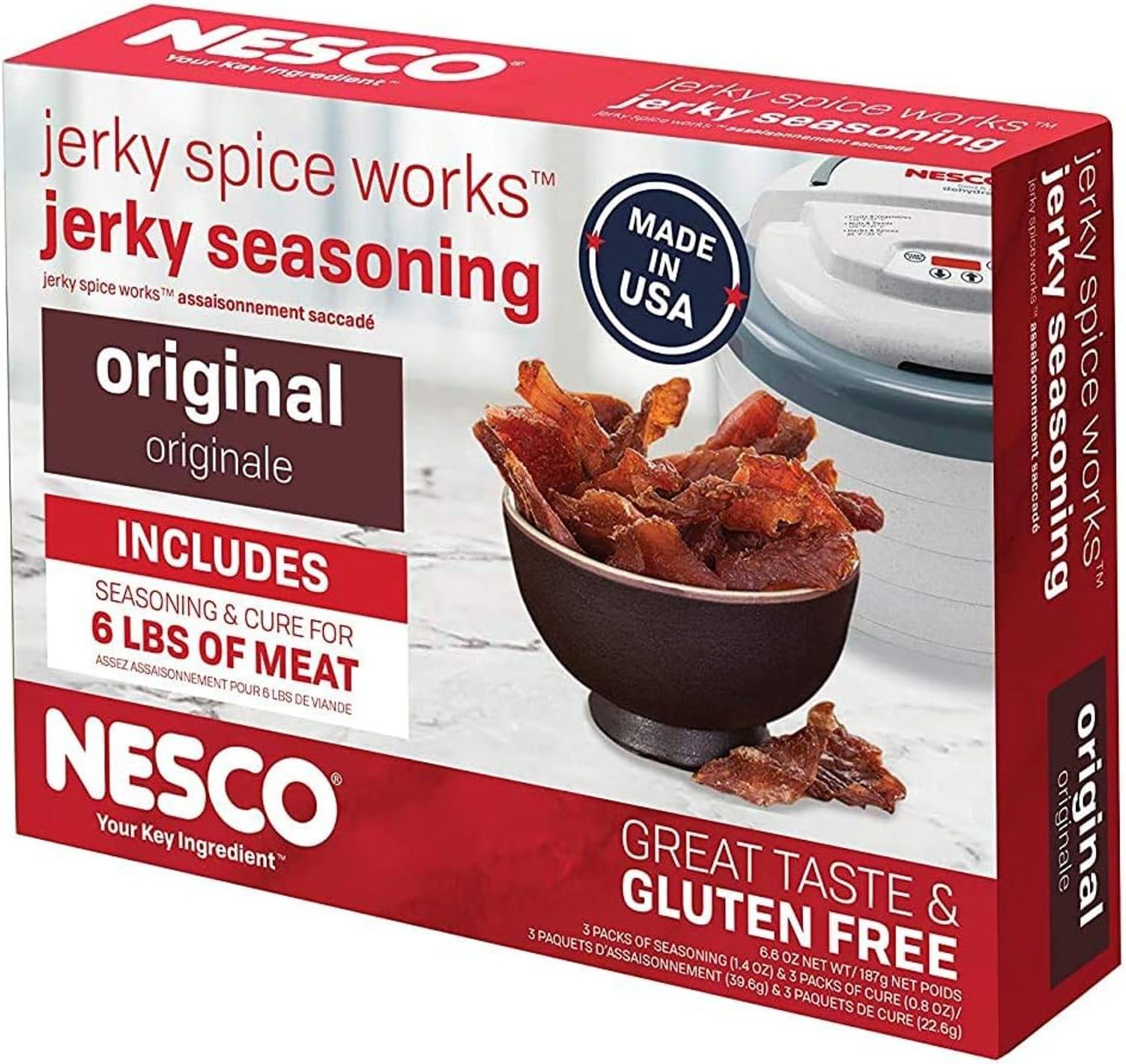
Pre-measured seasoning and cure packets designed to make home jerky simple—especially handy for ground meat or venison.
Why I picked it: Pre-measured packets make portioning easy and consistent when I’m making small batches.
Best for: People who want straightforward seasoning without measuring or mixing.
Economical option for repeat jerky makers.
Pros
- Pre-measured packets
- Great with ground beef and venison
- Simple to use
- Consistent seasoning when fresh
Cons
- Occasionally packets seem aged
- Limited to one flavor profile
My take
I keep a supply of these for quick batches because the pre-measured packets save time—especially when I’m making jerky from ground meat.
Flavor is straightforward and dependable; I often enhance the mix with a touch of soy or Worcestershire when I want a deeper umami. A small caveat: I’ve encountered a pack or two that seemed a bit aged, and when that happens the aroma is less vibrant, so I rotate stock regularly.
For everyday jerky-making where convenience matters, Nesco’s packets get the job done with minimal fuss.
How I Choose Jerky Seasonings and Tools
Key factors I consider
Flavor profile: I decide whether I want bold, spicy blends or a classic, balanced seasoning. Variety packs are great for sampling; single-flavor kits are better when I’ve found a favorite.
Cure level and salt: I always check whether the kit includes cure and how much it recommends. In my experience many cures are salt-forward, so I often reduce the cure amount for better balance while still being mindful of safe preservation.
Intended meat: Some seasonings are optimized for whole-muscle cuts, others for ground meat. I match the kit to whether I’ll slice strips or use a jerky cannon with ground meat.
- Pre-measured cure: saves time but taste the first batch and adjust salt if needed.
- Allergens: check ingredient notes (soy, wheat, mustard, MSG) before mixing family batches.
- Equipment compatibility: confirm whether the blend is meant for oven, smoker, or dehydrator.
- Packaging: resealable bags help keep seasonings and jerky fresh.
Tools and workflow tips I use
If I’m making snack sticks or working with ground meat, a jerky cannon saves time and produces uniform pieces. Practice loading upright and tamping to eliminate air pockets.
For whole-muscle jerky, I wet-marinate when I want deeper penetration and dry-rub for a quicker finish. Pat slices dry before cooking to avoid soggy or overly salty results.
Always monitor internal temperature and dehydration time; over-drying ruins texture, while under-drying can affect shelf stability.
- Use half the recommended cure on your first run if you’re sensitive to salt.
- Rotate seasoning stock to avoid using aged packets with muted flavor.
- Label packets and batch dates when producing multiple flavors.
Frequently Asked Questions
Should I always use the full cure packet included with kits?
I don’t. I typically start with half the recommended cure on a small test batch to judge saltiness and then adjust. That approach preserved safety for me while avoiding an overly salty final product.
Can these seasonings be used for poultry and fish as well as beef?
Yes. I’ve used many of these blends on turkey and even fish; the milder original blends translate well, while stronger flavors like Cajun or Mesquite work best on robust meats.
Do I need a jerky gun to make good jerky?
You don’t need one for sliced whole-muscle jerky, but I find a jerky cannon indispensable when I want snack sticks or when I’m working with ground meat—speed and consistency improve dramatically.
How do I prevent jerky from becoming too tough?
I avoid over-dehydration and slice against the grain for tenderness. When using wet marinades, I pat slices dry before cooking to prevent a leathery finish.
Final Take
I keep multiple seasoning kits in my pantry so I can choose a profile that matches the meat and the occasion. For quick, reliable batches I rely on Hi Mountain and Nesco; when I want to produce snack sticks quickly I use the LEM Jerky Cannon; and when I need a simple, made-in-USA treat for my dog I grab the Wag chicken jerky.
Try one option from each category—sample flavors, test cure levels, and match your toolset to the meat you’re working with—and you’ll have a jerky process that consistently delivers the texture and taste you want.
