
I tested six cold-press juicers across chute size, yield, noise, and cleanup to find reliable daily machines for every routine.
I put six popular cold-press juicers through my daily kitchen routine so I could tell you which ones actually make juicing easy and sustainable.
I spent mornings loading whole fruit, making green juice, and running the cleanup so my notes focus on yield, noise, prep time, and real-world convenience.
Below I break down where each model shines and who I think it’s truly right for.
I compared these machines on three practical things: how much prep the feed chute saves me, how dry the pulp and high the yield are, and how much effort cleanup and maintenance demand. I favored machines that made juicing feel like a simple habit rather than a chore.
1. Hurom H320 Cold Press Juicer Machine (Kale/Dark Green) Kale Slow Juicer – Best Overall
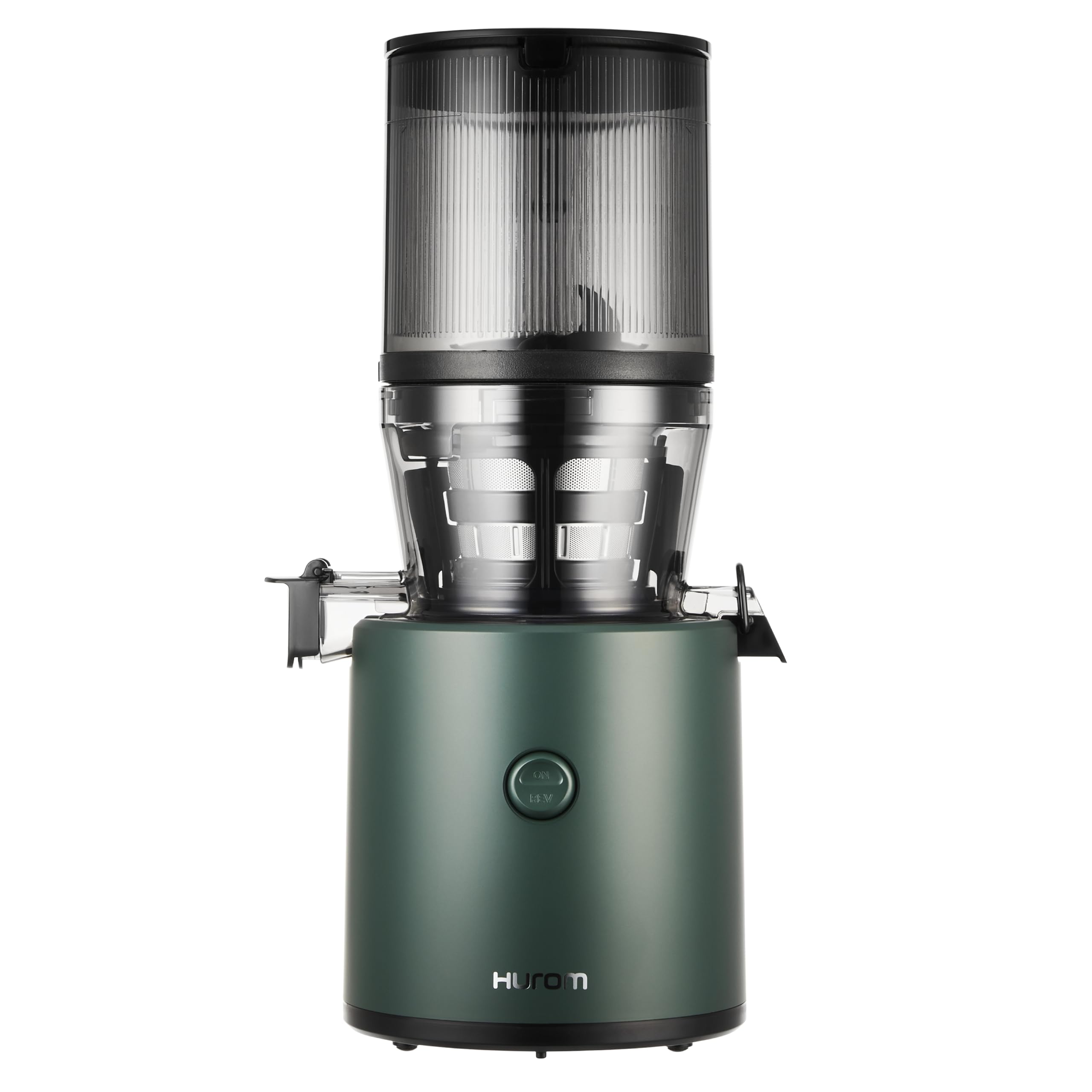
A premium masticating juicer built for families and committed juicers who want the driest pulp and the quietest mornings.
Why I picked it: Best combination of yield, quiet operation, and hands-free family-friendly hopper.
Best for: Households that make large batches and want near-silent operation.
A higher-end investment for people who juice every day.
Pros
- Ultra low pulp and very high yield
- Large self-feeding hopper for whole produce
- Near-silent AC motor
- Fine and coarse strainers
- Easy assembly and cleaning
Cons
- Premium price point
- Takes more counter space
My take
This is the juicer I reach for when I want the cleanest, fullest glass of juice without babysitting the machine. The high-volume self-feeding hopper handles whole apples, carrots, and long stalks of celery so I can load a batch and walk away while it runs.
I used the finer strainer most mornings and ended up with very little pulp and a noticeably higher juice yield; the pulp comes out almost bone-dry. The Slow Squeeze technology also meant less oxidation, so I bottled juice and kept it tasting fresh for the next day or two.
Assembly and teardown are straightforward—I appreciate a unit that doesn’t make cleanup a multi-step hassle. The motor runs whisper-quiet, which matters when I’m making a drink before the rest of the house wakes up.
2. Anybear Cold Press Juicer with 4.9″ Large Feed Chute (Dark Grey) – Best Wide Chute
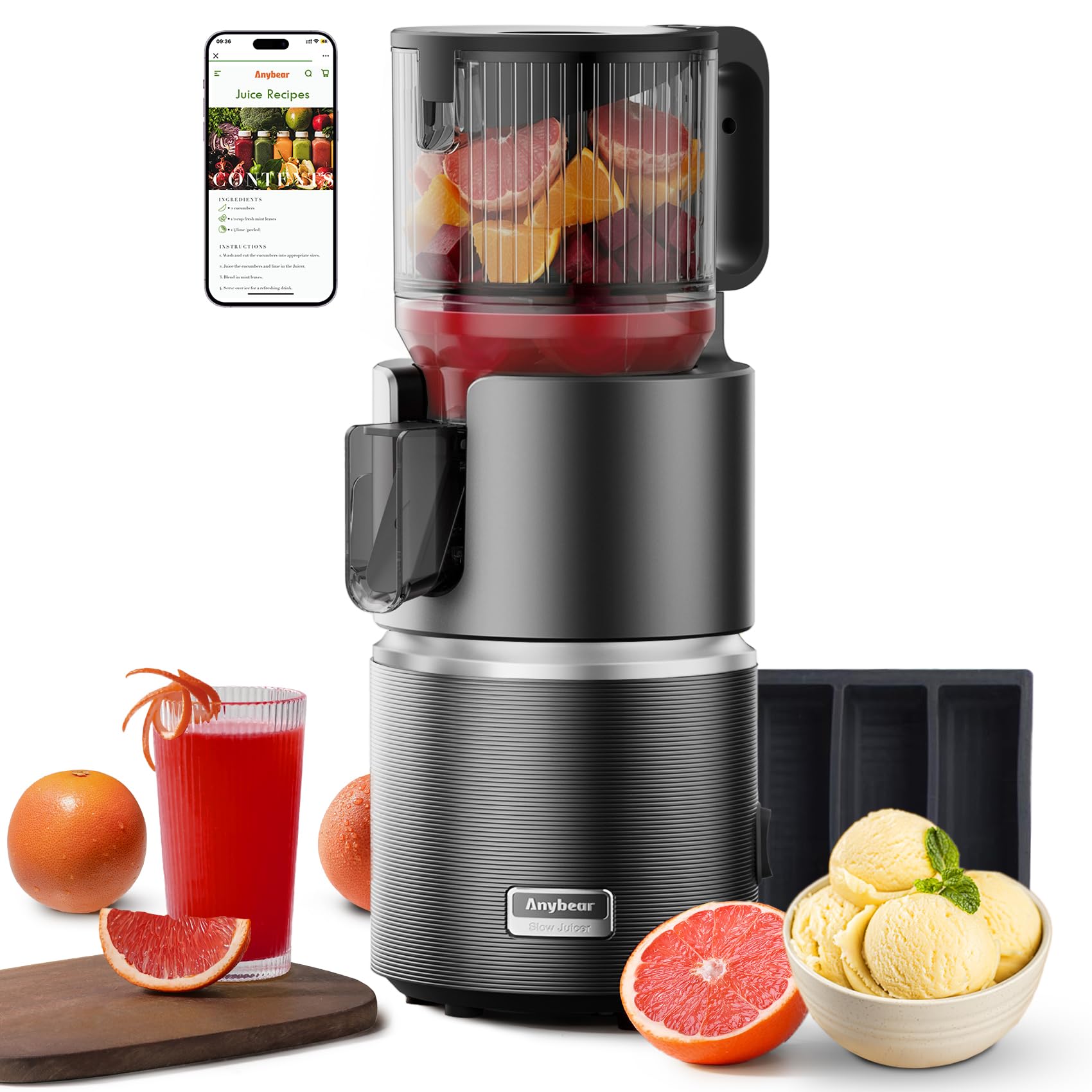
A powerful, efficient masticating juicer with a very wide feed chute and a dual-stage extraction system for higher yields and less prep.
Why I picked it: Huge feed chute plus dual-stage extraction for fast, efficient juicing.
Best for: People who value minimal prep and want good yield quickly.
A mid-range option that balances power and convenience.
Pros
- 4.9-inch wide feed chute
- Dual-stage extraction for better yield
- 350W high-torque motor
- Reverse function clears jams
- One-rinse cleanup design
Cons
- Heavier footprint on the counter
- Not the absolute quietest model
My take
The wide 4.9-inch chute is the feature I used most; I frequently dropped whole apples and carrots in without pre-cutting and it saved me a lot of prep time.
Dual-stage squeezing and the strong 350W motor consistently produced dry pulp and bright-tasting juice. When I had a brief stall with fibrous celery, the REV button cleared it without fuss.
Cleanup was simpler than expected because the one-piece filter rinsed clean quickly. The build feels solid and stable, so I had no worries running it for larger batches.
3. Cold Press Juicer with 3 Filters (For Juice/Sorbet/Nut Milk) – Extra Large Black – Best Multi‑Function
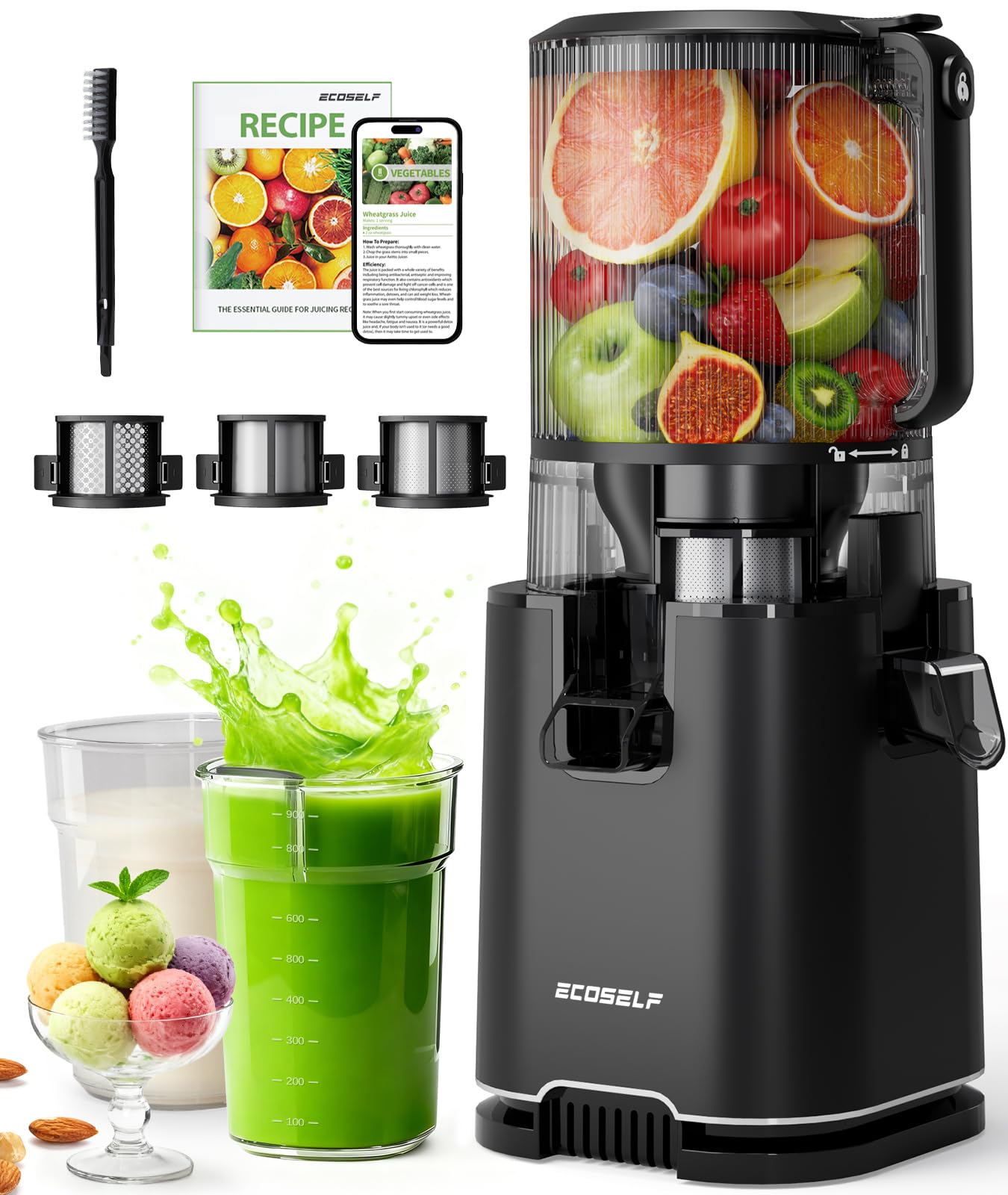
A versatile machine that makes juice, nut milk, and sorbet thanks to three filters and a very large 6.0" feed chute.
Why I picked it: Three filters add real versatility beyond juice—milk, sorbet, and smoothies.
Best for: Homes that want juice plus nut milks and frozen desserts.
A feature-rich mid-tier choice for multi-use kitchens.
Pros
- Three interchangeable filters
- 6.0-inch extra-wide feed chute
- Makes nut milk and sorbets
- Quiet motor for early mornings
- Large-capacity feeding chamber
Cons
- Slightly slower extraction speed
- Filter needs brushing after use
My take
I enjoyed that this machine is more than a juicer—switching to the blank filter let me make frozen fruit sorbets, and the fine and coarse filters covered everything from smooth juice to pulpy blends.
The 6-inch hopper is a real time-saver; I stopped spending ten minutes chopping and started dropping produce straight in. The pulp came out dry, and the juice tasted fresh with very little foam.
It’s not the fastest extractor I’ve used, but the trade-off is worth it for the additional functions. Cleanup is straightforward aside from the filter, which takes a little extra brushing.
4. Cold Press Juicer, 5.5″ Wide Feed Chute Juice Machine (Black Standard) – Best for Small Kitchens
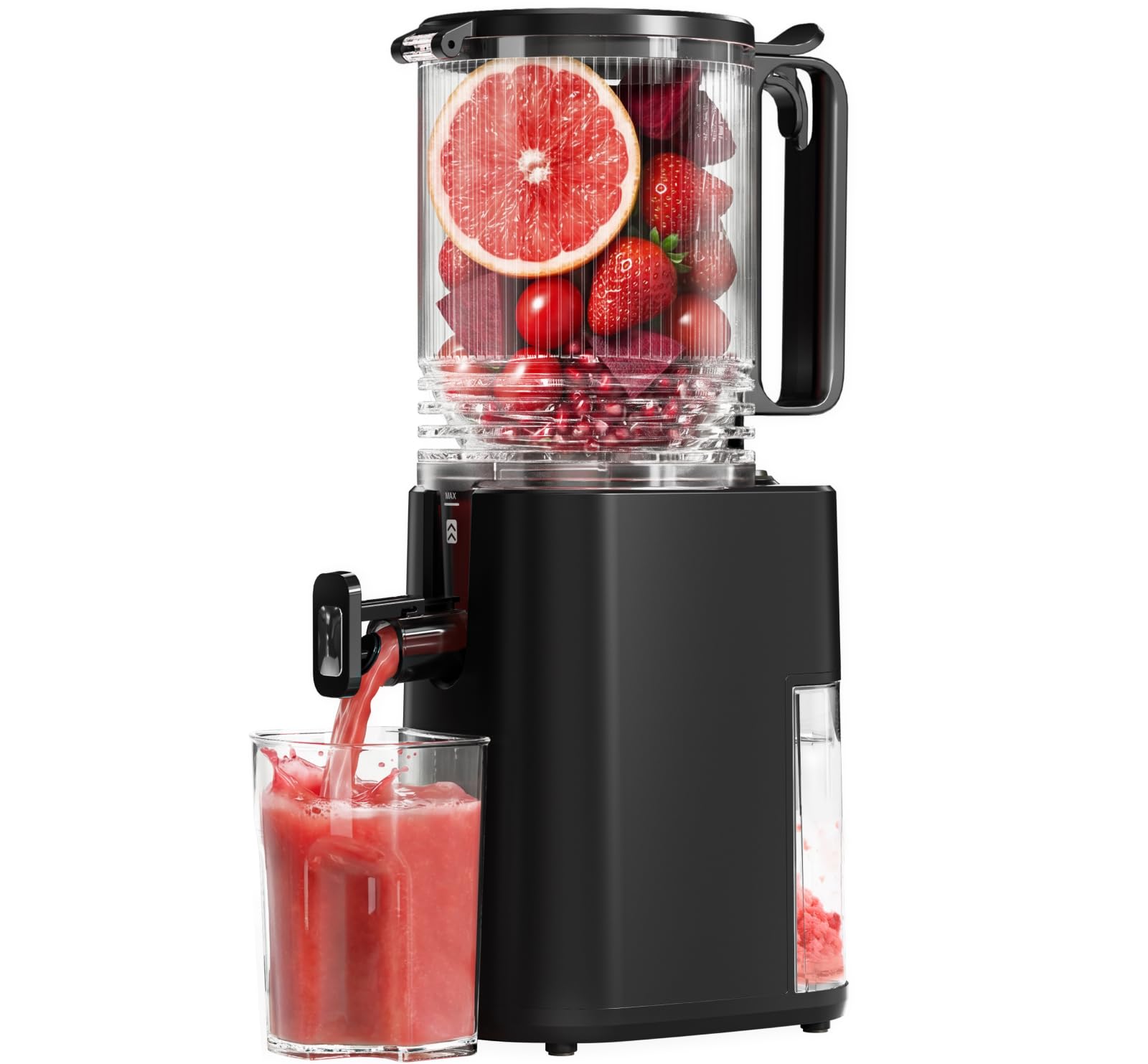
A compact cold-press juicer with a neat hidden pulp container and enough capacity for single-serve and small-family use.
Why I picked it: Compact footprint with smart pulp storage and strong extraction for its size.
Best for: Singles or small kitchens that need efficient daily juicing.
A practical option for those who want performance without a large appliance.
Pros
- 5.5-inch wide feed chute
- Hidden 1L pulp container
- Quiet and stable operation
- Quick assembly and cleaning
- Good single-serve sizing
Cons
- Smaller capacity for large batches
- Not built for commercial use
My take
This model fit comfortably on my counter without hogging space, which made me actually keep it accessible instead of stashing it away.
The hidden pulp container was clever—I didn’t have to pause juicing to empty it as often. Whole apples and larger vegetables went in easily, and I got a smooth, low-foam juice every time.
The quiet motor is perfect for early mornings, and the parts are easy to disassemble and rinse, even dishwasher-safe on the top rack when I’m in a hurry.
5. Juicer Machines, 5.3″ Large Mouth Feed Chute with Self Feeding & Hands-Free Design (Large Black) – Best Value
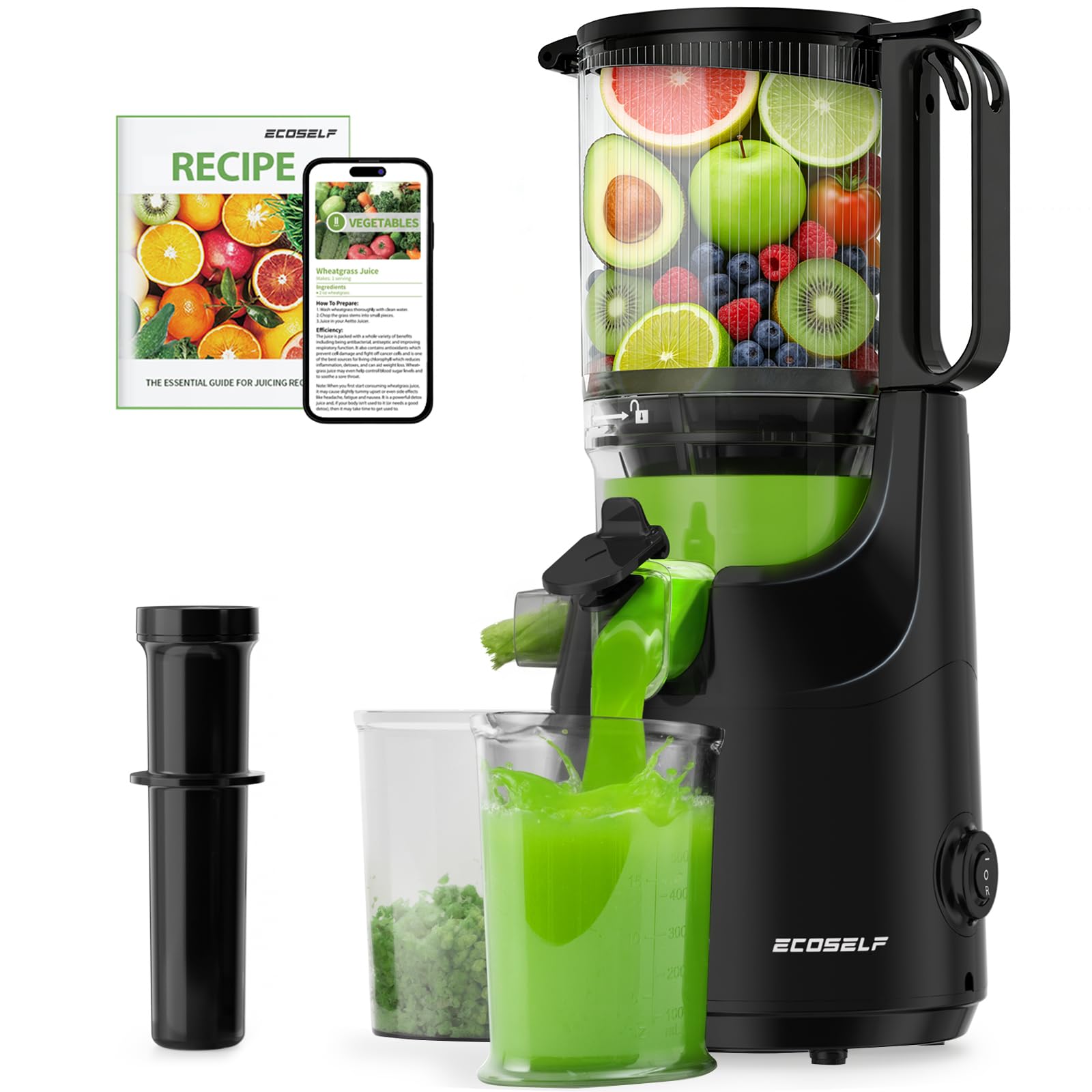
A reliable, no-nonsense cold-press juicer with a large 5.3" chute, simple one-touch control, and practical features for everyday use.
Why I picked it: Strong performance, easy cleanup, and sensible features at a great value.
Best for: Anyone looking for consistent daily juicing without a big investment.
A budget-friendly machine that doesn’t sacrifice core functionality.
Pros
- 5.3-inch wide feed chute
- Auto-feeding hands-free design
- One-touch control and reverse
- Straightforward assembly and cleaning
- Sturdy and reliable performance
Cons
- Takes up counter space
- Basic styling, fewer premium extras
My take
I found this juicer to be a dependable everyday performer—apples and carrots went in whole, the machine fed smoothly, and the pulp came out fairly dry.
One-touch control and a reverse function kept operation simple and worry-free, and I appreciated that the removable parts rinse clean quickly.
It’s not the flashiest unit, but it makes fresh juice consistently and with minimal fuss, which is exactly what I want for a daily habit.
6. LINKChef Cold Press Juicer Machines, 130mm Diameter and 1.8L Capacity (Black) – Best for Large Batches
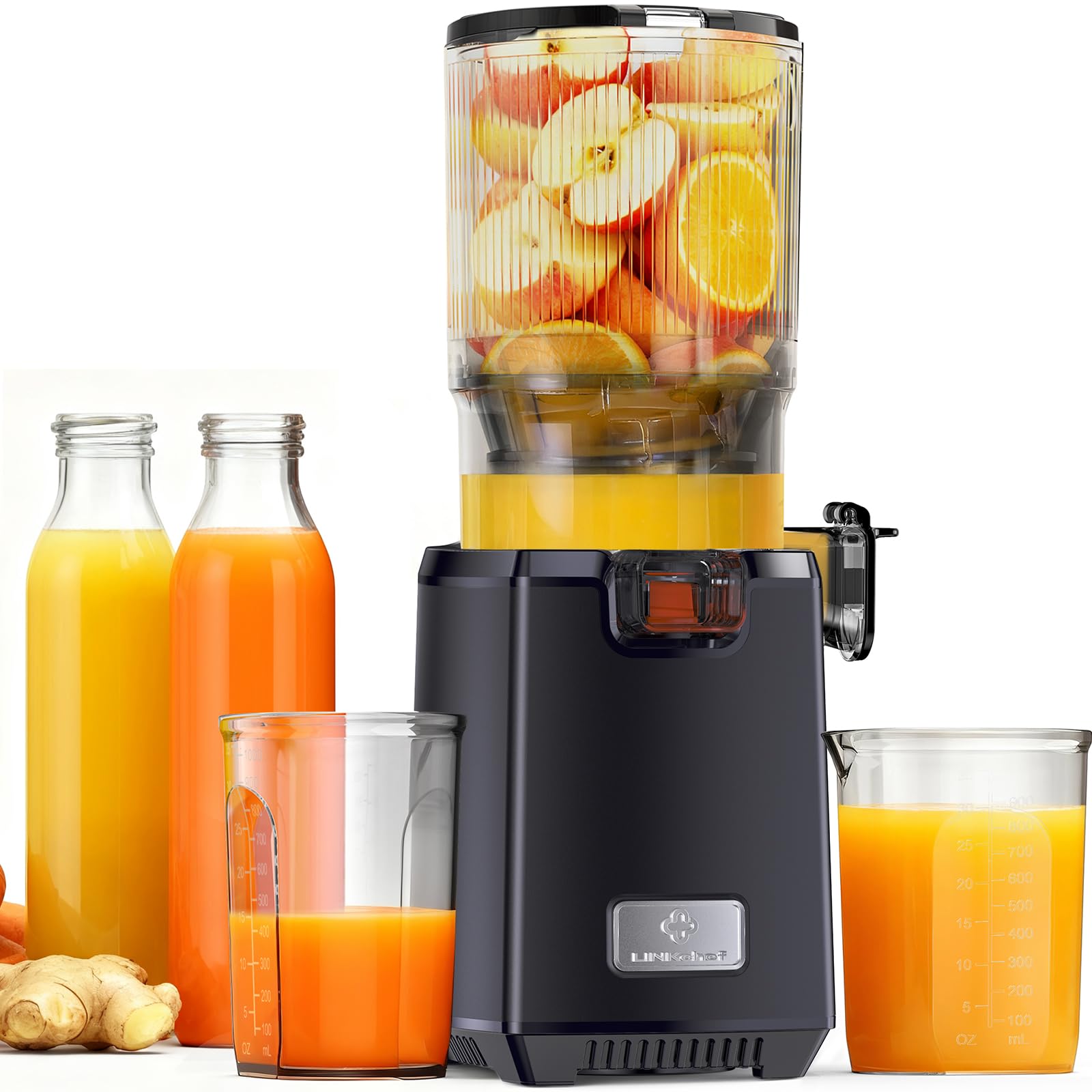
A high-capacity slow juicer with an extra-wide 130mm chute and a 1.8L feeding chamber built for weekly prep or family servings.
Why I picked it: Huge chute and large chamber speed up batch juicing.
Best for: Families and meal-preppers who load big batches at once.
A sensible mid-priced choice for larger-volume juicing.
Pros
- 130mm (5.12") feed chute
- 1.8L hands-free feeding chamber
- Quiet 50–65 RPM operation
- One-knob start/stop/reverse
- BPA-free Tritan components
Cons
- Requires counter space
- Assembly needs attention to fit correctly
My take
This was my go-to when I wanted to prep juice for the week—its 1.8L chamber and very wide chute let me load a lot and move on with my morning.
It produces smooth juice with dry pulp and very little foam, and the slow-speed motor keeps noise low. I liked the simple one-knob control and the safety stop when the lid opens.
Assembly requires a small habit—keeping the cover open while fitting parts makes it click into place properly—but once it's set up the throughput and consistency are excellent.
How I Picked These Juicers
Feed chute size and prep time
I prioritize large chutes because they cut prep time dramatically. If I can toss whole apples or large carrots in, I’m more likely to make juice every morning.
Smaller chutes require more chopping, which adds friction to a daily habit.
- 4.9–6.0" chutes reduce prep the most
- 3–4" chutes often need halfing or quartering
- Large chutes tend to mean a larger footprint
Juice yield and pulp dryness
I always judge a juicer by how dry the pulp is after a run. Dry pulp equals less waste and more juice per ingredient.
Masticating (slow) juicers typically deliver higher yield and less oxidation than fast centrifugal models.
- Look for terms like 'slow squeeze' or 'masticating'
- Fine and coarse strainers offer control over texture
- Dry pulp is the clearest sign of efficient extraction
Noise and motor power
I pay attention to motor specs and real-use noise; a quieter motor makes early-morning juicing feasible.
More watts and higher torque help with fibrous produce like celery and ginger.
- Higher torque helps with greens and wheatgrass
- Near-silent AC motors suit early mornings
- Reverse or anti-block functions prevent jams
Cleanup and daily maintenance
I favor units with fewer parts and easy-rinse filters—cleanup is the number-one reason people stop juicing, and it’s the same reason I stay consistent.
Dishwasher-safe components are a convenience I appreciate for busy mornings.
- One-piece filters speed rinsing
- Included brushes help clean strainers effectively
- Fewer parts equals faster assembly and teardown
Extra features worth considering
I like self-feeding hoppers, large pulp chambers, and multi-function filters if I want nut milk or sorbet occasionally.
Safety features like auto-stop when the lid opens and solid build materials (BPA-free Tritan) give me confidence the unit will last.
- Self-feeding hoppers for hands-free juicing
- Multiple filters expand functionality
- Look for warranty or replacement-part availability
Frequently Asked Questions
Can a cold-press juicer handle leafy greens like kale and celery?
Yes. In my experience the masticating machines here handle leafy greens and celery very well—especially those with higher torque and slow-squeeze designs. They produce wetter, more nutrient-dense juice with less foam than centrifugal models.
How often do I need to clean the juicer?
I rinse most parts right after use and deep-clean the filter every few uses. Machines with one-piece stainless filters and included brushes make this quick—5–10 minutes total for most models.
Can these juicers make nut milk and sorbet?
Yes—some models include blank or specialized filters that let me make nut milk and sorbets. If that versatility matters, I recommend the multi-filter unit with a larger chute.
Are the parts dishwasher-safe?
Some parts are top-rack dishwasher-safe, but I usually hand-rinse to protect filters and seals. The simpler the parts, the quicker and safer the cleanup in my kitchen.
Is a bigger motor always better?
Bigger torque and adequate wattage help with fibrous produce and yield, but motor size isn’t everything. Feed-chute design, auger geometry, and filter quality together determine extraction efficiency.
Final Take
I kept a few things in mind while testing: the less prep and cleanup required, the more likely I am to juice every day. The Hurom H320 is my top pick if you want the quietest, highest-yield machine for family use.
If you value minimal prep, the Anybear and the big-chute models saved me the most time. For versatility, the 3-in-1 unit that makes nut milk and sorbet stood out.
Whichever model you pick, I recommend thinking about chute size, pulp dryness, and cleanup—get those right and juicing becomes a habit I actually enjoy.
