
I tested X-style, Z-style, rolling, folding, and wood stands to find stable, portable, and stage-ready options that suit everything from practice to performance.
I spend a lot of time moving keyboards between the studio, rehearsal room, and living room, so a dependable stand matters. For this roundup I focused on stability, adjustability, and how quickly each stand sets up and breaks down.
My picks cover the common use cases I face: a no-fuss pre-assembled stand, heavy-duty Z frames for rigs and stage work, a rolling version for quick repositioning, a folding travel-friendly model, and a furniture-style wooden stand for Yamaha P-series owners.
I compared X-style and Z-style frames by testing each with 61- and 88-key weighted instruments. I prioritized weight capacity, adjustability (height and width), setup speed, and how much leg room each design leaves. For gigging I favored stands with straps and anti-slip features; for home and studio I leaned toward aesthetics and stability.
1. RockJam Xfinity Double-X Keyboard Stand – Best Overall
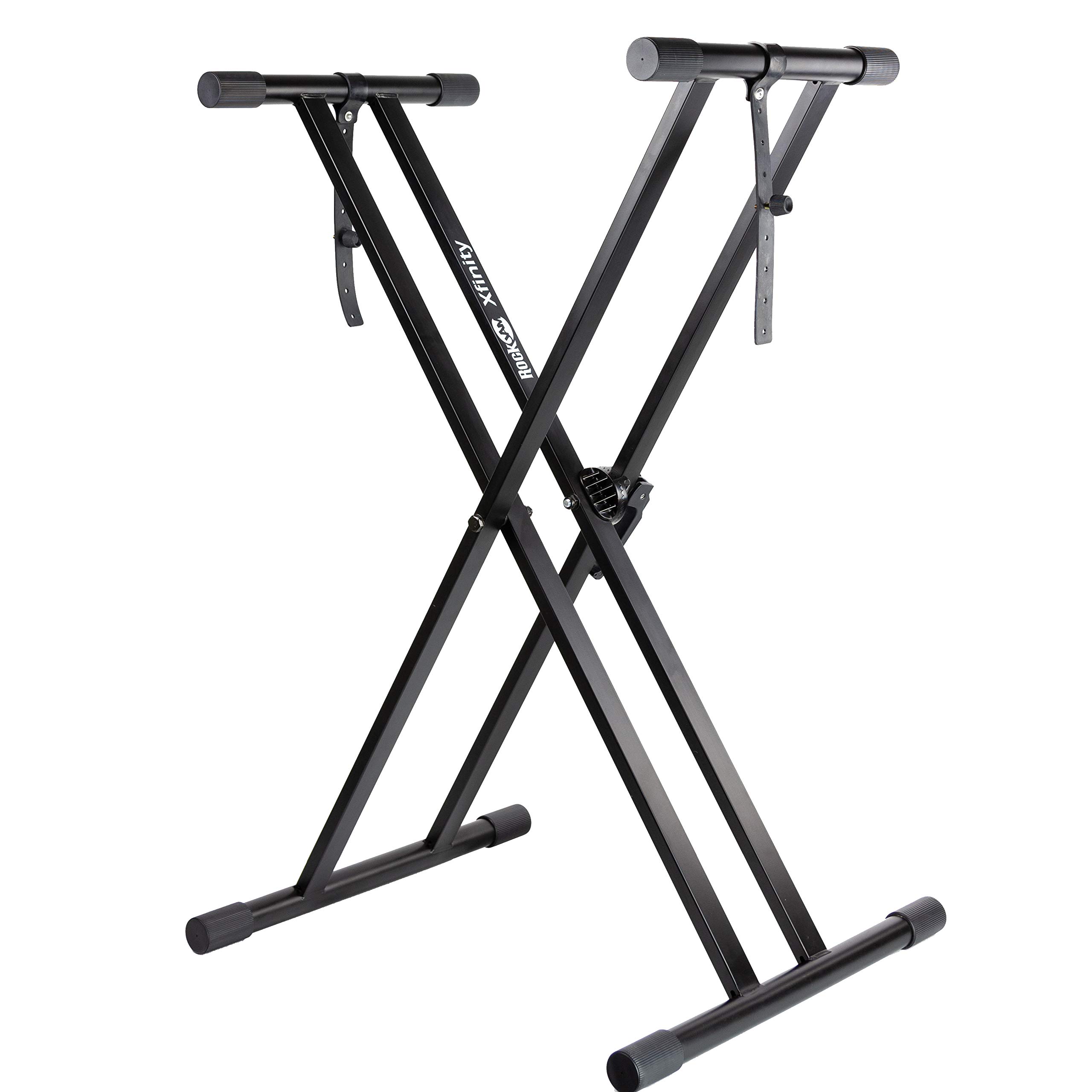
A pre-assembled double-X stand that balances stability with fast setup and wide height adjustability.
Why I picked it: Pre-assembled, fast to set up, and stable for most home and stage keyboards.
Best for: Players who want instant setup and a wide height range for seated or standing use.
Budget-friendly choice that punches above its weight.
Pros
- Pre-assembled—sets up in seconds
- Double-X frame for solid support
- Very wide height range
- Secure straps for extra stability
- Non-slip rubber end caps
Cons
- Limited leg room under the stand
- Strap screws may not fit every keyboard
- Can show a bit of shake under very aggressive playing
My take
I reached for the RockJam Xfinity when I needed a no-fuss stand that I could put into service the second it arrived. The fact that it comes pre-assembled means I literally take it out of the box, pick a height, and start playing.
Its double-X metal frame feels reassuring under an 88-key weighted keyboard; the straps and non-slip end caps help keep the instrument planted. The height span (from very low up to quite high) made it easy to find a comfortable seated position and a standing setup for different gigs.
My only real compromise is leg room—this design brings the crossbars in where you’d normally tuck your knees, so I use it primarily when I expect to stand or sit slightly off-center. Also, if you have a keyboard with nonstandard strap screw holes, plan to swap to appropriately sized fasteners.
For the price and how quickly it gets me playing, I find this stand hard to beat for home and casual stage use.
2. Liquid Stands Z-Style Keyboard Stand – Best Z-Style Stand
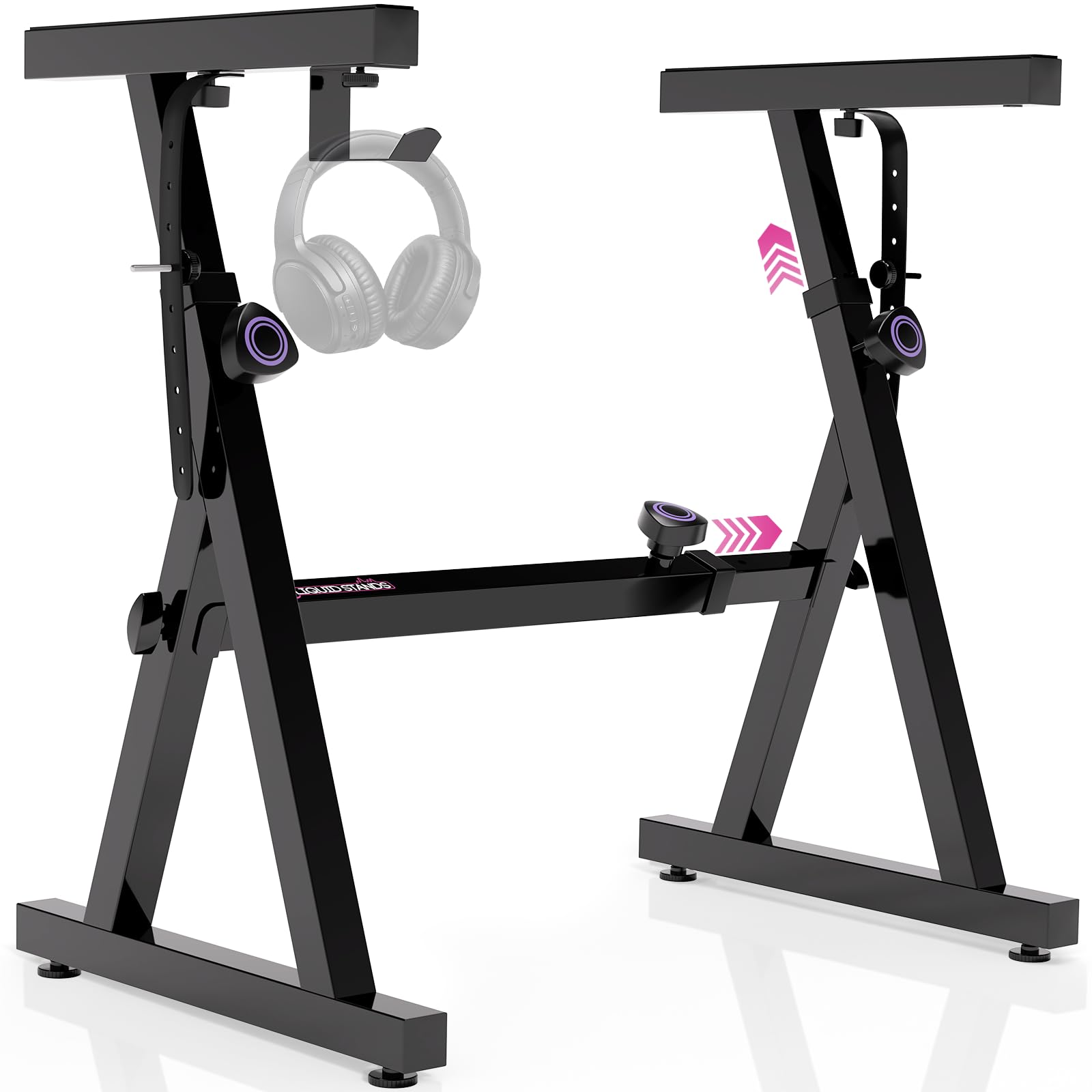
A heavy-duty, fully adjustable Z-frame with wide compatibility and useful extras like a headphone hook.
Why I picked it: Engineered strength, adjustable width, and practical add-ons make it a versatile pro-level option.
Best for: Studio and stage players who need stability for heavy keyboards and flexible height/width options.
A more expensive option with pro-level build quality.
Pros
- Adjustable height and width
- High weight capacity
- Includes headphone hook
- Anchoring straps for security
- Packs flat for transport
Cons
- Requires basic assembly
- Can feel fiddly when adjusting small parts
- Crossbar may limit full center leg room
My take
I chose the Liquid Stands Z-frame when I needed something that could handle heavier gear and still feel rock-solid onstage. The frame is built like a tank and the adjustable width means I can fit anything from a small synth to a full 88-key weighted piano.
Assembly is straightforward but there are a few small parts to align—worth the extra minute for how stable the stand becomes. The included headphone hook and straps are thoughtful touches I actually use when switching between setups quickly.
I noticed that the stand gives a healthier amount of leg room compared with some X designs, though very tall players can still bump the crossbar depending on how it's adjusted. Overall, the fit-and-finish and the ability to lock everything down make this my go-to when strength matters.
3. Liquid Stands Z-Style Rolling Keyboard Stand – Best with Wheels
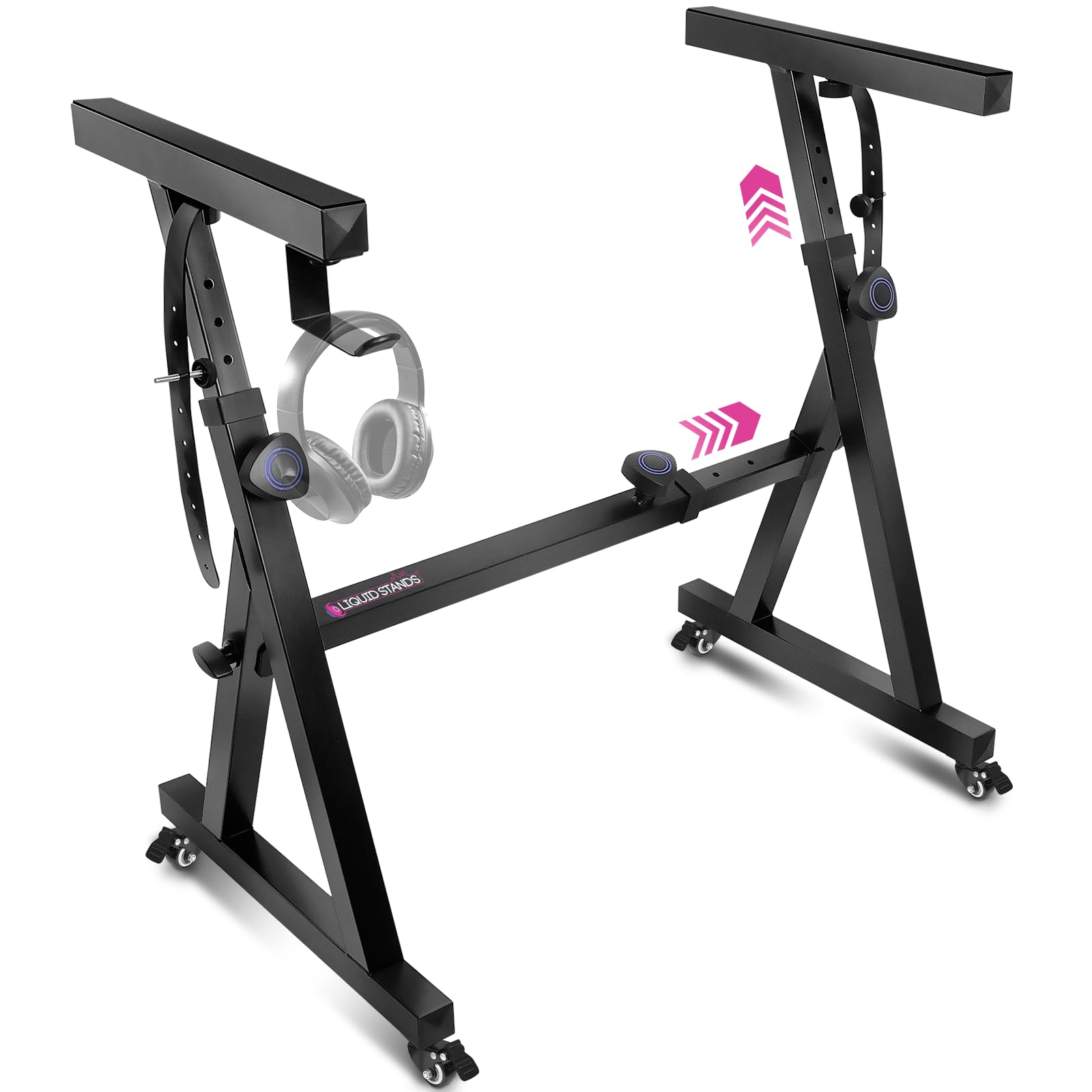
All the advantages of a heavy-duty Z stand with casters for easy repositioning onstage or in the studio.
Why I picked it: Mobility plus heavy-duty construction; great when I need to move rigs quickly.
Best for: Gigging musicians and studio setups that are frequently rearranged.
Slightly pricier than a standard Z stand for the added mobility.
Pros
- Locking casters for easy movement
- Adjustable height and width
- Ample weight capacity
- Includes anchoring straps
- Solid build quality
Cons
- Small side-to-side wiggle under some motion
- Wheels add some weight
- Assembly has a few fiddly bits
My take
I added the rolling Liquid Stands model to my rig when I started doing back-to-back rehearsal rooms and needed to wheel keyboards in and out fast. The casters lock tight, and once locked the stand performs like a fixed unit.
Assembly was quick and I left the wheels off for a while to compare stability; with or without them the frame feels heavy-duty. I did notice a tiny bit of lateral wiggle during aggressive playing on one of my synths, but it never felt unsafe, and the straps keep everything properly anchored.
If you value being able to reposition keyboards without dismantling a rig, this rolling Z-stand is a legitimately useful upgrade.
4. Pyle Heavy Duty Z-Frame Keyboard Stand – Best for Travel
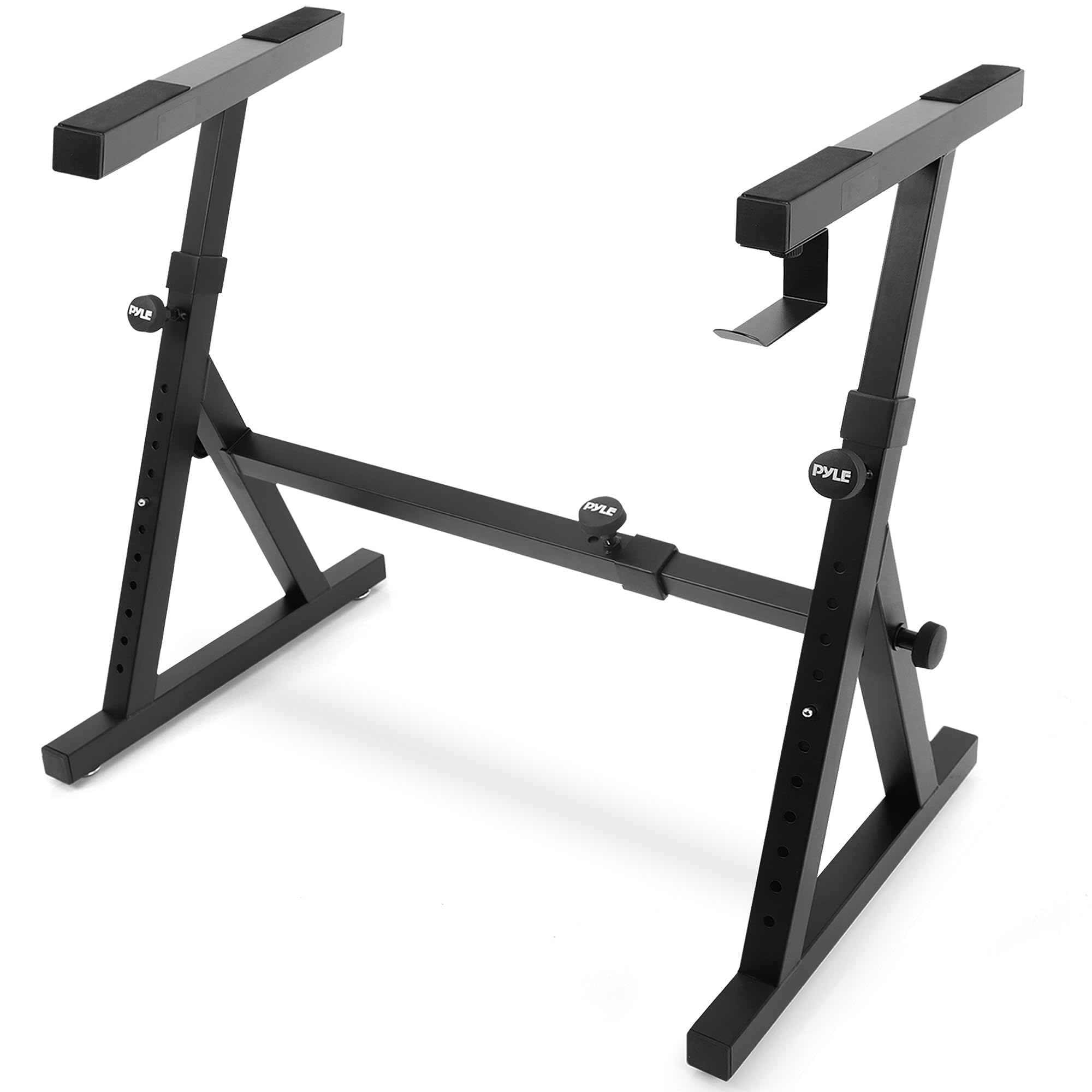
A folding Z-design with foam-padded arms and an infinitely adjustable width—built for easy transport.
Why I picked it: Fast folding and compact storage without sacrificing reliable support.
Best for: Musicians who need a sturdy stand that packs down for gigs or small studios.
Good value for a travel-friendly design.
Pros
- Folds compact for travel
- Foam-padded arms protect keyboards
- Infinitely adjustable width
- Secure stability-lock mechanism
- Anti-slip rubber foot caps
Cons
- Strap screws may not fit every keyboard
- Headphone holder isn’t the sturdiest
- Some setups need the straps for safety
My take
I reach for the Pyle when I’m taking a keyboard on the road and need something that packs flat into a car. It folds quickly and opens just as fast—setup and teardown both take under a minute once you know the locks.
The foam pads are an appreciated detail; they minimize scratches and keep my keyboards from sliding. Because the arms don't have a full stop ledge, I always engage the straps for heavier instruments. On a couple of keyboards I had to swap to different thumb screws from my toolbox, but that’s an easy fix.
For tour prep and occasional travel this stand balances compactness and stability in a way I rely on.
5. Yamaha L85 Wood Keyboard Stand – Best Match for Yamaha P-Series
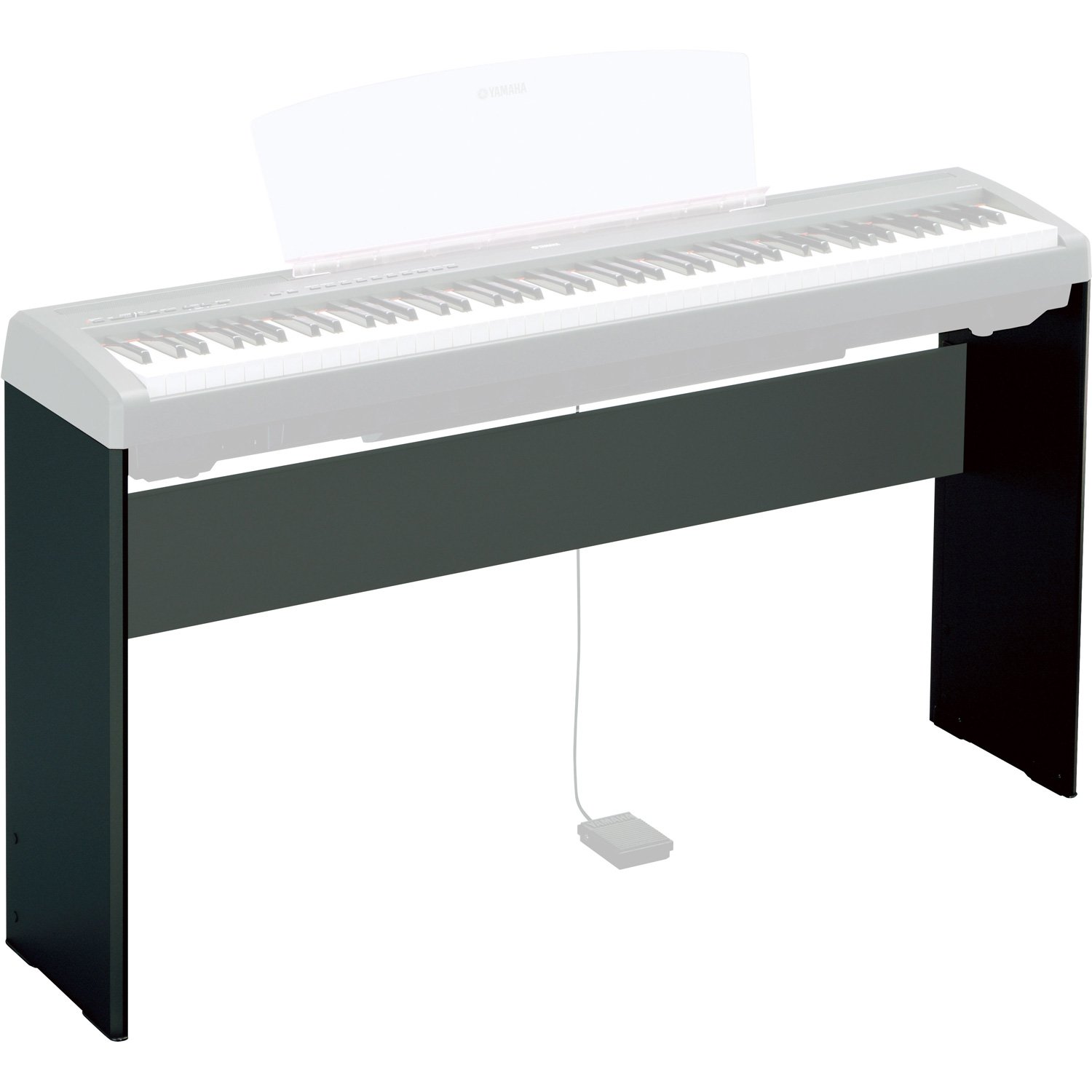
A furniture-style wooden stand built to match Yamaha P-series pianos and raise keys to acoustic piano height.
Why I picked it: A tailored, attractive solution when I want the keyboard to look like furniture in my living room.
Best for: Owners of Yamaha P-series who want a stable, attractive home setup.
More of a furniture-style, less portable option.
Pros
- Designed to match Yamaha P-series
- Solid, furniture-style appearance
- Positions keys at regulation height
- Sturdy metal hardware
- Bench stores neatly underneath
Cons
- Model-specific fit—limited compatibility
- Not designed for frequent transport
- Heavier than folding metal stands
My take
When I wanted my digital piano to sit like a piece of furniture in the living room, the Yamaha L85 delivered. The three-board assembly uses the keyboard itself as the top, and the final height puts the keys where they should be for comfortable, natural playing.
Assembly was straightforward and the metal brackets give the finished unit a reassuring rigidity. Unlike folding metal stands, this one feels like a permanent piece of furniture—exactly what I wanted for a home setup where looks matter as much as function.
If portability isn't a priority and you own a compatible Yamaha model, this stand transforms the instrument from gig gear into a convincing home piano.
How I Choose a Keyboard Stand
Key factors I consider
I look first at frame style: X-style stands are compact and light, Z-style frames give better stability and more leg room, and wooden cabinets prioritize appearance and a fixed height.
Weight capacity is non-negotiable for me—I match the stand to the heaviest instrument I plan to mount and factor in pedals or extra gear.
Adjustability matters when I switch between seated and standing playing or when multiple players of different heights will use the keyboard.
- Frame type: X for portability, Z for stability, wood for furniture look
- Weight rating: always choose a stand rated above your keyboard's weight
- Adjustability: check both height and width ranges
- Stability features: straps, locking mechanisms, and rubber feet
- Portability: folding action, size when packed, and presence of casters
Practical tips from my setup tests
I always test whether the supplied strap screws fit the threaded holes on my keyboard—many stands include generic fasteners that need swapping.
If you gig, opt for straps and anti-slip pads; they keep the instrument secure during transport and quick changes.
Consider leg room: some X-style stands place crossbars where your knees naturally sit, which affects comfort for long practice sessions.
- Bring extra thumb screws or a small hardware set when assembling
- Use straps for heavier keyboards or aggressive playing
- Test leg room before finalizing the setup height
Frequently Asked Questions
Which stand style gives the most leg room?
Z-style stands generally offer the most leg room because their support rails don’t cross directly under the keys the way X-style frames do. I recommend a Z-frame if seated comfort and side-by-side playing are priorities.
Do I always need straps to secure my keyboard?
I use straps with heavier or stage-facing setups to prevent any shifting. For lightweight practice keyboards I sometimes skip them, but straps are a quick insurance policy that only adds a minute to setup.
Are rolling stands stable enough for performance?
Yes—if the casters lock solidly. I only use rolling stands with locking wheels and I test them locked before performing; when locked they behave like a fixed stand in my experience.
Final Take
I picked options that address common tradeoffs: speed of setup, portability, and the stability you need for performance. For instant setup and solid value I rely on the RockJam Xfinity; for stage and studio strength I trust the Liquid Z frames; and for a home-ready furniture look the Yamaha L85 is unbeatable.
Decide which factor matters most to you—mobility, leg room, or aesthetics—and pick the stand that matches that priority. All of these stands earned a spot in my toolkit for different reasons.
