
I tested a range of king-size down-alternative duvets to find the best balance of warmth, loft, and value. Here are the ones I reach for depending on season, sleep temperature, and budget.
I slept under every comforter in this roundup so I could compare warmth, loft, stitching, and real-world fit on a king bed. My goal was to surface practical picks—what I’d actually use on my bed—rather than theory.
I focused on fill weight, quilting pattern, corner attachments, and cover fabric because those details determine how a comforter performs night after night. Below I break down what each piece does best and when I reach for it.
I compared these duvets by feel and function: how they fluff after unpacking, how well the quilting keeps fill in place, how breathable the shell feels against skin, and whether corner tabs hold a duvet cover steady. I mention whether each option runs light, medium, or warm so you can match it to your bedroom climate.
1. Bedsure All-Season Down Alternative Comforter (King) – Best Overall
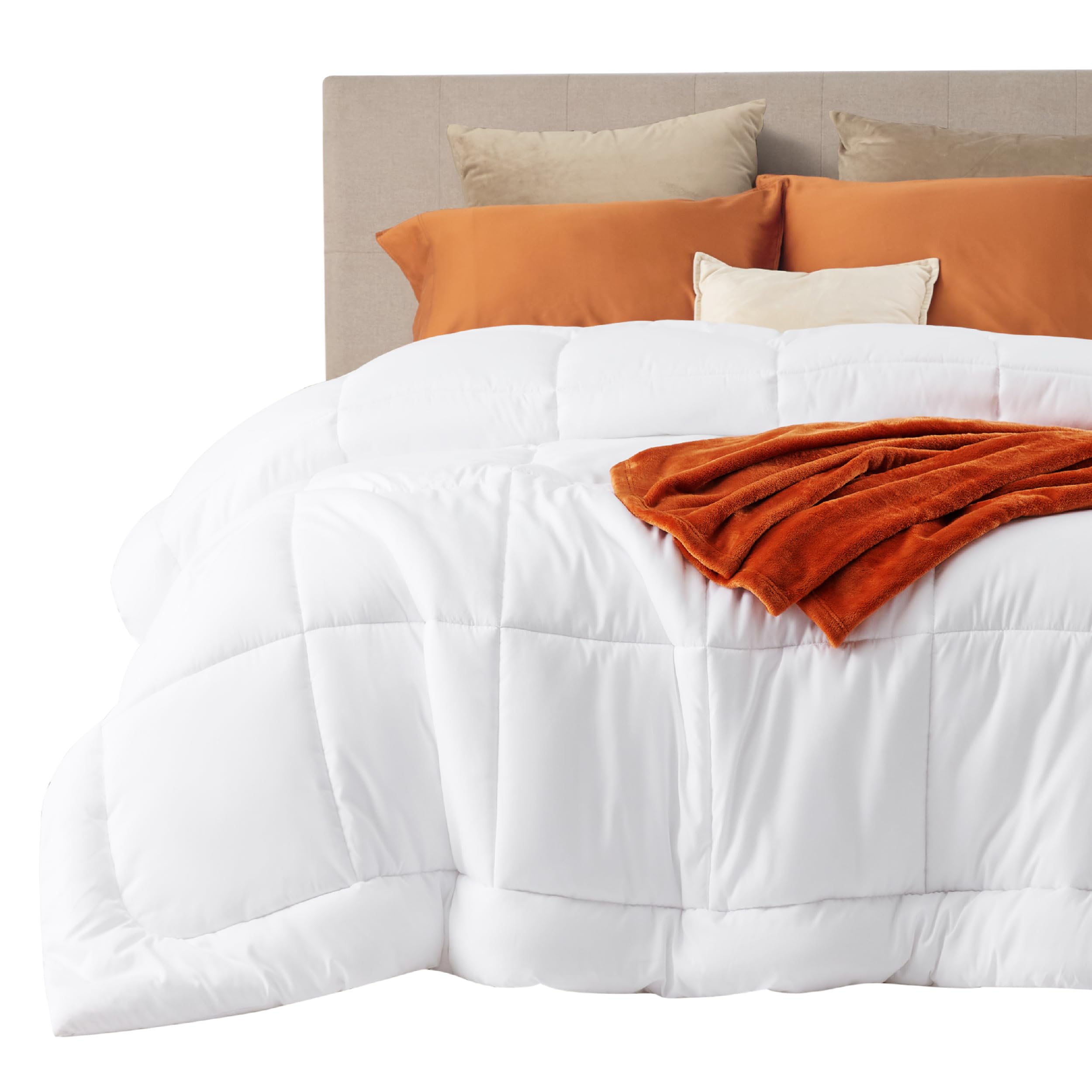
A balanced all-season comforter with GentleSoft fill, box stitching, and eight attachment tabs that I found reliable for year-round use.
Why I picked it: Consistent warmth, good loft recovery, and eight tabs for a secure duvet cover fit.
Best for: Anyone who wants one comforter to work through spring, summer, and winter.
Great value for a dependable all-season insert.
Pros
- Soft GentleSoft polyester fill
- Box-stitch keeps fill even
- Eight duvet attachment tabs
- Breathable yet warm
- Machine washable
Cons
- Synthetic feel to the shell
- Not the puffiest loft
- Needs 24–48 hours to fully fluff
My take
I reached for the Bedsure when I wanted a single insert that handles a wide range of temperatures. Out of the box it needed the usual 24–48 hours to regain loft, but after that it settled into a comfortable, balanced warmth—warm enough for cool nights and breathable on warmer ones.
The box-stitch keeps the fill from migrating, so I didn't get cold spots after several washes. I appreciated the eight attachment tabs because the insert stayed put inside my duvet cover during the night.
This is not the most luxurious-feeling fabric, but the overall construction and consistent warmth made it my default for mixed-season use and guest beds where I want something trouble-free.
2. EASELAND Down Alternative Comforter (King) – Best for Transitional Seasons
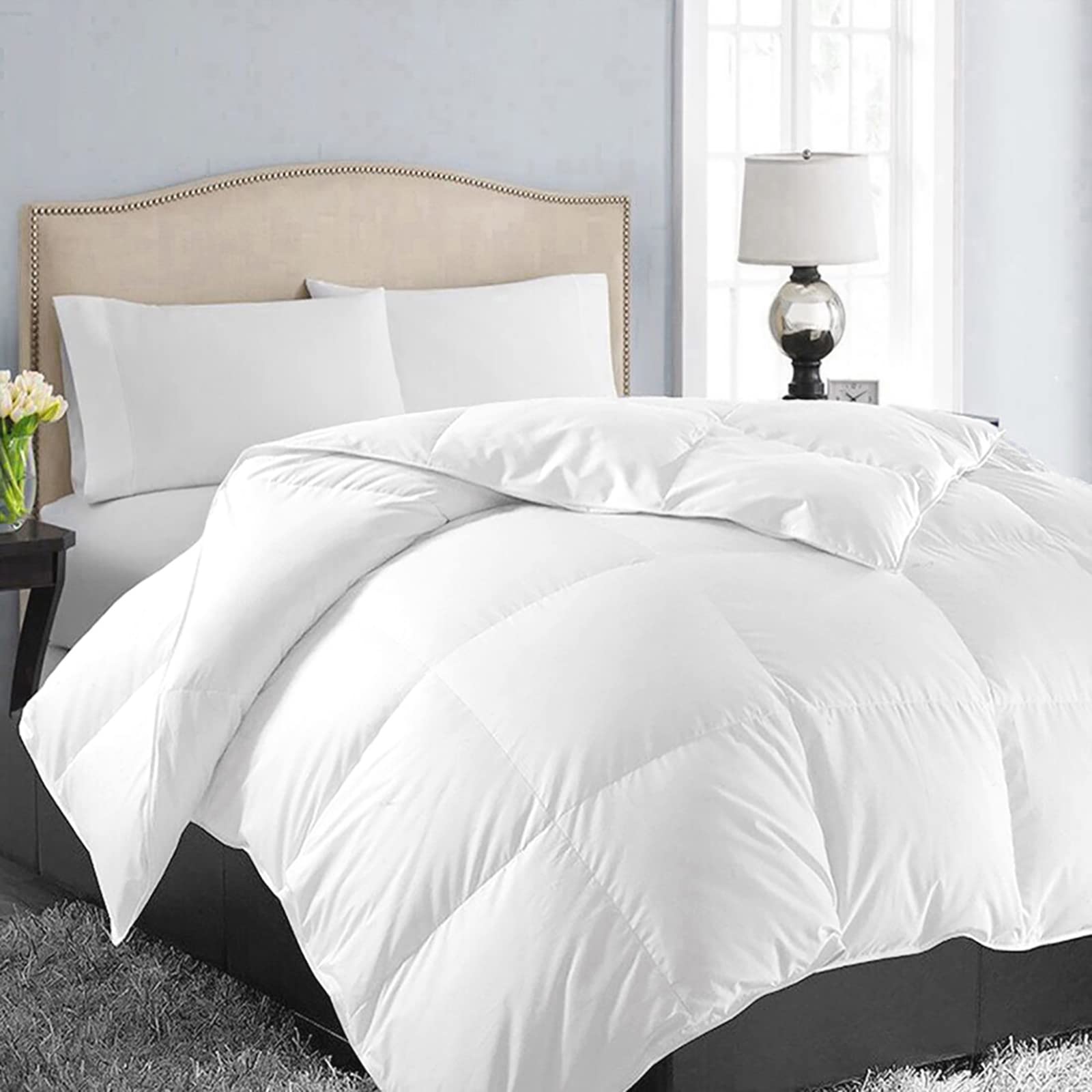
A lightweight-feeling comforter with a soft brushed cover and 300gsm fill that I found ideal for spring and fall.
Why I picked it: Soft brushed shell and midweight 300gsm fill deliver breathable, even warmth.
Best for: People who want a lighter, breathable insert for transitional weather.
Budget-friendly without feeling cheap.
Pros
- Brushed 105g cover feels soft
- 300gsm fill for balanced warmth
- Box-stitched to prevent clumping
- Fluffs well after drying
- Easy care
Cons
- Less fluffy than product photos
- May feel skimpy on very thick mattresses
My take
I liked the hand of the brushed polyester cover—it feels closer to cotton than other synthetics and sits comfortably against my skin. The 300gsm whole-piece fill gave me steady warmth without the heaviness I avoid.
After a wash the fill returned to its stitched boxes; I didn't see bunching or migration. If you sleep hot, this one performs well because it never felt stifling on warm nights.
Expect solid performance for spring and fall. I wouldn't call it the chunkiest comforter, but for what it aims to do—consistent, breathable warmth—it succeeds.
3. Homelike Moment Reversible Comforter (King) – Best Reversible Option
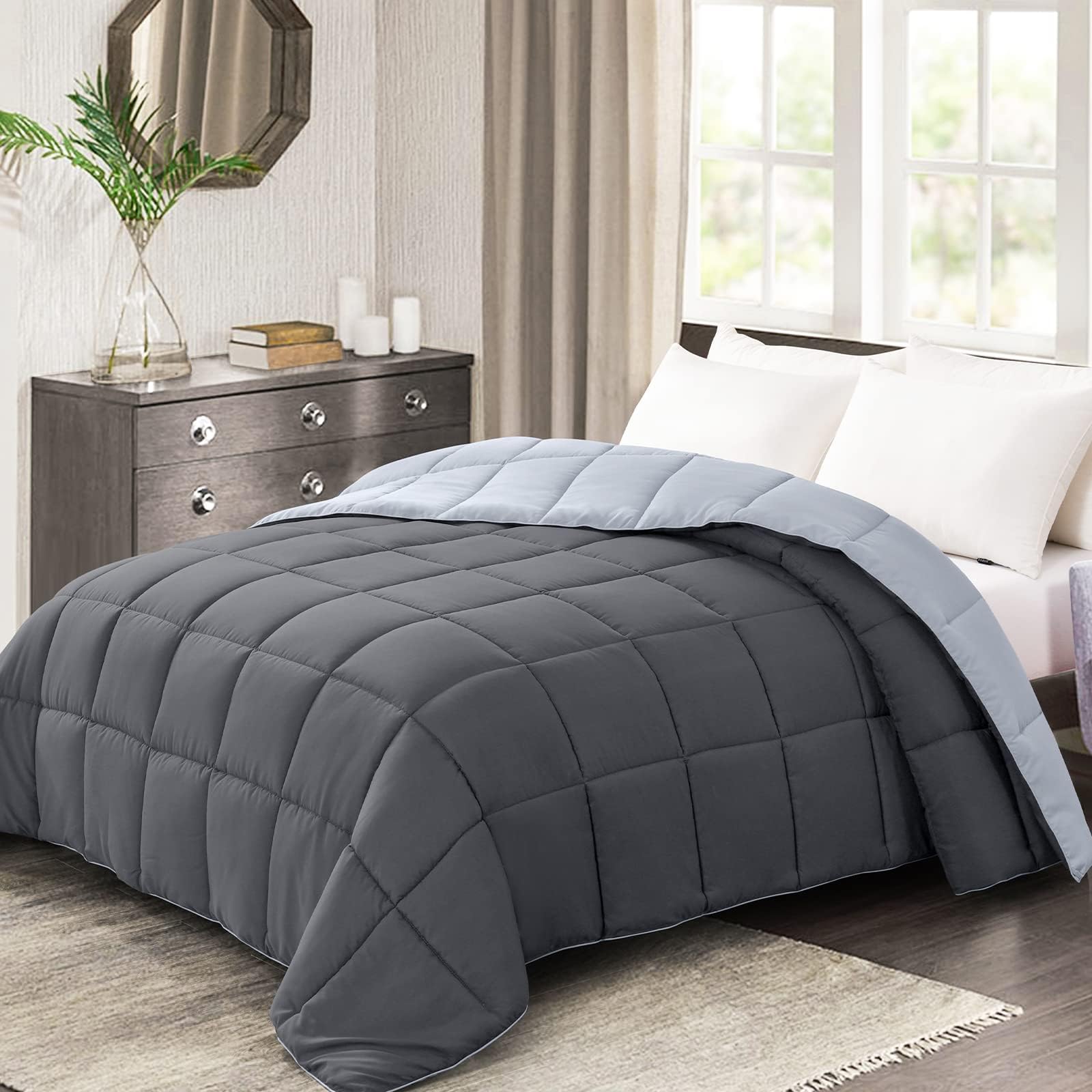
A reversible, two-tone comforter that gives visual flexibility and a lightweight all-season fill I found comfortable for warmer sleepers.
Why I picked it: Reversible design and soft microfiber make it versatile and visually flexible.
Best for: Warm sleepers who like an easy way to change bedroom color without swapping bedding.
Very affordable value pick.
Pros
- Reversible two-tone sides
- Lightweight, breathable fill
- Soft, skin-friendly microfiber
- Machine washable
- Many color options
Cons
- Only four corner tabs
- Not ideal for very cold climates
- Can be thinner than expected
My take
I reached for the Homelike Moment when I wanted a different look without changing sheets. Flipping the comforter gives an instant mood change, and the fabric is soft enough that I slept comfortably without a duvet cover on warmer nights.
This insert runs lightweight—perfect for hot sleepers or summer use—but I found it less insulating during cold snaps. The four corner tabs work for keeping a cover aligned, but if you’re rough with bedding, the fewer attachment points might feel less secure.
Overall I used this where color and breathability mattered more than heavy warmth, and it performed exactly as expected.
4. Cosybay Lightweight Down Alternative Comforter (King) – Best Lightweight
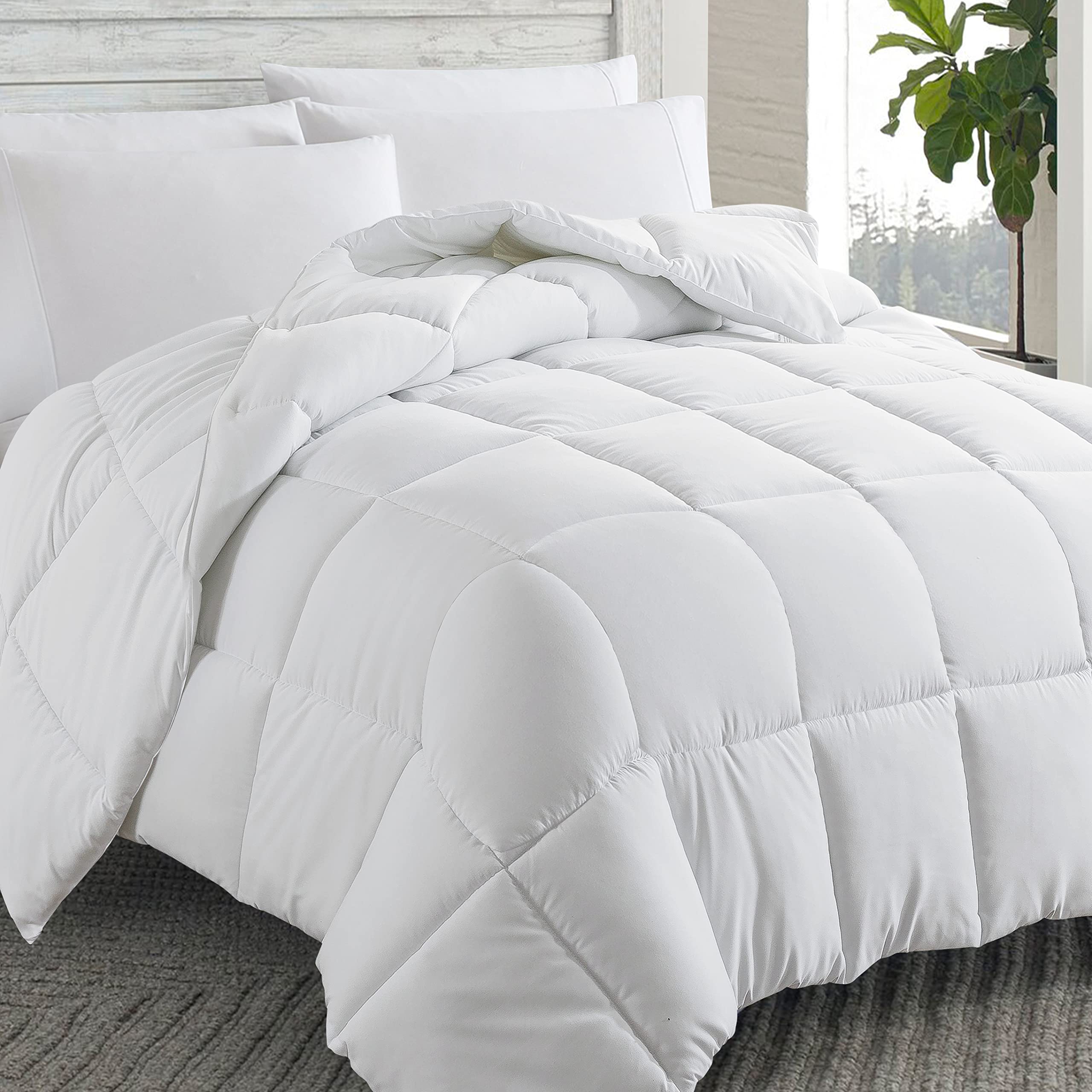
A thin, breathable comforter with 160gsm fill that I found comfortable for warm sleepers and RV or summer use.
Why I picked it: Thin, breathable fill and neat box stitching make it a great lightweight everyday layer.
Best for: Hot sleepers, summer bedding, or compact spaces like RVs.
Highly affordable lightweight choice.
Pros
- Lightweight 160gsm fill
- Box stitching prevents shifting
- Corner tabs for covers
- Machine washable
- Quick to fluff
Cons
- Too light for cold winters
- Vacuum packing can cause wrinkles
- Less lofty feel
My take
I used the Cosybay in a warm apartment and in our RV; it’s impressively light while still feeling cozy for milder nights. The 160gsm microfiber makes it a natural choice when I want a blanket that breathes.
The box stitching keeps the fill in place and the corner tabs help when I do use a duvet cover. It arrives tightly packed, so I gave it a good shake and some time to expand—then it was ready.
If you want a thin, easy-care comforter that won’t trap heat, this is one I reach for first.
5. Utopia Bedding All-Season Comforter (King) – Best Certified Option
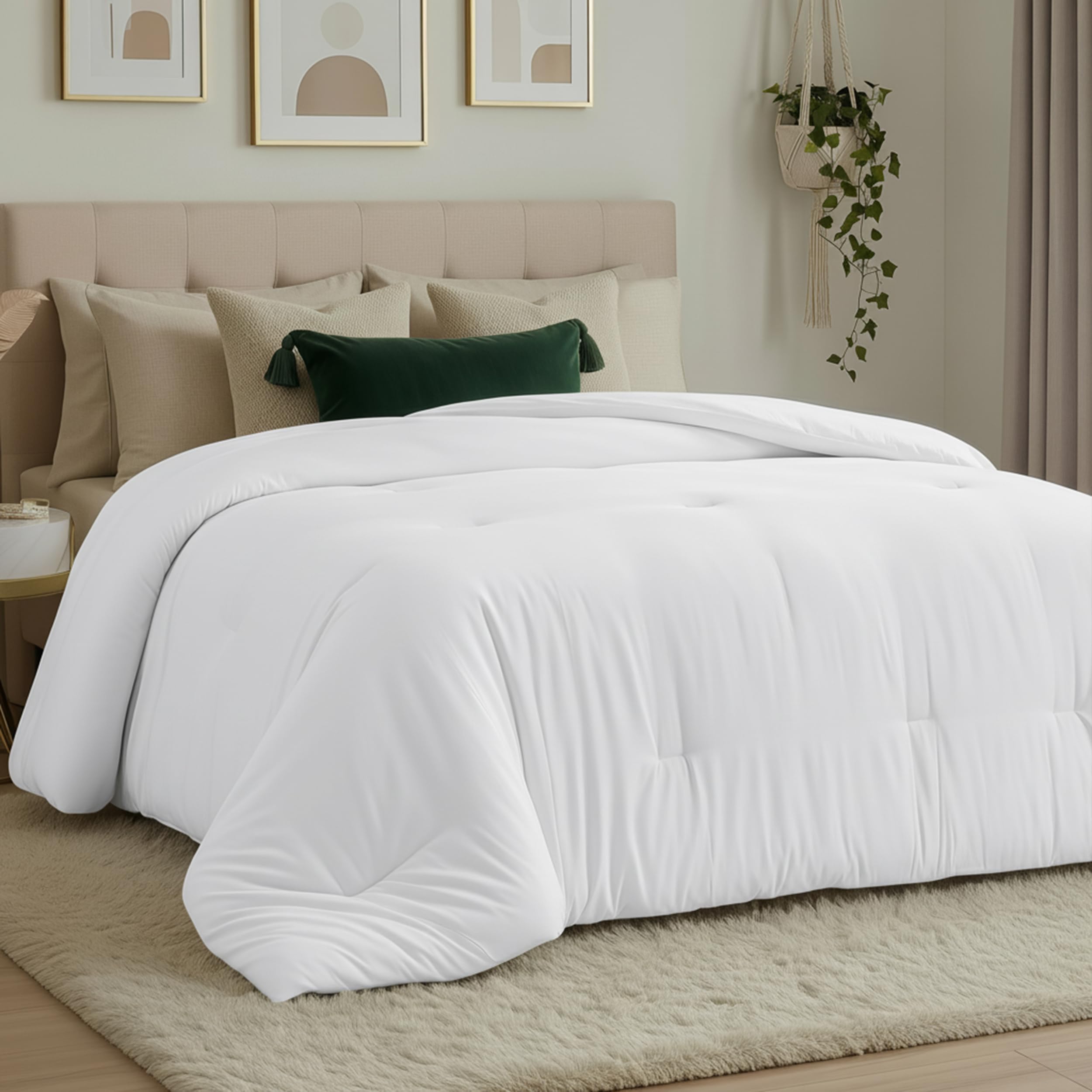
A straightforward, OEKO-TEX certified microfiber comforter that I found dependable for year-round use and easy maintenance.
Why I picked it: Safety certification and solid construction for everyday use.
Best for: Buyers who prioritize certified materials and easy care.
Value-oriented option with safety certification.
Pros
- OEKO-TEX certified materials
- Even fill distribution
- Corner tabs keep it secure
- Soft microfiber shell
- Machine washable
Cons
- Synthetic hand compared to natural fibers
- May be light for very cold climates
My take
I appreciated the OEKO-TEX certification; the shell feels soft and reassuringly safe next to skin. The construction holds fill in place and the corner tabs make a duvet cover easy to secure.
On my bed it provided steady, usable warmth without feeling heavy. I washed it a few times and the texture and loft stayed consistent, which is exactly what I want from a no-fuss everyday comforter.
If you want a reliable, easy-to-care insert made from certified materials, this is one I routinely recommend to myself and in my rotation.
6. Amazon Basics Warm Down-Alternative Comforter (King) – Best for Cold Sleepers
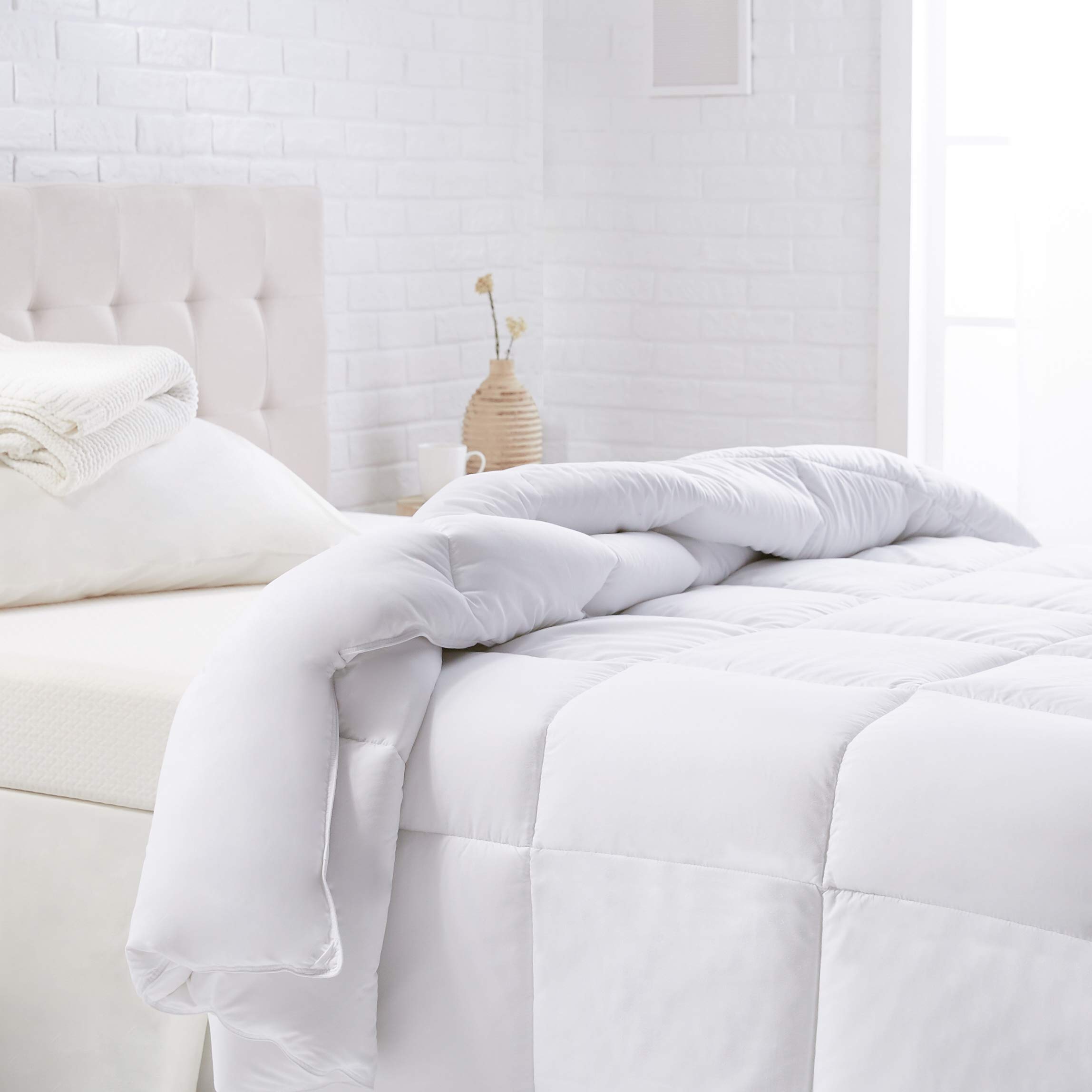
A heavier, hotel-style insert with 450gsm fill weight that I found notably warm and plush.
Why I picked it: High fill weight and MADE IN GREEN certification for a warm, durable bed layer.
Best for: People who want a seriously warm, fluffy comforter for cold bedrooms.
Affordable way to get a warm, hotel-like duvet.
Pros
- High 450gsm fill weight
- Very warm and plush
- MADE IN GREEN certified
- Fluffs up nicely inside covers
- Stays cozy after washes
Cons
- Too warm for hot sleepers
- Heavier feel may be restrictive in summer
- May be short on sides for very thick mattresses
My take
When I wanted serious warmth, the Amazon Basics warm insert delivered. It feels dense and lofty inside a duvet cover—close to the heavy, hotel duvets I prefer in winter.
Because of the fill weight it will be too warm for many summer sleepers, but for cold nights it was exactly what I reached for. It recovers loft well after drying and the fabric has a smooth, durable hand.
If you run cold at night, this is the one in the lineup that reliably keeps me cozy.
7. L LOVSOUL All-Season Comforter (King) – Best Secure Fit
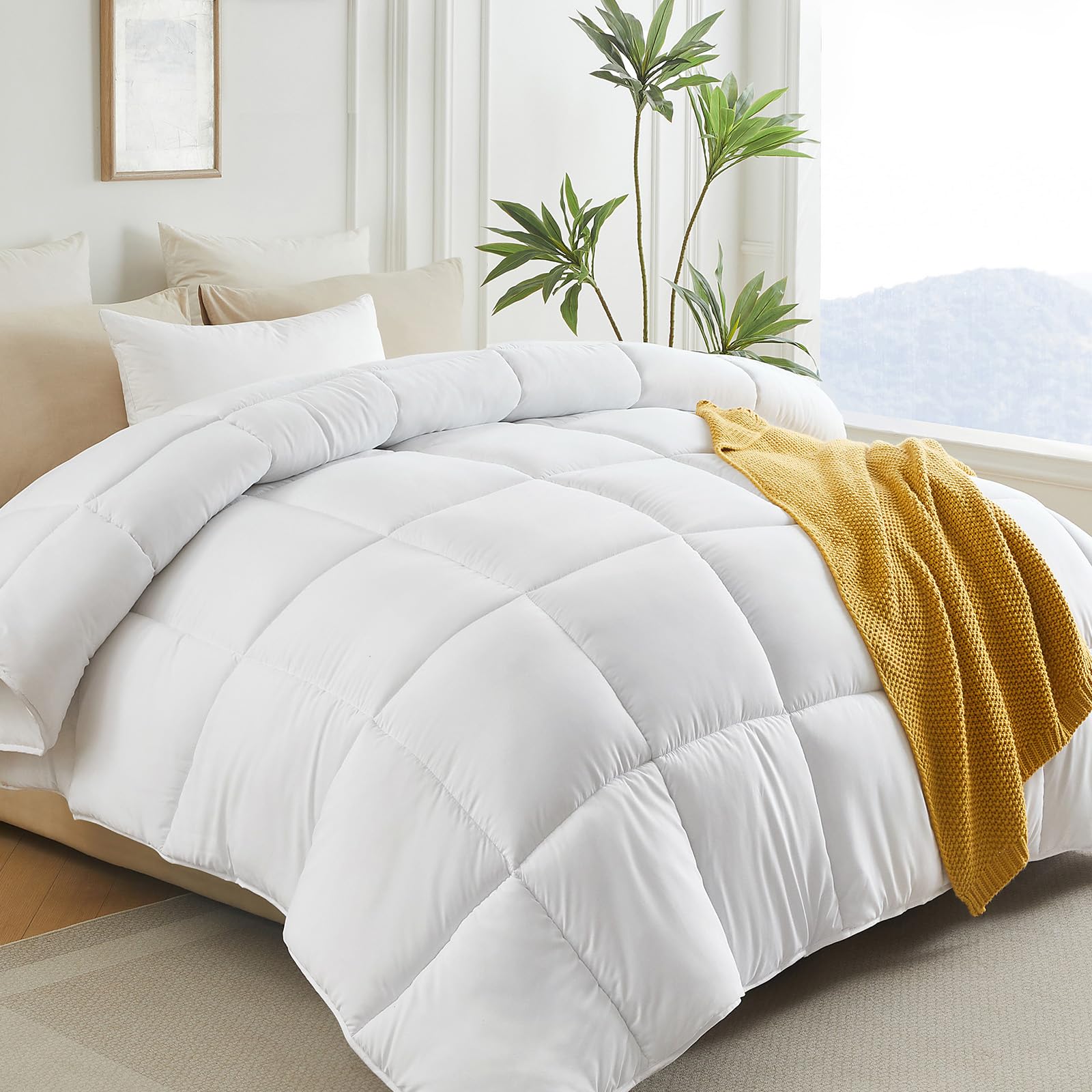
A midweight 250gsm comforter with a double-brushed cover, piped edges, and eight tabs that I found very secure inside duvet covers.
Why I picked it: Double-brushed cover and eight tabs for a plush feel and solid cover anchoring.
Best for: Anyone who wants a plush-feeling insert that stays put in a duvet cover.
Solid midpriced value.
Pros
- Double-brushed velvety cover
- 250gsm midweight fill
- Eight durable attachment tabs
- Piped edges for durability
- Machine washable
Cons
- Needs time to regain loft
- May feel warm for hot sleepers
- Slightly heavy for summer
My take
I liked the velvety face of the L LOVSOUL—the double brushing gives it a softer, more luxurious hand than many polyester shells. The 250gsm fill sits in the midweight zone: cozy but not too heavy.
The eight tabs and piped edges make the insert feel sturdier; I didn’t notice shifting inside covers. It needs the usual post-unpacking rest to reach full fluff, but once it does it holds shape well.
This one sits in my rotation when I want plushness without the bulk of a winter-only duvet.
8. SLEEP ZONE U-Shape Quilted Comforter (King) – Best for Temperature Regulation
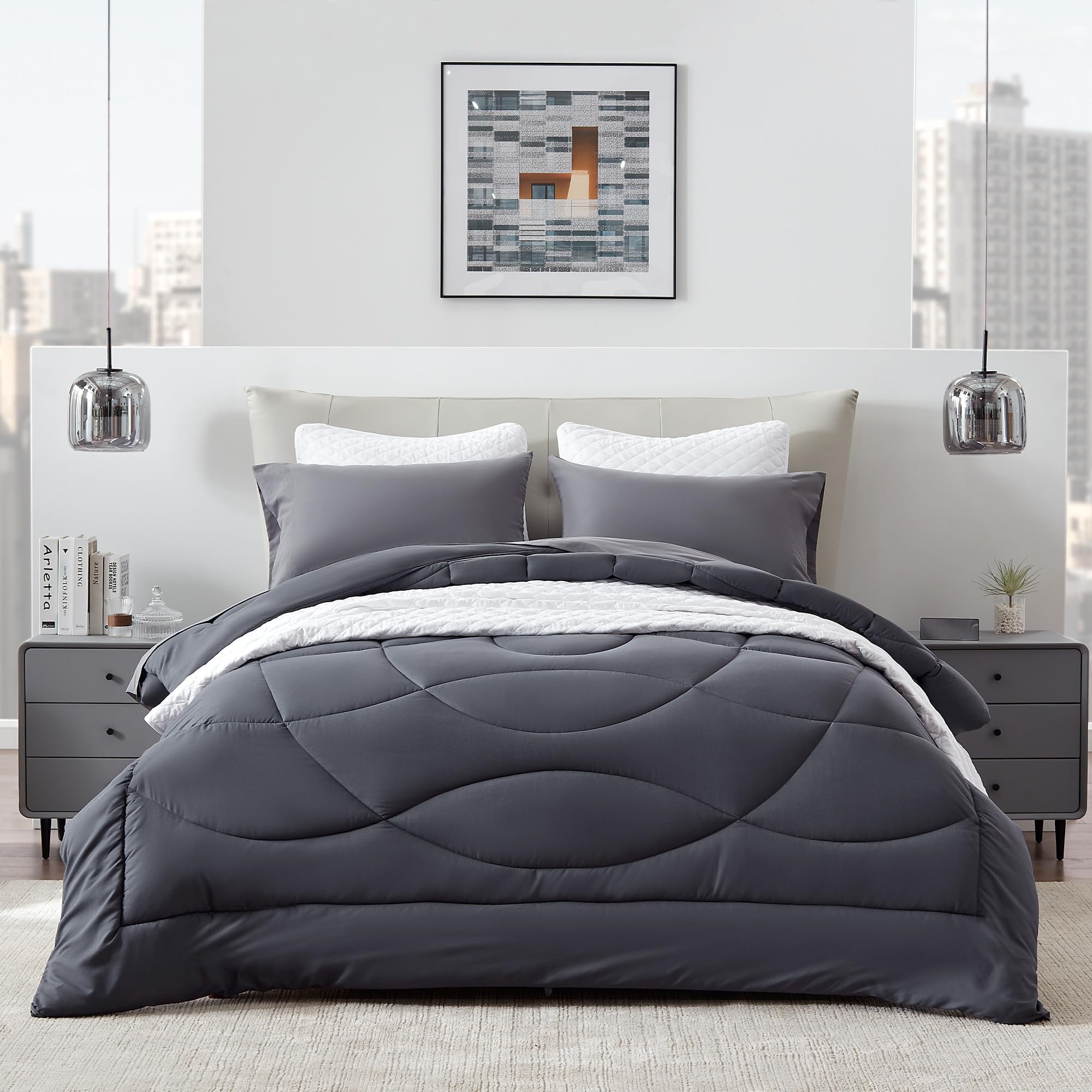
A comforter with U-shape ergonomic quilting, spiral microfiber fill, and temperature-regulating construction that I found adaptable across sleep positions.
Why I picked it: U-shape quilting and targeted fill make it conform to the body and help regulate temperature.
Best for: Side, back, or stomach sleepers who want an insert that follows body curves.
Midpriced with thoughtful quilting design.
Pros
- U-shape ergonomic quilting
- Temp-regulating spiral microfiber
- Eight built-in ties
- Reversible sides
- Durable piping
Cons
- Wrinkles from vacuum packing
- Medium-warm—may not suit extreme cold
- Large size can be hard to dry
My take
The U-shape quilting was immediately noticeable: the fill hugs my shoulders and torso better than standard box stitching, which helps with temperature control while I change positions at night.
The fabric has a velvet-like finish that feels pleasant to the touch, and the eight ties keep a duvet cover aligned. It arrived tightly packed and took longer than some to smooth out, so give it time to decompress.
For me this was the best choice when I wanted a comforter that shapes around the body and helps stop drafts at the edges.
How I Choose King-Size Duvets
Key things I check
I focus on four practical details when I pick a duvet insert: fill weight (for warmth), quilting pattern (to prevent clumping), attachment tabs (to keep a duvet cover from slipping), and shell fabric (for breathability and feel).
- Fill weight: lower gsm = cooler; higher gsm = warmer.
- Quilting: box or U-shape determines how well fill stays put.
- Tabs: eight tabs are more secure than four.
- Shell fabric: brushed or high-thread-count shells feel softer next to skin.
Match warmth to your bedroom
I match the insert’s warmth to how cold my bedroom runs and my sleeping style. If I run hot, I pick lightweight (120–200gsm). If I run cold, I look for high fill weights (350gsm+).
- Hot sleepers: look for lightweight, breathable shells.
- Mixed-season sleepers: pick a midweight (around 250–300gsm).
- Cold sleepers: choose high fill weights or a 'warm' labeled comforter.
Care and longevity
I always check washing instructions before a purchase—machine-washable inserts make maintenance easy. I also give vacuum-packed duvets time to decompress and sometimes a low tumble to restore loft.
- Machine wash on gentle cycles where recommended.
- Allow 24–48 hours to regain loft after unpacking.
- Use low-heat tumble or a few dryer balls to speed fluffing.
Sizing tips
I size a king insert to ensure adequate side coverage over thick mattresses. When in doubt, I go for a slightly oversized king if my mattress is very tall.
- Measure mattress depth before ordering.
- Oversized kings help cover deep mattresses and box springs.
- Check dimensions on the listing rather than relying on generic 'king' labels.
Frequently Asked Questions
How long should I let a vacuum-packed comforter decompress?
I let mine rest for 24–48 hours and give it a good shake; for stubborn wrinkles I run a low-heat dryer cycle with a damp towel to speed up fluffing.
Do I need a duvet cover or can I use the comforter alone?
I sometimes use lighter polyester comforters alone in summer, but I prefer a duvet cover for protection and style because it keeps the insert cleaner and is easier to wash.
Which quilting pattern should I choose?
I choose box stitching for even fill distribution and U-shape quilting when I want the insert to contour more closely to my body for better temperature control.
Final Take
After testing these options, I can say there’s no single best duvet for every sleeper—your room temperature and how hot you sleep matter most.
For an all-purpose pick I reach for the Bedsure; for serious warmth I grab the Amazon Basics warm insert; and for hot sleepers the Cosybay or EASELAND options are my go-tos. Use the buying guide above to match any pick to your bedroom and sleep style.
