
I tested six compact and pocket kitchen scales to find the best choices for baking, portioning, and precision weighing.
I rely on a good kitchen scale every day—baking, batch-cooking, and portioning meals. Over several weeks I used six different scales so I could compare accuracy, platform size, and practical features like bowls, battery life, and build quality.
What follows are the scales that stood out during real kitchen use. I focus on how they handled real recipes, small-quantity precision, and the quirks that matter when you’re actually cooking.
I compared maximum capacity, minimum increments, platform size/material, and practical extras like removable bowls and warranty coverage.
1. Etekcity Food Kitchen Scale, Digital Grams and Ounces, 304 Stainless Steel – Best Overall
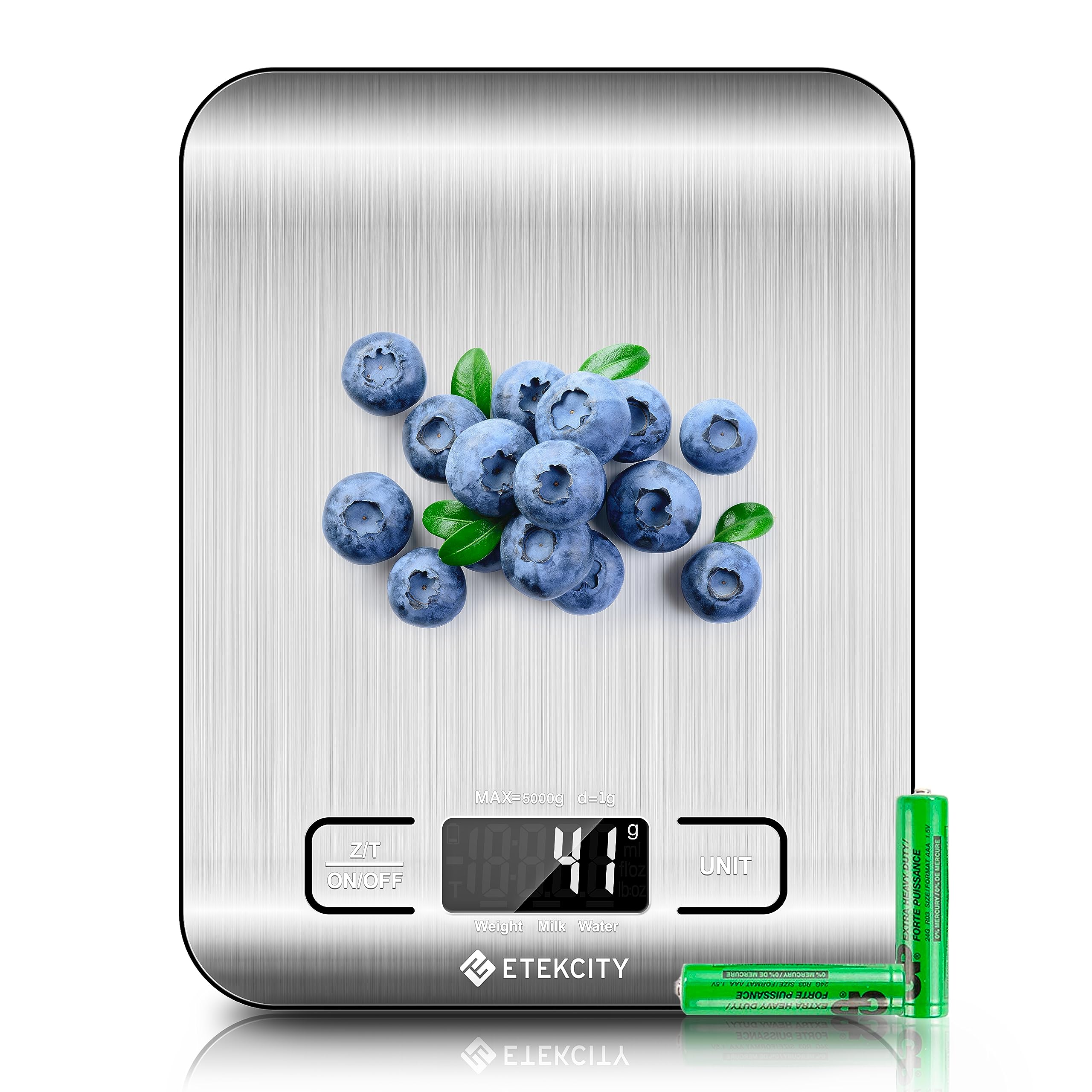
I found this Etekcity to be the most dependable all-around scale—accurate, compact, and easy to clean.
Why I picked it: Reliable 1 g increments, stainless-steel surface, clear backlit display.
Best for: Everyday baking, meal prep, and portion control.
Very affordable for core kitchen use.
Pros
- Accurate 1 g increments
- Compact stainless-steel surface
- Clear backlit LCD
- Tare function
- Batteries included
Cons
- Small weighing surface
- Short auto-off interval
- No protective cover
My take
I used this scale for recipes and everyday portioning, and it handled both with consistent 1 g steps. The stainless-steel top wipes clean in seconds, which saved me time while prepping multiple ingredients.
Its backlit LCD is easy to read under kitchen lights, and the tare button lets me zero a bowl quickly so I can add ingredients without doing mental math. The 5 kg capacity covers most home baking tasks, but the platform is fairly small—so I usually use a medium bowl.
For the price and portability (it runs on two AAA batteries), this is my go-to when I need a simple, precise scale that doesn’t get in the way.
2. Amazon Basics Digital Kitchen Scale with LCD Display, Stainless Steel – Best Budget
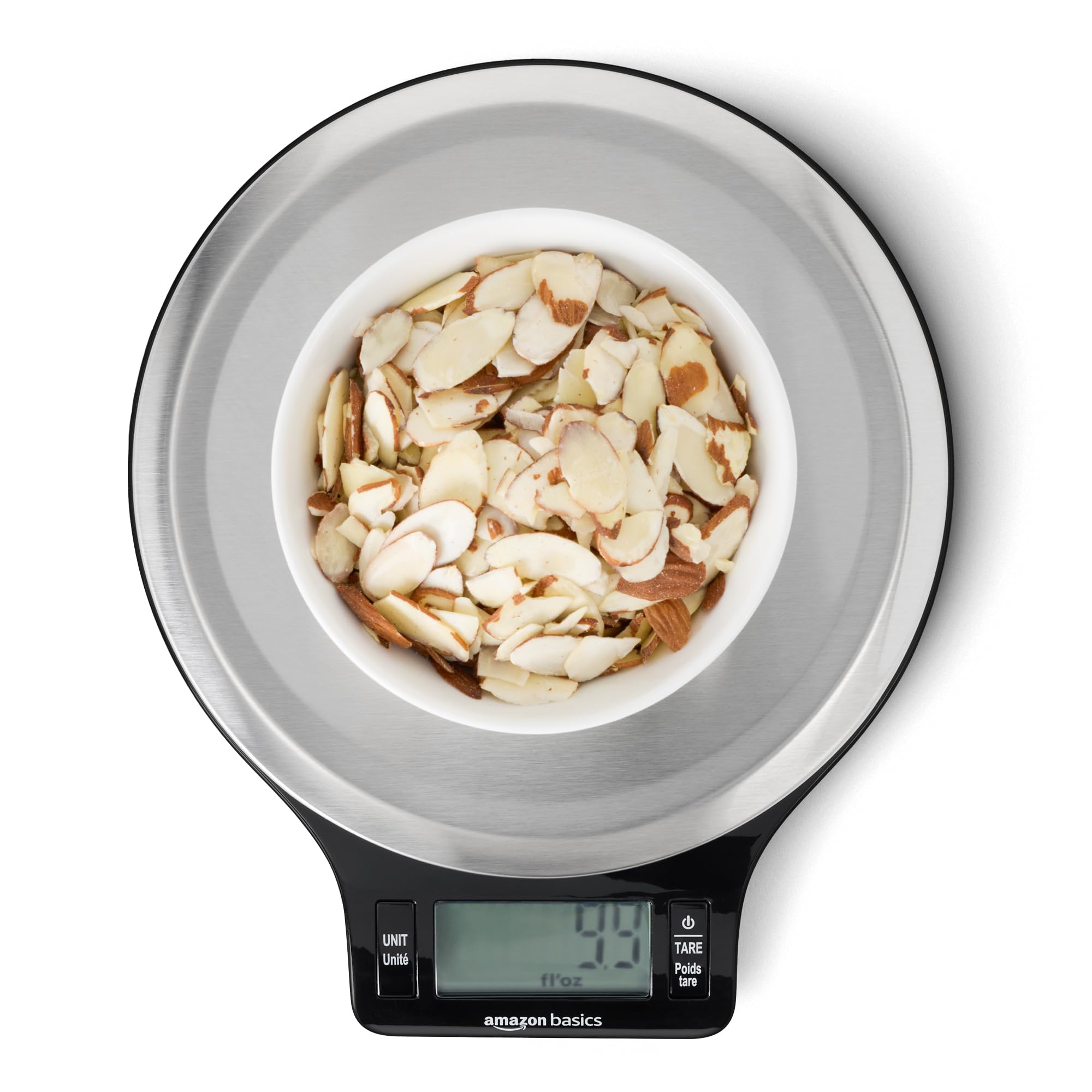
I recommend this as the best no-frills option when you want accuracy without extras.
Why I picked it: Wide platform, simple controls, solid basics at a low cost.
Best for: Weight-loss tracking, basic baking, and everyday weighing on a budget.
Extremely budget-friendly.
Pros
- Wide stainless-steel platform
- Large, easy-to-read display
- Simple tare button
- Batteries included
Cons
- 2 g minimum sensitivity
- Basic feature set
- Some plastic components
My take
I kept this Amazon Basics scale in the cabinet for quick grabbing, and it performed exactly as I needed: straightforward and dependable. The wide platform makes balancing bowls easier than on the smallest pocket scales.
It’s not built for ultra-fine measurements—the 2 g minimum means I don’t reach for it for tiny seasoning tweaks—but for flour, sugar, and portioned meals it’s excellent.
If you want a capable scale without bells and whistles, this is the one I reach for first.
3. Weigh Gram Scale 600g x 0.1g Pocket Scale, Digital Jewelry and Food Scale – Best for Precision (Pocket)
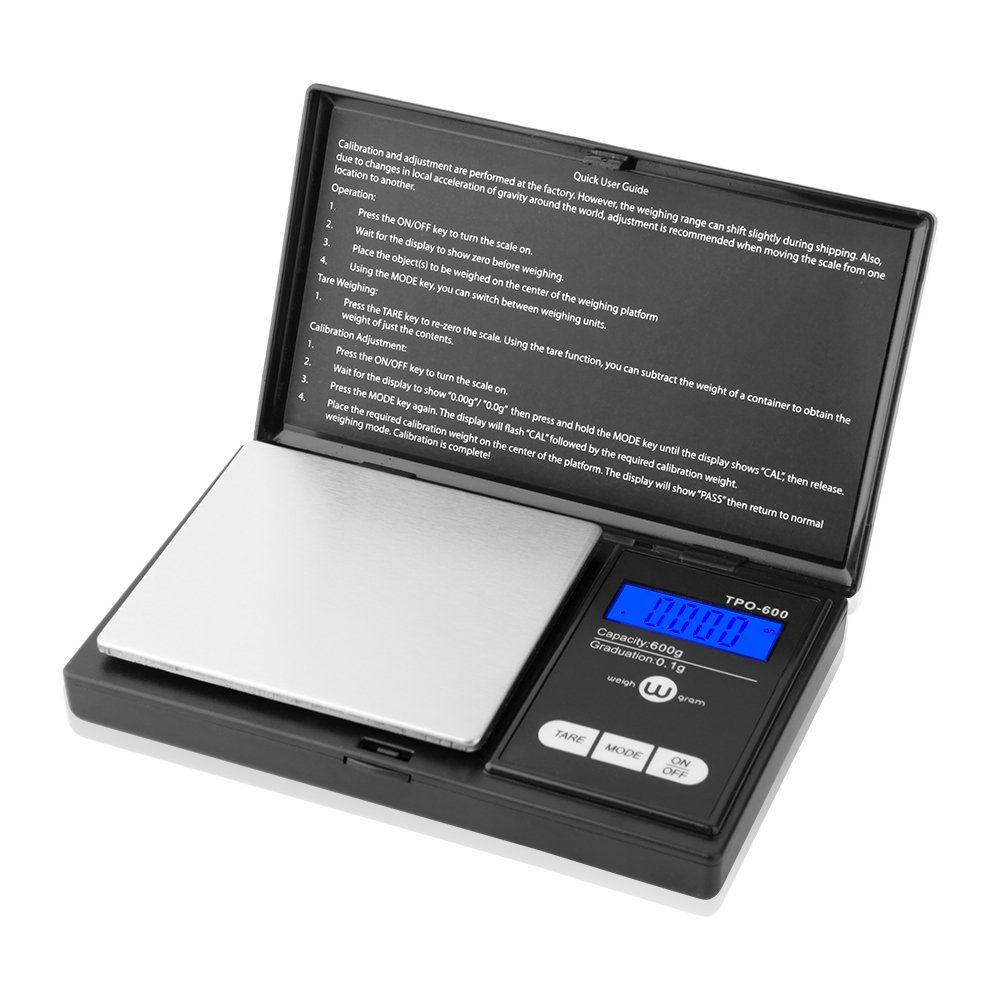
I chose this pocket scale when I needed fine-grain precision in a tiny footprint.
Why I picked it: 0.1 g resolution in a compact, protective design.
Best for: Small-quantity ingredients, spices, coins, and jewelry.
Ultra-affordable precision option.
Pros
- High 0.1 g precision
- Protective flip cover
- Bright backlit LCD
- Multiple unit modes
Cons
- Only 600 g capacity
- Very small weighing surface
- Not for large bowls
My take
When a recipe calls for tiny amounts (or when I’m weighing coins), this pocket scale is the tool I reach for. The 0.1 g resolution lets me measure pinches of spices and small baking add-ins accurately.
Its protective cover doubles as storage and keeps the stainless platform clean between uses. Because capacity tops out at 600 g, I use it strictly for precision tasks rather than full-batch ingredients.
The display is crisp and the controls are intuitive, so I can get a precise number in seconds.
4. Nicewell Food Scale, 22 lb Digital Kitchen Scale with Tempered Glass and Stainless Steel – Best Large Capacity
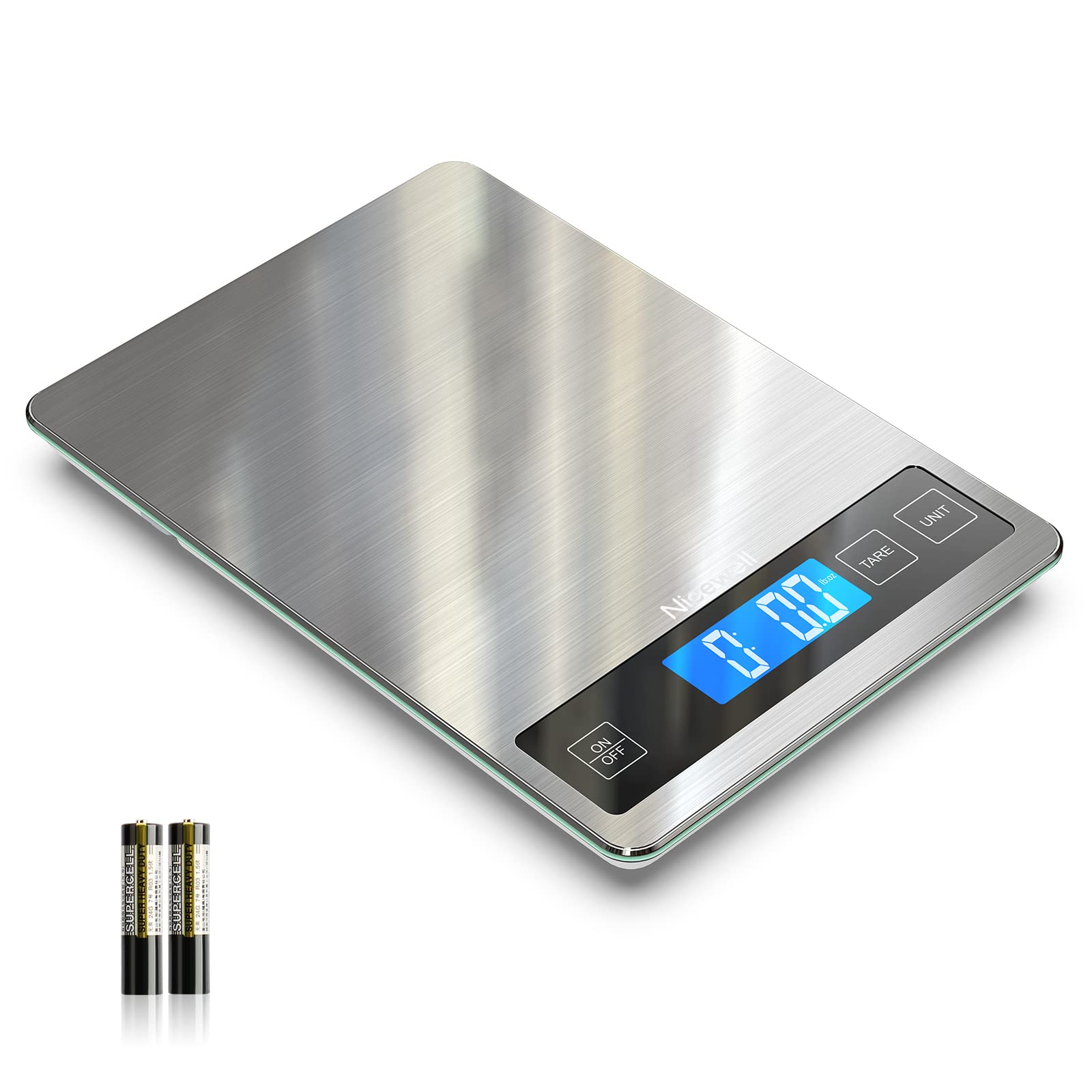
I picked this Nicewell for heavy-duty kitchen tasks where platform size and capacity matter.
Why I picked it: 22 lb range, large platform, tempered glass top for durability.
Best for: Weighing large bowls, whole proteins, and batch cooking.
Good mid-range value for size and capacity.
Pros
- High 22 lb capacity
- Large 9" x 6.3" platform
- Tempered glass top
- Large easy-to-read display
Cons
- Larger footprint
- Glass can scratch
- Min weigh slightly higher
My take
I run heavier kitchen tasks—big bowls of dough and whole chickens—and this Nicewell handled them without hesitation. The broad platform makes it easy to place large mixing bowls securely.
Tempered glass gives it a sturdy feel and the large display is a welcome convenience when I’m eyeing weights while multitasking. Four load sensors keep readings stable as I add flour or water.
If you need capacity and surface area in one package, this scale has been the most reliable in my kitchen for large-volume work.
5. Etekcity 0.1g Food Kitchen Scale with Detachable Bowl and Dual Increments – Best with Bowl
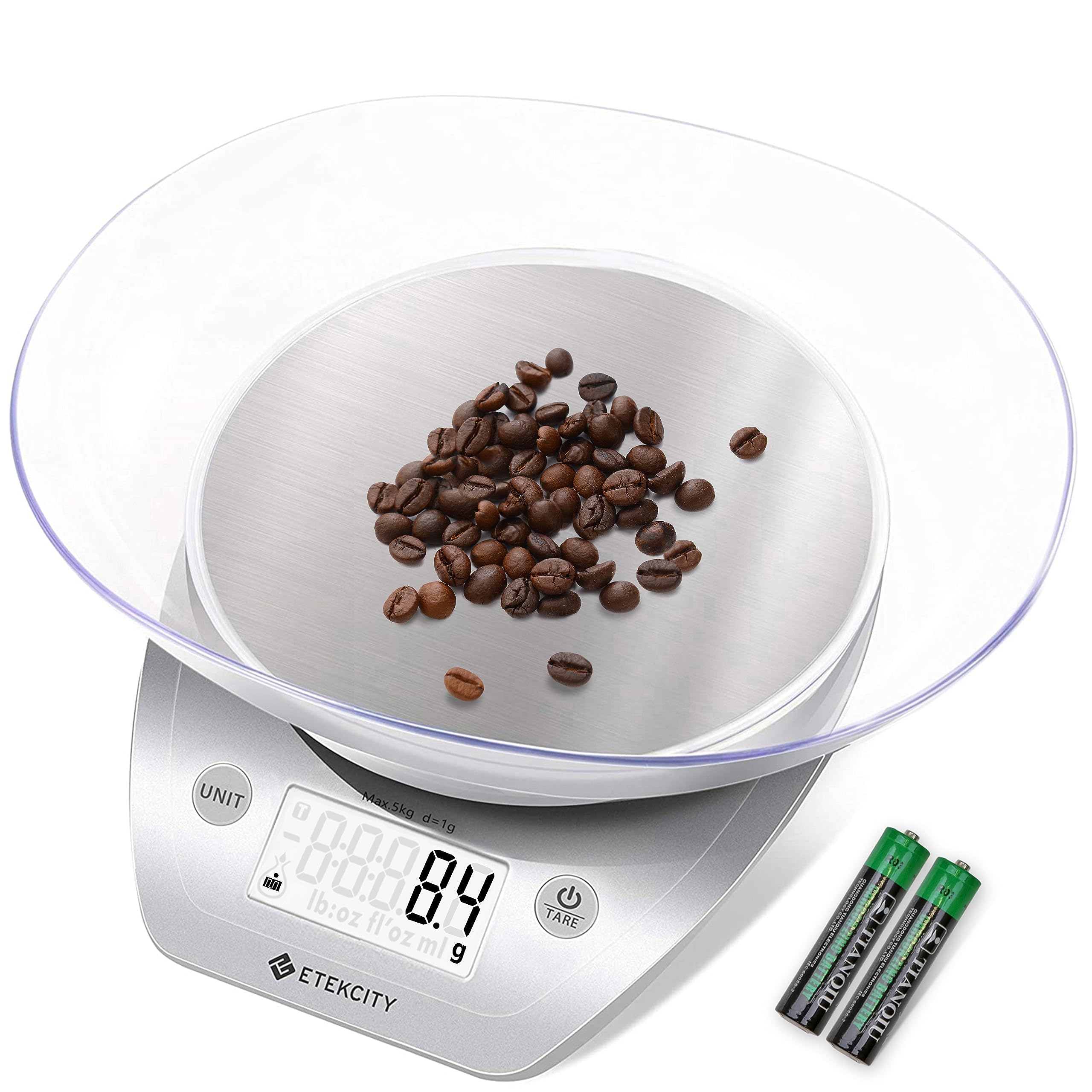
I appreciate the detachable bowl design and dual-resolution sensors for flexible measuring.
Why I picked it: Removable bowl and 0.1 g precision under 1 kg, versatile features.
Best for: Bakers who mix ingredients in a bowl and need fine precision.
Reasonably priced for added convenience.
Pros
- Detachable bowl for tidy measuring
- 0.1 g precision under 1000 g
- Large backlit display
- Bowl doubles as protective cover
Cons
- Auto-off can be quick
- Bowl size limits large items
- Slightly taller profile
My take
I use the detachable bowl every time I mix wet and dry ingredients because it keeps my workspace cleaner and speeds up tare work. The bowl flips over to serve as a cover, which makes storage neater.
The dual increments are useful: sub-1,000 g items register to 0.1 g, so I can handle both small precision jobs and larger quantities without swapping tools.
All told, this scale feels thoughtfully designed for people who bake or prepare mixed-ingredient recipes regularly.
6. American Weigh Scales Digital Pocket Scale 600g x 0.1g with 10-Year Warranty – Best Warranty & Durability
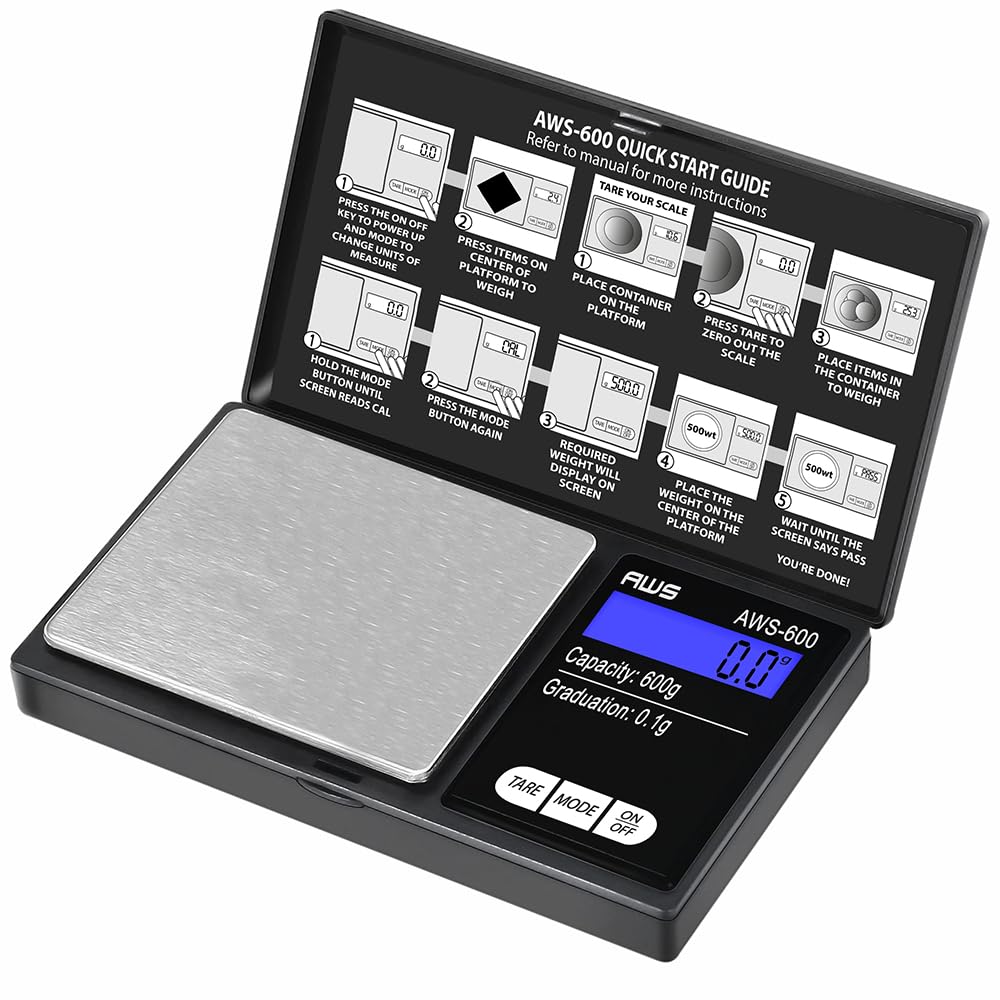
I rely on this American Weigh when I want precision backed by long-term warranty coverage.
Why I picked it: 0.1 g resolution plus an industry-leading long warranty.
Best for: Precision hobbyists, coin collectors, and long-term dependability.
Budget-friendly with exceptional warranty.
Pros
- 0.1 g precision
- 10-year warranty
- Compact and durable
- Clear LCD readout
Cons
- 600 g maximum capacity
- Calibration needs a specific weight
- Platform very small
My take
This pocket scale gives me reliable fine measurements and the peace of mind of a 10-year warranty, which is rare in this price class.
I did run into a calibration hiccup—proper calibration requires the correct 500 g weight—so plan ahead if you want to calibrate immediately out of the box.
For precise weighing tasks and a tool I expect to keep for years, this is the unit I choose.
How I Choose a Kitchen Scale
Capacity and Precision
I match scale capacity to how I cook. For most home bakers and meal preppers, a 5 kg (11 lb) capacity with 1 g increments is ideal. If I’m working with very small amounts—spices, jewelry, or coins—I choose a 0.1 g pocket scale.
When I need both, I look for dual increments that offer 0.1 g under a lower threshold and 1 g above it.
- 5 kg / 11 lb covers most home needs
- 0.1 g for spices, coins, jewelry, tiny amounts
- Dual-resolution scales give flexible precision
Platform Size and Material
Platform size matters in practice: larger platforms let me use big mixing bowls without balancing acts. Stainless steel or tempered glass tops are easiest to clean and more durable than thin plastic.
If portability matters, a slim stainless-steel or pocket model fits drawers and travels well.
- Large platform for big bowls and proteins
- Stainless steel or tempered glass for easy cleaning
- Pocket scales for travel and precision
Practical Features I Use Daily
Tare/zero is non-negotiable—I use it dozens of times per session. A backlit, large LCD saves time when I’m moving between bowls and mixing bowls. A removable bowl or cover can keep things tidy and doubles as storage protection.
Auto-off saves batteries but can be annoying during long sessions; look for models with reasonable auto-off periods.
- Tare/zero for multi-ingredient measuring
- Backlit display for quick reading
- Removable bowl as a tidy option
Power, Calibration, and Warranty
I prefer battery-powered scales with included batteries so I can use them immediately. For pocket scales, check calibration requirements—some require a specific calibration weight to get perfect accuracy. A long warranty is a sign the maker stands behind the unit.
Keep spare AAA batteries on hand; they’re the most common power source.
- Batteries included is convenient
- Know if calibration requires a specific weight
- Long warranty adds ownership peace of mind
Frequently Asked Questions
What minimum precision should I look for when baking?
I recommend 1 g precision for most baking. If you’re measuring tiny quantities like spices or yeast starters, a 0.1 g pocket scale is useful.
Can I weigh liquids on these scales?
Yes. I use the ml/fl oz modes when recipes list liquid volumes; tare a container first and switch to the appropriate liquid unit for accurate readings.
How do I keep my scale accurate over time?
I store scales flat or with the protective cover on, avoid spills, wipe stainless or glass tops after each use, and recalibrate if readings drift—note that some pocket scales need a specific calibration weight.
Final Take
I keep different scales for different jobs: a 5 kg stainless steel scale for everyday baking, a bowl-equipped model for messy mixes, and a pocket 0.1 g unit for precision tasks.
Match capacity and resolution to your cooking style, and you’ll find a scale that stays useful for years. Of the six I tested, any of these will earn a place in an organized kitchen depending on the tasks you cook most often.
