
I tested five leg and knee wedge pillows to find dependable support for post-op recovery, swelling, back pain and everyday elevation. Here are the ones I keep reaching for.
I spent time using each of these leg and knee wedges in real recovery and sleep situations so I could compare support, comfort, durability and ease of care.
My testing focused on foam density, incline height, width and stability, plus practical details like removable covers and handles that make nightly repositioning easier.
Below I lay out which wedge I reach for and why—whether I need a compact knee support, a firm clinical wedge, a double-leg cradle, or a full modular upper-body solution.
I picked these five because they cover the full range of needs: lightweight clinic-style firmness, memory-foam comfort, dual-leg elevation, ergonomic knee support, and a premium modular set for major recovery.
1. Kolbs Leg Elevation Pillow – Best Overall
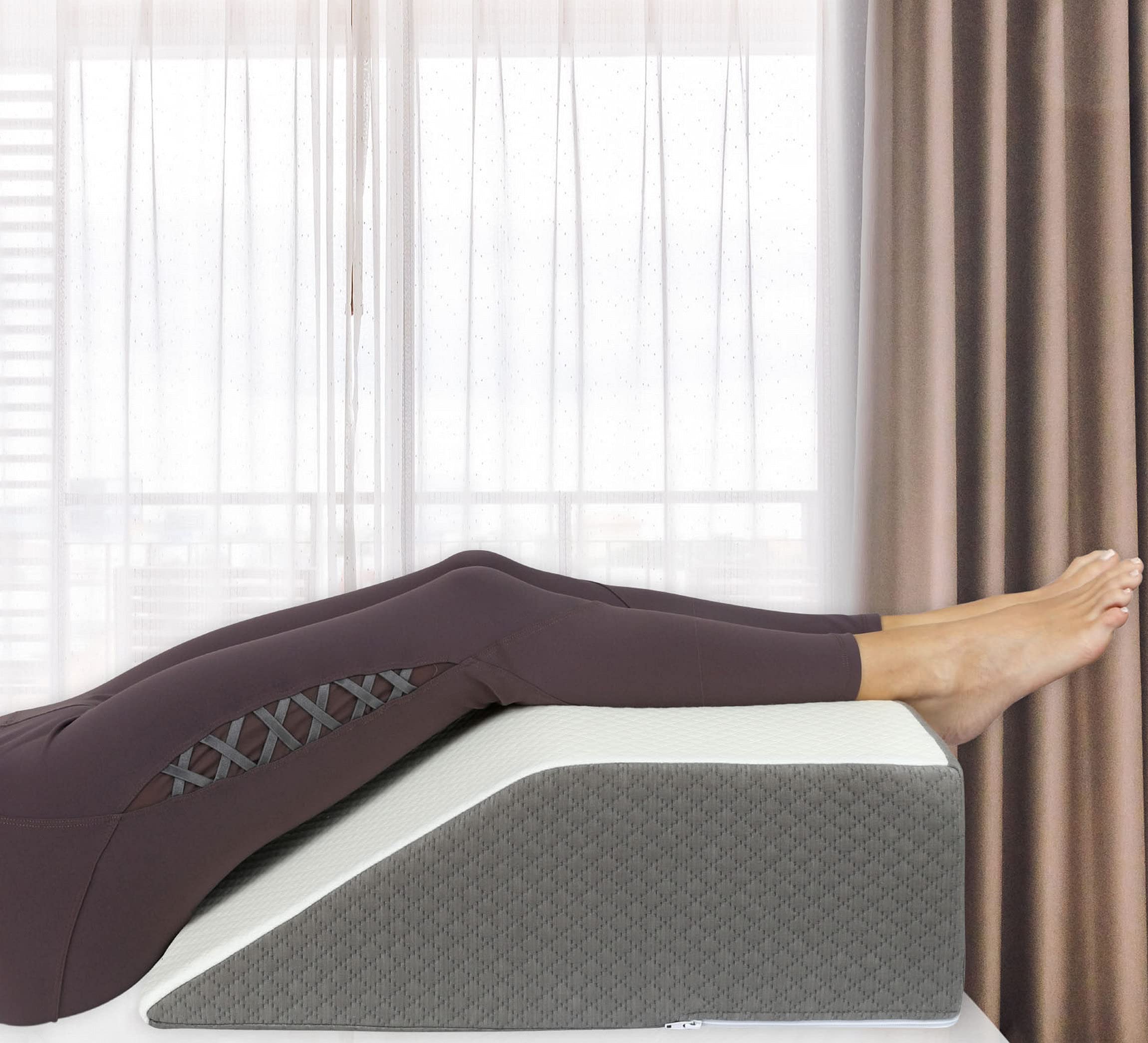
I like this for its memory-foam top, high-density core and washable jacquard cover—an all-purpose wedge that stays supportive night after night.
Why I picked it: Memory-foam comfort with a dense core and an easy-to-clean jacquard cover.
Best for: People who want a versatile wedge for legs or gentle upper-body elevation.
A solid midrange option for everyday use and recovery.
Pros
- Memory-foam top for pressure relief
- High-density core maintains the incline
- Wide surface — won’t feel cramped
- Removable, machine-washable cover
Cons
- 7-inch height may be low for some needs
- Not ideal if you prefer a very soft surface
My take
I use the Kolbs wedge when I want steady incline without the feeling of sinking. The memory-foam upper layer gives a comfortable surface while the dense core keeps the wedge from collapsing over the night.
The jacquard cover is a nicer fabric than typical plain slips and it zips off for washing, which I appreciate after longer recovery stretches or sweaty nights.
Because it’s wider than many wedges, I don’t worry about rolling off when I move in bed. For mild swelling, reflux positioning or general back pressure relief, it’s my go-to when I want comfort and reliable support.
2. DMI Firm Leg Wedge Pillow – Best Clinic-Style Firm Support
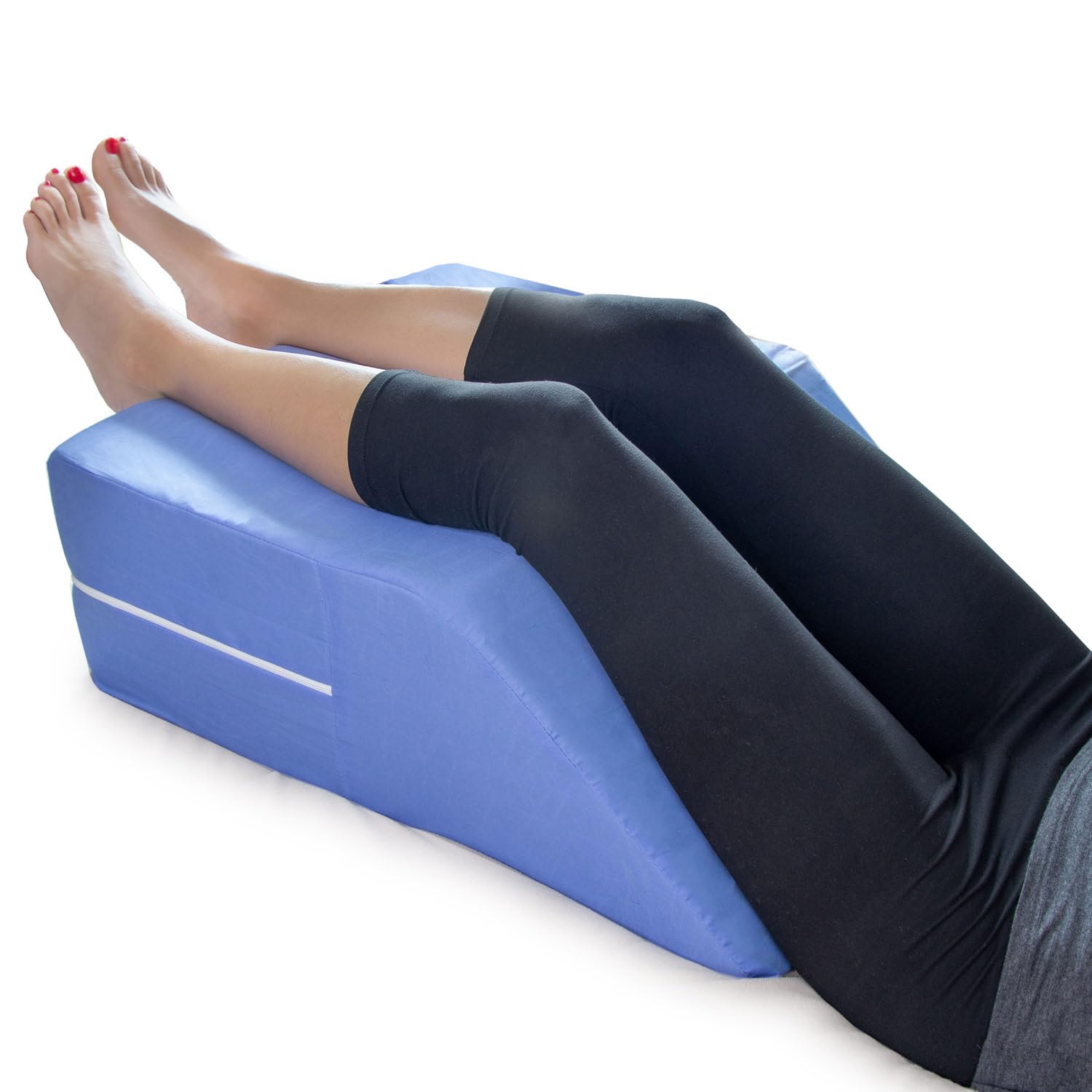
I choose this when I need uncompromising firmness and long-term shape retention—built like a clinical wedge and easy to care for.
Why I picked it: Dense, durable foam and a removable cotton cover for a no-nonsense support option.
Best for: Those who need firm, long-lasting elevation for circulation or post-op recovery.
An affordable, durable workhorse that holds its shape.
Pros
- Very firm, high-density foam
- Durable construction for long-term use
- Removable cotton cover
Cons
- Can feel too hard for sensitive legs
- May need a thin pillow on top for extra cushioning
My take
I reach for the DMI wedge when firmness is the priority. It feels like the kind of support used in clinical settings and stayed supportive for months of regular use.
Because it’s on the firm side, I sometimes layer a thin soft pillow on top if I want more padding, but the core support is exactly what I want for swelling and circulation management.
The cotton zippered cover is straightforward to remove and machine-wash, which makes it easy to keep hygienic during an extended recovery period.
3. LightEase Double Leg Elevation Pillow – Best for Both Legs
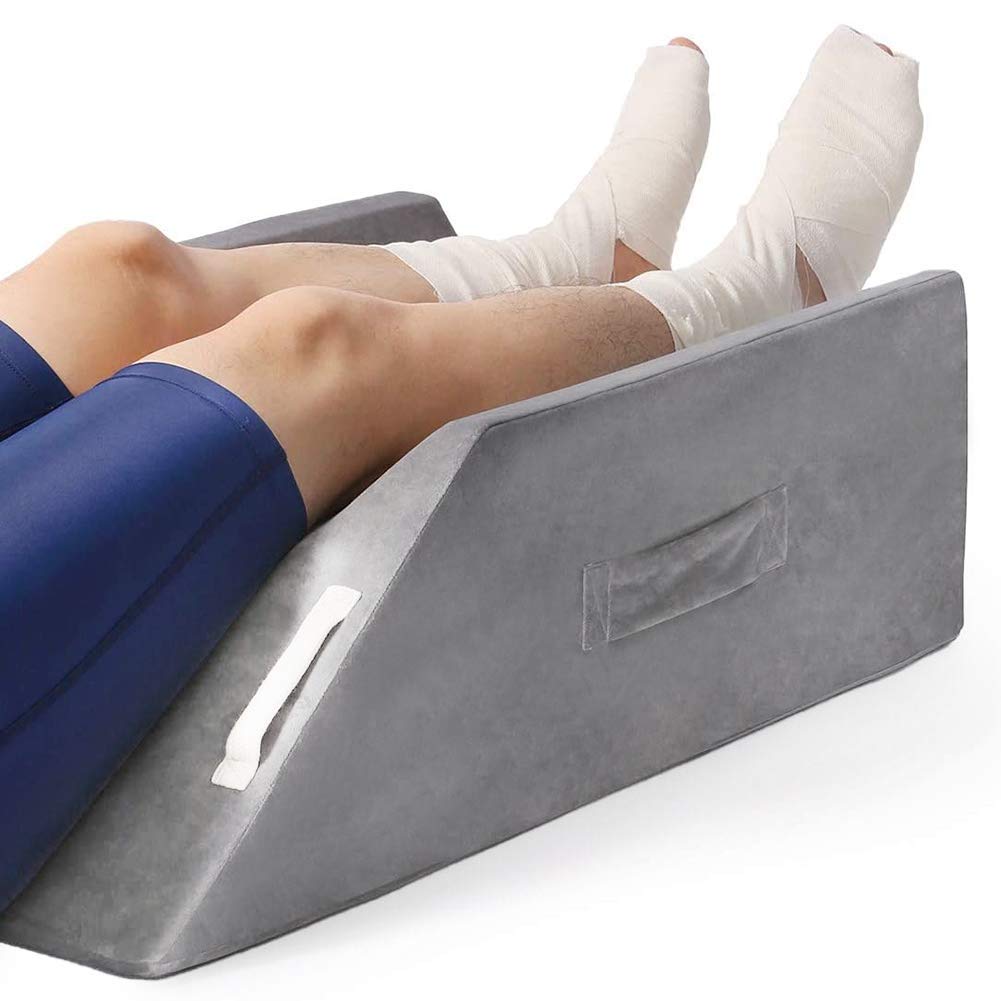
When I need to elevate both legs in parallel, this wide, double-wedge design gives stable support and keeps limbs aligned without them rolling apart.
Why I picked it: Long flat surface and dual-leg design for simultaneous elevation and alignment.
Best for: People recovering from bilateral leg procedures or anyone who wants both legs elevated at once.
A practical midrange pick for larger elevation needs.
Pros
- Elevates both legs side-by-side
- Memory foam that keeps shape
- Built-in handles for repositioning
Cons
- Bulky — needs more storage space
- Arrives compressed and needs time to expand
My take
I found this pillow indispensable when I needed to keep both legs elevated. The long, flat platform supports the entire lower leg so alignment stays correct through the night.
It comes tightly rolled, so I let it sit for a day to fully expand. Once plumped up, the handles made repositioning easy even when I was groggy after surgery.
Because it’s larger, I wouldn’t call it travel-friendly, but for at-home recovery where I want firm, stable parallel elevation, it’s the model I pick every time.
4. Vekkia Knee Wedge Pillow – Best for Knee Support
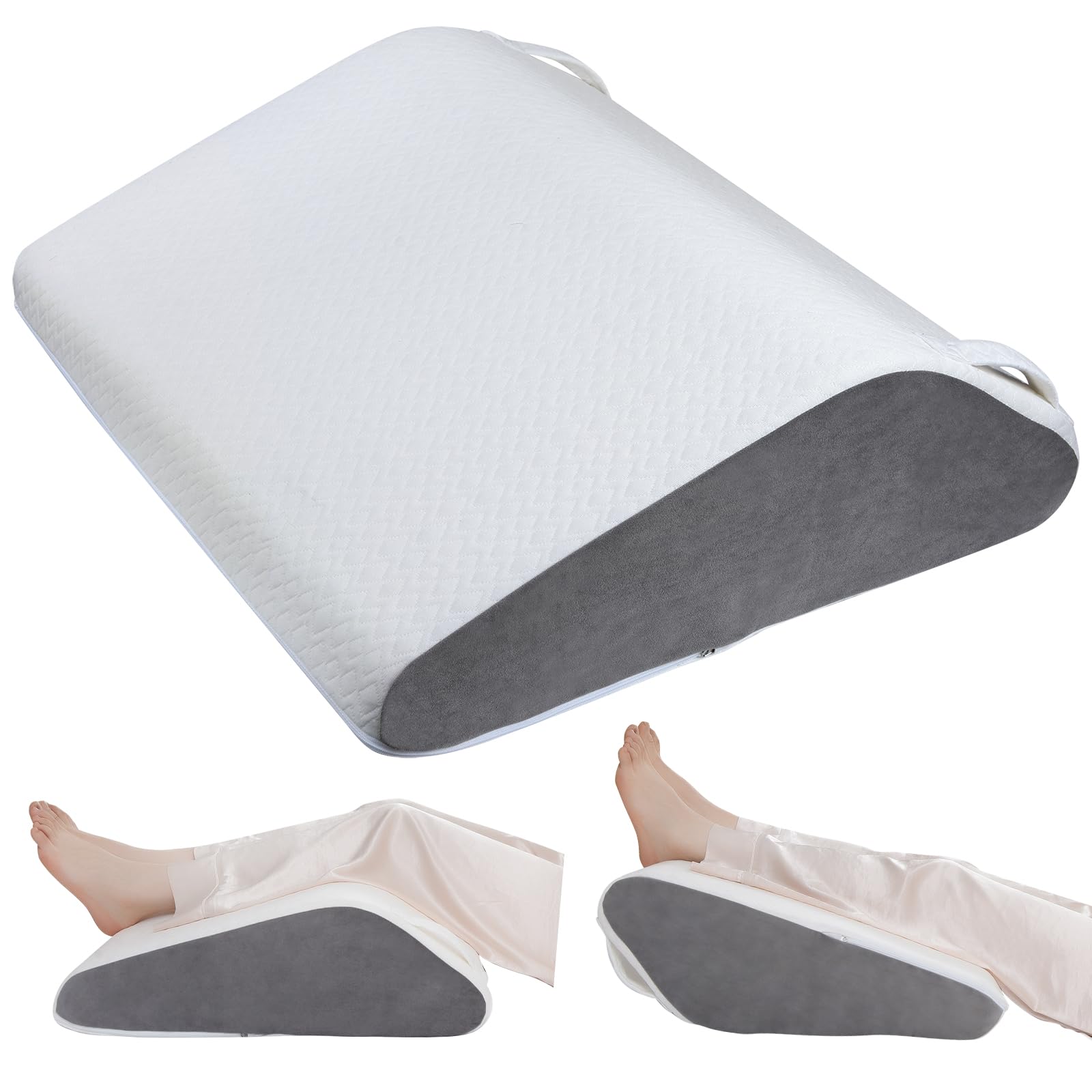
I rely on this ergonomic wedge when I need targeted support behind the knees—its rounded angle prevents pinching and it’s easy to reposition with dual handles.
Why I picked it: Ergonomic curve and dual handles for precise knee or calf placement.
Best for: Back sleepers and people who want targeted knee support to reduce lumbar pressure.
A budget-friendly option with thoughtful ergonomics.
Pros
- Rounded angle to avoid knee pinching
- Dual handles for accurate placement
- Machine-washable breathable cover
Cons
- Not height-adjustable
- Simple design may not suit all recovery needs
My take
I use the Vekkia wedge when I specifically want support under my knees to take pressure off my lower back. The rounded profile is gentler than a sharp triangular wedge and doesn’t dig into the back of my knees.
The handles are a small feature that actually matters—I can nudge the wedge closer or farther without sitting up, which makes nighttime adjustments effortless.
For its price and simplicity, it does the job well. It’s the one I reach for when I want a compact, targeted solution rather than a full-leg cradle.
5. Lunix LX5 4-Piece Wedge Set – Best Upper-Body Recovery System
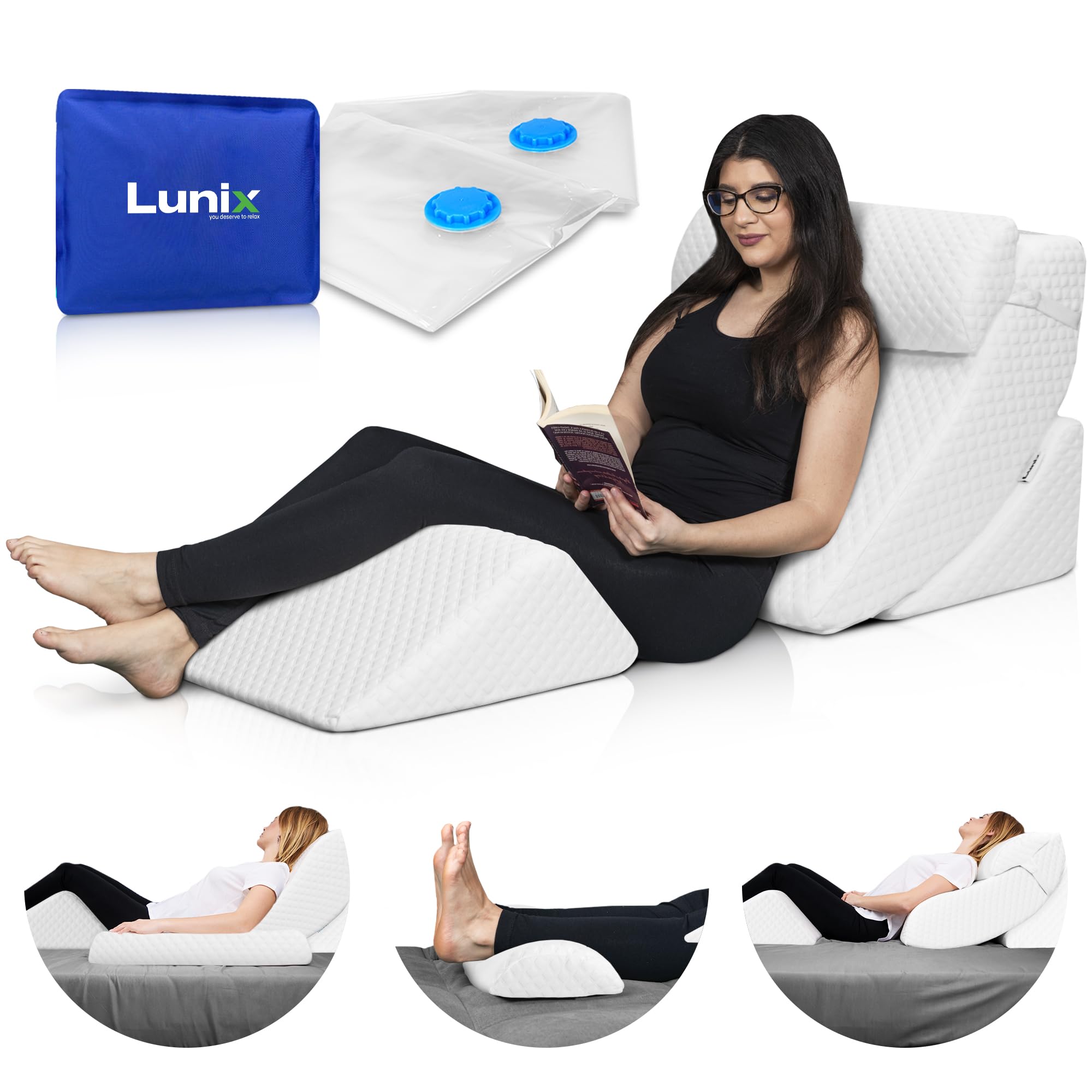
When I need a configurable support system for torso, shoulder and neck alignment, this modular set gives the most tailored positioning and stays put with its lock system.
Why I picked it: Modular pieces, lock-tight stability and certified high-density memory foam for serious recovery support.
Best for: Major upper-body recovery and anyone who needs adjustable, stable incline for torso and neck.
A premium investment for dedicated post-op or chronic support.
Pros
- Modular configuration for tailored support
- Lock-tight straps prevent sliding
- High-density certified memory foam
- Includes hot/cold gel pack
Cons
- Larger footprint and multiple pieces to manage
- Higher-cost, premium option
My take
I bought this multi-piece set when I needed more adjustable torso and shoulder support than a single wedge could provide. The pieces let me fine-tune the incline and target support exactly where I need it.
The lock-tight straps are a real benefit; once configured the system stayed put through restless nights and long reading sessions. The foam felt substantial and didn’t compress under me over hours of use.
If you need a single simple wedge this is overkill, but for extended upper-body recovery or anyone who wants precise spinal alignment, it’s the most capable system I tested.
How I Choose a Knee or Leg Wedge
Foam Type & Firmness
I look for foam that matches my goal—memory foam top with a dense core for comfort plus structure, or a very firm high-density foam when clinical support is the priority.
- Memory foam = pressure relief, conforms to limbs.
- High-density foam = long-lasting incline and support.
- If you’re sensitive, plan to layer a thin pillow for softness.
Height, Width & Shape
I measure how much elevation I need before choosing. A 7–9 inch wedge works well for mild elevation and knee support; larger or double-leg options suit major post-op needs.
- Wider wedges prevent rolling off while you sleep.
- Rounded knee wedges reduce pressure behind the knee.
- Double-leg designs keep both limbs aligned when needed.
Cover, Care & Portability
I favor wedges with removable, machine-washable covers and handles for easy repositioning. If you travel or use the wedge in multiple rooms, check weight and carry features.
- Removable cover = easy cleaning after long recovery.
- Handles make nighttime adjustments simple.
- Compressed shipping is common—allow expansion time.
Use Case & Stability
I choose a product based on whether I need targeted knee relief, bilateral leg elevation, or a full upper-body system. Stability features—straps or dense cores—matter if you move a lot in bed.
- For swelling/circulation, a steady incline that keeps legs above heart level is key.
- For spinal or shoulder recovery, modular pieces offer better alignment.
- Consider how often you’ll reposition the wedge during sleep.
Frequently Asked Questions
How firm should a leg wedge be for post-op use?
I prefer a firmer wedge for immediate post-op support so the incline holds; memory-foam tops layered over a dense core give comfort without losing elevation.
Will a wedge take up the whole bed?
Some double-leg or modular wedges are large and better suited to home recovery; I keep smaller knee wedges for nightstands and sofas when space is limited.
How long to wait after unpacking a vacuum-sealed wedge?
I let compressed foam sit 12–24 hours to regain full shape; some memory foams benefit from a full day to plump up completely.
Final Take
After testing these models across recovery and everyday use, I keep a compact ergonomic wedge for targeted knee relief, a firm clinic-style wedge for circulation work, and a double-leg cradle for bilateral needs.
If you want a single versatile pick, the Kolbs wedge delivered the balance of comfort, width and washable cover that I reach for most. For major upper-body recovery, the Lunix LX5 modular system is worth the premium investment.
Choose the shape and firmness that match your specific recovery goals, and pay attention to cover material and handles—those practical details make nightly use much easier.
