
I tested a range of sharpeners so you don’t have to. Here are the tools I reach for when I need a quick touch-up, a field-ready edge, or pro-level sharpening.
I rely on sharp knives every day, so I keep several sharpening tools around the house, in my pack, and in the workshop. Each sharpener below fills a specific role: quick maintenance, portable touch-ups, comprehensive field kits, simple mechanical options, honing steels, and heavy-duty electric systems.
My goal was practical: find tools that deliver usable edges quickly, are reliable in the places I use them, and won’t make sharpening intimidating. I describe how I use each one and who it fits best.
I grouped these sharpeners by use case so you can pick the right tool for where you spend time: the smallest pocket options for carry, compact guided systems for the trail, manual tools for kitchen drawers, honing steels for everyday maintenance, and electric systems when I need speed and repeatable results.
1. AccuSharp Knife Sharpener, Ergonomic Comfortable Handle, Compact & Easy to Use, Restore and Hone Straight & Serrated Knives, White – Best for Quick Touch-Ups
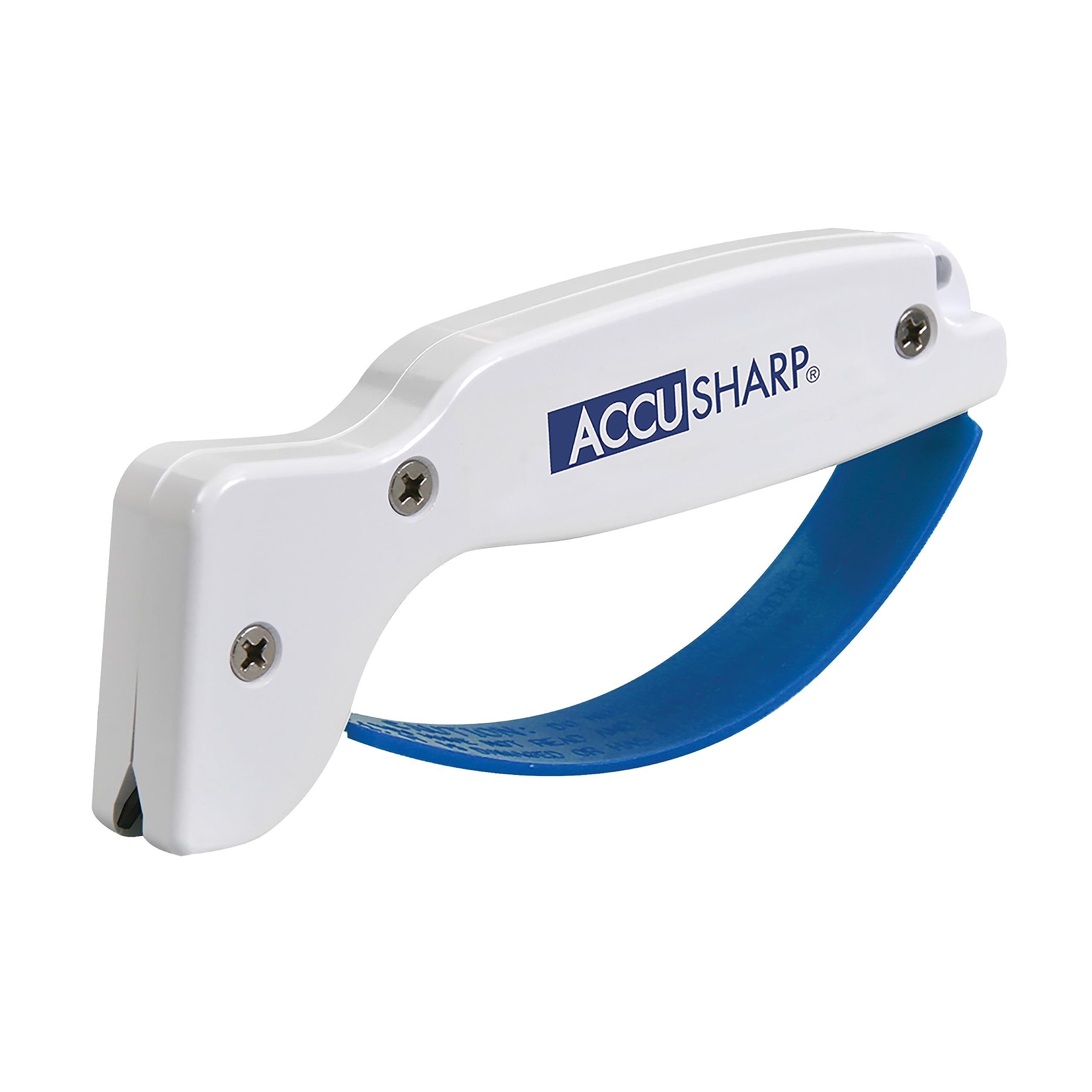
A compact, diamond-honed tungsten carbide pull-through that restores a usable edge in seconds and is built for everyday maintenance.
Why I picked it: Fast results, reversible carbide blades, and a comfortable ergonomic handle for safe, repeatable touching up.
Best for: Home cooks and anyone who wants a fast, no-fuss edge between full sharpenings.
Very affordable and practical for everyday use.
Pros
- Gets a keen edge in seconds
- Ergonomic handle with safety guard
- Works on straight and serrated blades
- Reversible carbide blades extend life
Cons
- Not for precision finishing
- More for maintenance than full regrinds
My take
I keep an AccuSharp in my kitchen drawer for the mornings I need knives to perform right away. A few guided pulls and knives that felt dull are noticeably sharper—perfect for slicing vegetables or prepping dinner quickly.
The diamond-honed tungsten carbide elements are aggressive enough to restore an edge fast, yet the design is forgiving. The ergonomic handle and full-length finger guard let me work confidently with either hand.
This isn’t a replacement for a whetstone or a pro-level system when I need a hair-trigger razor edge, but for routine upkeep and serrated touch-ups it’s hard to beat for convenience.
2. Victorinox Pocket Knife Sharpener Perfect Portable Solution for Sharpening All Your Straight Blades, Black – Best Pocket Sharpener
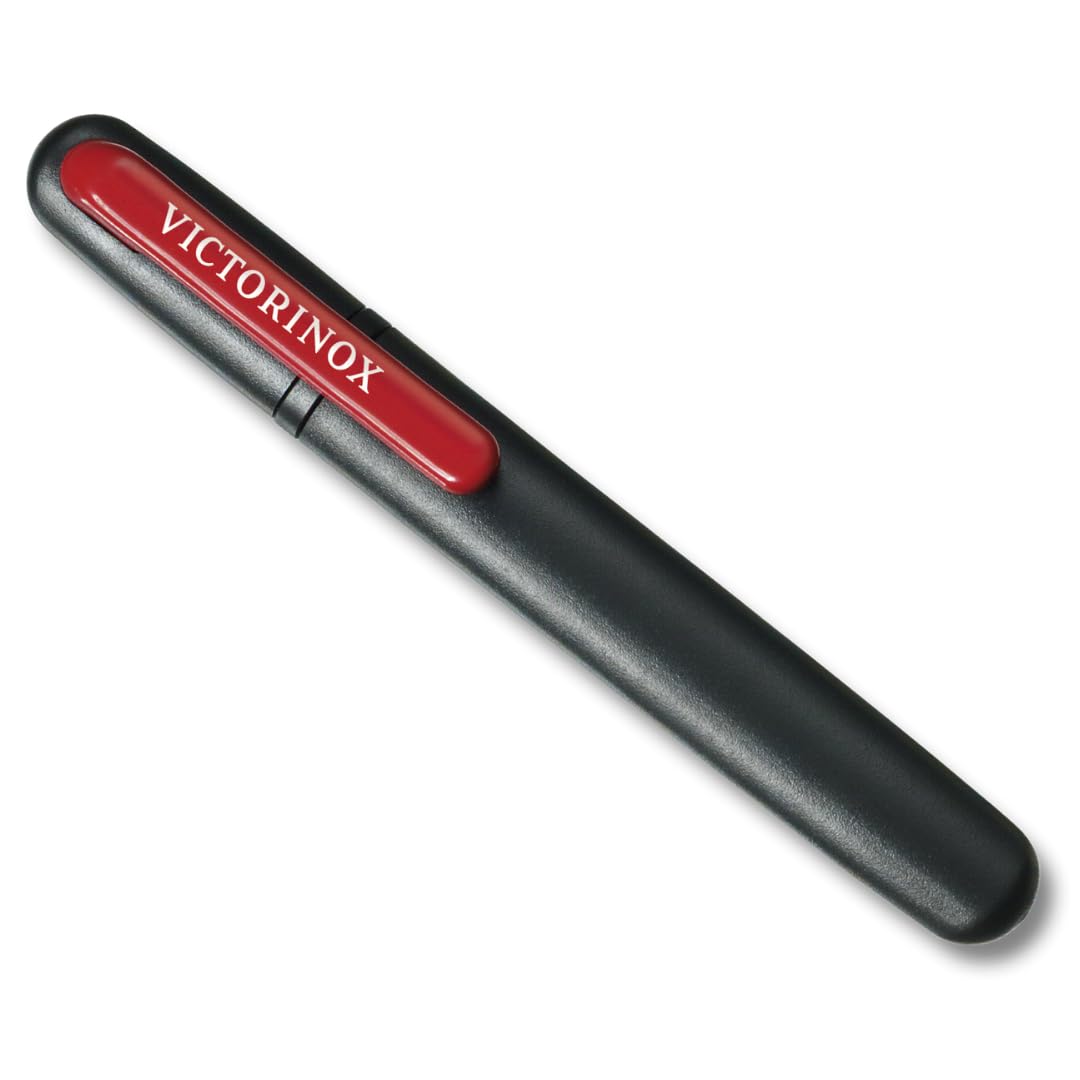
A pencil-sized dual-stage sharpener with a honing stone and ceramic notch that I carry for field and EDC touch-ups.
Why I picked it: Compact dual-stage design (honing stone + ceramic notch) delivers refined edges in a pocket-sized tool.
Best for: Everyday carry, campers, and anyone who needs a precise on-the-go touch-up.
A sensible mid-range portable option.
Pros
- Extremely portable, pencil-sized
- Dual-stage ceramic and honing stone
- Protective caps for safe carry
- Precise for straight blades
Cons
- Not intended for heavy regrinds
- V-notch has limited utility on some steels
My take
I stash the Victorinox sharpener in my pack and reach for it when a blade dulls while camping or cutting rope. The blue honing surface does the bulk of the work and the ceramic V-notch polishes the edge for a cleaner cut.
Using it takes a little practice—the order I prefer is to use the honing stone first, then finish in the V-notch for a smoother edge. It’s precise, easy to control, and simple to carry.
If I need to restore a badly nicked or very dull blade I’ll use a more aggressive tool, but for routine field maintenance this is the first thing I grab.
3. Work Sharp Guided Field Sharpener 3 Pack Gift Set, Travel Knife Sharpener Tool Multi Pack – Best for Outdoors & Field Use
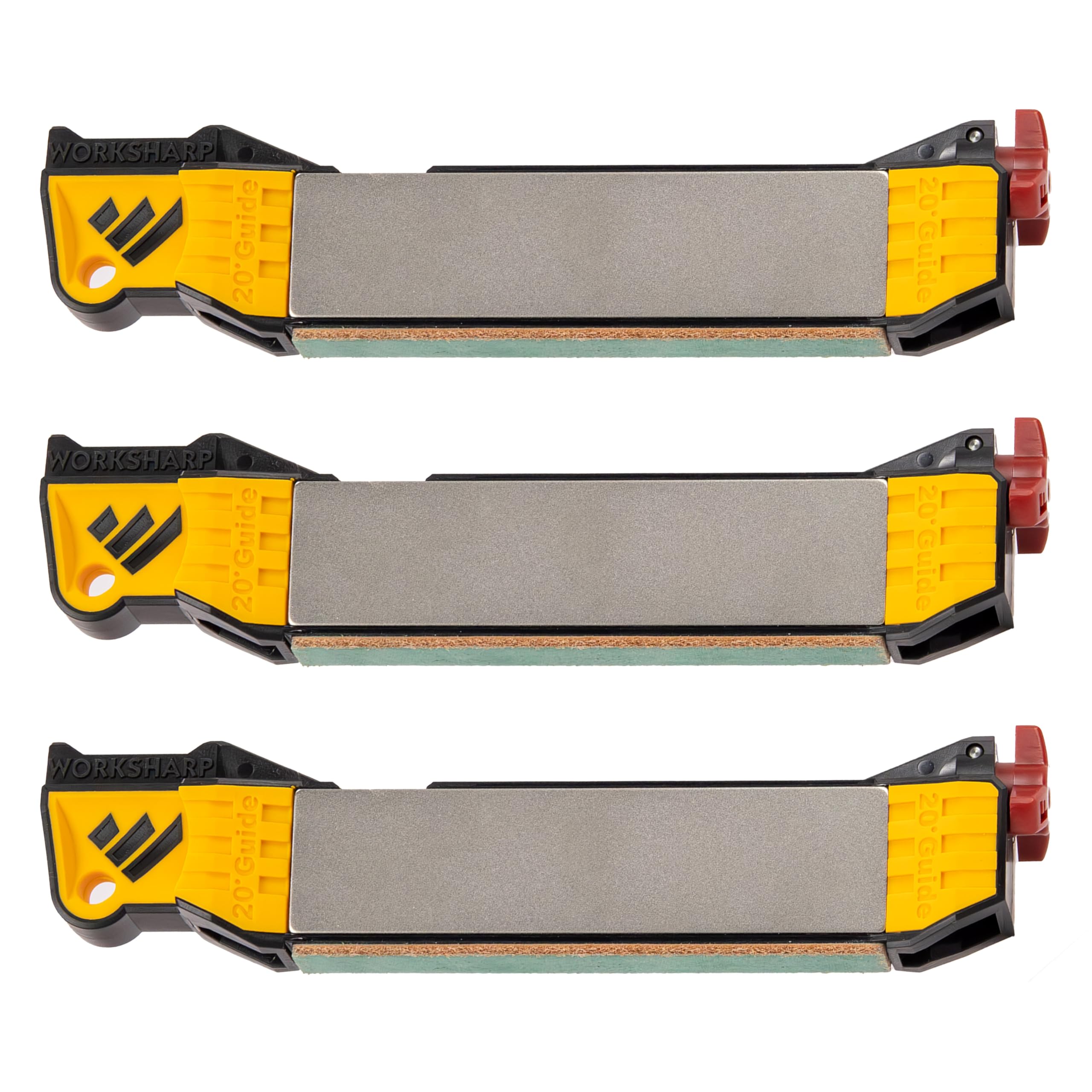
A complete, guided 5-stage field sharpening system with diamond plates, ceramic rods, a leather strop, and specialty grooves for hooks and broadheads.
Why I picked it: All-in-one guided system that consistently recreates correct edge angles in a compact package.
Best for: Hunters, anglers, and anyone who needs a full sharpening toolkit in the field.
A premium portable option that replaces multiple single-use tools.
Pros
- Five-stage guided sharpening
- Includes strop and ceramic rods
- Diamond plates for fast material removal
- Built-in fishhook and broadhead features
Cons
- Larger than tiny pocket sharpeners
- A small blade section is awkward to reach
My take
I bring the Work Sharp Guided Field Sharpener on trips when I need a complete sharpening solution. It taught me consistent angles and got seven different knives to a razor edge with surprisingly little fuss.
The diamond plates remove metal quickly when I need to reshape an edge; the ceramic rods and leather strop finish the job so cuts are clean and long-lasting. The broadhead wrench and fish-hook groove are actually useful in the field.
It’s the sharpener I choose when portability and capability both matter. I appreciate that everything stores in a single, self-contained unit so I’m not hunting for extra pieces when I need them.
4. Rada Cutlery Quick Edge Knife Sharpener (R119), 3.5″ x 2″, Stainless Steel Wheels – Best Simple Sharpener
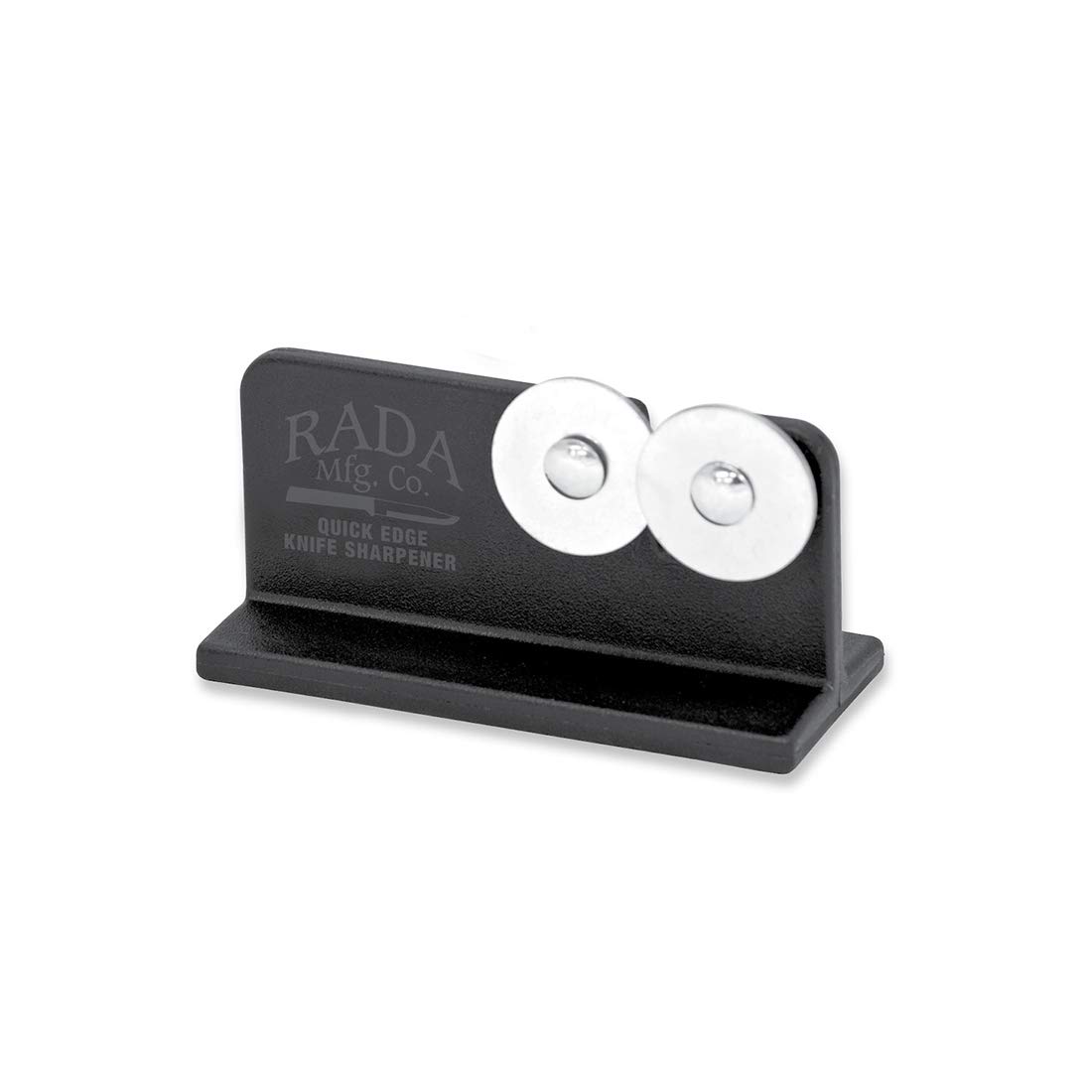
A straightforward dual-wheel stainless steel pull-through that I use when I want a fast, reliable edge without fuss.
Why I picked it: Ridiculously simple and effective—two hardened steel wheels restore cutting performance quickly.
Best for: Anyone who wants a no-nonsense, compact sharpener for straight-edged kitchen and field knives.
A budget-friendly mechanical option.
Pros
- Incredibly simple to use
- Durable hardened steel wheels
- Compact and easy to store
- Made in the USA
Cons
- Not suitable for serrations
- Edge finish is coarser than stones
My take
When I need a quick restoring swipe for a paring or fillet knife, I reach for the Rada Quick Edge. A couple of pulls and the blade cuts much better—no setup, no learning curve.
The dual stainless wheels are tough and consistent. I’ve thrown one in a go-bag and appreciated having a reliable tool on short trips.
It won’t give the polished microbevel of a strop and stone, but for everyday sharpening chores it’s fast and effective.
5. Utopia Kitchen Knife Sharpener Rod 12 Inch, Professional Honing Rod for Knife Sharpening with Hanging Hook, Black 12 Inch Black – Best Honing Rod
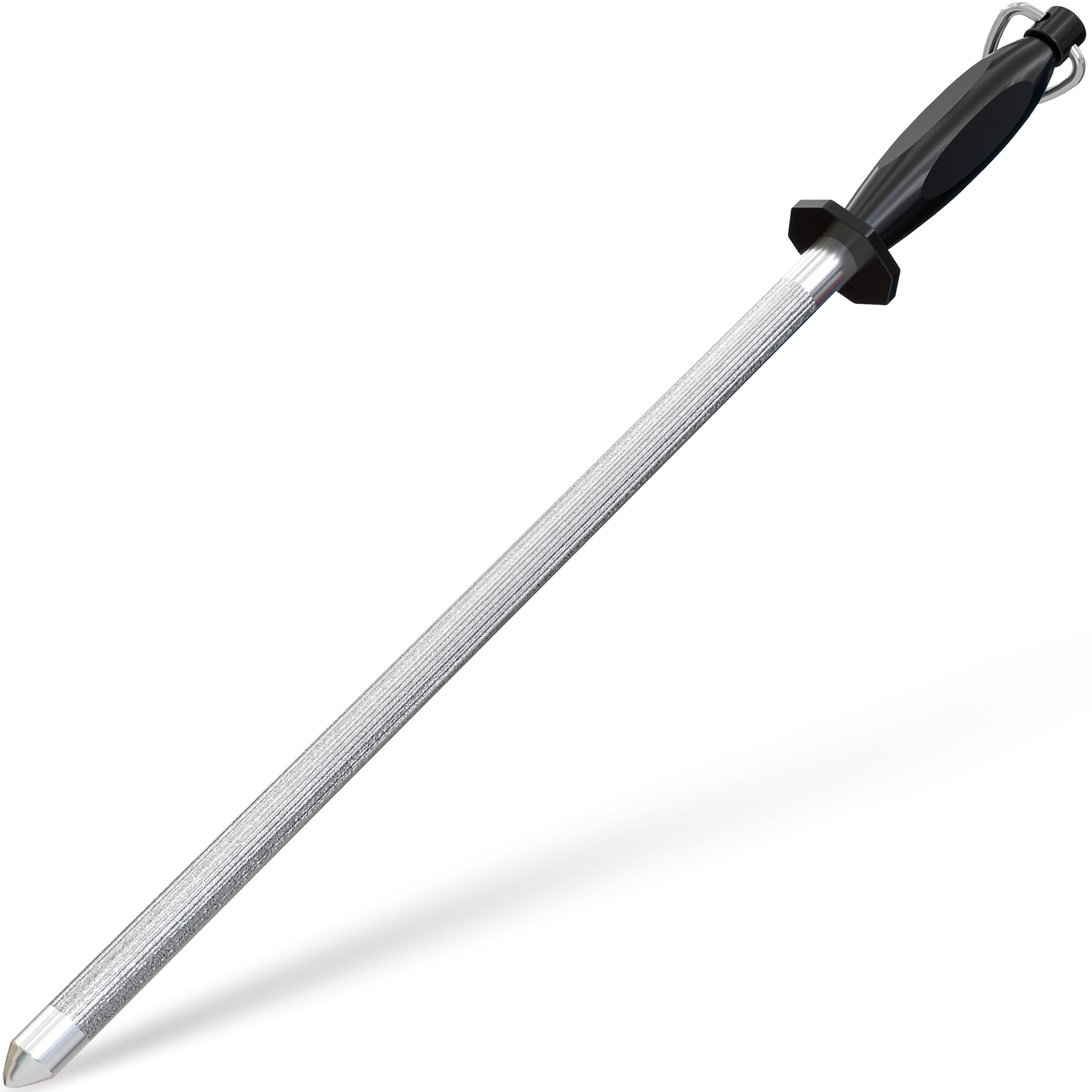
A 12-inch carbon steel honing rod with a comfortable non-slip handle I use to keep edges aligned between sharpenings.
Why I picked it: Well-balanced, durable steel rod that restores edge alignment quickly and safely.
Best for: Maintaining kitchen knives between sharpening sessions; suitable for small and large blades.
An inexpensive, long-lasting maintenance tool.
Pros
- Solid, well-balanced construction
- Comfortable non-slip handle
- Generous 12-inch length
- Hanging loop for storage
Cons
- Not a substitute for sharpening stones
- Less effective on very dull blades
My take
I use the Utopia Kitchen 12-inch rod several times a week to keep my chef’s knives slicing smoothly. It’s balanced and comfortable in the hand, which makes the quick stroking motion safe and repeatable.
A few controlled passes on each side aligns the edge and restores cutting performance in seconds. For me, this rod is a go-to for maintenance that prevents unnecessary full sharpenings.
If a blade is badly dull or damaged, I follow up with a stone or guided sharpener, but for most day-to-day work this rod gets the job done quickly.
6. Work Sharp MK2 Professional Electric Knife and Tool Sharpener – Adjustable Tool and Knife Sharpening System KTS Sharpener – Best for Power Users
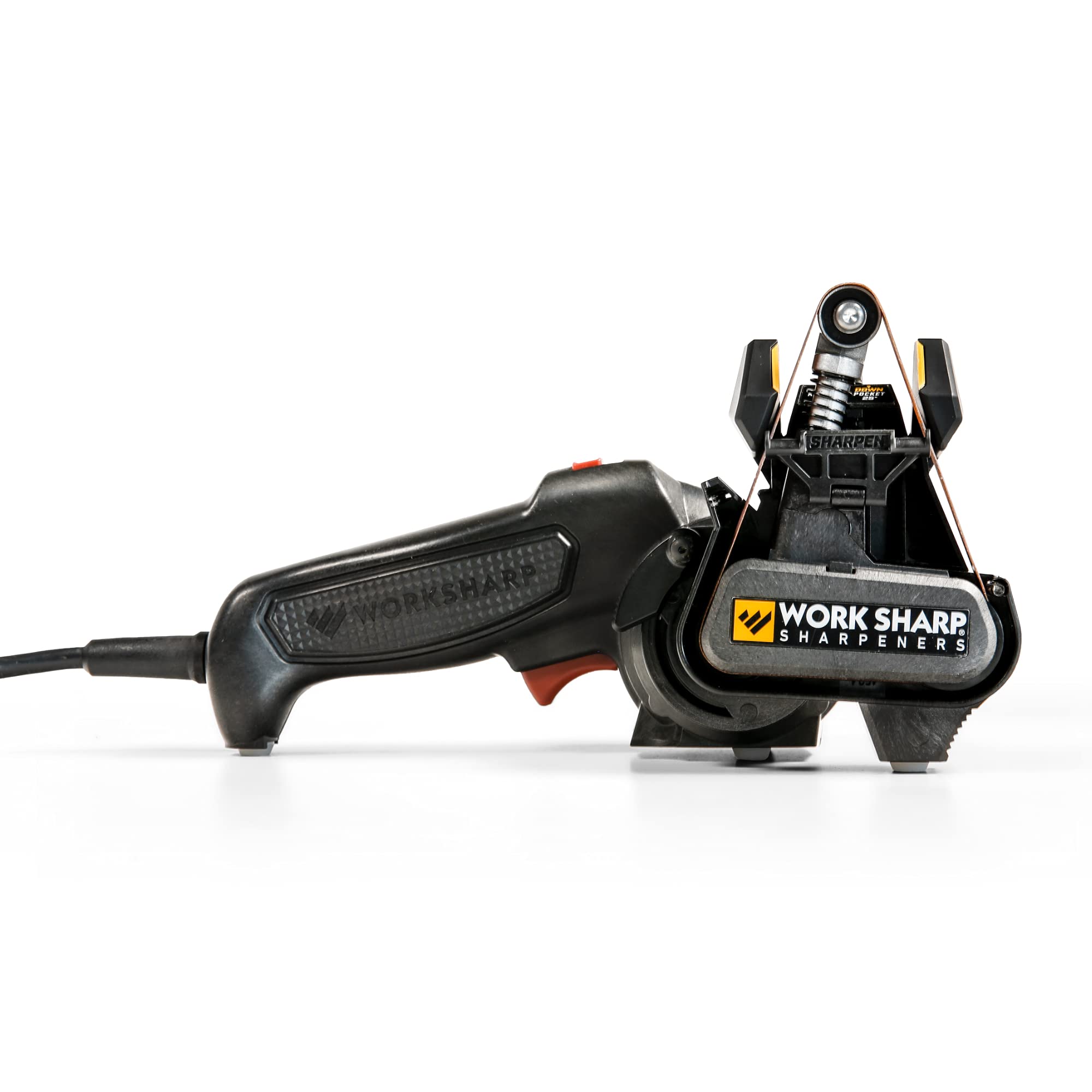
A powerful, belt-driven electric system with adjustable guides and two speeds that I use for repeatable, professional results on knives and tools.
Why I picked it: Adjustable belts and angle guides deliver consistent, fast results across many blade types and tools.
Best for: Serious hobbyists, pros, and anyone who sharpens many knives or tougher steels.
A premium electric system built for workshop use.
Pros
- Fast, repeatable sharpening
- Flexible belts conform to edges
- Two-speed motor for control
- Works on knives and tools
Cons
- Requires extra belts over time
- Takes up bench space
My take
When I need speed and consistency—especially on many blades or harder steels—the Work Sharp MK2 is the system I reach for. The belts remove material efficiently and the edge guides simplify getting the same angle every pass.
The two-speed motor lets me be aggressive when reshaping edges and dial back for finishing. I’ve used it on kitchen knives, pocket knives, and even axes and lawn tools with excellent results.
It’s not a pocket tool: it belongs on a bench and I keep spare belts handy. For the results and the time it saves me, it’s become indispensable in my workshop.
How I Choose a Sharpener
Types of sharpeners I use
I separate sharpeners into five categories based on how I use them: pocket/EDC sharpeners, pull-through mechanical sharpeners, guided field systems, honing steels, and electric belt systems. Each one has strengths and trade-offs.
Pocket sharpeners are for portability and quick touch-ups. Pull-throughs and simple wheel sharpeners are fast and beginner-friendly. Guided systems teach and repeat angles. Honing rods maintain edges between sharpenings. Electric systems handle volume and heavy re-profiling.
- Pocket: best for carry and field touch-ups
- Pull-through/wheel: quick home maintenance
- Guided field: all-in-one portability and control
- Honing rod: everyday alignment and maintenance
- Electric systems: speed and consistent reprofiling
What I look for
I focus on what blade types I commonly use, how often I’ll sharpen, and where I’ll work. Those answers determine whether I want portability, speed, or precision.
Materials and construction matter: diamond or carbide elements remove metal quickly, ceramic finishes refine edges, and leather strops deliver a polished bevel.
- Blade compatibility: straight vs serrated
- Abrasive type: carbide, ceramic, diamond, steel
- Portability vs performance
- Ease of use and safety features
- Availability of replacement parts (belts, stones)
Angles and steel
I match edge angle to the knife’s purpose. Narrow angles slice better but are less durable; wider angles tolerate hard use. Guided systems or edge guides remove the guesswork.
Harder steels can take longer to sharpen and wear abrasives faster, so I keep spare belts or stones when I work on premium knives.
- 20°–25° is a good general kitchen angle
- Lower angles for razor slicing, higher for toughness
- Hard steel requires more durable abrasives
Maintenance and safety
I keep a strop or fine ceramic for finishing; a sharp edge dulls in use and benefits from stropping to remove burrs. I also clean and store sharpeners according to manufacturer guidance to extend their life.
For safety I always secure blades and use guards or guides when available; maintaining consistent technique reduces slips and accidents.
- Strop or fine ceramic to finish edges
- Store abrasive elements dry and clean
- Use guards or guides to protect fingers
- Keep spare belts or reversible stones on hand
Frequently Asked Questions
How often should I use a honing rod versus a sharpener?
I hone my knives after heavy use or weekly to realign the edge; I use a sharpening tool when the blade no longer slices cleanly or needs metal removed to restore an angle.
Can these sharpeners handle serrated blades?
I use pocket and guided sharpeners with specific serration features for serrated blades; many pull-through and wheel sharpeners are best reserved for straight edges only.
Will electric sharpeners remove too much metal?
Electric systems remove material faster than hand methods, so I choose lower speed and light passes for maintenance, and more aggressive belts only when I need to reprofile or restore a badly damaged edge.
Do I need to buy replacement belts or stones?
Yes—when I use abrasive systems regularly I keep spares on hand. Belt and stone life depend on steel hardness and frequency of use.
Final Take
I organize my sharpeners by task: a small pocket tool for carry, a quick pull-through for the kitchen drawer, a guided field kit for trips, a solid honing rod for daily upkeep, and an electric system for heavy work.
Pick the sharpener that matches how and where you use knives most often. In my experience, having two complementary tools—one for maintenance and one for re-profiling—covers almost every sharpening need.
