
I tested Addi Express machines, adapters, and extended kits to find the best tools for making hats, scarves, and larger panels quickly and reliably. Here’s what I’d pick for different needs and why.
I’ve spent hours with round knitting machines and the drill adapters that speed them up, turning yarn into hats, scarves, and wide panels. In this roundup I focus on what actually performs on my table — ease of setup, how smoothly stitches form, what yarns behave, and which accessories are worth buying.
If you want fast stockinette tubes, a machine that won’t drop stitches, or an adapter that saves your wrist, I’ll walk you through my top picks and how I use each one.
For quick hats and tubes I favor the Addi 46-needle King Size for its capacity and stability; for compact projects I keep the 22-needle Addi handy. If I need to speed up long sessions, I use a power adapter but I always run it slowly to avoid heat and stress on plastic parts.
1. Addi Express King Size (46-needle) – Best Overall
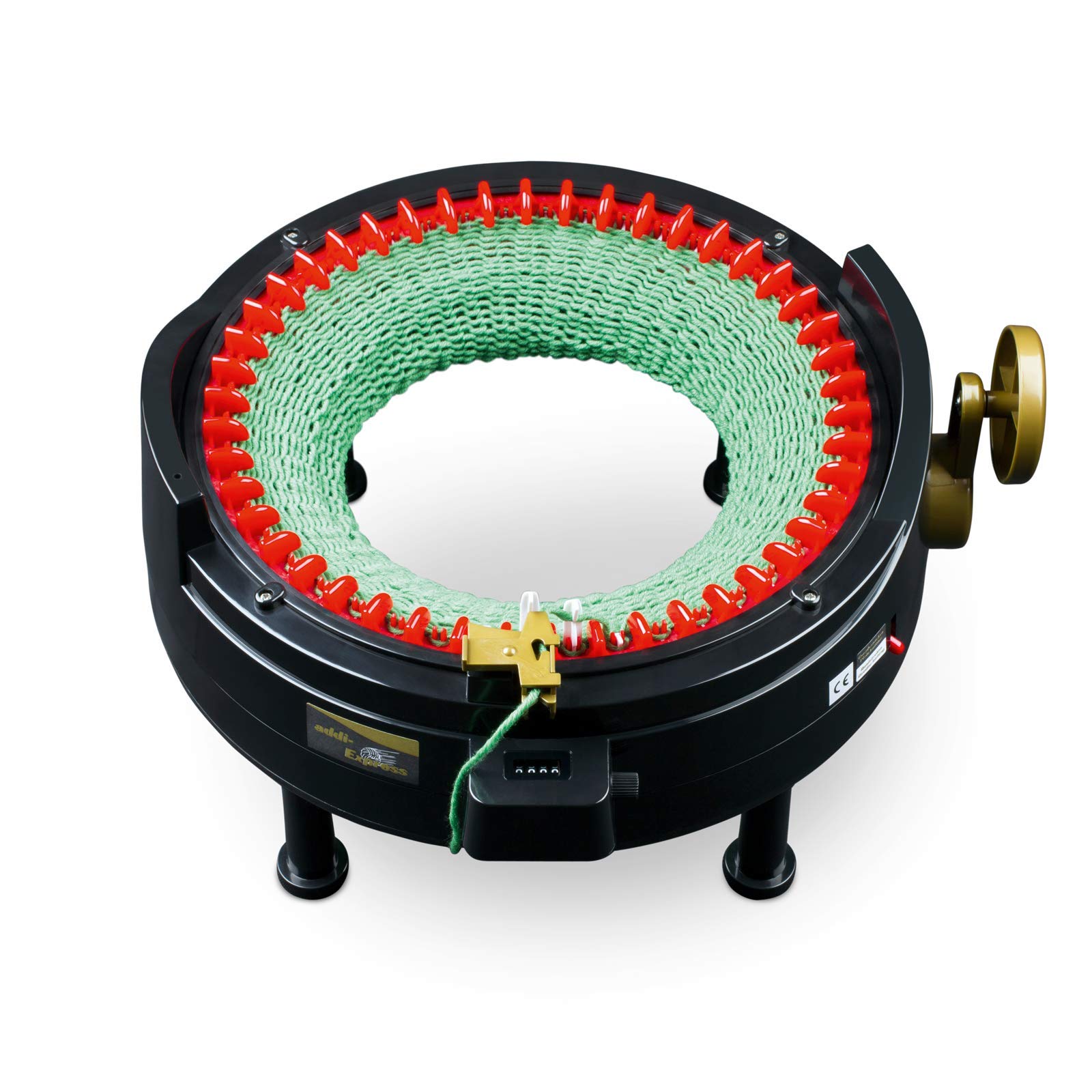
A 46-needle round machine with two knitting modes, built-in row counter, and a complete starter kit.
Why I picked it: Big circumference, two modes, and reliable operation make it my go-to for larger projects.
Best for: Wide scarves, blankets, ponchos, and beanies for adults.
More of an investment than toy alternatives, but built for hobbyist durability.
Pros
- 46-needle capacity for larger tubes
- Switches between circular and flat modes
- Built-in row counter
- Complete kit with clamps and spare needles
- Smooth, consistent stitch formation
Cons
- Plastic components can wear over heavy use
- Row counter may fail over very long-term use
My take
Out of the box the King Size felt sturdy and straightforward to set up. I used the clamps and feet to lock it to my worktable and threaded it with a variety of yarns.
What impressed me most was the consistency: I turned the hand crank at a steady pace and the machine produced even stockinette tubes with no popping or binding. Compared to cheaper machines I’ve tried, this one dropped far fewer stitches and handled different brands of yarn without fuss.
I relied on the built-in row counter for pacing multi-panel projects, and the option to swap between circular (smaller tube) and the wider flat panel mode let me move from hats to blanket panels without needing another machine.
A couple of practical notes from hands-on use: keep an eye on yarn weight — very bulky yarns can jam needles — and expect a bit of a learning curve when tensioning the yarn by hand. Also, I did experience a counter failure in extended use, so I treat the counter as a helpful guide rather than the only way to track rows.
2. Addi Express (22-needle) – Best Compact
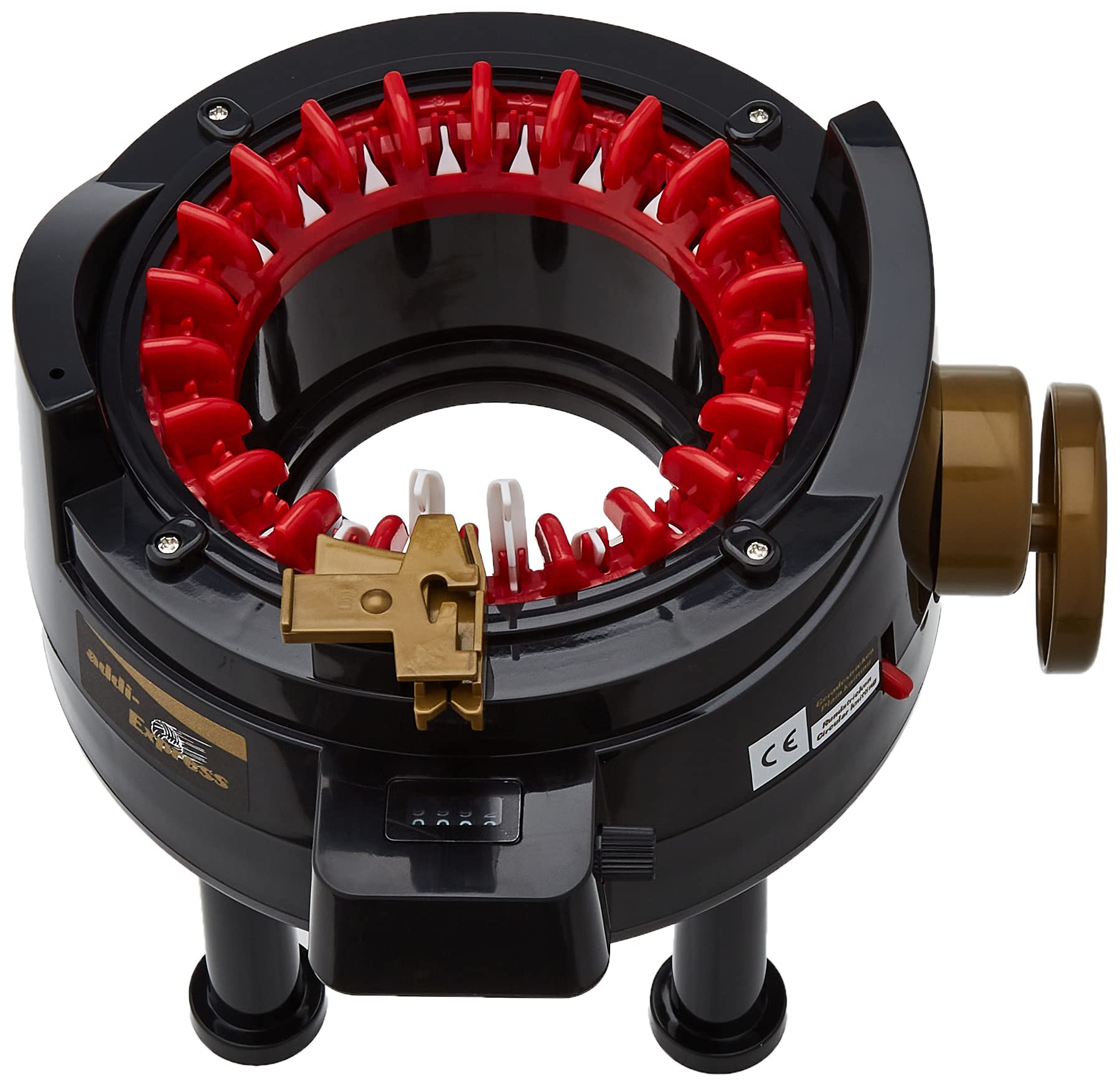
A small, precise 22-stitch machine that’s ideal for tubular fabrics and small panels.
Why I picked it: Compact size and neat stitch quality make it perfect for small and novelty projects.
Best for: Headcovers, golf club covers, child-size hats, and small tubes.
A more affordable entry point than larger machines.
Pros
- Compact and portable
- Produces even tubular fabrics
- Includes spare needles and clamps
- Easy to thread and operate
Cons
- Limited stitch width
- Requires practice to avoid dropped stitches
My take
I reach for the 22-needle Addi whenever I want a quick, tidy tube. It’s lighter and easier to manage on my lap than the big king-size unit.
Setting up takes minutes: feet, clamps, threading, and I was knitting. The machine makes neat, consistent stitches when I match speed to yarn — go too fast and it can skip, so I learned the best crank rhythm for each yarn type.
I’ve used it for golf club head covers and small beanies in school colors; the finished fabric is even and professional-looking. Expect a short learning period to find the right pace and tension, but once dialed in it’s a dependable little workhorse.
3. Quick Knit Power Adapter (22/40/48 compatible) – Best for Power Users
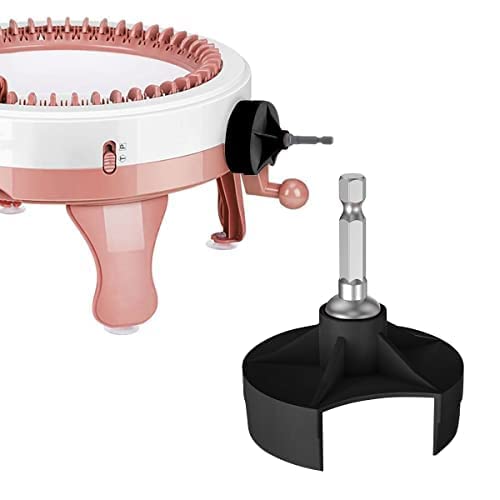
A crank-to-drill adapter that lets a standard electric screwdriver drive 22, 40, and 48-needle machines.
Why I picked it: Dramatically reduces manual cranking time while fitting several machine sizes.
Best for: Knitters who want faster row speeds without constant hand cranking.
A very affordable way to speed up repetitive work.
Pros
- Fits 22/40/48-needle machines
- Uses a standard 1/4" hex bit
- Simple to install and remove
- Saves wrist fatigue
Cons
- Can overheat if run too fast
- May stress plastic crank over time
My take
I installed this adapter on my 48-needle machine to cut down hours of hand cranking. Installation was straightforward once I snugged the adapter onto the crank and secured the hex bit in my electric screwdriver.
When I kept drill speeds moderate (the manufacturer and my experience both point to about or below 180 RPM), it sped up progress without incident. It’s tempting to go faster, but I learned the hard way to resist that impulse — high speed creates heat and friction, which can weld plastic parts together or warp the crank.
After a few runs the adapter seated more smoothly and the knitting rhythm felt natural. For long sessions I still alternate between powered and manual operation to limit stress on the machine’s plastic components.
4. Knitting Adapter for Sentro, Jamit, Loops & Threads – Best Compatibility
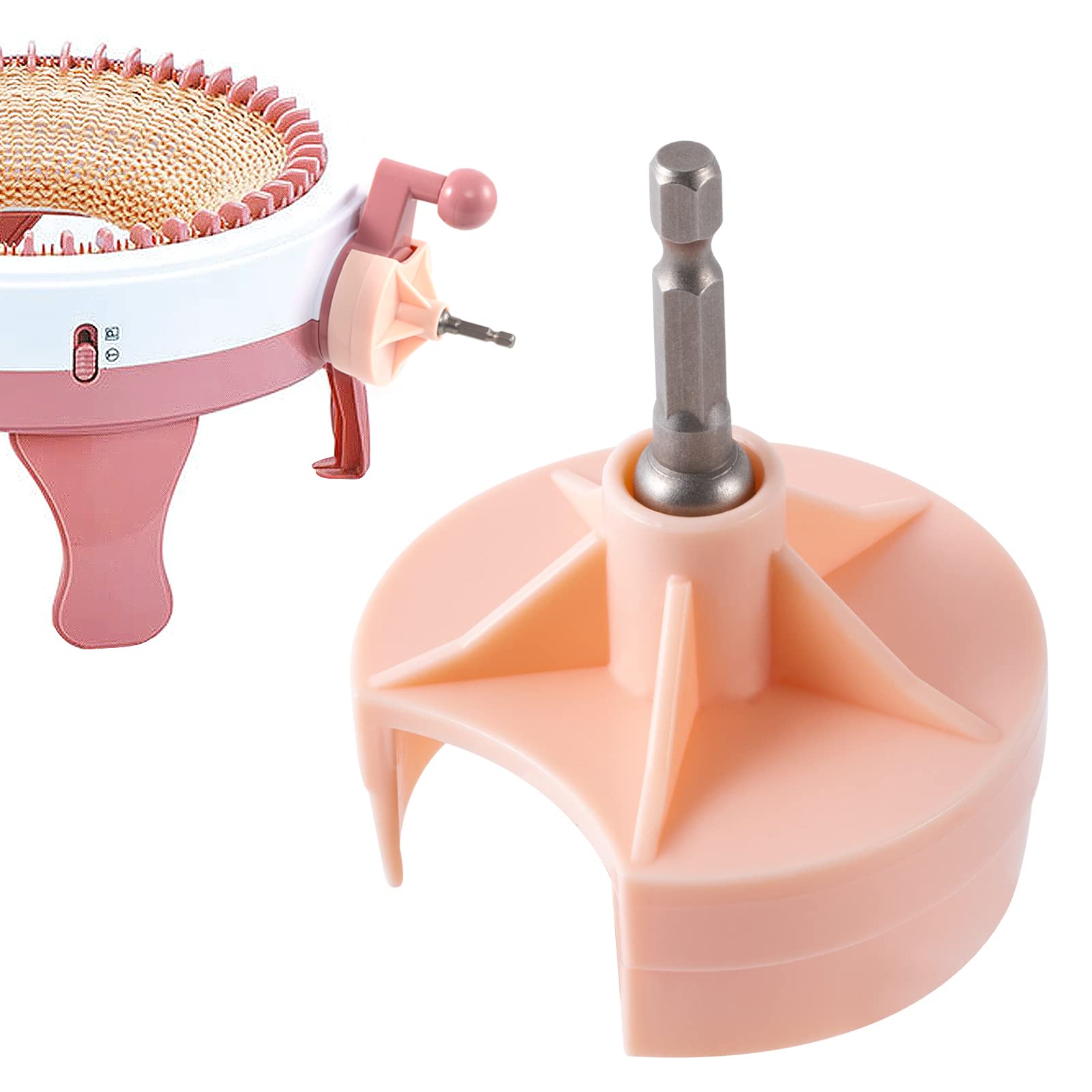
A PETG crank adapter and 1/4" hex bit designed for Sentro, Jamit, and Loops & Threads machines (not Addi).
Why I picked it: Works with several popular non-Addi brands and includes the hex bit.
Best for: Owners of Sentro, Jamit, and Loops & Threads machines wanting powered operation.
Low-cost accessory for powering hand-crank machines.
Pros
- Compatible with multiple non-Addi machines
- Includes hex steel bit
- Easy to fit and remove
- Saves hand effort
Cons
- Not compatible with Addi express
- Friction can melt plastic if overused
My take
I bought this for a Sentro 48 and it made long sessions much easier — installation was quick and the hex bit fit my electric screwdriver without extra adapters.
The adapter did exactly what I wanted: freed my hands and accelerated row counts. That said, I kept drill speeds low and checked the crank periodically. Running it too hard produced slipping and heat buildup that can deform plastic parts.
If you have a Sentro or Jamit model, this is a helpful, inexpensive way to move from hand power to electric. If you own an Addi, note that fitment is loose and I wouldn’t rely on it.
5. Addi Express King Size Extended Kit – Best Kit
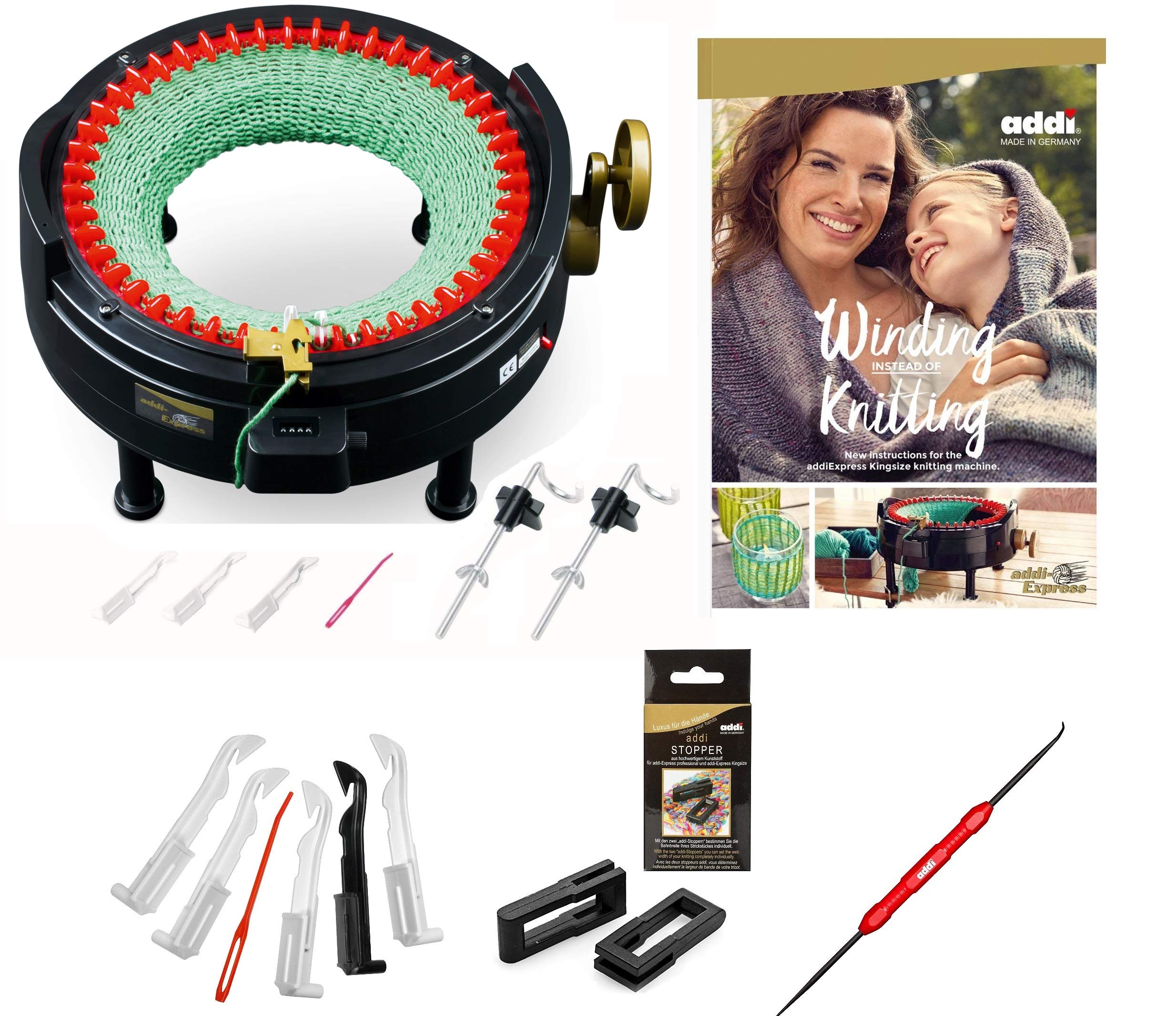
King-size machine with a pattern book, express hook, and replacement needles — made in Germany and suited to yarn counts 4–8.
Why I picked it: Comes with extra tools and a pattern book that extend what I can make and try.
Best for: Knitters who want patterns, an express hook, and wider flat-panel capability.
A premium kit option for makers who want extra tools and guidance.
Pros
- Includes pattern book and express hook
- Supports yarn counts 4–8
- Wider flat knitting capability
- Made in Germany
Cons
- Requires patience to master flat panels
- Not beginner-friendly without practice
My take
This extended kit arrived with everything I needed to experiment: the machine, a pattern book, an express hook geared for more complex techniques, and replacement needles.
I used it to make a variety of hats and panels. Needles gripped well and I had no slipping when I stayed within the recommended yarn counts. The pattern book proved useful for ideas and for learning sequences beyond basic tubes.
Practical caveats from my hands-on time: flat-panel knitting demands more attention to tension and technique than circular knitting. I spent time with tutorial videos to work out consistent tension, but once I did, the results were polished enough to gift. Because I use these machines a lot, I eventually purchased a second unit — I do recommend regular maintenance and gentle use if you intend heavy production.
How I Choose a Knitting Machine or Adapter
Needle Count and Project Size
I match needle count to project scale: 22 needles for small tubes and covers, 46–48 needles for adult hats and wide panels.
If I want large flat panels or wider circumference hats, I choose a king-size or extended kit.
- 22 needles = compact tubes, child hats, novelty items
- 46–48 needles = adult hats, blankets, wide scarves
Yarn Compatibility and Tension
I always check recommended yarn counts; too bulky yarn can jam needles and too fine yarn may not form clean stitches without adjustments.
I control tension with my free hand and test a small swatch before committing to a long run.
- Look for machines supporting yarn counts you use most
- Practice tensioning with scrap yarn first
When to Use a Power Adapter
A drill adapter saves time on long projects, but I only run it at medium speeds to prevent heat and plastic deformation.
I alternate powered knitting with manual cranking to reduce stress on the machine and crank.
- Use a standard 1/4" hex bit drill or electric screwdriver
- Keep speeds under roughly 180 RPM for safety
- Monitor for heat and stop immediately if plastic softens
Accessories and Maintenance
I value kits that include spare needles, hooks, and clamps — these make setup and repairs straightforward.
Regularly clean lint and check needle alignment; replace worn needles to maintain stitch quality.
- Clamps and feet improve stability
- Carry spare needles and a threading tool
- Inspect crank and plastic parts after heavy use
Frequently Asked Questions
Can I electrify any round knitting machine?
In my experience, many machines accept a 1/4" hex adapter, but fit and tolerance vary. I only use adapters specified for my machine family and always keep drill speeds moderate to avoid damage.
Which machine is best for beginners?
I usually recommend the 22-needle Addi for beginners because it’s compact and forgiving; start with simple tubes and low-speed practice before moving to larger machines.
How do I avoid dropped stitches?
I control yarn tension with my free hand, find a comfortable crank speed, and correct any missed stitches immediately. Regularly checking needle condition also helps prevent drops.
Are pattern books worth it?
I find pattern books and express hooks extremely helpful when I want to push beyond basic tubes — they speed up learning and inspire project ideas.
Final Take
If you want a workhorse for wider projects, I stick with the Addi King Size for its capacity and reliability. For small, quick projects the 22-needle Addi is my portable favorite.
For long sessions I use a power adapter but only at controlled speeds and with regular checks for heat and wear. Choose the combination that matches your project scale and how much tinkering you enjoy.
Whichever option you pick, practice tension control and keep spare needles and basic tools on hand — those small habits make a huge difference in finished results.
