
I tested connectors and solar pathway lights so you can pick the right hardware and decorative lighting for your yard. These are the options I reach for when I want reliable connections or attractive, long-running solar-
I installed and lived with each of these landscape lighting products so I could compare practical performance, durability, and ease of installation.
My focus was twofold: dependable low-voltage connectors for wired path lighting and decorative solar stakes that actually deliver usable light and weather resistance.
Below I explain why each product earned a spot in my toolkit and how I use them on real paths, driveways, and around barns and patios.
I chose two connector packs and two types of solar pathway lights to cover common needs: small- and large-project wiring, decorative ranch-style markers, and a higher-end glass-and-steel solar option. I note where each shines and where I’d choose a different option based on brightness, build materials, and installation style.
1. SUNVIE Low Voltage Wire Connectors (12 Pack) – Best for Small Runs
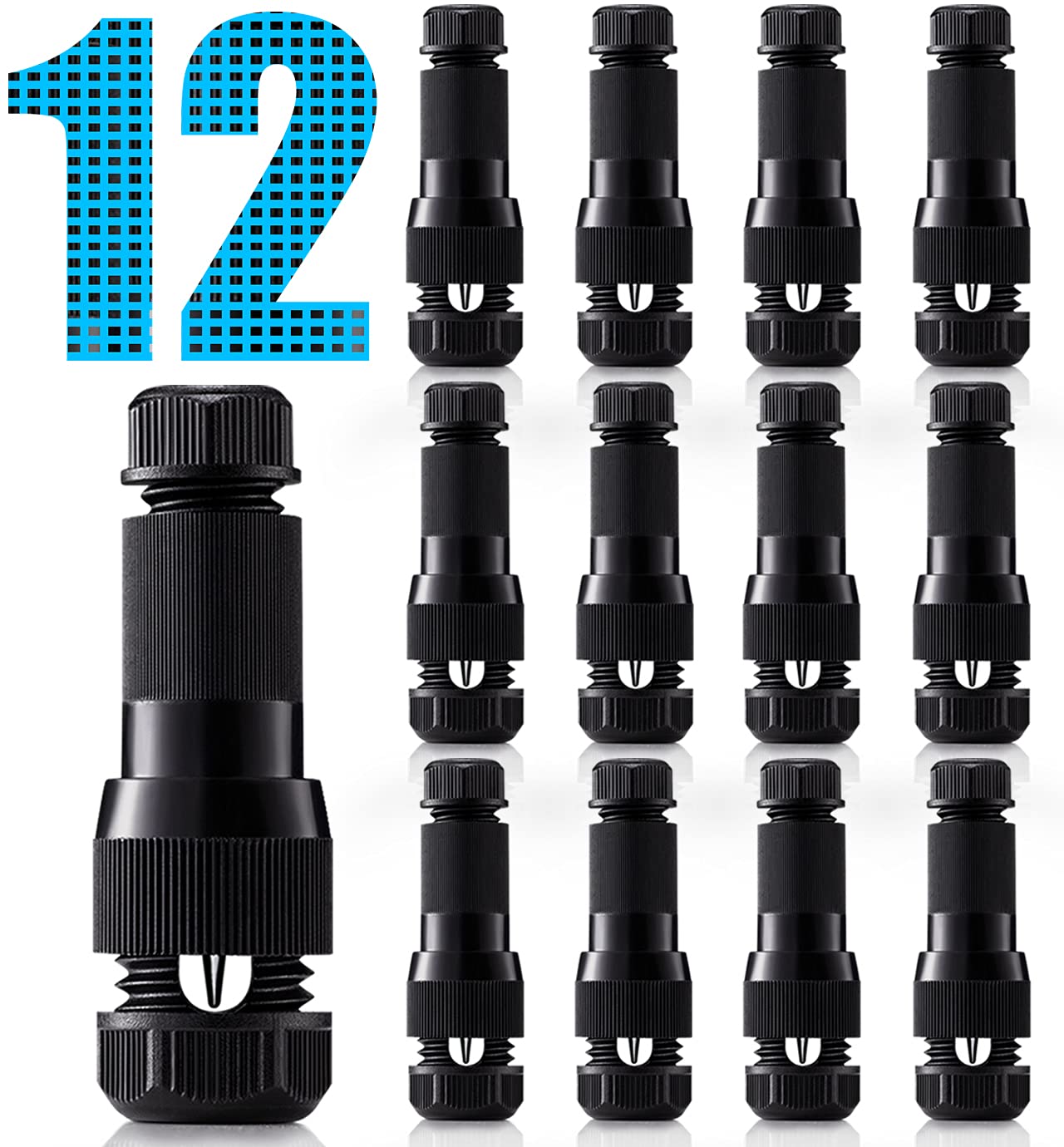
A compact 12-pack of screw-tight low-voltage connectors built for 12–14 gauge landscape wire; fast to install and useful for small path lighting runs.
Why I picked it: Screw-tight design and CNC-machined pins make connections quick and reliable for short runs.
Best for: Small path projects, quick replacements, and garden fixtures.
Affordable option for homeowners and DIYers.
Pros
- Screw-tight, no crimping needed
- Works with 12–14 gauge wire
- Nickel-plated pins improve conductivity
- Easy, tool-free installation
- 12 connectors in the pack
Cons
- Plastic thread screws can strip
- Tighter fit on thicker 12-gauge wire
My take
I keep a pack of these on hand for small landscape runs because they make low-voltage hookups fast: push the probe in, tighten the screw, and the connection holds. The screw-tight design removes the need for splicing or crimping, which saved me time on a few short 60-foot runs where I added five fixtures each.
The connectors feel solid — nylon reinforced with fiberglass and plated pins — and I observed good contact where the probe pierced the supply line. I did notice a slight gap around the individual light leads in some installations, so I sometimes add a dab of silicone to those junctions if I’m burying them directly.
A few caveats from my time using them: the plastic screw threads can strip if you force them, so I tighten carefully, and on very thick 12-gauge conductors the fit can be snug. For most garden and path installs these are a fast, reliable choice.
2. Moon & Horse Solar Garden Stakes – Best Decorative Solar Pair
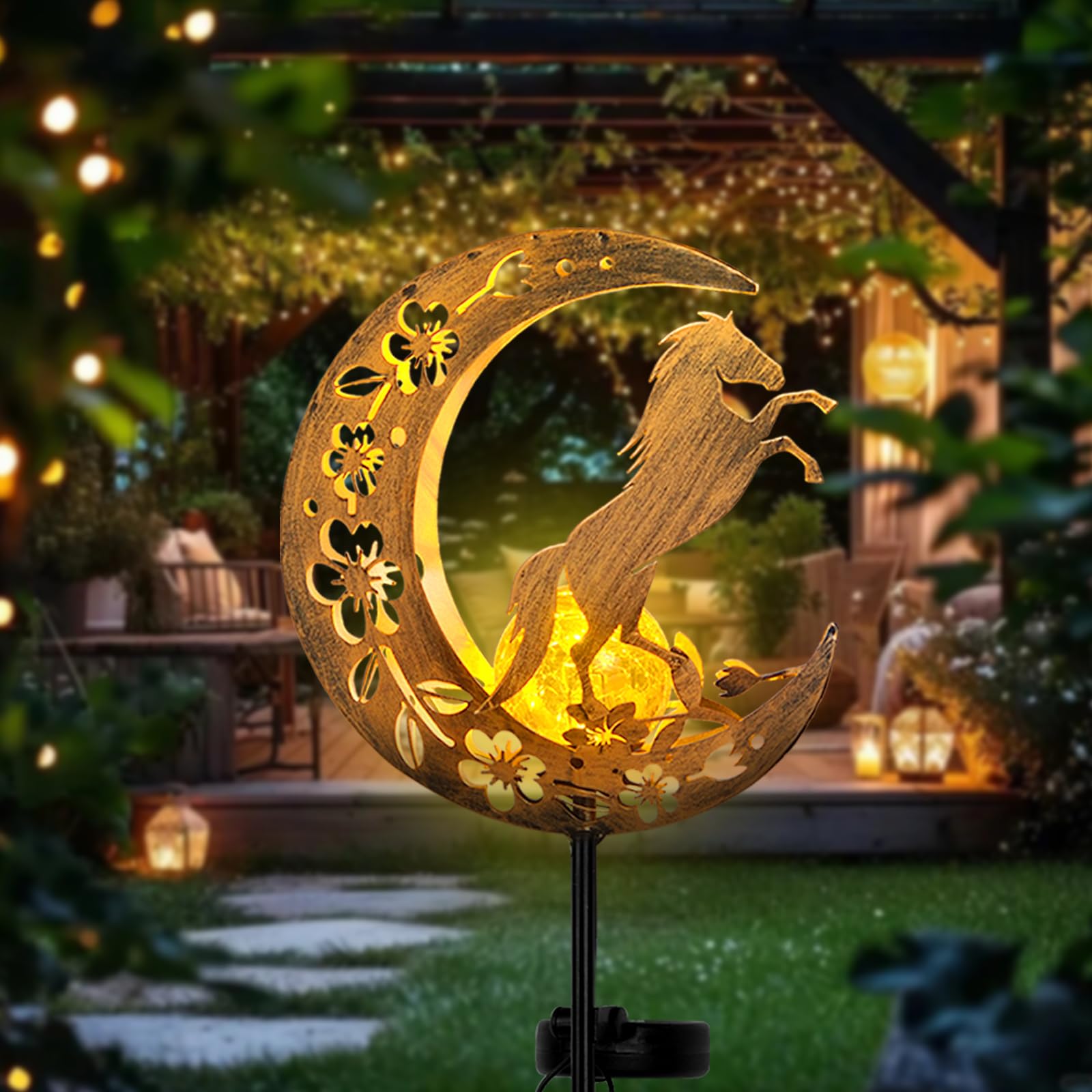
Decorative horse-and-moon solar stakes that add ranch-style charm and provide warm white illumination on an automatic dusk-to-dawn cycle.
Why I picked it: Distinctive western design and true dusk-to-dawn operation make them a decorative way to mark paths and barn entrances.
Best for: Equestrian properties, themed gardens, and decorative pathway markers.
Budget-friendly decorative option.
Pros
- Unique horse-and-moon silhouette
- Auto dusk-to-dawn operation
- Runs 8–10 hours after full charge
- Rust-proof metal construction
- Tool-free stake installation
Cons
- Not bright enough for task lighting
- On/off switch can be unclear
My take
I put these along a driveway and near a barn door to add character more than to brighten the area. The warm white LEDs create a pleasant glow and the horse-and-moon cutouts cast neat silhouettes that I get compliments on from guests.
Setup was effortless—remove the protective film over the solar panel and give them a day of good sun. In my experience they ran well into the night after a full day, roughly matching the listed 8–10 hour runtime under good solar exposure.
These lights are built to handle weather; the metal bodies resist rust and the stakes install without tools. If you need bright walkway illumination for safety, I’d pair these with a brighter option, but for ambiance and ranch-style accents they’re exactly what I reach for.
3. XMCOSY+ Glass & Stainless Steel Solar Pathway Lights – Best Premium Solar
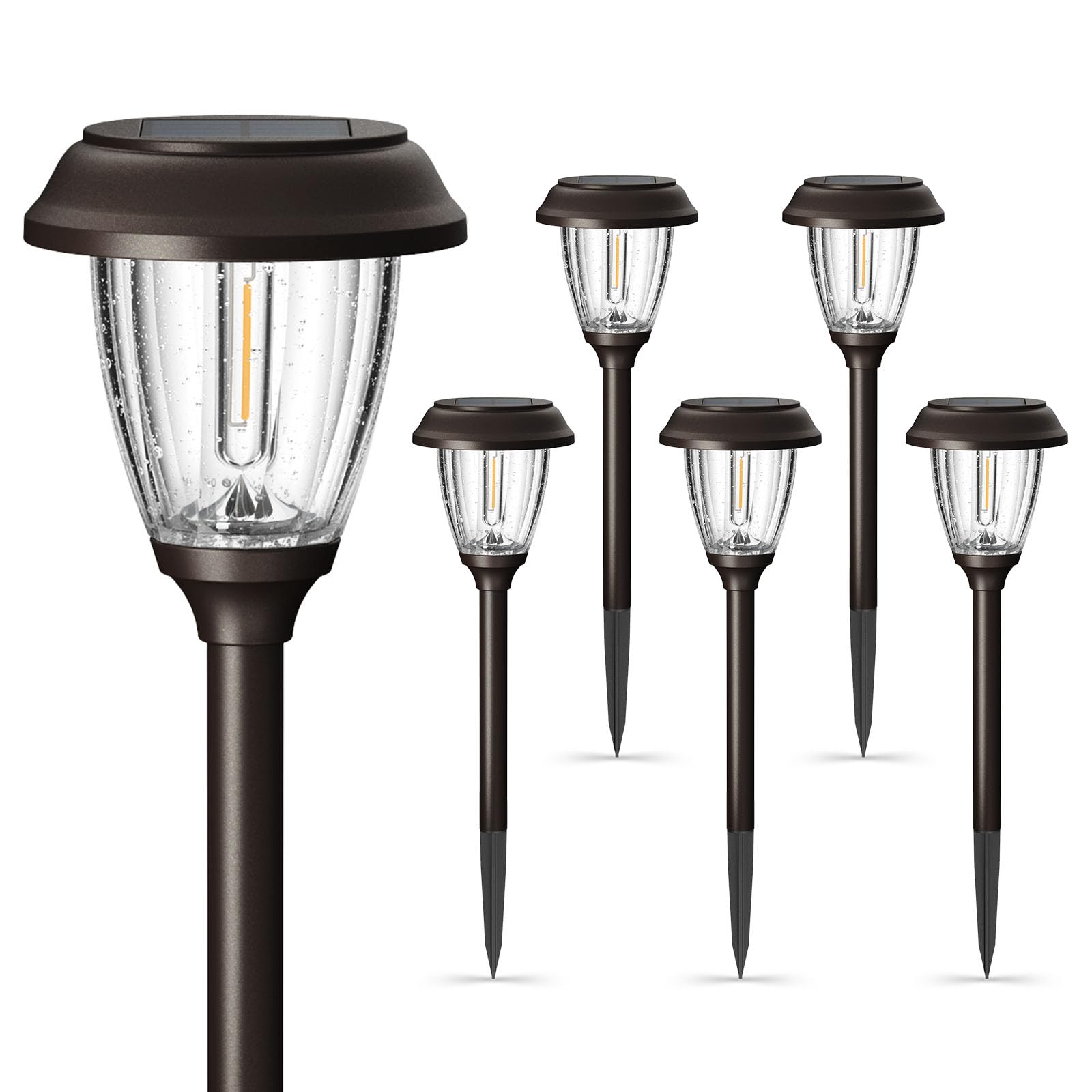
Higher-end solar pathway lights with bubble glass shades, stainless steel body, two brightness modes, replaceable battery, and IP65 weather resistance.
Why I picked it: Premium materials, replaceable battery, and two brightness modes give me flexibility and a long-term solar solution.
Best for: Homeowners wanting durable, upscale-looking solar pathway lighting.
More premium option with replaceable battery.
Pros
- Thick bubble glass shades
- Dual brightness modes (10 / 25 lm)
- Replaceable rechargeable battery
- IP65 weather resistant
- Stainless steel construction
Cons
- Glass can break if knocked over
- Needs 4–6 hours sun for all-night
My take
These are the solar fixtures I choose when appearance matters. The seeded bubble glass and bronze-finish stainless steel give a street-lamp look that integrates well with planted borders and patios.
Functionally, the two-mode output is useful: I use the lower 10-lumen mode when I want ambiance all night and the 25-lumen mode when I want a stronger glow during shorter winter days. The replaceable battery is a big win for me — I’ve swapped cells in hot-weather installations rather than replacing the whole fixture.
A quick tip from installation: the ABS-reinforced ground stakes are packed inside the tubes, so pull them out and assemble fully before forcing into soil. I also space these 6–8 feet apart for even coverage; close spacing looks cluttered and reduces the perceived brightness per unit.
4. SUNVIE Fastlock Wire Connectors (16 Pack) – Best for Larger Jobs
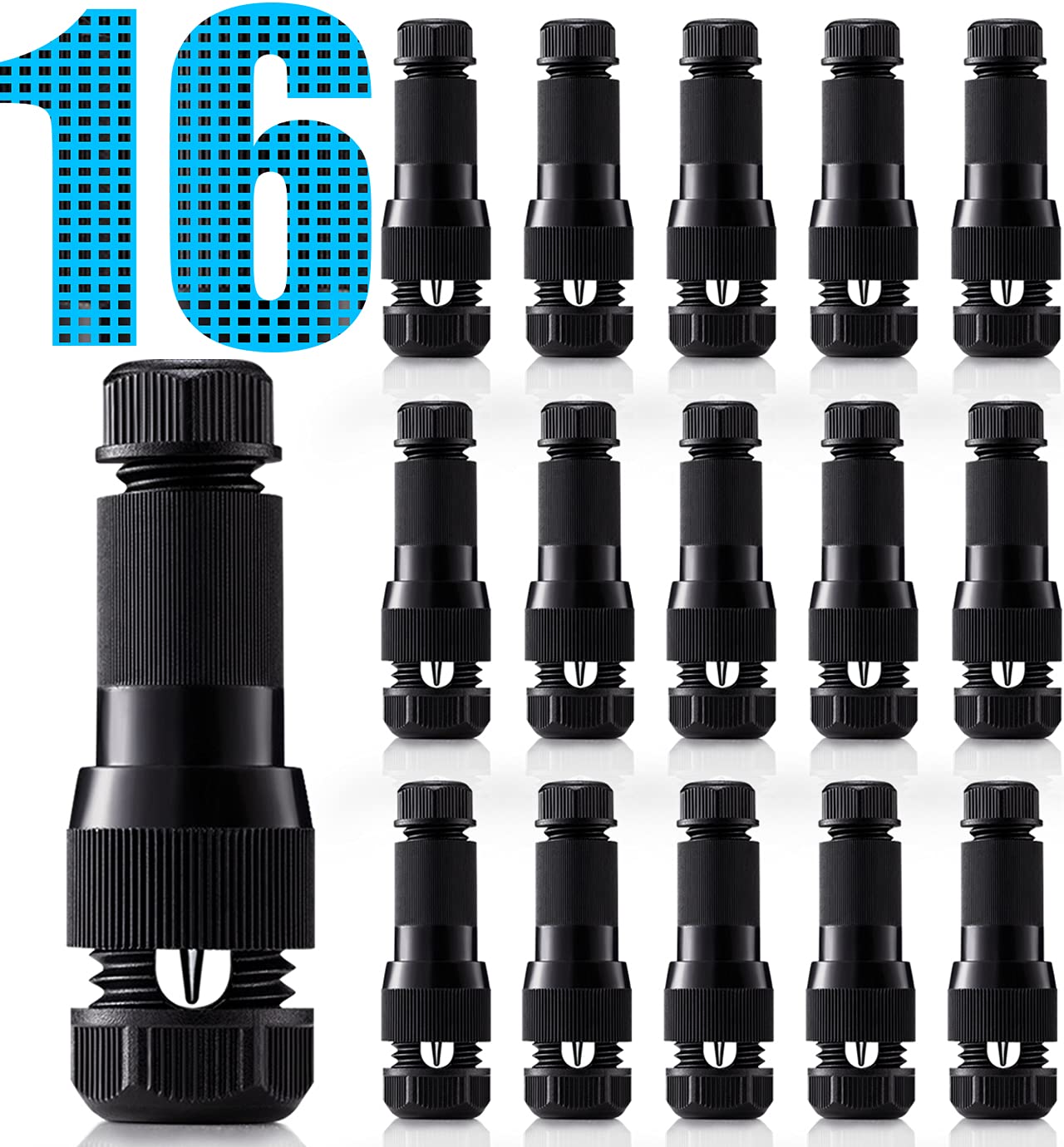
A 16-pack of the same screw-tight low-voltage connectors, intended for larger installations or projects that require more junctions.
Why I picked it: Bigger pack and the same fast screw-tight system make longer runs and multi-fixture installs easier.
Best for: Larger landscapes, long runs, and multi-fixture installations.
Good value when you need more connectors for a big job.
Pros
- Larger 16-pack
- Screw-tight, no splicing
- Designed for 12–14 gauge
- Durable nylon body
- Quick installation
Cons
- Plastic housings can degrade over long UV exposure
- Some batches may use different pin metal
My take
When I’m wiring several fixtures or larger paths, I buy the 16-pack for the obvious volume advantage. The same screw-tight approach applies: install the connector on the fixture leads and then connect to the main line for the easiest workflow.
I’ve used them buried without additional sealant in wet climates and found several connectors still clean and functioning after long seasons of rain, which speaks to their practical durability. That said, I pay attention to the pin metal when I open the pack; some connectors in similar product lines have used steel pins in certain batches, so I inspect and replace any questionable pieces on jobs where corrosion would be a real issue.
Overall these are the connectors I reach for on larger installs because they save time and simplify troubleshooting later on.
How I Choose Landscape Path Lights and Connectors
Decide between wired and solar
I think about the goal first: security or visibility favors wired low-voltage fixtures tied to a transformer, while ambiance and easy placement favor solar stakes.
If you need consistent brightness across seasons, I recommend wired systems; if you want quick, tool-free installs and decorative markers, solar can be the better fit.
- Wired: Reliable output, needs trenching and connectors
- Solar: Simple placement, depends on daily sun exposure
Connector selection and installation tips
For low-voltage landscape wiring I favor screw-tight connectors that work with 12–14 gauge wire because they eliminate splicing and crimping and make replacements straightforward.
I install connector-on-fixture-first, then connect the main line — that order makes tightening and access easier on the workbench versus doing the opposite in a trench.
- Test fit conductor size before finalizing connections
- Tighten screws to hand-firm; avoid stripping plastic threads
- Add silicone where you’ll bury a junction for extra moisture protection
Solar light placement and performance
I position solar stakes where they get maximum direct sun for most of the day; 4–6 hours of good sun is typically needed for overnight operation on many models.
Spacing matters: for decorative pathway glow I stick to 6–8 foot spacing; closer spacing doesn’t necessarily increase perceived brightness and can look crowded.
- Remove protective films over panels before first use
- Consider dual-mode fixtures to balance runtime and brightness
- Choose replaceable-battery models in hot climates
Materials and durability
I prefer stainless steel and glass for an upscale look, but know that glass adds fragility; use those where they’re unlikely to be knocked over.
For buried connectors, I prioritize corrosion-resistant pins and reinforced nylon housings and will add external sealing for installations that will sit directly in wet soil.
- Stainless steel + glass = premium appearance
- Plastic + brass pins = lightweight, often durable
- Seal buried connections in flood-prone areas
Frequently Asked Questions
Can I use these connectors with 12- and 14-gauge wire?
Yes — I use the SUNVIE screw-tight connectors specifically for 12–14 gauge low-voltage landscape wire. I always test a connector on a spare length first to confirm fit before finalizing multiple junctions.
How long will solar path lights run at night?
From my experience, well-charged solar stakes commonly run 8–10 hours on a full day of sun, but runtime depends on panel exposure, seasonal daylight, and the mode chosen (low vs. high output).
Are glass solar lights worth it?
I choose glass-and-stainless fixtures when look and light diffusion matter. They deliver a nicer glow and feel more substantial, but I protect them from being knocked over and accept the trade-off of potentially higher fragility.
Final Take
I use the SUNVIE connector packs when I want fast, reliable low-voltage connections — the 12-pack for small jobs and the 16-pack for larger installs.
For decorative pathway lighting I reach for the Moon & Horse solar stakes; for a more finished, durable solar look I prefer the XMCOSY+ glass-and-stainless option with replaceable batteries.
Match the product to your priorities — durability and brightness for function, or form and ease-of-install for ambiance — and you’ll get landscape lighting that lasts and looks great.
