
I tested a range of moisture solutions from passive absorber bags to high-capacity compressor units. Here are the options I recommend for basements, large rooms, vehicles, and closets—organized by the job each one does.
I spend a lot of time solving humidity problems, so I tried both powered dehumidifiers and passive absorbers to see what actually works in real spaces.
In this roundup I focus on coverage, extraction rate, drainage options, noise, and ongoing operating effort so you can pick the right tool for your specific damp problem.
Below I explain which unit I’d use for a basement, a whole floor, a travel trailer, a car, and small storage spaces.
I compare portable compressor units for whole-room performance with passive and rechargeable absorbers that are low-effort solutions for small or enclosed areas.
1. Wisedry 500g Rechargeable Silica Gel Pack – Best Rechargeable Desiccant
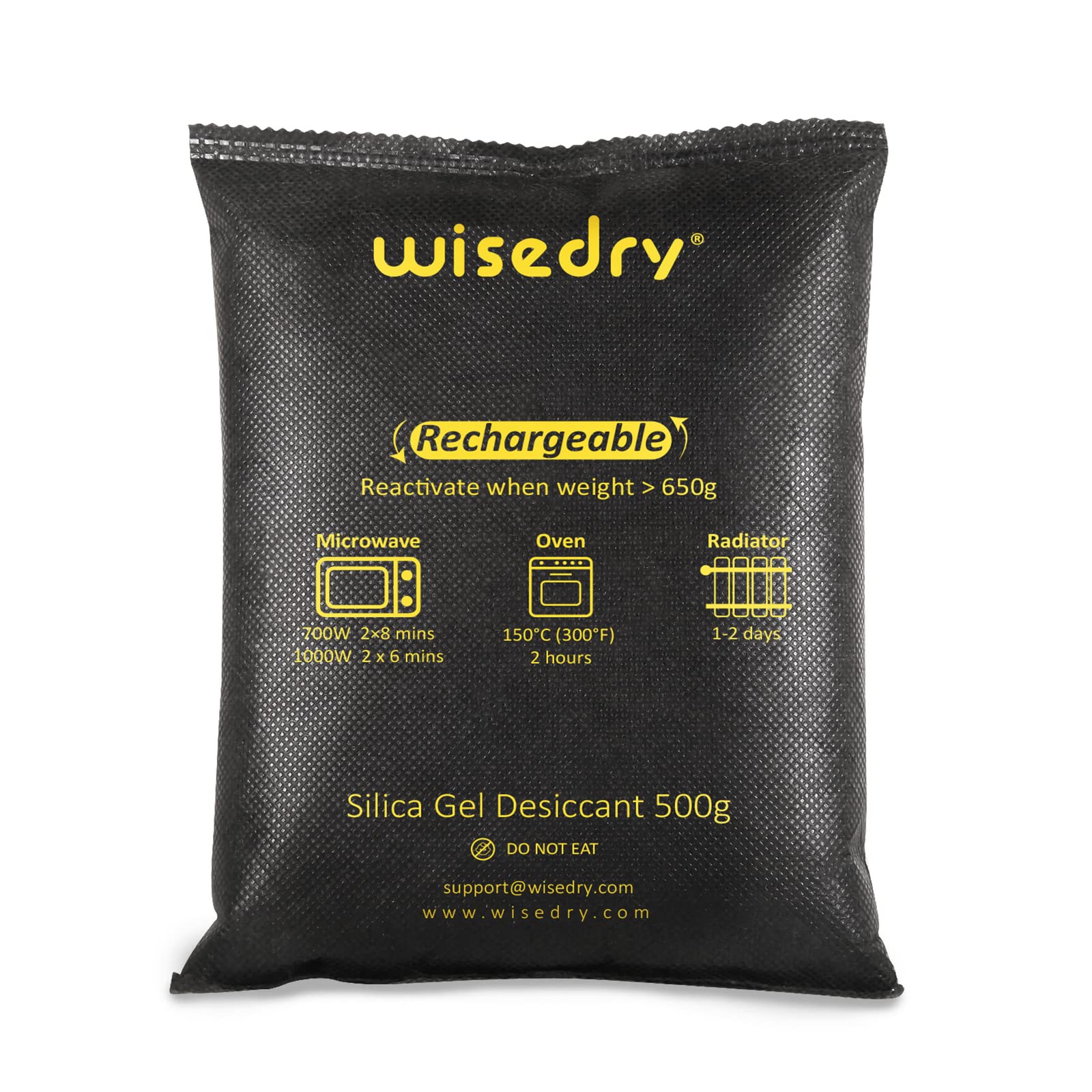
Large 500 g silica gel packs that absorb heavy moisture, change color to indicate saturation, and reactivate quickly in a microwave or oven for repeated use.
Why I picked it: I picked these for fast, reusable moisture control where power isn’t practical and quick recharge is a must.
Best for: Cars, gun safes, closets, tool rooms, boats and garages.
Affordable, reusable option that reduces long‑term consumable costs.
Pros
- Reusable via microwave or oven
- Large 500 g desiccant capacity
- Color-change indicator for saturation
- Fast 10–16 minute reactivation
Cons
- Needs periodic recharging
- Not intended for whole-house use
My take
I used multiple 500 g packs in a full-size SUV and noticed reduced window fog and a fresher interior within a day. In rainy weather with wet dogs onboard, the packs cut down condensation substantially.
Recharging is impressively quick—my oven method returned the beads to the active color in one cycle, and the manufacturer says these can be reused many times without problem.
These are simple to deploy: they arrive double-sealed, so they’re ready to use, and I like that they don’t require electricity. For cars and enclosed storage, they’re a low-effort fix that actually works.
2. Midea 22‑Pint Wi‑Fi Dehumidifier – Best Compact Electric
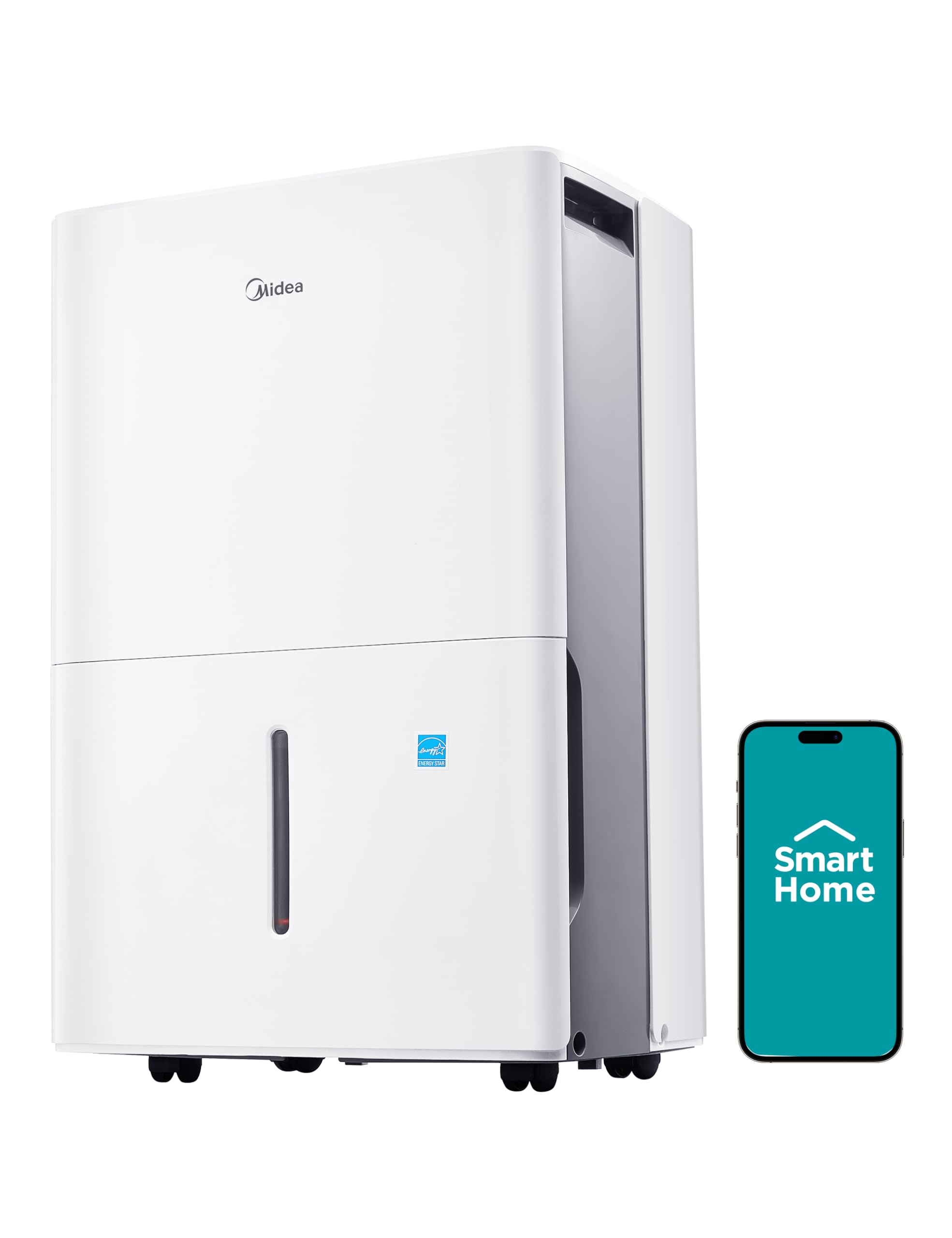
A compact compressor dehumidifier rated for about 1,500 sq. ft. that removes up to 22 pints per day, runs quietly, and offers Wi‑Fi and voice control.
Why I picked it: I picked this model for medium rooms where smart control, quiet operation, and portability matter.
Best for: Bedrooms, medium basements, bathrooms, and apartments.
Mid-priced and energy-efficient for frequent use.
Pros
- Wi‑Fi and voice control
- Energy Star certified
- Quiet 47 dBA operation
- Easy continuous drainage option
Cons
- Unit generates noticeable heat
- Small tank requires attention
My take
I ran this Midea daily in a mid-sized bedroom and found it effective at pulling moisture; the room felt less clammy within hours.
The Wi‑Fi controls and timer make it easy to schedule runs when I’m away, and the 360° wheels made moving it between rooms painless.
A caution: the unit does run warm. In a small, already-warm room I noticed thermal output that’s worth factoring into placement. Otherwise the combination of quiet operation and smart features makes it a workhorse for living spaces.
3. Yaufey 31.6‑Pint Energy Star Dehumidifier – Best for Large Spaces
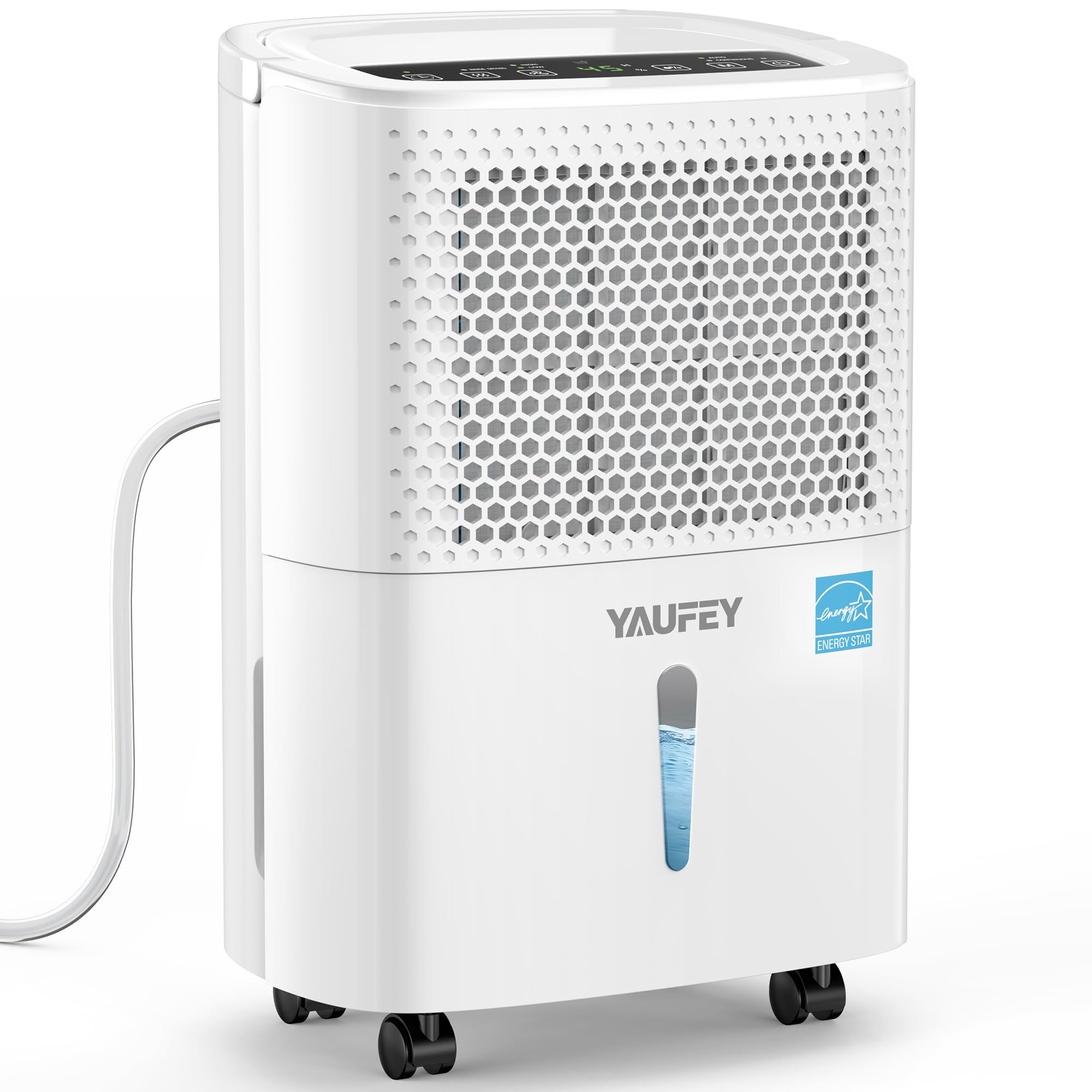
High-capacity compressor unit rated for up to 2,000 sq. ft. that removes over 30 pints per day and carries advanced features like auto-defrost and power‑on memory.
Why I picked it: I picked this for maximum extraction and strong energy efficiency across large areas.
Best for: Large basements, whole-floor dehumidifying, and big open rooms.
Higher-performance option with strong energy savings potential.
Pros
- High 31.6 pint daily capacity
- 2025 ENERGY STAR Most Efficient
- Auto-defrost and auto-restart
- Includes drain hose
Cons
- Larger footprint
- Heavier than compact units
My take
I hooked this Yaufey up in a damp finished basement and saw humidity drop substantially within hours. The large extraction rate made short work of the musty odor and persistent dampness.
It surprised me how quiet it runs for its size; I felt comfortable leaving it on overnight. The automatic defrost and power memory are useful—after a power blip it returned to my settings without fuss.
Because it’s designed for wider coverage, I’d recommend it when you need serious dehumidifying without the high running cost of older units.
4. AIUSEVO 21‑Pint Dehumidifier – Best Value Large Unit
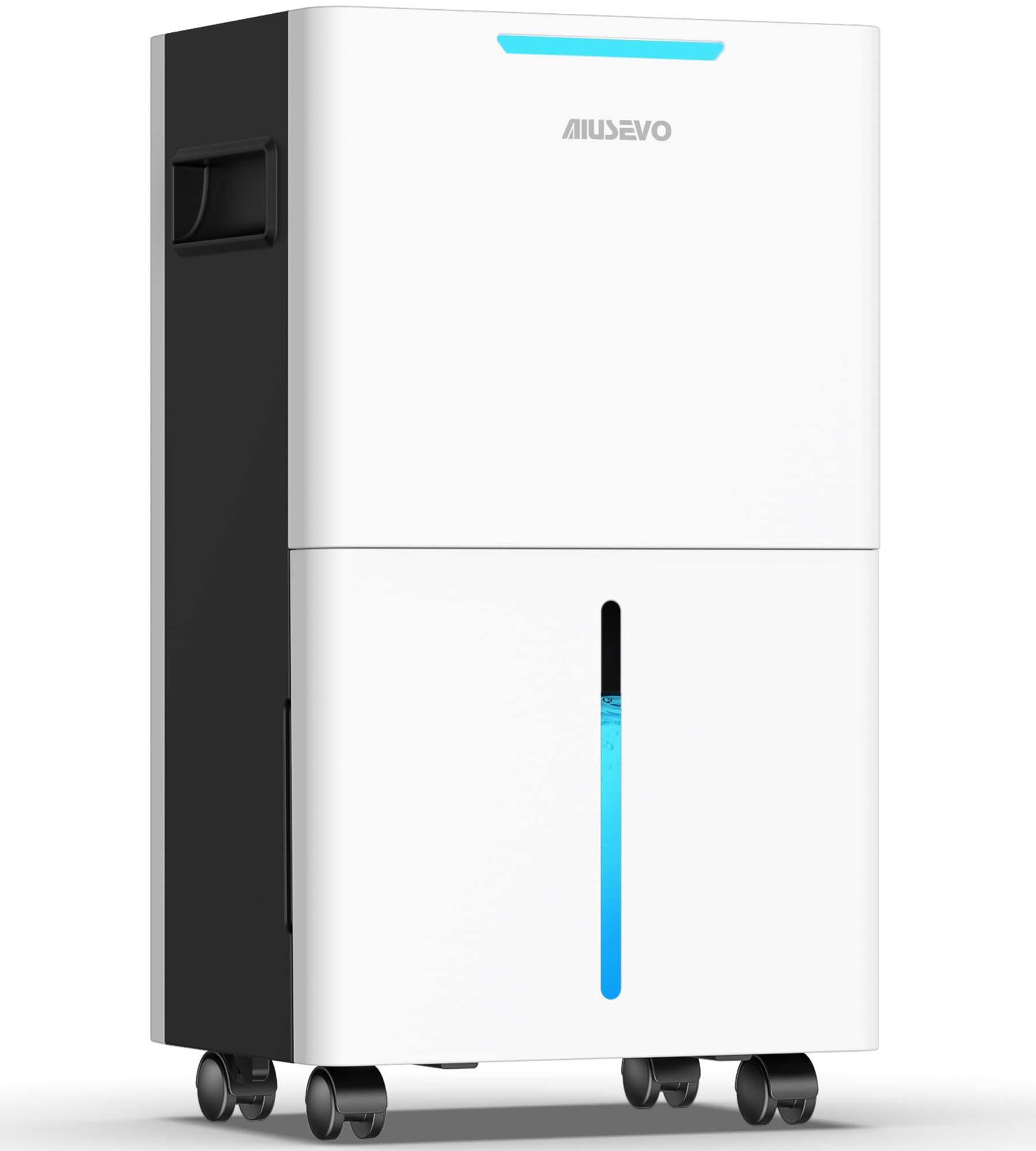
A 21‑pint compressor dehumidifier with three modes (DEHU/DRY/CONT), a 24-hour timer, and an included drain hose—designed for 1,500 sq. ft. spaces.
Why I picked it: I picked this for its balance of features, noise control, and price across typical basement and RV needs.
Best for: Basements, travel trailers, bedrooms, and laundry areas.
Good value—feature-rich without premium pricing.
Pros
- Three practical modes
- Included drain hose
- Quiet and portable
- 24-hour timer
Cons
- Control panel under plastic cover
- Tank small for high extraction rates
My take
I used this AIUSEVO in a travel trailer and noticed a night-and-day difference—no more sticky, steam-room atmosphere. Running it in CONTINUOUS mode removed a lot of moisture quickly.
The wheels and handles make it easy to move, and the 24-hour timer is handy for overnight runs. My only gripe: the settings pad sits under a thin plastic cover that needs a lighter touch to operate.
Overall it’s a dependable workhorse for people who need strong performance without a big investment.
5. CLEVAST Calcium Chloride Absorber Bags – Best Passive Moisture Bags
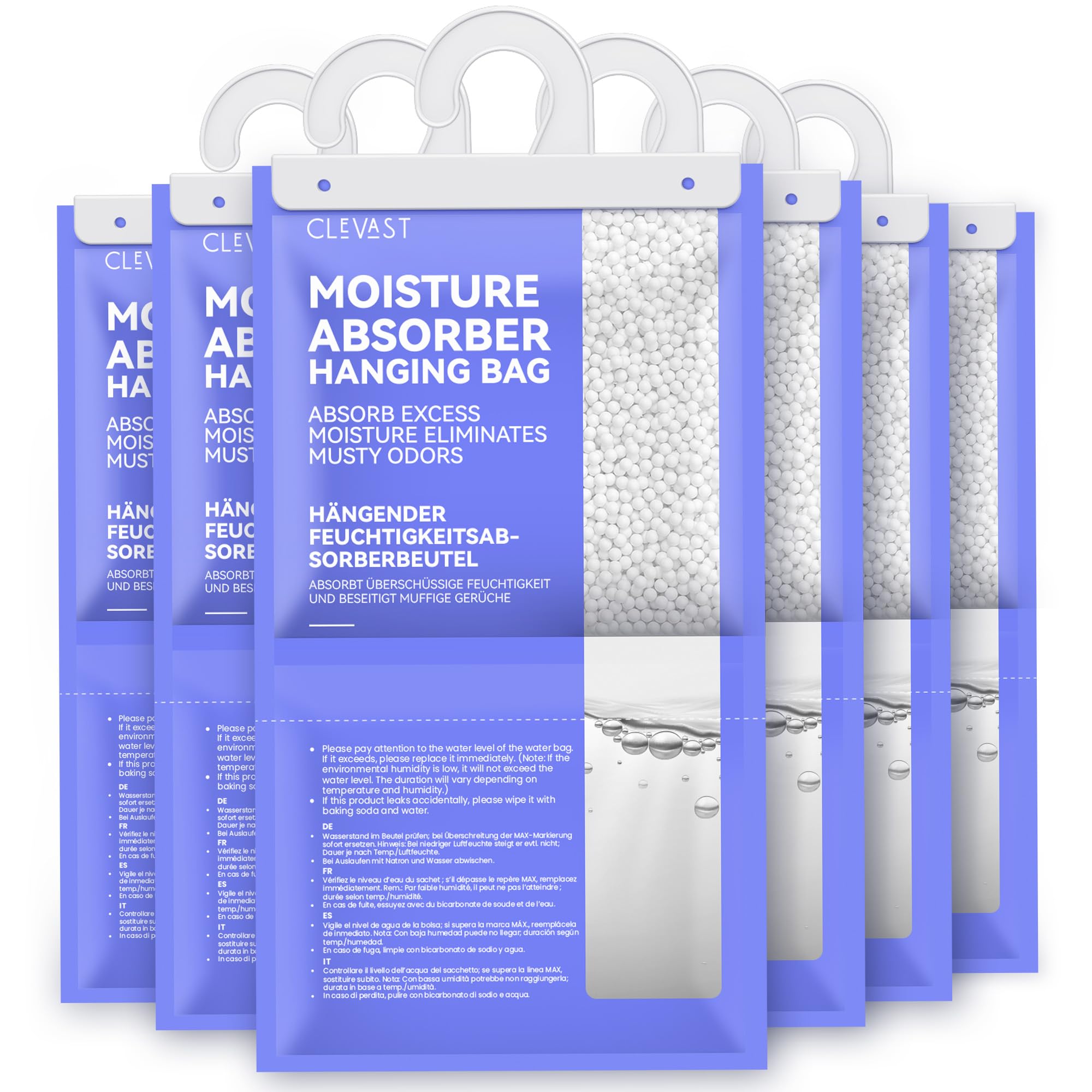
Passive calcium chloride bags that dissolve into liquid as they collect moisture; visible collection and up to around 60 days of use depending on conditions.
Why I picked it: I picked these when I needed a zero‑power, low‑effort option for closets and small enclosed spaces.
Best for: Closets, wardrobes, small bathrooms, and storage areas.
Very affordable passive solution without electricity costs.
Pros
- Works without power
- Visible water collection
- Long usable life in many conditions
- Hanging hook included
Cons
- Can become liquid and messy
- Not for direct contact with valuables
My take
I deployed these bags in bedroom closets and saw water accumulate in the collection pouch in a matter of days; damp smells diminished and clothes stayed fresher.
They’re completely hands-off while working, which makes them ideal where electricity isn’t available or where I don’t want a running machine.
One practical note: the top hanger is small and the pouch can fill and feel awkward if not checked regularly, so I pair these with a drip tray when I expect heavy condensation.
6. VEAGASO 34‑Pint Dehumidifier – Best for Whole‑House Coverage
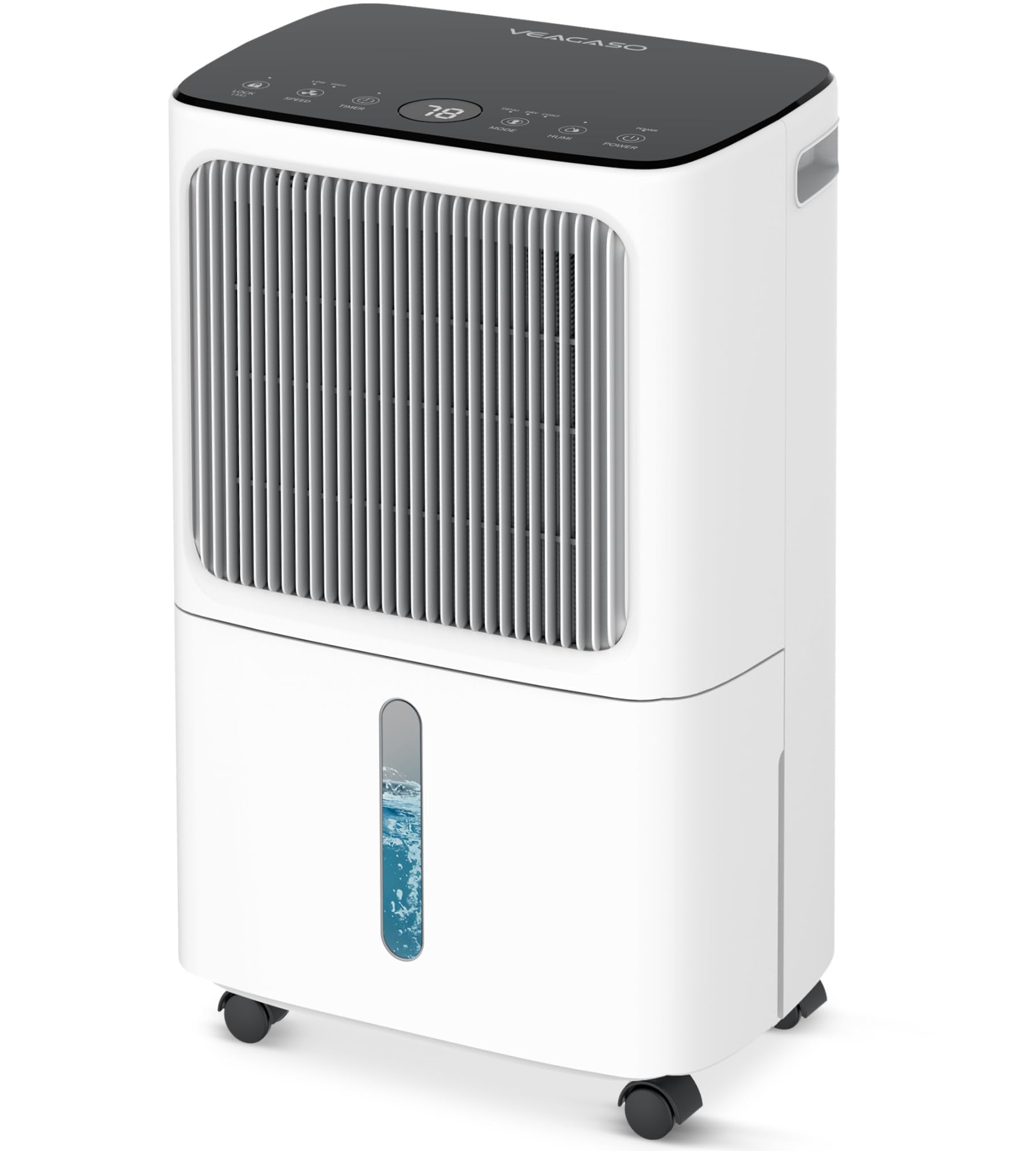
A heavy-duty 34‑pint unit rated for up to 2,500 sq. ft. with three smart modes, continuous drain options, and a user-friendly touchscreen.
Why I picked it: I picked this for large open areas where I needed sustained extraction and a robust build.
Best for: Large rooms, garages, whole-floor coverage, and serious damp problems.
Built for heavy use; solidly constructed for long shifts.
Pros
- High 34 pint daily capacity
- Front tank with viewing window
- Strong build and thick power cord
- Included drain hose
Cons
- Tank can spill if removed quickly
- Side discharge can feel cold in winter
My take
I placed this VEAGASO in a two-car garage and watched humidity fall from uncomfortable to comfortable over the course of a week. The unit handled continuous duty and drained easily through the hose.
It’s a solid-feeling machine—heavier and more robust than many cheaper options. The front tank and visible level make emptying straightforward, though I learned to remove the tank slowly to avoid splashing.
If you need coverage for very large or persistently damp spaces, this is the sort of unit that keeps going without needing constant babysitting.
How I Choose a Large Dehumidifier
Match capacity to space
I always start by estimating the square footage and the severity of dampness. A high-capacity unit (30+ pints) is worth it for basements and whole floors; smaller 20–22 pint units suit medium rooms.
For closets, cars, or safes I prefer passive or rechargeable desiccants instead of a powered compressor.
- Up to 1,500 sq. ft.: 20–22 pint class
- 1,500–2,000 sq. ft.: 30+ pint class
- Enclosed small spaces: passive bags or desiccant packs
Drainage and maintenance
I look for continuous drain options if I want unattended operation. Tank capacity matters only if you won’t use a hose; a small tank with a drain hose is fine for continuous duty.
Removable tanks should be easy to pull and empty without spilling.
- Choose a drain hose for overnight or continuous use
- Check tank shape and handle placement to avoid spills
Energy, noise, and placement
Energy Star certified units save electricity during long runs; I weigh that against upfront cost.
Noise and heat output affect placement—bedrooms need the quietest models, garages tolerate more noise and discharge heat.
- Look for Energy Star for efficiency
- Compare dBA if bedroom use is planned
- Avoid placing intake near open doors or windows
Features that matter to me
Smart controls, timers, auto-defrost, and power-on memory are convenience features I value for automated setups.
For portability, I prefer units with sturdy wheels and ergonomic handles.
- Auto-defrost for cold spaces
- Power memory when outages are common
- Wi‑Fi and timers for remote scheduling
When to choose passive solutions
I use passive calcium chloride or silica packs for small enclosed areas where I need a low-cost, no-power solution. They’re excellent for closets, seasonal storage, and cars.
Rechargeable silica gel works well when you want reusable performance without disposable waste.
- Passive bags: zero electricity, low maintenance
- Rechargeable desiccants: reusable, quick reactivation
- Choose powered units for whole-room or continuous problems
Frequently Asked Questions
How do I pick the right capacity?
I pick capacity based on square footage and moisture severity: smaller rooms typically need 20–22 pint units, while basements and whole floors benefit from 30+ pint machines.
Can I run a dehumidifier 24/7?
Yes—if the unit has continuous drain or you’re prepared to empty the tank. I prefer continuous drain for overnight or unattended operation to avoid frequent tank emptying.
When should I choose passive moisture absorbers?
I use passive absorbers in closets, small storage areas, and vehicles where electricity isn’t available or I want a low-maintenance fix.
Final Take
I recommend choosing a powered compressor unit when you need whole-room or persistent moisture control, and sticking with passive or rechargeable absorbers for small, enclosed spaces.
Match capacity to the area, pick the drainage style that fits your lifestyle, and consider noise and heat when placing the unit. Once set up, a properly chosen dehumidifier quickly makes a room more comfortable and protects belongings from moisture damage.
