
I tested four roomy, walk-in greenhouses so you can pick the right one for year-round seedlings, overwintering, or a dedicated potting station. I focused on frame strength, cover durability, ventilation, shelving, and on
I spend a lot of time starting seeds, overwintering tender plants, and expanding a small hobby-farm footprint, so I looked for greenhouses that give real usable space without a huge install process.
In this roundup I compared sturdy frames, heat retention, ventilation, shelving capacity, and how easy each unit was to assemble and anchor. Each pick reflects hands-on time with the kit and practical fixes I used in the yard.
I matched products by structure (galvanized steel vs. tubular frame), cover material (reinforced PE or Oxford fabric), shelving quantity, and portability to highlight where each greenhouse excels.
1. Greengro Walk-In Greenhouse – Best for Large Capacity
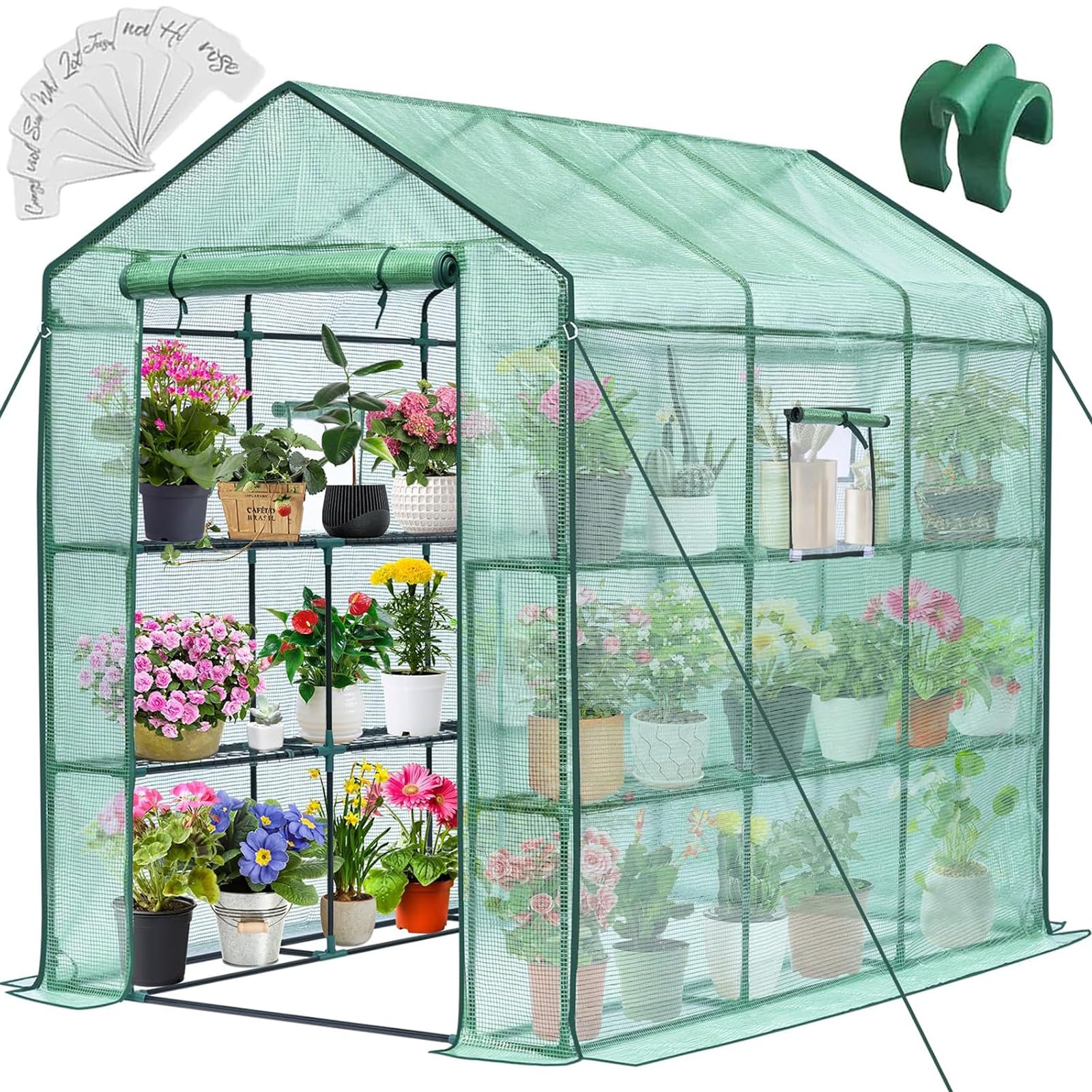
Roomy walk-in greenhouse with reinforced PE cover, mesh side vents, and eight shelves for heavy seed-starting workloads.
Why I picked it: I needed a large, portable space that keeps heat in and fits many pots without permanent installation.
Best for: Starting lots of seedlings, staging plants for transplant, and wintering many medium pots.
Affordable option for gardeners who want lots of space without a high-end frame.
Pros
- Thick, grid-reinforced PE cover
- Fits many pots and trays
- Mesh side windows for ventilation
- Tool-free assembly
Cons
- Included stakes feel flimsy
- Front flaps need tie-downs
- One zipper can be stiff
My take
I set this up in under an hour with a helper and found the cover thicker than I expected for the price. The reinforced grid PE holds heat well, which is exactly what I want when I’m getting flats up to temperature in early spring.
Shelving gives me room for dozens of seedlings and small pots—my layout fits trays on every shelf and still leaves central floor space for larger containers. The mesh side windows are easy to roll for ventilation on warm days.
The cover install is the trickiest part, and the zipper on one side is a little stiff at first. The supplied ground stakes are useful in light breezes but I replaced or supplemented them with pavers and stronger stake anchors for windy spells.
I like that it’s fully portable: I can take it down and move it when the season changes. For me, a few simple mods—adding ties for the front flaps and heavier anchors—made it much more secure without losing the convenient setup.
2. KING BIRD 10-ft Greenhouse – Best Heavy-Duty Frame
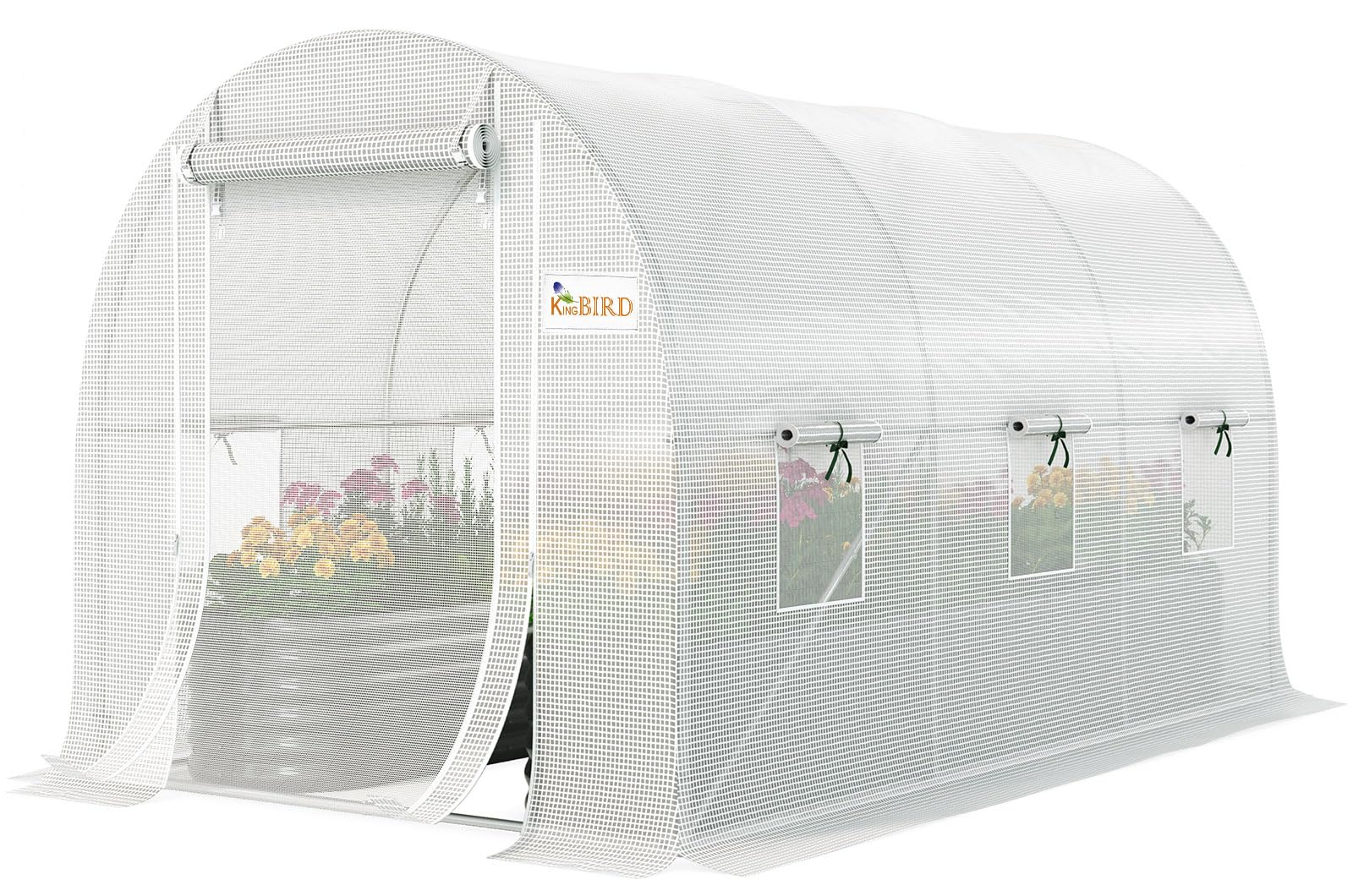
Galvanized-steel framed tunnel greenhouse with a UVI 6 protected PE cover and multiple roll-up windows for year-round control.
Why I picked it: I wanted the most rigid frame in the group to stand up to snow and prolonged outdoor use.
Best for: Gardeners who need a durable outdoor structure and plan to anchor and reinforce a permanent spot.
Mid-range to more expensive option relative to basic pop-ups; built for longer outdoor service.
Pros
- 0.7mm galvanized steel frame
- Thicker UVI 6 PE cover
- Multiple roll-up screen windows
- Two-layer door (PE + screen)
Cons
- Cover edges can wear over years
- Zipper and Velcro may need care
- Frame benefits from extra anchoring
My take
This greenhouse’s frame is noticeably more rigid than the tubular kits I usually handle. I assembled it over a couple of evenings and anchored it to a wooden base I built to keep everything square and stable.
The UVI 6 PE cover felt tighter and better finished than thinner covers, and the roll-up screen windows give me precise control of ventilation during heat spikes. I kept a close eye on zipper stress during frequent use and found that treating the zippers gently extends their life.
I deliberately reinforced the base and added inside braces to reduce reliance on the cover for structural shape. After that prep it handled a heavy ice event and weeks of winter snow without collapsing.
The manufacturer includes replacement-part support, which I appreciate when I plan to keep a greenhouse in one outdoor spot for multiple seasons.
3. Porayhut Pop-Up Greenhouse Tent – Best Pop-Up Greenhouse
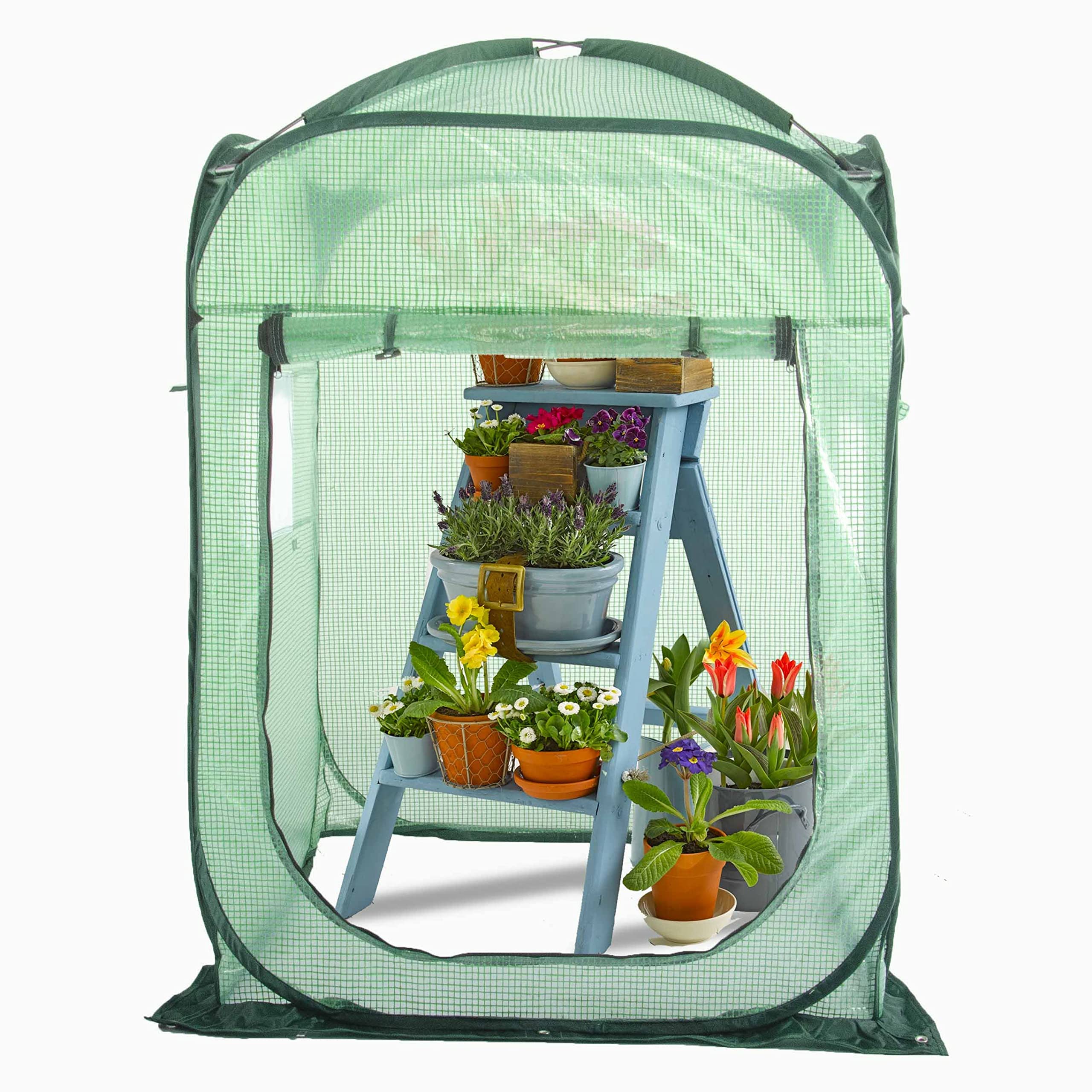
Foldable pop-up greenhouse that sets up in minutes, with tall center height and stakes for quick frost protection.
Why I picked it: I wanted a fast, compact option for intermittent frost protection and easy storage.
Best for: Balconies, patios, or spot-protecting a few tender plants overnight.
Budget-friendly, very portable choice.
Pros
- Pop-up setup in minutes
- Tall center—easy to walk inside
- Compact storage bag
- Stakes and spare parts included
Cons
- Material thinner than walk-in units
- May need extra heat in hard freezes
- Zippers can suffer from material shrinkage
My take
I pop this up when a late frost threatens and can protect peppers and tomatoes in under five minutes. The tall top means I don’t have to crouch to tend plants, and a 4 ft table fits inside for tray work.
The 600D Oxford and double-layer PE mesh give surprisingly good insulation for a pop-up. In my hands it routinely raised interior temperature by several degrees overnight compared with outside air.
I stake it down and often add weight at the base during windy nights. For long winter stretches I treat it as a short-term shelter and add a small heater or insulating blankets on the coldest nights.
This is the unit I reach for when I need speed and portability more than permanent structure.
4. SUNGIFT Walk-In Greenhouse – Best for Organization
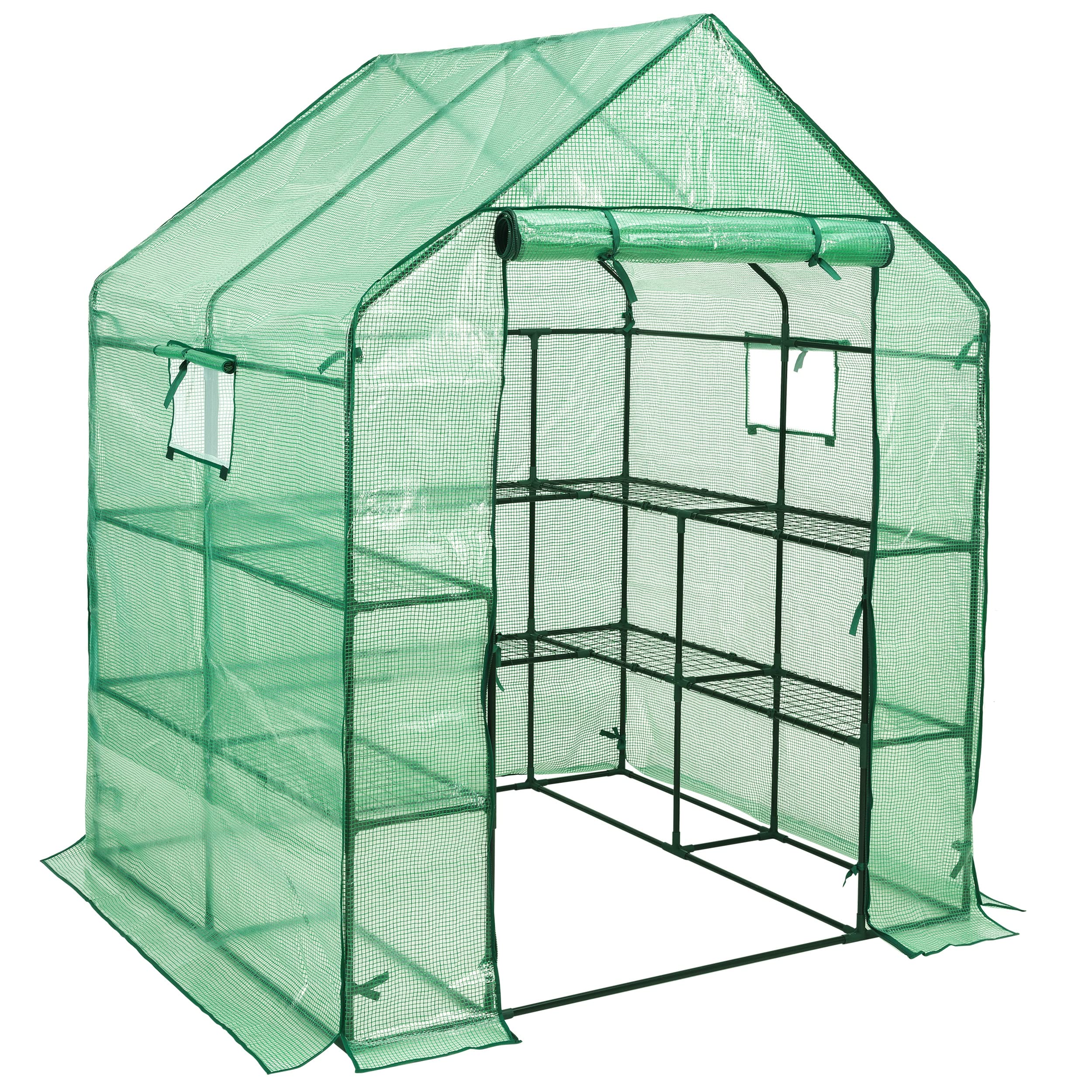
Walk-in greenhouse with ten shelves, roll-up door, observation windows, and a powder-coated steel frame for neat plant organization.
Why I picked it: I wanted a compact walk-in that makes better use of vertical shelf space for seedlings and pots.
Best for: Growers who need shelving for many small pots and easy access to organized trays.
Affordable starter greenhouse with built-in shelving.
Pros
- Ten sturdy shelves included
- Powder-coated steel frame
- Large zippered roll-up door
- Lightweight and portable
Cons
- Needs firm anchoring in wind
- May need a helper for cover install
- Shelves sometimes require zip ties
My take
I appreciated how this greenhouse organizes plants—the ten shelves let me separate seed trays, herbs, and small pots without stacking awkwardly on the floor.
Assembly was straightforward, though I asked a friend to help with the top and the cover during a windy afternoon. I secured shelves with cable ties and added pavers around the base rails to keep the unit from shifting in gusts.
A few simple additions—weed barrier underneath, zip ties on shelves, and some weights—turned this into a reliable starter greenhouse that keeps seedlings warm while still offering easy access.
If you need neat, vertical growing space without a heavy permanent frame, this one balances capacity and portability well.
How I Choose a Large Greenhouse
Key features I check
When I evaluate a greenhouse I look first at the frame material, cover quality, ventilation, shelving, and how it anchors to the ground. Those elements determine whether a unit lasts multiple seasons or becomes a short-term solution.
I also consider how I’ll use the space: constant seed-starting, overwintering tender plants, or occasional frost protection. That purpose dictates whether I prioritize a rigid frame or a lightweight portable option.
- Frame: galvanized steel or thicker tubing for long-term outdoor use.
- Cover: reinforced grid PE or Oxford fabric resists tearing and UV.
- Ventilation: roll-up windows and screened doors prevent overheating.
- Shelving: built-in shelves save space for seedlings and small pots.
- Anchoring: check for ground stakes, guy ropes, and options to add weights or a base.
Assembly and maintenance tips I use
I reserve an afternoon for assembly and plan to strengthen any greenhouse with extra ties, pavers, or a simple base frame. That small investment extends life and performance dramatically.
Zippers and Velcro are common wear points, so I lubricate zippers lightly and avoid over-stressing closures during strong winds.
- Lay a weed barrier and add pavers to anchor bottom rails.
- Use zip ties to secure shelves and interior braces.
- Reinforce the frame corners if you expect snow or ice.
- Plan ventilation—open vents on sunny days to avoid overheating.
Which style to pick
If I need a permanent, season-round structure I go for a galvanized frame and UVI-protected cover. For quick frost protection or temporary shelter I favor pop-ups that store easily.
Shelving is a priority when my seed-starting workload is high; otherwise a simple walk-in with floor space may be a better value.
- Permanent use: prioritize frame and cover durability.
- Temporary use: choose pop-up or portable designs.
- Space-limited yards: compact walk-ins with vertical shelving.
Frequently Asked Questions
How much anchoring do I need for a portable greenhouse?
I always add more anchoring than included hardware: pavers, longer ground stakes, or a simple 2×4 base reduce lift in gusty weather.
Can these greenhouses handle snow?
I treat tunnel-style and rigid-frame units as snow-capable only after I reinforce the frame and clear heavy accumulation promptly. Pop-ups are best for frost protection, not heavy snow loads.
Will the greenhouse get too hot on sunny days?
It can. I rely on roll-up vents, screen windows, and opening doors during sunny afternoons. A small fan or shade cloth helps control excessive heat.
Final Take
After hands-on testing I found no single greenhouse is perfect for every need—rigid frames win on longevity, pop-ups win on speed and portability, and shelved walk-ins win on organization.
Decide whether you want permanent protection, portable frost defense, or optimized shelving, then choose the model that matches that priority and plan a few simple reinforcements for wind and zipper longevity.
