
I tested a range of mower and garden tractor tires so you can pick the right tread, ply, and mounting approach for your machine and yard.
I spent time fitting and running a selection of replacement lawn mower tires so I could compare traction, ride feel, and how hard they are to mount.
In this roundup I focus on sizes I’ve actually installed — 18×9.50-8, 15×6.00-6, 4.80-8 and 18×8.50-8 — and explain which tires I used for steep lawns, zero-turns, tillers, and turf-sensitive jobs.
I grouped these tires by use: heavy‑duty 6‑ply super lugs for maximum pull, 4‑ply turf patterns for lawn protection, compact 15×6 and 4.80‑8 sizes for zero‑turns and tillers. Expect stiffer construction to deliver traction at the cost of a firmer ride and harder mounting.
1. MaxAuto 18×9.50-8 Super Lug Tires – Best Overall
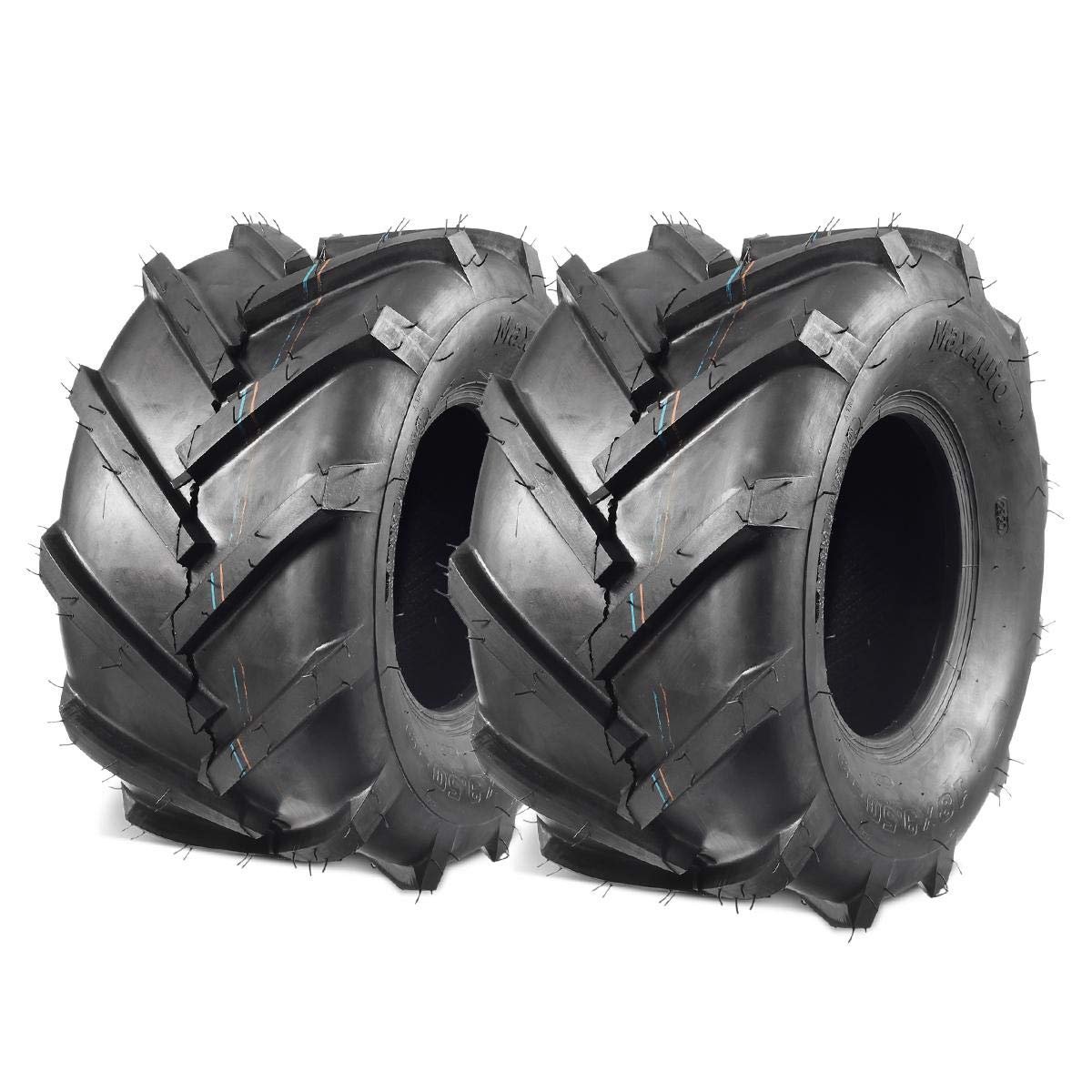
A heavy‑duty 6‑ply, tubeless super‑lug tire that delivers the most traction and load capacity in this group.
Why I picked it: Highest load rating and deep lugs for steep, uneven yards and heavy use.
Best for: Garden tractors, tillers, trenchers, steep or muddy yards where traction matters most.
A midrange value for a high‑capacity 6‑ply tire.
Pros
- 6‑ply construction for durability
- Deep super‑lug tread for traction
- High load capacity
- Tubeless — fewer flats
Cons
- Very stiff — hard to mount
- Rougher ride on smooth lawns
My take
I put the MaxAuto 18×9.50-8s on a riding mower that struggles on slopes and immediately noticed the improved grip. The tires are rated 6PR with a max load of 1320 lbs at 36 psi and a 0.63" (16mm) tread depth — specs that translate to confident hill climbing and pulling power in wet or uneven ground.
Because the tread is a directional super‑lug pattern with sharp angled elements, I got far better traction than the stock turf tires I removed. That aggressive bite does make the ride firmer; on flat, finely graded lawns I felt more vibration than with turf‑style tires.
Installation took effort. These are stiff 6‑ply tires and needed long spoons, plenty of bead lube, and a patient inch‑by‑inch method to seat the bead. I used the vice‑grip trick to hold my place on the rim and highly recommend professional mounting if you don’t have the right tools.
If you need a tire that will pull, push, and hold heavy loads without slipping, this is the package I reach for first.
2. MaxAuto FOX V1 18×9.50-8 Turf Tire – Best for Turf-Friendly Traction
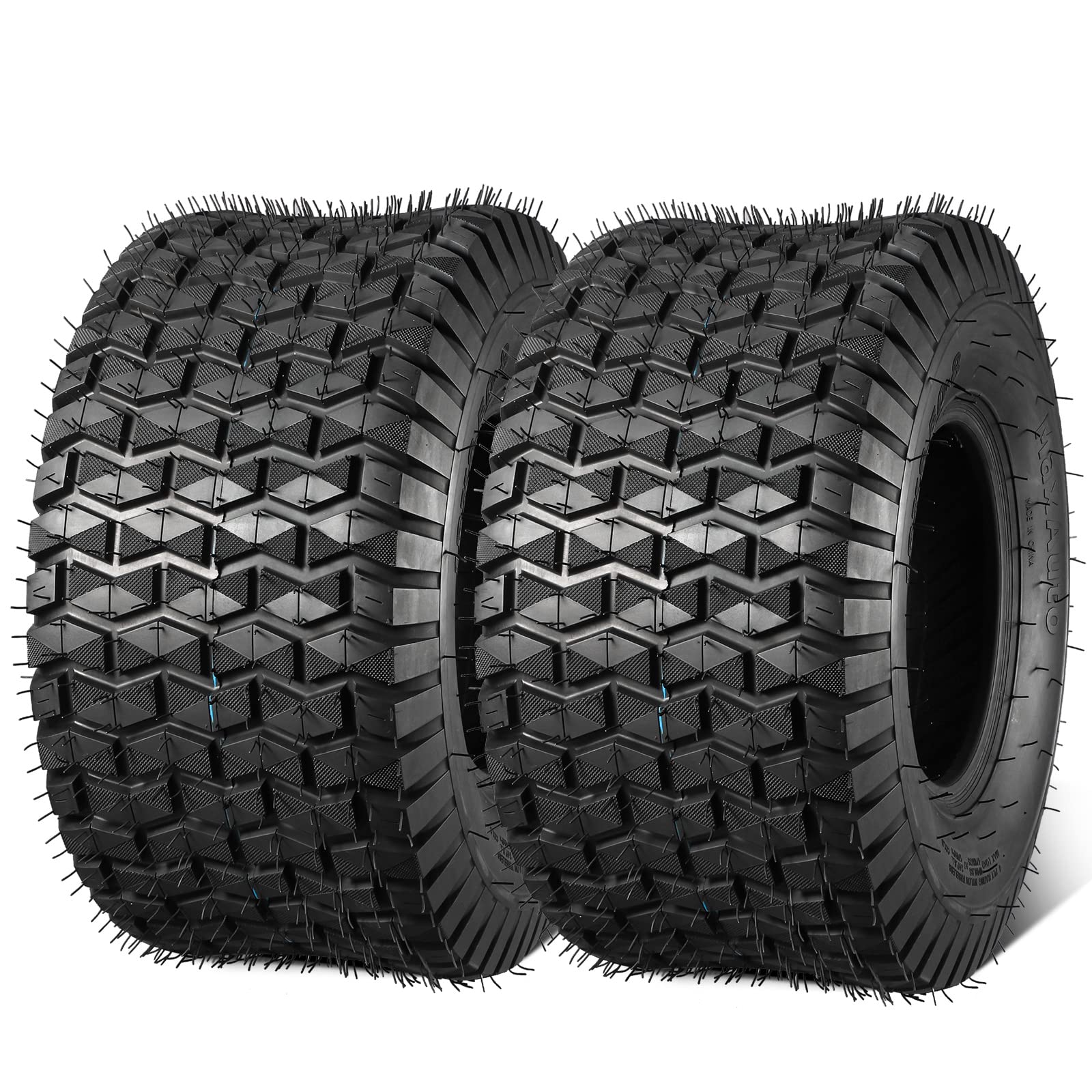
A patented tread pattern that balances traction with reduced turf damage for rear mower use.
Why I picked it: Patented tread gives traction while being kinder to grass than aggressive lugs.
Best for: Lawns where minimizing turf damage matters but extra traction is still required.
A more affordable 4‑ply option that performs above its price.
Pros
- Patented tread pattern
- Less turf scuffing than ag lugs
- Good traction for slopes
- Tubeless construction
Cons
- Lower load rating than 6‑ply tires
- Still requires patience to mount
My take
I installed the MaxAuto FOX V1 18×9.50-8s as a 4‑ply, turf‑friendly alternative to heavier ag tires. The tire’s patented pattern and 6mm tread depth made a real difference: I got solid traction on damp grass without the turf gouging that super‑lugs can cause.
These are rated for 1040 lbs at 24 psi and fit the same rims as other 18×9.50-8 tires. Mounting was easier than the 6‑ply super‑lugs but still benefits from proper tools. I also swapped valve stems and added sealant on one tire to avoid future slow leaks — a small precaution that saved me time later.
For everyday mowing on yards where appearance matters, I prefer this FOX V1 pattern over aggressive ag treads.
3. HALBERD 15×6.00-6 Herringbone Tires – Best for Compact/Zero‑Turn
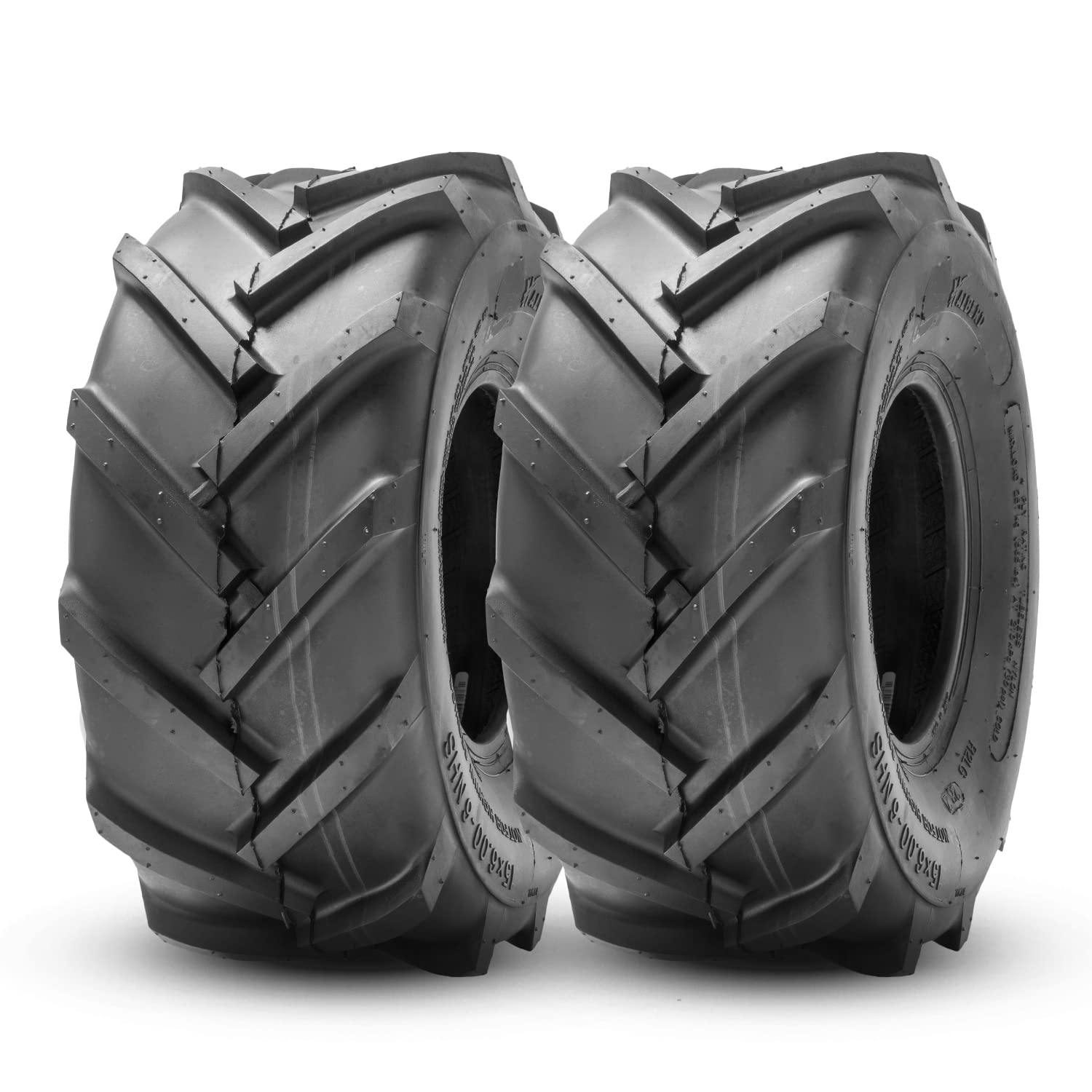
A 4‑ply herringbone tread built for compact tractors, zero‑turns, and applications that need bite without extreme lug depth.
Why I picked it: Herringbone tread offers drive traction with a muted lug depth suitable for ZTs and small tractors.
Best for: Zero‑turn mowers, compact garden tractors, small excavators and golf carts.
A budget‑minded 4‑ply option with solid traction.
Pros
- Herringbone tread for drive traction
- Strong sidewalls
- Good for zero‑turn drive wheels
- Tubeless
Cons
- Firm ride on rough yards
- May need shop mounting
My take
I fit the HALBERD 15×6.00-6 set on a compact mower and appreciated how the tapered herringbone bars give consistent pulling power without overly aggressive lugs. The 12mm tread depth and 4PR rating made them ideal as drive tires on my zero‑turn when I needed extra grip.
They run at about 30 psi and feel stout — the sidewalls are thick and resist punctures, which is useful when I’m mowing through weeds and thorny patches. The trade‑off is a firmer ride; on bumpy ground you’ll notice more vibration than with softer turf tires.
I had a tire shop mount mine to avoid wresting the bead on a 6" rim, and that was a quick, inexpensive call that got me back to work fast.
4. MaxAuto 4.80-8 Turf Tires – Best for Tillers & Small Equipment
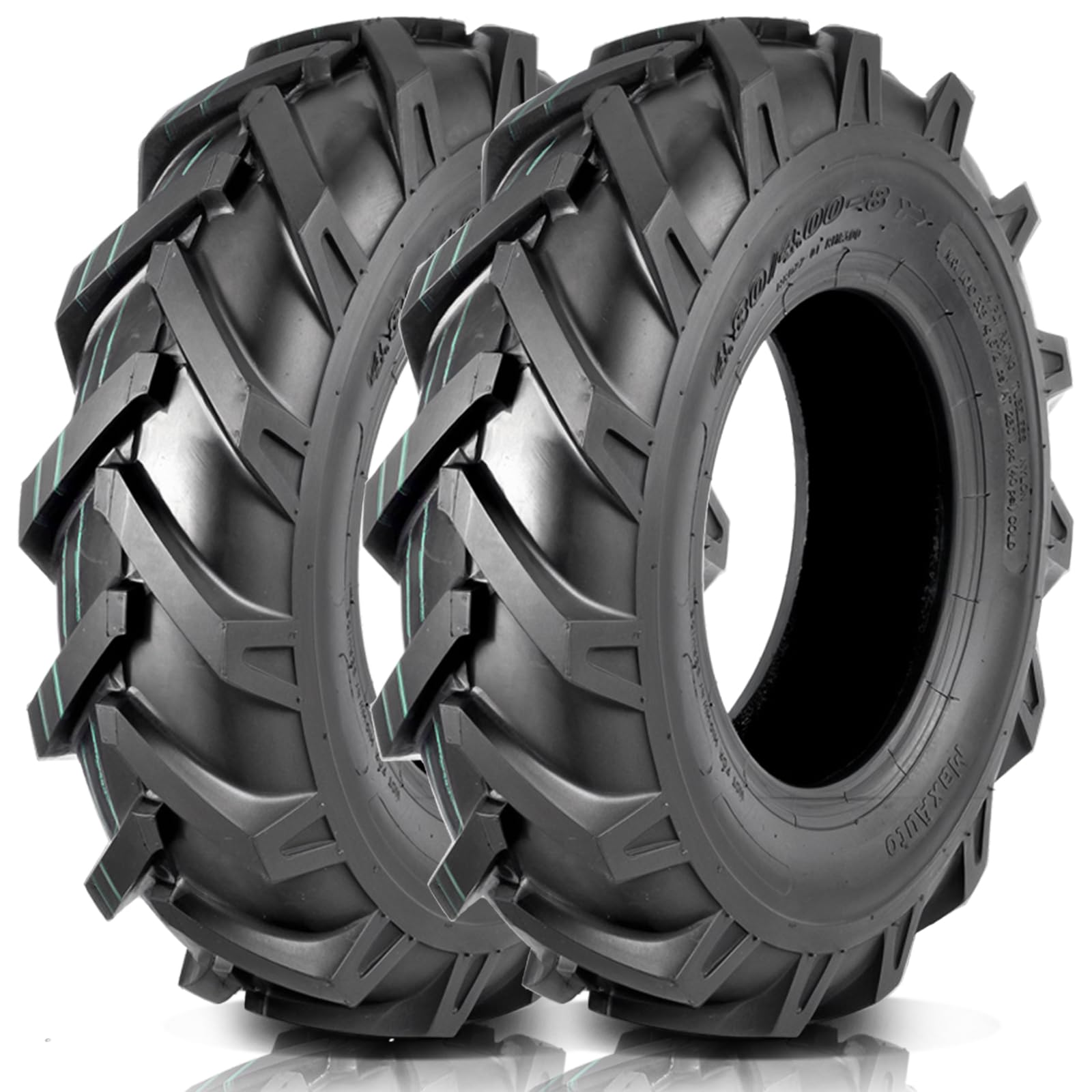
A 4‑ply, tubeless 4.80-8 that’s sized for tillers, smaller garden tractors and compact utility equipment.
Why I picked it: Correct geometry and tread for rototillers and small machines that need traction without harsh turf damage.
Best for: Rototillers, small garden tractors, trenchers and similar compact equipment.
An affordable replacement option for small‑equipment wheels.
Pros
- Direct replacement sizing
- Good tiller traction
- Tubeless — fewer flats
- Easy to mount on factory wheels
Cons
- Limited load capacity
- Not for high‑speed use
My take
I used the 4.80-8 pair as replacements on a rototiller and they matched the original geometry perfectly. The 10.2mm tread depth and 4PR build gave the tiller the traction it needed without digging in too aggressively.
Mounting these on the original wheel was straightforward in my case and they held air reliably all season. They’re clearly aimed at non‑highway, garden equipment service and perform well when used as intended.
If you have a small machine that needs a simple, dependable tire, these are the ones I reach for.
5. 18×8.50-8 Turf Tires (2‑Pack) – Best Budget Turf Option
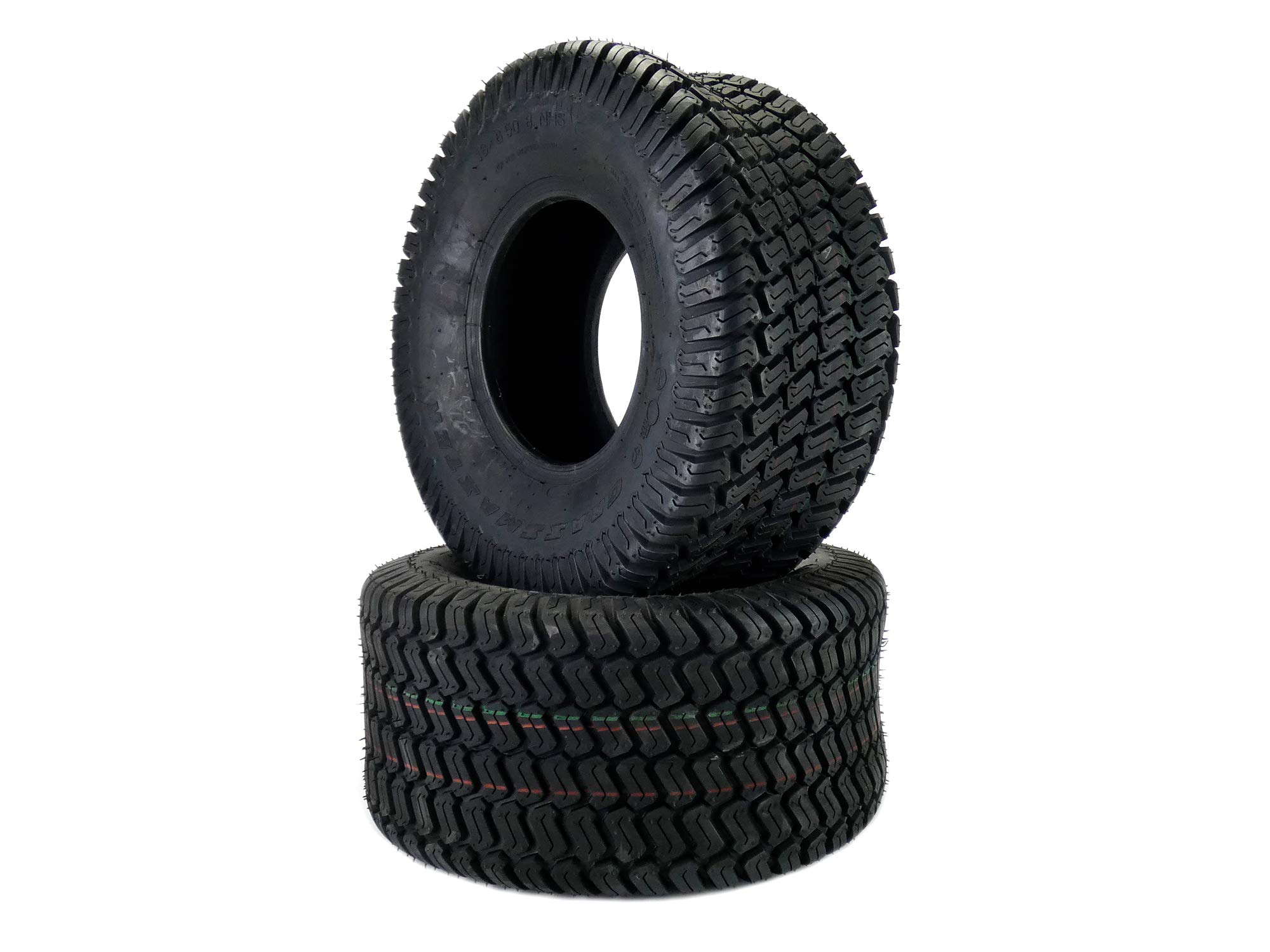
A turf‑tread 4‑ply pair that’s easy on grass and represents strong value for a lawn‑friendly replacement.
Why I picked it: Good turf tread and quick delivery make this a reliable, budget choice.
Best for: Golf carts, lawn mowers, and any application where minimizing turf damage is a priority.
A budget‑friendly 4‑ply turf tire with good performance for the price.
Pros
- Turf‑friendly tread
- 4‑ply durability
- Good traction for lawns
- Fast delivery
Cons
- Harder to mount without proper tools
- Take care during shop mounting
My take
I ordered the 18×8.50-8 set when I wanted a softer footprint for a golf‑cart style mower. The turf tread is gentler on grass and still gave me respectable traction for everyday mowing.
They arrived in good shape and the 4‑ply construction feels sturdier than many entry‑level options. Mounting one at home was doable with the right tools, but I recommend professional mounting if you lack tire spoons or a compressor setup — improper mounting can pinch the bead or damage a sidewall.
For a budget turf replacement that looks and performs well, these are a practical choice.
How I Choose Lawn Mower Tires
Key factors I check before buying
I always start by confirming the tire size stamped on the sidewall of the old tire — the diameter, section width, and rim size must match your wheel.
Next I look at ply/load rating and intended service. Stiffer 6‑ply tires give me higher load capacity and traction but ride firmer and are harder to mount. 4‑ply tires are lighter and kinder to turf.
Tread pattern matters: super‑lug or ag tread is best for mud, slopes, and pulling work; turf and herringbone patterns protect grass and reduce scuffing.
- Match size exactly to the wheel (e.g., 18×9.50-8 vs 18×8.50-8).
- Choose ply/load rating based on weight and terrain.
- Select tread for the job: ag lugs for traction, turf for lawn care.
- Check NHS (non‑highway service) ratings — don’t use these at speed.
Practical tips for mounting and maintenance
I prepare before installing: get bead lube, long tire spoons, and new valve stems. I swap stems when I mount new tires.
If a tire is very stiff, I either take it to a shop or use the inch‑by‑inch bead seating method with tools to avoid pinching the bead.
I inflate to the tire’s recommended PSI based on load — many of these tires run between about 24–40 psi depending on size and rating.
- Use bead lube and long spoons for stiff tires.
- Consider sealant for tubeless tires on rough properties.
- Replace valve stems during mounting.
- When in doubt, have a pro mount to avoid rim or sidewall damage.
Frequently Asked Questions
How do I verify the correct tire size for my mower?
I always read the size on the existing tire sidewall and compare it to the wheel rim width. If the old tire is unreadable, I measure rim diameter and width and consult the mower manual before ordering.
Can I mount these tires at home or should I use a shop?
I mount 4‑ply turf tires at home with basic tools, but I take very stiff 6‑ply super‑lugs to a shop unless I have long spoons, bead lube, and experience. Professional mounting avoids damaged beads and sidewalls.
Which tread is best for my lawn?
If protecting grass appearance is a priority, I choose turf or herringbone patterns. For mud, slopes, or hauling, I opt for deeper super‑lug treads despite a firmer ride.
Final Take
I chose these five tires to cover the most common mower and small‑equipment needs: maximum traction, turf care, compact machine use, and small‑equipment replacements.
Match tire size and ply to your machine and yard, plan the mounting, and don’t hesitate to use a professional if a tire is especially stiff.
With the right tread and a careful install, replacing mower tires is one of the best ways I’ve found to restore traction and confidence on challenging lawns.
