
I tested four very different rakes so you can match the right tool to the job — from quick leaf pickup to precision soil leveling.
I spend a lot of time maintaining lawns and landscapes, so I keep a selection of rakes for different tasks. For this roundup I focused on tools that actually make common chores faster and easier.
Below I explain which rake I reach for depending on the job, how they feel in use, and any fit or compatibility details I ran into while testing.
I grouped these picks by what they do best rather than price alone — handheld scoops for fast pickup, a heavy-duty head for hard ground, an adjustable telescoping rake for tight spots, and a stainless steel leveler for smoothing soil.
1. GARDEASE Leaf Scoops – Best for Fast Pickup
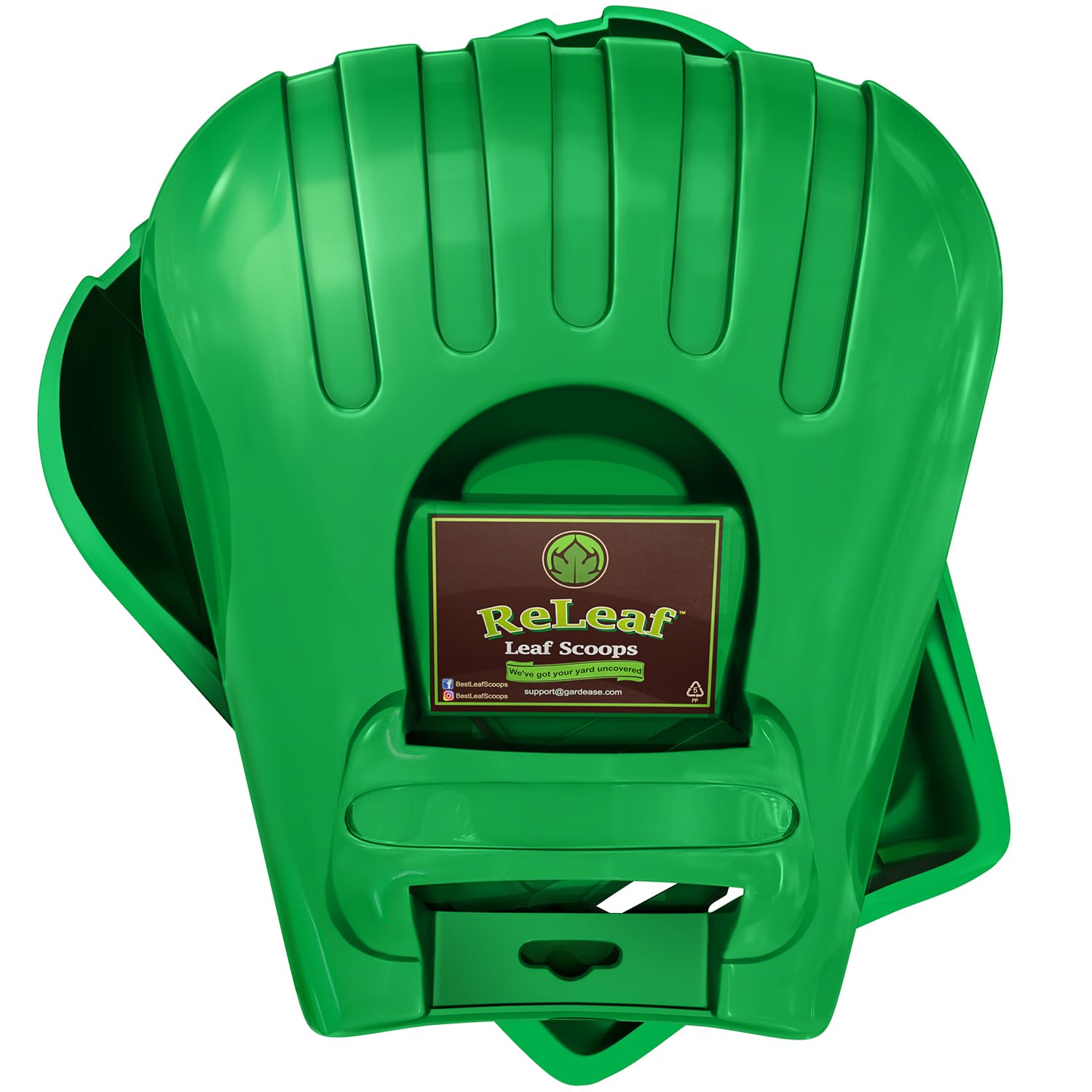
Oversized hand claws that let me scoop large handfuls of leaves, fruit, and debris without bending constantly.
Why I picked it: They turn slow hand-picking into quick scooping and protect my hands.
Best for: Bagging leaves, picking fruit, cleaning pet messes, quick yard tidy-ups.
Affordable way to cut time and bending during seasonal cleanups.
Pros
- Huge scooping surface
- Protects hands from thorns
- Easy to clean plastic
- Simple storage—pairs clip together
Cons
- Hand openings can feel awkward
- Not useful for fine raking
My take
These are the closest thing I have to extra hands. The claw shape traps wet or dry leaves and lets me move big piles into a bag with far fewer trips to the ground.
Using them saved my lower back and made leaf pickup an order-of-magnitude faster compared with bending for handfuls. They also worked well for picking fallen fruit and quick pet cleanup.
I appreciate the protective barrier when I work near thorny shrubs, and the pair clips together for neat storage. The lifetime quality guarantee gives me confidence they'll last.
2. WOLF Garten UIMC Leaf Rake Head – Best for Hard Ground
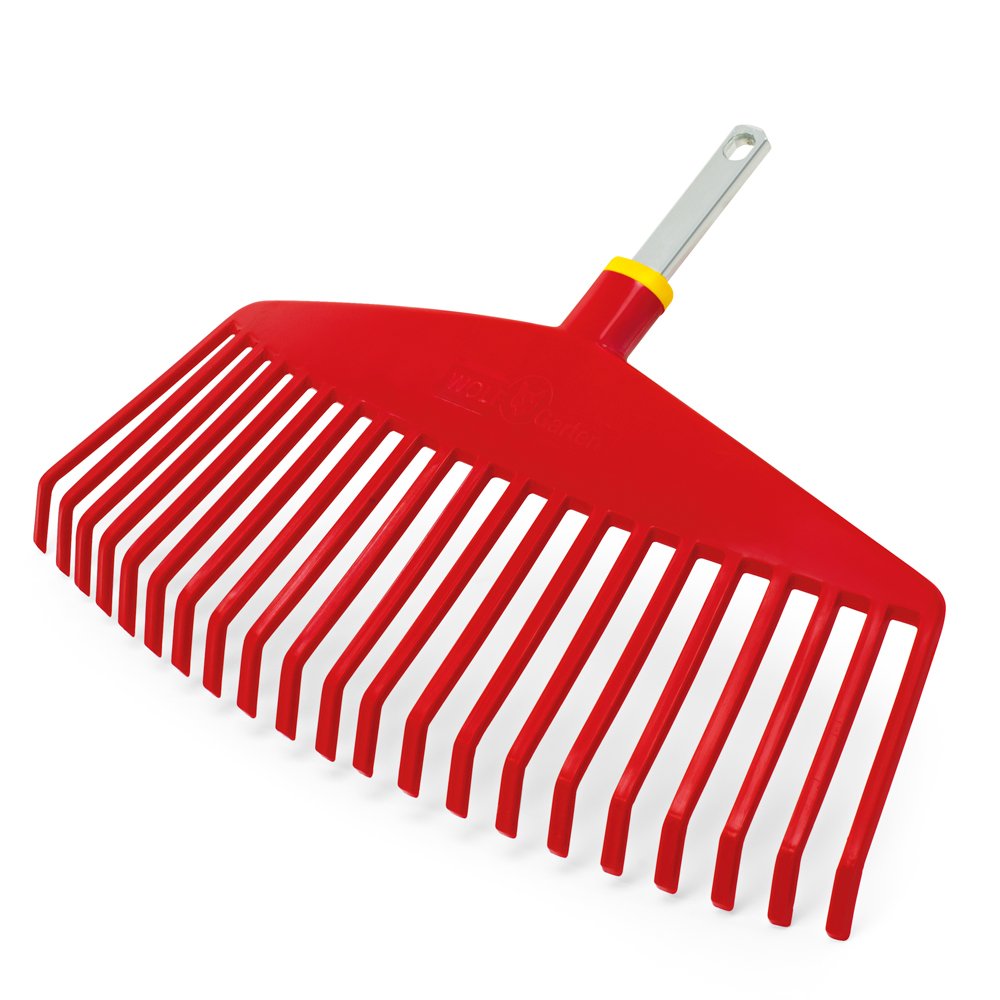
A compact, hard-wearing plastic-tined head that excels at moving grass clippings and leaves on firm surfaces.
Why I picked it: Durable tines and a light weight made this my go-to for paved areas and lawns.
Best for: Raking clippings on hard ground, paved areas, and routine lawn cleanups.
A longer-lasting head that pairs with a proper handle for years of use.
Pros
- Sturdy plastic tines
- 42 cm wide working swath
- Lightweight to reduce fatigue
- Long manufacturer guarantee
Cons
- Head-only — handle not included
- Requires matching handle shape
My take
I like how effortless this head is to use when clearing clippings and leaves from paths and tight lawn spots. The 21 tines grab material cleanly without needing heavy pressure.
Because it’s head-only, I paired it to a Wolf Garten handle and found the fit solid. Note: it uses a rectangular fitting, so check compatibility if you plan to use a generic round handle.
The construction feels built to last, and the lightweight design keeps longer sessions from tiring my arms.
3. TABOR TOOLS Telescopic Adjustable Rake – Best Adjustable
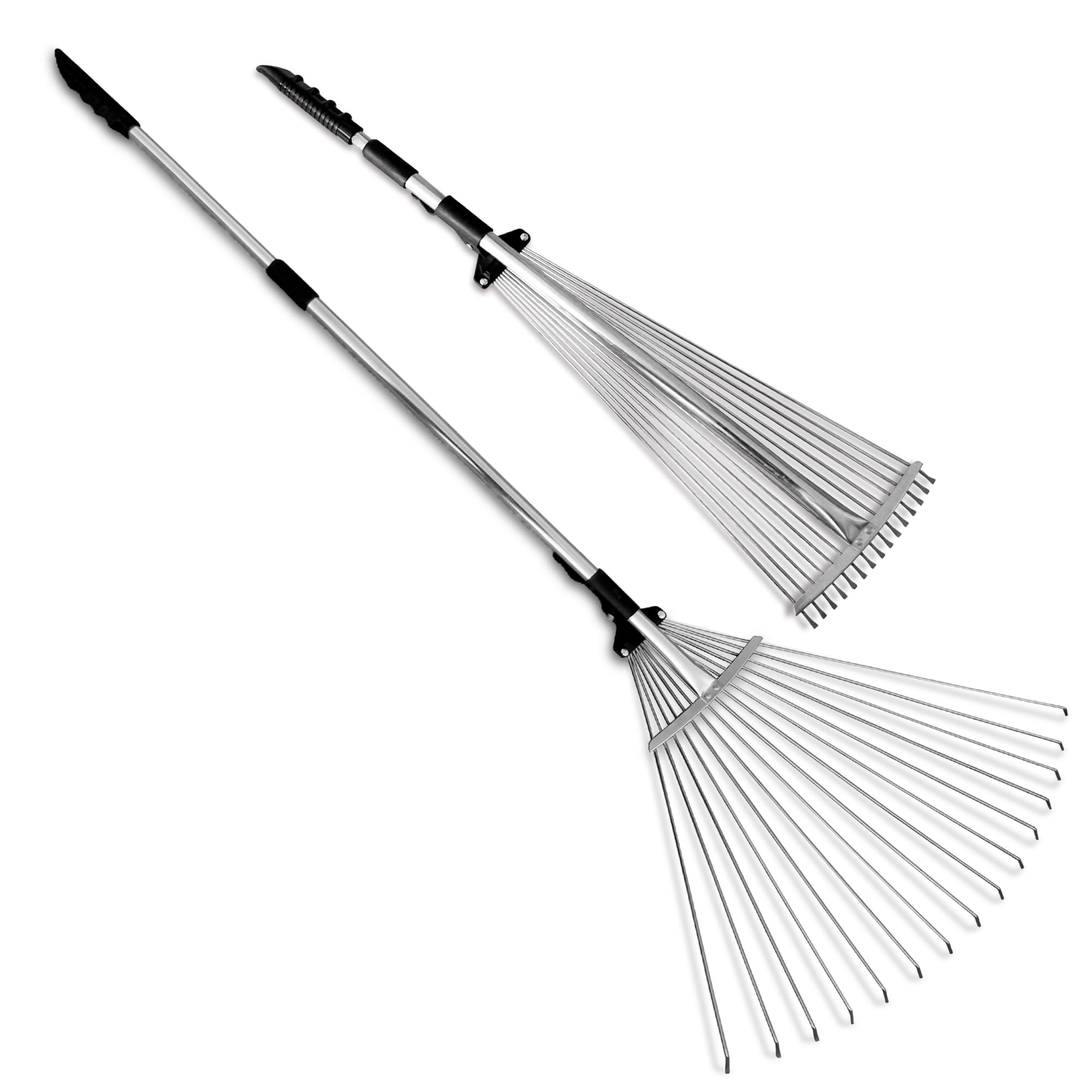
A metal fan rake that collapses and expands from narrow to wide, which I use for tight beds and wider sweeps alike.
Why I picked it: I rely on the adjustable width for tricky spots and for saving storage space.
Best for: Narrow garden beds, under hedges, variable-width sweeping around landscaping.
Good midrange option with metal tines for longer life than plastic fans.
Pros
- Width adjusts 8–23 inches
- Telescoping handle for reach
- Galvanized steel tines resist rust
- Collapses for compact storage
Cons
- Not for heavy-duty cement work
- Plastic parts can feel delicate
My take
I value the ability to change the fan width on the fly — it makes clearing between rocks or around pond edges far easier than a fixed rake.
The telescoping handle lets me tweak reach and posture so my shoulders don’t ache after longer sessions. The steel teeth hold up to normal yard debris and stay rust-resistant.
This isn’t a tool for prying on concrete, but for lawns and beds it replaced several single-use rakes in my shed.
4. Rocklin Lawn Leveling Rake – Best for Leveling
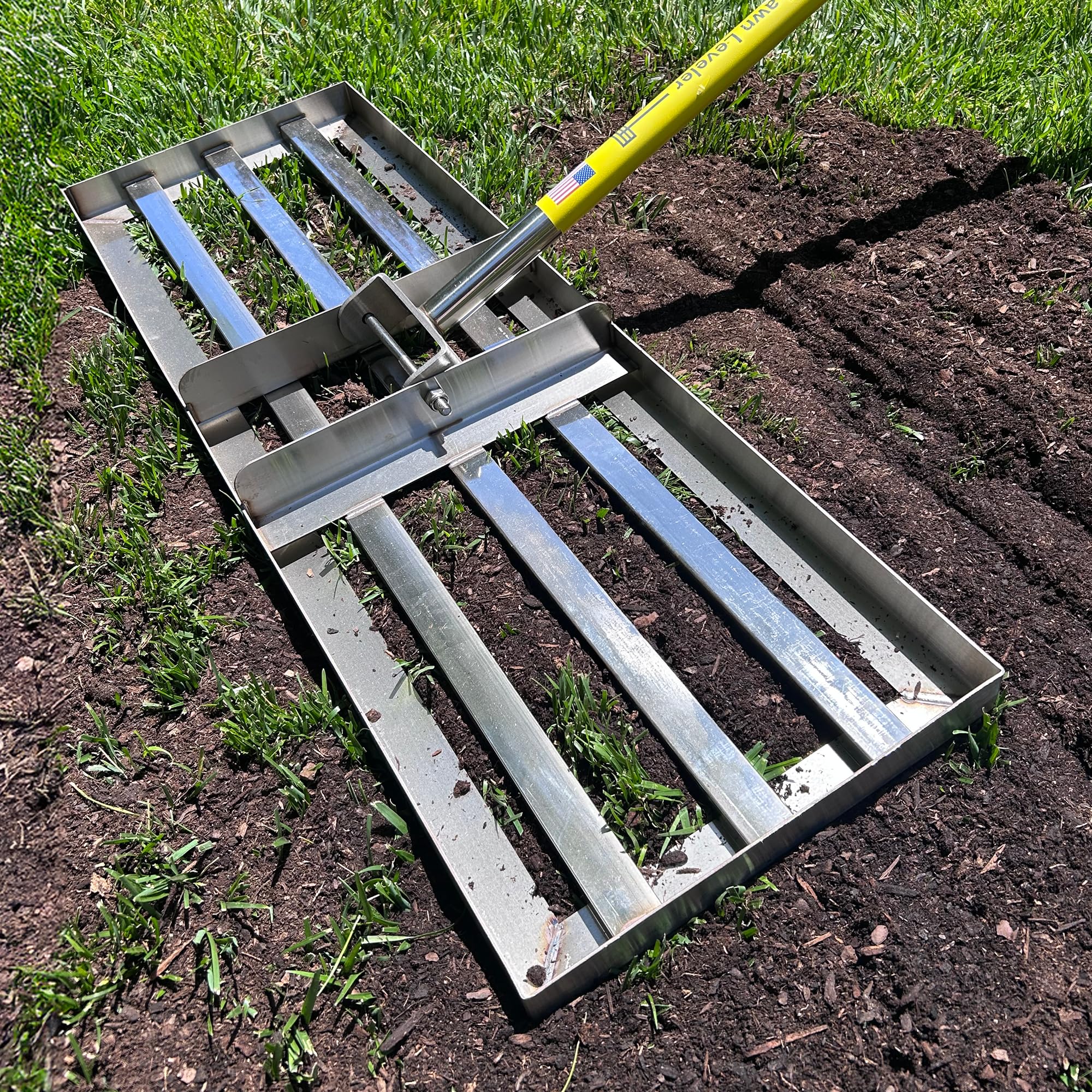
A heavy-duty stainless steel leveling tool with a wide plate and very long handle that I use for smoothing soil and sand.
Why I picked it: It’s built to move and smooth material without flexing or rusting over time.
Best for: Leveling soil, spreading topsoil or sand, prepping lawn and hardscape bases.
A more professional-grade option for homeowners who need real leveling performance.
Pros
- All stainless steel construction
- Wide 30" x 10" ground plate
- Extra-long handle reduces bending
- Solid build for heavy spreading
Cons
- Head is heavy for some users
- Takes practice to glide smoothly
My take
This is a leveling tool rather than a leaf rake — I use it when I need to smooth soil, sand, or small aggregates. The stainless steel head moves material cleanly and resists corrosion.
It requires a slightly different technique than a garden rake: I learned to give a little upward lift with my forward hand so the plate glides instead of digging and flipping on uneven patches.
For large or recurring leveling jobs the weight and construction make this my first choice; for quick leaf work it’s overkill, but when I need an even base it outperforms standard rakes.
How I Choose a Lawn Rake
Match the tool to the task
I always pick a rake based on the job. Handheld scoops beat traditional rakes for fast leaf pickup and fruit collection. Adjustable fan rakes are my choice for beds and edges. For grading and leveling, I switch to a heavy plate-style rake.
- Leaf scoops: fast pickup, minimal bending.
- Fan/leaf rakes: general leaf removal and light debris.
- Adjustable rakes: tight spots and variable widths.
- Leveling rakes: spread and smooth soil or sand.
Handle fit and comfort
I pay attention to handle length, diameter, and how the head mounts. A long handle reduces back strain, and a comfortable grip makes repetitive work tolerable.
If a head is sold separately, I test-fit or confirm the connector type so I don’t end up buying the wrong handle.
- Telescoping handles add reach and compact storage.
- Check rectangular vs. round fittings before pairing head and handle.
- Longer handles help posture; adjustable handles help multiple users.
Materials and durability
I prefer galvanized steel tines for corrosion resistance and longevity in most climates. Heavy-duty stainless components are worth it when I expect intense or professional use.
Plastic heads are lighter and fine for leaves but wear faster if used on hard surfaces.
- Stainless steel: best for heavy, wet, or abrasive jobs.
- Galvanized steel: good balance of strength and rust resistance.
- Plastic tines: lightweight and flexible for gentle work.
Storage and maintenance
I consider how a tool stores — collapsible heads or clip-together pieces save space. After use I wipe metal parts and hang tools to extend life.
Simple maintenance like tightening bolts and storing dry keeps rakes working for years.
- Collapsible or foldable heads save garage space.
- Rinse wet debris and dry before storage.
- Keep moving parts greased and bolts snug.
Frequently Asked Questions
Can I use leaf scoops on wet leaves?
Yes — in my experience the oversized claws handle wet or dry leaves well and trap material without spilling, which is why I use them when damp cleanup is unavoidable.
Will the Wolf Garten head fit any handle?
No — I learned to check the connector type. That head uses a rectangular fitting, so I pair it with a compatible Wolf Garten handle or a matching adapter to avoid compatibility issues.
How wide should a rake be for my yard?
I choose based on access: narrower heads (under 12 inches) for tight beds and wider heads (18–42 cm) for general lawns and paved areas. Adjustable fans let me cover both needs without another tool.
Final Take
I keep multiple rakes because each serves a distinct purpose: scoops for speed, adjustable rakes for versatility, a solid head for hard ground, and a leveling rake for soil work.
Pick the one that matches your most common tasks and you’ll cut time and strain out of chores. I reach for a different tool depending on whether I’m smoothing soil, clearing paths, or bagging leaves.
