
I tested a range of lawn tractor tires and wheel assemblies so you can choose the right traction, turf protection, and durability for your mower and yard.
I spend a lot of time swapping tires across mowers and small utility machines, so I know how much difference the right tire makes for traction, ride quality, and turf protection. In this roundup I cover aggressive lug tires for steep yards, turf-friendly patterns for finished lawns, compact sizes for tillers and walk-behinds, and a full wheel-and-tire assembly if you want a direct replacement.
My picks are organized by real-world use: heavy traction, turf-saving designs, small equipment fits, and full assemblies that come ready to mount. I include installation notes and things I learned the hard way so you can avoid the same mistakes.
I chose each tire based on construction, tread design, and practical fitment for common mower types. Where I could, I prioritized traction for slopes, turf protection for finished lawns, and ease of installation for DIYers.
1. MaxAuto 18×9.50-8 Lawn Tractor Tire – Best Overall
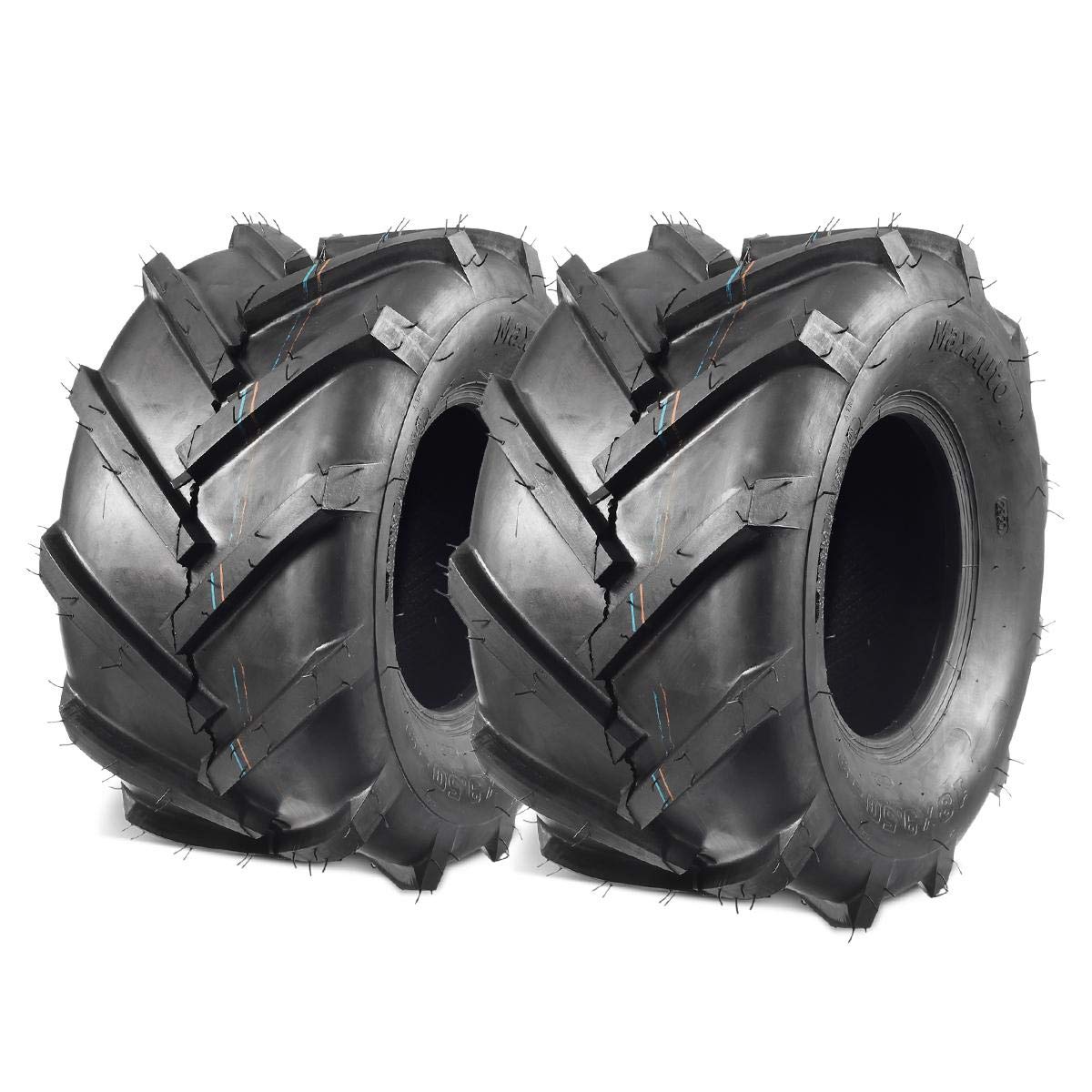
I picked this set for aggressive traction and heavy-duty load capacity on demanding terrain.
Why I picked it: Stout 6PR construction and deep directional lugs for pulling and hill traction.
Best for: Steep yards, mud, towing small implements.
Midrange cost with heavy-duty capability.
Pros
- Excellent pulling and hill traction
- High load capacity
- Durable 6PR construction
- Directional super-lug pattern
Cons
- Very stiff—hard to mount
- Rougher ride on smooth turf
- Not for high-speed use
My take
I installed the MaxAuto 18×9.50-8s when I needed real bite on my John Deere's rear axle. The sharp angled lugs and 0.63" tread depth translated to immediate traction gains — climbing slopes and navigating wet patches became noticeably easier.
These are a heavy-feel, 6PR tubeless tire with a max-load around 1,320 lbs at recommended pressure, so they feel built to take a beating. That stoutness is a trade-off: mounting required long tire spoons, lots of bead lubricant, and a patient approach with vice grips to walk the bead onto the rim.
Once mounted they stayed firm and confident. I also noticed a firmer, rougher ride on flat, fine turf compared with torsion-belted lawn tires, so I only use them where traction matters more than a cushioned ride. Remember these are NHS (non-highway service).
2. MaxAuto FOX V1 18×9.50-8 Lawn Tire – Best for Turf Protection
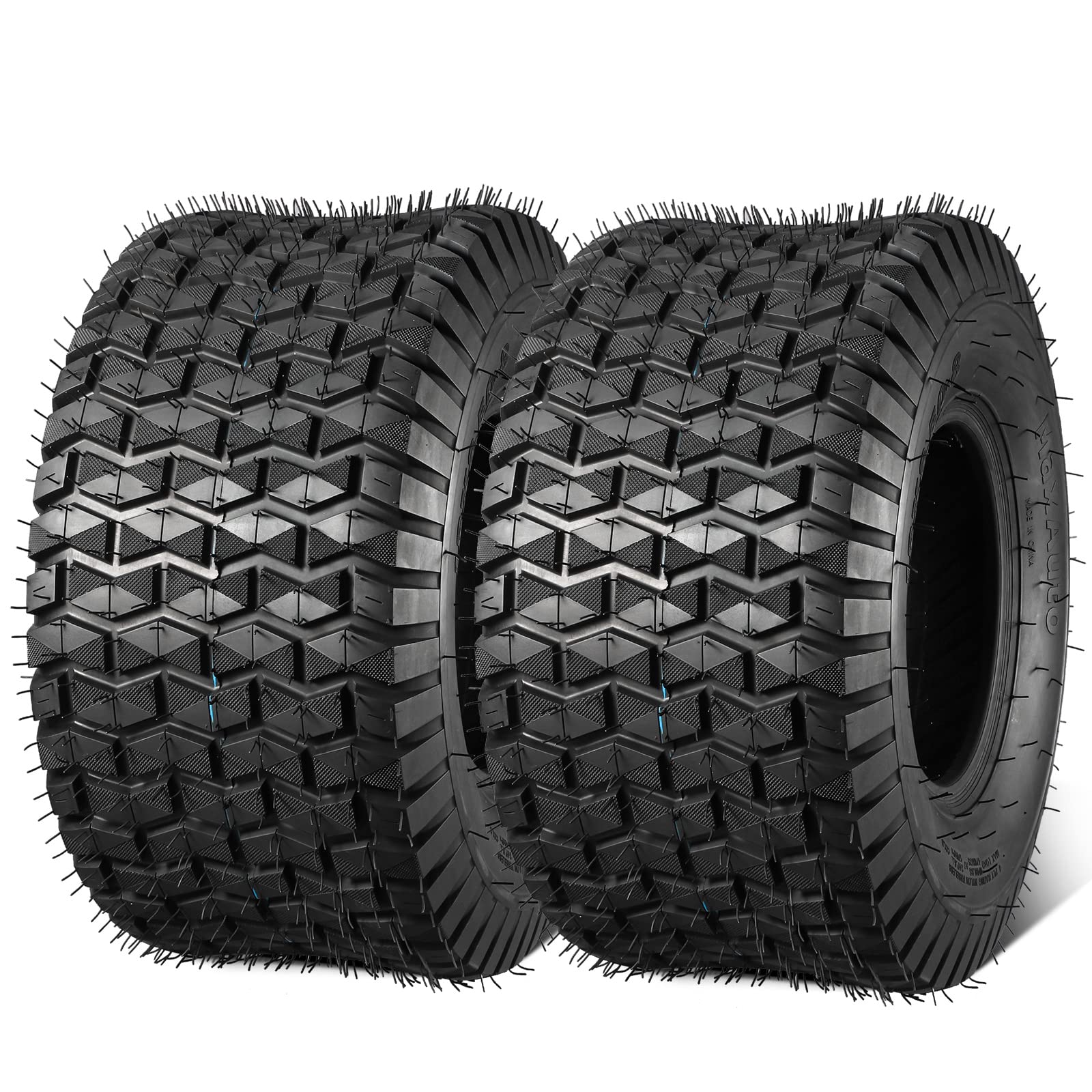
I liked the FOX V1 for its patented tread that balances traction with reduced turf scarring.
Why I picked it: Patented chevron pattern that protects grass while improving traction.
Best for: Finished lawns where minimizing tire marks matters.
Affordable, value-oriented option.
Pros
- Turf-friendly tread pattern
- Lightweight 4PR build
- Improved traction with less turf damage
- Easier rolling than aggressive lugs
Cons
- Shallower tread than heavy ag tires
- Takes patience to mount
- Lower load rating than heavy-duty tires
My take
I put the FOX V1 pair on a rear axle where I wanted better grip without tearing up the lawn. The unique pattern lives up to the listing — I saw less tracking than with aggressive ag lugs and still had confidence on slopes.
These are a 4PR tubeless tire with a shorter tread depth (about 6mm) and a max-load closer to the 1,040-lb range at recommended pressure. That lighter construction translates to a smoother ride and less turf damage, but I wouldn't pick them for heavy towing or extremely rough ground.
Installation is doable for a DIYer, but bring long spoons and plan extra time. I also swapped valve stems and used sealant on one install to reduce hassle later — a small step that saved me downtime.
3. HALBERD 15×6.00-6 Tractor Tire – Best for Zero-Turn / Drive
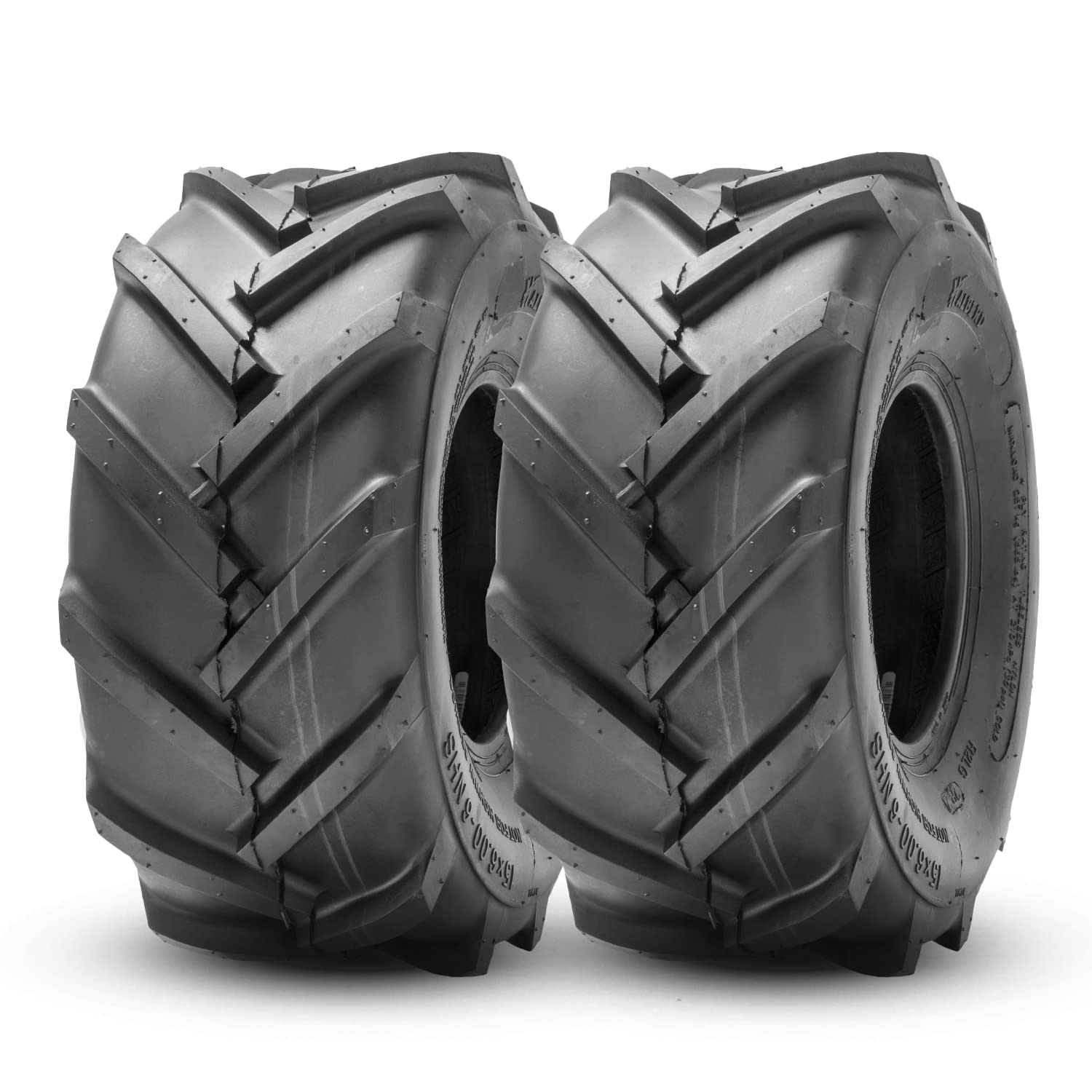
I recommend these when you need drive-side traction on compact tractors and zero-turns.
Why I picked it: Herring-bone tread gives solid pull without excessive turf damage.
Best for: Zero-turns, small tractors, compact landscaping machines.
Budget-friendly replacement option.
Pros
- Herring-bone traction pattern
- Good sidewall strength
- 4PR durability
- Well suited as drive tire
Cons
- Stiff—transfers bumps to seat
- May feel firm on rough yards
My take
I used the HALBERD 15×6.00-6s on a compact riding mower that needed better bite. The herring-bone tread and 12mm depth deliver confident traction, and the angled lugs translate to real pulling power when climbing or starting on loose ground.
These tires are a 4PR tubeless option designed for a 6" rim and a fairly high max air pressure. The sidewalls are stout, which I appreciate for durability, but that also makes the ride a bit firmer over bumps.
For me they were one of the easiest upgrades that noticeably changed performance — my mower pulled through sticky patches it used to slip on.
4. MaxAuto 4.80×4.00-8 Turf Tire – Best for Tillers & Small Equipment
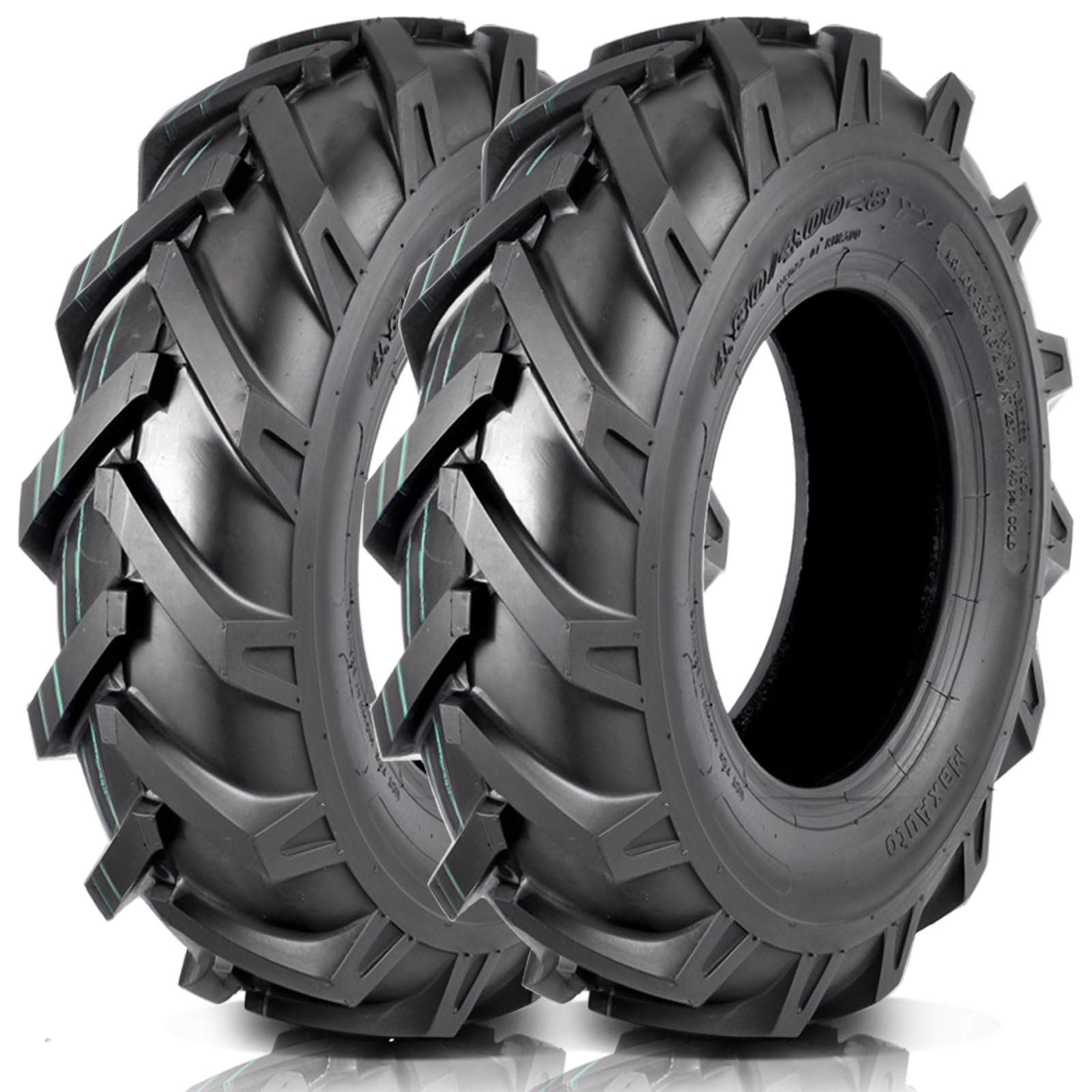
I find these compact tires ideal for tillers, trenchers, and other small garden machines.
Why I picked it: Right size and tread for tillers and small garden equipment.
Best for: Rototillers, small trenchers, garden carts.
Very affordable small-equipment option.
Pros
- Correct fit for many tilllers
- Good traction for small machines
- Easy to mount on original rim
- Tubeless convenience
Cons
- Not for heavy towing
- Smaller load capacity
My take
I swapped these 4.80-8 tires into a rototiller and they were a perfect match for the original wheels. The angled lugs give enough bite for garden tasks while keeping the setup compact.
They mount to three-inch rims and are rated for typical tiller pressures. I mounted them on factory wheels with no weird fit issues, and they held air reliably through a full season of use.
If you need a direct, budget-friendly replacement for small equipment, these are exactly the kind of tire I reach for.
5. 20×10-8 Wheel and Tire Assembly – Best Complete Wheel + Tire
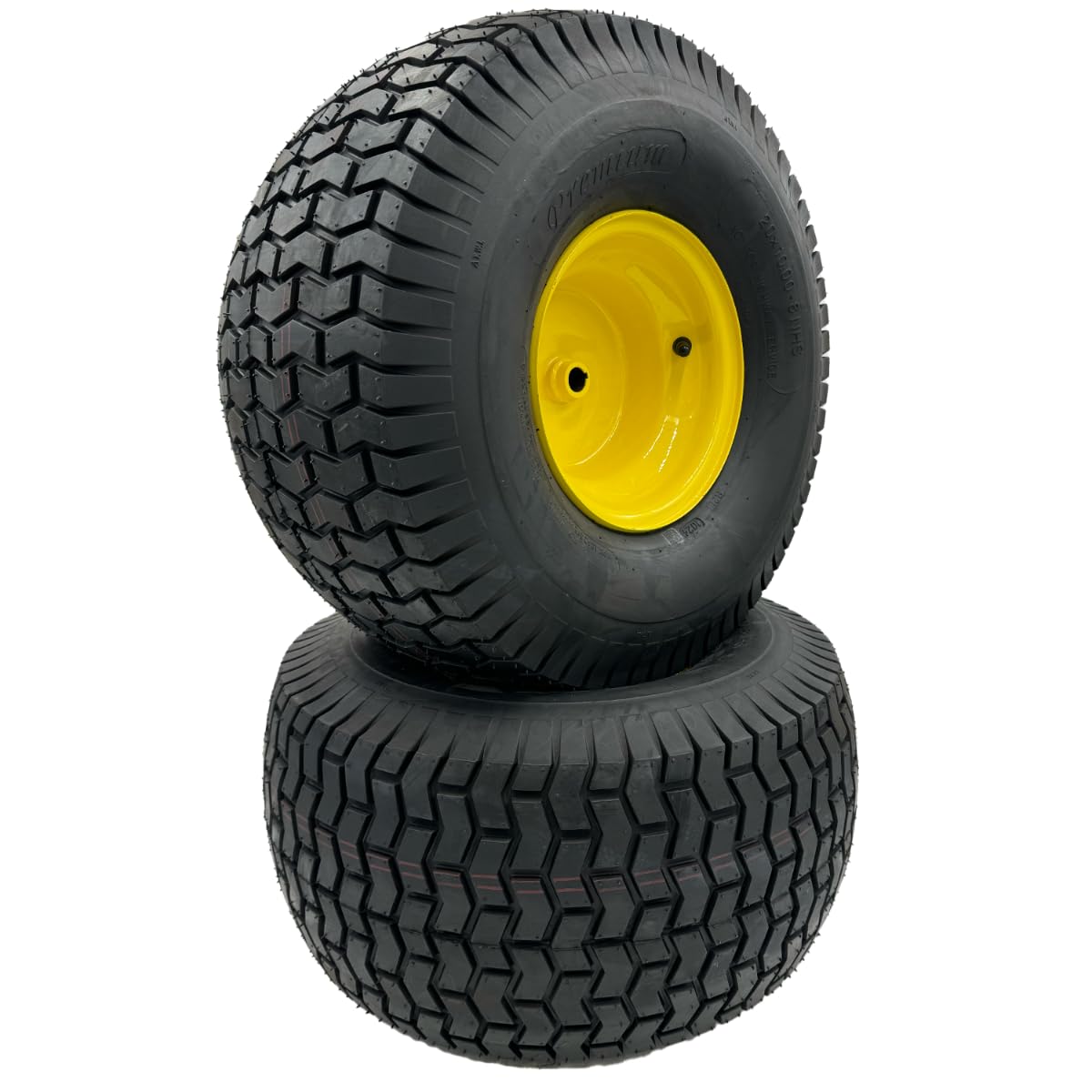
I prefer this when I want a plug-and-play replacement: tire and rim included.
Why I picked it: Includes rim and hub — direct fit for many mower models.
Best for: Direct replacements for specific mower models.
Higher cost reflects wheel plus tire convenience.
Pros
- Comes with rim and hub
- Direct fit for many models
- 4PR tire construction
- Simplifies replacement
Cons
- Heavy—harder to lift
- Colored rim may not match every mower
My take
I bought the 20×10-8 assembly when I wanted a straightforward swap without sourcing a separate rim. The set includes a 3.5" long hub and tires already mounted, which saved me time and a trip to the tire shop.
The assembly fits a range of mower models and is built with a 4PR tire. Because it's a combined unit it's heavier to handle during installation, but that weight also translates to a solid, ready-to-use replacement.
If you prefer the convenience of a ready assembly, this is the easiest route I've taken for full replacements.
6. HALBERD 13×6.50-6 Turf Tire – Best for Walk-Behind Mowers
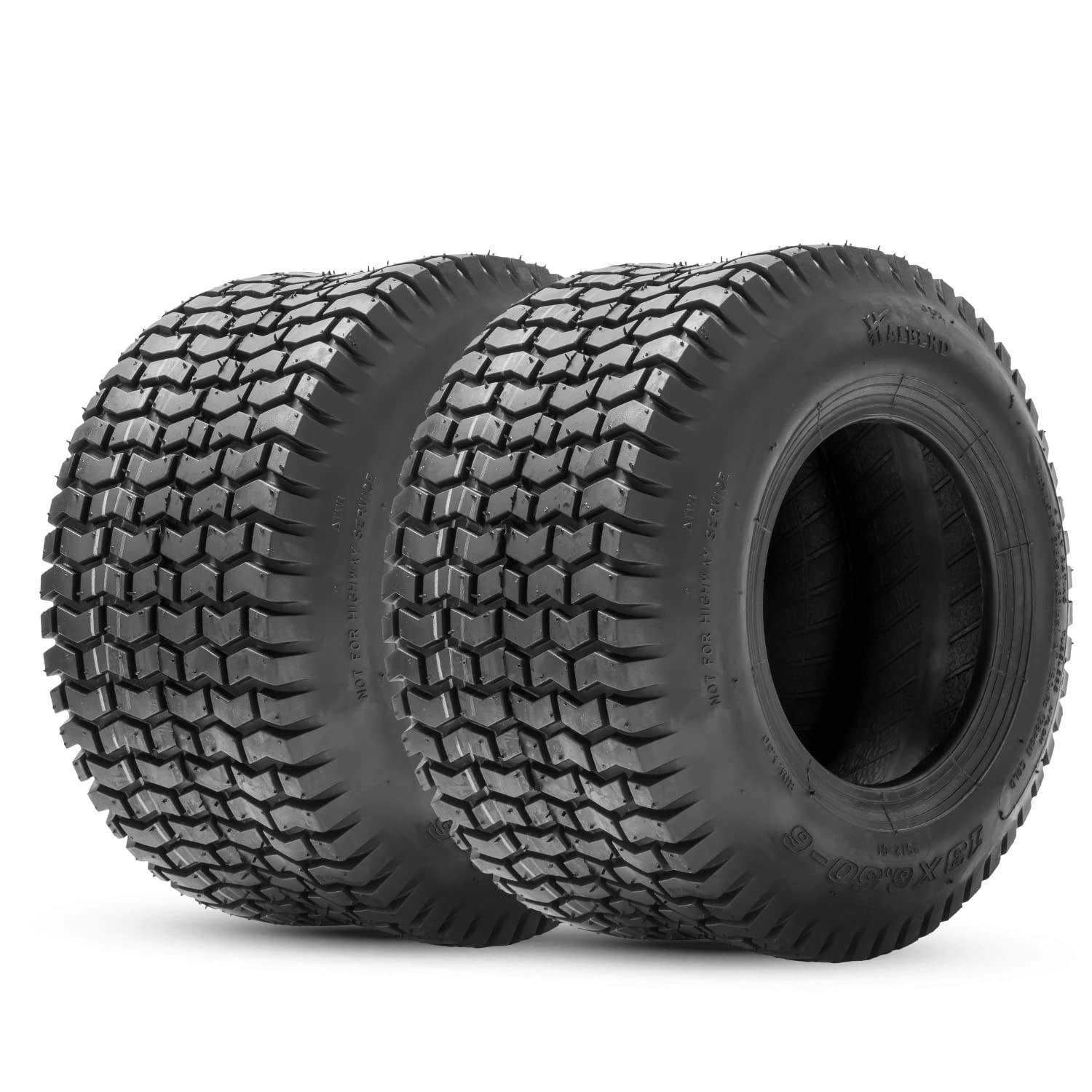
I like these for walk-behind mowers and turf maintenance where minimizing tracks matters.
Why I picked it: Square shoulders and chevron treads protect turf while giving traction.
Best for: Walk-behind mowers, golf turf, light utility carts.
Low-cost, turf-focused replacement.
Pros
- Turf-friendly chevron tread
- Reduced turf marking
- Fits common 6" rims
- Good balance of traction and turf care
Cons
- Less aggressive for heavy mud
- Some users want deeper tread
My take
I installed the HALBERD 13×6.50-6s on a walk-behind mower and appreciated how little they marked the grass compared with deeper-lug options. The square shoulders and chevron pattern spread load and keep tracks tidy.
They're rated for typical mower pressures and are a straightforward fit for most six-inch rims. The ride and traction are well suited to maintained lawns; I wouldn’t choose them as my first pick for very rough, muddy ground.
Overall, these are an economical choice when turf appearance matters more than extreme bite.
7. WANDA 24×12-12 Farm Tire – Best Heavy-Duty Traction
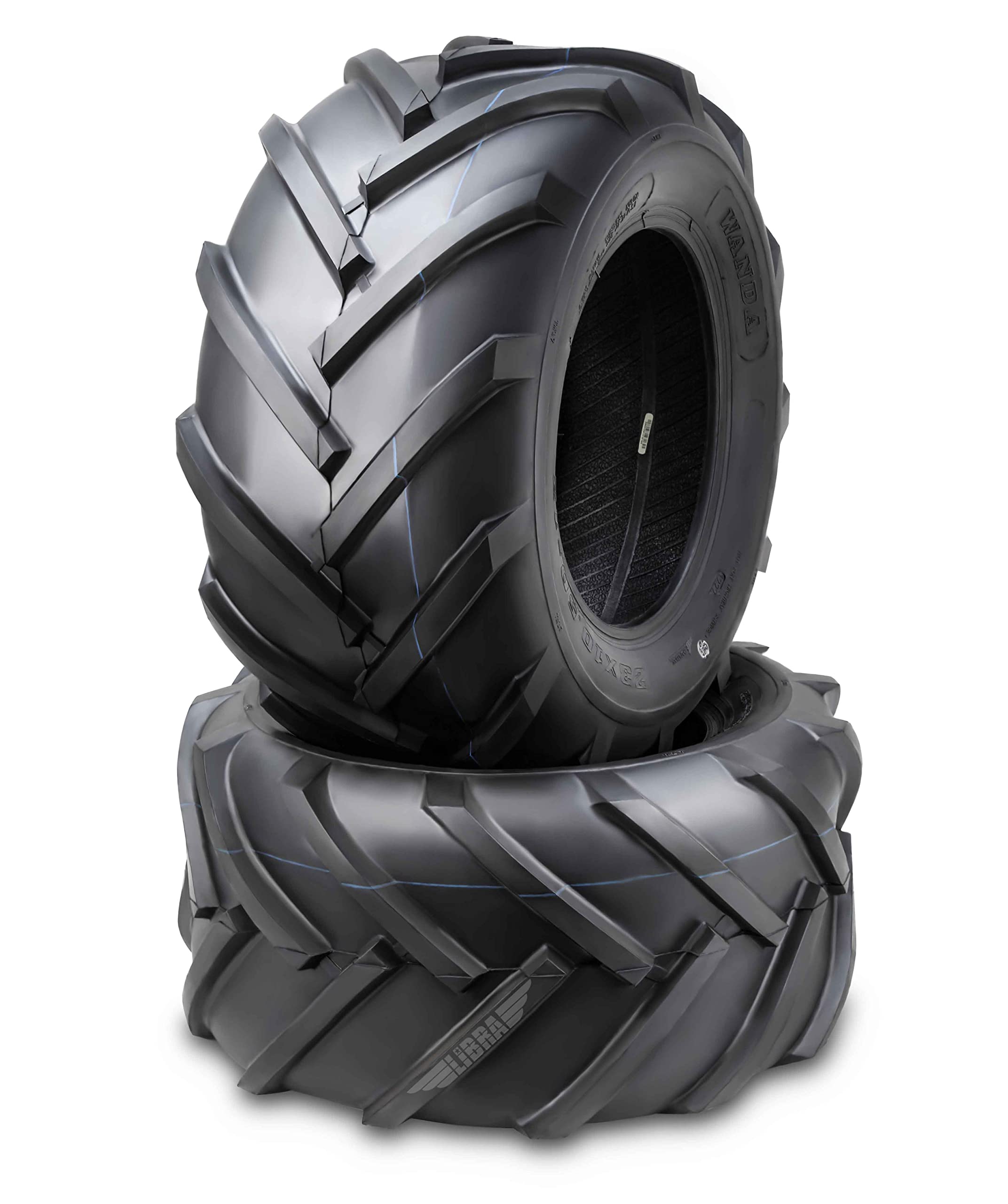
I recommend these when you need wide, stout tires for heavy loads and soft surfaces.
Why I picked it: Wide shoulders, deep fish-bone tread, and high load rating for utility use.
Best for: Large garden tractors, utility vehicles, sand or mud conditions.
Premium option for heavy-duty tasks.
Pros
- Wide shoulders for weight distribution
- Deep fish-bone tread
- High load capacity
- Stout sidewalls
Cons
- Very stiff—difficult to mount
- Large size may require shop help
My take
I fitted the WANDA 24×12-12s to a Cub Cadet when I needed wide flotation and traction across uneven ground. The fish-bone tread and wide shoulders give excellent bite in sand, mud, and soft turf.
These tires carry a high load — listing notes around the 1,700-lb range at recommended pressure — and the robust construction makes them resistant to sharp debris. Mounting them was a workout; the stiff rubber demanded tire spoons, clamps, or professional mounting.
After mounting the tires performed exactly as intended: better steering and fewer instances of spinning on wet, uneven ground. For big mowers and utility machines these are a serious upgrade.
How I Choose Lawn Tractor Tires
Match tire size and rim compatibility
I always start by confirming the exact tire size stamped on my current tire and the rim width. Sizes like 18×9.50-8, 15×6.00-6, and 4.80-8 are common but not interchangeable.
If a product includes a wheel assembly, I check hub length and axle fit to avoid surprises during installation.
- Confirm tire size on sidewall before ordering
- Check rim width and hub length for assemblies
- Remember many listings are NHS — not for highway use
Choose tread based on use
I pick aggressive, deep-lug tires for slopes, mud, and towing. For finished lawns I choose herring-bone or chevron patterns to minimize turf damage.
Consider tread depth: deeper lugs give traction but increase ride harshness and can scuff fine grass.
- Deep lugs = traction, firmer ride
- Herring-bone/chevron = turf-friendly
- Directional lugs help with pulling power
Installation and tools I use
Stiffer, heavier tires often need long tire spoons, bead lube, and patience. For the largest tires I either heat them in the sun to soften the rubber or take them to a shop.
I recommend fresh valve stems and sealant for tubeless setups if you want to avoid pinhole leaks.
- Bring long tire spoons and bead lubricant
- Consider professional mounting for large tires
- Swap valve stems and consider sealant
Air pressure and load
I follow the listed max-load and recommended psi for each size. Overinflating to compensate for a heavy load can reduce traction and comfort.
If you carry attachments or tow frequently, choose a tire with a higher load rating.
- Use recommended psi for load rating
- Higher load ratings for towing or heavy implements
- Adjust pressure for turf care vs traction needs
Frequently Asked Questions
Can I mount these tires myself?
I mount some sizes myself with long tire spoons, bead lube, and vice grips, but for the largest or stiffest tires I take them to a shop to avoid damage and save time.
How do I pick between aggressive lugs and turf-friendly tread?
I choose aggressive lugs when traction and slope performance matter; for lawns where appearance matters I choose herring-bone or chevron patterns to reduce turf scarring.
Are these tires tubeless and do they need special valve stems?
Most of the tires here are tubeless. I typically replace old valve stems and sometimes add sealant when installing tubeless tires to prevent slow leaks.
Final Take
I chose options here to cover the real decisions I face when replacing mower tires: traction versus turf care, DIY installation versus ready-to-mount assemblies, and the sizes that fit common equipment.
If I need maximum bite on steep or muddy ground, I reach for the heavy-lug MaxAuto or WANDA options. For maintained lawns and walk-behinds I prefer the HALBERD and FOX V1 patterns. And when I want the easiest swap, the wheel-and-tire assembly saves a lot of time.
Pick the tire that fits your rim and use case, bring the right tools, and you’ll get the performance you expect from a simple upgrade.
