
I've tested a range of light boxes for kids, artists, diamond painters, and product photographers. These are the options I keep reaching for when I need reliable, even lighting for tracing, weeding vinyl, or shooting e‑‑
I hunt for light boxes any time I need consistent, even illumination for tracing, diamond painting, vinyl weeding, or product shots. Over months of testing I used pads for kids, portable USB models, large A3 boards, complete diamond‑painting kits, and a compact photo studio box.
In this roundup I compare the models I’ve depended on most — from a kid‑friendly Crayola tracing pad to an A3 pad that handles heavy paper and fabric, plus a compact photo booth with professional color rendering. I’ll explain what each one does best and where I’d use it.
If you want portability and battery power, I point you toward rechargeable A4 pads. For large projects and fabric work, I prefer A3 pads with physical side controls. For product photography, the collapsible photo box with high CRI lighting is my go-to.
1. Crayola Light-Up Tracing Pad – Best for Kids
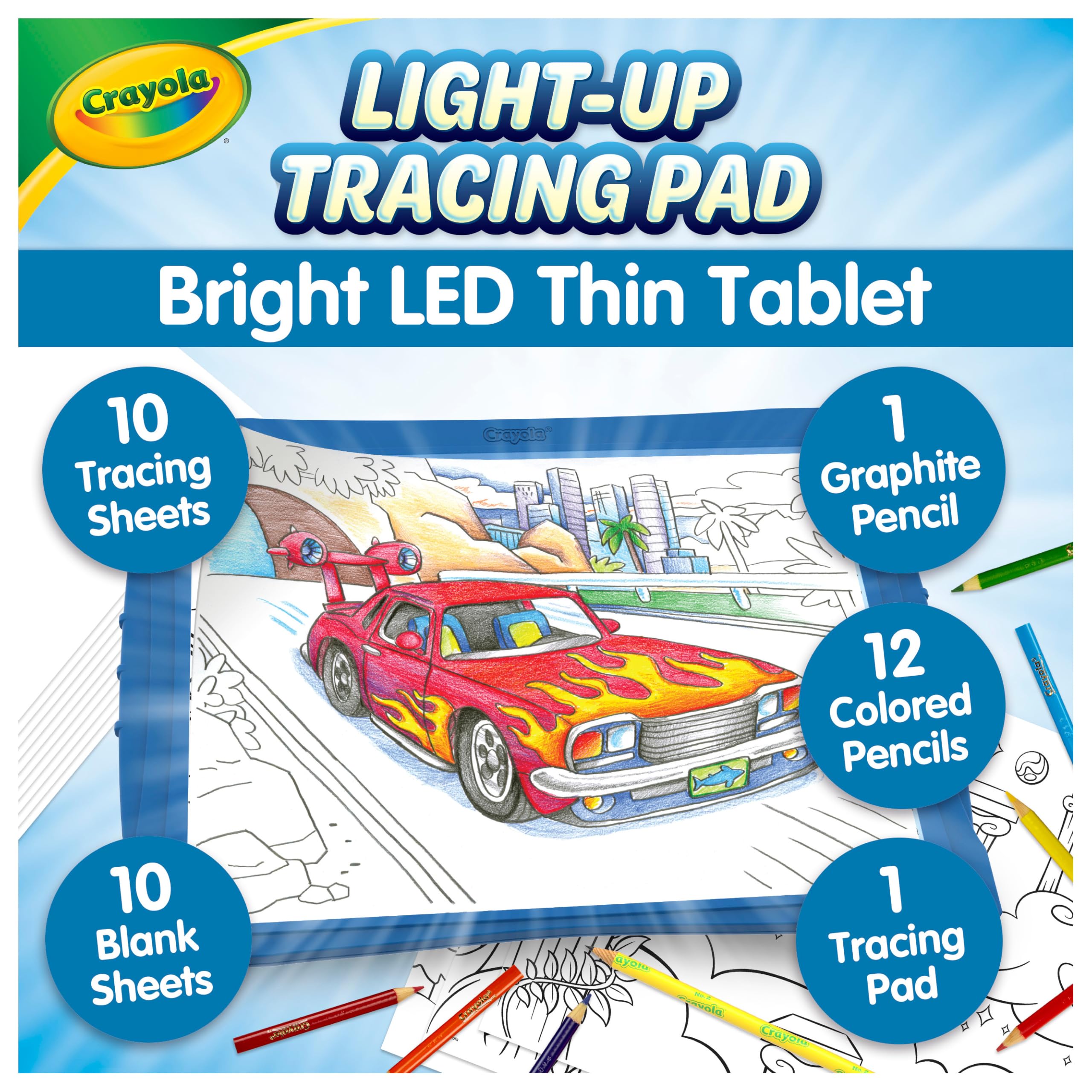
A complete, kid-focused tracing kit with even LED lighting and included art supplies — ideal for beginners and younger artists.
Why I picked it: I chose it for the kid‑friendly kit, even lighting, and travel‑friendly build.
Best for: Young artists, classrooms, and travel creative kits.
Affordable, great value as a full starter kit.
Pros
- Comes with pencils and tracing sheets
- Uniform, bright LED surface
- Lightweight and portable
- Kid-friendly non-slip frame
Cons
- Requires AA batteries
- Limited to small sheet sizes
My take
I reach for this Crayola pad when I want a ready‑to‑use kit for a child. It arrives with colored pencils, graphite pencil, tracing sheets and blanks, so we can start tracing immediately without hunting for supplies.
The LED panel gives uniform light that makes even detailed designs easy to trace, and the frame is light enough for kids to carry to the couch or take on trips. The non‑slip feet keep paper steady while tracing.
I appreciated that the pad is simple to use and that additional designs are available to download. It’s ideal for early learners who benefit from a contained kit and bright, even lighting.
2. Ultra-Thin A4 LED Tracing Pad – Best Ultra-Thin
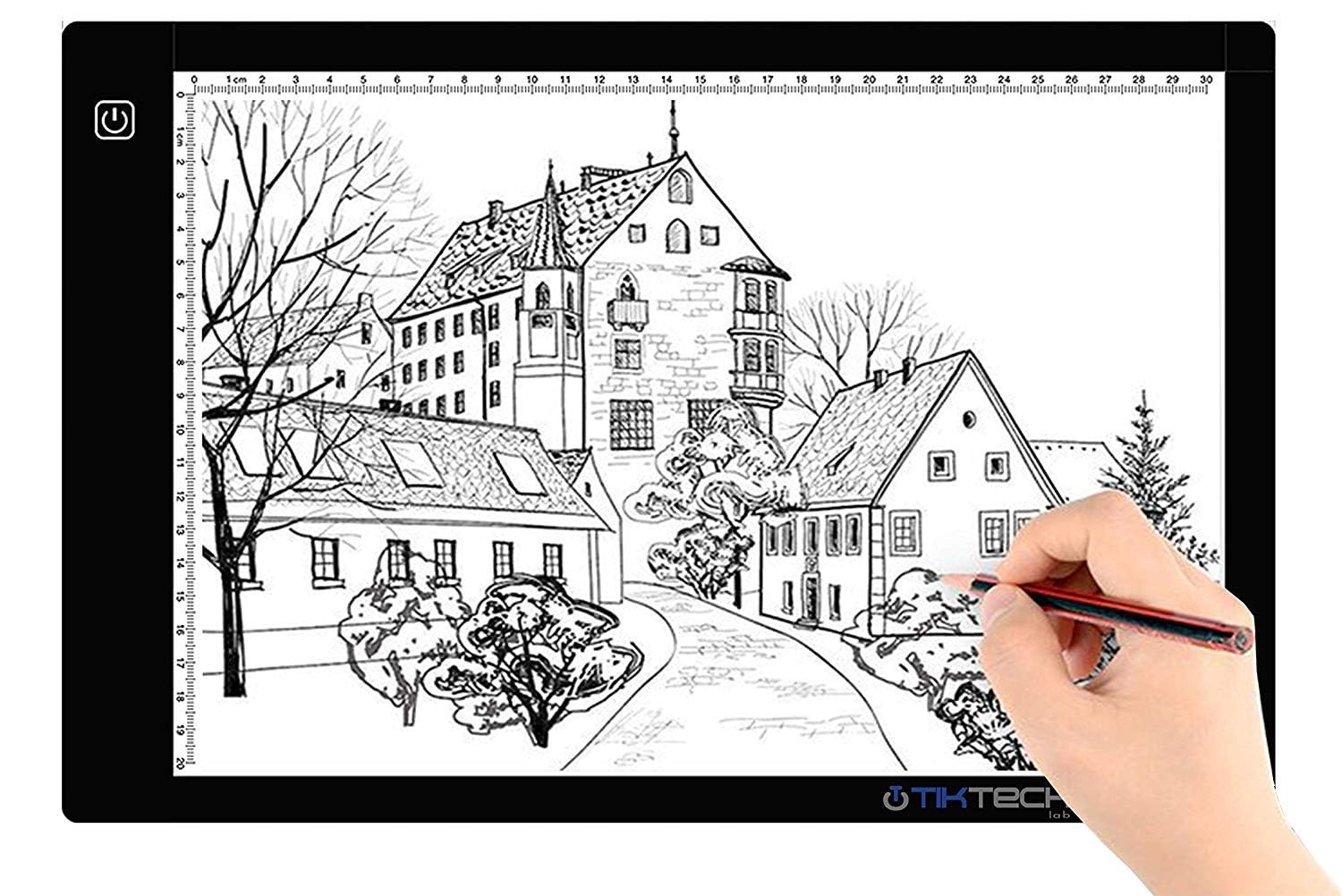
A super-slim, USB‑powered A4 pad with stepless brightness control that I used for detailed tracing and heavy paper.
Why I picked it: I picked it for its thin profile and stepless brightness control via touch sensor.
Best for: Artists who need a slim, plug‑in pad for sketching and tracing.
Budget-friendly option for a full‑size A4 pad.
Pros
- Very slim and portable
- Stepless brightness control
- Bright, flicker‑free LEDs
- USB powered for desk setups
Cons
- Must stay plugged in
- USB cord can feel short
My take
This A4 pad is the one I use when I want something thin and unobtrusive on my desk. The panel is only a few millimeters thick, so it tucks into my portfolio and travels easily.
The touch sensor offers smooth, stepless dimming — hold the sensor to dial the brightness down — which I found handy when tracing through everything from copy paper to heavier cardstock and watercolor sheets.
A key limitation is that it needs a steady 5V USB source to run; there’s no internal battery, so I keep it plugged into my computer or a power bank while I work.
3. Ratukall A4 Diamond Painting Light Pad Kit – Best Diamond Painting Kit
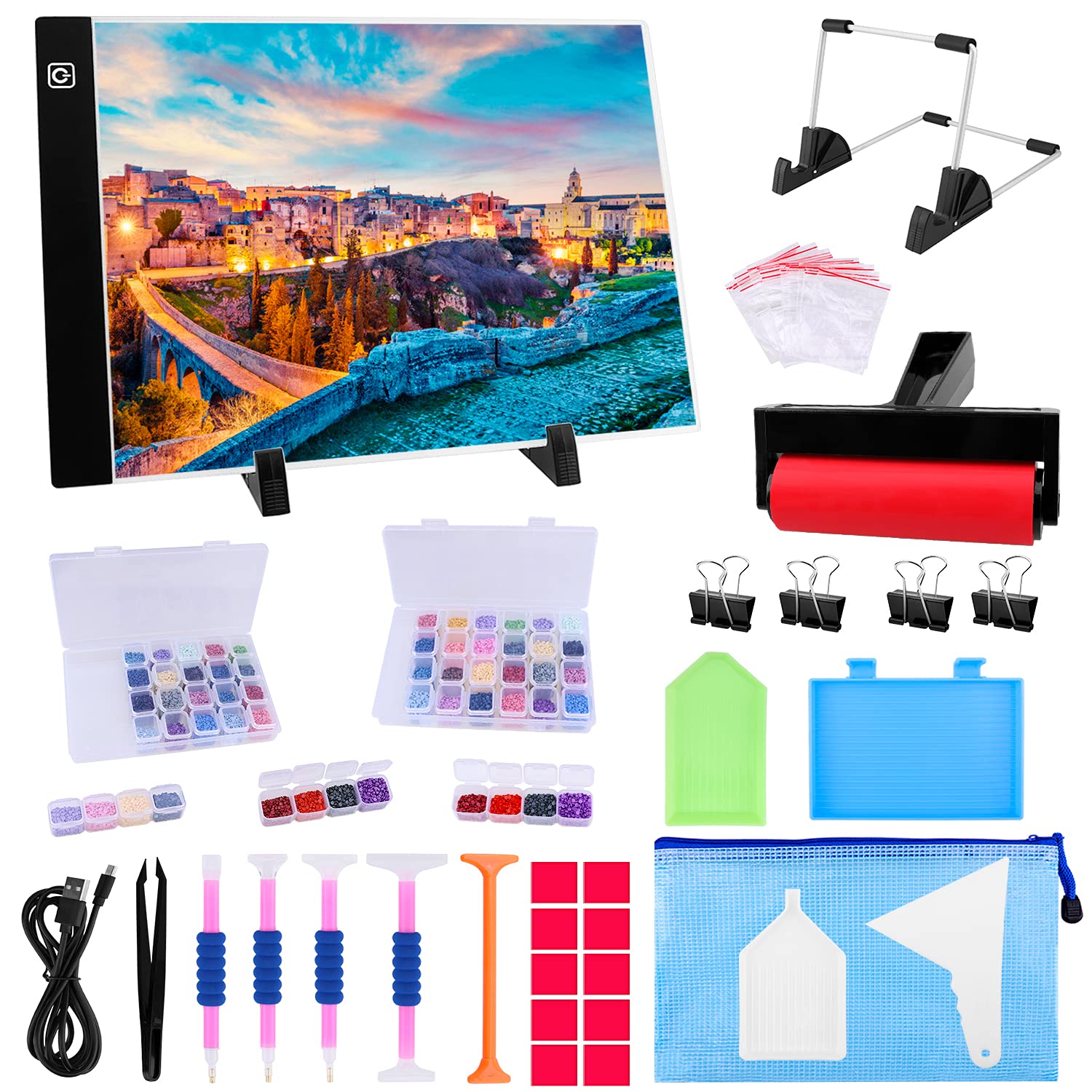
A full A4 kit tailored to diamond painting hobbyists, with accessory boxes, a stand, and three brightness levels.
Why I picked it: I favored it for the all‑in‑one accessory set and the three brightness modes for long craft sessions.
Best for: Diamond painting enthusiasts and craft hobbyists who want a complete kit.
Very wallet‑friendly kit that includes tools and storage.
Pros
- Comes with many diamond‑painting accessories
- Three brightness levels
- Includes storage boxes and stand
- Lightweight and portable
Cons
- Accessory bag feels thin
- USB cord is a bit short
My take
I used this Ratukall kit specifically for diamond painting and appreciated that it ships as a near‑complete set — storage trays, multiple pens, roller, tweezers, and two storage boxes are included so I didn’t have to source extras.
The pad itself is bright and has three easily selectable light levels. The included little stand helps me angle the board for long sessions so my neck doesn’t ache.
A few practical notes: the USB cord is shorter than I prefer and the tiny accessory bag isn’t very robust, but I bought this mainly for the light pad and accessories combo and it delivers excellent value for that purpose.
4. WELZK A3 Light Pad – Best Large Pad
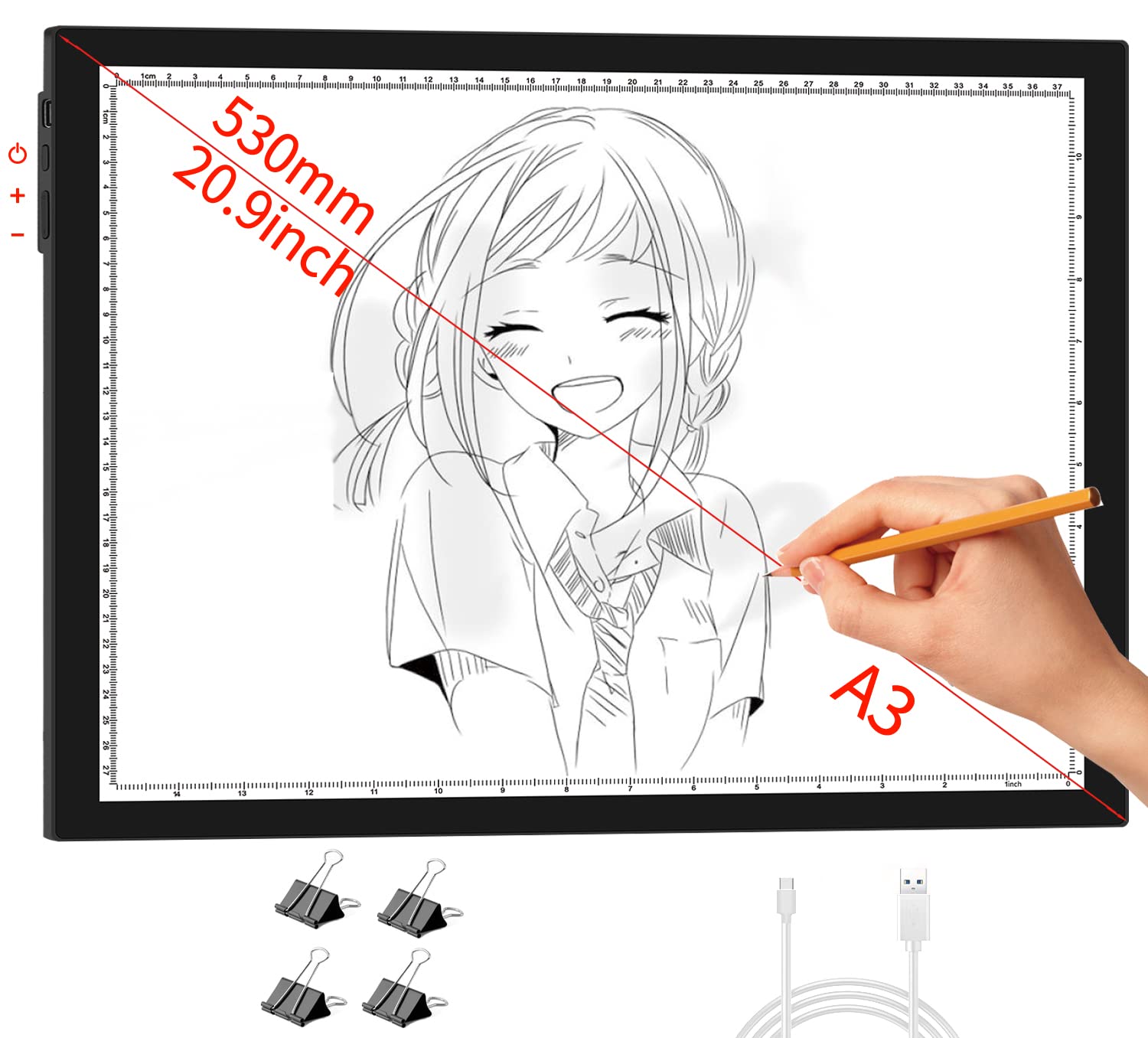
A large A3 pad with side physical buttons, very high brightness, and a sturdy frame for big tracing and fabric work.
Why I picked it: I use it when projects demand a larger working area and consistent, dot‑free lighting.
Best for: Large format tracing, fabric collage, and heavy paper projects.
Midrange for A3 sizes, excellent value for size and output.
Pros
- Large A3 lighting area
- Side physical controls prevent accidental touches
- Very bright, no dot pattern
- Anti‑slip back and solid frame
Cons
- Not rechargeable — needs power
- Bulky compared to A4 pads
My take
When I need to trace oversized patterns or work with fabric and thicker material, the WELZK A3 board is the one I grab. The larger lighting area saves me from constantly shifting the project.
I like the side buttons because I stopped accidentally changing brightness mid‑project; short presses step brightness, long presses provide smooth dimming. The panel produces no dot pattern and very even light across the whole surface.
The frame feels sturdy and the non‑slip backing keeps the board steady while I cut or trace. If you frequently work on larger pieces, this A3 pad makes the process much faster.
5. HSK A3 LED Light Pad – Best A3 with Lock
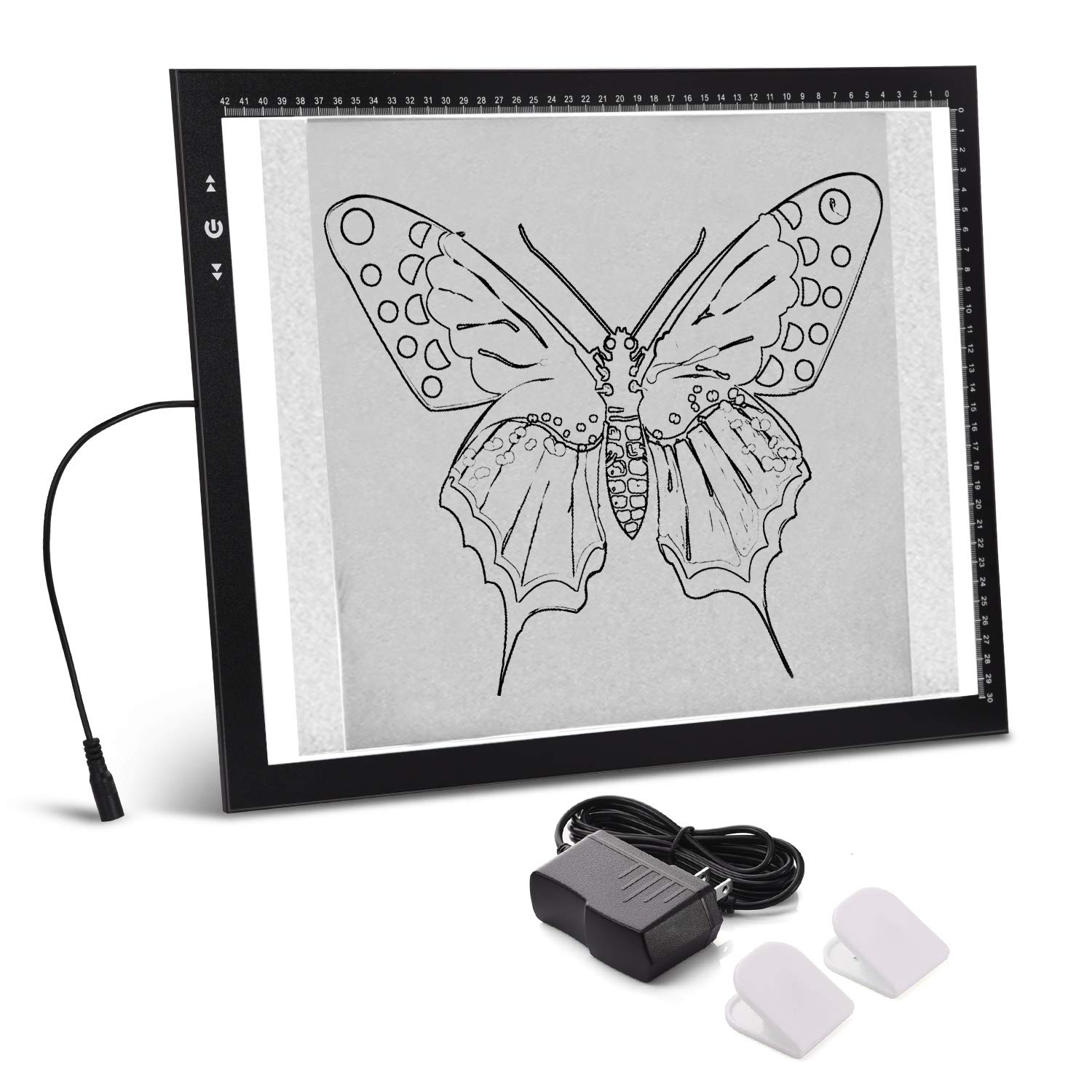
An aluminum‑framed A3 pad with a lock function to prevent accidental dimmer changes and a broad brightness range.
Why I picked it: I appreciate its lock feature and bright, even illumination for quilting and tattoo transfer work.
Best for: Quilters, large tracing projects, and diamond painters wanting a lockable control.
Competitive for A3 pads with an aluminum frame and extras.
Pros
- Lock button prevents accidental changes
- Solid aluminum frame
- Even, flicker‑free illumination
- Large visual area for bigger projects
Cons
- Requires wall power
- Heavier than slim A4 pads
My take
I picked up this HSK A3 pad for art quilts and larger tracing jobs where I needed a reliable, even light source. The aluminum frame gives it a premium feel compared with thinner models.
The lock function is genuinely useful: I can tape patterns in place or weed vinyl without worrying about accidentally bumping the controls. Brightness adjusts cleanly with the up/down buttons.
Because it plugs into the wall, I keep it stored in its box when not in use; it travels okay in a car but it’s best for a dedicated workspace rather than lap work.
6. DUCLUS 12×12 Photo Light Box – Best for Product Photos
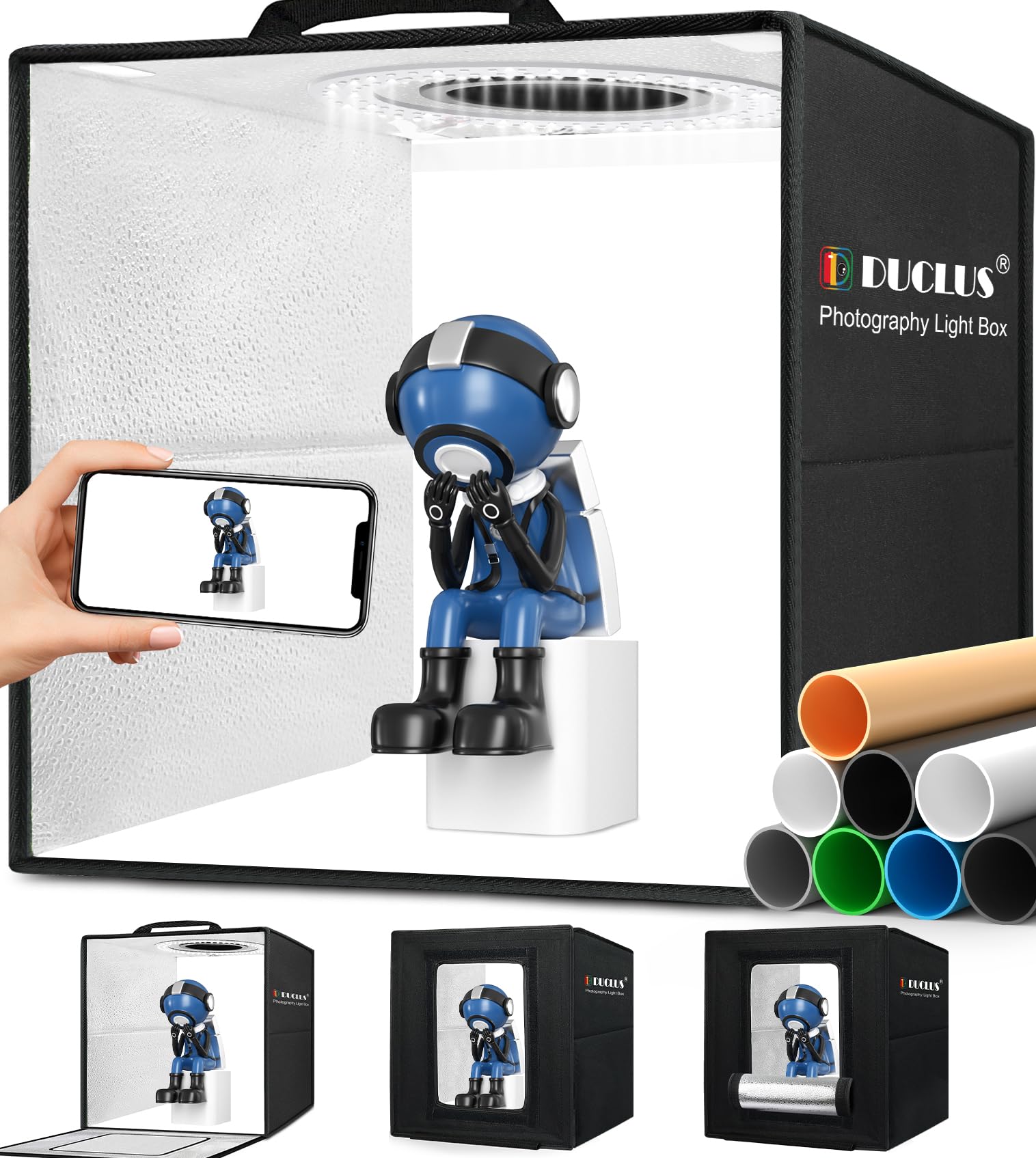
A collapsible photo booth with many LEDs, high CRI, adjustable front cover modes, and eight backdrops — built for clean product shots.
Why I picked it: I use it to make product images pop thanks to even lighting and high CRI color rendering.
Best for: Small product photography, jewelry shots, and quick e‑commerce imaging.
Affordable portable photo studio with professional features.
Pros
- High CRI and daylight color
- Multiple front cover shooting modes
- Includes eight backdrops
- Quick fold‑in setup
Cons
- Limited to small and medium items
- Velcro edges need care
My take
I started using the DUCLUS box for small product shoots and quickly noticed cleaner images and truer colors, thanks to the high CRI lighting and daylight temperature LEDs.
The Velcro front cover gives me three working modes (fully open, small window, fully closed top hole), which I use depending on whether I want a front‑on or top‑down composition. Setup and teardown are fast — it folds down for storage in seconds.
The kit includes several PVC and matte backgrounds that I rotate through to create reflections or eliminate glare. For jewelry, cards, and small home‑studio items, this box consistently gives me the polished shots I need.
7. iVyne Rechargeable A4 Light Pad – Best Rechargeable
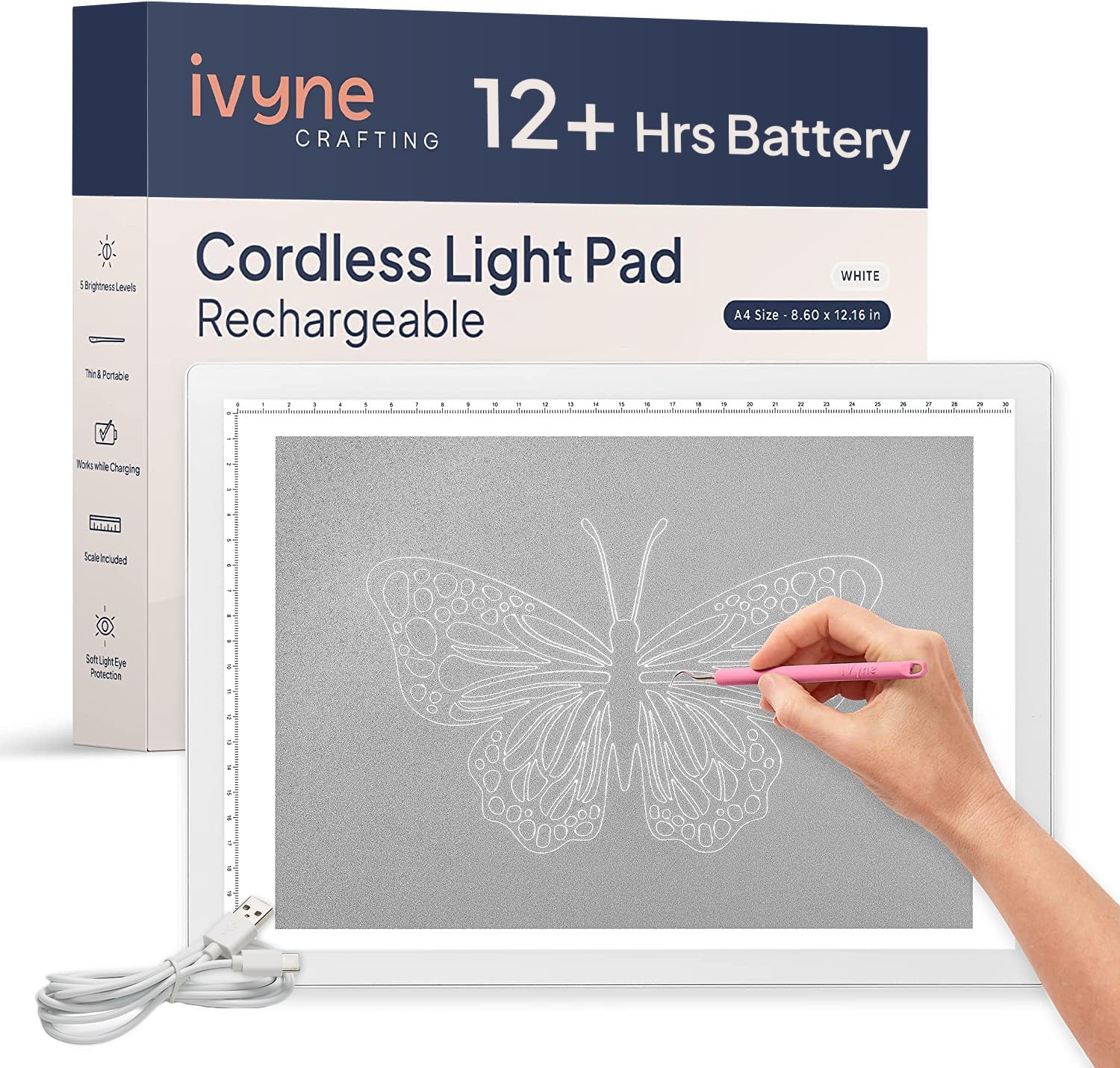
A rechargeable A4 pad with five brightness levels and a slim profile that I use for vinyl weeding and on‑the‑go tracing.
Why I picked it: I relied on its rechargeable battery and portability for crafting away from outlets.
Best for: Crafters who weed vinyl, use Cricut, or need cordless tracing.
Midrange — pays off with rechargeable convenience.
Pros
- Built‑in rechargeable battery
- Five useful brightness modes
- Ultra‑thin and portable
- Good for vinyl weeding
Cons
- Side button can trigger when working
- Smaller working area than A3
My take
I use the iVyne pad when I need cordless freedom for weeding vinyl or transferring small designs. The built‑in battery keeps me working away from power outlets, and charging is straightforward with the included cable.
Five brightness settings let me find a comfortable level for delicate work; holding the button smoothly adjusts intensity. At its highest setting the pad is bright enough for detailed weeding and tracing.
One small annoyance: when I work left‑handed my hand occasionally taps the power switch. Flipping the pad or angling it slightly fixes that, and overall its portability makes it one of my most used tools for quick projects.
How I Choose a Light Box
Size and workspace
I always match the pad size to the project. A4 is great for small tracing, vinyl weeding, and travel. A3 is where I go for fabric, large patterns, or when I don’t want to move the work around constantly.
If I’m shooting products, I pick a collapsible lightbox that accommodates the largest item I plan to photograph.
- Choose A4 for portability and small crafts.
- Choose A3 for quilting, large tracing, and heavy paper.
Power type — rechargeable, USB, or wall plug
When I need mobility I prioritize rechargeable pads. If I work at a desk with a computer or power bank nearby, USB‑powered pads give near‑unlimited runtime.
For the highest and most consistent output I’ll use a pad that plugs into AC power.
- Rechargeable: best for cordless crafting.
- USB: great for desk use and power banks.
- AC‑plug: steady power for the brightest output.
Brightness, dimming, and eye comfort
I prefer pads with multiple brightness levels or stepless dimming so I can tune the light for tracing on thin or thick media. Flicker‑free LEDs are essential for long sessions.
Physical side buttons are my preference if I’m prone to accidental touch controls while I work.
- Look for flicker‑free LEDs and adjustable brightness.
- Side physical buttons reduce accidental changes.
Special features and extras
If I’m into diamond painting, a kit that includes trays, pens, and storage boxes saves me time. For product photography, I prioritize high CRI lighting and multiple backdrops.
Anti‑slip backing, stands, and lock functions are small details that improve daily use.
- Diamond‑painting kits: look for storage and tools included.
- Photo boxes: choose high CRI and adjustable shooting windows.
- Check for stands, anti‑slip feet, and lock features.
Frequently Asked Questions
Can I trace through thick paper or fabric?
Yes — I regularly trace through heavier cardstock and even cotton when I use large, high‑lux A3 pads. Smaller A4 models work fine for thinner papers; the highest brightness levels are best for dense materials.
Do rechargeable pads hold enough charge for long sessions?
In my experience, modern rechargeable pads give enough runtime for a few hours of steady work. If I expect an all‑day session I either plug in or keep a power bank handy.
Are photo light boxes worth it for online listings?
Absolutely. I saw a noticeable improvement in color accuracy and shadow control after switching to a collapsible box with high CRI lighting; it cuts editing time and produces cleaner product images.
How do I avoid accidentally changing brightness while working?
I either choose a pad with side physical buttons or use a lock function. On touch‑sensitive pads I change my working angle or flip the pad so my hand doesn’t brush the control.
Final Take
I keep several of these light boxes in my toolkit because different tasks demand different solutions. For kids and starters I favor the Crayola kit; for portability the rechargeable A4 pad wins; for large, detailed work I rely on A3 models; and for product photography the DUCLUS box is the most consistent.
Use the buying guide to match size, power, and features to your projects, and you’ll have a light source that speeds work and improves results.
