
I tested a range of A19 and specialty bulbs to find the best options for living-room lighting—warm ambient bulbs, bright daylight options, vintage filaments, color-changing mood lights, and a top smart bulb pick for full
I swapped bulbs across every fixture in my home to figure out which ones actually improved living-room lighting. My tests focused on color, brightness, consistency, and real-world features like remote control and smart-home integration.
Below I share five bulbs that performed best for distinct living-room needs: ambient comfort, bright task light, vintage style, mood lighting, and full smart control. I explain where each fits and the trade-offs I discovered while using them.
For cozy evenings I reach for a 2700K soft-white option; when I need clear, task-ready light I go daylight; if I want ambiance I use vintage filaments or an RGB bulb; for reliable remote and automation control I prefer Hue.
1. Sylvania ECO A19 2700K Soft White – Best Overall
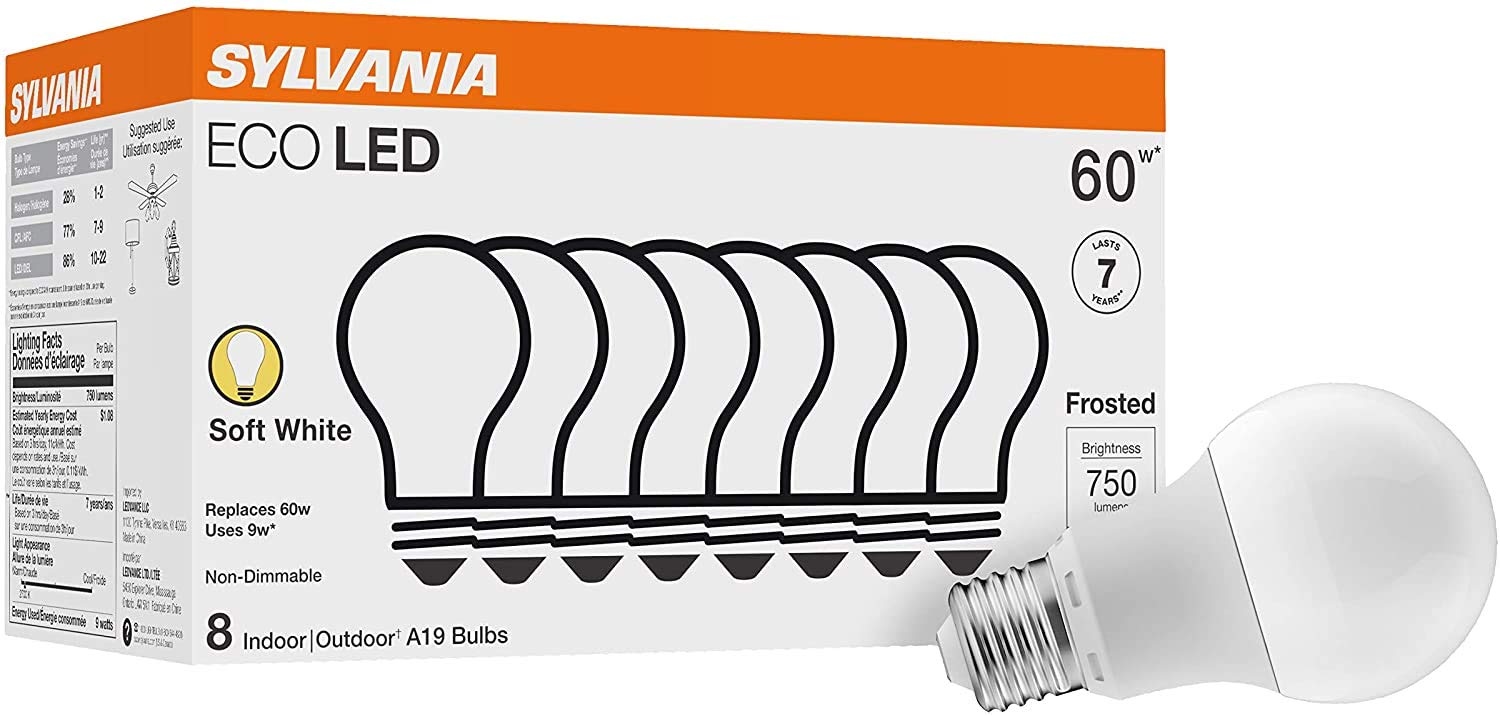
Consistent warm soft-white output at 750 lumens with low energy use and long life in bulk packs.
Why I picked it: Because the 2700K warmth and 750-lumen output hit the sweet spot for living-room overheads—bright enough for tasks, soft enough for evenings.
Best for: General living-room fixtures where I want welcoming, non-harsh light.
Affordable bulk option for whole-home swaps.
Pros
- Warm, inviting 2700K light
- Consistent color across bulbs
- 750 lumens — good middle ground
- Low wattage, energy efficient
- No audible hum or flicker
Cons
- Non-dimmable
- Not rated for fully enclosed fixtures
- Occasional minor cosmetic scuffs
- Rare premature failures reported
My take
I replaced most fixtures in my apartment with these Sylvania ECO bulbs and immediately noticed a more cohesive, welcoming atmosphere. The 2700K soft white feels natural in a living room—warm without drifting orange—and the 750-lumen output gives me enough light for reading or hosting without glare.
They turn on instantly and I didn’t hear any humming even after hours of use, which says a lot about the driver quality. The bulbs run cool and have a solid frosted finish that softens the light nicely. A small caveat: they’re non-dimmable and the listing advises against fully enclosed fixtures, so I avoid them in recessed cans with tight housings.
Overall, I recommend these for anyone who wants reliable, pleasant ambient lighting across multiple rooms. For the price of a multi-pack, it’s an easy swap that noticeably improved daily lighting in my living spaces.
2. Energetic A19 5000K Daylight – Best Value (Daylight)
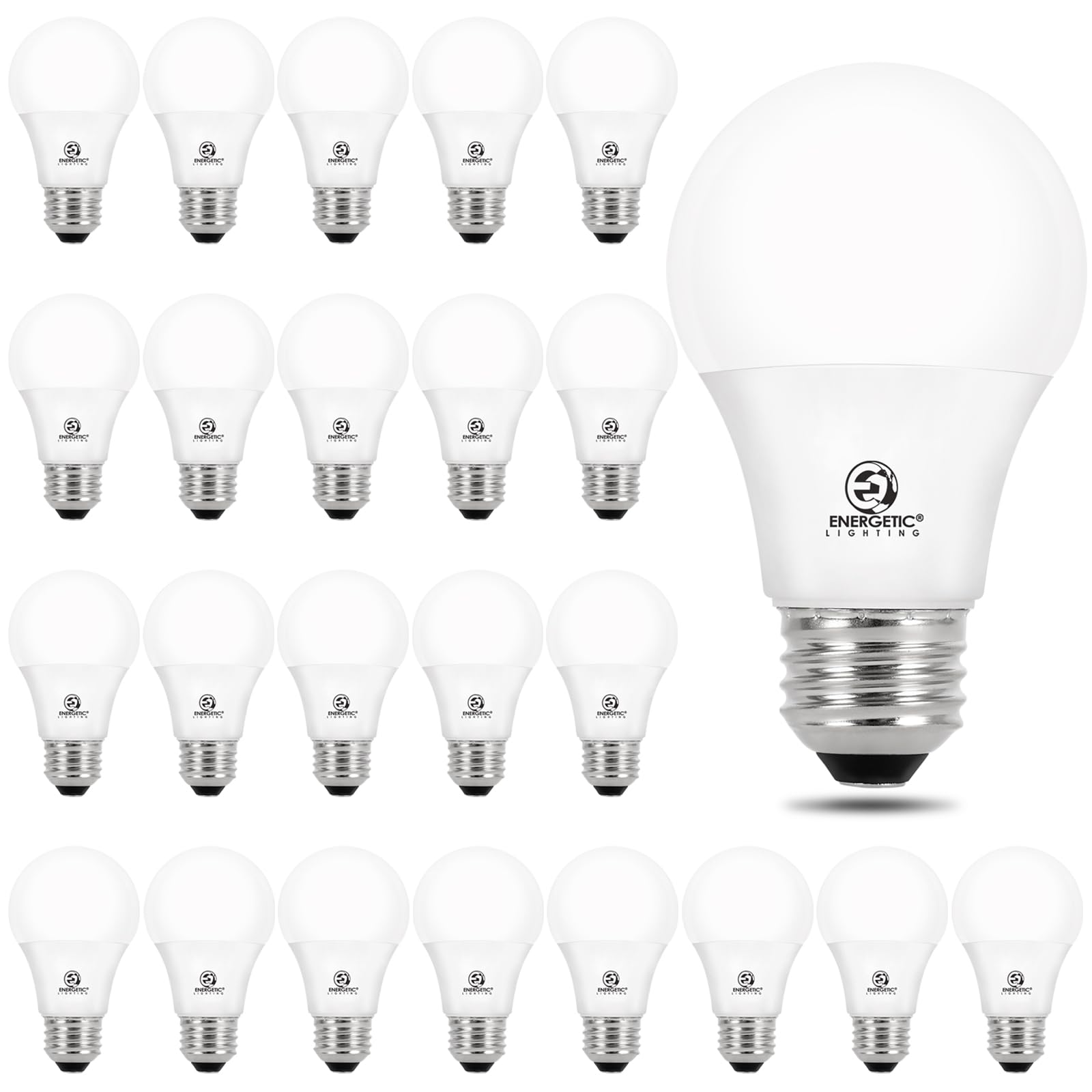
Large 24-pack of bright daylight bulbs that suit work areas and kitchens where crisp, high-visibility light matters.
Why I picked it: Because the 5000K daylight output delivers clean, task-ready illumination and the 24-pack makes it simple to outfit multiple fixtures.
Best for: Kitchens, garages, workshops, and living rooms where bright, daylight-white light is preferred.
Very economical per bulb for whole-house replacements.
Pros
- Very bright, clean 5000K daylight
- Large 24-pack — easy whole-home swaps
- Instant-on with even light
- Good lumen output (~760 lm)
Cons
- Non-dimmable
- Not eligible for some regional shipments
- Manufacturer lifespan claims may vary in real use
My take
I bought a 24-pack of the Energetic daylight bulbs to replace older kitchen and garage lamps and appreciated how instantly crisp everything looked. The 5000K tone removes the yellow bias most household LEDs create and makes detail work much easier.
Across two cycles of use I saw mixed longevity: a set that was lightly used has needed no replacements, but in very high‑use fixtures a few bulbs failed earlier than the manufacturer’s maximum-hour claims. That aligns with the product notes, so I treat the lifespan numbers as best-case rather than guaranteed.
If you need bright, clean light on a budget for many fixtures, these bulbs are my go-to — just avoid putting them in fixtures that require dimming.
3. Ascher Vintage Edison ST58 4000K – Best Vintage Style
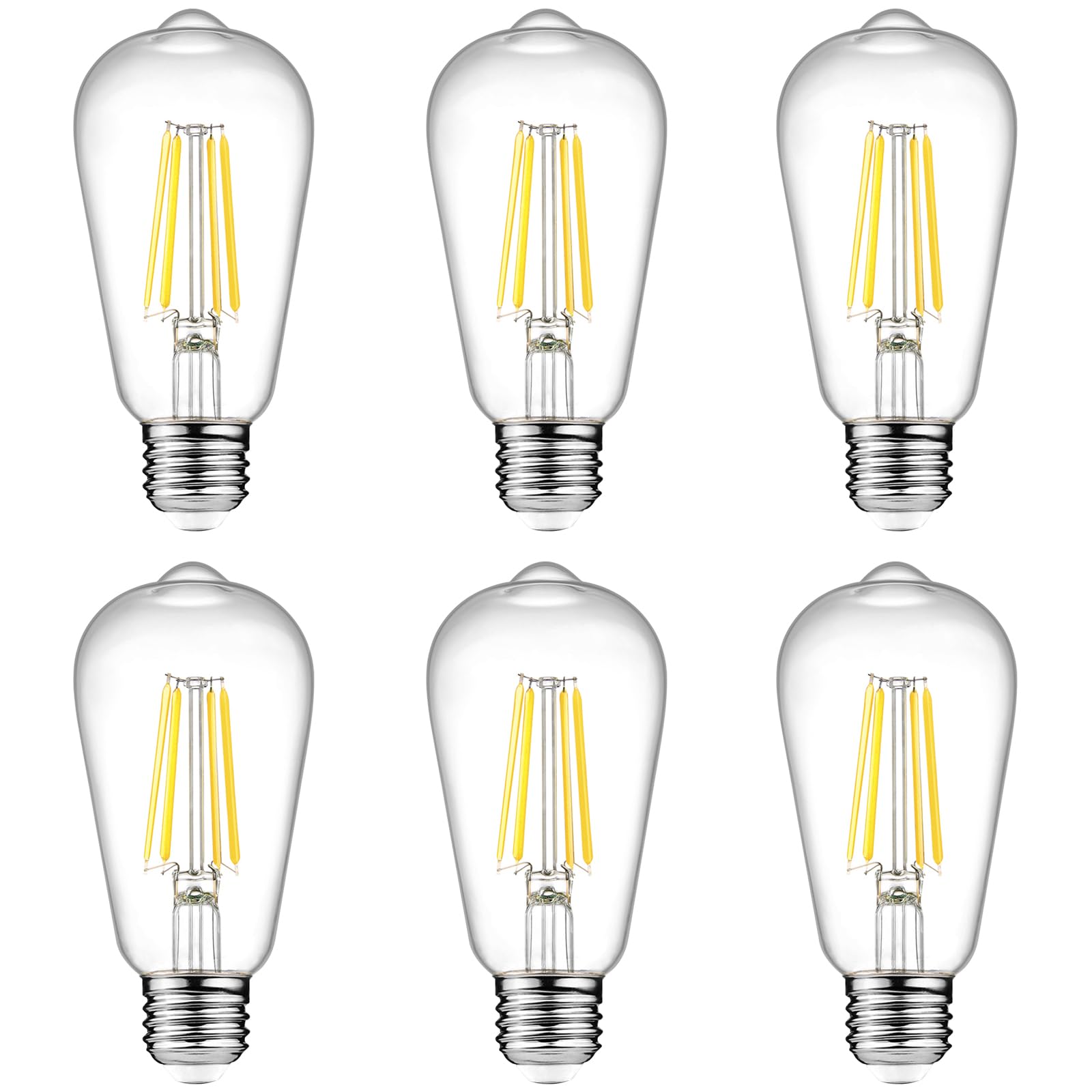
Decorative clear-glass filament bulbs that give a vintage look while delivering usable cool-white illumination.
Why I picked it: Because they blend the Edison aesthetic with modern LED efficiency—great when the bulb is part of the decor.
Best for: Exposed pendants, chandeliers, and fixtures where the bulb itself is part of the design.
Mid-range decorative option with strong visual payoff.
Pros
- Attractive vintage filament look
- Clear glass for visual impact
- Good color rendering (CRI ~80)
- 700 lumens — functional and decorative
Cons
- Non-dimmable
- Fragile packaging possible
- Cooler 4000K may feel less "warm"
My take
I installed these Ascher Edison bulbs in exposed pendant fixtures and they instantly upgraded the room’s character. The clear glass and filament design look intentional rather than cheap, and the 4000K output made the bathroom and dining area feel cleaner and brighter without being icy.
One shipment arrived with a broken bulb, so I swapped the box, but the replacement arrived well packed. The bulbs themselves install like any standard E26 and are noticeably more attractive than frosted A19s when used in open fixtures.
If you want style as much as light, these provide a good balance—just handle the boxes carefully and don’t plan on dimming them.
4. ILC RGB Color-Changing RGBW Bulb – Best for Mood Lighting
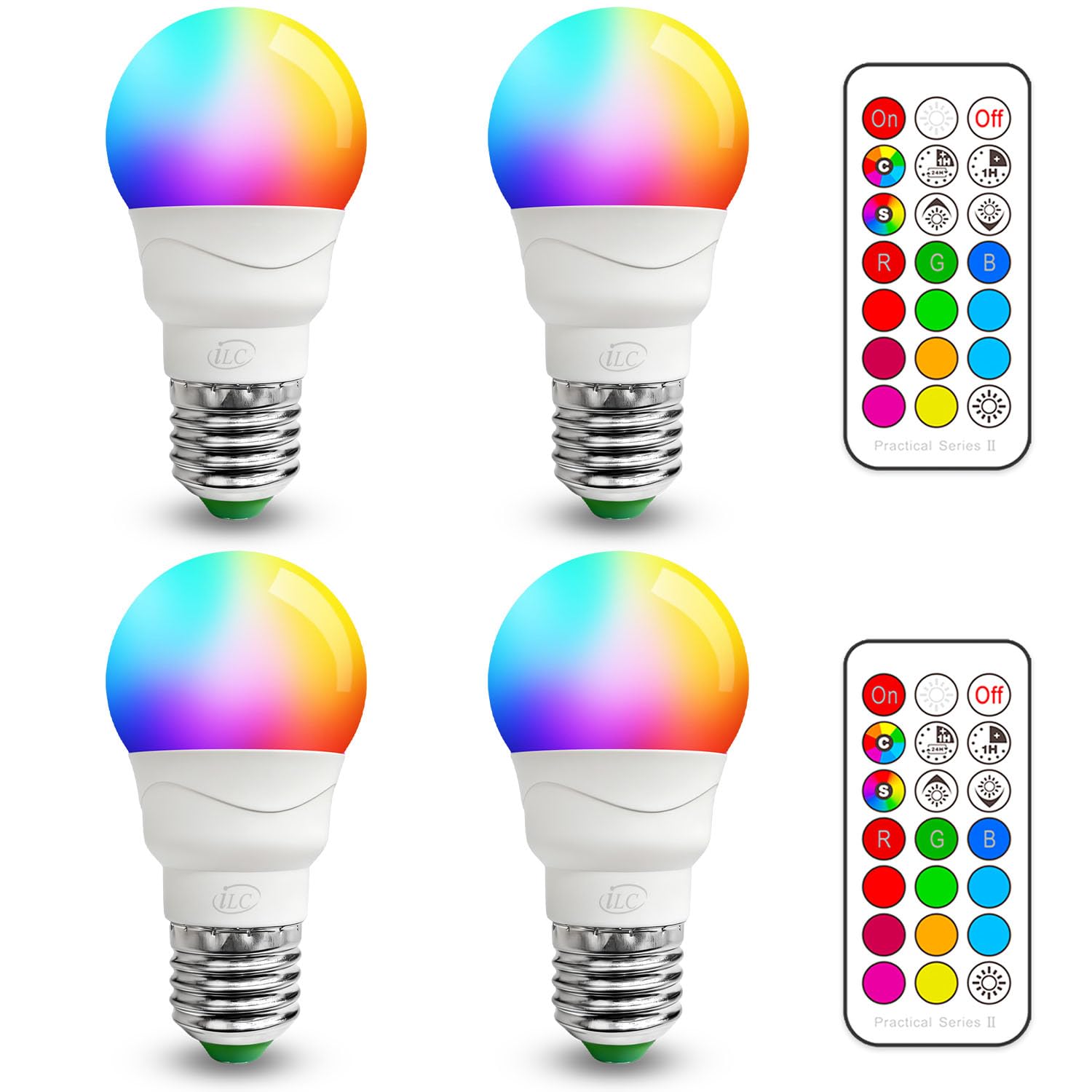
Remote-controlled RGBW bulb that offers 12 colors, memory and sync, timing, and basic warm-white output for atmosphere.
Why I picked it: Because the included remote and color modes let me create party or cozy lighting without a smart-home setup.
Best for: Game rooms, parties, kid spaces, or any lamp where you want quick color changes and mood effects.
Budget-friendly alternative to app-based smart bulbs.
Pros
- 12 vivid color choices
- Remote control included
- Memory and synchronization features
- Timing function for automation
Cons
- Lower max brightness (450 lm)
- Can fail sooner in dimmable fixtures
- Color accuracy not studio-grade
My take
ILC’s RGB bulb became my go-to when I wanted instant mood lighting without fuss. The remote is small but durable, and switching between warm white and the colored modes is immediate. Sync and memory are surprisingly helpful when I use multiple bulbs together—the transitions stay coordinated.
A few caveats emerged in prolonged use: the bulb’s brightness tops out around 450 lumens, so it’s best as accent or mood lighting rather than main-room illumination. Also, I avoid putting these in dimmable fixtures; I found they can behave oddly or have shorter lifespans there.
For a cheap, no‑app way to add color to a living room or game space, this is one of the most convenient solutions I’ve used.
5. Philips Hue White & Color Ambiance A19 – Best Smart
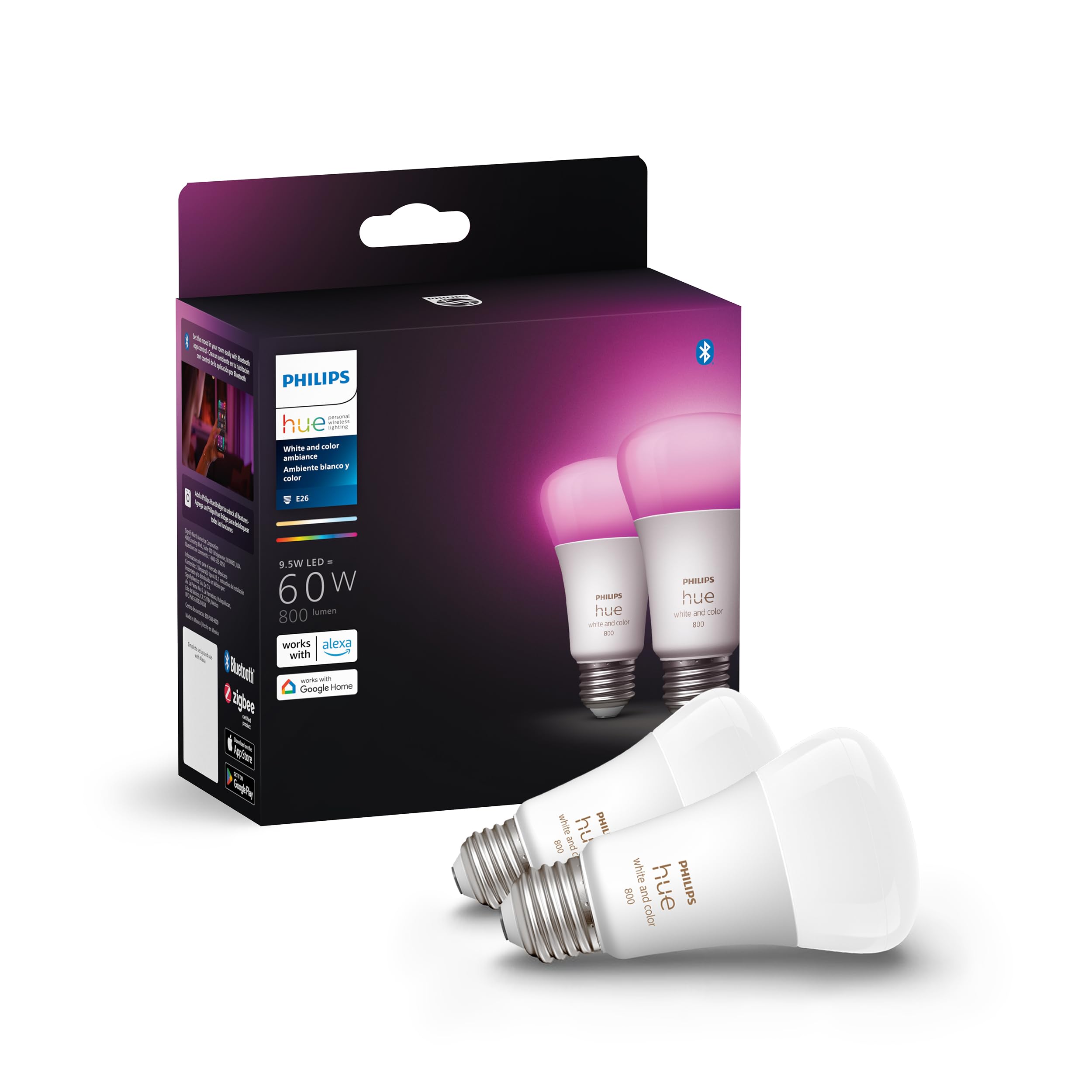
A premium smart bulb with wide color range, reliable Zigbee hub support, smooth dimming, and advanced automation via the Hue ecosystem.
Why I picked it: Because Hue’s hub-based system produces the most reliable response, best color rendering, and deepest automation I’ve experienced.
Best for: Anyone building a stable smart lighting setup with routines, voice control, and multi-room scenes.
Premium purchase but I consider it a long-term smart-home investment.
Pros
- Millions of colors and warm-to-cool whites
- Smooth, reliable dimming
- Strong Zigbee hub integration
- Excellent app features and routines
Cons
- Higher cost than basic bulbs
- Full feature set needs Hue Bridge
- App requires account for some remote features
My take
I use Hue bulbs throughout my home because the system's reliability is worth the premium. Switching from a Wi‑Fi-only setup to Hue’s Zigbee hub stopped connection dropouts and freed up my Wi‑Fi for other devices.
Colors are rich and the white tones are smooth across the dimming range—this matters for living-room scenes and evening routines. The Hue app and bridge let me create schedules and wake-up/away routines that actually work without constant tinkering.
If you want the cleanest, most dependable smart lighting experience and plan to expand to many bulbs and accessories, Hue remains my top recommendation despite the higher upfront cost.
How I Choose Bulbs for a Living Room
Color Temperature (Kelvin)
I decide the mood of a room by the bulb’s color temperature. For a cozy living room I usually pick 2700K–3000K (soft white). If I need bright, task‑oriented light I go 4000K–5000K (cooler or daylight).
When bulbs are visible—pendants or exposed fixtures—I consider how the color complements decor and skin tones.
- 2700K–3000K: warm and relaxing
- 3500K–4000K: neutral, good for mixed-use rooms
- 5000K: crisp, task-focused light
Brightness and Lumens
Lumens tell me how much light I’ll get. For general living-room overheads I aim for bulbs in the 600–900 lumen range; accent or mood bulbs can be much lower.
I match lumen output to fixture type—reflectors and shades reduce apparent brightness, so I up the lumen count where needed.
- 600–900 lm: typical for main living-room bulbs
- 300–500 lm: table/floor lamps and accents
- Higher lumens for large rooms or task lighting
Dimmability and Control
I prefer dimmable bulbs in living rooms so I can control atmosphere. If a bulb is non-dimmable, I use it only in fixtures that don’t need variable light.
For smart control I weigh whether I want app/voice automation (Hue) or a simple remote solution (many RGB bulbs).
- Pick dimmable bulbs for living areas
- Use Hue or similar hubs for reliable large setups
- Remotes are great for plug-and-play color control
Style and Fixture Compatibility
When bulbs are visible, I choose shape and finish that enhance the fixture—clear glass filaments for exposed pendants, frosted A19s for diffused ceiling fixtures.
Check fixture ratings: some LEDs aren’t for fully enclosed housings, and many decorative bulbs aren’t dimmable.
- Clear glass = decorative
- Frosted = softer, diffused light
- Confirm enclosed fixture ratings
Energy Use and Lifespan
I compare wattage and claimed lifetime but treat lifespan numbers as guidance. In high-use spots a bulb may fail sooner than theoretical hours.
Bulk packs are cost-effective for whole-home swaps, while premium smart bulbs are an investment in reliability and features.
- Lower wattage LED = lower energy draw
- Lifespan claims vary with usage patterns
- Bulk packs save money but watch quality variance
Frequently Asked Questions
What color temperature works best for a living room?
I generally pick 2700K–3000K for a cozy living-room feel and move to 3500K–5000K only if I need bright, task-oriented light for a specific area.
Do I need dimmable bulbs in my living room?
If I want flexible lighting for movies, reading, and entertaining, I use dimmable bulbs. Non-dimmable bulbs are fine for constant-output fixtures or decorative lamps.
Are color-changing RGB bulbs a good choice for living rooms?
I use RGB bulbs for accents and parties; they’re ideal for mood lighting but usually lack the brightness to be a room’s primary light source.
Final Take
I found that one bulb won’t solve every lighting need. For everyday warmth and consistency I rely on the Sylvania ECO A19; when I need daylight clarity I switch to the Energetic 5000K pack; Ascher wins where the bulb itself is part of the design; ILC’s RGB bulbs are my quick path to mood lighting; and Philips Hue remains the top choice when smart-home reliability and advanced automation matter.
Match the bulb’s color temperature, lumen output, and control features to how you use a room, and you’ll notice the difference in comfort and function every time you flip the switch.
