
I tested popular liquid fertilizers across soil and hydro setups so you can pick the right feed for faster vegetative growth, bigger blooms, or organic boosts.
I put these liquid fertilizers through real-world trials in pots, raised beds, and hydroponic units so I could compare how quickly plants respond and how easy each product is to use.
Across houseplants, herbs, vegetables, and flowering specimens I tracked growth spurts, bud production, ease of mixing, and any nitty-gritty maintenance like flushing or pH adjustments.
Below I explain which formulas I reach for depending on the job — whether I want a complete feeding program, an organic bloom booster, or a hydroponic nutrient that’s simple to dose.
I grouped these by the role they play in my garden: full-system feeding, organic bloom support, hydroponic nutrition, vegetative growth, and bloom/fruit boosters — pick the one that matches what you need to feed.
1. FoxFarm Soil Liquid Trio Pack – Best Overall
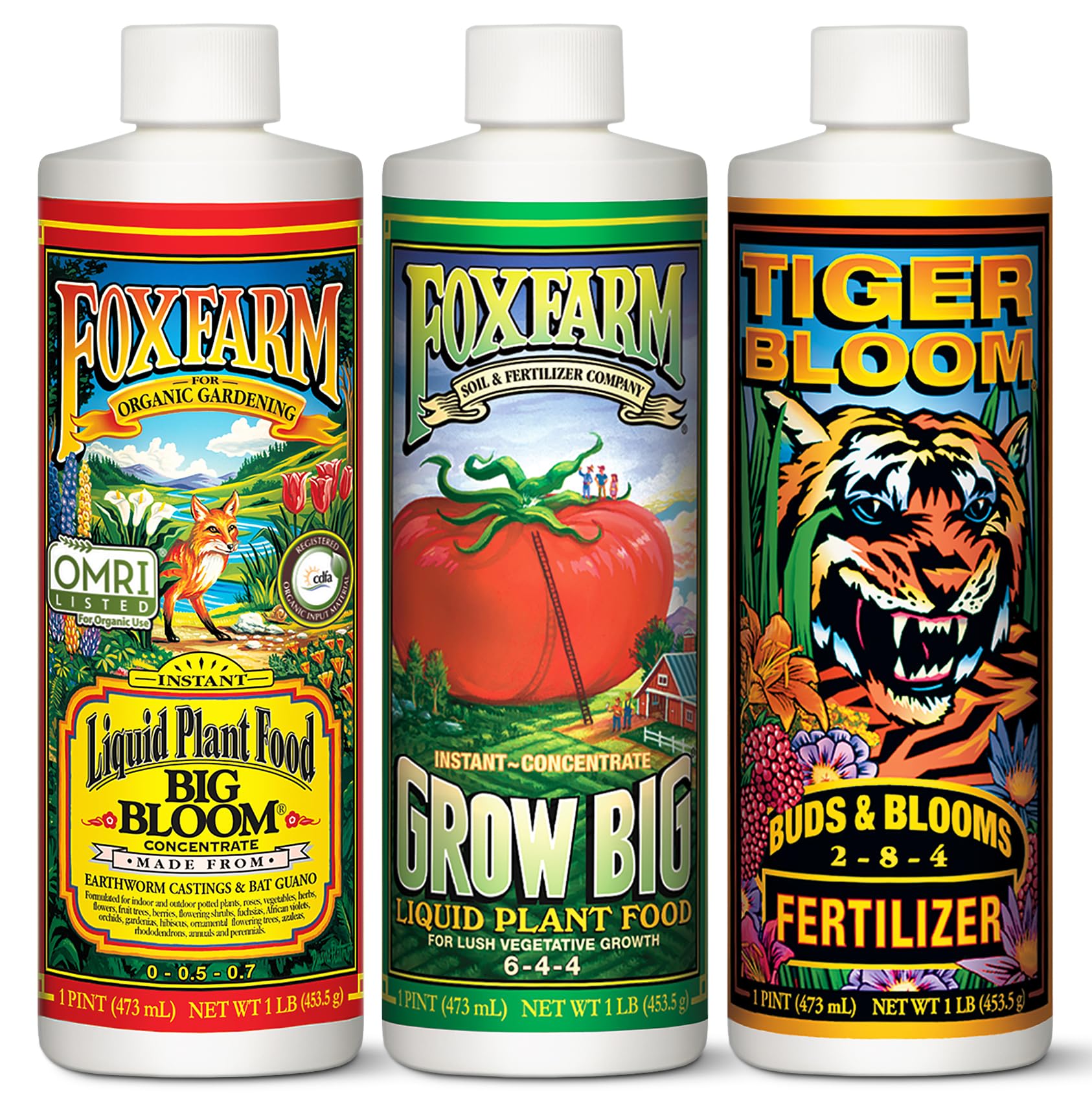
I rely on this three-bottle system when I want a single, coordinated feeding plan that carries plants from early growth through heavy bloom and fruiting.
Why I picked it: Complete three-product program that covers vegetative, bloom, and soil conditioning.
Best for: Gardeners who want one coordinated feeding schedule for multiple growth stages.
Bundle offers strong value compared with buying formulas individually.
Pros
- Complete veg-to-bloom nutrient set
- Works across houseplants and edibles
- Easy dilution charts
- Noticeable growth response
Cons
- Can cause nutrient burn if followed too aggressively
- Bottle caps get residue and can be sticky
My take
I keep the trio on my bench when I want a no-surprise nutrition plan: Grow Big for vegetative push, Big Bloom to condition soil, and Tiger Bloom to finish. Together they provide the range of nutrients my plants need across stages.
In use I saw fast, visible results — greener foliage and quicker size gains in seedlings and transplants. The formulas mix simply and the dilution instructions are straightforward, though I often start at half the recommended strength until plants adapt.
A couple of practical notes I learned: the liquids don’t have the harsh ammonia smell you get with some feeds, but the bottles can collect residue around the cap, which makes them a little fiddly to open after use. Also, a full-strength follow of the chart can scorch sensitive tips, so I ease into the schedule.
2. FoxFarm Big Bloom Liquid Plant Food – Best Organic Booster
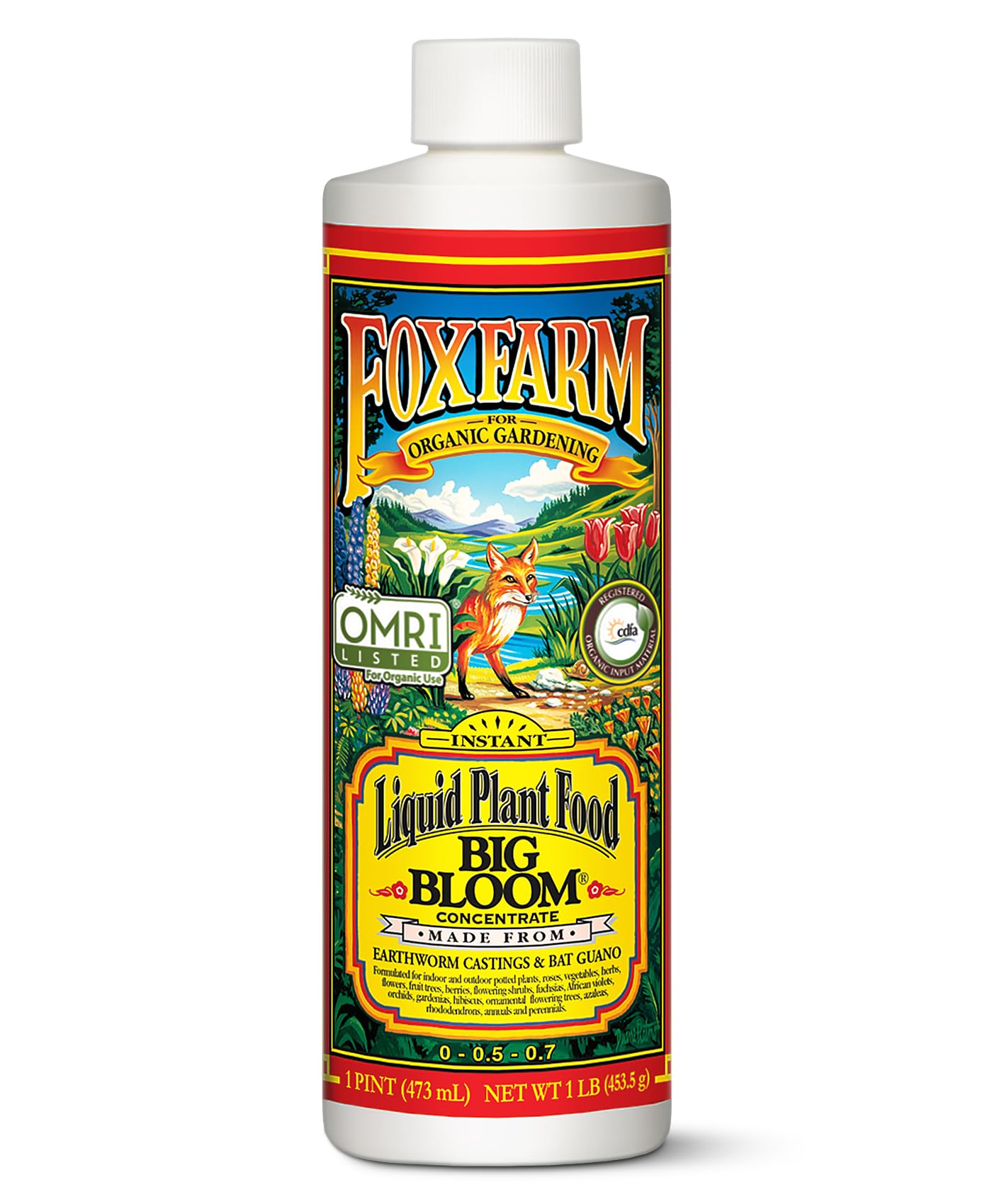
When I want a gentle, organic-style bloom booster, I reach for Big Bloom for flowers, fruiting plants, and inside pots where I don’t want strong chemical smells.
Why I picked it: Natural ingredients like bat guano and worm castings that support blooms without heavy NPK shock.
Best for: Flowering and fruiting plants, plus houseplants that need a gentle nutrient lift.
Affordable for occasional booster use and stretches a long time at recommended dilutions.
Pros
- Organic-style nutrient blend
- Gentle on sensitive plants
- Promotes blooms and fruit
- No strong odor
Cons
- Low NPK requires repeated applications
- Best used as a supplement, not sole feed
My take
I use Big Bloom as my go-to booster when I want fuller flowers and better fruit set without aggressive feedings. The bat guano and earthworm castings give a slow, steady lift that plants absorb quickly.
In pots and containers I saw perked-up growth within days — leaves looked healthier and blooms stayed fuller longer. It’s easy to apply with a watering can or hose-end siphon; I follow the every-other-watering guidance and rarely overdo it.
Big Bloom feels like a confidence product for delicate houseplants and herbs. It won’t force huge vegetative growth, but it consistently improves bloom quality and overall vigor when used regularly.
3. Miracle-Gro AeroGarden Liquid Nutrients – Best for Hydroponics
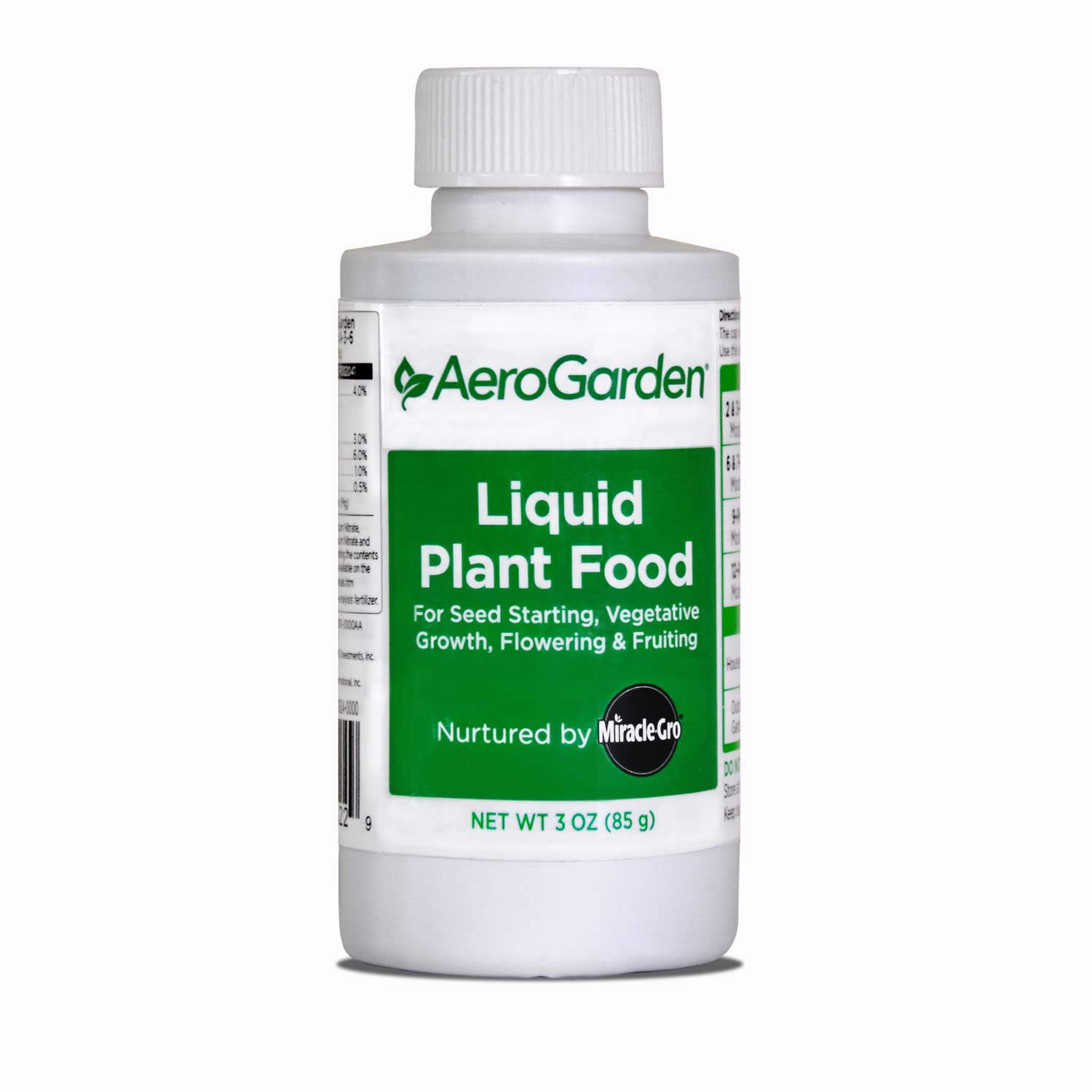
For hydroponic systems and compact indoor gardens I use this formula because it’s tuned for water-based growing and includes pH buffering to keep nutrient uptake steady.
Why I picked it: Hydroponic-specific formula with pH buffering and a convenient dosing cap.
Best for: AeroGarden users and small indoor hydroponic setups.
Small bottle size is practical for hobby hydro setups; one bottle lasts if you dose weekly.
Pros
- Formulated for hydroponics
- Includes pH buffering
- Handy measuring cap
- Works well in AeroGarden
Cons
- Small bottle may feel expensive per ounce
- Not intended as a soil-only solution
My take
I use this nutrient in my AeroGarden units and it consistently produces quick germination and vigorous growth. The organic pH buffering helps keep the reservoir stable so plants don’t suffer nutrient lockouts.
The bottle’s lid doubles as a measuring cup with clear mL marks, which makes dosing foolproof. In my runs with herbs and small tomatoes I saw faster leaf production and better overall vigor than with generic mixes.
This is a practical, easy-to-use choice if you’re growing indoors in water. It’s not a soil feed, so I don’t reach for it in pots, but for hydro it’s my reliable go-to.
4. FoxFarm Grow Big Liquid Plant Food – Best for Vegetative Growth
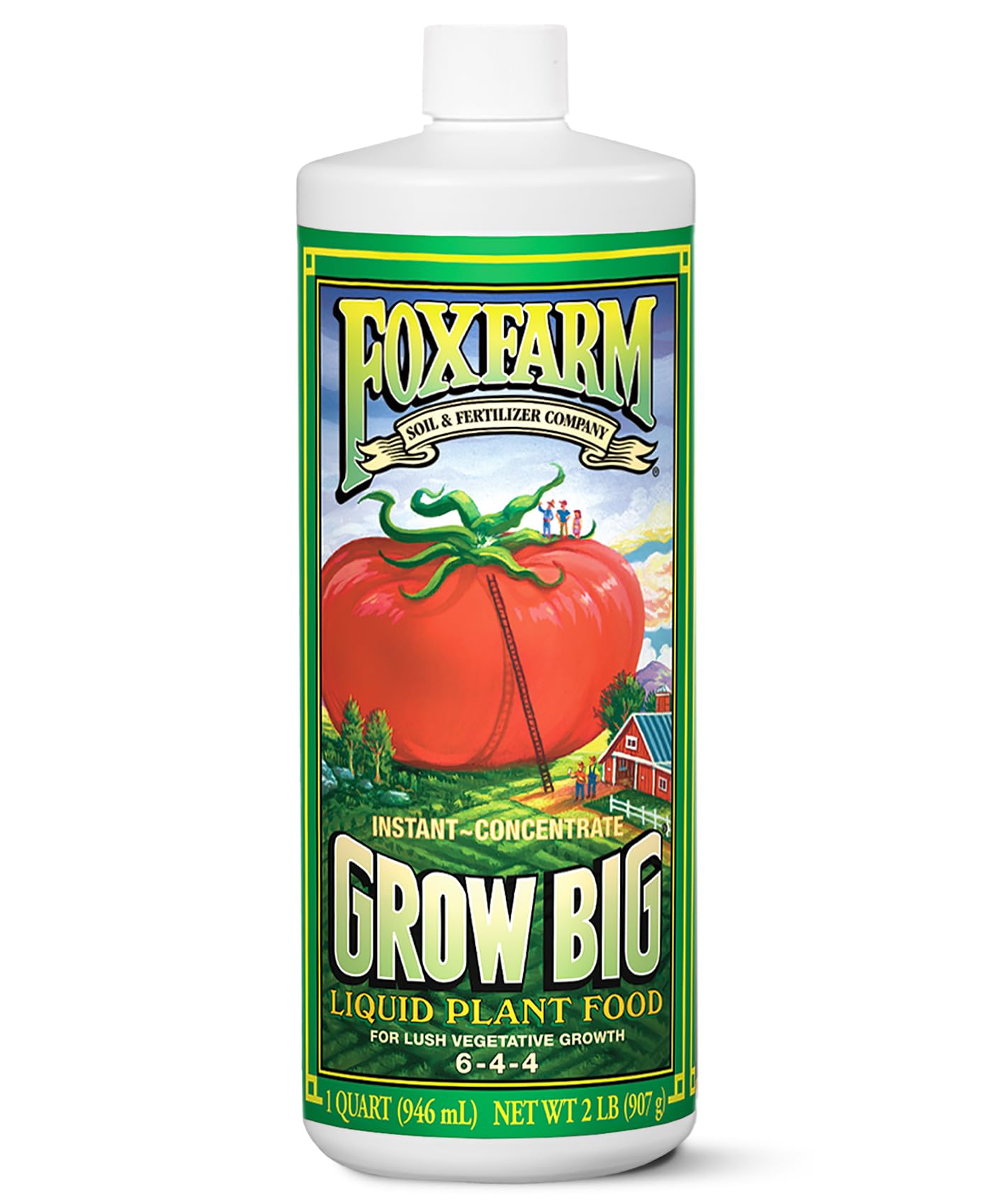
When I want rapid, lush vegetative growth — larger leaves and stronger stems — Grow Big is the bottle I use to push that early-stage vigor.
Why I picked it: High-nitrogen focused formula that drives leaf and stem development.
Best for: Seedlings, transplants, and leafy vegetables needing a vigorous vegetative push.
A little goes a long way; I find it efficient for frequent veg feedings.
Pros
- Strong vegetative boost
- Builds root strength
- Mixes easily for foliar or soil feed
- No offensive smell
Cons
- Not organic — can leave salts
- Requires flushing before harvest
My take
I rely on Grow Big when I’m starting hundreds of seedlings or when my greens need an aggressive push. The plants respond quickly with thicker stems and faster leaf expansion.
It mixes cleanly and I’ve used it both as a soil drench and foliar feed. That said, because it’s a non‑organic concentrate I plan flush cycles before harvest to avoid salt buildup, and I monitor pH more closely when I use it heavily.
Overall it’s a potent tool for vegetative growth — I just pair it with judicious flushing and pH attention to avoid off-flavors in edible crops.
5. FoxFarm Tiger Bloom Liquid Plant Food – Best for Flowering
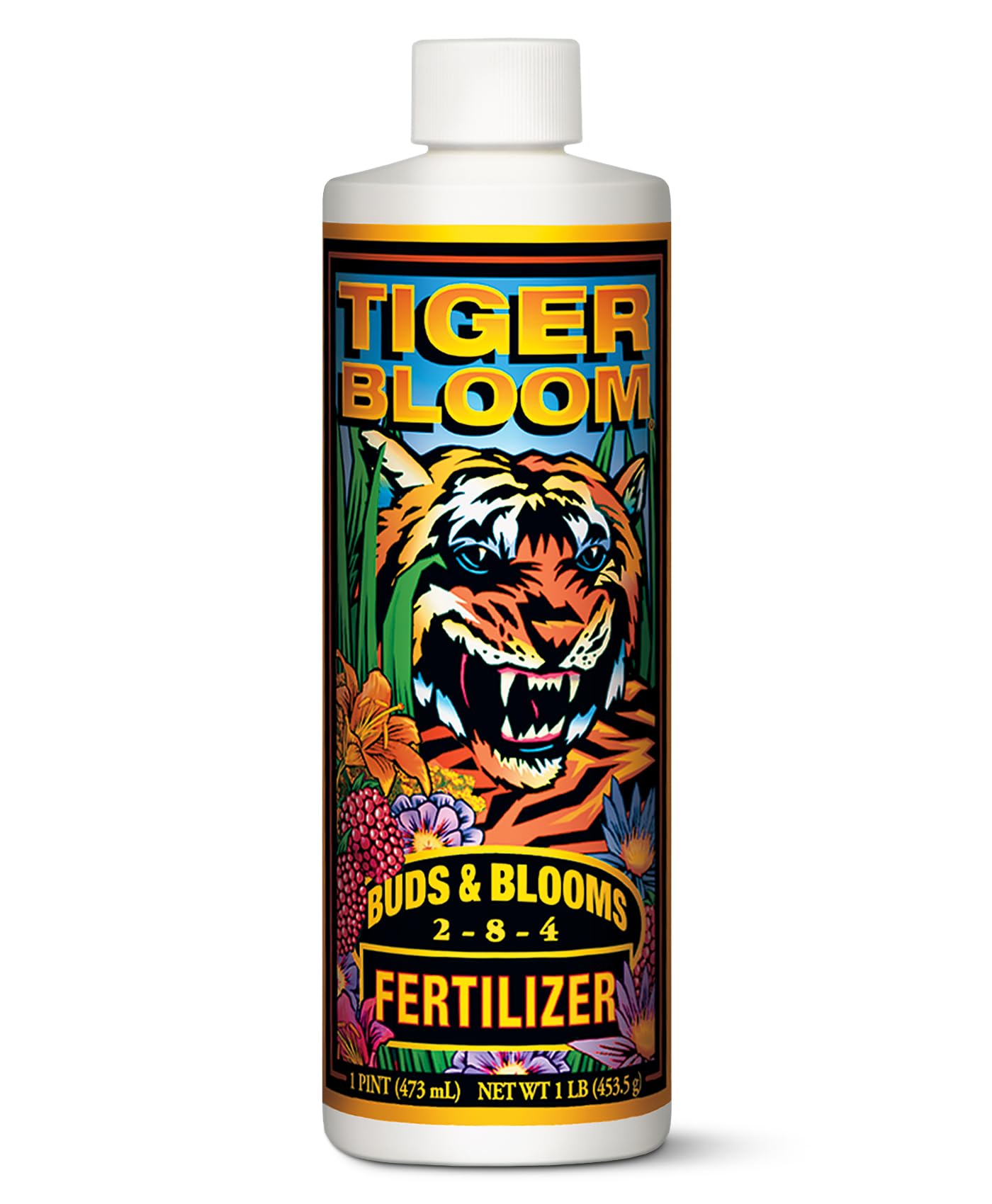
I turn to Tiger Bloom when I want to push bud and fruit development — it’s the finishing feed that helps flowers swell and set plentiful fruit.
Why I picked it: High-phosphorus bloom formula that promotes buds, flowers, and fruit set.
Best for: Flowering stage and heavy fruiting plants in both soil and hydro setups.
Concentrated formula stretches far, making it cost-effective for regular bloom boosts.
Pros
- Boosts bud and fruit development
- Works in soil or hydro
- Fast nutrient uptake
- Concentrated — long lasting
Cons
- Can yellow some leaves if overused
- Requires careful dosing for sensitive plants
My take
I use Tiger Bloom when I need flowers to fatten and set fruit quickly. In my trials blooms enlarged noticeably within a feeding cycle and fruit set improved on tomato and pepper plants.
The formula absorbs fast so you see results quicker than with slow-release granules. I do take care to dose at or slightly below the label recommendation early in the feed cycle; aggressive use can yellow a few leaves, but that’s usually a sign to back off.
Its versatility for soil or hydro makes it one of my most-used finishing feeds — concentrated enough that a little goes a long way.
How I Choose and Use Liquid Fertilizer
Key things I check before buying
I look at the intended use first: hydroponic-specific formulas for reservoirs, bloom boosters for flowering, and balanced or multi-product systems if I want start-to-finish feeding.
Ingredient style matters to me — organic blends (bat guano, worm castings) are gentler and better for potted houseplants, while synthetic concentrates give faster, stronger responses in garden beds and indoor grow tents.
- Match formula to stage: high nitrogen for veg, higher phosphorus for bloom.
- Check concentration: more concentrated liquids last longer but need careful dosing.
- Look for pH buffering if you run hydroponics or automated systems.
- Consider residue and flushing needs for edible crops — non-organic feeds can leave salts.
Practical dosing and safety tips I follow
I always start at half or three-quarters of the recommended strength for a new product to see how my plants react, then increase gradually.
When switching products I flush with plain water to avoid nutrient lockups and to keep salt buildup in check.
- Use the included measuring cap — it reduces dosing errors.
- If leaves scorch at tips, dilute the mix next time.
- For edibles, plan a flush a week or two before harvest when using non-organic concentrates.
Choosing between single products and kits
I opt for a multi-product kit when I want a simple, coordinated program for all growth stages. For targeted problems or an organic approach I pick single-purpose bottles.
Think about storage and frequency: concentrated bottles are economical if you feed regularly, while smaller bottles are handy for occasional use or trials.
- Kit = convenience and matched formulations.
- Single bottle = targeted performance or organic preference.
- Store liquids upright and wipe caps to prevent residue build-up.
Frequently Asked Questions
How often do I feed liquid fertilizer?
I typically follow label guidance but usually feed every 1–2 weeks for concentrated formulas and every other watering for gentle boosters. I start light and adjust to plant response.
Can I use liquid fertilizer in hydroponics and soil?
Some formulas are built for both, but I choose hydro-specific nutrients for reservoirs because they include pH buffering. Soil plants accept many liquid feeds, but I watch for salt buildup.
What should I do if leaves show burn after feeding?
I flush the pot with plain water, reduce the next dose to half strength, and reassess watering frequency. That combination typically stabilizes plants quickly.
Final Take
I recommend picking the formula that matches how and what you grow: a full trio for a hands-off program, Big Bloom for organic bloom support, AeroGarden nutrients for hydro, Grow Big to push vegetative growth, and Tiger Bloom to finish flowers and fruit.
In practice I keep at least one generalist and one stage-specific bottle in my toolkit so I can react to plant needs without hunting for a new solution each season.
