
I tested four distinct quilting threads — variegated mercerized cotton, bulk polyester cones for serging, Aurifil's fine 50wt cotton, and a large-value 50wt cotton spool — and I share which I reach for depending on the任务
I quilt and sew regularly, so thread choice is one of the decisions I make most often. Thread affects stitch quality, puckering after washing, lint buildup, and how smoothly my machine runs.
In this roundup I evaluated four threads that address different needs: colorful variegation, bulk serger use, a premium fine cotton, and a large-value everyday cotton spool. I tested them on piecing, machine quilting, and serging to see how they performed in real projects.
I picked threads that solve distinct problems: variegated cotton for visible texture and natural-fabric compatibility; polyester cones for long serging runs; Aurifil for fine, precise piecing; and Connecting Threads for large, affordable cotton spools. I explain when I reach for each one below.
1. New brothread Mercerized Variegated Cotton Thread – Best Variegated Cotton
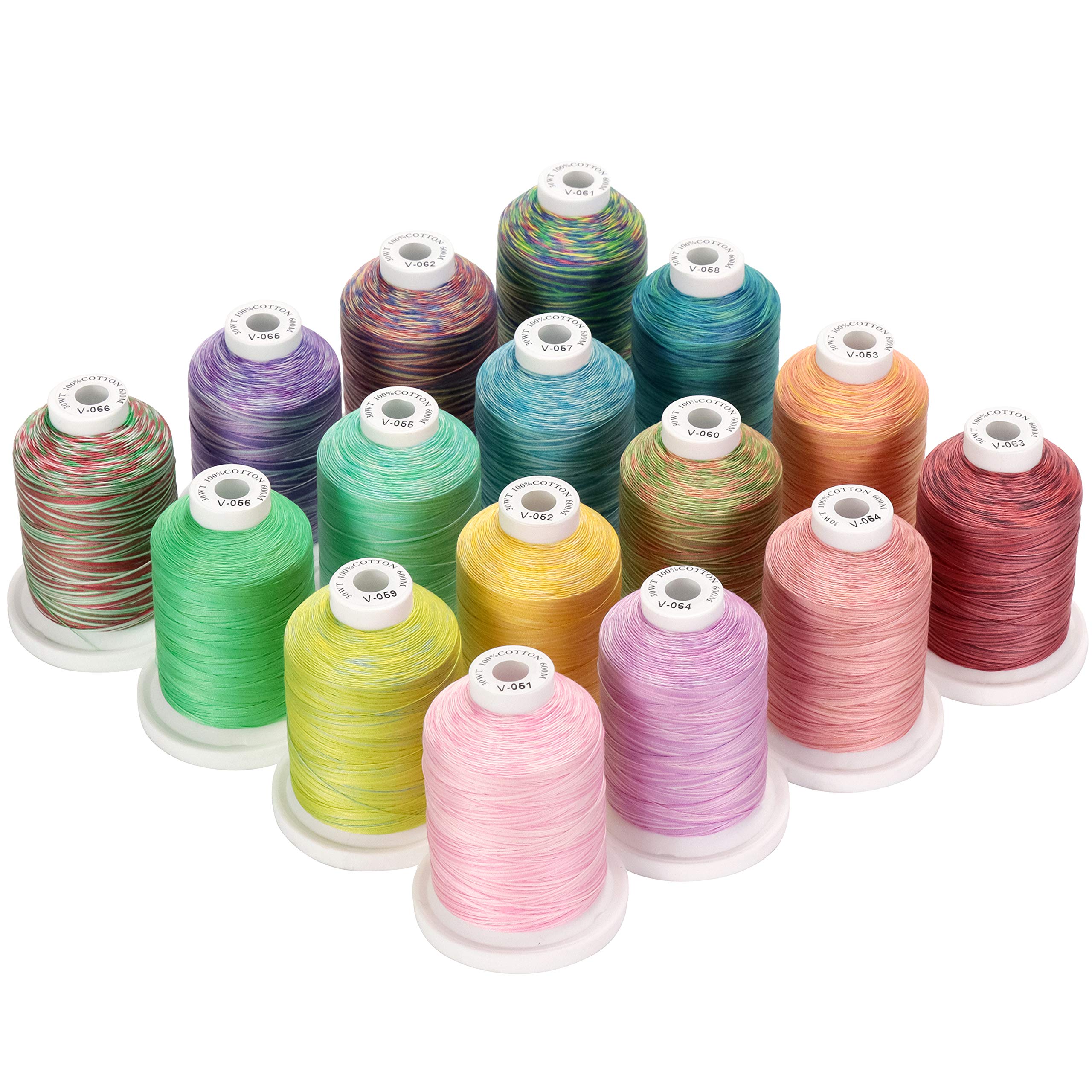
I use this mercerized, variegated cotton when I want color variation and a natural-fabric match. The spools are mercerized long-staple cotton, three-ply, and feel thicker than typical 50wt single-ply threads.
Why I picked it: Variegated finish that plays well with cotton and linen projects.
Best for: Quilting, piecing, visible decorative stitching on natural fabrics.
Generous spool length across multiple colors makes it a strong value.
Pros
- Beautiful variegated color transitions
- Mercerized for low lint and sheen
- Locking spool base reduces tangles
- Natural-fabric shrinkage compatibility
Cons
- Thicker than typical 50wt threads
- Needs larger needle (≥80/12)
- Less stretch than polyester
- Not ideal for very high-speed serging
My take
I reach for this New brothread set when I want quilted texture that changes color subtly across a seam. The variegation reads beautifully on cotton and linen, and the mercerized finish gives a soft sheen without excess lint.
Because the company bonds three plies into a thicker cotton (actual working weight closer to 30wt), I switched to needles with larger eyes and slowed my top stitching speed. With that setup the thread ran smoothly and I avoided stripping on the needle.
The snapping spool with a locking base kept thread tails from unwinding when I used an upright stand. If your machine takes horizontal spools, plan to use a stand or adapter — I used a vertical thread stand and had no issues.
I like this thread for quilt tops and decorative stitching where cotton-to-cotton shrinkage matters; washed pieces settled evenly and avoided the puckering I sometimes see when mixing poly thread with natural fabrics.
2. Mandala Crafts 40S/2 Polyester Serger Thread (White Cones) – Best for Sergers & Bulk Sewing
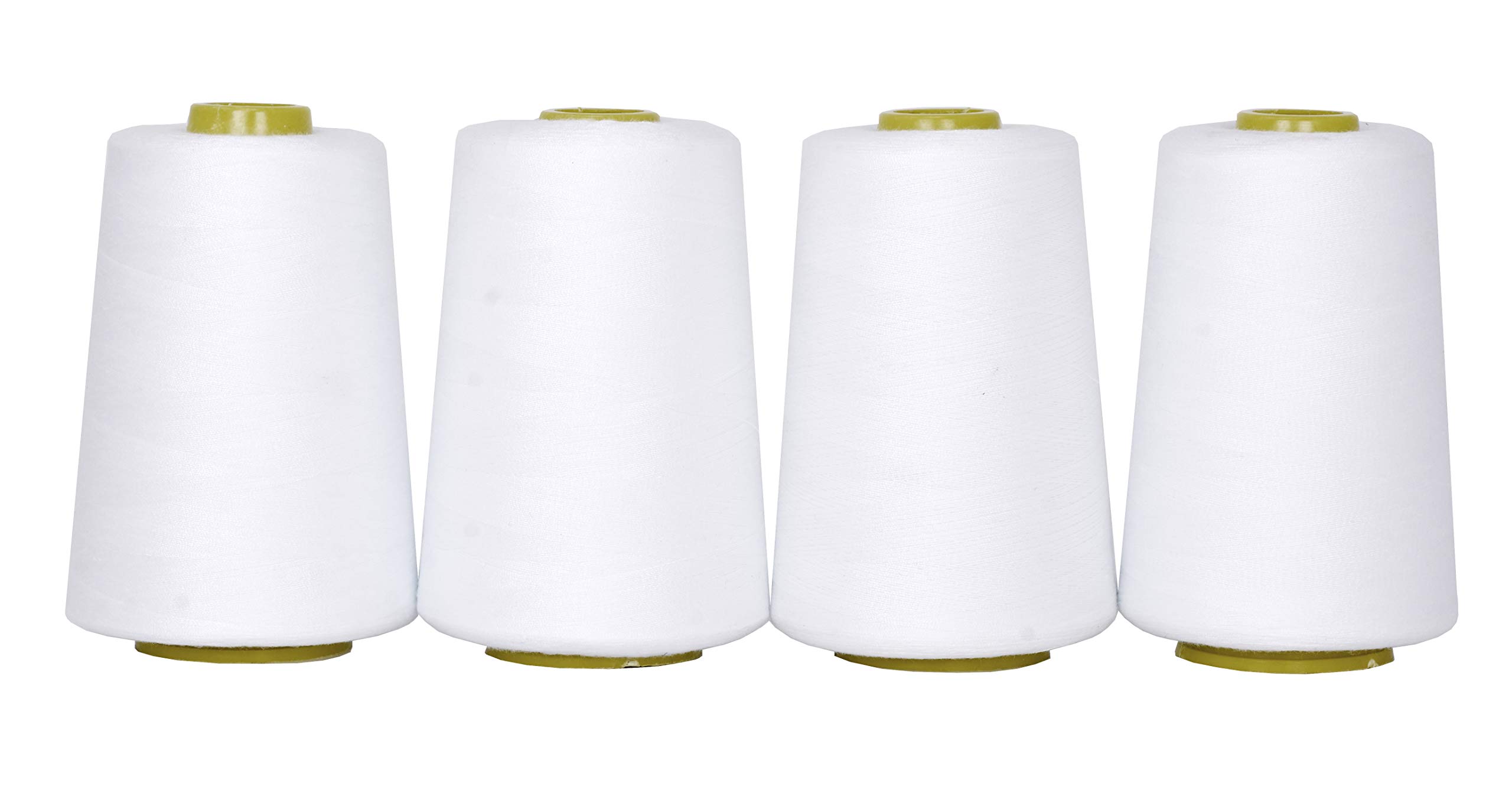
I use these polyester cones when I need long runs of serging or production sewing. The 40S/2 polyester is strong, low-lint, and handles high-speeds and tension without frequent breakage.
Why I picked it: Bulk cones built for high-speed serging and long sewing runs.
Best for: Overlocking, serging, long production runs, and heavy fabrics.
Bulk cone format makes it a very economical choice for long projects.
Pros
- High-strength polyester
- Minimal lint for loopers and needles
- Handles high-speed serging
- Consistent white color
Cons
- Cones can wobble on standard machine spindles
- Only white in this pack
- Requires thread stand or adapter on some machines
My take
When I have long serger sessions I reach for Mandala Crafts cones because they run cleanly through my loopers and resist breakage. The thread lays flat and doesn’t fuzz up, which keeps my tension steady.
I did need a cone holder on a domestic machine; the conical shape can wobble on a standard vertical spindle. Once I set it on a stand the feed was steady and I could serge at top speed.
This is the thread I choose for finishing seams on knits and for utility sewing where I want a bright, durable white. It also handled heavier materials like denim and vinyl without snapping, which I found useful for practical sewing jobs.
3. Aurifil 50wt Mako Cotton Thread (Marrakesh) – Best Premium Cotton
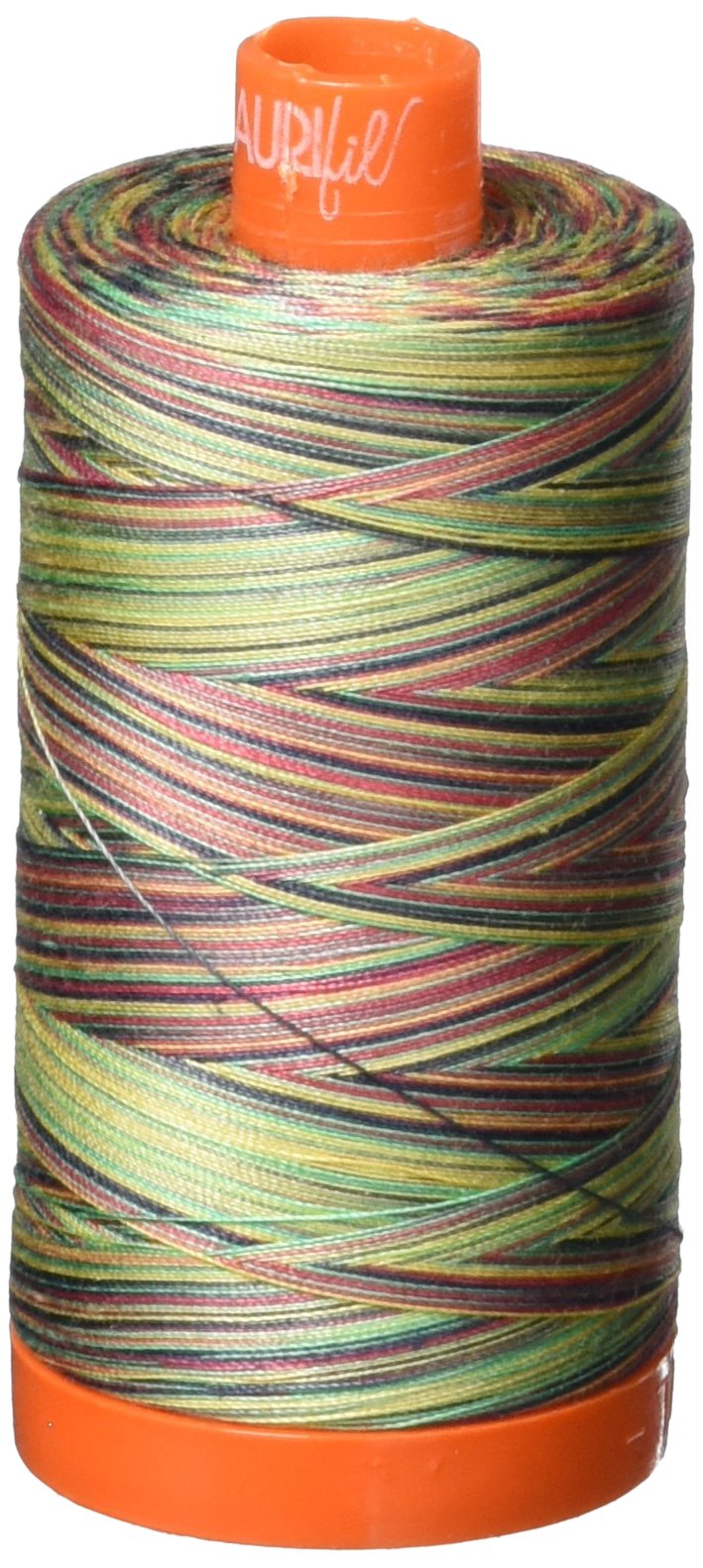
I keep Aurifil 50wt in my kit for fine piecing and delicate machine quilting. The long-staple mercerized Egyptian cotton winds smoothly and produces very consistent stitches with minimal lint.
Why I picked it: Fine, consistent 50wt cotton for precise quilting work.
Best for: Piecing, fine quilting, and detailed topstitching where a thin thread helps hide seams.
A premium option I consider a worth-while splurge for heirloom work.
Pros
- Smooth, consistent 50wt
- Long-staple Egyptian cotton
- Very low lint
- Excellent color consistency
Cons
- Higher cost than basic cotton
- Smaller spool than industrial cones
My take
Aurifil 50wt is my go-to when I need a thread that disappears into seams or produces delicate quilting lines. The Mako cotton unwinds evenly and my needle doesn’t grab or skip.
I appreciate the color consistency — a single spool stayed true through many piecing seams and matched my fabric better than other cottons I tried. The minimal lint also kept my machine cleaner between cleanings.
Because the spool is finer, I use Aurifil for projects where thread visibility matters, and I’ll switch to a thicker cotton or polyester when strength and bulk are priorities.
4. Connecting Threads 50-Weight Cotton Thread (Parchment) – Best Value Cotton Spool
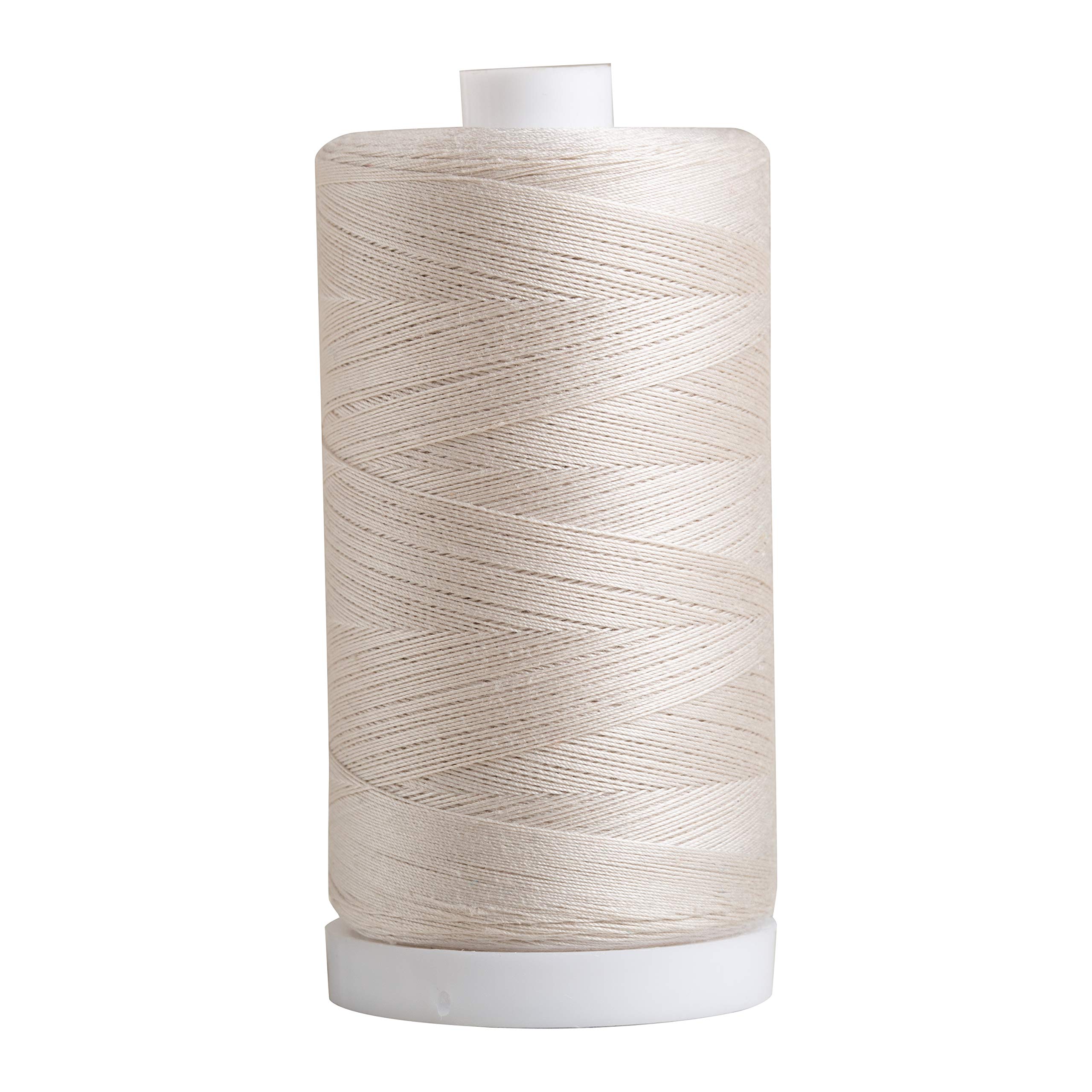
I choose this Connecting Threads spool when I want a large supply of 50wt cotton at a good value. The satin finish gives a gentle sheen and it fits standard machine spindles.
Why I picked it: Large 50wt spool that’s dependable for everyday quilting and crafting.
Best for: Everyday quilting, crafting, and microwave-safe cotton projects.
Budget-friendly large spool that stretches across multiple projects.
Pros
- Generous spool length
- Satin finish for subtle sheen
- Fits standard machine spindles
- 100% cotton for microwave-safe uses
Cons
- Inconsistent batches reported
- Occasional small nodules
- Not as strong as premium threads
My take
I used this Connecting Threads spool for a set of microwave-safe bowl cozies and appreciated that it’s 100% cotton, which is important for heat-safe sewing projects.
Most spools ran smoothly on my machine and produced clean stitches. The satin finish gives a subtle sheen that reads nicely on quilt tops.
I did notice occasional variability — a few spools had small nodules or felt easier to break under a hard tug. For everyday projects it’s a great value, but for heirloom or high-stress seams I reach for my premium cotton or polyester options.
How I Choose Thread for Machine Quilting
Thread weight and terminology
I pay attention to weight because it determines how visible a thread will be and how it behaves on the machine. Lower weight numbers mean thicker thread; higher weights (like 50wt) are finer and better for invisible seams.
When a listing says 40S/2 or 40wt, I treat those as stronger, slightly thicker choices for serging and utility seams. Three-ply mercerized cottons often read heavier than single-ply 50wt threads.
- Pick 50wt for piecing and fine quilting.
- Pick 40/30wt or 40S/2 for serging and heavy-duty seams.
- Match thread fiber to fabric when possible to reduce puckering.
Cotton vs polyester — when I choose which
I rely on cotton when I want matched shrinkage with cotton and linen, and for microwave-safe projects. Cotton gives a matte-to-satin finish depending on mercerization.
I use polyester for strength, stretch, and high-speed serging. Polyester resists breaking and tolerates heavy wear and laundering better in many utility applications.
- Choose cotton for natural-fabric quilts and heirloom work.
- Choose polyester for serging, knits, and high-stress seams.
Spools, cones, and feeders
I consider spool format early: cones are practical for long runs and sergers but often need a stand or adapter on domestic machines. Standard spools fit most machine spindles directly.
If a spool has a locking base or snap feature, I’ll still confirm how it feeds on my machine; some snapping spools work best with an upright thread stand.
- Use a cone holder for conical spools to avoid wobble.
- Locking bases help when doing small multi-spool projects.
Needles and machine setup
I change needle size based on thread thickness. Thicker cottons and three-ply threads benefit from needles with larger eyes to avoid shredding.
Slowing stitching speed slightly with thicker or less stretchy threads reduces breakage and improves tension balance.
- Switch to ≥80/12 or larger for thicker mercerized cottons.
- Reduce speed with sticky or non-stretch threads to prevent snapping.
Frequently Asked Questions
Which thread do I pick for piecing versus quilting?
I pick a finer 50wt cotton for piecing so seams nest and nearly disappear, and a slightly heavier cotton or polyester (30–40wt) for visible quilting lines or when I want more texture.
Can I use serger cones on a domestic sewing machine?
I often use cones on domestic machines with a cone holder or adapter. Without a holder they can wobble, but once stabilized they feed smoothly.
How do I avoid puckering when mixing thread and fabric?
I match thread fiber and shrinkage to the fabric whenever possible — using cotton on cotton helps avoid post-wash puckering. Also check tension and stitch length when switching fibers.
Final Take
Each of these threads has a clear role in my sewing room: New brothread for colorful cotton work, Mandala Crafts cones for heavy serging runs, Aurifil for fine piecing, and Connecting Threads when I want an economical large spool.
I recommend keeping at least two or three of these types on hand so you can choose the right thread for the task rather than forcing one thread to do everything.
If you tell me the projects you do most, I’ll recommend which of these I’d use first.
