
I tested magnetic and slot-style knife blocks to find the best options for limited counters, large collections, and stylish displays. Here are the pieces I actually used and trusted in my kitchen.
I live in a small kitchen but cook like I have a professional setup, so I’ve tried every sensible way to store knives. Over several months I used both magnetic blocks and traditional slot blocks to see how they handled real knives, heavy chef’s blades, and daily use.
This roundup focuses on practical outcomes: how many knives fit, how easy blades are to remove and replace, how the block affects blade life, and how each piece sits on the counter. I also paid attention to build quality and how each block looked on my prep station.
I separate these into two families: slot-style blocks that hide blades in angled openings and magnetic blocks that display blades on a wooden face. Slot blocks protect blade edges and keep things tidy, while magnetic blocks save drawer and counter space and put knives instantly visible and accessible. Your choice comes down to capacity and countertop layout.
1. Shenzhen 20-Slot Bamboo Knife Block – Best for Large Sets
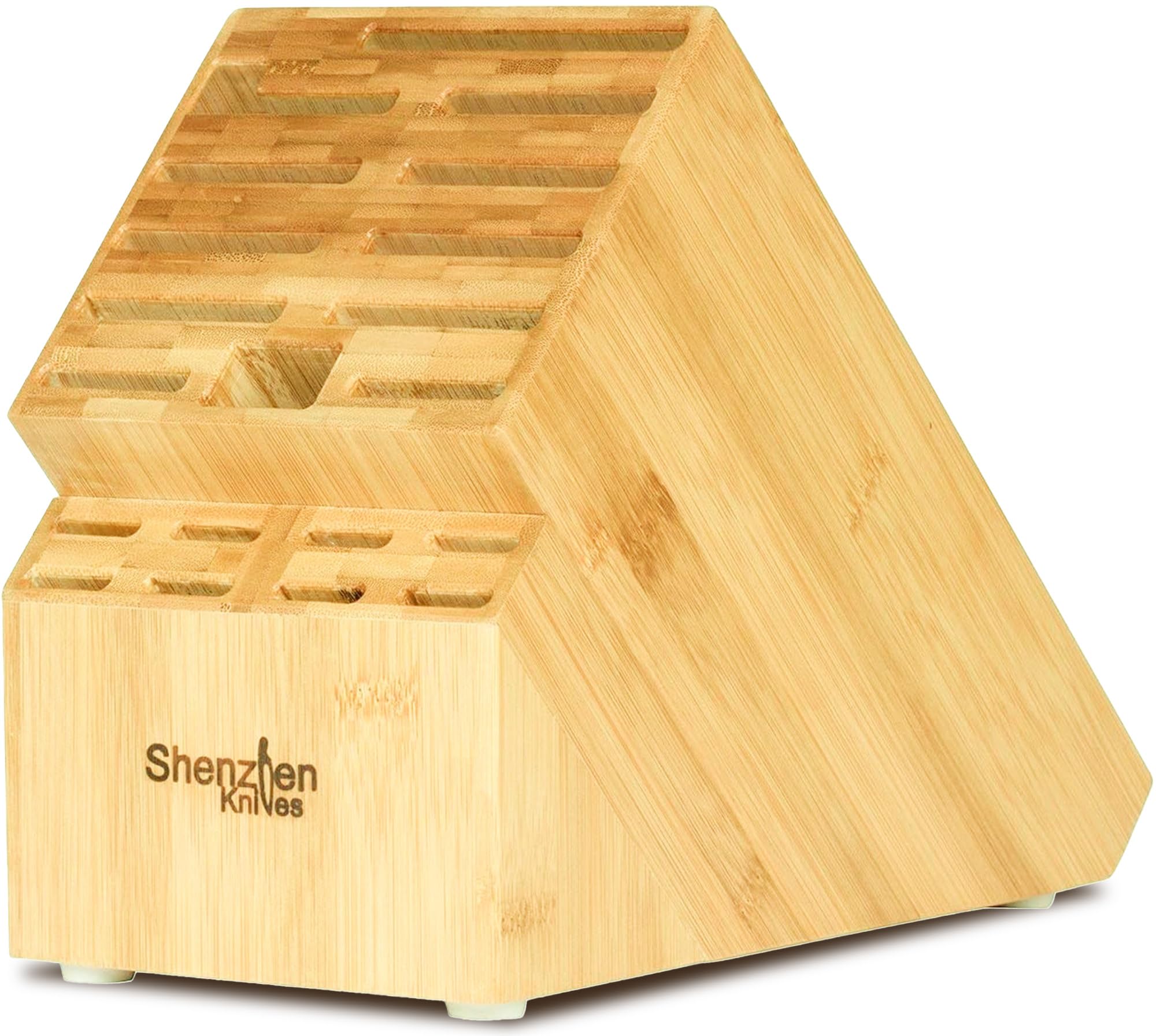
I used this when I needed maximum slot capacity and room for long chef knives and accessories.
Why I picked it: Holds a huge set plus scissors and a honing rod without crowding blades.
Best for: People with many full-width chef and specialty knives.
Great value for a high-capacity wooden block.
Pros
- Holds up to 19 knives plus extras
- Wide, angled slots reduce blade wear
- Sturdy construction with non-slip feet
- Easy to wipe clean veneer finish
Cons
- More horizontal profile uses extra counter space
- Slots could use slightly more vertical spacing
My take
I put nearly my entire collection into this block and still had room. The 20-slot layout is genuinely useful when you own multiple chef’s knives, serrated blades, and a couple of specialty pieces.
The slots are flared at the top and angled horizontally, which makes slipping knives in and out easier and puts less stress on the edge than some vertical blocks I’ve used.
Because this block sits lower and more horizontal than many blocks, it consumes more counter depth. I found that it worked better under a low cabinet but needed a little more front-to-back clearance on my counter.
Overall the build felt durable and the anti-skid feet kept everything stable while I reached for heavy knives. For anyone who wants storage capacity first, this is the practical choice.
2. Coninx Bamboo Magnetic Knife Block – Best Magnetic Value
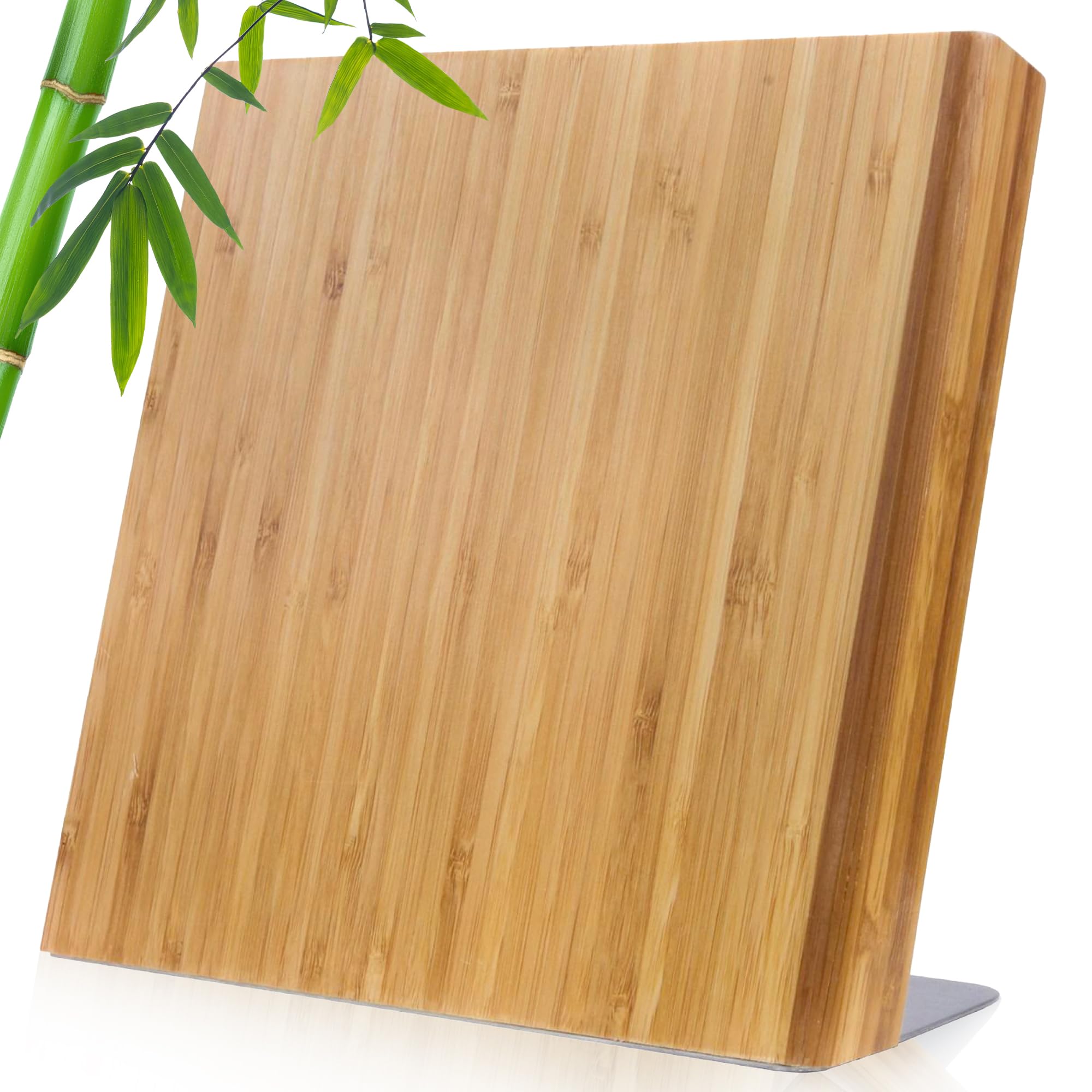
I reached for this when I wanted a slim, magnetic solution that kept knives visible and saved drawer space.
Why I picked it: Slim footprint with a solid magnet and a stable, felt-padded base.
Best for: Small kitchens and cooks who want knives on display.
Affordable magnetic option with a refined look.
Pros
- Strong hidden magnet holds large knives
- Slim profile saves counter space
- Felt-padded base prevents slipping
- Clean bamboo finish
Cons
- Capacity is limited compared to 20-slot blocks
- Some users might want it longer for more knives
My take
This was my go-to when counter space was tight; it tucks close to the wall and keeps my most-used knives at hand.
The magnet is surprisingly strong — it even securely held a heavy chef’s knife and a cleaver during my tests — and the felt-padded bottom kept the board from sliding when I grabbed a blade quickly.
I liked the way the bamboo finish dressed up a simple workspace. The only trade-off is capacity: I could display my everyday set cleanly, but I couldn’t store a very large collection on it.
If you want a magnetic block that looks good and performs without taking up much room, this one earned a permanent spot on my counter.
3. Cook N Home 20-Slot Bamboo Block – Best Budget Slot Block
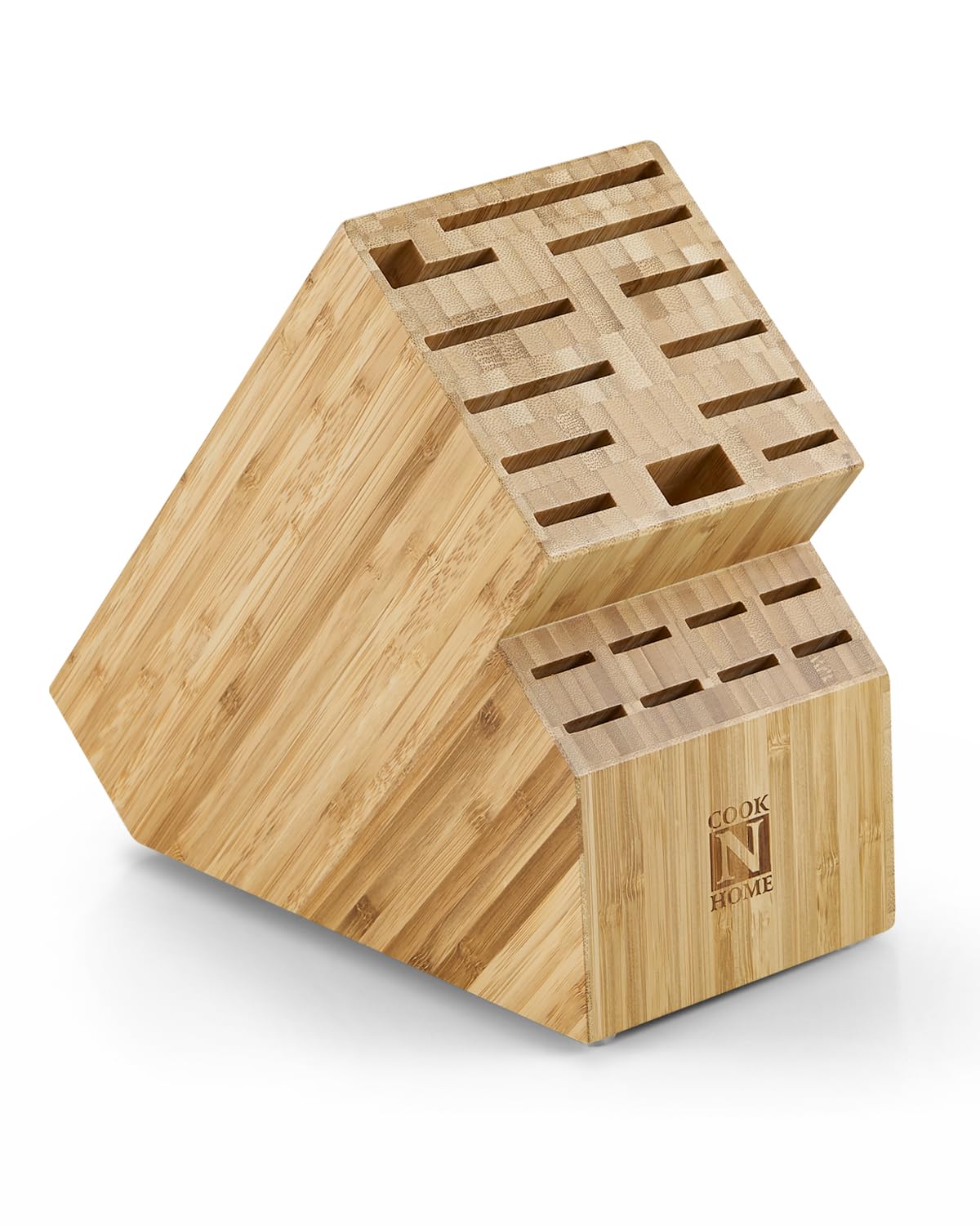
I used this when I wanted good capacity on a budget and didn’t need a premium finish.
Why I picked it: Lots of wide slots and depth for long blades at a friendly price.
Best for: Value-minded cooks with mixed knife sizes.
Budget-friendly with broad slot compatibility.
Pros
- 20 wide slots fit many knife types
- Deep slots accommodate long blades
- Natural bamboo look
- Heavy enough to balance knives
Cons
- Occasional cosmetic blemishes on arrival
- Not as refined as higher-end blocks
My take
I appreciated how many knife shapes this block accepted — from long slicers to cleavers — without me having to jury-rig a solution.
The block is heavier than it looks, which helped when heavier-handled knives sat in the slots. I did note some small finish imperfections on arrival, but it didn’t affect function in my daily use.
For a practical kitchen that needs storage rather than a display piece, this bamboo block handled regular abuse and kept knives accessible.
If you want broad compatibility without spending much, this block delivers exactly that.
4. Coninx Acacia 15-Slot Knife Block – Best Compact Organizer
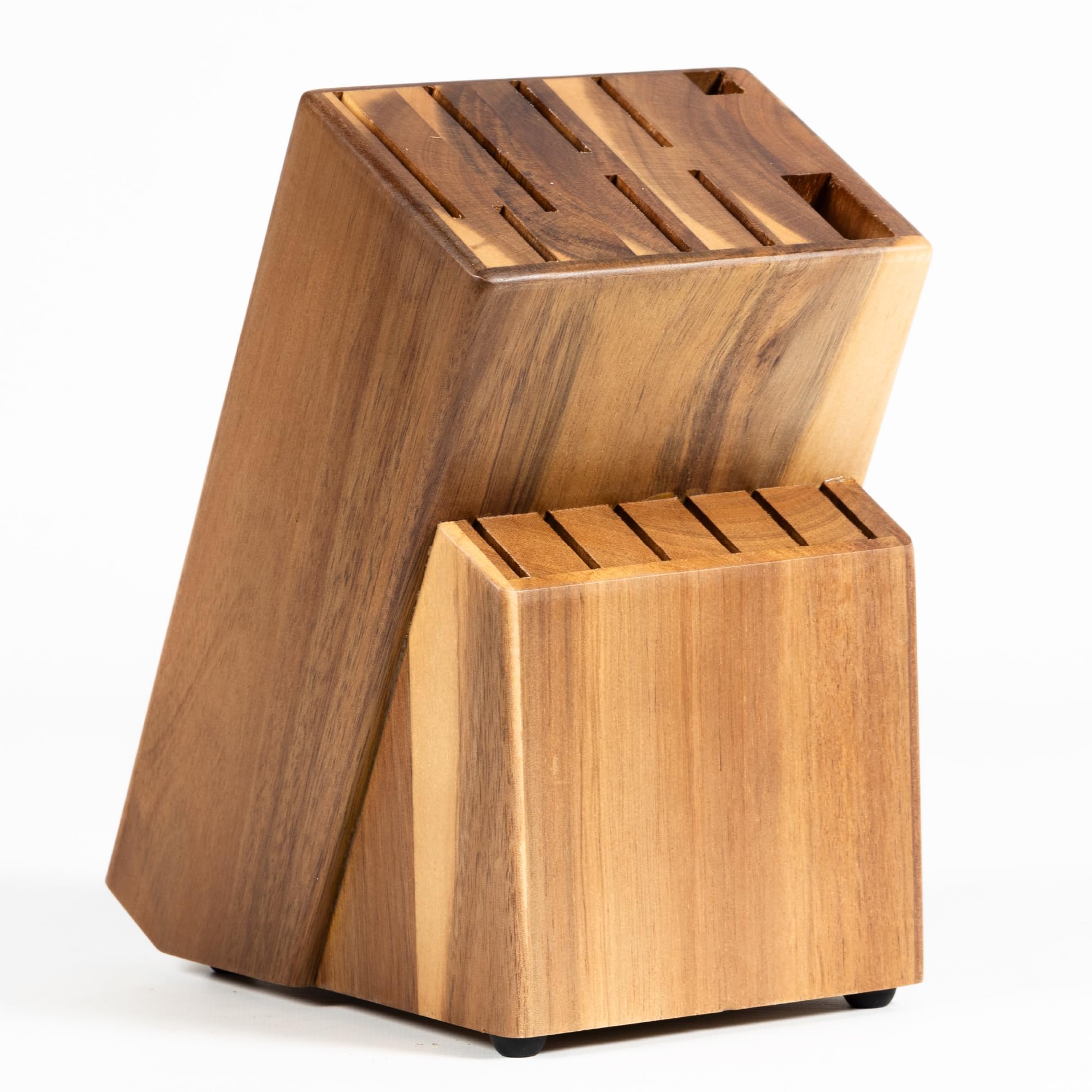
I recommend this when you want a compact, attractive block that still handles a typical household knife set.
Why I picked it: Rich acacia wood in a smaller footprint that still fits full chef’s knives.
Best for: Kitchens that need a neat, space-conscious organizer.
Affordable midrange pick with a premium wood look.
Pros
- Attractive acacia wood finish
- Compact yet holds common knives
- Rubberized feet for stability
- Fits 8" chef knives comfortably
Cons
- Only 15 slots — fewer than larger blocks
- May not fit very long cleavers
My take
I gifted this to someone setting up a new apartment and watched it transform a cluttered countertop into a tidy station. The deep, brandy-toned acacia looks richer than its price suggests.
The block’s compact size meant it fit neatly next to a stove without crowding the prep area, and the rubber feet kept it raised above spills and stable during use.
It won’t hold an extensive collector’s set, but for everyday cooks with a standard range of knives, it’s a beautiful, space-saving organizer.
If you want a block that doubles as decor and storage, this one strikes a nice balance.
5. Navaris Magnetic Walnut Knife Block – Best Modern Look
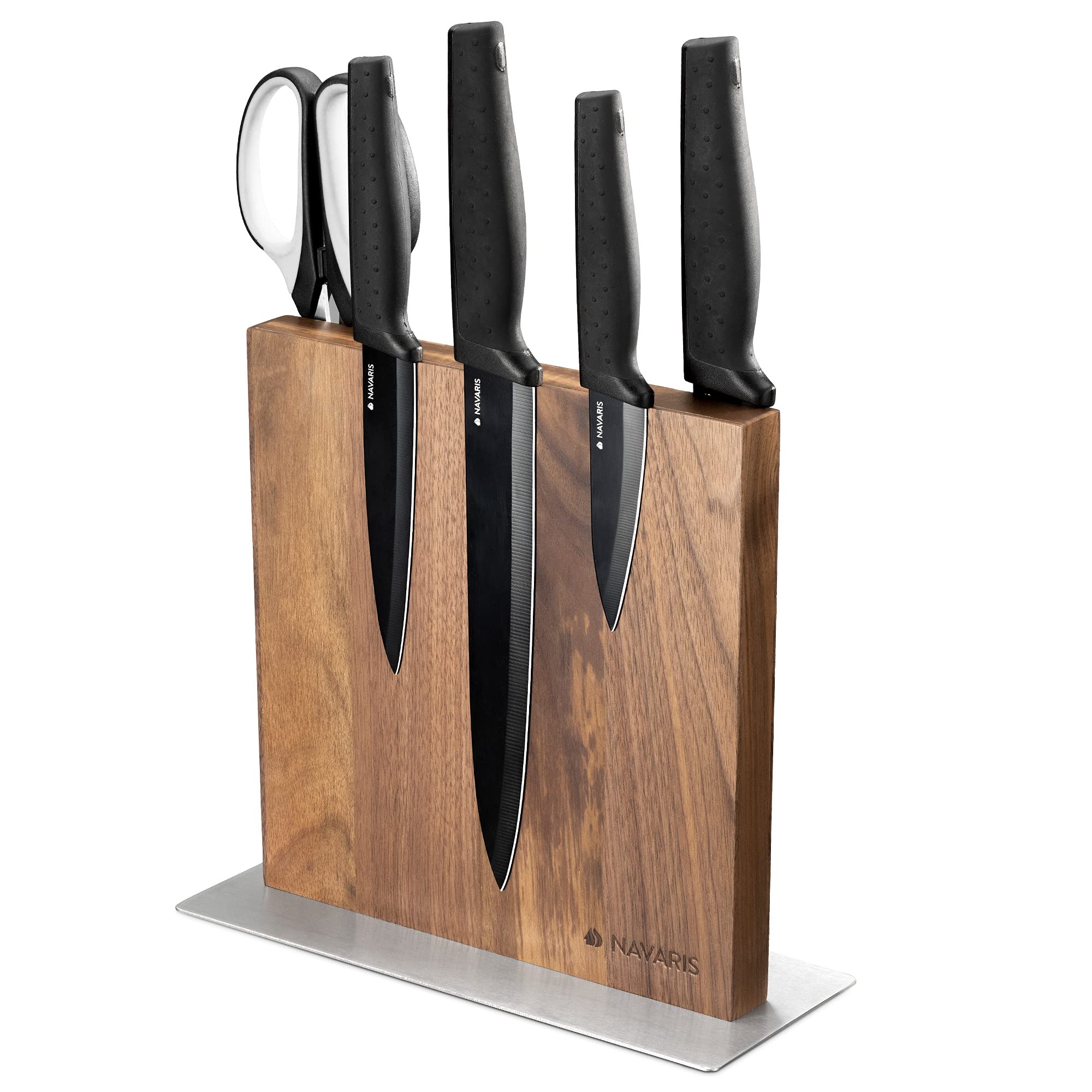
I used this when I wanted a modern, double-sided magnetic solution that maximized visible storage.
Why I picked it: Double-sided magnetic face gives more usable space while staying slim.
Best for: Stylish kitchens and cooks who want maximum access in a small footprint.
Stylish, mid-priced magnetic block.
Pros
- Double-sided magnetic surface
- Strong magnets hold knives securely
- Non-slip stainless steel base with rubber pads
- Attractive walnut grain
Cons
- Wood finish can look less premium up close
- Long-term durability still unknown
My take
I liked the double-sided magnetic faces because they let me spread out a set of knives without a deep footprint. That was a real advantage in my narrow kitchen.
The stainless base with rubber pads kept the block locked in place while I grabbed blades, and the magnets were strong enough for heavy chef’s knives but not so strong that removal felt awkward.
Aesthetically it warmed up my otherwise white kitchen and made knives feel like part of the décor instead of tools shoved in drawers.
If you want a modern display piece that actually functions, this Navaris block proved both useful and attractive on my counter.
How I Choose a Knife Block
Magnetic vs Slot Blocks
I decide between magnetic and slot-style blocks based on space and how I use my knives. Magnetic blocks keep blades visible and save drawer space, while slot blocks keep edges tucked away and can be gentler on delicate blades.
When I need capacity and blade protection, I reach for a slot block. When I need a slim profile and faster access, I choose a magnetic block.
- Magnetic: best for limited counter depth and fast access.
- Slot: best for protecting edges and storing many knives.
- Magnetic strength matters — test with a heavy chef knife.
Capacity and Knife Size
I always measure the longest knife in my set before buying. Blocks list maximum blade depth; if a slot block doesn’t state depth, assume long slicers may stick out.
Magnetic blocks are measured by face area — I plan placement accordingly so my full set can sit without overlapping dangerously.
- Count usable slots, not just total slots.
- Check whether there’s a scissor or honing steel opening if you need one.
Build, Stability, and Finish
I prefer blocks with rubber or felt feet so they don’t slip when I withdraw heavy knives. Solid glue-ups and dense woods like acacia or bamboo stand up to regular use.
For magnetic blocks, make sure the bottom is weighted or has a non-slip base; otherwise the whole block can tip when you pull a knife.
- Non-slip feet are a must for safety.
- Natural wood can show grain variation — that’s normal.
- Inspect for cosmetic chips on arrival and decide if function outweighs looks.
Care and Maintenance
I keep knives dry before storing them to prevent moisture damage inside slot blocks. Wiping the wooden surfaces with a damp cloth and a light oil occasionally keeps the finish healthy.
For magnetic blocks, I wipe the face clean of residues and check that the magnet surface stays free from grit that could scratch blades.
- Dry blades before storing.
- Wipe wood with a damp cloth; re-oil occasionally.
- Avoid dishwashers or soaking any wooden block.
Frequently Asked Questions
Will magnetic blocks dull my knives?
I didn’t find magnets themselves dull blades; the risk comes from metal-on-metal contact. I keep blades from touching one another and place knives gently against the face to avoid sliding and scratching.
Can a magnetic block hold heavy knives reliably?
In my tests a good magnetic block held chef’s knives and even heavier blades securely. I still prefer a stable base and to check the magnet’s pull with a heavier blade before trusting it with a full set.
How do I store knives to avoid moisture damage?
I dry each blade thoroughly before placing it in a slot block or on a magnetic face. If a block gets splashed, I wipe and dry it promptly and keep it off wet countertops with rubber feet.
Final Take
I recommend choosing based on how many knives you have and how much counter depth you can spare. For maximal capacity choose the 20-slot blocks; for a slim, modern solution pick one of the magnetic blocks.
Across these picks I kept an eye on stability, magnet strength, and real-world usability — all of which determined which block earned a permanent spot on my counter.
Decide whether you want display and fast access or maximum blade protection, then pick the block above that matches your priorities.
