
I tested seven manual food mills across batch size, build, and ease of use. These are the ones I rely on for tomato sauce, applesauce, mashed potatoes, and canning.
I cook a lot from garden produce and seasonal fruit, so a dependable food mill is one of the tools I reach for every harvest. Over many sessions I ran tomatoes, apples, potatoes, berries, and cooked vegetables through different mills to judge durability, throughput, texture control, and cleanup.
In this roundup I focused on build quality, disc options, how comfortable the crank or handle feels under load, and how easy the mills are to disassemble and clean. The picks below cover everything from small-batch kitchen work to heavy canning sessions.
I compared each mill on three practical points: how the discs affect final texture, how the unit mounts or stabilizes over a pot or bowl, and how effortless the rotating or turning mechanism felt during multi-pound batches.
1. OXO Good Grips Food Mill – Best Overall
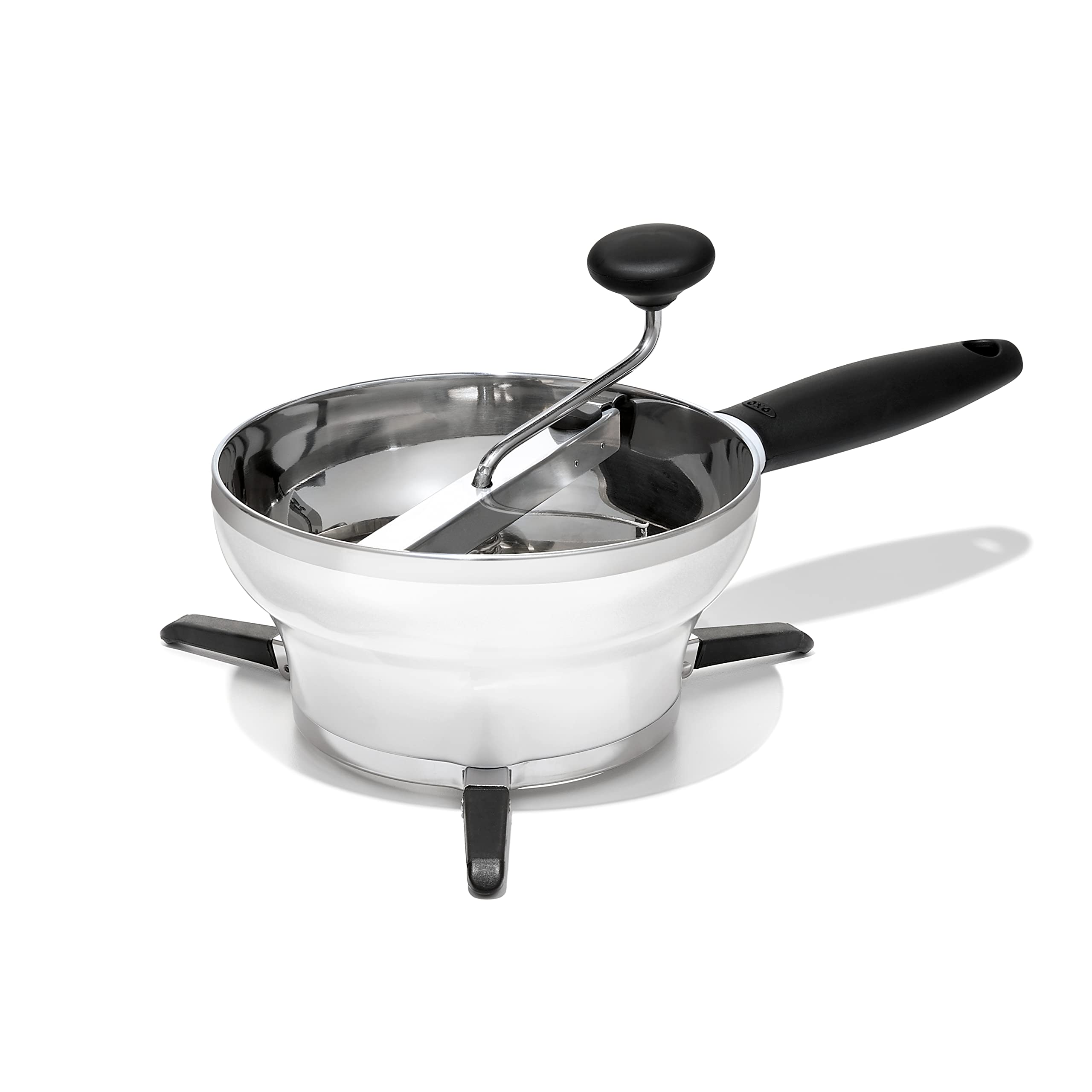
A reliable, well-designed food mill with three stainless discs, secure feet, and easy disassembly.
Why I picked it: Stainless bowl, comfortable turning, and stable feet made it the most versatile tool in my kitchen.
Best for: Everyday sauces, baby food, and small to medium canning batches.
Midrange price with premium usability and lifetime value.
Pros
- Stainless-steel inner bowl
- Three grinding discs included
- Spring-loaded quick disc release
- Foldable non-slip legs
- Comfortable non-slip handle
Cons
- Smaller capacity for very large batches
- A bit bulky to store
My take
I used this mill to process several bushels of tomatoes and it handled them with ease. The stainless-steel bowl stays cool to the touch and doesn’t stain from long tomato sessions.
Swapping the fine, medium, and coarse discs is fast thanks to the spring-loaded lever, so I could move from silky baby purées to chunkier applesauce without fuss.
The three folding non-slip legs are a standout: they kept the mill secure on mixing bowls and pots up to about 11 inches, and folding them for storage is painless.
Turning the blade felt comfortable even after a lot of tomatoes, and cleanup was simple since all parts are dishwasher-safe. For my regular kitchen tasks this was the most dependable and flexible mill I used.
2. Stainless Steel Food Mill with Rotary Crank – Best Ergonomic Crank
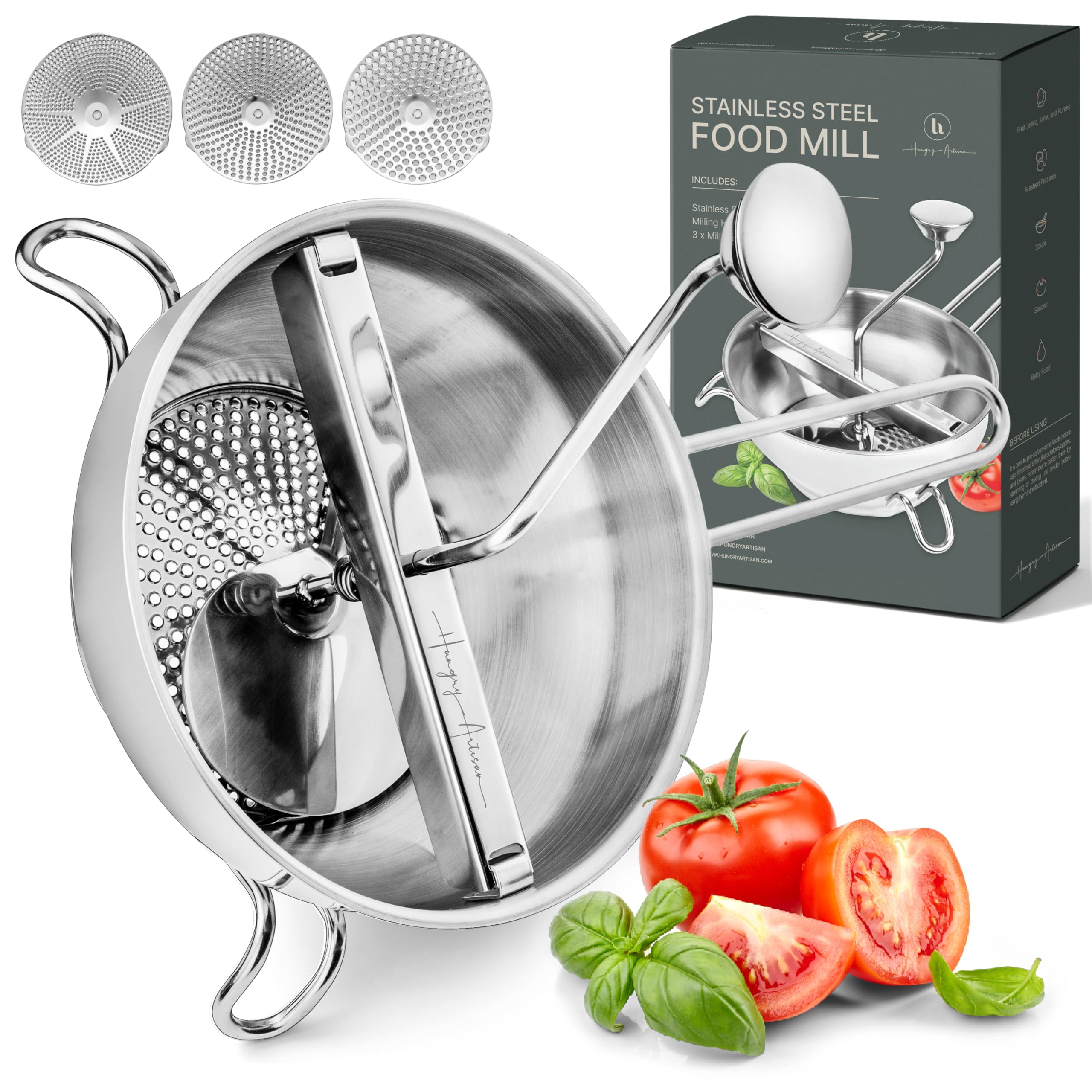
A sturdy stainless mill with an ergonomic rotary hand crank that reduces wrist fatigue during batch work.
Why I picked it: The crank design noticeably eases long milling sessions and still gives three texture options.
Best for: Home cooks who process tomatoes and apples frequently and want less wrist strain.
Good value for an ergonomic, stainless model.
Pros
- Ergonomic rotary hand crank
- Three stainless discs
- Dishwasher-safe construction
- Sturdy stainless build
- Stable feet for bowls
Cons
- Occasionally arrives with small cosmetic dings
- May pass small seeds through
My take
I found the rotary crank easier on my wrist than straight handle mills, which mattered when I ran multiple kettles of tomatoes.
The three discs gave me the range I needed—from silky baby purées to coarser mashed potatoes—and the mill felt heavy-duty while I turned it.
One unit arrived with small surface dings, so I pay attention to packaging now, but performance remained solid. Cleanup and reassembly were fast, and the feet helped keep the mill steady on a bowl.
3. Navaris Stainless Food Mill (2-Quart) – Best Budget
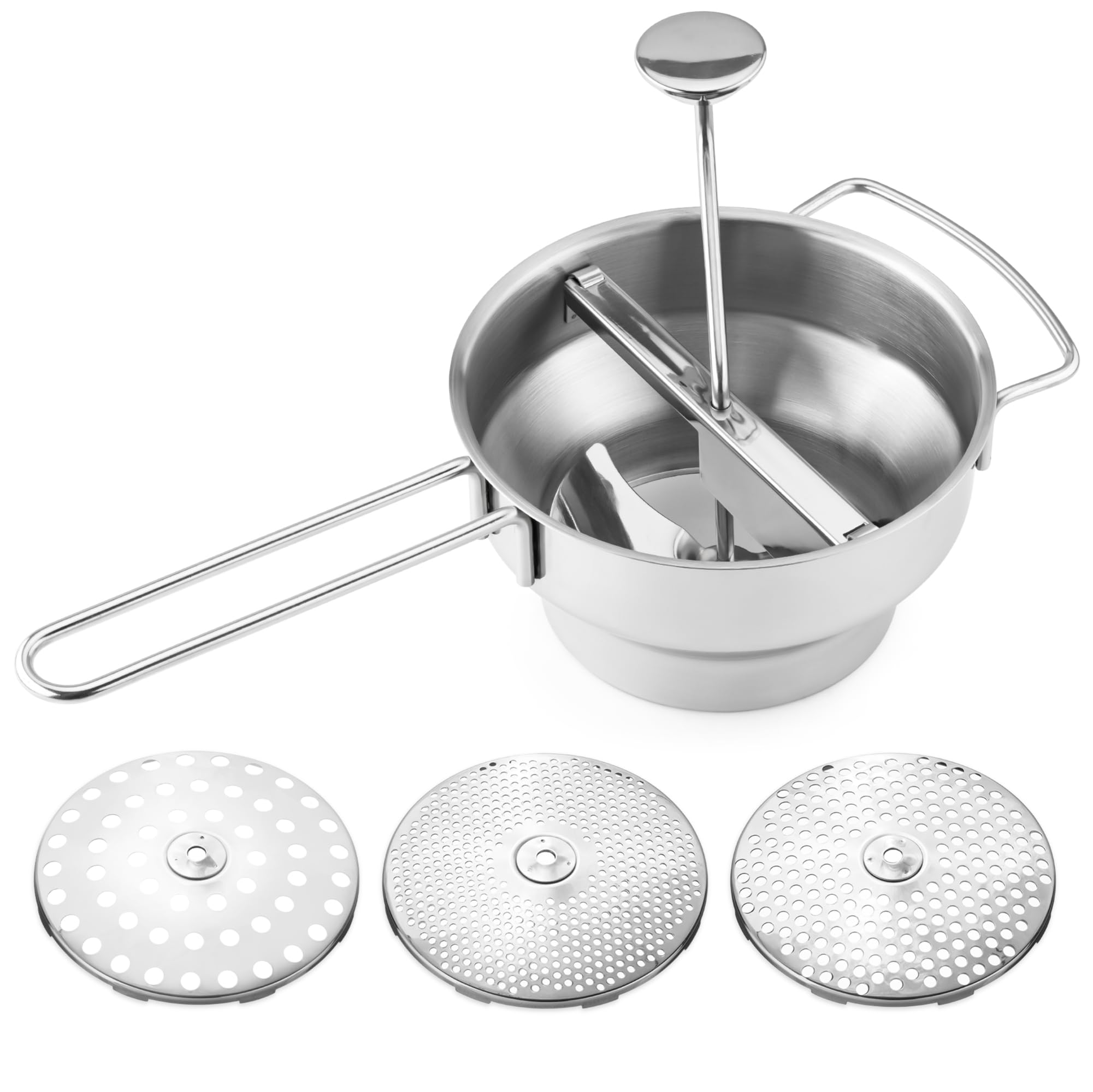
A compact, affordable stainless mill that handles everyday purées and baby food well for small batches.
Why I picked it: Two-quart size and three discs make it an inexpensive, useful entry-level mill.
Best for: Small-batch applesauce, baby food, and occasional tomato sauce.
Very budget-friendly while still offering stainless build and three discs.
Pros
- Affordable stainless construction
- Three disc sizes included
- Dishwasher-safe
- Compact and stylish
Cons
- Can struggle with very seedy fruits
- Works best in small batches
My take
For quick kitchen tasks this 2-quart mill was the most economical pick I kept on a lower shelf for fast access.
It handled apples and tomatoes well, and the three discs let me fine-tune texture. When I tried it with tiny-seeded berries for jam, I had to double-sieve to remove seeds.
Some people reported feed-through problems on the heaviest jobs; I found that pre-cooking and cutting produce into smaller pieces helps the mill behave much better.
4. Küchenprofi Stainless Food Mill – Best Premium
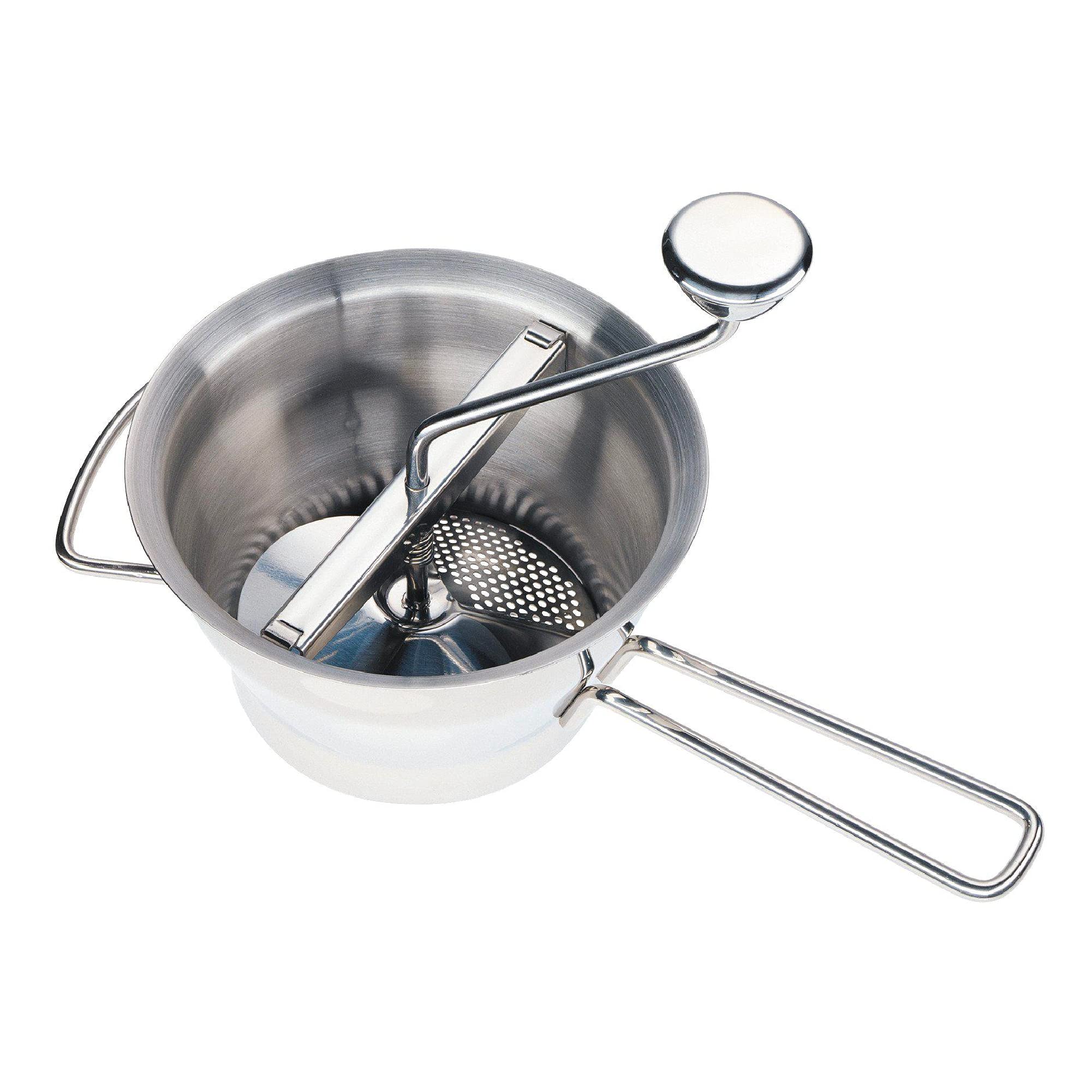
A professional-grade German design with four interchangeable discs, including an extra-fine option.
Why I picked it: The extra-fine disc and 18/10 stainless construction made it the most capable for delicate textures.
Best for: Serious home canners and cooks who want ultra-smooth sauces and long-term durability.
A premium option for cooks who want professional materials and extra-fine textures.
Pros
- Four discs including extra-fine
- 18/10 stainless construction
- Ergonomic hand crank
- Fits a variety of pots
- Durable, professional feel
Cons
- Premium cost relative to simple mills
- Takes practice for fastest throughput
My take
This Küchenprofi feels like a tool built to last; the 18/10 stainless looks and performs like higher-end kitchen gear.
The four disc sizes gave me the smoothest purées and the cleanest tomato sauces—especially when I needed an extra-fine finish for delicate sauces or baby food.
At first I thought processing took longer than expected, but after adjusting batch size and technique it became one of my go-to mills for serious canning and frequent use.
5. Mirro Foley 2-Quart Food Mill – Best for Mashed Potatoes
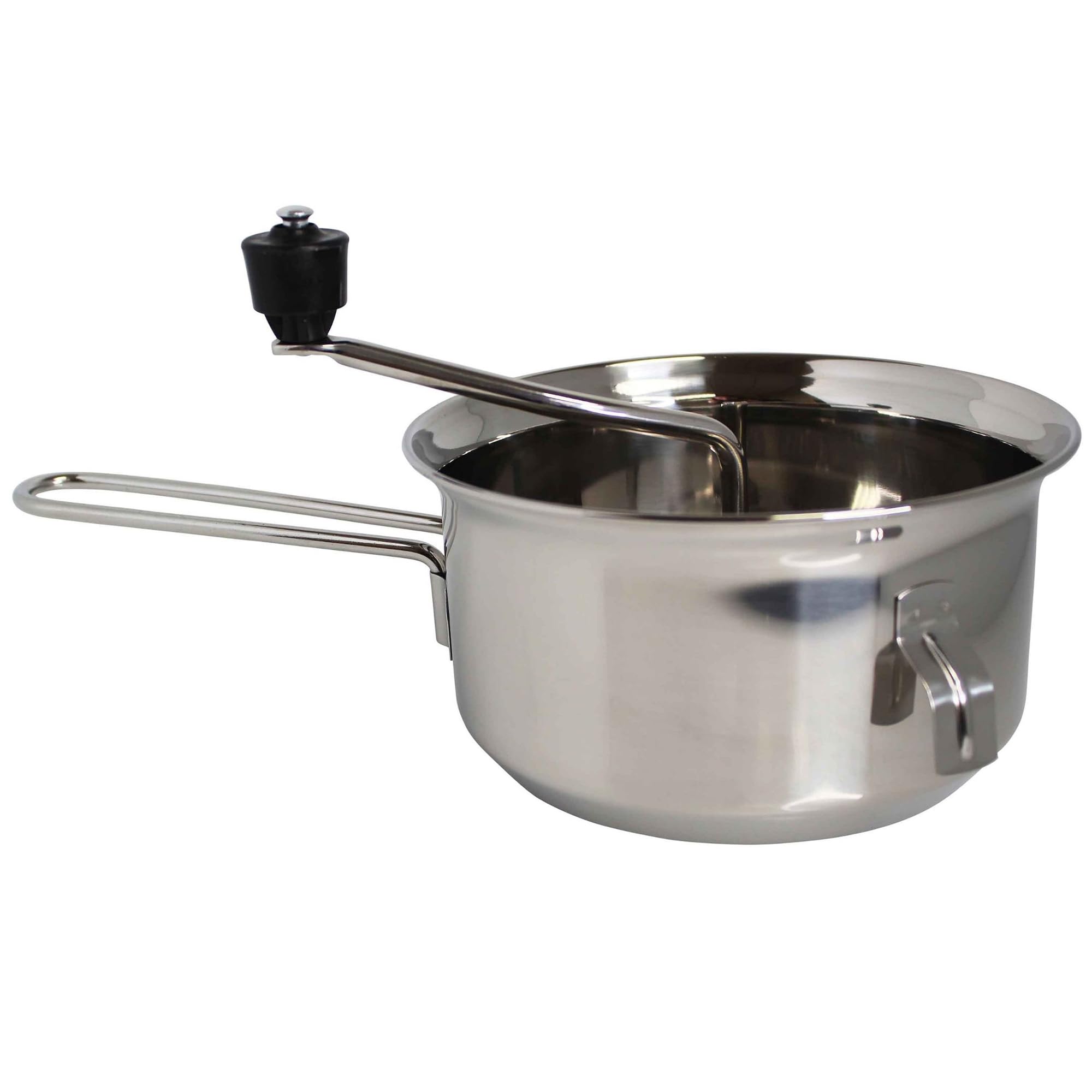
Classic Foley design in a compact 2-quart size that makes exceptionally fluffy mashed potatoes.
Why I picked it: It produced restaurant-style fluffy mashed potatoes with minimal effort and was easy to stash away.
Best for: Mashed potatoes, small sauce batches, and occasional home use.
A practical, entry-level mill for cooks who want great potatoes without excess capacity.
Pros
- Produces fluffy mashed potatoes
- Durable stainless-steel
- Attractive, simple design
- Easy to clean
Cons
- Wire handle can be uncomfortable
- Grate is not interchangeable
My take
I reached for this 2-quart Foley when I wanted smooth, fluffy mashed potatoes—and it delivered consistently better-than-restaurant texture.
The compact size suited small batches perfectly and it cleaned up without fuss. For marinara and light sauce work it also performed well.
Do note the wire handle is less comfortable than a solid grip, and unlike larger models the grate is built-in, so you won’t swap plates on the fly.
6. ExcelSteel Stainless Food Mill – Best for Canning
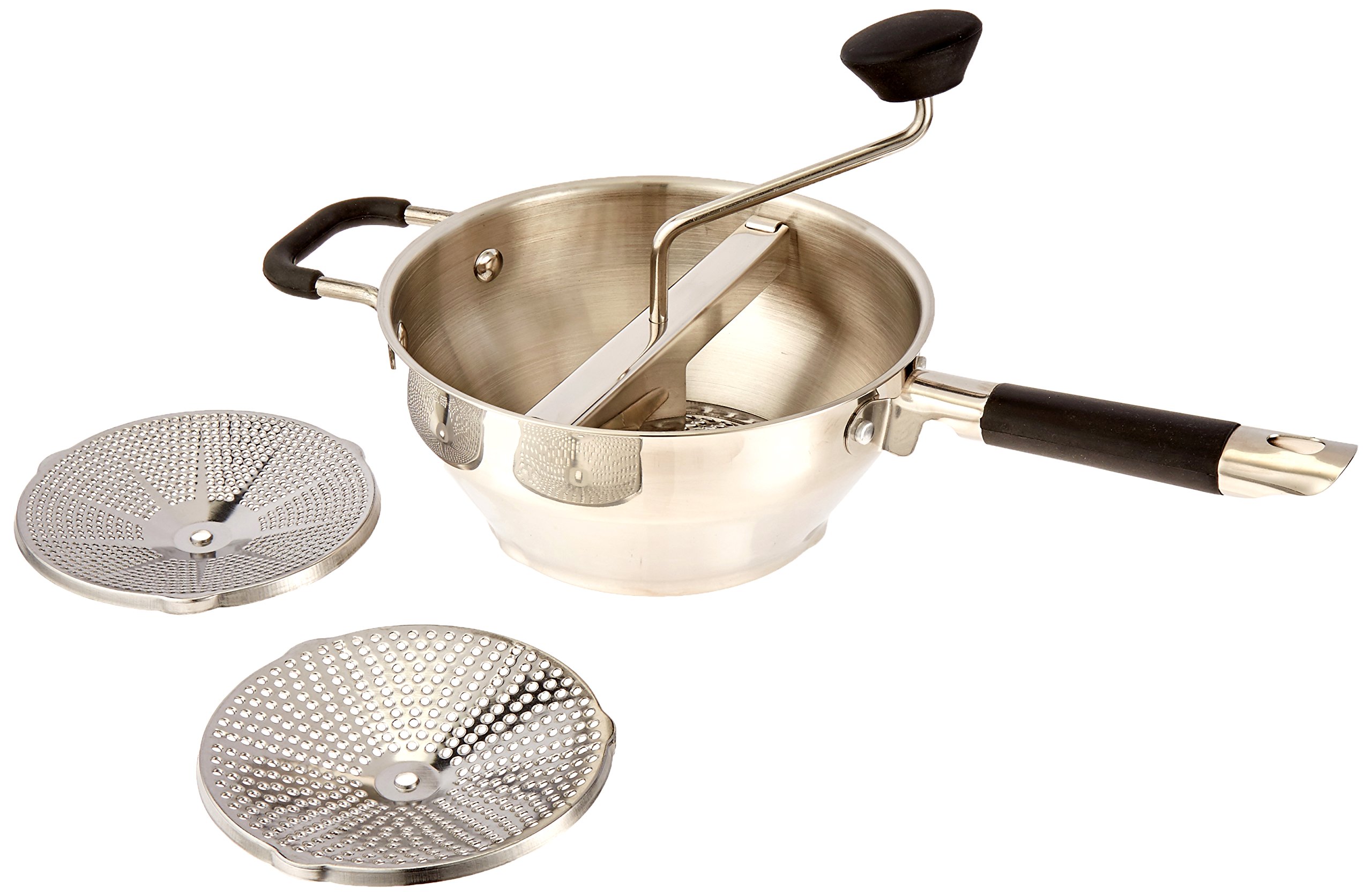
A heavy-duty mill that felt built for frequent tomato sessions and pressure-canning prep.
Why I picked it: Hefty build, comfortable handle, and rapid throughput made long canning days less tedious.
Best for: Large tomato runs, preserving, and frequent seasonal canning.
A solid investment for frequent preserving and heavy use.
Pros
- Heavy-duty construction
- Easy disc interchange
- Comfort grip handle
- Processes tomatoes quickly
- Easy to clean
Cons
- Bulky to store
- Requires arm strength for long sessions
My take
I used this mill during a big tomato season and it made short work of multiple kettles; the metal felt substantial and never flexed under load.
The quick press-and-release for changing discs kept me moving from coarse to fine textures without stopping to wrestle parts apart.
It’s a big, sturdy piece so storage is the trade-off, and you’ll get the most out of it if you’re prepared for a bit of elbow work on marathon canning days.
7. Mirro Foley 3.5-Quart Food Mill – Best Large Capacity
Large 3.5-quart capacity for extended sessions, a long-serving favorite for heavy home canning.
Why I picked it: The roomy bowl and simple, time-tested design let me process large batches without constant refilling.
Best for: Large-batch applesauce, tomato runs, and frequent canning.
A great choice if you need generous capacity and durability.
Pros
- Generous 3.5-quart capacity
- Long-lasting build
- Processes many tomatoes at once
- Simple, classic design
Cons
- Wire handle lacks comfort
- Mounting clips can bend under heavy pressure
My take
This 3.5-quart Foley is my pick when I have multiple bushels of produce to process. The size cuts down refills and speeds the session.
It’s stood up to years of use in my kitchen and still feels serviceable, though the wire handle is a modest annoyance on long jobs.
When I pushed hard with dense batches the mounting clips bent slightly; with a small adjustment they held up for the remainder of my processing.
How I Choose a Manual Food Mill
Key features that influence my choice
I focus on three practical elements when I evaluate a food mill: disc options, stability, and turning mechanism. These directly affect texture, throughput, and comfort during extended use.
- Discs: More disc sizes (including an extra-fine) give finer control over texture.
- Stability: Non-slip feet or solid mounting clips keep the mill from moving during milling.
- Crank vs. handle: Ergonomic cranks reduce wrist fatigue on multi-pound batches.
- Material: 18/10 stainless resists staining and lasts longer with heavy use.
- Capacity: Match bowl size to how often you’ll process large batches.
Match the mill to the job
I pick a smaller 2-quart mill for occasional sauces and baby food. For canning or preserving, a 3–3.5+ quart model or a heavy-duty build saves time.
- Baby food: Use fine or extra-fine discs for velvety purées.
- Tomato sauce: Medium to fine discs remove skins and seeds cleanly.
- Mashed potatoes: Coarse discs or a Foley-style mill produce fluffy results.
Practical tips from my kitchen
Pre-cook and quarter produce to help the mill feed and prevent clogging. If seeds are an issue, I sometimes pass the puree again through the finer disc or a sieve.
I always check whether parts are dishwasher-safe before buying for easier cleanup.
- Don’t overload: Smaller batches turn faster and strain less.
- Cut produce uniformly for the smoothest throughput.
- Secure the mill to a stable bowl or pot for safer, easier milling.
Maintenance and storage
I rinse parts promptly after use to prevent stuck-on pulp. Full disassembly makes cleaning simpler, especially around the screw points and disc edges.
- Check for removable grates if you want easier cleaning.
- Store folded legs or disassembled discs to save space.
- Inspect mounting clips and handles periodically for wear.
Frequently Asked Questions
Can a manual food mill remove seeds and skins?
Yes. When I use the appropriate disc—usually medium to fine—most tomato skins and seeds stay behind. Very tiny seeds (from certain berries) sometimes require an extra pass or a fine sieve afterward.
Which disc should I use for baby food?
I use the finest disc or the extra-fine option when available. It gives a velvety texture without grit, and I often cook the fruit or vegetable until very soft first.
Are manual food mills dishwasher-safe?
Many are. I check the product details, but in practice the stainless bowls and discs I used went through my dishwasher fine; handles and clamps sometimes cleaned better by hand.
Final Take
A food mill is one of those simple tools that repays frequent use. I reach for a compact 2-quart mill for quick kitchen jobs and a heavier 3–3.5-quart or premium mill for serious canning days.
If you want the most versatility for everyday cooking, the OXO Good Grips model balanced comfort, stability, and disc range for me. For heavy preserving I relied on the ExcelSteel and Mirro 3.5-quart mills for their capacity and durability.
Pick the mill that matches how often you’ll use it and what you’ll process most—textures, throughput, and comfort under load make the biggest difference in real use.
