
I tested a range of hand-crank pasta machines and attachments so you can pick the right model for your kitchen — from a professional-grade Atlas to a budget-friendly roller and a ravioli stamp set.
I make fresh pasta at home regularly and I’ve spent time with everything from heavy-duty Italian rollers to compact budget machines and small ravioli cutters. In this roundup I focus on build quality, consistency of sheets, thickness control, expandability, and how easy each unit is to clean and store.
If you want a machine that feels like a lifetime kitchen tool, or something simple to get your kids involved, I cover the options I actually used and what they’re best at in real kitchens.
I compared each model by how well it flattens dough, the precision of thickness settings, accessory compatibility, and how forgiving each is when my dough hydration wasn’t perfect.
1. Marcato Atlas 150 Pasta Maker – Best Overall
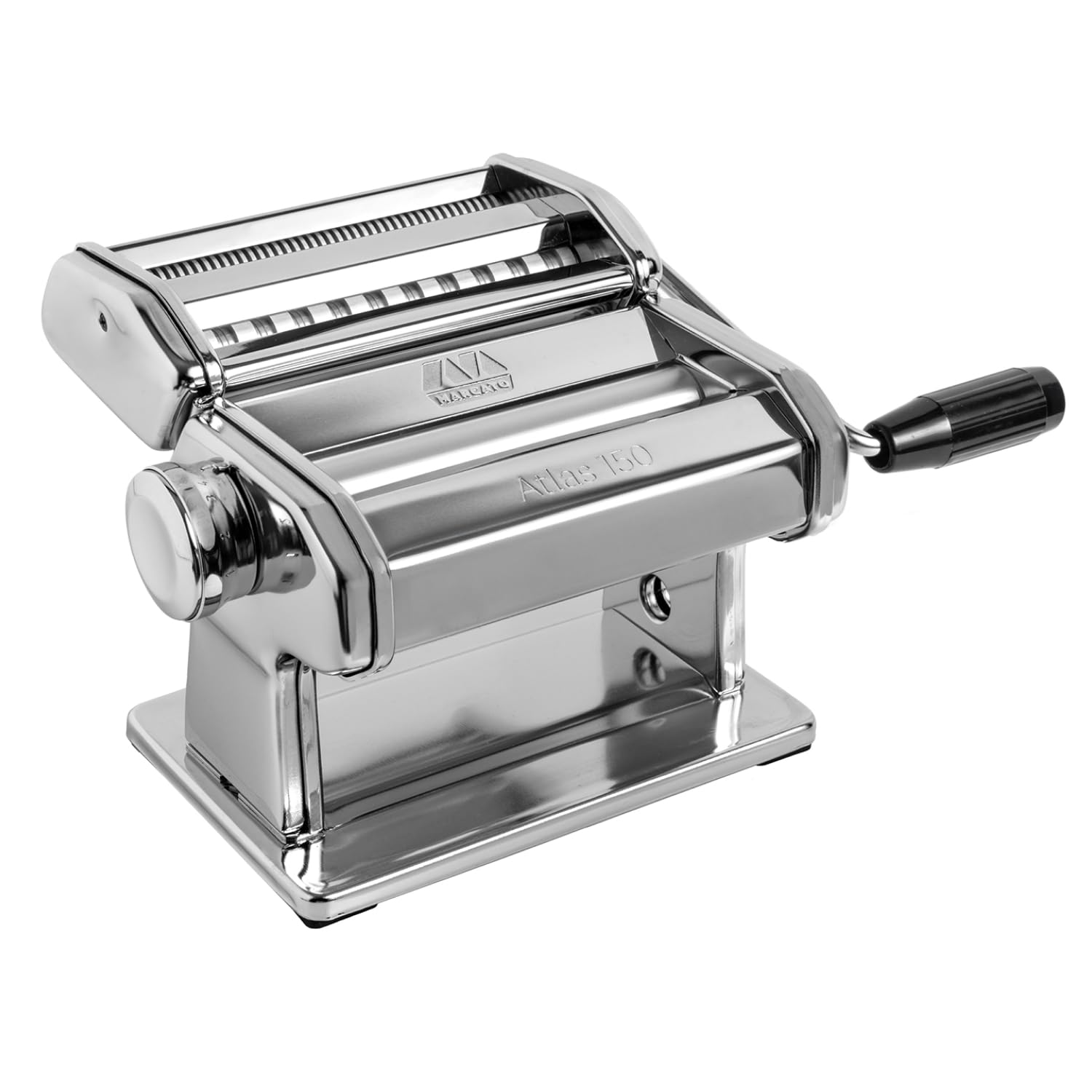
A pro-feel, all-metal roller that produces consistent, uniform sheets and accepts a wide range of accessories.
Why I picked it: Exceptional build and precise thickness control, plus Italian-made durability.
Best for: Home cooks who want a long-term, professional-feeling pasta machine.
A higher-end purchase that I consider a lifetime tool.
Pros
- All-metal, professional construction
- Precise adjustment dial
- Produces uniform pasta sheets
- Compatible with motor and accessories
- Made and assembled in Italy
Cons
- Not dishwasher safe
- Requires drying then brushing to clean
- Heavier and less portable
My take
This is the machine I reach for when I want perfectly even pasta sheets. The Atlas 150 feels solid in the hand — heavy, chrome-plated, and built to last — and the roller produces clean edges without tugging the dough.
The thickness dial is precise enough that I can feather sheets from a thicker start down to near-translucent pasta for filled shapes. I also like that the unit accepts a Pastadrive motor for hands-off rolling when I’m making larger batches.
Cleaning is simple but different from dishwashers: I let any dough residue dry for about 30 minutes, then remove it with the supplied brush. That routine keeps the finish and rollers in top shape.
Being 100% made and assembled in Italy is not just marketing — the workmanship shows in the tolerances and the smooth crank action. The two-year warranty gives me extra confidence if something unusual happens.
2. Imperia Classic Pasta Maker – Best for Traditionalists
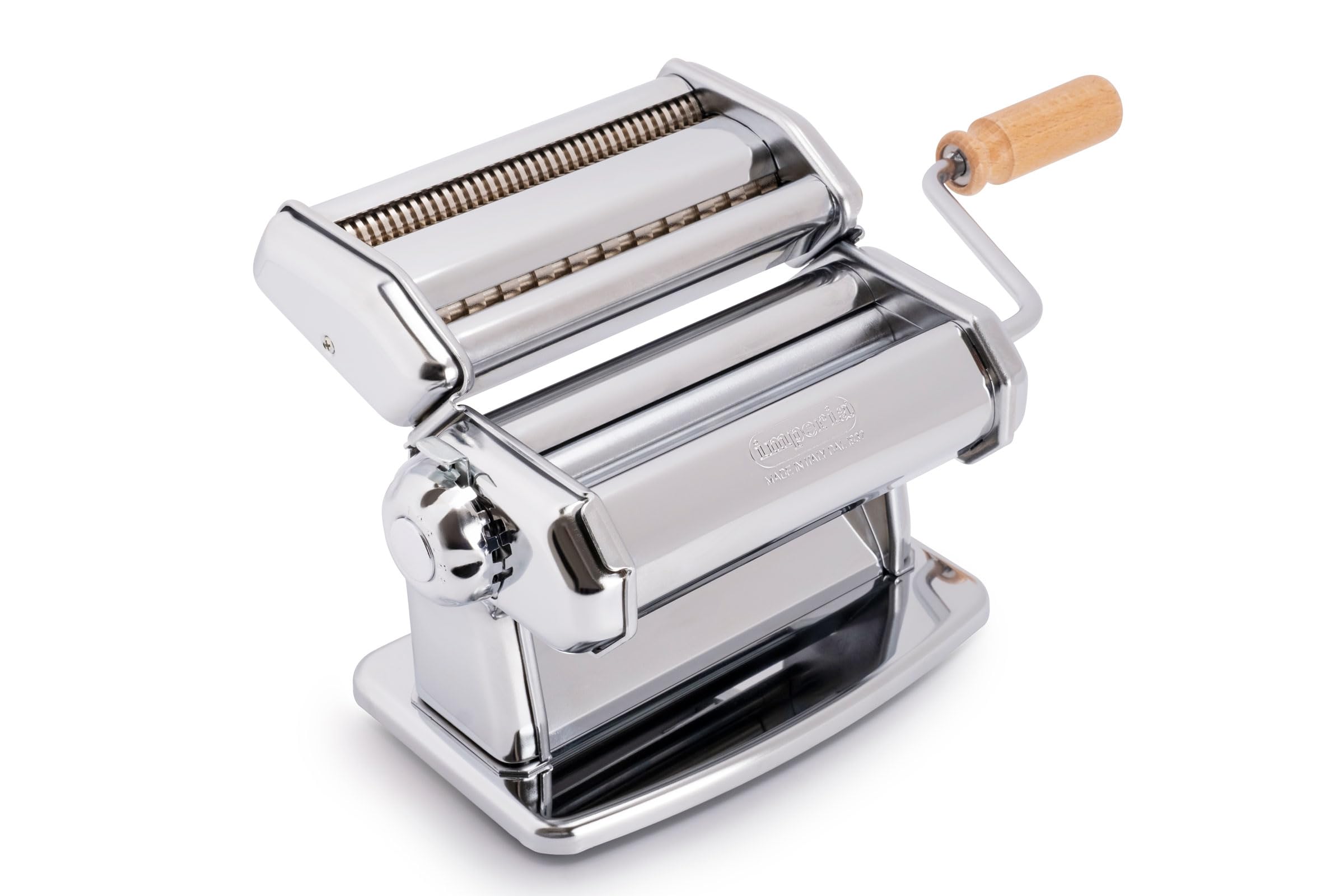
A solid, Italian-made roller with intuitive height adjustments and accessory expandability.
Why I picked it: 100% Italian steel construction and accessory compatibility for traditional pasta styles.
Best for: Cooks who want an authentic, expandable Italian machine without fuss.
A midrange choice with strong value for build and features.
Pros
- Solid chromed steel construction
- Six height settings for thickness control
- Makes fettuccine and tagliolini
- Compatible with electric motor and accessories
- Compact storage with included bag
Cons
- Assembly instructions can be unclear
- Some familiarity helps with attachments
My take
This Imperia model is the same type I used in cooking classes in Italy, and it delivers that familiar, reliable performance at home. The chromed steel feels robust and the clamp holds the unit steady on my counter.
I appreciated the six-step thickness adjustment — it’s easy to dial the sheet from thick to thin — and the cutters produce classic fettuccine and very thin tagliolini cleanly.
The machine ships with a crank and a small storage bag, and it’s compatible with DUPLEX and SIMPLEX accessories if you want to make more shapes later. The clamp slot also accepts an electric motor if I want to automate longer sessions.
The only real nuisance is the instructions; they’re terse and I figured things out faster by handling the parts than by reading the manual.
3. Master Feng Ravioli Stamp Set – Best for Ravioli
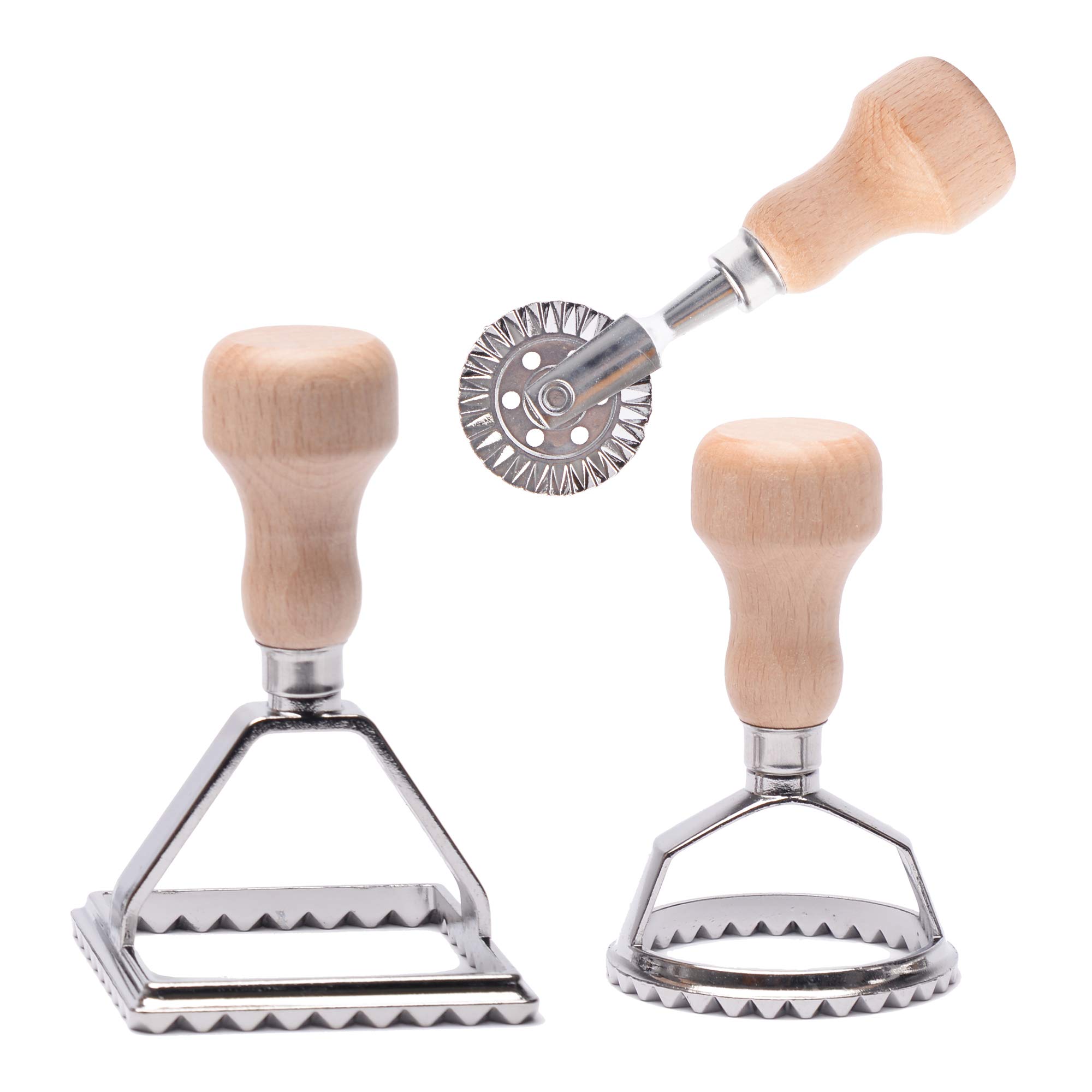
A simple stamp-and-roll set with round and square cutters plus a fluted wheel for sealing and trimming.
Why I picked it: Quick way to make filled pasta pockets without complex attachments.
Best for: Anyone who wants to make ravioli and hand-shaped stuffed pasta.
A very affordable way to add filled pasta to your repertoire.
Pros
- Includes round, square, and roller tools
- Beechwood handle for comfortable grip
- Fluted edge gives neat seals
- Great for small-batch ravioli and shapes
Cons
- Feels a bit cheaply made
- Not heavy-duty enough for constant commercial use
My take
When I want fat, filled ravioli quickly, this set is my go-to. I roll sheets thin on my machine, lay one sheet down, position filling, cover with a second sheet, and stamp. The cutters seal and trim in one motion when I press firmly.
The wooden handle is comfortable and the fluted edges give the classic look I want. I’ve also used the roller for cutting crackers and other doughs — it’s more versatile than it looks.
A downside is the build quality feels light compared with the heavy metal rollers — it’s perfectly fine for home use, but I wouldn’t expect it to stand up to commercial throughput.
4. Sailnovo 180 Roller Pasta Maker – Best Budget
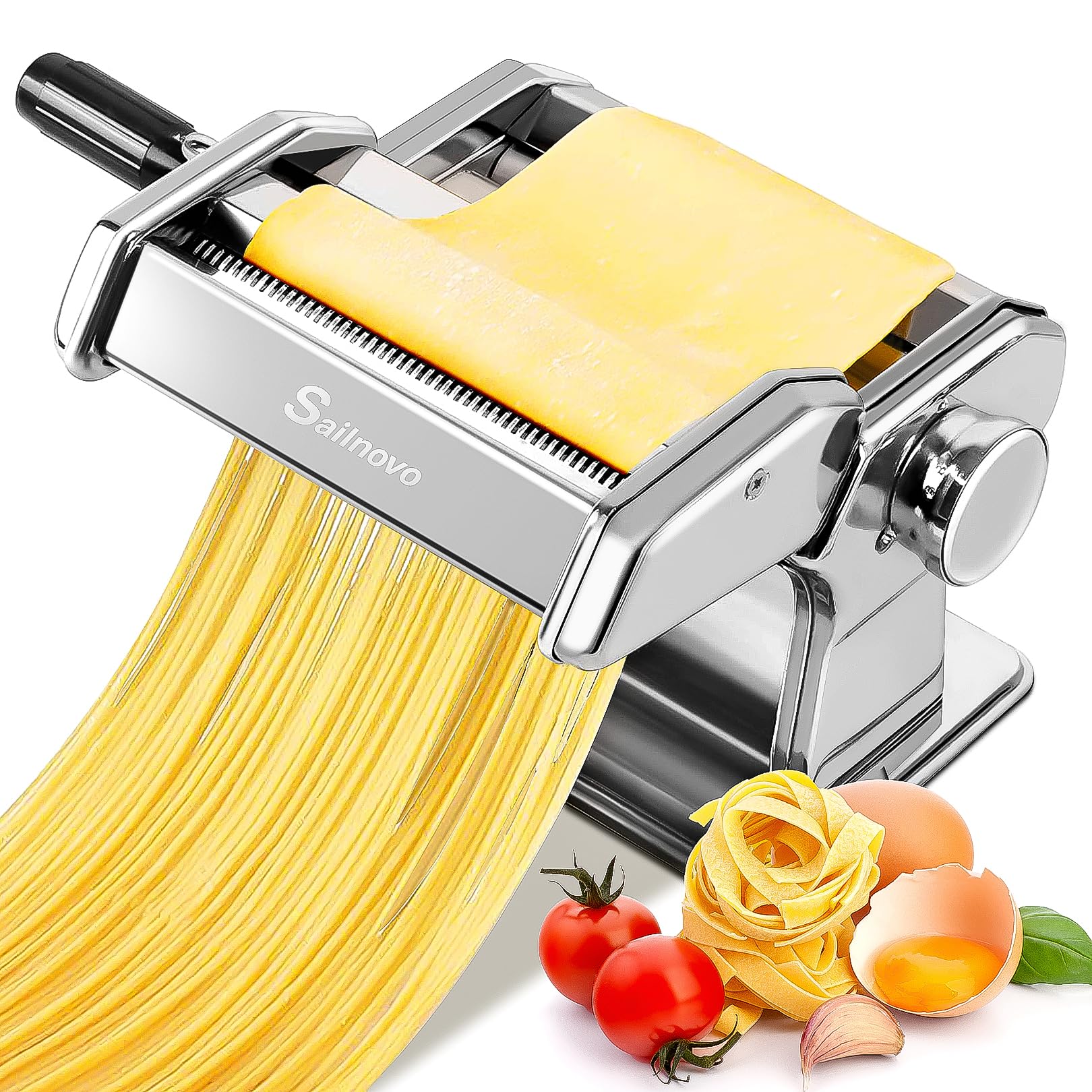
A compact, rust-resistant roller with nine thickness settings that’s fast to use and easy to store.
Why I picked it: Nine thickness options and lightweight construction make it versatile and beginner-friendly.
Best for: Beginners, families, and anyone who wants quick fresh pasta without a big investment.
A budget-friendly option that performs well for everyday use.
Pros
- Nine adjustable thickness settings
- Rust-resistant stainless construction
- Compact and lightweight
- Good for quick batches
Cons
- Dough can stick to roller ends
- Cutting only in two widths
My take
I made my first batch of fresh pasta with this Sailnovo and it shaved a huge amount of time off hand-rolling. The nine thickness settings genuinely let me dial in textures from dumpling skin to thicker noodles.
The machine feels solid while cranking, and the clamp secures it well to the counter — I even used it with middle-school students and it held up to light classroom use.
Cleanup requires patience: dough can collect on the roller ends and needs careful brushing or a toothpick to clear. Also, the cutter assembly only offers two widths, so you won’t get the same variety as pricier machines, but for simple spaghetti and fettuccine it’s fast and effective.
How I Choose a Manual Pasta Maker
Build & Materials
I evaluate machines first by materials and build. Heavy chrome-plated or stainless steel rollers give a smoother roll and last longer than plastic-heavy models.
If I plan to keep a machine on my counter and use it often, I prefer an all-metal unit that feels stable while cranking.
- Look for chromed or stainless rollers for durability.
- Heavy base and secure clamp reduce wobble.
- All-metal gears and cranks last longer than plastic parts.
Thickness & Cutting Options
Thickness control dictates what you can make. I want at least four or five settings for filled pasta and many more if I’ll make sheets for lasagna or very thin noodles.
Cutters define the shapes you can produce—some machines include multiple cutters or accept accessory sets.
- More thickness settings = more versatility.
- Check max sheet width if you plan to make lasagna or wide ribbons.
- Find models that accept motor attachments if you’ll scale up production.
Cleaning & Maintenance
Manual pasta makers generally aren’t dishwasher-safe. I always let residue dry and then brush it away. Metal machines will resist rust, but avoid soaking any cutter parts.
Simple designs with removable cutters are easier to keep in prime condition.
- Dry and brush rollers — don’t submerge in water.
- Use a small brush or toothpick for trapped dough.
- Store with a dust cover or the included bag to protect the finish.
Accessories & Expandability
If I want to branch into ravioli or stuffed shapes I look for machines compatible with duplex/simplex accessories or a motor. A separate ravioli stamp set is a low-cost way to add filled pasta capability.
Consider whether you want the option to motorize the unit for large batches.
- Confirm accessory compatibility before buying.
- Ravioli stamps or molds are inexpensive and effective.
- Motor compatibility is useful for frequent, large-batch use.
Frequently Asked Questions
Can I motorize these manual pasta makers?
Yes — several machines in this roundup accept an optional motor. If I plan to make long runs of pasta, I choose a model with a clamp slot or specific motor compatibility.
How do I clean a manual pasta machine?
I let any dough residue dry, then brush it away with a small brush or toothpick. I avoid water on the rollers and cutters to protect sharpness and prevent rust on non-stainless parts.
What kind of dough works best with these machines?
I use a classic pasta dough of flour and eggs (or a simple flour-water dough for egg-free versions). Hand-kneaded dough that’s rested and slightly tacky but not wet feeds through rollers most reliably.
Final Take
If I want professional-grade sheets and lifetime durability, the Marcato Atlas is my pick. For an authentic Italian experience that’s a bit more wallet-friendly, the Imperia gives me the right balance of build and expandability.
If I’m making filled pasta, the Master Feng stamp set is a quick, inexpensive way to get beautiful ravioli. And for casual, budget-conscious cooks who want convenience without sacrificing results, the Sailnovo is a surprisingly capable everyday tool.
Whichever I reach for, a good recipe and proper dough hydration make the biggest difference — the right machine just makes the job easier and more enjoyable.
