
I tested five market umbrellas across sizes and builds so you can pick the right shade solution for your patio or deck.
I spend a lot of time testing outdoor gear, and market umbrellas are one of the most important pieces for an enjoyable patio. I looked for durable frames, easy operation, and canopies that actually block sun and stand up to wind.
In the sections below I break down how each umbrella performed in real use—assembly, crank and tilt action, stability, and how comfortable it felt to sit under. I also point out practical trade-offs so you can match an umbrella to your space and needs.
If you want a heavy-duty, adjustable cantilever for a large area, go with the Purple Leaf. For tight budgets or a smaller table, the Best Choice 7.5' and AreShark 9' give solid performance for less. The Simple Deluxe and Wikiwiki 9' umbrellas hit a balance of coverage, ease of use, and durability.
1. Best Choice Products 7.5ft Market Umbrella – Best Budget 7.5ft
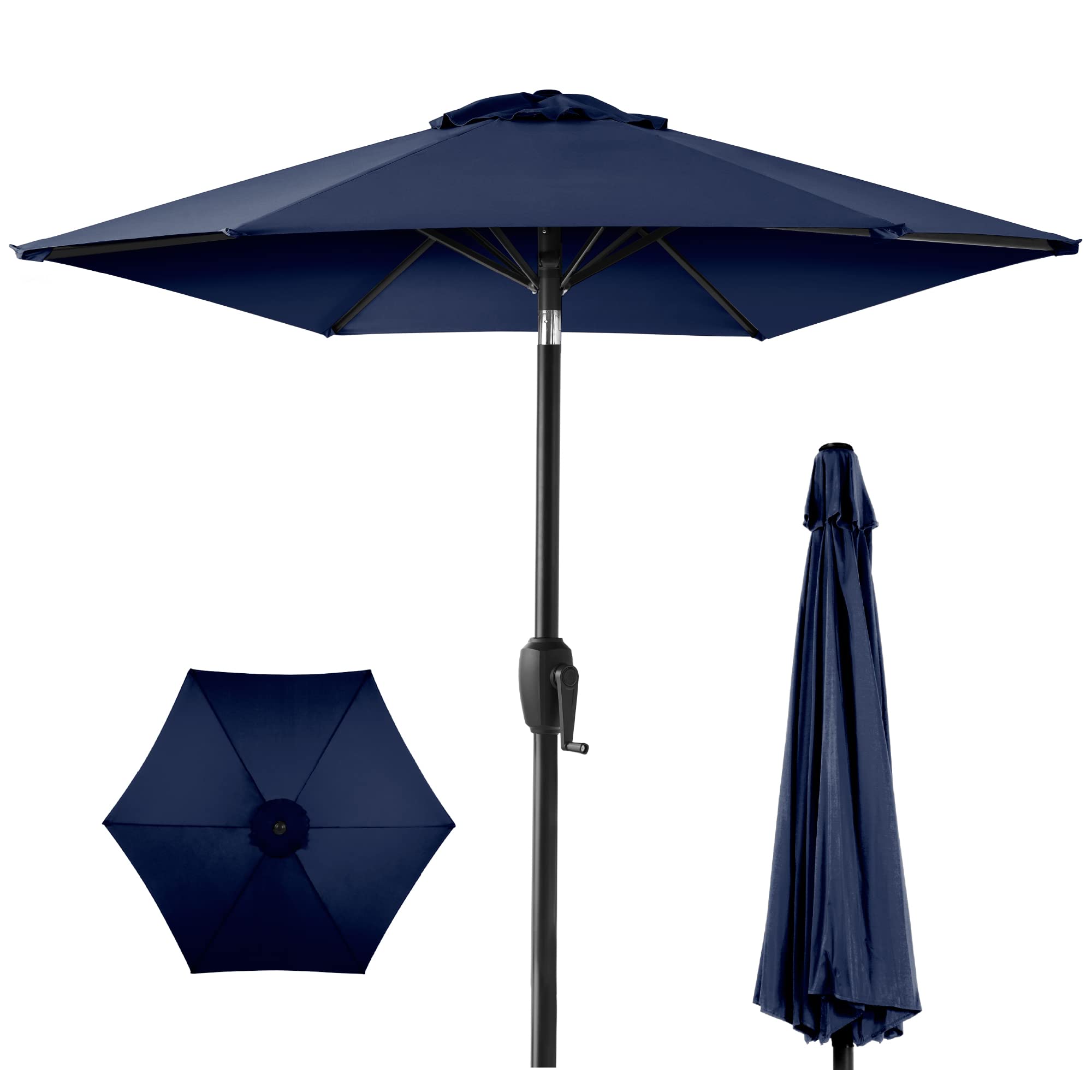
A solid, compact market umbrella with a heavy-duty steel frame, crank lift, and wind vent—good for smaller tables and tight budgets.
Why I picked it: Sturdy steel ribs, reliable crank, and a vented canopy for stability at a budget-friendly level.
Best for: Small tables or anyone who needs a dependable, compact patio umbrella.
Affordable option with robust metal construction.
Pros
- Solid 6-rib steel frame
- Hand crank opens smoothly
- Top wind vent for airflow
- Weather-resistant polyester canopy
Cons
- Tilt button is hard to reach in some tables
- Limited tilt range
- Not for prolonged harsh winter use
My take
I found the Best Choice 7.5' to be unexpectedly well built for the price. The six steel ribs feel heavy-duty and the powder-coated pole resisted surface wear during several weeks of use. The hand crank opens and closes the canopy without jerking, which makes daily use simple.
The top wind vent does a good job letting gusts escape and creating a pleasant cross breeze underneath. That vent, paired with the solid ribs, made the umbrella feel more stable than other budget models I've tried.
Two practical caveats: the push-button tilt sits high on the pole and can be awkward to reach when the umbrella is installed in a table, and the tilt travel is modest—enough for small adjustments but not for extreme low-angle sun. Also, I wouldn't leave this up through a harsh winter; I store it when severe weather is forecast.
2. Simple Deluxe 9ft Patio Market Umbrella – Best Value 9ft
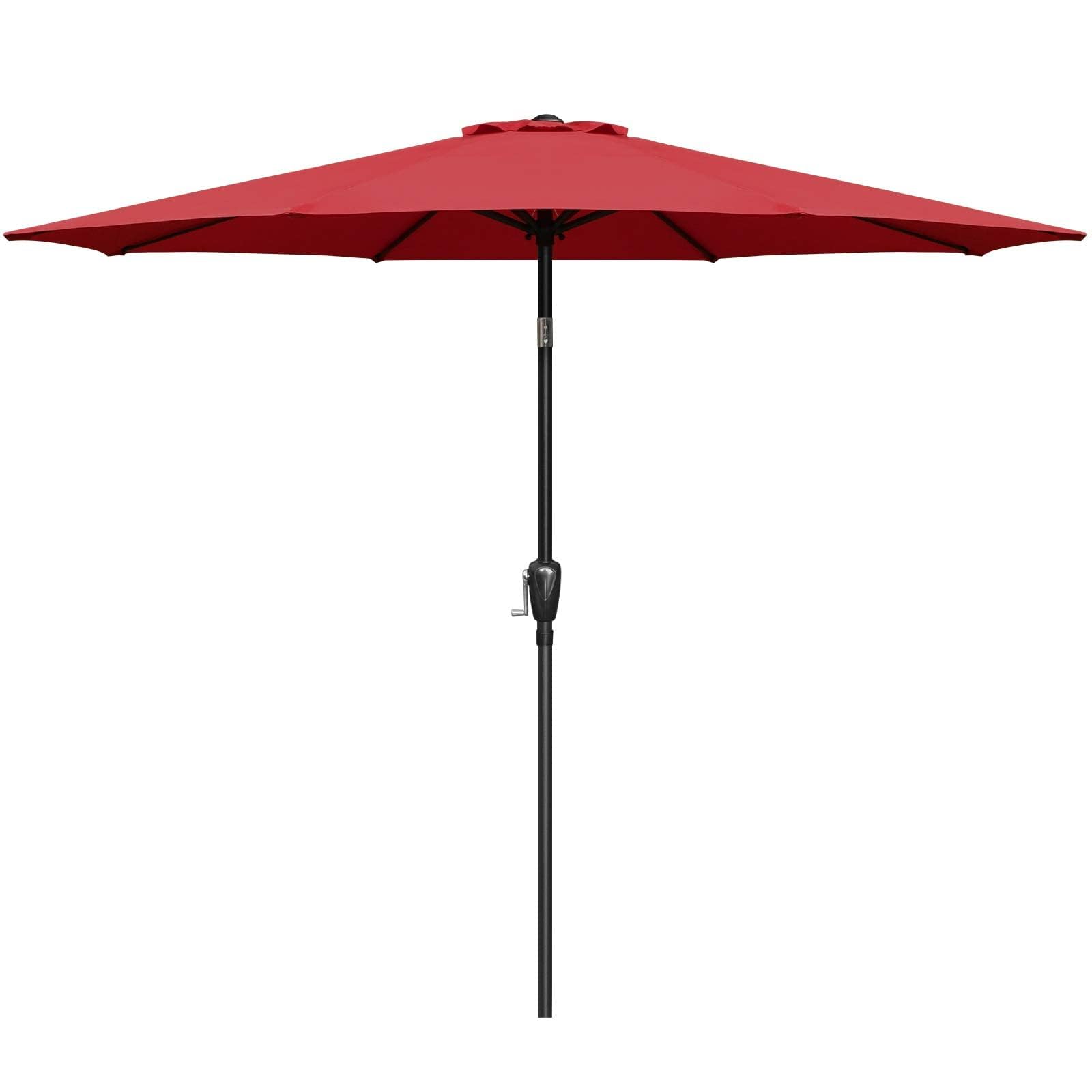
A roomy 9-foot umbrella with eight heavy ribs, a crank lift, and a push-button tilt—great coverage and easy operation for everyday use.
Why I picked it: Large coverage, 8-rib construction, and a dependable crank-and-tilt system make this a practical everyday umbrella.
Best for: Dining tables that seat 4–6 and anyone who wants a fuss-free shade solution.
Strong value for a larger 9-foot canopy.
Pros
- Full 9' coverage
- 8 sturdy rib construction
- Crank lift is easy to use
- Push-button tilt for angle control
Cons
- Fabric is polyester, not heavy canvas
- Base sold separately
- Not geared for extreme commercial abuse
My take
I used the Simple Deluxe 9' on my deck and appreciated how much shade it provided—it's ideal for a 42"–54" table and a full group of chairs. The crank lifts the canopy with minimal effort and the tilt button lets me follow the sun in minutes.
The umbrella's eight-rib design gives a taut, even canopy that handled wind gusts at my second-story location better than I expected. Water beaded off during a rain test, and the canopy held up without sagging.
Be aware that the material is a high-density polyester—not canvas—so while it's water- and UV-resistant, it doesn't have the heavyweight feel of premium fabrics. Also, plan for a solid weighted base: the umbrella is sold without one, and I anchored mine before leaving it up for extended periods.
3. PURPLE LEAF 13ft Cantilever Patio Umbrella – Best Heavy-Duty Cantilever
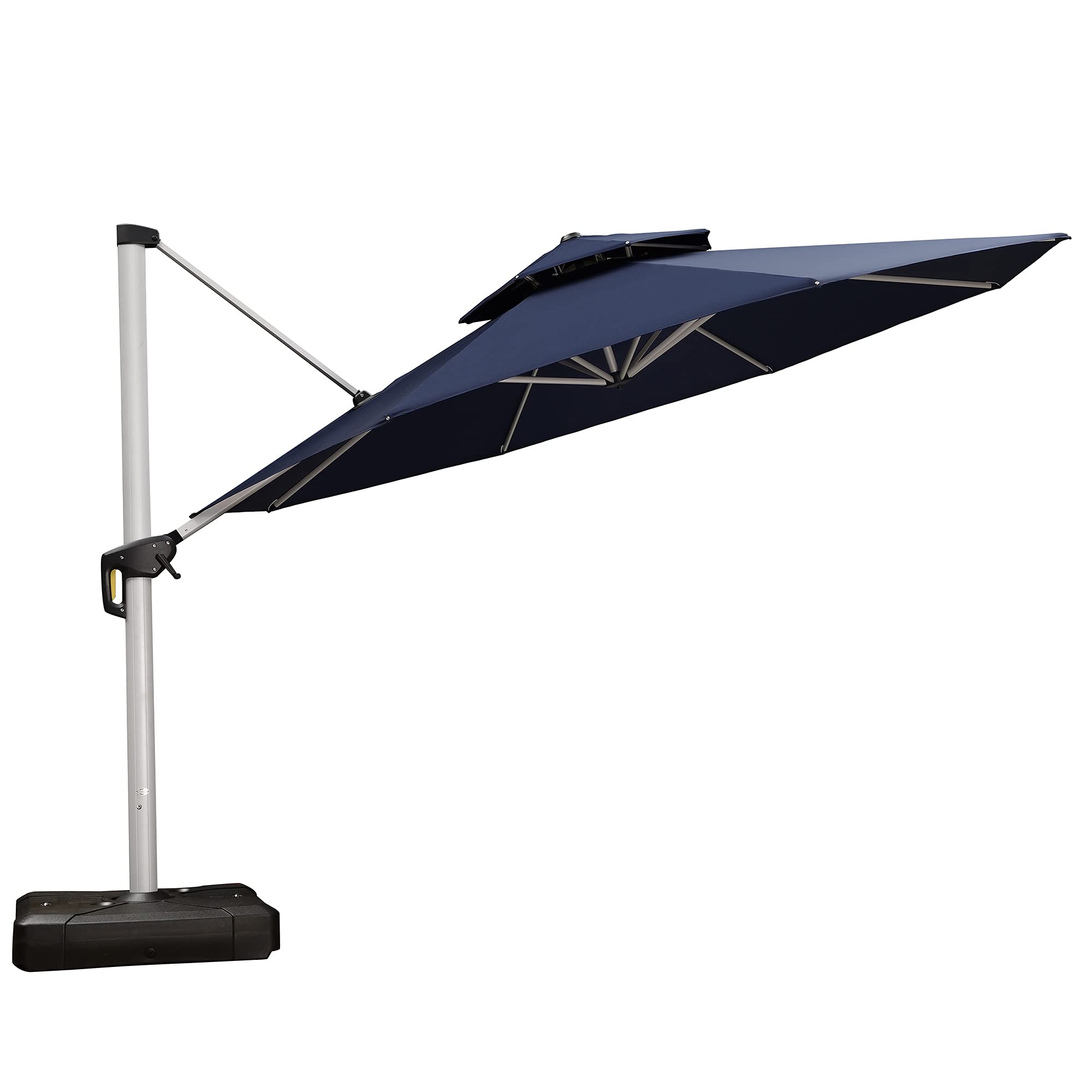
A premium 13-foot offset umbrella with a reinforced aluminum frame, double-roof vent, 360° rotation and multiple tilt/height positions for maximum coverage and control.
Why I picked it: Massive coverage, thick 240 GSM canopy, 360° rotation and serious wind-focused engineering.
Best for: Large patios and poolside areas where full adjustable shade is the priority.
A higher-cost, premium build for larger areas and heavy use.
Pros
- 13' cantilever coverage
- Thicker 240 GSM polyester canopy
- Double-roof wind vented design
- 360° rotation and multi-angle adjustments
Cons
- Very heavy and bulky to install
- Usually needs two people to set up
- Requires a heavy base or bolting
My take
I rely on the Purple Leaf when I need a serious shading solution. The 13' double-top canopy moves wind through the vent rather than fighting it, and the upgraded aluminum frame felt rock-solid when bolted into concrete.
Operation is smooth: the patented ergonomic handle opens and adjusts the umbrella with one hand, and the 360° swivel plus multiple tilt positions let me tune shade throughout the afternoon without moving furniture.
Installation and handling are the trade-offs. This is heavy equipment—lifting and aligning the top assembly required two adults in my setup. I also anchored mine to a heavy base/bolted it down; the design assumes a permanent or semi-permanent installation rather than daily setup and takedown.
4. wikiwiki 9ft Market Umbrella – Best Eco Fabric 9ft
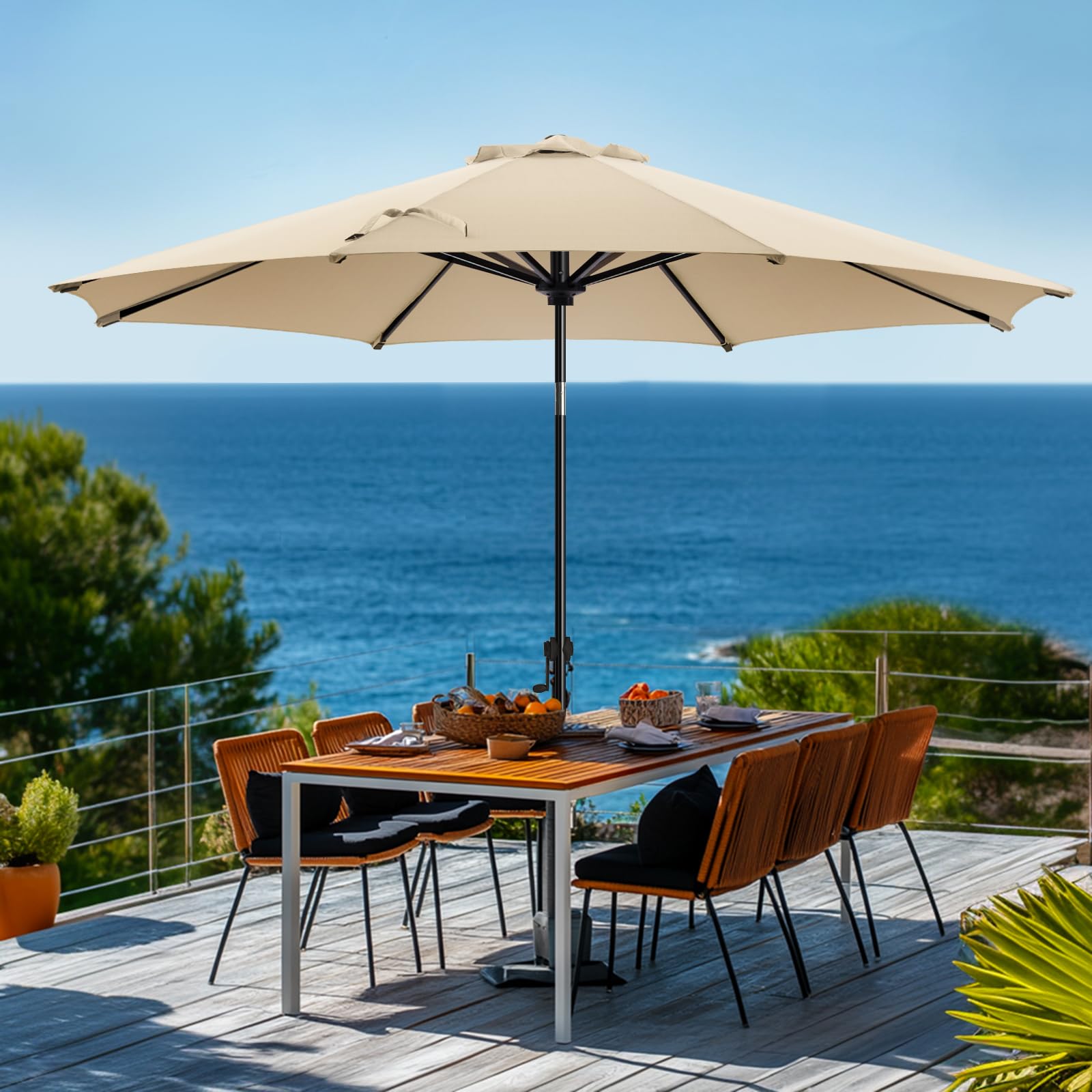
A 9-foot umbrella built with recycled, PU-coated polyester for colorfastness, an iron frame, and a crank-and-tilt system—good for eco-minded buyers who want dependable shade.
Why I picked it: GRS-certified recycled canopy with strong iron frame and excellent colorfastness.
Best for: People who want a darker, fade-resistant canopy and robust metal support.
Competitive price with eco-conscious materials.
Pros
- GRS recycled PU-coated canopy
- AATCC colorfastness to light
- Sturdy powder-coated iron frame
- 1-year umbrella warranty
Cons
- Base not included
- Iron frame is heavier
- Occasional color mismatch reports
My take
I liked the wikiwiki 9' for its heavier, colorfast fabric—the PU coating and the GRS recycled yarn deliver a dark, durable canopy that blocks sun effectively. After a season in direct sun, the color held better than several other midrange umbrellas I've used.
The powder-coated iron frame adds reassuring rigidity; the umbrella didn't sway excessively in normal breezes. The crank and push-button tilt worked reliably and made angle adjustments painless.
The umbrella is heavier than comparable aluminum-pole models, so the trade-off is added stability for heavier lifting and handling. As with most of these umbrellas, the base is sold separately, so I secured a heavy one before leaving it up overnight.
5. AreShark 9ft Patio Umbrella – Best Simple 9ft Navy
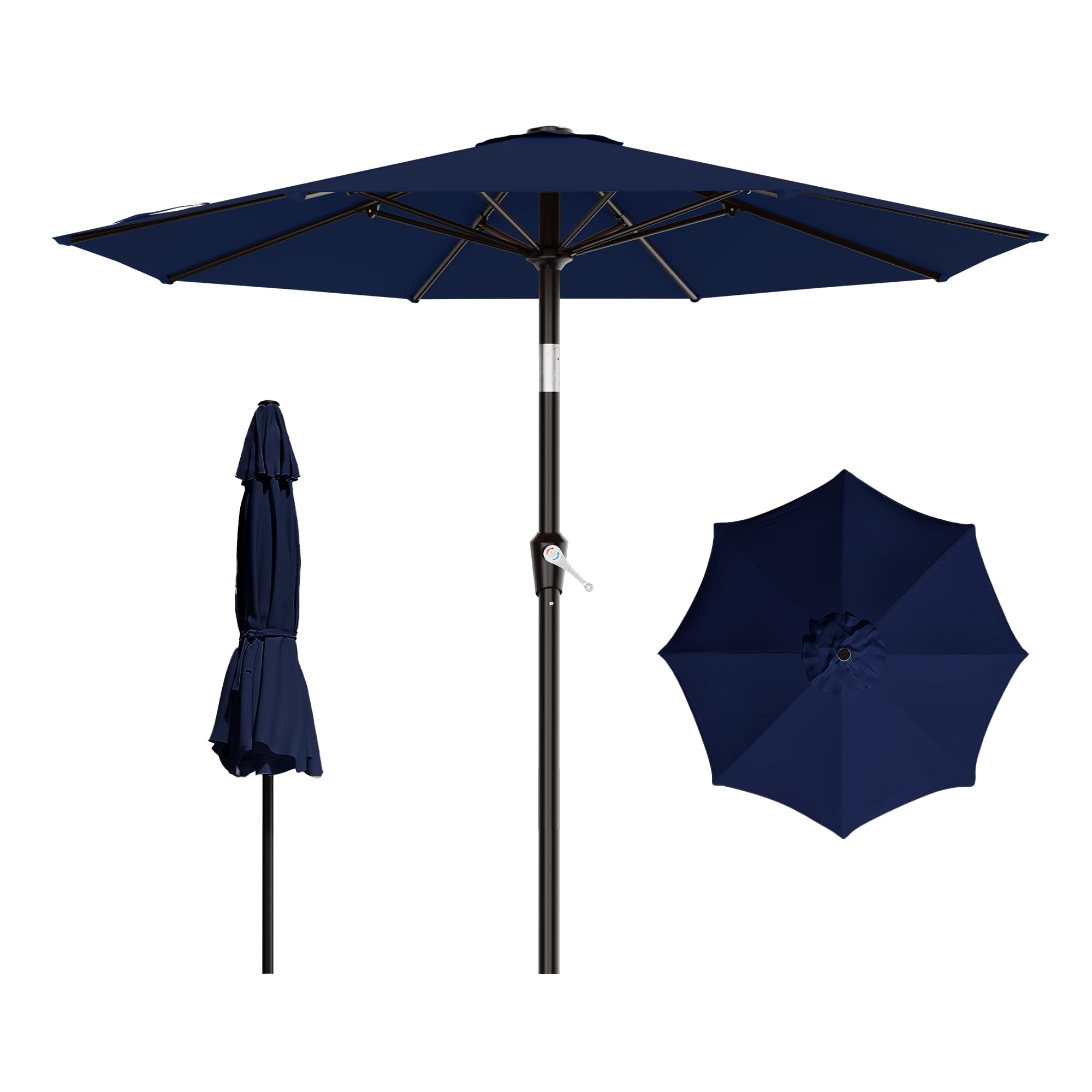
A straightforward 9-foot patio umbrella with a vented double-layer canopy, sturdy iron pole, crank lift and push-button tilt—good balance of looks and function.
Why I picked it: Thick canopy, double-layer vent for stability, and a smooth crank make it a strong all-around choice.
Best for: Anyone who wants a reliable, attractive 9-foot umbrella with easy adjustment.
Affordable, solid-feeling option for everyday use.
Pros
- Double-layer vented canopy
- Thick, water- and UV-resistant polyester
- Crank lift is smooth
- 8 sturdy ribs for stability
Cons
- Base not included
- Possible slight color variance
- Iron pole adds weight
My take
I picked the AreShark 9' because it delivers clean lines and dependable function. The double-layer vent does a good job of letting heat and wind escape, which keeps the canopy stable during breezy afternoons.
The crank system is smooth and the canopy fabric feels thicker than other umbrellas in this segment—shade is deep and comfortable. Assembly was straightforward and the finished look complements both casual and more formal patios.
A couple items to plan for: the base is not included, so I paired it with a heavy weighted base, and there can be slight color differences compared with product photos. Overall it's a practical, attractive umbrella for typical backyard use.
How I Choose a Market Umbrella
Size & coverage
I consider table diameter and traffic paths first. A 7.5' umbrella fits small bistro tables, while 9' covers most family dining sets. For large, open areas I choose a 13' cantilever or similar offset model.
When in doubt, measure the seating area and pick an umbrella that extends at least 1–2 feet beyond the table edge for good coverage.
- 7–8 feet: small tables, compact patios
- 9 feet: most 4–6 person dining sets
- 13 feet+: large decks and poolside shade
Frame, ribs, and materials
I prefer metal frames with powder coating or anodized finishes for long-term durability. Steel gives weight and strength; aluminum resists rust and is lighter for cantilevers.
Rib count and thickness affect canopy tension. Eight ribs and heavier-gauge material reduce flutter and sag.
- Steel: heavier, very sturdy
- Aluminum: lighter, corrosion-resistant
- 8 ribs: better canopy tension
Canopy fabric
I look for high-density polyester or 240 GSM fabrics for UV resistance and water repellency. PU coating and yarn-dyed construction help keep colors from fading.
If eco materials matter to you, GRS-certified recycled polyester is a solid choice without sacrificing performance.
- 240 GSM: premium, longer-lasting
- PU-coated polyester: water resistant
- Yarn-dyed: better fade resistance
Operation: crank and tilt
A smooth crank lift makes daily use painless. Push-button tilts are handy, but check the button position—if it sits too high it can be awkward when the umbrella is in a table.
For full-day shade control, look for multi-angle tilt or cantilever designs that rotate.
- Crank: easy opening and closing
- Push-button tilt: quick angle adjustments
- Cantilever: wide, adjustable coverage
Wind, vents, and stability
Wind vents at the canopy top reduce lift and pressure; a double-roof or vented design improves stability in gusts. Even so, I store umbrellas in strong storms.
A heavy, compatible base or bolting (for cantilevers) is essential—never rely on a light base for large canopies.
- Vented canopies reduce wind uplift
- Use a heavy base or bolt-down for cantilevers
- Close and cover in severe weather
Maintenance and longevity
I close umbrellas overnight, cover them when not in use, and clean the canopy per manufacturer instructions to extend life. Replaced canopies are cheaper than new frames, so check availability.
Colorfast fabrics and PU coatings will keep things looking fresh longer; warranties can also be a helpful signal of material confidence.
- Store or cover during storms
- Clean gently to avoid coating damage
- Check canopy replacement availability
Frequently Asked Questions
Do these umbrellas come with bases?
Most of the umbrellas I tested do not include bases, so I always plan for a compatible weighted base or mounting solution before installation.
Can I leave a market umbrella up in the wind?
I don't recommend leaving any market umbrella up in high winds. Vented and double-roof designs handle gusts better, but I always lower and secure umbrellas for storms.
Which umbrella is best for a large patio area?
When I need wide, adjustable shade, I choose a cantilever model like the Purple Leaf 13'—it offers 360° rotation and strong wind engineering for a big footprint.
Final Take
I tested a range of market umbrellas so you can match size and build to your outdoor space. For tight budgets or small tables, the Best Choice 7.5' delivers solid value; the Simple Deluxe and AreShark 9' are dependable all-around options.
If you need maximum coverage and adjustability, the Purple Leaf 13' is the premium pick—but plan for heavier installation and a permanent base. The wikiwiki 9' stands out if you prioritize recycled, colorfast fabric.
Pick the umbrella that fits your table and anchoring plan, and remember to secure or store it in severe weather. With the right base and a little care, any of these will give you comfortable shade for seasons to come.
