
I tested a range of cleavers so you don’t have to. From a budget-friendly 7-inch chopper to a premium forged German steel cleaver, here’s what I reach for when I need to break down meat, split bone, or prep large veg.
I cook a lot of whole birds, roasts, and weekend butchery projects, so I own several cleavers and switch between them depending on the task. In this roundup I focus on tools that actually work in a home kitchen — from a light, inexpensive 7-inch option for occasional use to heavier blades built for splitting bone.
I tested each cleaver on real tasks: quartering poultry, breaking down roasts, hacking through small bones, and prepping large squash. I describe how each blade felt, what it handled well, and where I would avoid using it.
I picked these cleavers to cover a range of needs: lightweight and inexpensive for occasional cooks, nimble Japanese-style blades for precision chopping, heavier western-style cleavers for bone work, and a premium forged option when I want long-term edge retention and a refined fit-and-finish.
1. Utopia Kitchen 7-inch Cleaver – Best Budget
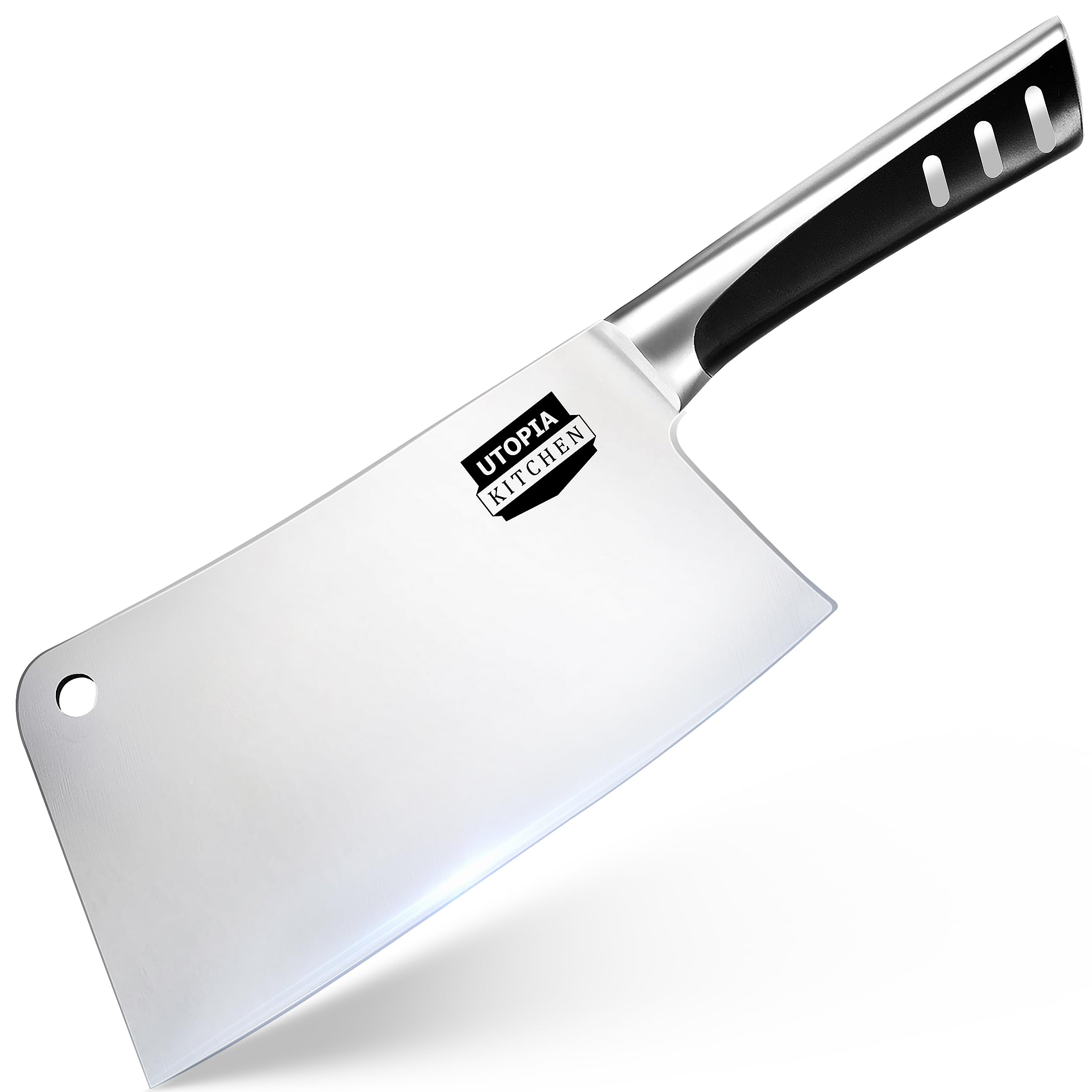
A sharp, no-frills 7-inch stainless steel cleaver that handled my turkey and everyday chopping without fuss. Great if you need a capable tool on a tight budget.
Why I picked it: Affordable, sharp out of the box, and capable of handling occasional bone-chopping.
Best for: Occasional home cooks who want a dependable, low-cost cleaver.
The most wallet-friendly option in this lineup.
Pros
- Sharp straight from the box
- Light and easy to maneuver
- Good balance for its weight
- Versatile for meat and veg
Cons
- Blade thinner than heavy-duty cleavers
- Not designed for hammering through very large bones
My take
I keep this Utopia 7-inch cleaver in my prep drawer for times when I don’t want to bring out the big bone-splitting axe. The stainless steel blade arrived sharp and stayed useful across several sessions when I broke down a turkey and prepped roasts.
It’s lighter than old-fashioned thick cleavers, so I found it easier to control for precise chops and larger vegetable work. That thinner blade is also the reason I wouldn’t trust it for decades of hammer-style abuse — it’s built for chopping and light bone work, not repeatedly striking heavy femurs.
The handle felt comfortable and provided a secure grip during longer prep sessions. For the price, I was impressed by how much kitchen capability this one delivered without making me worry about the cost.
2. imarku 7-inch Japanese Cleaver – Best Sharp Edge
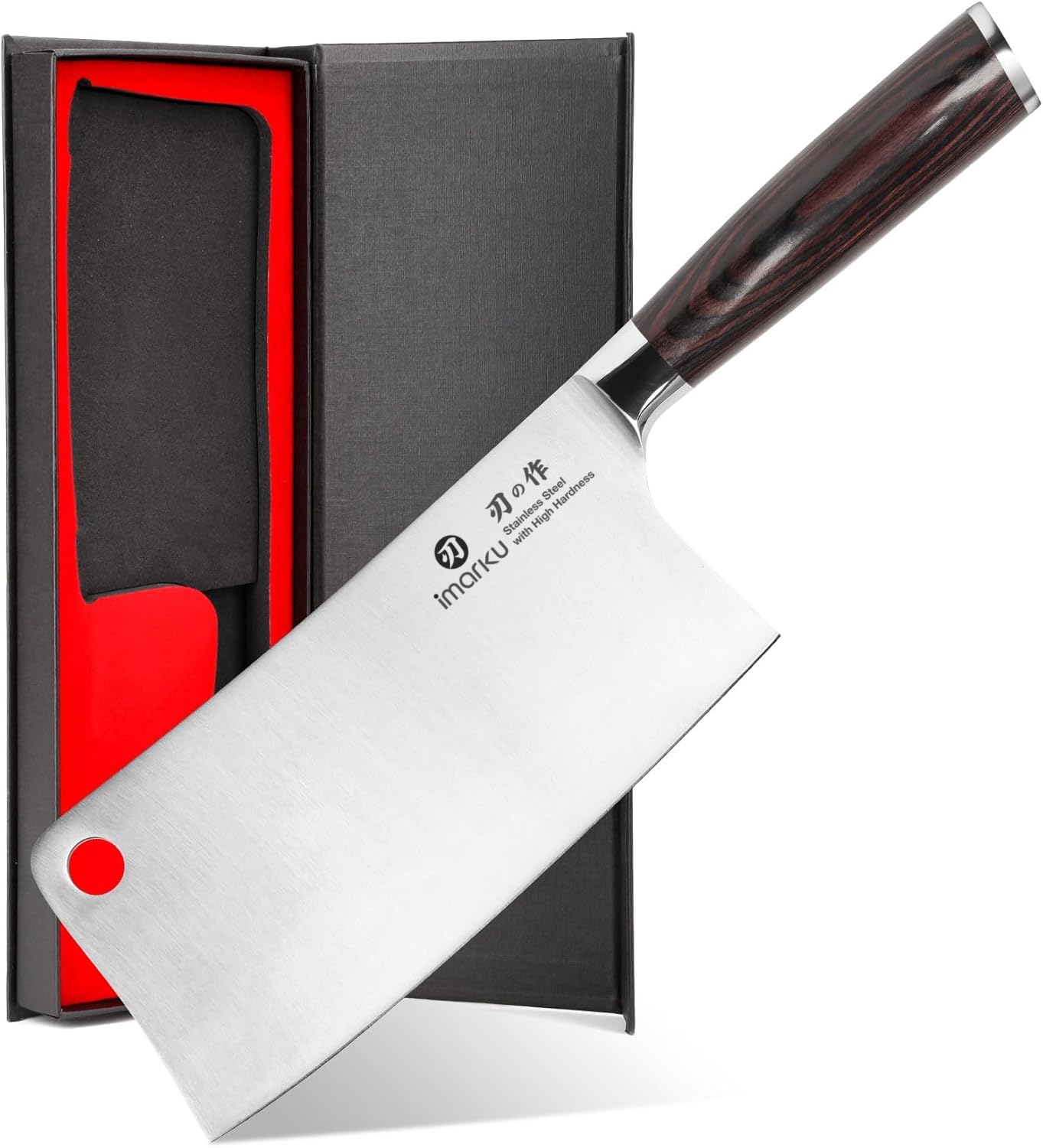
A finely ground Japanese high-carbon cleaver with a thin 2.4mm edge for precise slicing and excellent edge retention for softer meat and vegetables.
Why I picked it: Precision-forged Japanese steel and a 15° double-bevel make it exceptionally sharp and easy to slice with control.
Best for: Cooks who want a razor-sharp cleaver for meat, veg, and delicate chopping rather than heavy pounding.
A midrange option with stronger steel and better edge retention.
Pros
- Exceptionally sharp 15° edge
- Thin 2.4mm blade for clean cuts
- Comfortable pakkawood handle
- Good edge retention
Cons
- Not intended for hacking large bones
- Edge can roll if used on dense leg bones
My take
I reach for the imarku 7-inch cleaver when I want chef-knife control but with a larger blade. The hand-sharpened 15° double-bevel creates a very keen edge that slices through meat and vegetables with minimal effort.
The Japanese high-carbon stainless steel (around 57 HRC) gives the blade a firmness that holds up to repeated kitchen use. I used it for cubing meats and mincing large heads of garlic and appreciated the slim 2.4mm thickness — it glided through food rather than hacking it apart.
One important note from my testing: I deliberately avoided using this to repeatedly break large leg bones. The blade performs best on soft to medium-density materials; attempting heavy bone hacking can dull or roll the edge. For most home cooks who want sharpness and control, this cleaver is a great balance.
3. imarku 7-inch Japanese Cleaver (Gift-Ready) – Best All-Purpose
The same sharp imarku profile, highlighted here for its presentation and ergonomics — a good pick if you want a polished package and comfortable grip for regular use.
Why I picked it: Elegant packaging and a well-shaped handle make it comfortable for repeated use and a good presentable tool.
Best for: Home cooks wanting a sharp, attractive cleaver for daily kitchen tasks.
A smart midrange choice that balances performance and presentation.
Pros
- Attractive gift-ready packaging
- Ergonomic pakkawood handle
- Great for slicing and mincing
- Well-made edge geometry
Cons
- Edge vulnerable to repeated bone impact
- Not a heavy-duty butcher’s cleaver
My take
I included a second imarku entry because the knife’s presentation and handle make it one I’ll happily reach for during long prep sessions. It felt balanced in my hand and the pakkawood grip reduced fatigue when I was chopping and mincing for extended periods.
It performed the same precision work I expect from its steel and grind: clean cuts, easy resharpening, and dependable performance on meat and vegetables. If you want a sharp, usable cleaver that also looks and feels a bit more refined, this is the version I’d give as a gift or keep on display.
4. Juvale 8-inch Heavy-Duty Cleaver – Best Heavy-Duty
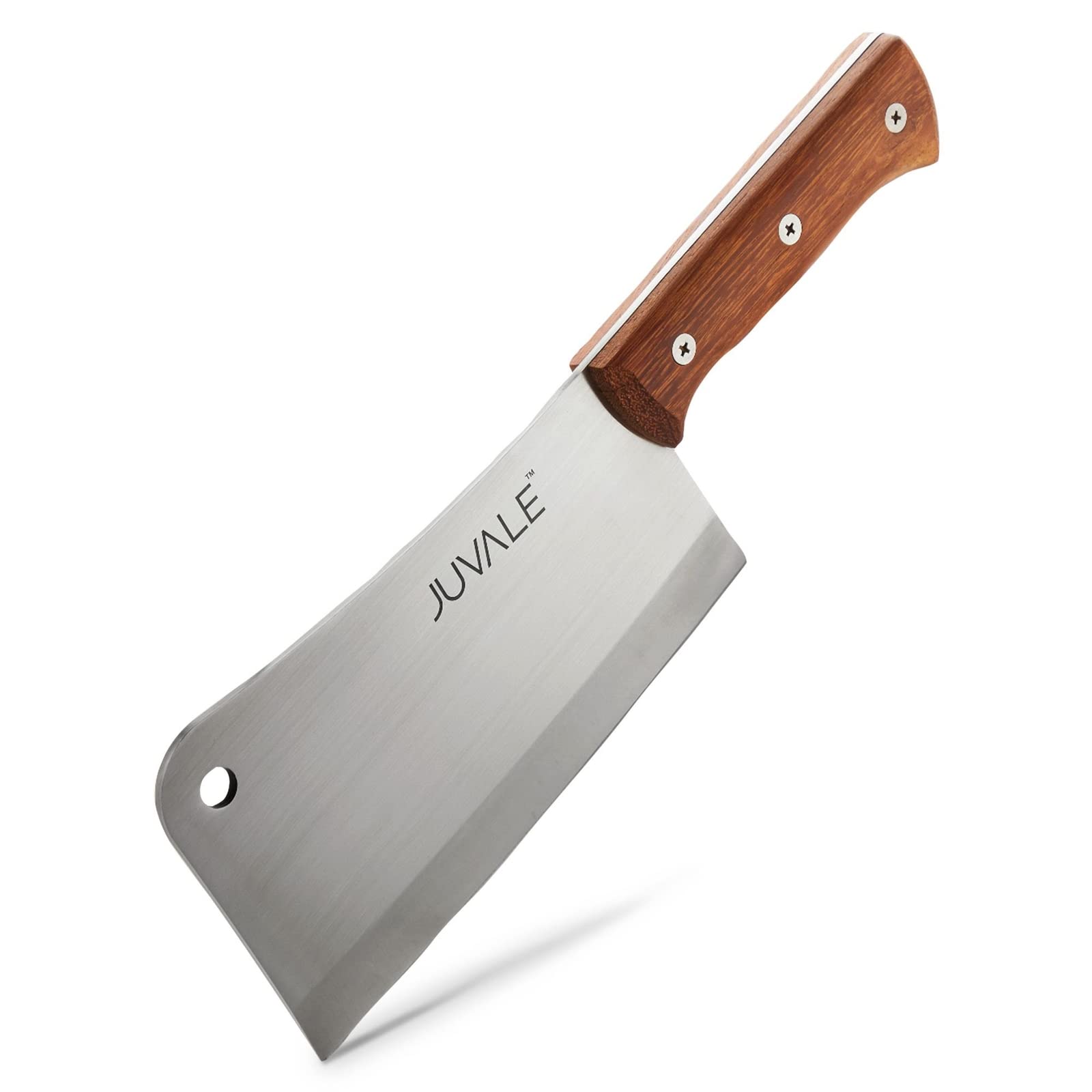
A hefty 8-inch cleaver with a thick blade and solid wood handle — excellent when I need brute force to break larger bones and tackle big roasts.
Why I picked it: Thick blade and substantial weight give it real chopping power for bone and large roasts.
Best for: People who need a powerful, bone-chopping cleaver for heavy home butchery.
A budget-friendly heavy hitter for demanding chopping jobs.
Pros
- Powerful bone-splitting capability
- Robust, comfortable wood handle
- Thick, durable blade
- Hanging hole for easy storage
Cons
- Heavy — tires smaller hands
- Wood handle may show natural flaws
My take
When I want brute force rather than finesse, the Juvale 8-inch cleaver is my go-to. It’s heavy and feels like a small axe in the hand — exactly what I want when splitting larger bones or breaking down brisket into manageable pieces.
Because of its weight I use a large, sturdy cutting board; the extra mass makes short work of dense material but can fatigue smaller wrists during long sessions. The wood handle is comfortable and appears sealed, though I did notice slight natural variation and a little roughness on some samples.
Overall, this is a great value when you need something that will reliably separate bone and dense meat without the higher cost of premium forged blades.
5. Dalstrong Gladiator 7-inch Cleaver – Best Premium
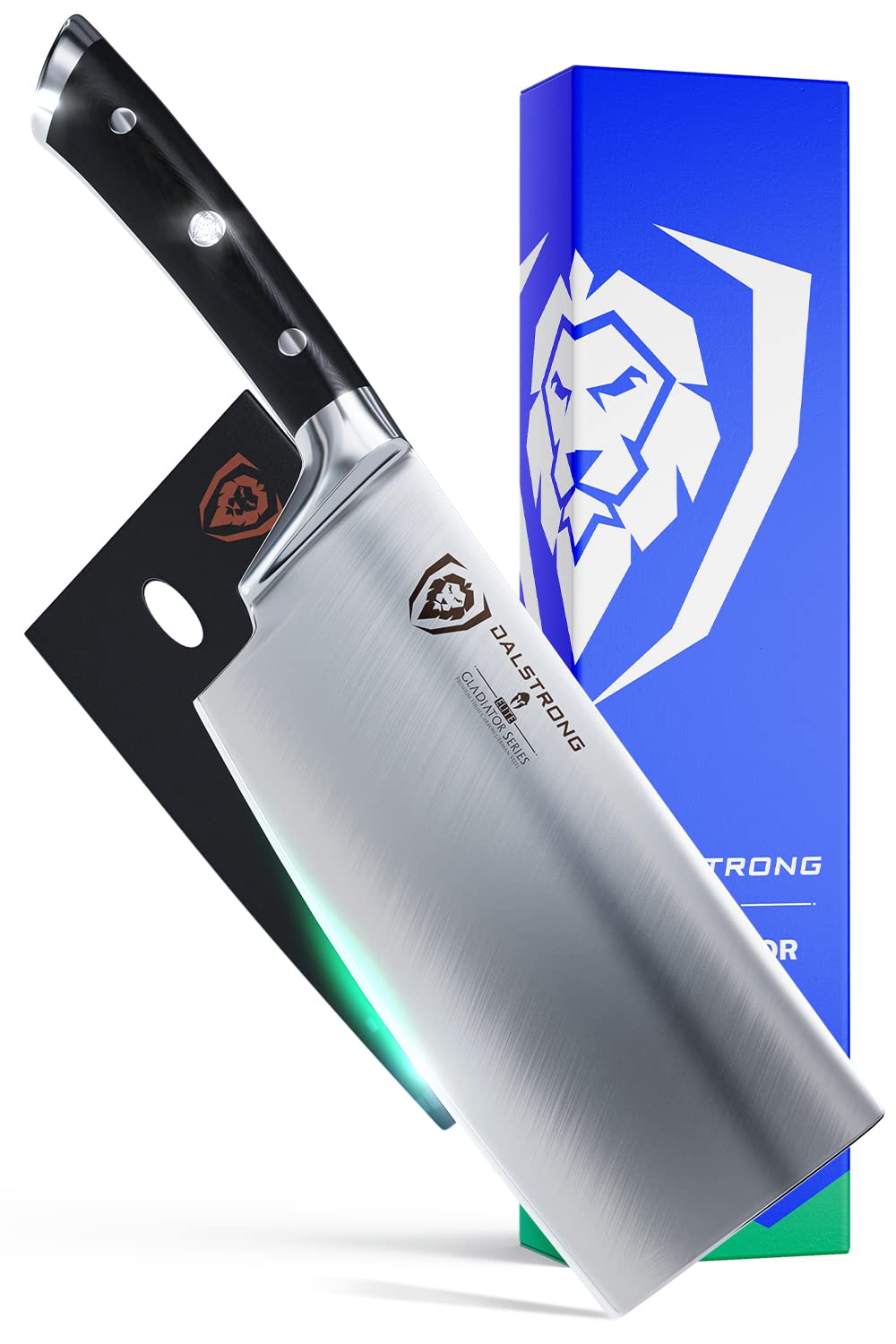
A premium, forged German steel cleaver with excellent fit-and-finish, a robust G10 handle, and a sheath — I reach for it when I want durability and long-term edge retention.
Why I picked it: Forged high-carbon German steel and refined construction make it a lifetime-style tool for serious home cooks.
Best for: Cooks who want a durable, well-balanced premium cleaver they’ll keep for years.
A pricier, investment-style cleaver with premium materials and finishing.
Pros
- Forged high-carbon German steel
- Solid full-tang construction
- Ergonomic G10 handle feels secure
- Comes with protective sheath
Cons
- Heavier and bulkier for daily light use
- Grip may feel large for small hands
My take
I bought the Dalstrong Gladiator when I wanted a blade that combined edge performance with presentation and durability. Out of the box it impressed with tight fit-and-finish, protective sheath, and a satisfying heft that still felt balanced.
The German X50CrMoV steel, heat treated to the mid-50s HRC range, holds an edge well and is relatively easy to sharpen when it eventually needs attention. I used it for butternut squash, cubing beef for chili, and occasional bone work — the added weight helped as it cut without requiring me to use excessive force.
A note on feel: this cleaver is on the bulkier side. I appreciate that for heavy tasks, but for everyday light prep I often reach for a slimmer, lighter blade instead. For anyone wanting a lasting, premium cleaver, this is the one I’d keep indefinitely.
How I Choose a Cleaver
Blade steel & hardness
I prioritize steel that balances hardness and corrosion resistance. Higher Rockwell numbers typically mean better edge retention, but they can be more brittle if used improperly.
- High-carbon stainless or German tool steels: good edge life and easier maintenance
- Japanese high-carbon options (mid-to-high HRC): excellent sharpness for slicing
- Lower-cost stainless: fine for occasional use and light bone work
Blade thickness and intended use
Blade thickness determines what the cleaver is best at. Thinner blades slice and mince cleanly, thicker blades transfer more force for chopping bone.
- Thin (around 2–3mm): precision slicing and vegetable work
- Thicker: heavy-duty chopping and small bone splitting
- If you plan to hack big leg bones, choose a heavier, thicker cleaver
Handle material and balance
I test how a cleaver sits in my hand. Balance between blade and handle reduces fatigue and improves control.
- Pakkawood or stabilized wood: good feel but check for sealing
- G10 or synthetic: durable and low-maintenance
- Full tang construction improves balance and longevity
Maintenance and sharpening
I sharpen cleavers like other knives — stropping and stones for a keen edge, and occasional honing. Avoid using a cleaver as a hammer; that stresses the edge.
- Sharpen on stones for best control
- Hone regularly to keep the bevel aligned
- Avoid dishwashers; hand dry immediately
Choosing by task
Match blade type to the work: refined Japanese-style blades for fast, precise prep; heavier Western cleavers when you need impact and bone-cleaving power.
- Everyday prep: thin, sharp cleaver
- Bone work: heavier, thicker cleaver
- Mixed duties: a midweight forged cleaver offers versatility
Frequently Asked Questions
Can a cleaver cut through bone?
Yes — but it depends on the cleaver. Heavy, thick-bladed cleavers are designed to split small-to-medium bones. Thin, razor-sharp Japanese-style cleavers are better for slicing and should not be used repeatedly on large leg bones or femurs.
How do I keep a cleaver sharp?
I sharpen cleavers on whetstones and maintain the edge with a leather strop or regular honing. Avoid using a ceramic rod on very hard steels; match your sharpening method to the steel hardness.
Can I wash my cleaver in the dishwasher?
I always hand wash and dry my cleavers. Dishwashers can dull the edge and may damage wood or laminated handles over time.
Final Take
I own different cleavers for different jobs: a budget 7-inch for occasional use, a sharp Japanese-style cleaver for precision work, a heavy 8-inch for bone-splitting, and a premium forged option for long-term performance.
Think about what you do most in the kitchen and pick the blade that matches that work. For mixed duties I prefer a midweight forged cleaver; for lots of heavy bone work I go heavy; and for everyday slicing a thin, sharp cleaver is my choice.
