
I tested simple silent wall clocks, ornate wooden clock kits, and novelty pieces so you can pick the right mechanical clock for your space or next build project.
I spent hands-on time with six mechanical and mechanical-style clocks: ready-to-hang wall pieces, glass decorative clocks, and wooden build-it-yourself kits. I focused on readability, movement type, build quality, and how the clocks behave day to day.
Across these picks I judged real-world fit — whether a clock belongs over a kitchen sink, on a mantel, or built and displayed as a hobby piece. Below I explain what stood out about each model and where I’d use it in my home.
I compared these clocks by platform (prebuilt vs. DIY kit), movement (silent sweep, ticking quartz, or mechanical gears), and placement (indoor wall, outdoor-covered area, or desk/display). I prioritized clarity of numerals, ease of assembly or installation, and long-term reliability.
1. AKCISOT 8-Inch Silent Wall Clock – Best Simple Wall Clock
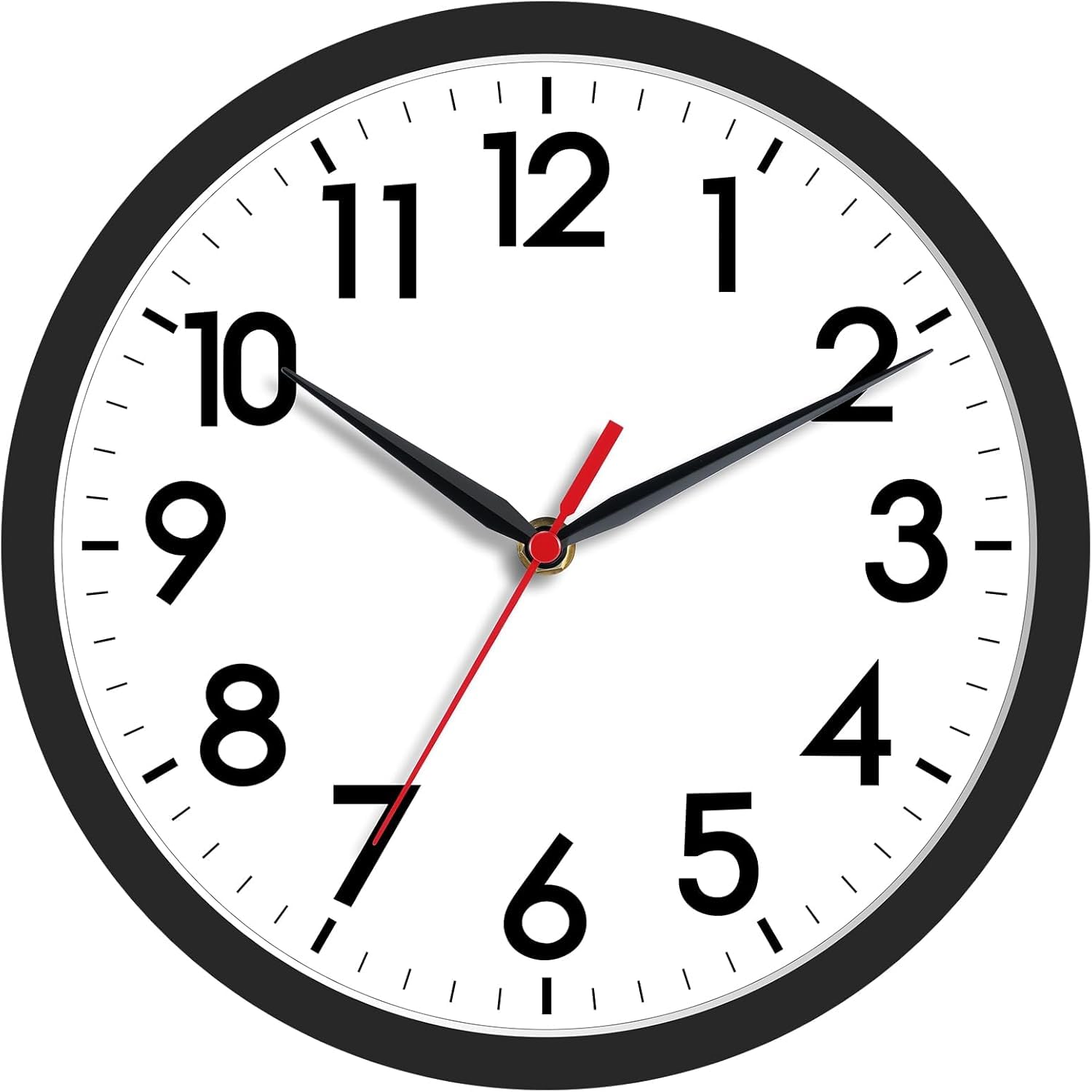
A straightforward, lightweight wall clock with big numerals and a quiet sweep movement that I used around the house for easy time checks.
Why I picked it: Clear face and true quiet sweep make it ideal for rooms where I don’t want ticking noise.
Best for: Kitchens, offices, bathrooms, and bedrooms where readability and silence matter.
An affordable, no-frills everyday wall clock.
Pros
- Large, easy-to-read numerals
- Quiet sweep movement
- Lightweight and easy to mount
- Simple, clean styling
Cons
- Plastic build feels basic
- Battery compartment can be delicate
- Very plain design
My take
I like this clock for exactly what it is: a small, readable timepiece with a sweep mechanism that stays quiet. Its black-on-white dial is easy to read across a room, and the lightweight case made mounting simple.
In day-to-day use it kept accurate time for me while installed in my office. The package included hooks so I didn’t need extra hardware.
One caveat from long-term use: the battery compartment connection on my unit required careful handling when I changed the AA. I learned to slide the battery out gently rather than pull hard, because the metal tab there can bend if you aren’t careful.
2. UGEARS Old Clock Tower Wooden Model – Best Mechanical Model
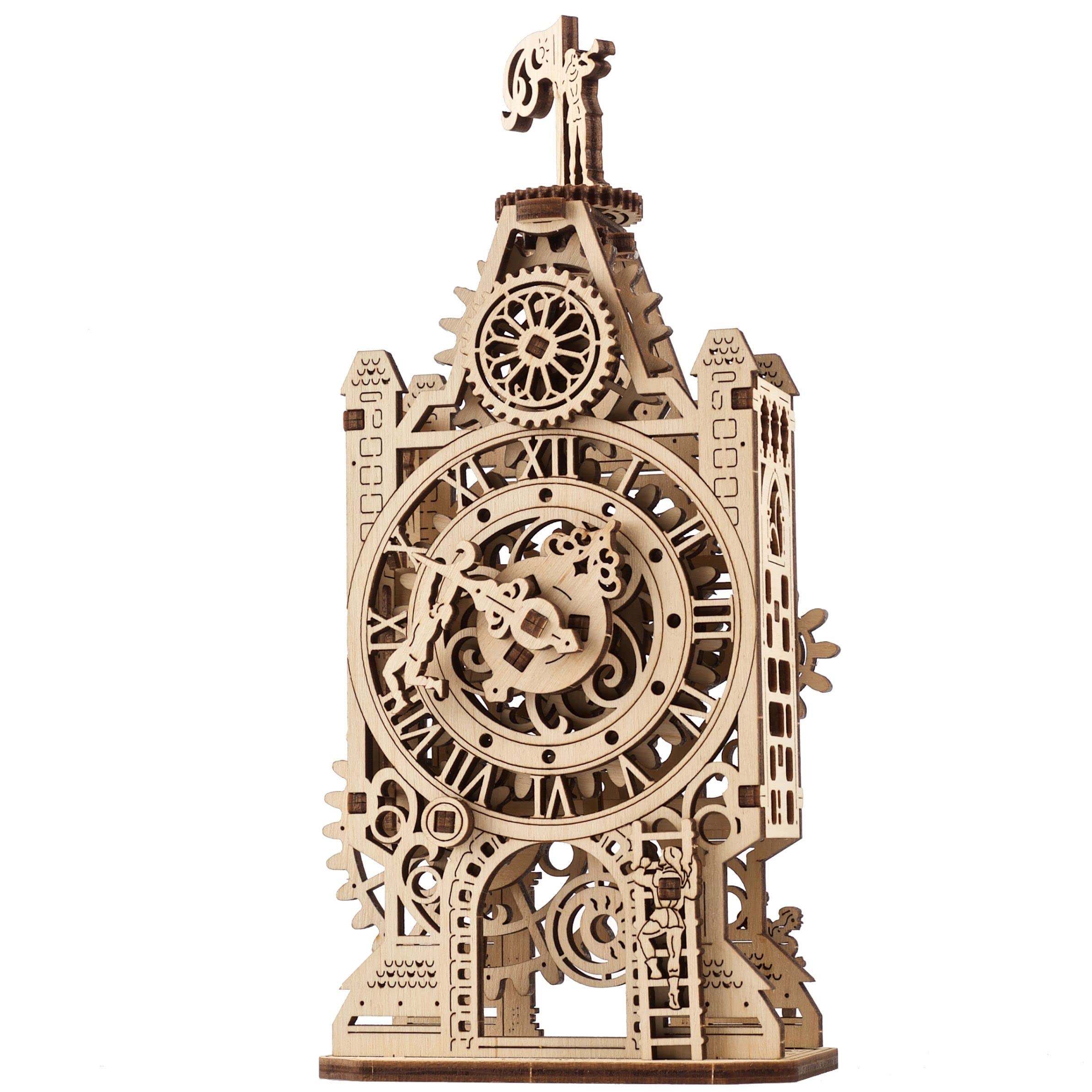
A compact 3D wooden puzzle with moving gears and a pendulum—fun to assemble and attractive as a desktop conversation piece.
Why I picked it: Articulated gears and a visible mechanism make this a satisfying build-and-display kit.
Best for: Hobbyists who want a quick build and a mechanical-looking desktop ornament.
An affordable hobby kit with good detail for the size.
Pros
- Articulated gear movement
- No glue or tools required
- Fits together well after light sanding
- Short build time
Cons
- Fragile small parts
- Clock face neck can be delicate
- Compact size limits detail
My take
I assembled this kit in an evening and appreciated how the gears come to life when you turn the main gear. The illustrated instructions are simple, and a little sanding where parts rub made the fit smooth.
I painted mine for contrast, which made the details pop on my shelf. The kit includes a small spindle that helps get pieces out of the frame—handy during assembly.
Handle the thinner neck pieces with care. One fragile element can fail under rough handling during build, so I worked slowly on those joins to avoid stress.
3. Flip‑Flop Glass Beach Wall Clock – Best for Coastal Decor
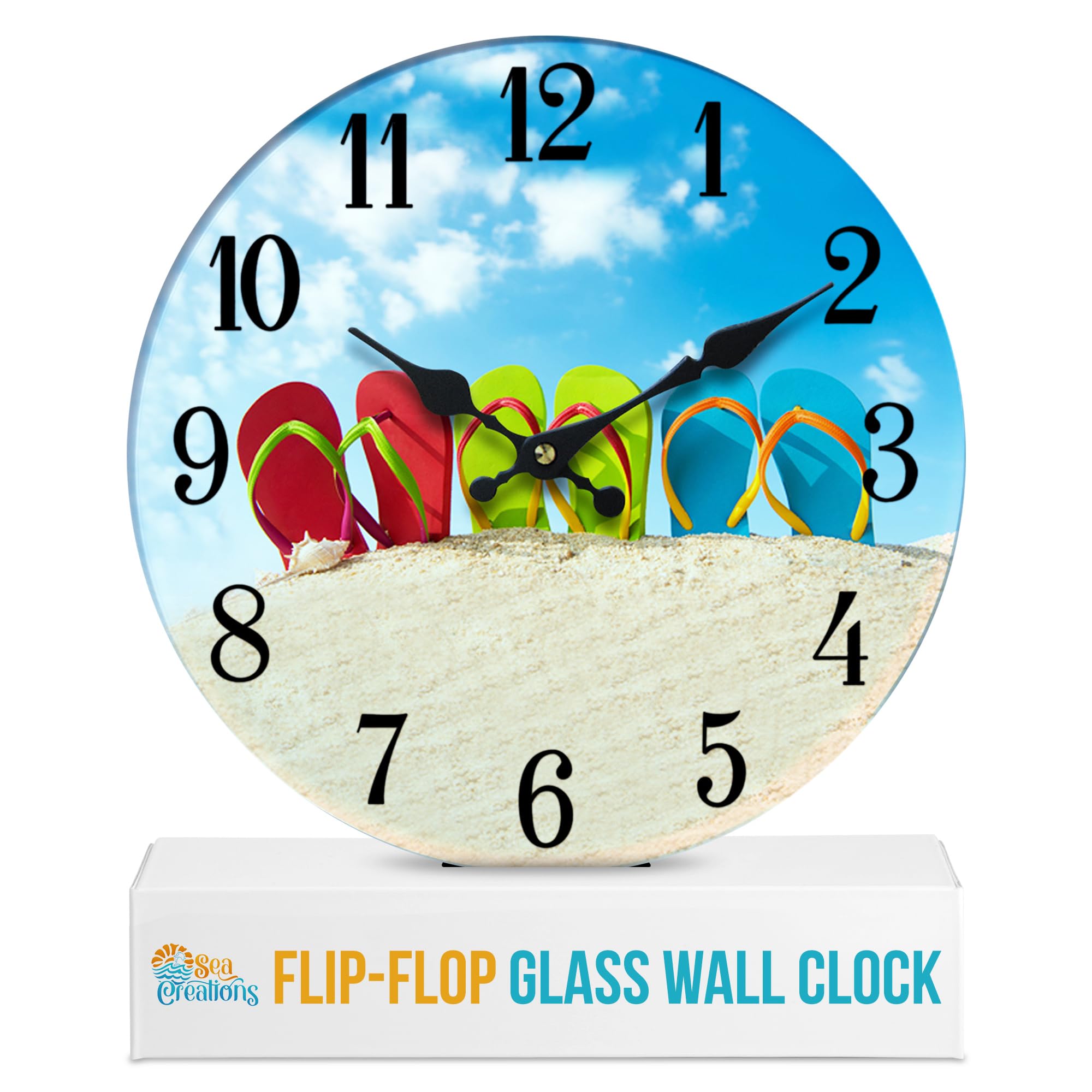
A bright, glass-faced clock with a beachy motif that brings color to patios, bathrooms, or a beach house — just measure first and expect a visual statement.
Why I picked it: Vibrant multicolor face and glass construction stood out for porch and coastal rooms.
Best for: Outdoor-covered patios, pool areas, bathrooms, or rooms that need a bold decorative clock.
A midrange decorative clock that emphasizes style.
Pros
- Vivid, beachy artwork
- Glass face feels solid
- Large numbers for easy reading
- Durable-looking construction
Cons
- Mechanism may tick rather than sweep
- May not sit perfectly flat on the wall
- Some units can fail
My take
I installed this clock in a covered outdoor area and the colors held up well in sun and humidity. The large numerals make it easy to read at a glance from across a deck.
Be aware the movement in my unit produced a faint tick rather than a smooth sweep, so it isn’t truly silent. The clock also leans slightly at the top on my wall bracket, which didn’t bother me but could for a perfectly flush look.
Functionally it worked well overall, though I’ve seen examples where a unit stopped and needed replacement. If you want a decorative, colorful piece, this one does the job; if you need absolute sweep-quiet accuracy, choose a different movement type.
4. ROKR Owl Mechanical Wooden Clock Kit – Best Family Build
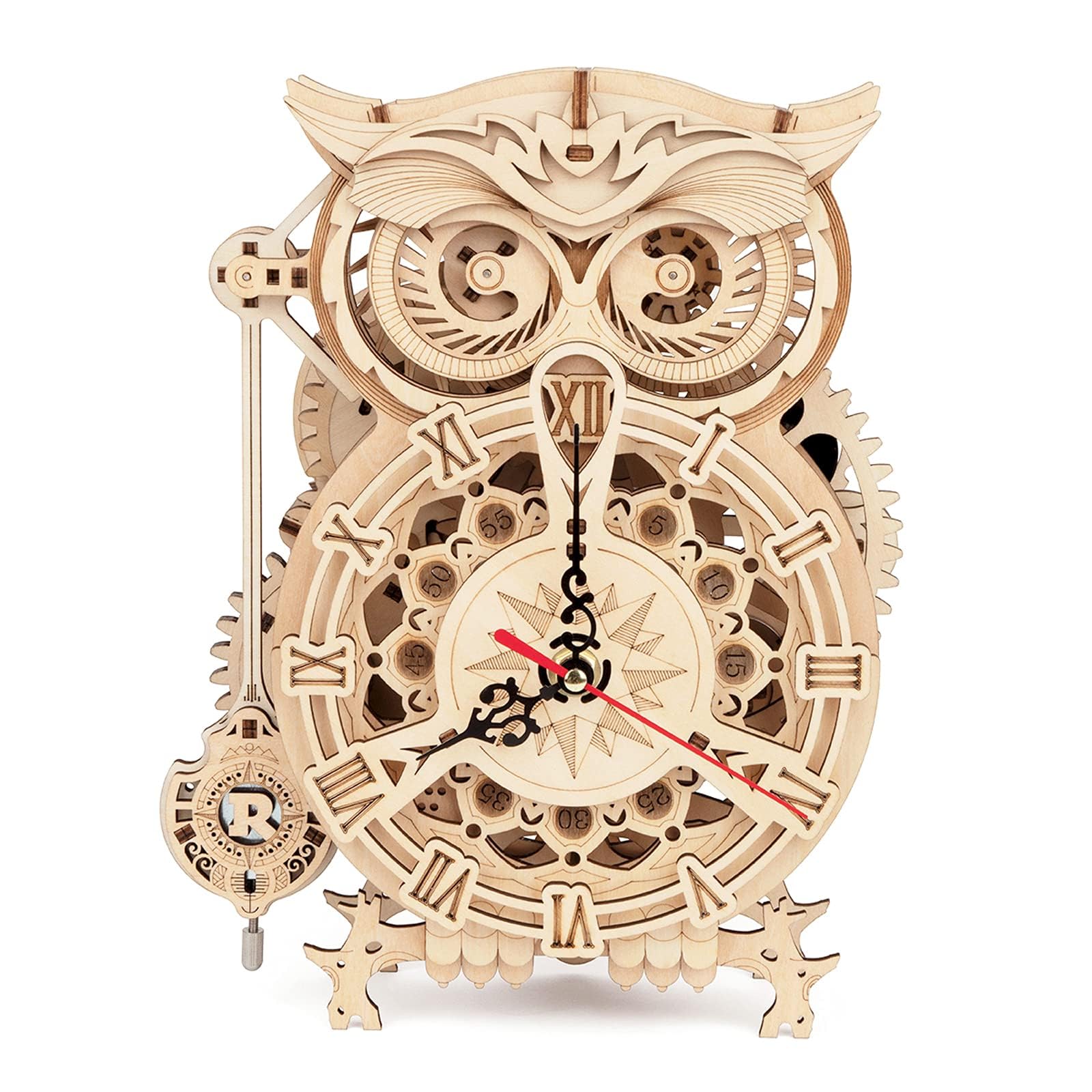
A detailed 161-piece wooden kit that assembles into an owl-shaped clock with a 30-minute wind-up timer and pendulum—great as a multi-session family project.
Why I picked it: Combines a charming decorative result with a functioning timer and moving parts.
Best for: Family bonding projects, hobbyists who like a longer build, and gift-giving.
A pricier kit that delivers a rewarding build experience.
Pros
- Intricate laser-cut parts
- Includes 30-minute wind-up timer
- Mortise-and-tenon construction, no glue
- Parts labeled and well packed
Cons
- Assembly needs wax/sanding
- Clock movement is battery-powered
- Some finish materials may be omitted
My take
This kit kept me occupied over a couple of weeks and was gratifying to assemble a bit at a time. The parts are laser-cut and labeled, so the build flows when I follow the diagrams.
ROKR’s design includes a wind-up timer on the back that creates a pleasant pendulum tick when used. Note that the actual timekeeping runs from a standard battery quartz movement, so the inner wooden gears are decorative and mechanical in character rather than the clock’s time engine.
The instructions recommend waxing friction points; I found wax and light sanding essential for smooth operation. One frustration: export restrictions meant the company may not include wax in every box, so I prepared my own before starting.
5. Baroque 3D Wooden Pendulum Wall Clock Kit – Best Wall Puzzle Clock
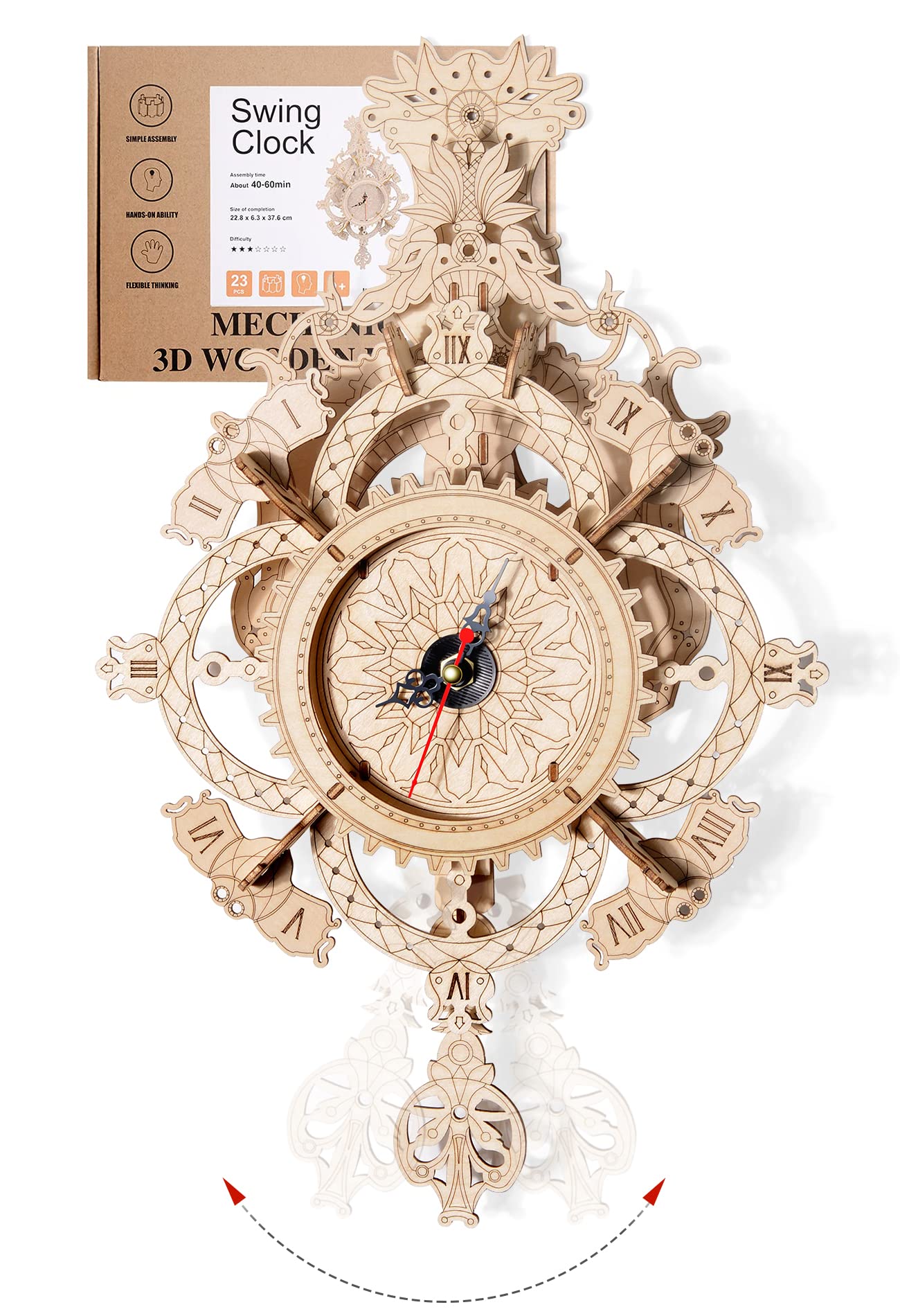
An ornate Baroque-style wooden wall clock kit that assembles into an eye-catching hanging clock with a pendulum and Roman numerals.
Why I picked it: Ornate styling that becomes a functional wall piece once assembled.
Best for: Collectors and anyone who wants an elaborate wall-hanging wooden clock.
A midrange kit that prioritizes looks and display value.
Pros
- Distinctive Baroque styling
- No-glue assembly
- Pendulum adds motion
- Good customer support promise
Cons
- Some parts may need glue for longevity
- Fit can be tight in places
- Requires an AA battery
My take
I built this kit and enjoyed the ornate outcome—the carved motifs and Roman-numeral dial give it an antique feel that really stands out on a wall.
Assembly was mostly straightforward, but several joints didn’t snap perfectly on my unit, so I used a small amount of glue for long-term durability while leaving the battery area accessible.
Once finished it performs as a decorative pendulum wall clock. Expect to do some light cleanup of parts and occasional adjustments during the first few runs.
6. BeauGift Engraved Log Desk Clock – Best Gift Clock
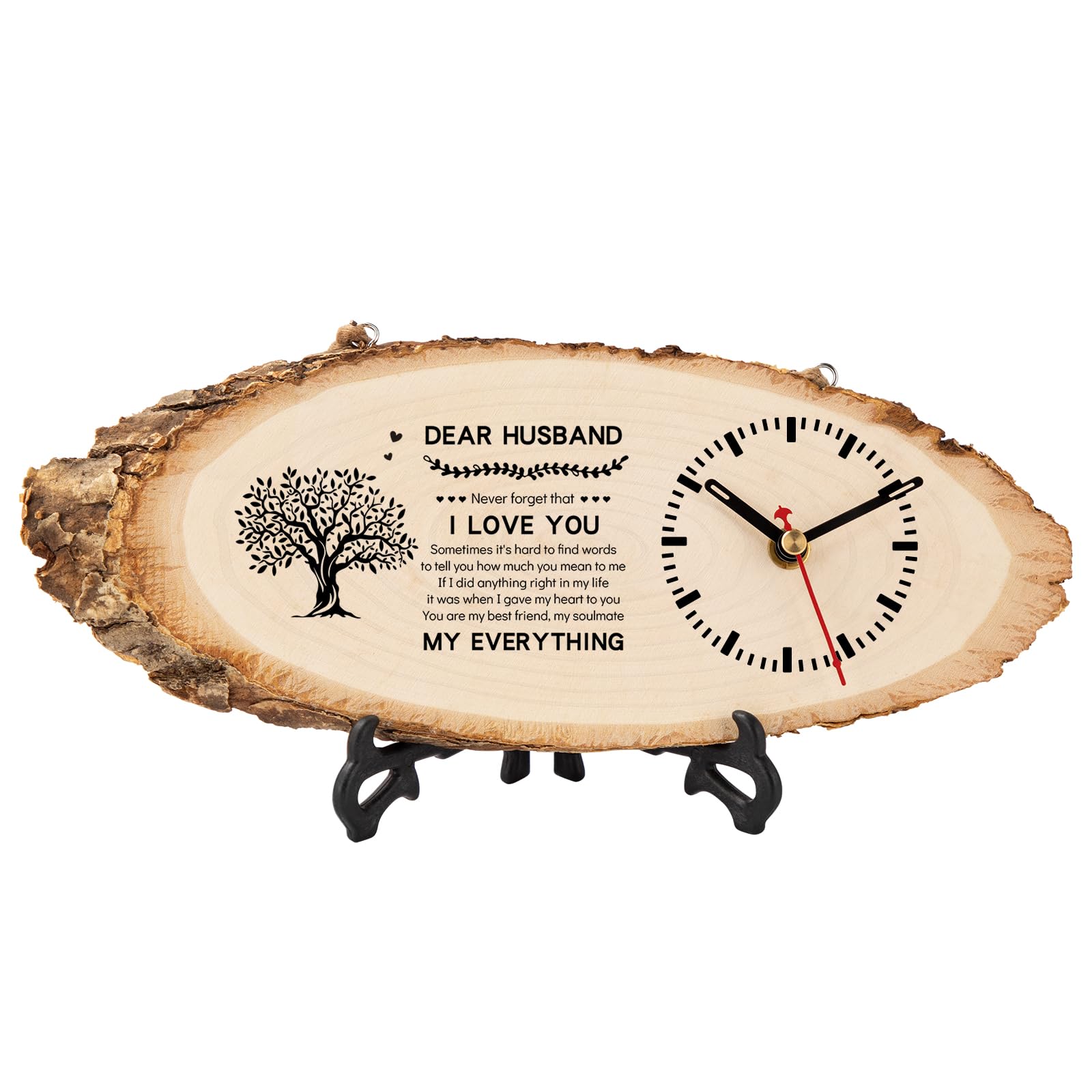
A rustic log-slice clock engraved with a sentimental message; it can hang or stand and brings a warm, natural accent to shelves or desks.
Why I picked it: The engraved wood grain makes it a uniquely personal display piece.
Best for: Sentimental gifts, mantel or desk display, and rustic decor settings.
An affordable, gift-focused decorative clock.
Pros
- Unique natural wood grain
- Dual hang or stand options
- Sentimental engraved message
- Careful internal packaging
Cons
- Timekeeping can drift
- Requires assembly and battery
- Wood grain varies between units
My take
I appreciated the tactile, natural feel of this log clock and the way each piece’s grain pattern is different—no two are identical.
The package included a stand and a hanging loop, so I tried both display styles and liked the flexibility. It arrived well protected inside a foam-lined box.
In my use the movement was attractive but not the most consistent timekeeper; I had to reset it occasionally. If you want a beautiful, meaningful gift and don’t need precision chronometry, this is a satisfying choice.
How I Choose Mechanical and Mechanical-Style Clocks
Movement Types and What I Prefer
I decide on a clock by its movement first. Quartz sweep movements deliver silence and reliable timekeeping; ticking quartz movements are common in decorative pieces and kits with pendulums; wooden-mechanism kits offer satisfying motion but usually rely on a battery-powered quartz movement for accuracy.
If silence matters to you (bedrooms, home offices), I look for “quiet sweep” in the specs. If you want tactile mechanical charm, plan to treat wooden gears as decorative and expect to maintain them with wax or light sanding.
- Sweep quartz = quiet, reliable timekeeping
- Ticking quartz or wind-up = charm and audible feedback
- Wooden gear kits = visual motion, not precise chronometry
If You’re Buying a Ready-Made Wall Clock
I check legibility first: big numerals and high-contrast faces win for practical rooms like kitchens and garages. Next I check mounting hardware and weight—glass faces look premium but need sturdier anchors.
Think about placement. A glass decorative clock can tolerate covered outdoor spots; cheaper plastic clocks are better inside.
- Measure your wall before buying (size matters visually)
- Prefer included hanging hardware for easy installation
- Look for battery type and ease of replacement
If You’re Choosing a Build Kit
I assess the required time and tools. Many wooden kits are designed with no glue required, but they still benefit from light sanding and waxing at friction points. I keep a sanding stick, beeswax, and a little PVA on hand.
I also consider fragility—kits with very thin necks or small decorative bits need slow, careful assembly.
- Have wax and sandpaper for smoother operation
- Expect some delicate joins; go slow
- Decide if you’ll paint or finish before assembly
Durability and Long-Term Care
I treat wooden kits and decorative glass clocks differently. Wooden mechanisms may need occasional re-waxing; battery-powered quartz movements usually only need battery swaps. When changing batteries, be gentle with thin metal tabs and contacts to avoid bending.
If you plan to put a clock outdoors, choose glass or treated material and keep it under cover.
- Replace batteries before they fully die to reduce contact issues
- Wax moving wooden joints every few months for best motion
- Avoid direct, prolonged sun on wooden finishes
Frequently Asked Questions
Do the wooden clock kits require glue or extra tools?
Most of the kits I tested use interlocking slots and advertise no-glue assembly, but I still keep sandpaper and wax on hand. In a few spots I used a tiny amount of glue for long-term durability where joints didn’t hold perfectly.
Are these clocks accurate timekeepers?
Quartz-sweep movements are accurate and quiet in my experience. Decorative wooden mechanisms provide motion and charm, but the actual timekeeping is usually handled by a separate battery-powered quartz movement and can require occasional reset.
Can I use an outdoor clock by the pool?
I’d place glass-faced decorative clocks in covered outdoor areas only. Direct sun, heavy rain, and humidity shorten the life of many movements unless the clock is explicitly weatherproof.
What batteries do these clocks use and how often do they need replacement?
Most units here use a single AA battery for the quartz movement. Battery life varies with movement quality, but I replace batteries proactively when accuracy drops or every 12–18 months for peace of mind.
Final Take
I recommend the AKCISOT if you want a quiet, highly legible everyday wall clock. Choose the Flip‑Flop glass clock when you need a bold, coastal statement piece.
If you enjoy hands-on projects, the UGEARS and ROKR kits are the most satisfying builds; expect to sand, wax, and take your time during assembly. The Baroque wall kit delivers the most ornate finished look for a hanging display.
For a sentimental gift with natural character, the engraved log clock is a memorable choice, but be prepared to monitor its timekeeping. Whatever your priority—silence, decor, or the joy of building—I used these criteria to pick the specific clocks above and would be comfortable placing any of them in the right role at home.
