
I tested eight popular microgreen and sprouting seed packs so you can pick the right seeds for jars, trays, hydroponics, or big-batch growing. Here are the ones I reach for again and again.
I grow microgreens and sprouts year-round in jars, trays, and soil, and I compiled this roundup from repeated, hands-on batches of each seed variety. I focus on germination reliability, flavor, and how each seed performs in the growing method I prefer.
If you want quick jar sprouts for sandwiches, nutrient-dense broccoli sprouts for health-focused meals, or colorful tray-grown microgreens for salads, I’ll point you to the right pack and explain why I use it.
Across these packs you’ll find a few consistent trade-offs: sprouting mixes and premeasured packs make jar growing simple, single-variety broccoli seeds deliver the most sulforaphane and predictable flavor, heirloom and tray mixes shine in soil or trays, and bulk bags give the best per-tray value. I choose based on whether I need speed (jar sprouting), variety (mixed blends), or bulk (1 lb bags for frequent growers).
1. Nature Jim’s Organic Salad Mix Seeds – Best Overall
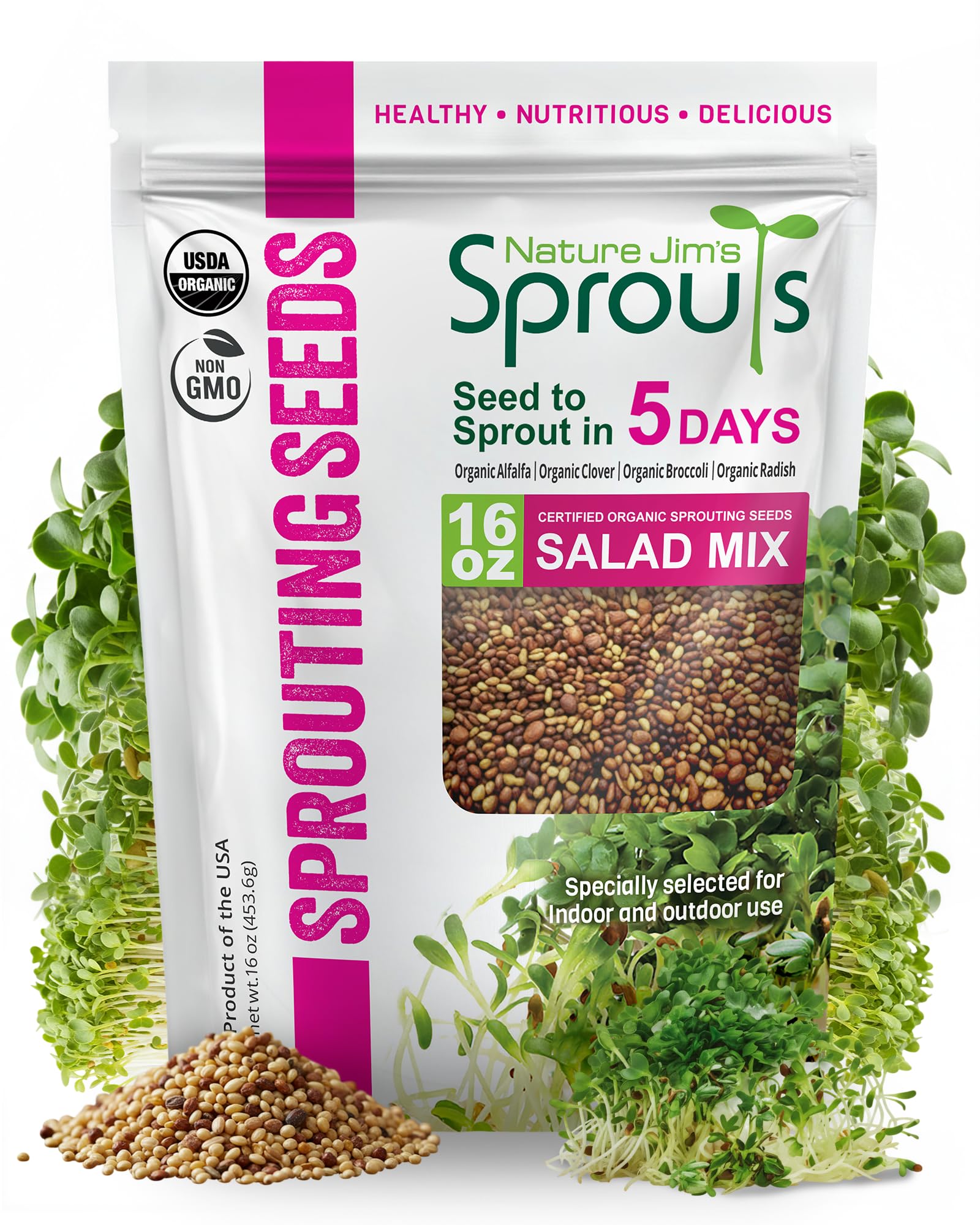
A reliable organic mix of broccoli, alfalfa, radish, and clover that sprouted quickly for me and made a versatile, everyday salad addition.
Why I picked it: Versatile organic mix that sprouts fast and stores well.
Best for: Home sprout jars and quick salad microgreens.
Great value for a full-pound mixed pack.
Pros
- Certified organic
- Fast germination in about five days
- Large 1 lb supply
Cons
- Mix can be mild or slightly bitter
- Not ideal if you want single-variety crops
My take
I planted this salad mix in both jars and shallow trays. In jars the mix produced crisp sprouts in roughly five days; in trays it produced a pleasant, varied microgreen salad. The combination of broccoli, alfalfa, radish, and clover gives me a good balance of peppery and mild flavors that I use on sandwiches and mixed greens.
The 1 lb bag lasts me several weeks of regular sprouting and the resealable packaging keeps the seeds usable between batches. I appreciate that every seed in the mix is organic and non-GMO — I felt comfortable feeding the sprouts to my family straight from the fridge.
If you prefer a single, bold flavor you might be better off with a dedicated broccoli or radish pack, but for everyday variety and easy kitchen use this mix has become my go-to.
2. Nature Jim’s Organic Broccoli Seeds – Best for Broccoli Sprouts
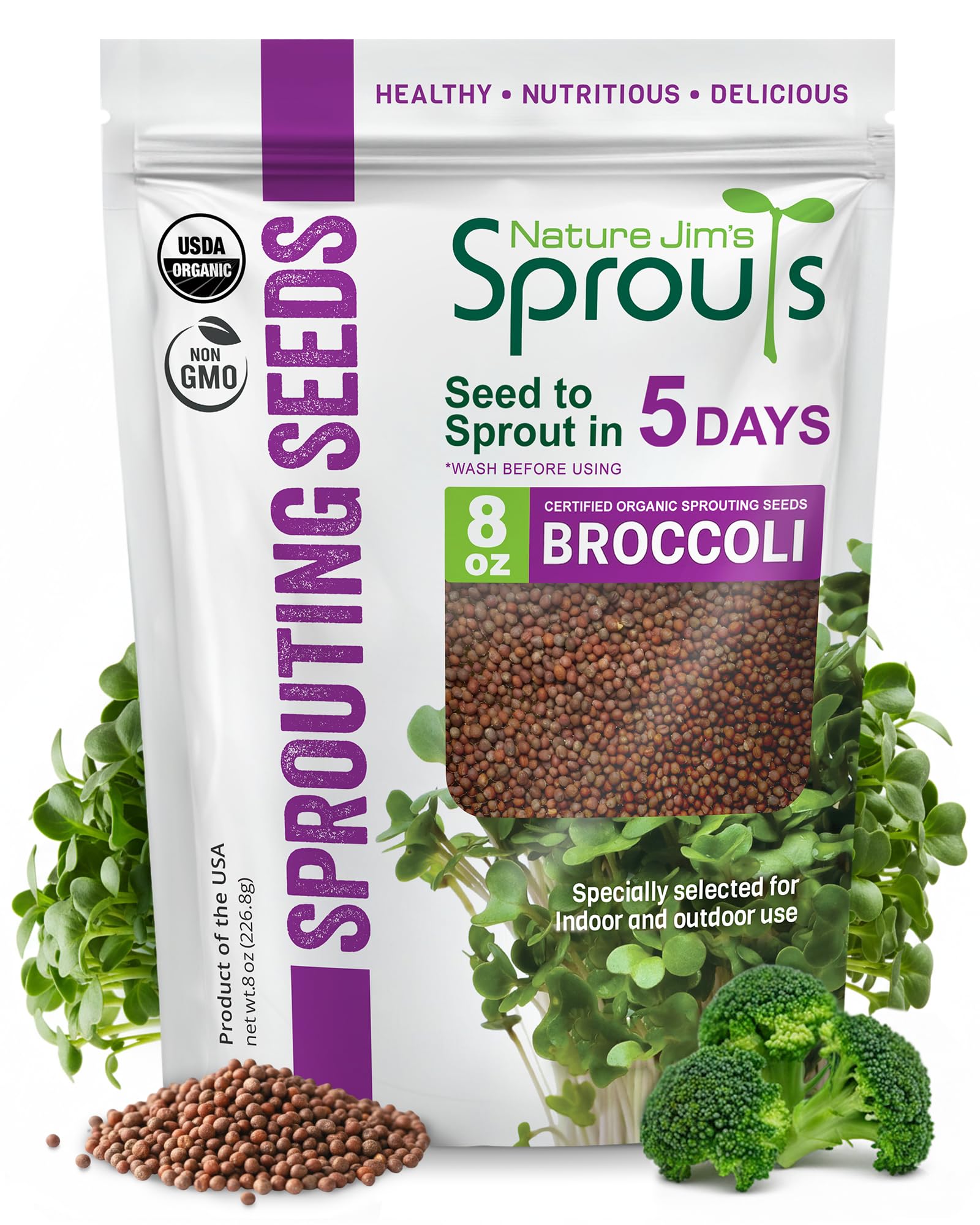
A single-variety organic broccoli seed that germinated heavily in my jars and produced lively, sulfur-forward sprouts.
Why I picked it: High germination and strong sulforaphane potential.
Best for: Growing broccoli sprouts for health-focused meals.
Good single-variety option for frequent sprouters.
Pros
- Excellent germination rate
- Fast growth in 4–5 days
- Clean, crisp flavor
Cons
- Can be slightly bitter raw
- Single variety only
My take
I sprouted these broccoli seeds in mason jars and watched nearly every seed push a shoot within five days. The crop was dense and bright green, and I use the sprouts frequently when I want that distinctive broccoli flavor and the associated sulforaphane benefits.
My routine was a short soak, a couple of daily rinses, and a final period of light exposure to green them. The seeds handled this regimen well and produced consistent yields batch after batch.
If you’re focused on broccoli sprouts specifically — for smoothies, salads, or just snacking — this pack gives me the reliable performance I need.
3. Rainbow Heirloom Waltham 29 Broccoli Seeds – Best Heirloom Broccoli
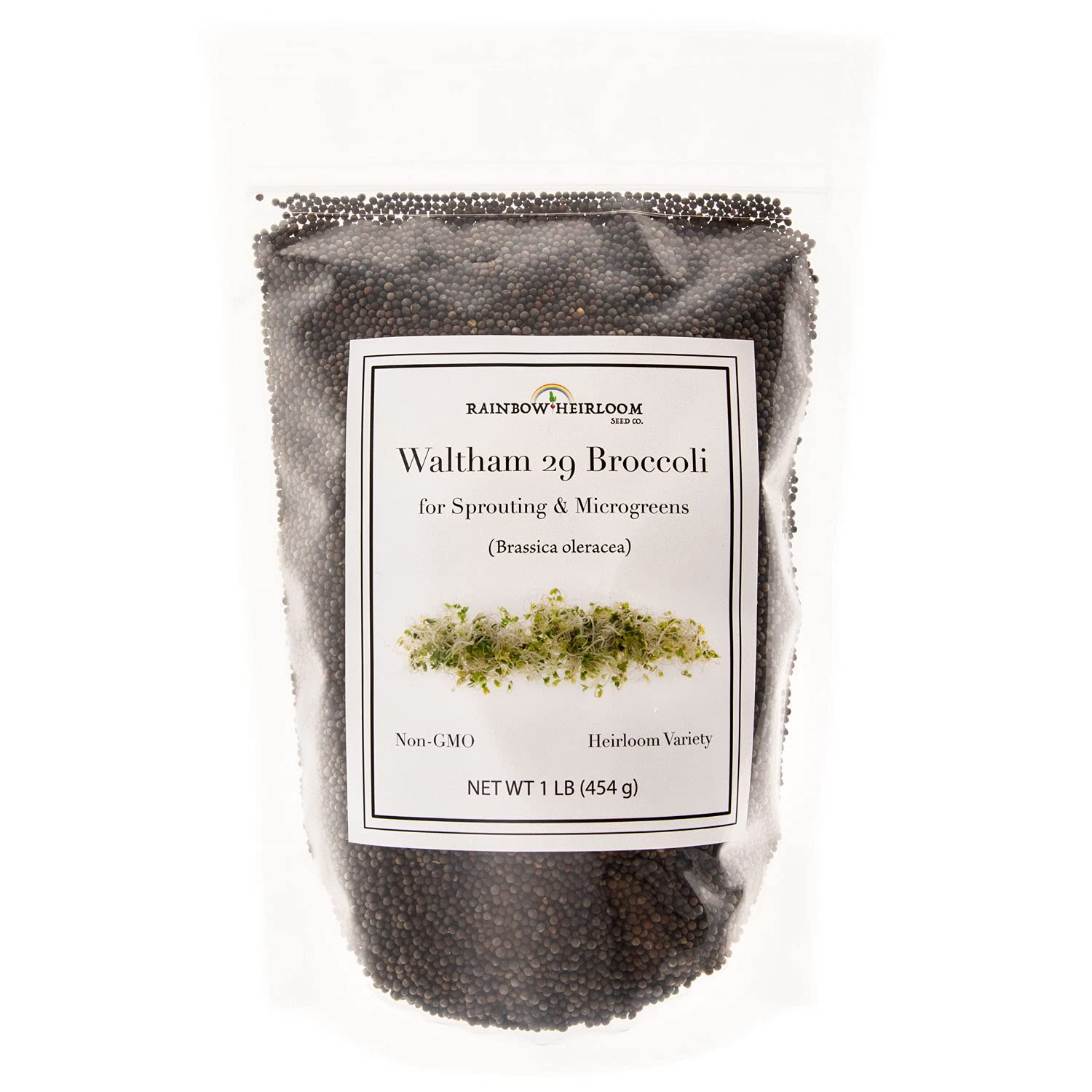
Heirloom Waltham 29 broccoli seeds that I grew successfully in both soil trays and jars, yielding a sweet mild broccoli microgreen.
Why I picked it: Heirloom variety with consistent germination and sweet flavor.
Best for: Growers who prefer heirloom broccoli for flavor and regrowth.
Solid value for an heirloom seed pack.
Pros
- Non-GMO heirloom seed
- Great germination in soil or jars
- Mild, pleasant flavor
Cons
- Smaller yields for jar sprouting than some mixes
- May show white filaments on regrowth
My take
I’ve grown Waltham 29 in trays filled with soil and in a jar method; both worked well. In soil the microgreens grew dense and had a mild, sweet broccoli taste that’s easy to use raw. I even coaxed a second small regrowth after harvest when I left the roots intact.
Germination was reliable and I didn’t see stray seeds from other varieties. The crop was forgiving and didn’t succumb to mold when I kept trays properly ventilated.
For anyone who prefers a classic heirloom broccoli microgreen, this pack gave me the dependable flavor and performance I wanted.
4. Rainbow Heirloom Superfood Microgreen Mix – Best for Color & Flavor
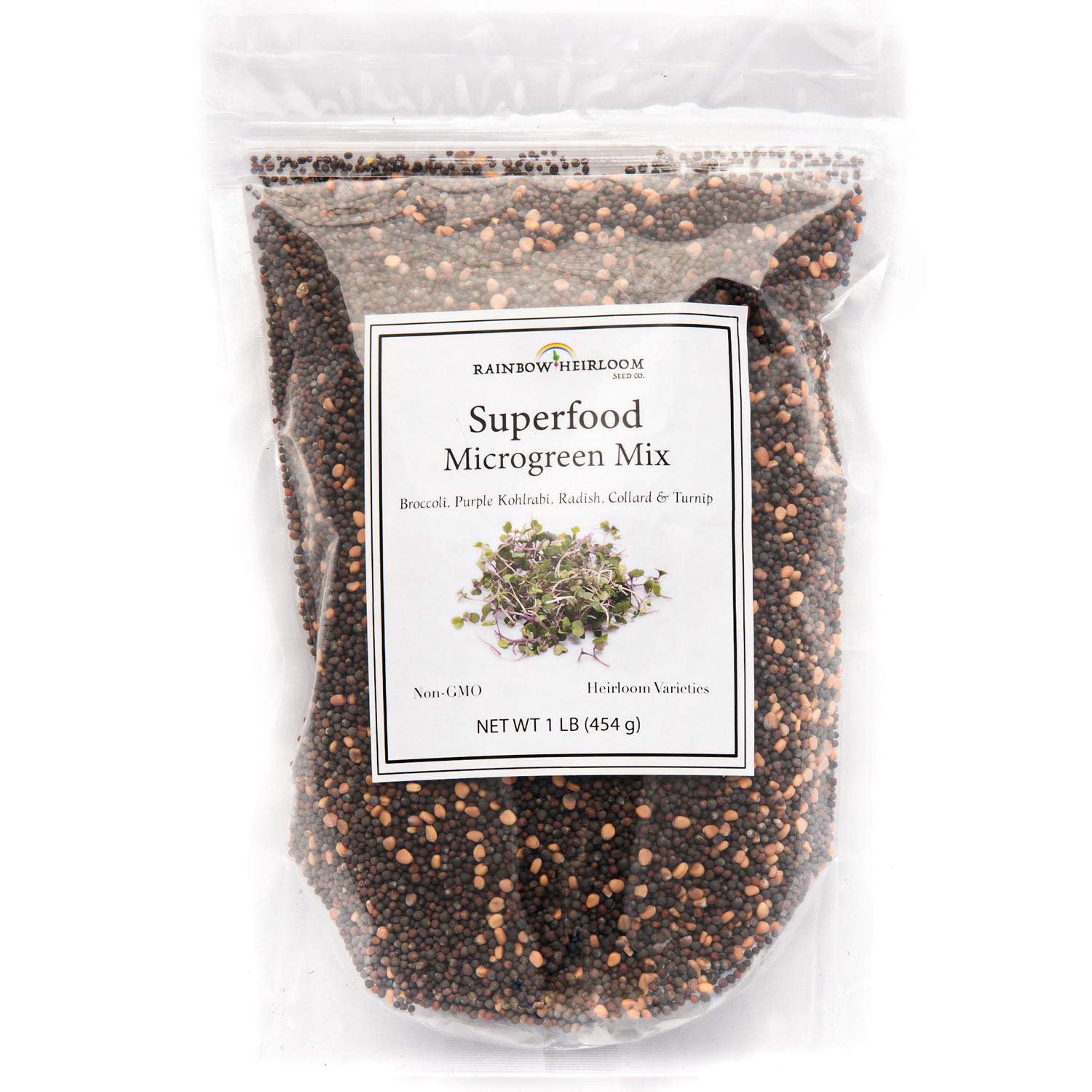
A colorful tray mix of broccoli, radish, purple kohlrabi, collard, and turnip that grew thick and flavorful in soil trays during my tests.
Why I picked it: Colorful, tray-focused mix with high germination.
Best for: Tray microgreens for salads and garnishes.
Great per-pound value for tray growers.
Pros
- Vibrant color mix
- High germination for trays
- Packed for tray planting
Cons
- Not designed for jar sprouters
- Radish note may be spicy for some
My take
I planted this mix in 10×20 trays and got very dense, colorful microgreens suitable for salads and plating. The purple kohlrabi and radish add visual interest and a spicy kick that livens up simple greens.
The seeds are intended for tray planting rather than jar sprouting, and following that approach gave me the best results. Germination was fast and I harvested several full salads over a few weeks.
If you want showy microgreens for lunch bowls or garnishes, this mix delivered repeatable, attractive crops in my setup.
5. Premeasured Variety Sprouting Seed Pack – Best Variety Pack for Trying Types
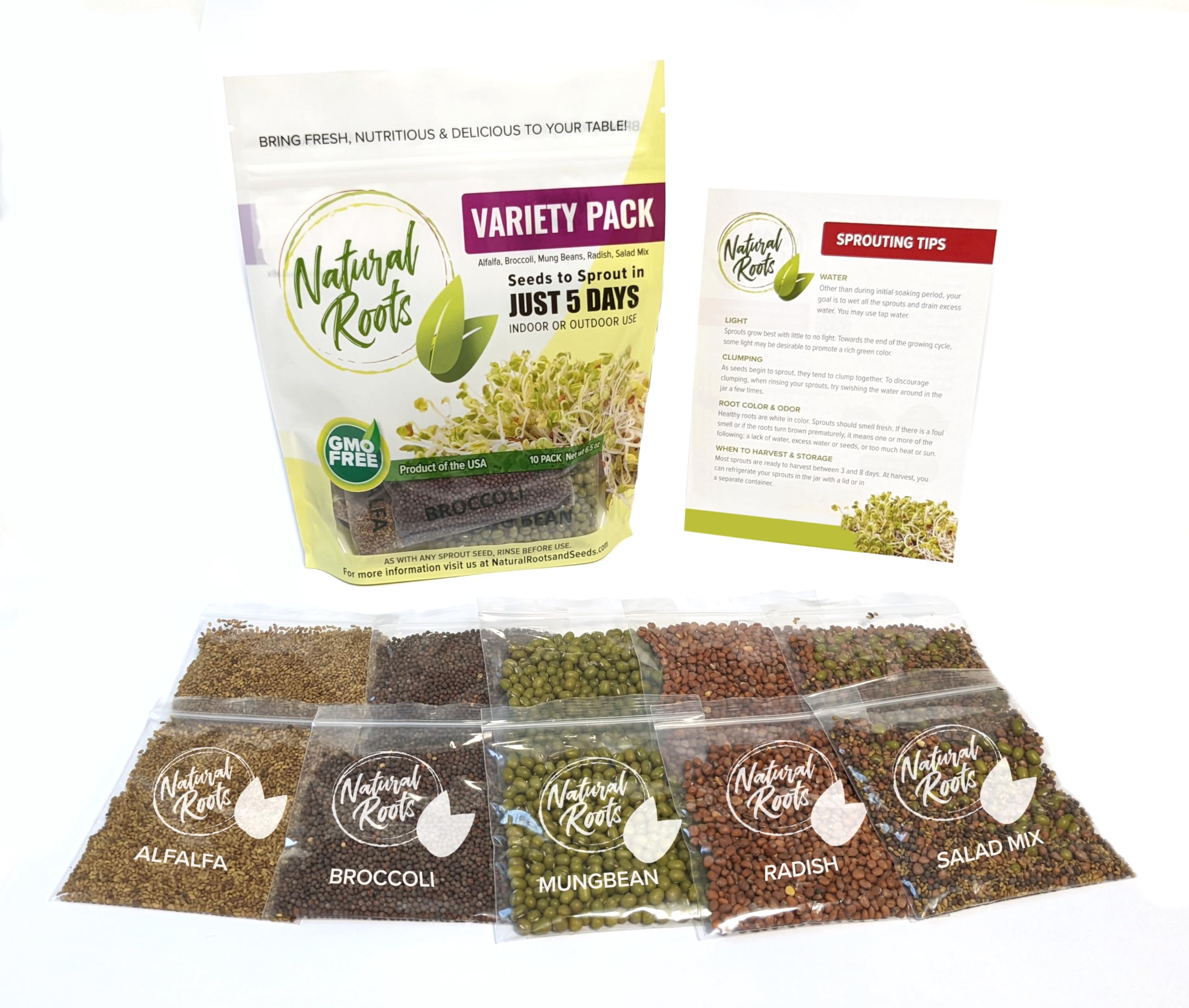
A convenient assortment of premeasured packs (broccoli, alfalfa, radish, mung, salad mix) that I used to test flavors without committing to large bags.
Why I picked it: Premeasured bags make trying multiple sprouts simple.
Best for: Beginners or anyone sampling different sprout flavors.
Convenient format for sampling a range of seeds.
Pros
- Premeasured for jars and trays
- Includes five different seed types
- Easy for beginners
Cons
- Smaller single-use packs
- Some types shed hulls more than others
My take
I like this pack when I’m experimenting or gifting sprouting to friends — each small bag is the right amount for a quart jar or a tray. The varieties sprouted quickly and gave me a clear sense of which flavors I prefer.
The mung and broccoli were my favorites for texture and yield, while alfalfa sometimes held hulls that needed a bit more rinsing. For testing new flavors without buying bulk, this is the easiest route.
If you end up identifying favorites, you can move to larger single-variety bags for regular growing.
6. Handy Pantry Organic Alfalfa Seeds – Best Alfalfa
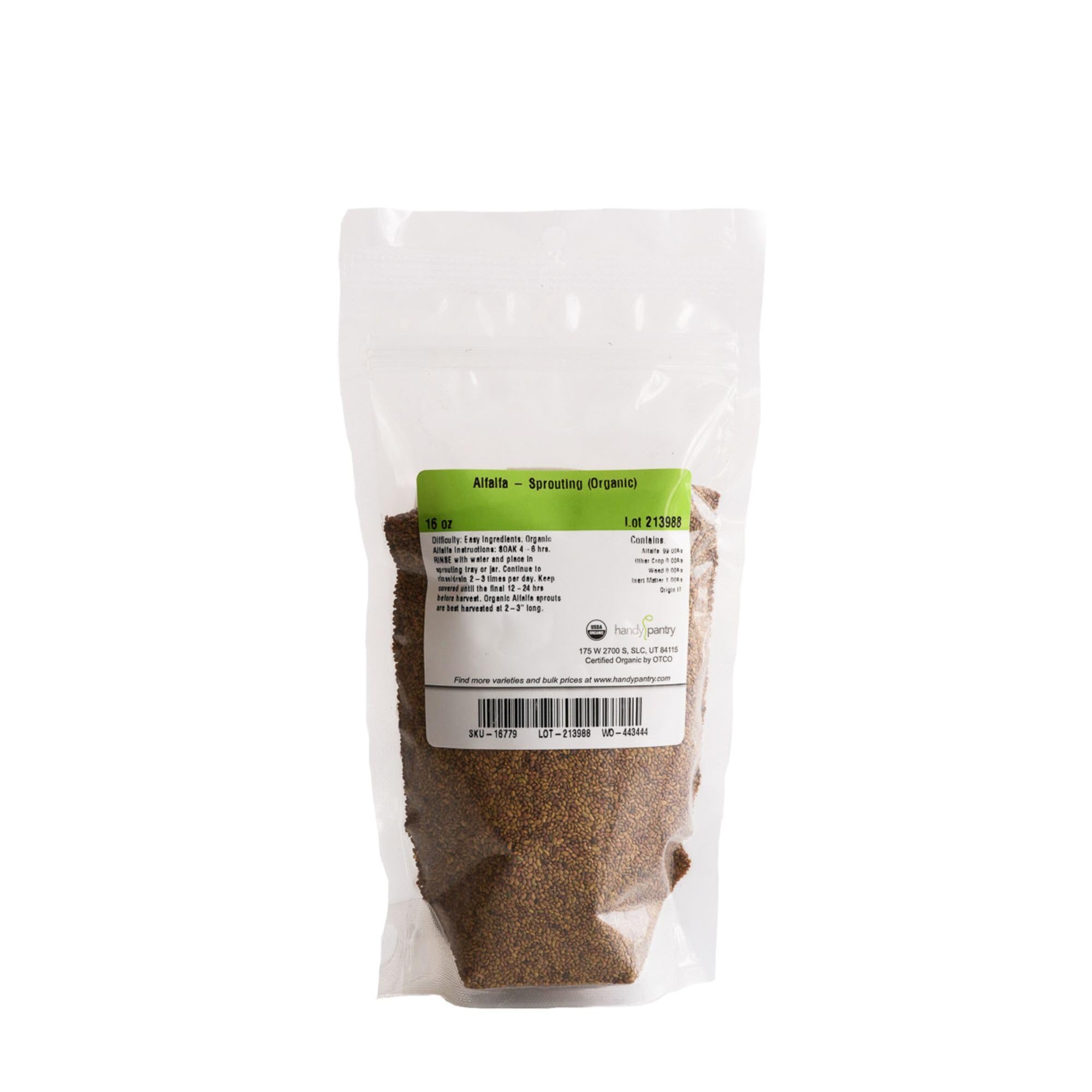
Organic, Oregon Tilth-certified alfalfa seeds that sprouted robustly for me and made sweet, crunchy sprouts ideal for sandwiches.
Why I picked it: Sweet, mild alfalfa with certified organic pedigree.
Best for: Alfalfa lovers and frequent sandwich sprouters.
Good bulk option for regular alfalfa use.
Pros
- Oregon Tilth certified organic
- Sweet, mild taste
- High viability
Cons
- Can require more hull removal
- Bag condition varies on shipping
My take
I found these alfalfa seeds to be extremely viable — almost every seed I sowed pushed a sprout. The flavor is mild and sweet, perfect for sandwiches and light salads, and the texture is pleasingly crisp.
Because my family goes through alfalfa quickly, the resealable pouch and one-pound quantity made it easy to maintain a steady supply. I prefer using a jar sprouter and rinsing multiple times a day for the cleanest results.
Note: a few packages arrived slightly battered from shipping, but the seed quality inside remained strong in my experience.
7. Country Creek Broccoli Seeds – Best Budget Broccoli
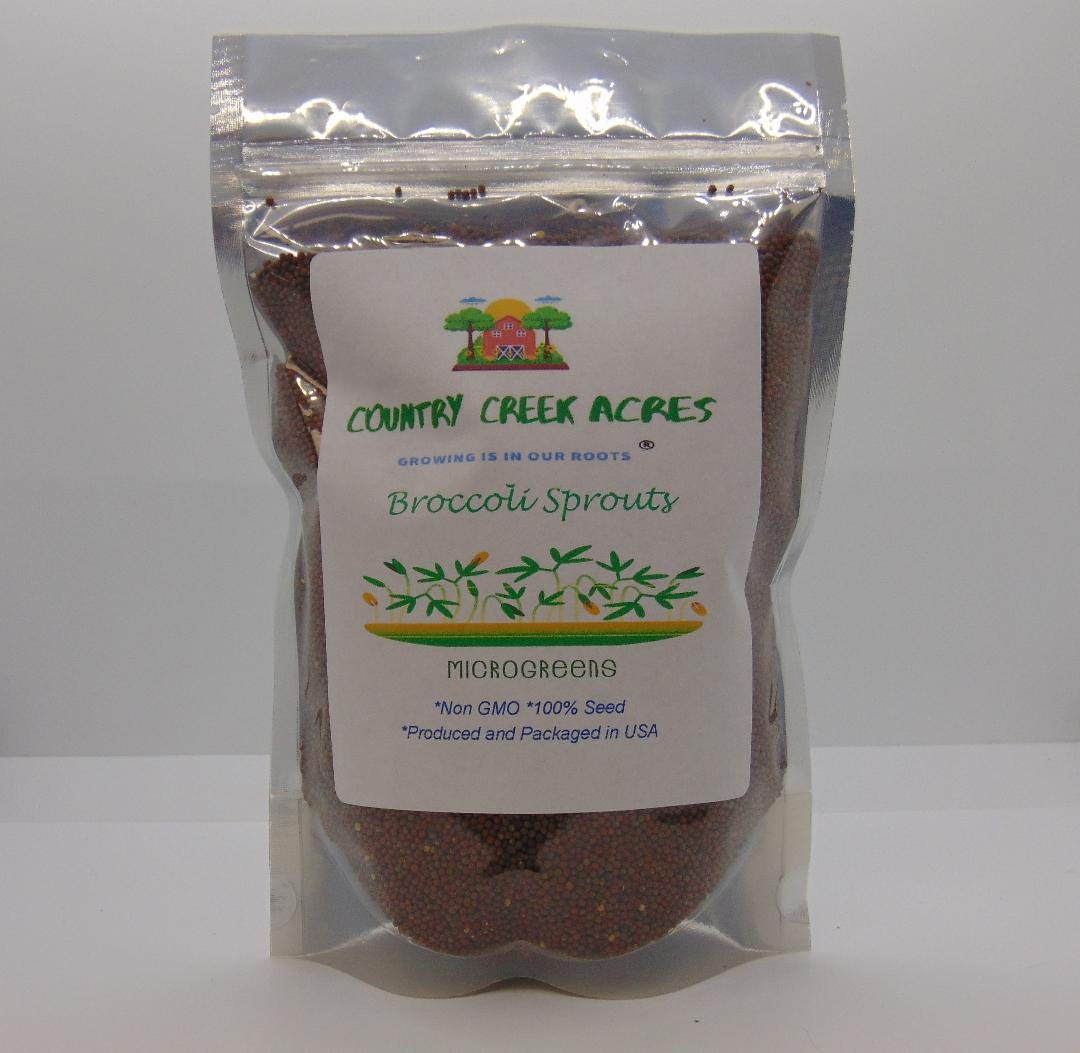
A straightforward, no-frills broccoli seed that germinated well in my jars and delivered solid yields at a lower cost.
Why I picked it: Low-cost single-variety broccoli with strong germination.
Best for: First-time sprouters and cost-conscious growers.
Budget-friendly option without sacrificing germination.
Pros
- High germination generally
- Long shelf life
- Works in many sprouters
Cons
- A small percentage may not sprout
- Flavor can vary batch to batch
My take
I started a jar with Country Creek seeds and had a full jar of sprouts in about six days. They’re predictable and suited well to weekly jar batches when I want plain broccoli sprouts.
This pack is simple to store and gives a good yield for the amount I used. In a couple of early runs I noticed 5–10% of seeds didn’t sprout, but overall performance was solid and repeatable.
If you’re looking for a low-cost way to keep broccoli sprouts on rotation, these seeds did the job for me.
8. Organo Republic Broccoli Seeds – Best Bulk for Hydroponics
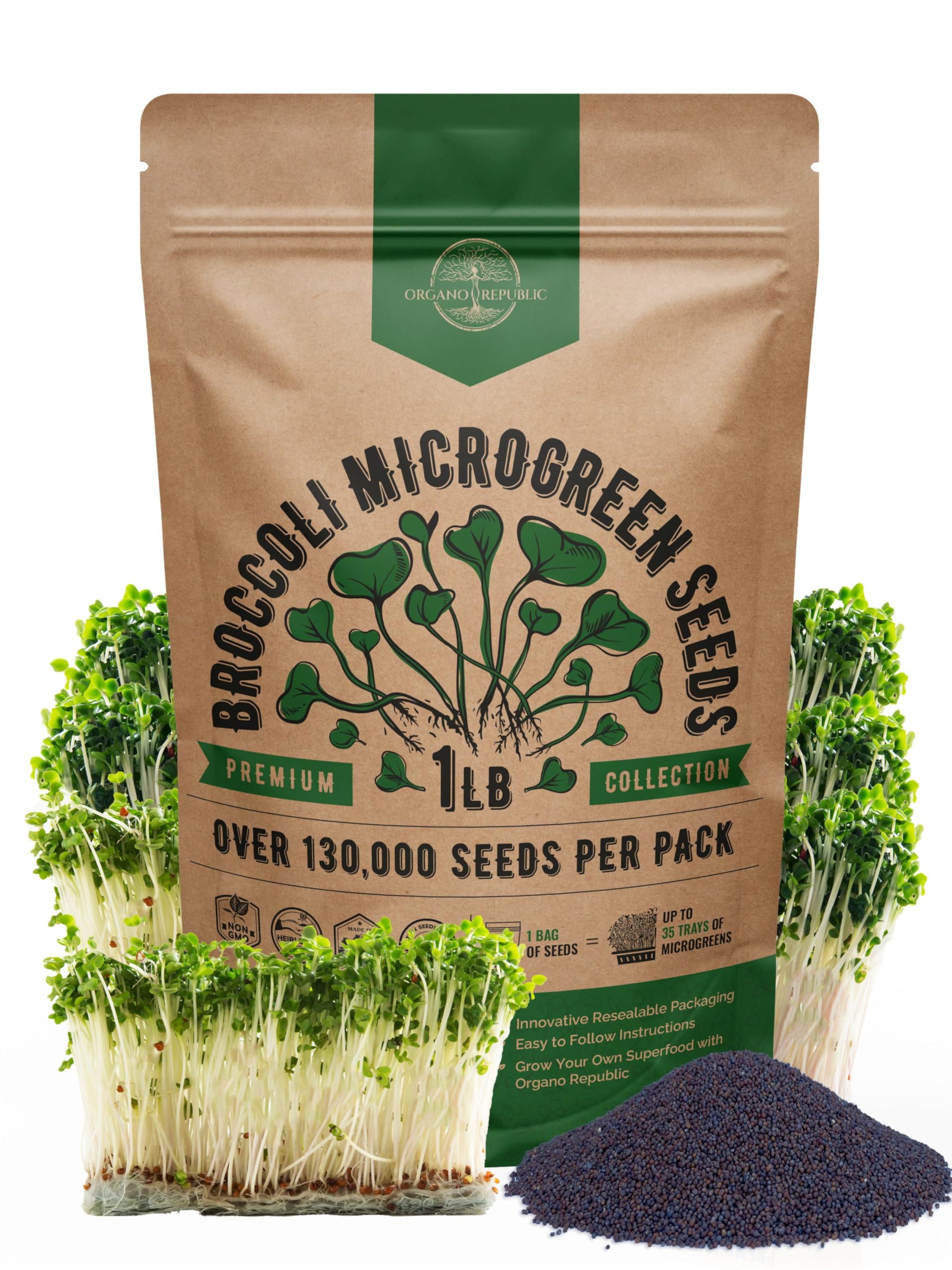
A true bulk option — 1 lb of broccoli seed designed for trays, soil, and hydroponic systems that produced fast, dense microgreens in my trays.
Why I picked it: Huge per-tray yield and versatile across growing systems.
Best for: Hydroponics, Aerogarden, and frequent tray growers.
Best bulk value for growers doing many trays.
Pros
- Massive seed count per bag
- Suitable for soil, coir, hydroponics
- Fast germination and high yield
Cons
- Large quantity may overwhelm casual growers
- Label instructions sometimes inconsistent
My take
I used these seeds in trays and a hydroponic rig; they filled a 10×20 tray quickly and gave me a clean, flavorful crop in five days. The bulk size makes it easy to run continuous production without rebuying frequently.
I appreciated the included growing guides and QR code for quick tips, though I did note a labelling instruction that I corrected based on experience (a short soak step worked better for my method). Overall germination and vigor were excellent.
If you grow microgreens regularly, this bag gave me more trays per season and reduced my per-tray cost significantly compared with small packets.
How I Choose Microgreen Seeds
Pick seeds by growing method
I separate seeds into two categories when I shop: sprouting-jars and tray microgreens. Small seeds like alfalfa and broccoli work well in jars and trays, but some mixes (especially those with larger seeds) are optimized for trays.
If I plan to use jars, I pick mixes or single varieties that are explicitly suitable for sprouting. For tray or hydroponic systems I choose tray-optimized mixes or bulk seeds.
- Jar sprouting: choose small, hull-shedding friendly seeds (broccoli, alfalfa, radish).
- Tray microgreens: choose tray mixes and seeds labeled for soil or hydroponics.
- Hydroponics/Aerogarden: pick non-coated, high-germination seeds meant for trays/coir.
Seed quality and labels I look for
I always check for non-GMO, organic certification when that matters to me. For heirloom varieties I value traceable origin and clear packaging.
High germination rates and recent packing dates matter; older seeds can underperform even if described well.
- Organic certifications (when preferred) such as Oregon Tilth.
- Non-GMO and heirloom tags for specific flavors/heritage varieties.
- Resealable bulk bags for frequent growers to preserve viability.
Flavor and culinary use
I choose broccoli seeds when I want the nutritional punch and a pronounced flavor; radish and turnip add a spicy bite; alfalfa is mild and versatile. Mixing varieties gives layered texture and taste.
If I’m preparing dishes for kids I lean on milder alfalfa or mixed salad packs; for smoothies and health goals I favor broccoli sprouts.
- Broccoli: peppery, nutrient-dense (sulforaphane).
- Radish/turnip: spicy, great as a garnish.
- Alfalfa: mild, sandwich-friendly.
Storage and freshness tips I use
I store unopened seed bags in a cool, dark place and transfer open bulk bags to the fridge or a sealed container to extend shelf life.
When seeds are older than a year I run a small germination test before committing a large tray to them.
- Resealable bags or airtight jars preserve viability.
- Keep seeds cool and dry; refrigeration helps for long-term storage.
- Test 10–20 seeds if you doubt freshness before planting a full tray.
Frequently Asked Questions
Can I use the same seeds for both jars and trays?
Yes — many small seeds like broccoli, alfalfa, and radish work in both jars and trays, but some mixes are formulated specifically for tray planting. I choose tray mixes for soil and coir systems and single-variety or small-seed packs for jars.
How long until I can harvest microgreens or sprouts?
In my experience sprouts are ready in 4–6 days and tray-grown microgreens are usually ready in 7–14 days depending on the seed and growing conditions.
Do I need organic seeds to grow safe sprouts?
Organic seeds reduce my exposure to residues and fit my preferences, but non-GMO and properly stored seeds can also sprout safely. Proper sanitation and rinsing are as important as seed origin in keeping sprouts clean.
How should I store bulk seed bags?
I keep opened bulk bags in airtight containers in the fridge or a cool pantry. Unopened resealable bags I store in a cool, dark place until I’m ready to use them.
Final Take
I keep a couple of these seed packs on hand: a mixed salad pack for quick jars, a broccoli pack for nutrient-dense sprouts, and a bulk tray seed for steady production. Each serves a clear purpose in my kitchen routine.
If you’re starting out, try a premeasured variety pack. If you want consistent broccoli sprouts, pick a single-variety broccoli seed. For colorful tray microgreens, choose a tray mix formulated for soil or hydroponics.
Whichever you pick, consistent rinsing, proper ventilation, and using fresh seeds are the small habits that gave me the most reliable, tasty results.
