
I tested eight compact ovens so you don’t have to. From single-serve air fryers to family-sized smart ovens, here are the mini ovens I keep reaching for and why.
I live in a small kitchen and I cook every day, so compact ovens are a big part of my routine. I put a range of mini ovens through real-world use—from tiny 2.1‑quart air fryers to 25‑quart smart countertop ovens—to see which ones actually deliver.
In this roundup I focus on what matters when you’re short on space: capacity, heat control, noise, cleanup, and how reliably each machine cooks the foods I use most (toast, roasted veggies, frozen snacks, and small meals).
If you want something for true single‑serving convenience, pick the smallest air fryer. For multi‑function cooking and family meals, I recommend a larger smart countertop oven. The middle ground—compact toaster ovens with simple dials—works best if you want straightforward performance without extra tech.
1. COSORI Lite 2.1‑Quart Mini Air Fryer – Best for Single Servings
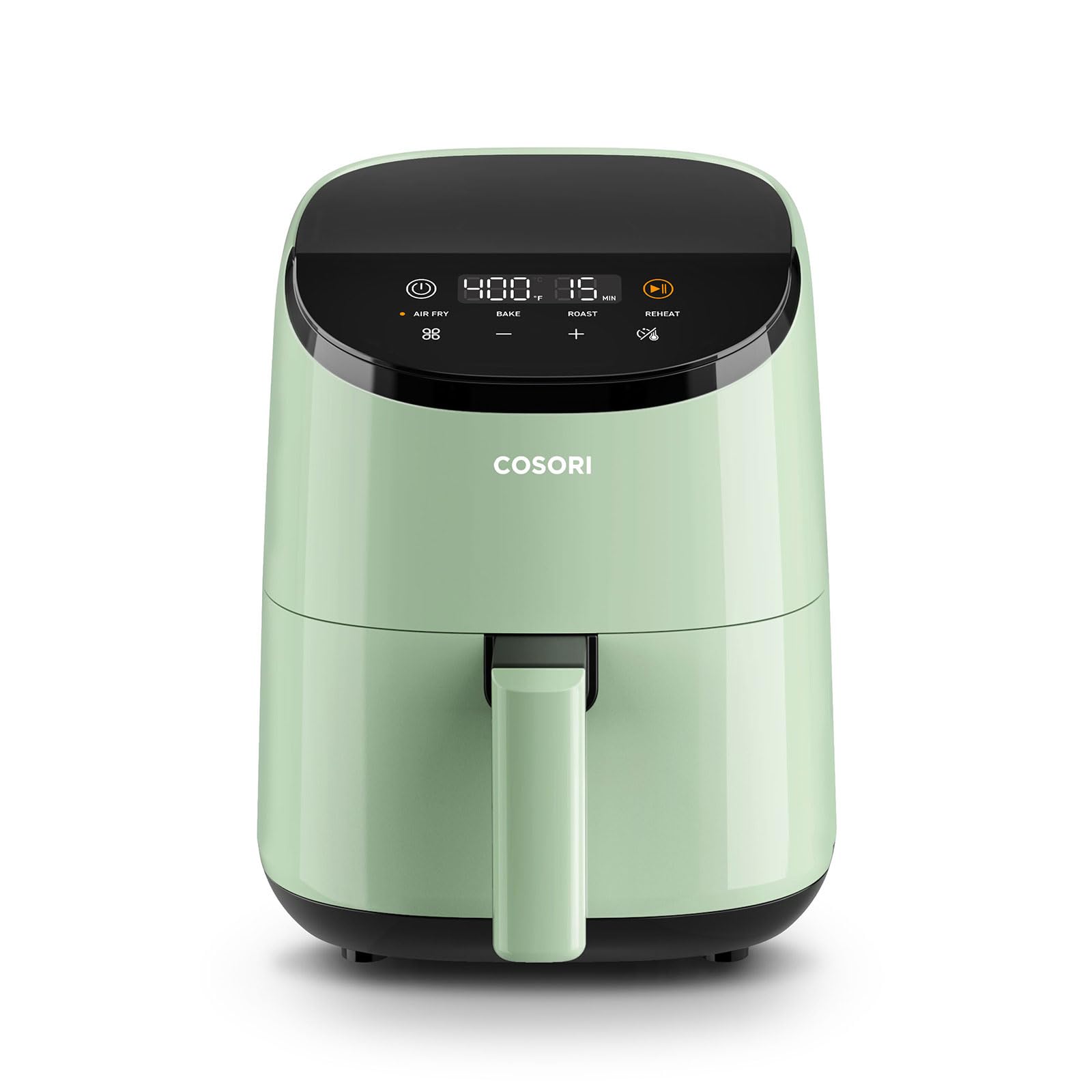
My go‑to when I want a single portion fast. Compact, quiet, and easy to store.
Why I picked it: Smallest true single‑serve air fryer I tested; very quiet operation.
Best for: One‑person households or quick snacks and sides.
A budget‑friendly option compared to larger air fryers.
Pros
- Compact footprint for tiny counters
- Very quiet (<48 dB) during operation
- Easy cleanup—dishwasher‑safe basket
Cons
- Only 2.1‑quart capacity
- Learning curve for timing and temp
- Basket is small for larger items
My take
I keep this Cosori on my counter because it’s almost hand‑sized and genuinely convenient for single portions. I used it for Trader Joe’s potatoes with bell pepper and onion and the potatoes came out perfectly crisp while the more delicate onions needed a shorter cook time—something I dialed in after a couple of runs.
What impressed me most is how quiet it is; it runs under normal conversation levels so I don’t wind up turning up the TV or shouting over it. The one‑touch functions (Air Fry, Roast, Bake, Reheat) simplify quick meals, and cleanup is painless thanks to the dishwasher‑safe basket.
Expect a short learning curve because the default temps trend high, but once I adjusted times and used the included guides the results were consistently good. I also follow the manual’s test‑run and venting recommendations to avoid odors and ensure safe airflow.
2. Breville Mini Smart Oven (BOV450XL) – Best for Toasting & Precision
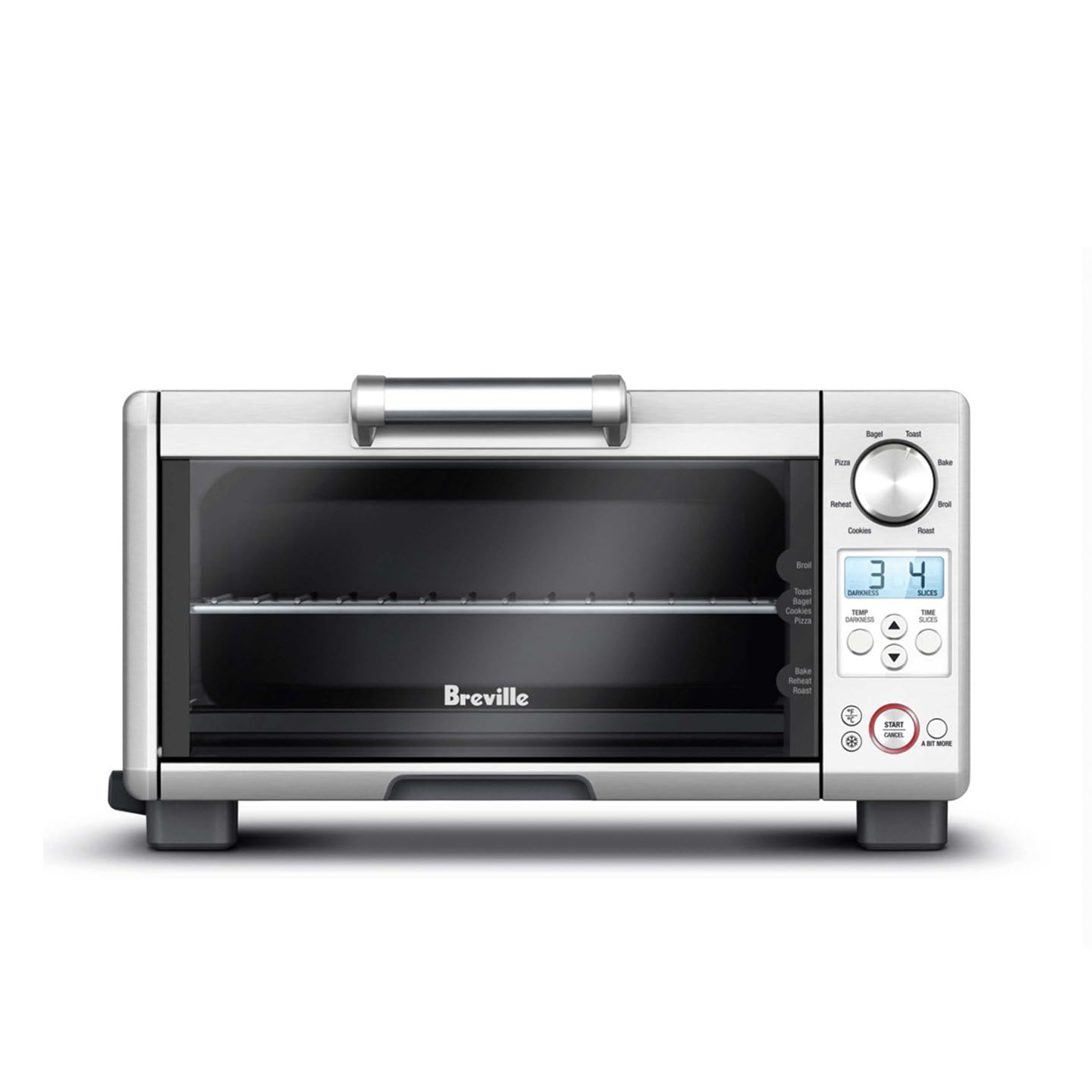
The most precise small toaster oven I keep for fast, consistent toast and baking.
Why I picked it: Element iQ delivers more even heat and very fast preheat.
Best for: People who want superior toast and predictable small‑batch baking.
A premium small oven that earns its price with performance.
Pros
- Element iQ for even heating
- Fast preheat and reliable toast
- Eight useful cooking functions
Cons
- Small interior limits larger pans
- Higher cost than basic models
- Not the lightest to move
My take
I switched to this Breville mini after years with a larger model because it fixed two problems I had: slow, inconsistent toast and a too‑huge footprint. The Element iQ system is the difference-maker—the oven steers heat intelligently and the results are noticeably more even.
It’s compact but useful: I can fit four slices of toast, a small pizza, or cookie batches. The LCD and function choices simplify everything from bagels to broiling a single piece of fish, and I appreciate the quick preheat on busy mornings.
If you primarily want toast or precision baking in a small countertop oven, this is the one I reach for. It’s a more deliberate purchase than a basic toaster oven, but I found the faster, more consistent output worth it.
3. Dash Mini Toaster Oven – Best Compact Toaster Oven
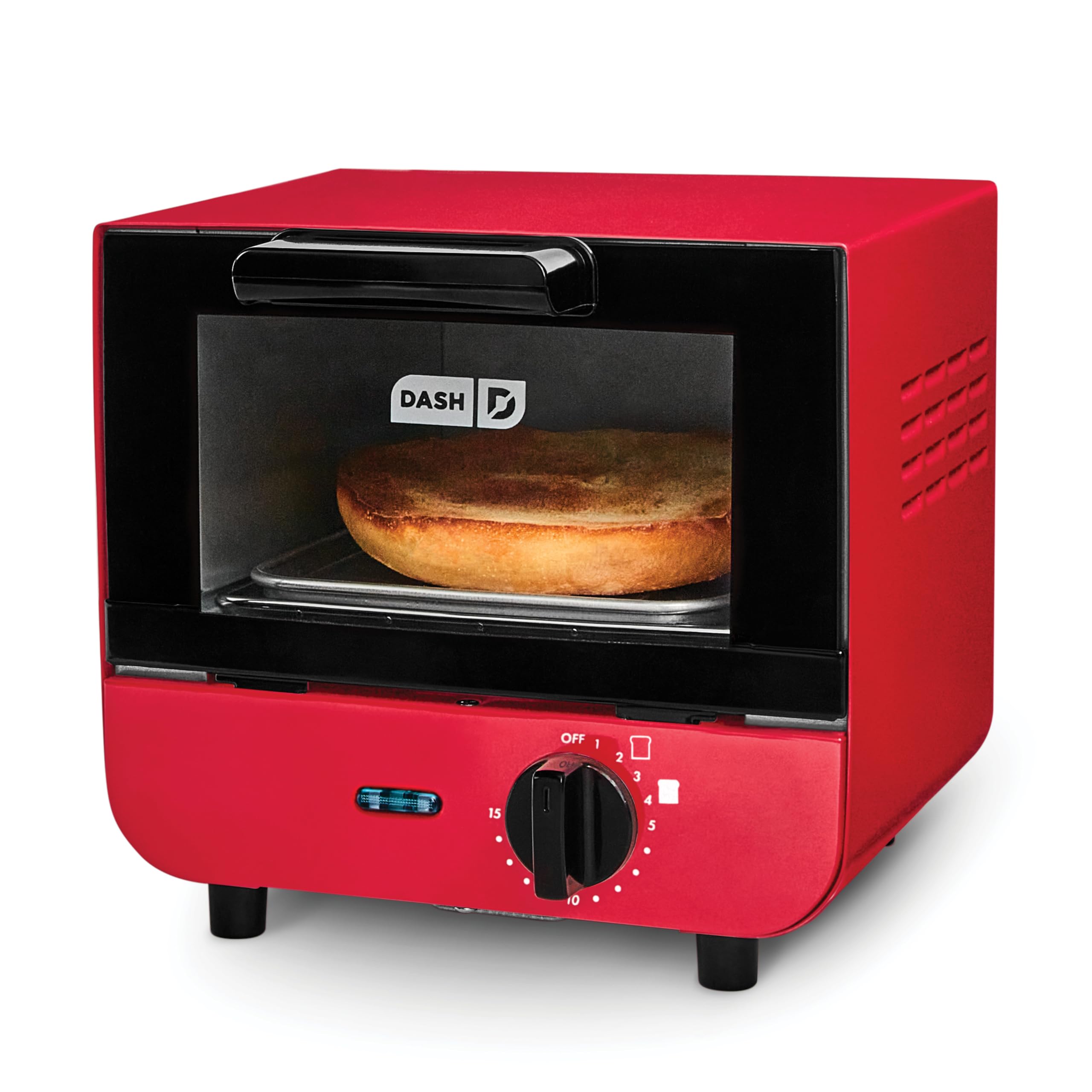
Cute, fast, and extremely space‑efficient—my favorite for dorms and tiny kitchens.
Why I picked it: Tiny footprint with simple controls and quick heat-up.
Best for: Dorm rooms, craft rooms, and small snacks.
One of the most wallet‑friendly tiny toaster ovens available.
Pros
- Very small and lightweight
- Adjustable temperature dial
- Removable tray and crumb pan
Cons
- Tray is very small
- Food can char if unattended
- Limited to single servings
My take
I use the Dash when I want something that heats in seconds and won’t dominate my counter. It’s perfect for a single slice of toast, mini‑pizza, or reheating fries—the latter becomes crisper than the microwave.
The removable baking tray and slide-out crumbs tray make cleanup quick. One caveat: the included tray is tiny (about 4.8 inches square), so I line it or use foil to avoid stubborn baked‑on messes and to keep things from burning.
For under‑use and small snacks this is the fastest way to get hot food without firing up a full oven. Just keep an eye on timing because things can burn faster than you expect in such a compact cavity.
4. COMFEE’ CTO‑E101A Compact Toaster Oven – Best Simple Toaster Oven
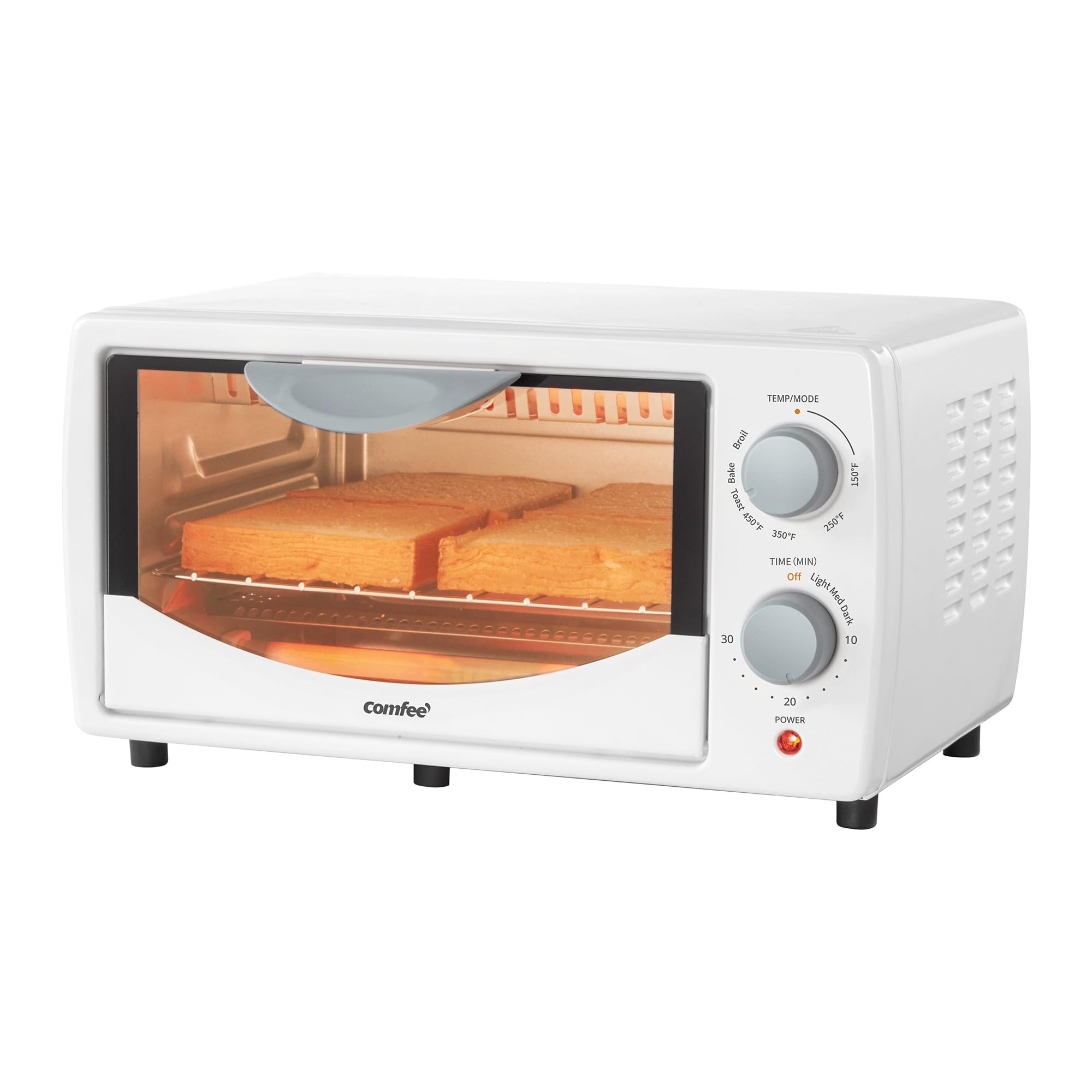
A straightforward, dial‑controlled toaster oven that does the basics well.
Why I picked it: Three core modes and intuitive dials make it low‑fuss.
Best for: Those who want a no‑frills compact oven for toast and small meals.
An affordable, no‑tech countertop solution.
Pros
- Simple, familiar dial controls
- Fits a 9‑inch pizza
- Includes rack, pan, crumb tray
Cons
- Temperature markings are coarse
- Interior measurement claims vary
- Toast can brown unevenly
My take
I keep this Comfee unit in rotation when I want a dependable toaster oven without digital menus. The two dials—time and temp—are immediate and obvious, and the 150–450°F range covers everything I use it for.
It handles 2–4 slices of bread or a small 9‑inch pizza, and the included baking pan and removable crumb tray simplify cleanup. I did cross‑check temps with a thermometer because the control markings are basic, and I learned to watch toast closely to get an even result.
If you want a straightforward machine that doesn’t need an app or complicated controls, this is a very practical pick, especially for small kitchens where I don’t need extra bells and whistles.
5. CHEF iQ MiniOven Smart Convection Oven – Best Smart, Full‑Featured
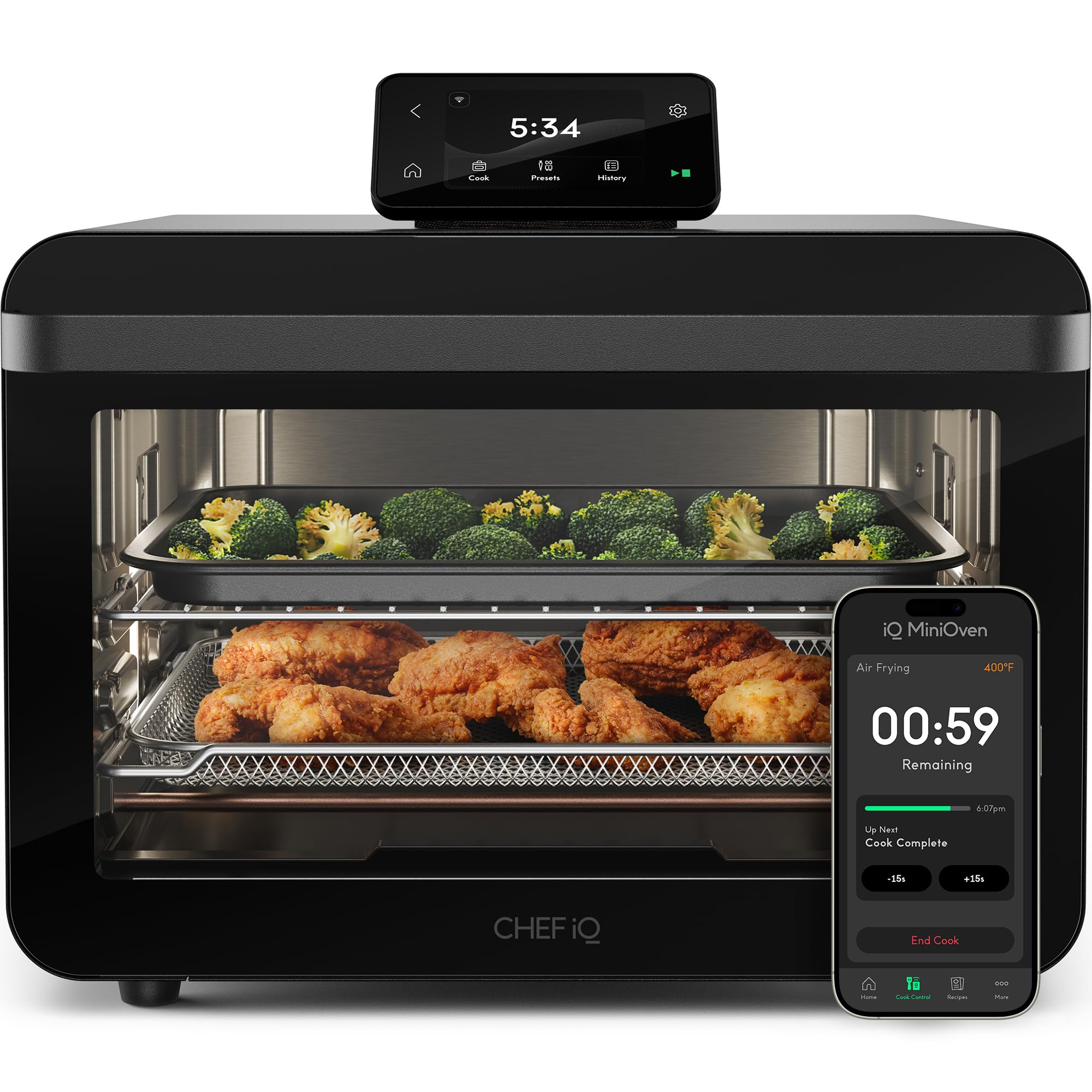
The most capable countertop oven I own—networked, fast, and built for family meals.
Why I picked it: Huge function set plus app control makes complex cooks nearly effortless.
Best for: Families and tech‑minded cooks who want one appliance for everything.
A premium, feature‑packed option for serious countertop cooking.
Pros
- 11 cooking functions including air fry
- Large 25‑quart capacity for family meals
- Touchscreen and app control
Cons
- Higher cost than simple ovens
- Occasional app sync quirks
- Takes counter space
My take
I bought the Chef iQ MiniOven specifically to replace juggling multiple appliances, and it genuinely simplifies weeknight cooking. The touchscreen is responsive and pairing it with the free app gave me presets and step‑by‑step guides that I actually used when I was short on time.
With its 25‑quart cavity I can fit a 13‑inch pizza or cook dinner for several people at once. The motor and convection system run hotter and faster than smaller units I own, so roasts and air‑fried foods finish sooner without drying out.
It’s not flawless—the app can de‑sync occasionally—but the tradeoff for one appliance that handles everything from dehydrating to slow cooking is worth it in my kitchen. If you cook for more than one person regularly, this is the most flexible device I reach for.
6. Elite Gourmet 8.5Qt Compact Air Fryer Oven – Best Value Air Fryer Oven
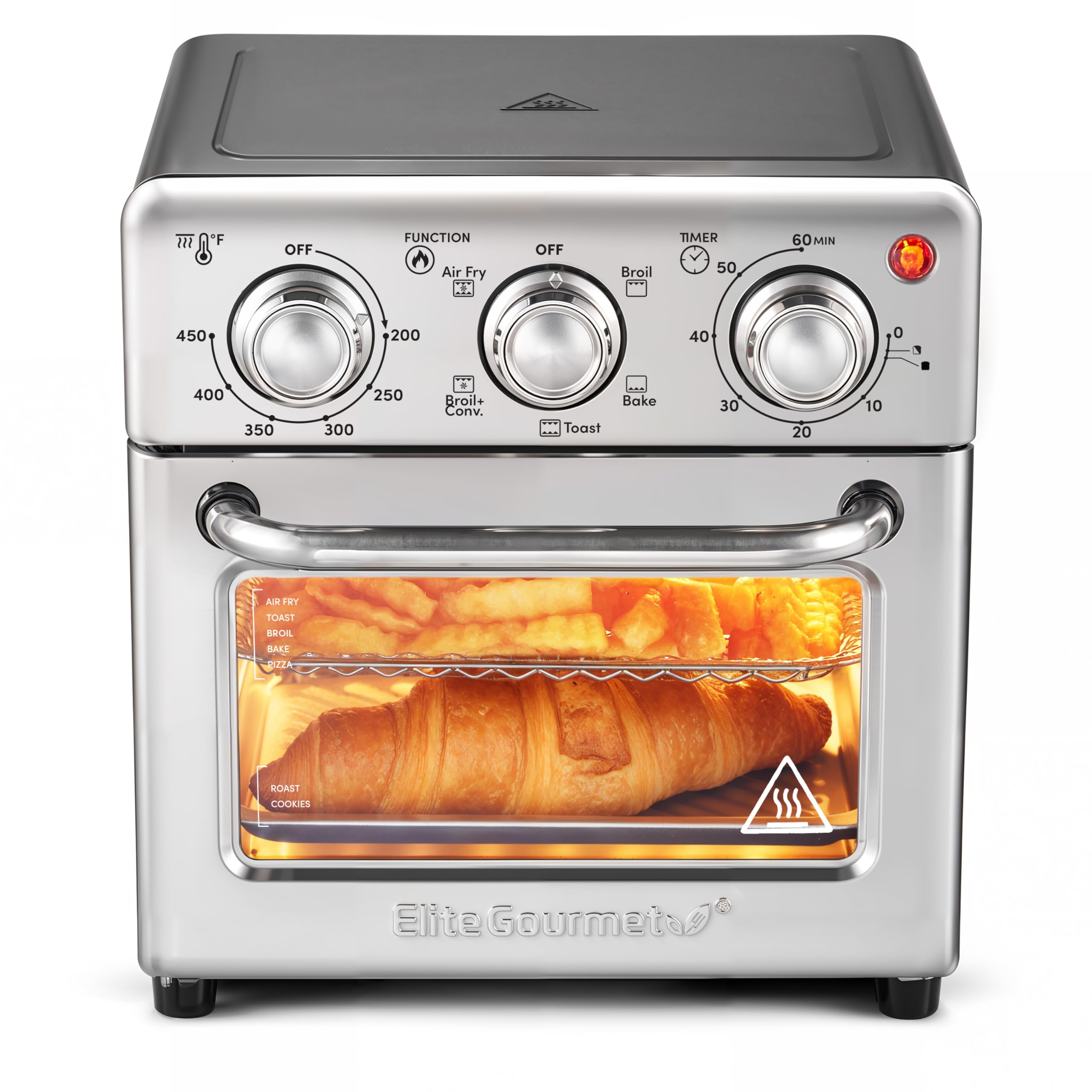
An affordable, capable compact air fryer oven I use for everyday meals.
Why I picked it: Good balance of capacity, power, and price for small households.
Best for: Couples and singles who want a full oven alternative on a budget.
A very affordable option with solid feature set.
Pros
- Reasonable 8.5‑quart capacity
- Dishwasher‑safe basket and pan
- Adjustable temp and 60‑min timer
Cons
- Can smell during initial runs
- Not ideal for large family meals
- Requires space for two rack positions
My take
I bought the Elite Gourmet for weekend use and camping prep, and it’s been a reliable, no‑surprises machine. It heats quickly, is simple to operate, and gives even, crispy results for wings, fries, and veggies.
The included basket and bake pan are dishwasher‑safe, which saves me time on cleanup. I did follow the recommended burn‑in process to remove manufacturing odors, and after that it ran cleanly.
For the price and size, I find it to be an excellent everyday unit. If you need something for larger portions, step up to a bigger model, but for one or two servings this hits a great balance.
7. Universal Air Fryer Accessory Set (Small) – Best Accessories Pack
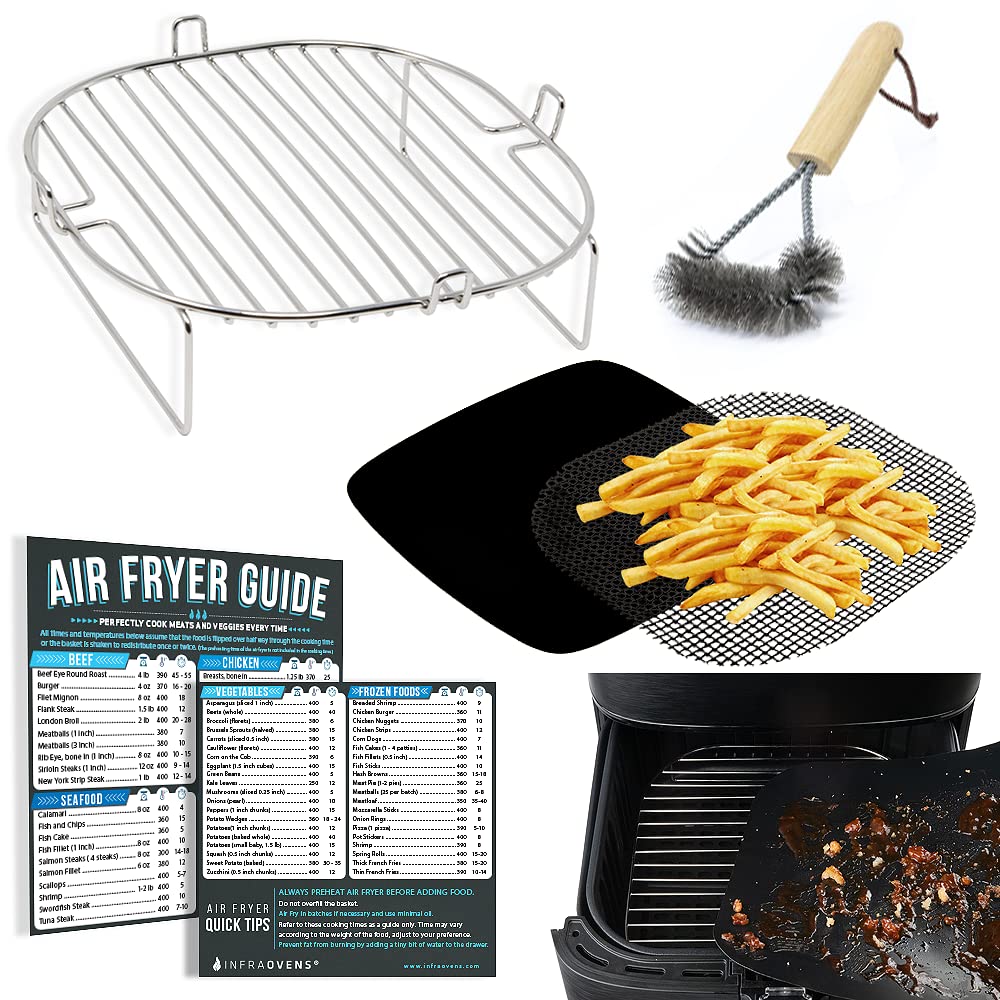
I keep this accessory kit on hand to expand what my small fryers can do.
Why I picked it: Adds racks, liners, and a cleaning brush to small baskets.
Best for: Owners of small air fryers who need versatile accessories.
A low‑cost way to get more cooking flexibility from tiny baskets.
Pros
- Creates a double‑layer with stainless rack
- Mesh mats capture grease and crumbs
- Includes cleaning brush and cheat sheets
Cons
- Designed for small 6.8" baskets
- Fit isn't perfect for every model
- Instructions are minimal
My take
I bought this set to use with my Chefman and Cosori baskets and it expanded what I can cook in a small fryer. The stainless rack lets me layer foods, and the mesh mat keeps smaller pieces from falling through.
The magnetic cheat sheets are handy to keep on the fridge so I don’t guess times for common foods, and the grill brush cleans stuck bits quickly as long as you use it only on stainless parts.
Fit varies by model—measure your basket first—but for the price I found it to be a practical addition that made meal prep faster and less fussy.
8. Nuwave Pro Plus Air Fryer Oven – Best Infrared / No‑Preheat
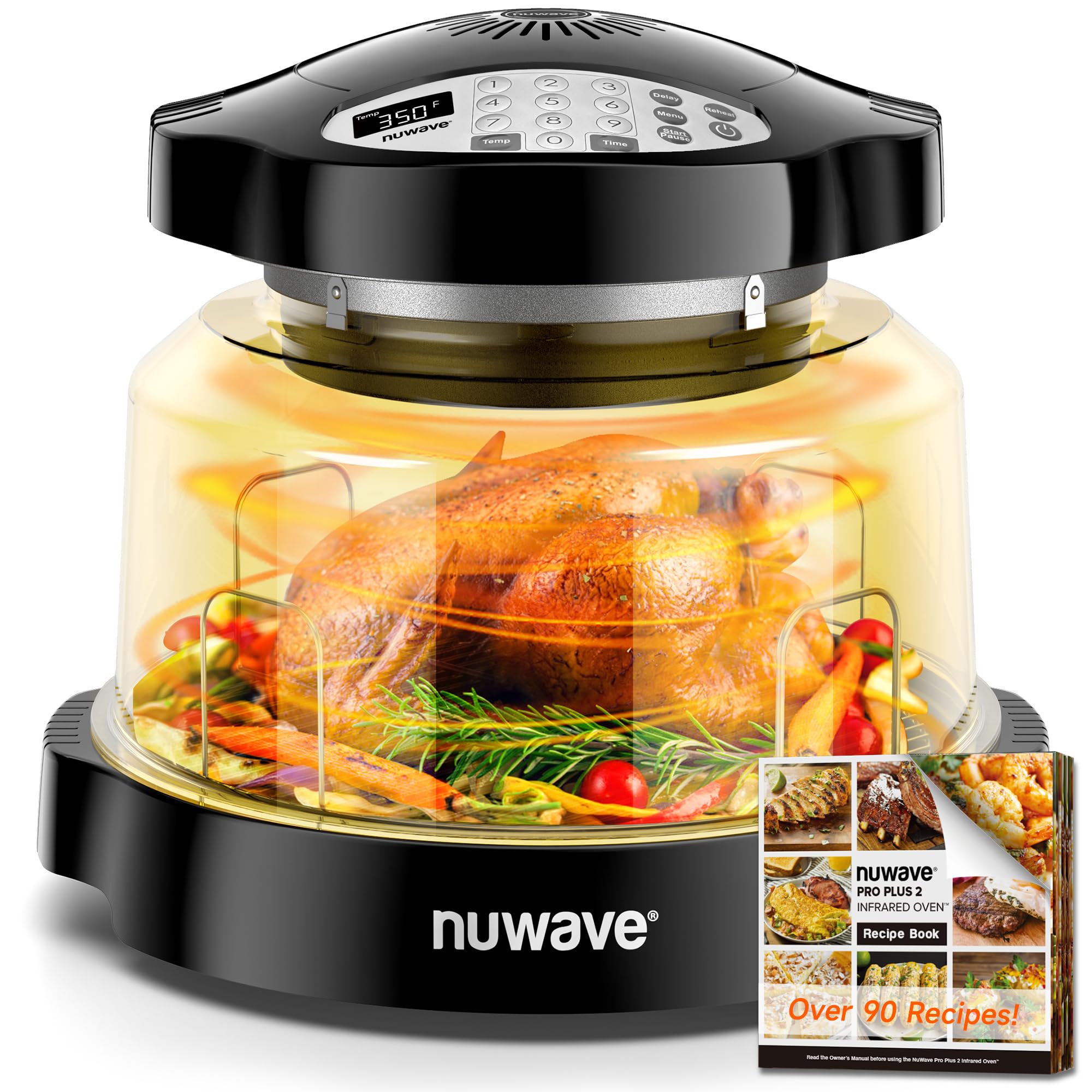
My pick when I want fast cooking without preheating—especially for frozen foods.
Why I picked it: Infrared plus convection combo cooks from frozen without preheat.
Best for: People who value speed and the ability to cook frozen items straightaway.
A mid‑range option for faster, energy‑efficient cooking.
Pros
- No preheat required for many foods
- Cooks frozen foods quickly and evenly
- PFAS‑free cooking surfaces
Cons
- Fan noise is noticeable
- Cook times may need personal tweaks
- Learning curve for best results
My take
I use the Nuwave when I need something fast straight from the freezer—pizzas, frozen chicken, and reheats all come out dramatically faster than my conventional oven.
The combo of infrared, conduction, and convection really speeds things up and seems to pull excess fat away from proteins, so roasted items stay juicy inside and crisp outside. I appreciate that the cooking surfaces are PFAS free.
It isn’t whisper‑quiet—the fan is audible—but that’s the tradeoff for the brute force cooking. I also learned to tweak the displayed cook times slightly based on what I was making to match the results I want.
How I Picked These Mini Ovens
Size and Capacity
I checked internal dimensions and thought about what I actually cook: single‑serve snacks, small pizzas, or family dinners. If you regularly cook for more than two people, choose a 20‑plus quart model.
Measure the pans you want to use—tiny ovens often list interior size that doesn’t match standard baking trays.
- 2–3 quarts: single servings and snacks
- 8–12 quarts: couples and small meals
- 20+ quarts: family meals and full pizzas
Cooking Functions
I prioritized ovens with the functions I use most: air fry, bake, broil, and reheat. More functions are helpful if you want to dehydrate or proof dough, but they add complexity.
If you want predictable results quickly, prioritize convection and smart heat management like Breville’s Element iQ or Chef iQ’s presets.
- Basic 2–3 function ovens are simpler to use
- Multi‑function smart ovens reduce guesswork
- Infrared or hybrid systems cook frozen foods very well
Controls & Connectivity
I prefer tactile dials for everyday toast and quick use; touchscreen and app control are useful when I want guided recipes and remote monitoring.
Consider whether you’ll actually use an app—some people prefer a simple dial and reliable manual controls.
- Dials = immediate, low‑maintenance
- Touchscreens and apps = guided cooking and presets
- Verify app reliability before committing
Cleanup & Accessories
Dishwasher‑safe baskets and removable crumb trays make cleanup fast. I also recommend small accessory packs to expand what your fryer can handle.
Watch for nonstick coatings and confirm whether they’re PFAS‑free if that’s a health priority for you.
- Dishwasher‑safe parts speed cleanup
- Extra racks and mats add flexibility
- Check for PFAS‑free cooking surfaces
Noise, Venting & Safety
I pay attention to fan noise and vent placement. Compact units can have vents in back—leave space for airflow—while some models are noticeably louder during high‑speed cooking.
Follow the manufacturer’s test‑run advice to burn off manufacturing residues before cooking food.
- Leave clearance for rear vents
- Expect louder fans on high‑speed motors
- Run initial burn‑in per the manual
Frequently Asked Questions
Can a mini oven replace my full‑size oven?
In my experience, mini ovens are excellent for everyday cooking—toast, snacks, roasting, and small dinners—but they won’t fully replace a full‑size oven if you bake large batches or roast whole turkeys. Think of them as a more efficient, space‑saving complement.
Do air fryer ovens actually use less oil?
Yes. I routinely get crunchy results with a fraction of the oil I’d use for deep frying. The hot air circulation crisps exteriors while keeping interiors moist, so you can reduce oil by a large percentage for most foods.
Do mini ovens need preheating?
It depends. Some models—like the Nuwave—excel at no‑preheat cooking and handle frozen foods straightaway. Others, especially those for baking, benefit from a short preheat for consistent results. I follow the recipe or preset guidance for best results.
How should I clean and maintain a mini oven?
I wipe the cavity after each use, remove and wash baskets/trays (many are dishwasher‑safe), and run a manufacturer‑recommended burn‑in initially. For racks and stubborn bits I use a grill brush and avoid abrasive cleaners on nonstick surfaces.
Final Take
I’ve tested tiny air fryers and full‑featured smart ovens so I know which ones earn a permanent spot on my counter. Choose the smallest models for single portions and quick snacks, choose mid‑size units for flexible everyday cooking, and pick a smart, large model if you regularly cook for multiple people.
If you want one recommendation to start: pick the capacity that matches how you cook most often, and then prioritize the features—precision heating, ease of cleanup, or app guidance—that make your life easier.
