
I tested a range of mini sewing machines — from portable electric starters to decorative music-box novelties — and I’m sharing the ones I use most often for mending, crafting, and beginner projects.
I’ve spent time sewing with a batch of compact machines so I could recommend the ones that actually work when space, price, or portability matter.
In this guide I focus on usability: how easy the machines are to thread, the control you get from foot pedal or hand switches, what each model will handle, and which ones come with the useful extras I look for.
Below are the models I kept coming back to during testing and the situations where I reach for each one.
My testing covered tiny decorative pieces up to full starter kits; I’ve highlighted which machines are best for quick repairs, beginner lessons, gift-giving, or slightly heavier home projects.
1. RXMeili Portable Mini Electric Sewing Machine – Best Overall
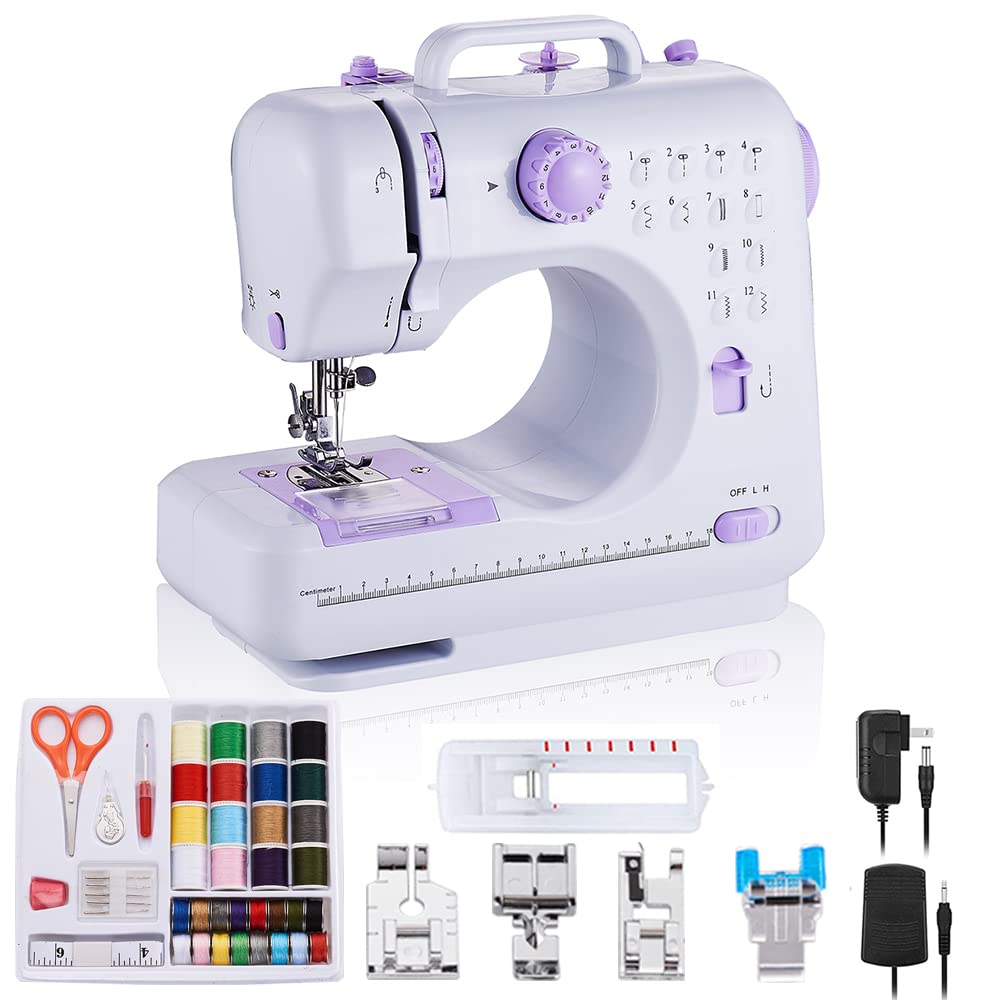
A compact, lightweight electric mini with 12 built-in stitches, two speeds, foot pedal, and dual power (AC or AA batteries).
Why I picked it: I kept reaching for this one because it balances portability, enough stitch options, and useful extras like a storage drawer.
Best for: Beginners, hobby sewing, quick mending, and craft projects on the go.
Affordable, great value for entry-level use.
Pros
- 12 built-in stitch options
- Dual power: AC or batteries
- Foot pedal and hand controls
- Compact and lightweight
- Built-in storage drawer
Cons
- Foot pedal has limited sensitivity
- Not suited for heavy-duty fabrics
- Do not use battery and adapter together
My take
I used this machine for small projects like tote bags, cushion covers, and hemming, and it handled those tasks reliably.
Setup was straightforward; the printed threading guides and a short video made getting started quick. The two-speed control plus the foot pedal let me slow down for tricky corners and speed up for long seams.
The stitch selector knob is simple to use and the 12 stitch choices covered everything I needed for decorative and utility seams. Reverse stitching works while I hold the switch, which is easy once you get the rhythm.
It runs quietly and the built-in storage drawer saved me a trip to the toolbox mid-project. I did notice the pedal is almost binary — low or high — so it lacks the fine control of larger machines. Also, don’t power it with batteries and the adapter at the same time to avoid damaging the motor.
2. Artyea Vintage Mini Sewing Machine Music Box – Best Decorative
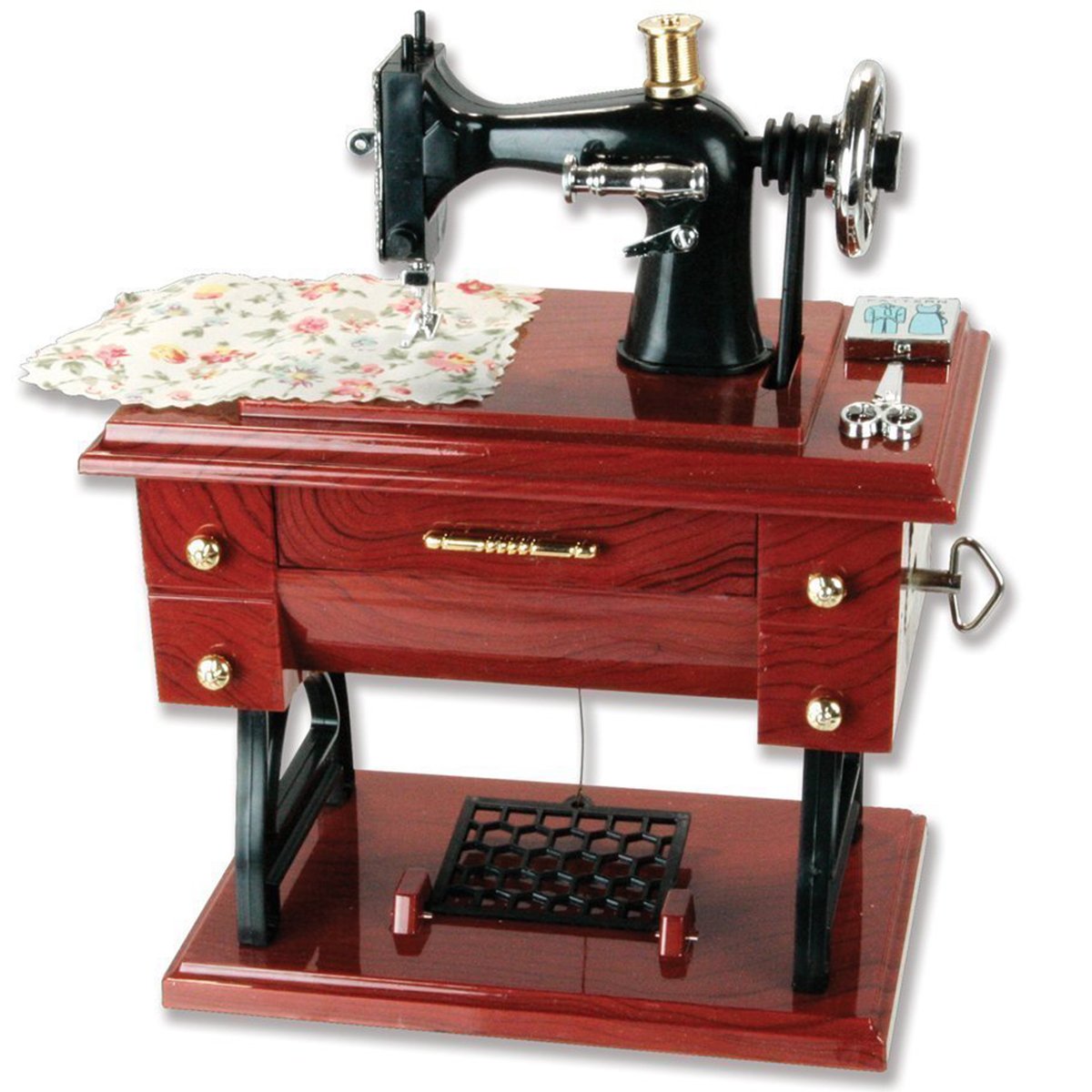
A wind-up, plastic vintage-style treadle music box with moving parts and a tiny drawer—purely decorative.
Why I picked it: I chose this when I wanted a charming, non-functional piece that celebrates sewing history and makes a sweet gift.
Best for: Desk or shelf decor, novelty gifts, and collectors of vintage-inspired items.
Inexpensive novelty that looks pricier than it is.
Pros
- Charming vintage detailing
- Wind-up, no batteries required
- Moving treadle and spool
- Tiny functioning drawer
Cons
- Made of lightweight plastic
- Music sounds a bit tinny
- Not a working sewing machine
My take
I gifted this music box to someone who quilts and it was an immediate hit—the little pedal rocks and the spool turns while the tune plays.
The craftsmanship is surprisingly detailed for a small plastic piece: scissors, a fabric swatch, and the miniature balance wheel give it personality on a shelf.
Wind it up to start and pull the drawer to stop; packaging was good so it arrived undamaged. If you’re looking for a functional sewing tool, this isn’t it, but as decoration it’s delightful.
3. MEGLE FHSM-505 Mini Sewing Machine – Best Simple Starter
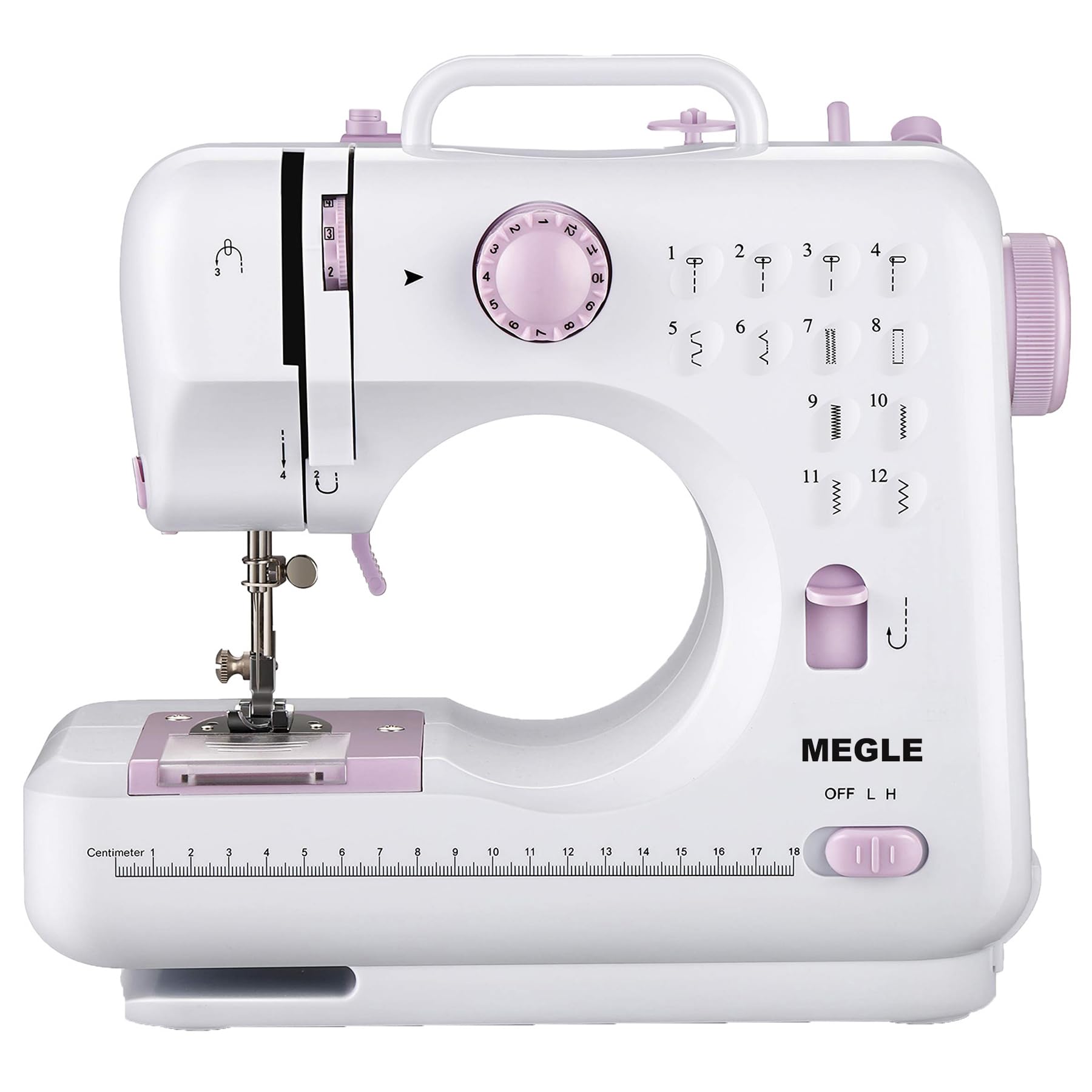
A no-frills mini with 12 stitch programs, LED light, thread cutter, foot pedal, and dual power options—built for basic household jobs.
Why I picked it: I kept this one around for basic mending and for gifting to teens because it’s straightforward and portable.
Best for: Simple hemming, kids and teens learning to sew, and quick repairs.
Budget-friendly option for light use.
Pros
- 12 stitch programs
- LED light for better visibility
- Thread cutter and hidden drawer
- Battery or AC power
Cons
- Can be finicky with tension
- Not built for heavy workloads
- Build quality is basic
My take
I used this for curtain fixes and small clothing repairs; it performed well for light fabric and short sessions.
The LED work light and built-in cutter are handy touches I appreciated when sewing in low light, and the manual in several languages is helpful for new users.
Battery power is convenient for portability, but I noticed the machine can be temperamental with thread tension and may require patience to dial in. For occasional mending and for beginners learning the basics, it’s serviceable; I wouldn’t rely on it for sustained or heavy-duty sewing.
4. Dechow Mini Sewing Machine Kit – Best Complete Kit
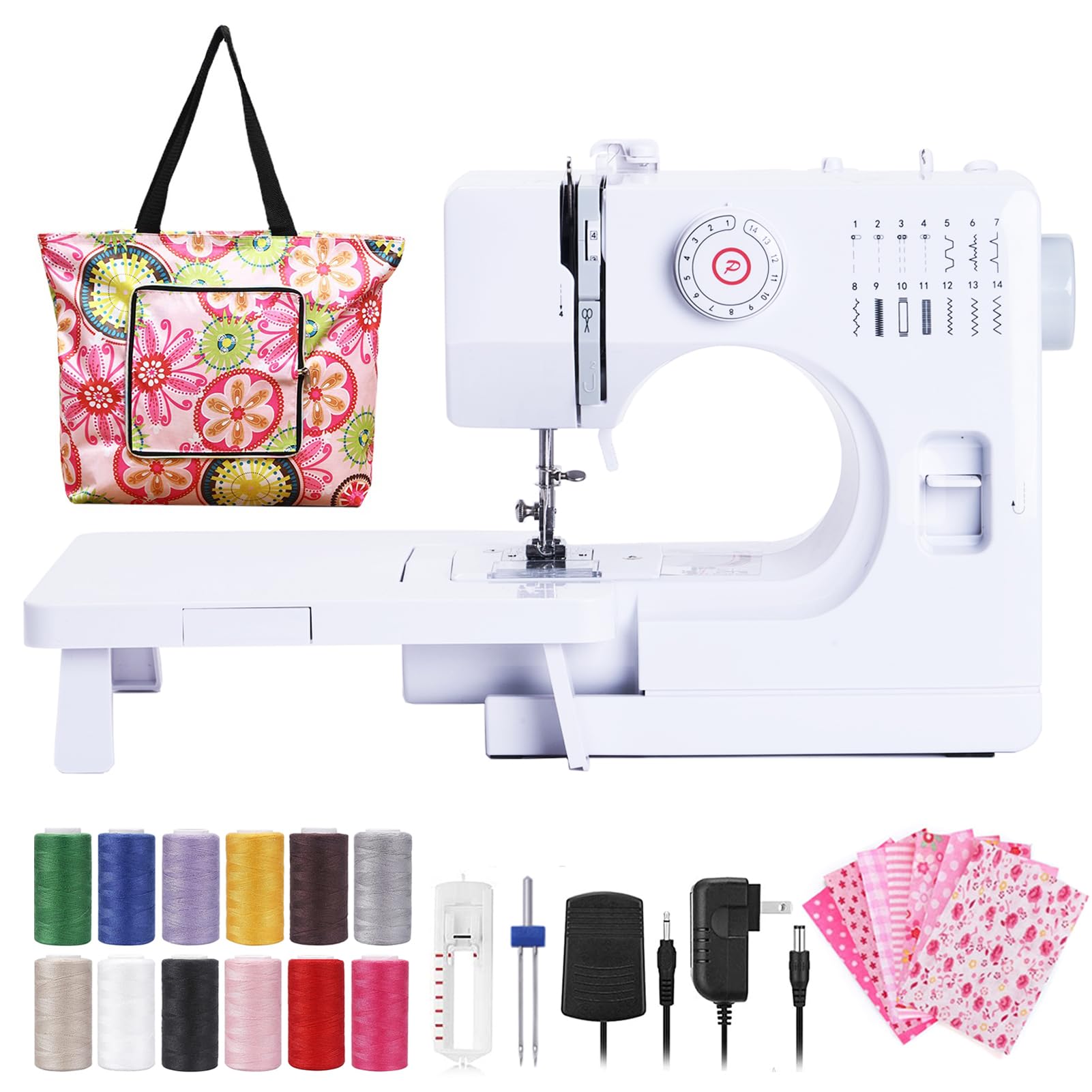
A well-equipped mini that ships with an extension table, storage bag, fabric and a set of threads, plus a stronger motor and double-thread stitching.
Why I picked it: I reach for this one when I want a mini that feels more like a complete starter workshop out of the box.
Best for: Beginners who want accessories included and users who need more piercing power for slightly thicker fabrics.
Mid-range with a comprehensive accessory set.
Pros
- Comes with threads and extension table
- Built-in sewing light
- Stronger motor for thicker seams
- Double-thread option for sturdier stitches
Cons
- Can sound noisy under load
- Supplied needles and thread may need upgrading
My take
This is the mini I used when I wanted a ready-to-go kit; the included threads and pre-wound bobbins let me start sewing immediately.
The motor felt noticeably more capable than other minis I tested, so I could sew through thicker cottons and multiple layers when I switched to a better needle and thread.
It’s a bit heavier, so I tend to leave it set up rather than carry it around, and the stock needle/thread combo isn’t the best—changing those improved stitch quality immediately.
Overall it’s a solid choice when you want extras included and a machine that can handle slightly tougher home sewing tasks.
5. DAPRIL Mini Sewing Machine – Best for Kids & Moms
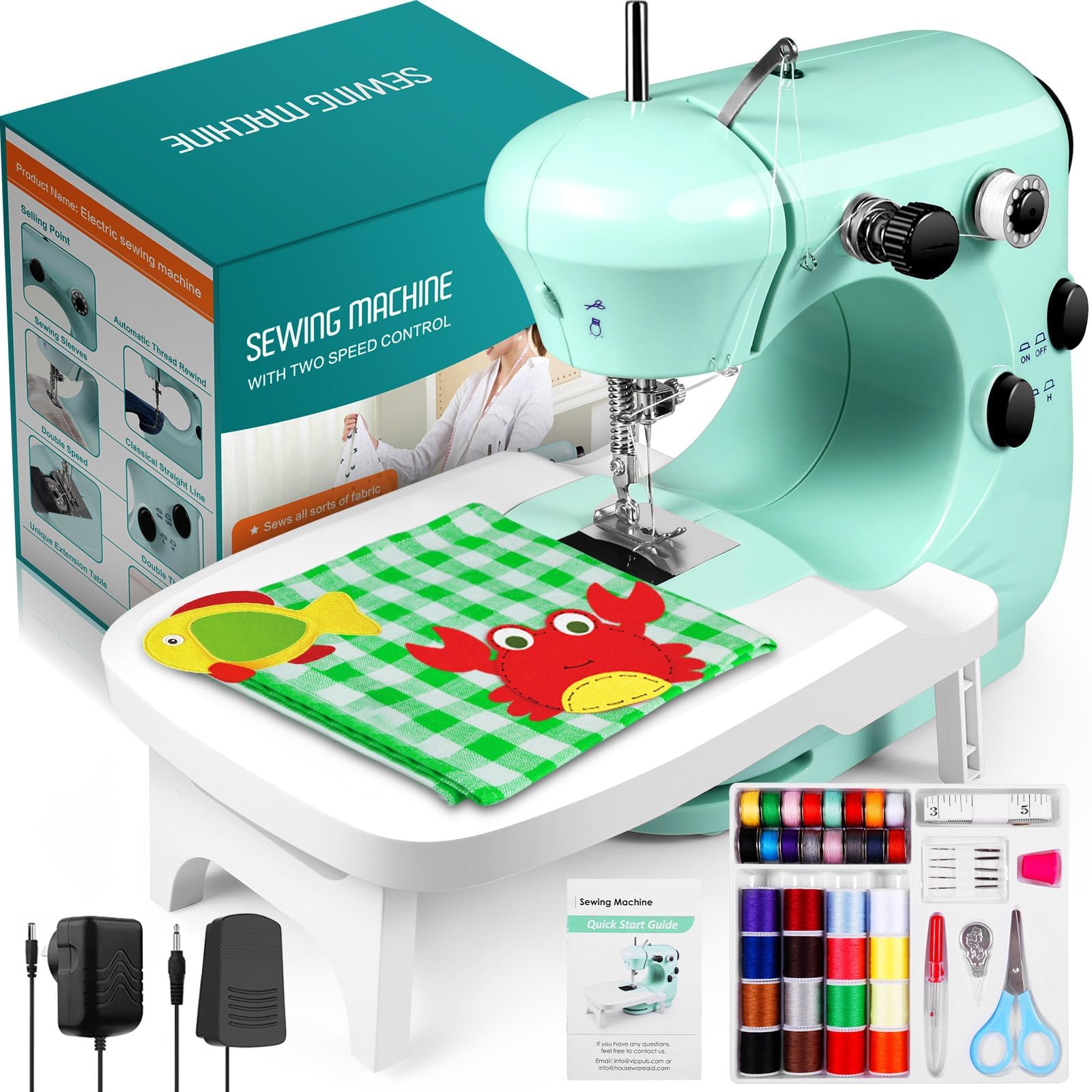
A compact, kid-safe mini machine made from eco-friendlier materials, with low/high speed control, extension table, built-in light, and thread cutter.
Why I picked it: I appreciated the safety-minded design and compact footprint for quick household fixes while managing a busy schedule.
Best for: Parents, beginners, kids learning to sew, and small-space craft rooms.
Affordable and family-friendly.
Pros
- Designed with safer materials
- Extension table included
- Built-in light and thread cutter
- Compact and portable
Cons
- Feels a bit toy-like to some
- Not meant for professional work
My take
As a parent, I liked how compact and easy to store this machine is—I can pull it out for a quick hem during nap time and put it away before the kids wake.
The low/high speed selector gives me confidence when teaching my older child to stitch, and the extension table is genuinely useful for stabilizing small projects.
It arrived with thread and simple instructions, making it straightforward to get started. For light mending and learning, it’s a dependable, convenient pick; for heavier or frequent sewing, a larger machine will be a better long-term choice.
How I Choose Mini Sewing Machines
Power and Portability
I always check how a mini is powered. Machines that offer both AC and battery options give me maximum flexibility for travel or quick jobs away from an outlet.
Weight matters: if I expect to move the machine often I prefer models under about 6 pounds; heavier mini models I tend to leave set up.
- AC + battery = most flexible
- Look for a carrying handle if you’ll transport it
- Consider weight if storage and portability matter
Stitch Options and Controls
For general mending and beginner projects I prioritize a machine with at least several practical stitch patterns and an easy-to-use stitch selector.
I value both foot pedals and hand switches: pedals give hands-free speed control while hand controls are useful when teaching or doing precise work.
- 12 stitches cover most basic needs
- Two-speed controls help beginners
- A reverse stitch function is helpful for securing seams
Extras That Matter
I always prefer models that include a light, a small set of accessories, and a storage drawer or bag so I’m not hunting for bobbins or needles mid-project.
An extension table makes a surprisingly big difference when working on hems or small quilts—don’t underestimate it.
- Built-in light improves visibility
- Extension table stabilizes larger pieces
- Included threads and bobbins reduce setup time
Durability and Intended Use
Mini machines vary from decorative novelties to legitimate sewing tools. I match the machine’s build and motor strength to the work I plan to do.
If I expect to sew heavier fabrics, I pick a mini with a stronger motor and plan to upgrade needles and thread for better results.
- Pick a stronger-motor mini for thicker fabrics
- Swap stock needles and thread for better performance
- Consider leaving heavier minis set up rather than transporting them
Frequently Asked Questions
Can a mini sewing machine handle denim or thick fabric?
In my experience most minis will handle a single layer of denim or a few light-to-medium layers if you use a heavy-duty needle and strong thread, but they’re not built for sustained heavy-duty sewing. For repeated work on thick fabrics I recommend a machine with a stronger motor or a full-size machine.
Is battery power reliable for sewing on-the-go?
Battery power is handy for quick mending away from an outlet. I use battery mode for short projects or demonstrations, but for longer sessions I plug in to avoid inconsistent power and to preserve battery life.
What should I change first after unboxing a mini machine?
I usually replace the stock needle and use a good-quality polyester thread. That upgrade alone improves stitch consistency and prevents skipped stitches.
Final Take
I’ve found a mini that fits every need: a compact workhorse for quick repairs, a complete kit for new sewers, a safe kid-friendly machine, and a decorative music box for gifting.
If you want an all-around starter, I reach for the RXMeili for its balance of portability and features. If accessories and a stronger motor matter more, the Dechow kit is my go-to.
Pick the mini that suits the projects you actually plan to sew, and you’ll get a lot of useful work from these small—but capable—machines.
