
I evaluated six modern kitchen sinks across materials, depth, noise control, and installation. Here are the ones I keep recommending for different needs—from deep single bowls to granite composite options.
I replaced my own kitchen sink multiple times while renovating, so I know how much the right bowl changes daily life. In this roundup I focused on build quality, material, depth, noise control, installation type, and the accessories that actually matter.
I tested stainless and composite options in real kitchens, paying special attention to how each sink handles large pots, hides wear, and fits mounting and plumbing constraints. Below I explain which sink I’d pick for common needs and why.
To pick these six I compared steel gauge and material, bowl depth and usable interior space, sound-dampening or insulation, whether the sink is topmount or undermount, and the included accessories like grids and strainers. I prioritized how each sink performs in everyday use—washing big cookware, draining quickly, and staying quiet under running water.
1. Kraus Premier 32in Undermount Single Bowl – Best Overall
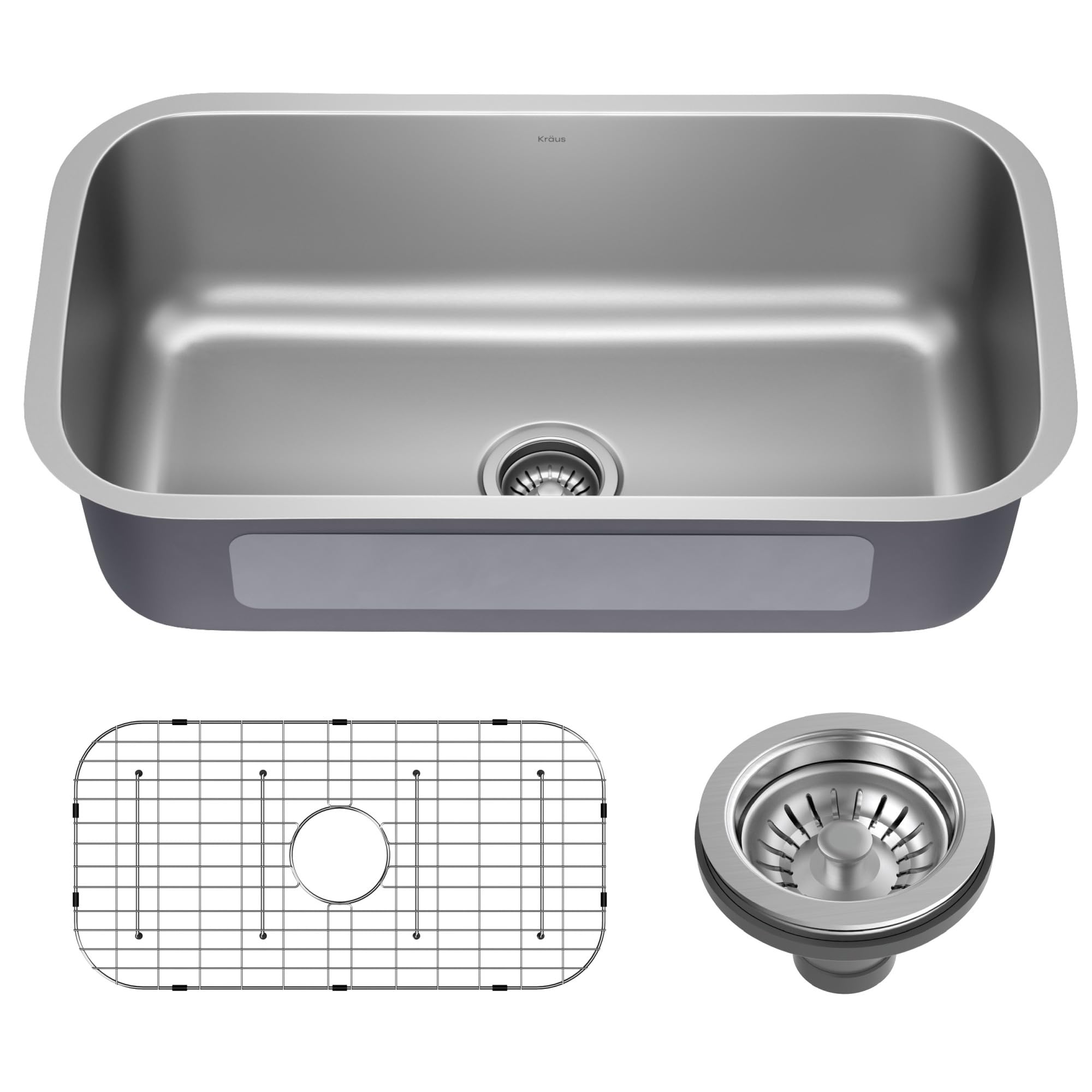
18-gauge T304 undermount single bowl with NoiseDefend pads, sloped bottom, rounded corners, and a protective bottom grid and strainer included.
Why I picked it: I chose this for its balanced size, quiet performance, and a complete installation kit.
Best for: Busy kitchens that need a durable, quiet single-bowl sink.
A sensible midrange option for solid 18-gauge stainless.
Pros
- Heavy-duty 18-gauge stainless steel
- Thick NoiseDefend sound dampening
- Includes bottom grid and drain assembly
- Sloped bottom for faster drainage
- Rounded corners wipe clean easily
Cons
- Shows water spots if not wiped
- Not as deep as some 10-inch sinks
My take
This is the sink I reached for when I wanted a durable, understated undermount that doesn’t scream commercial. The 18-gauge T304 steel feels substantial without being awkward to handle during installation.
The NoiseDefend pads make a noticeable difference. Running the tap and using larger cookware is much quieter than the thinner sinks I had before, and the sloped bottom helps water clear to the drain instead of pooling.
I appreciated that Kraus ships this with a protective bottom grid and a quality strainer—small additions that keep the finish cleaner and make everyday use easier. The rounded corners actually make wiping out crumbs and gunk faster than sharper-radius designs.
If you’re picky about appearance, know that stainless shows water spots if you don’t towel it dry. For me that’s a small trade-off for a sink that balances size, finish, and noise control.
2. Zuhne Modena 30in Undermount Single Bowl – Best Value
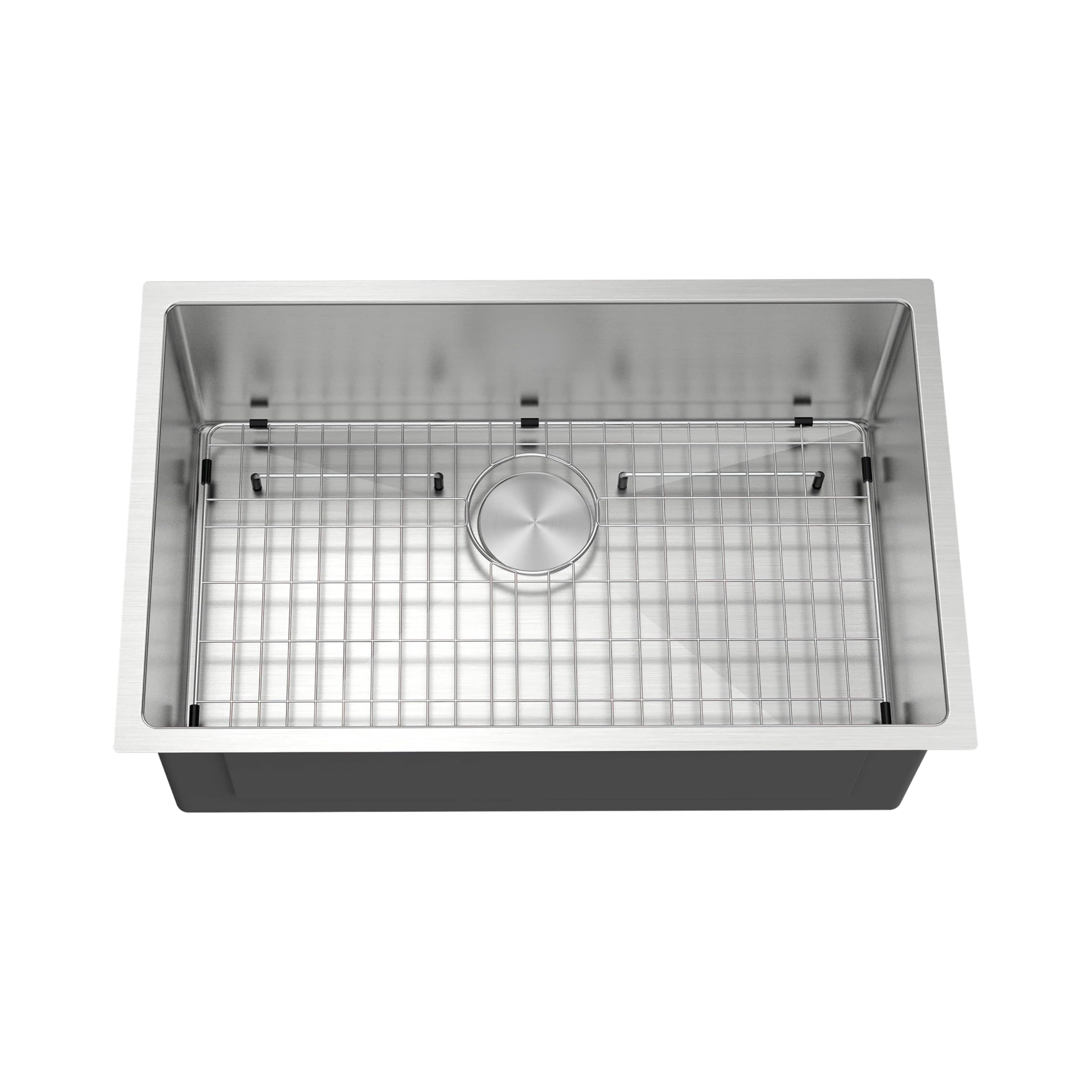
16-gauge T304 stainless with four-way sloped base, R10 corners, scratch protector grate, and included drain and template.
Why I picked it: I picked it for its 16-gauge build and deep bowl at a wallet-friendly value.
Best for: Anyone wanting a sturdy, quiet single-bowl sink without a premium price.
Excellent value for a 16-gauge stainless sink.
Pros
- Robust 16-gauge T304 steel
- Four-way sloped base improves drainage
- Includes scratch protector grate and strainer
- Brushed finish matches appliances
- R10 tight-radius corners for easier cleaning
Cons
- Protective grate can slow debris to drain
- Surface may scratch over time
My take
The Zuhne Modena impressed me with how solid it felt out of the box. At 16-gauge it’s noticeably stiffer and quieter than common 18-gauge alternatives.
I liked the four-way sloped base—the water channels really do help guide debris toward the drain, though the protective grate I keep in place can sometimes make pushing small bits into the opening a little slower.
The brushed finish blends well with modern appliances and hides minor scuffs. For kitchens where I wanted a durable bowl without upgrading to the most expensive models, this one consistently hits the sweet spot.
3. Ruvati 32in Undermount Single Bowl (10in Deep) – Best for Large Pots
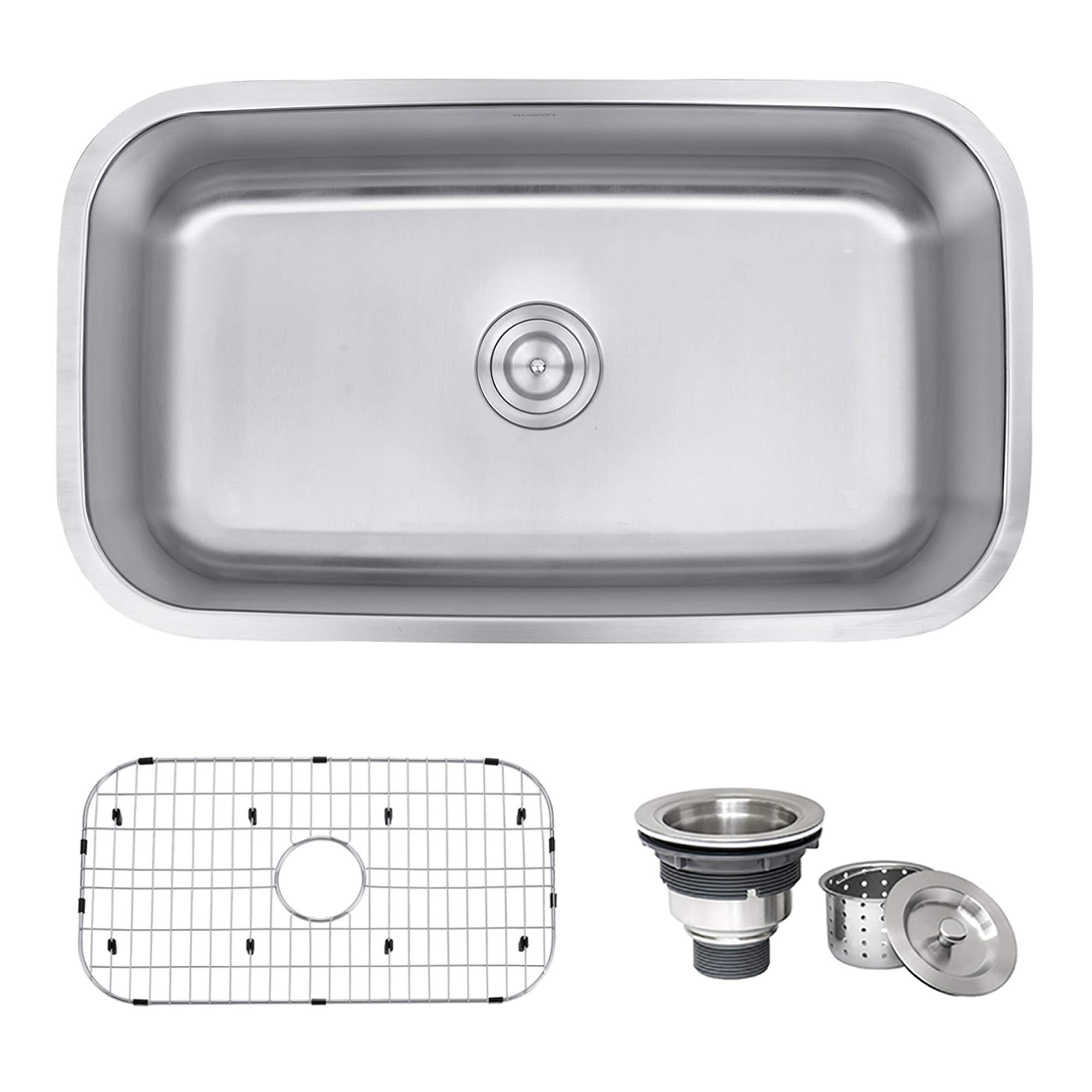
True 16-gauge T304 stainless with a 10-inch-deep bowl, heavy soundproofing, gently curved corners, and a full bottom grid and strainer included.
Why I picked it: I reached for this when I needed maximum bowl depth and heavy-duty construction.
Best for: Homes that regularly wash oversized roasters and deep cookware.
A premium-feel sink with mid-to-upper range positioning.
Pros
- Very deep 10-inch bowl
- 16-gauge T304 for durability
- Thick soundproof coating
- Complete accessory set included
- Brushed finish hides wear well
Cons
- Heavy—requires sturdy support
- Requires 36" base cabinet minimum
My take
This Ruvati gave me the usable interior space I wanted. The 10-inch depth lets me lay in roasters and tall pans without propping them on edge.
Because it’s 16-gauge with substantial padding, the sink is quiet and feels built to last. The included full-size rinse grid and basket strainer are practical extras I use every day.
The brushed finish is forgiving: small scratches are less obvious than on polished steel. Just be prepared for weight—this is noticeably heavier than thinner sinks, and it needs a proper base cabinet.
4. Ruvati 33in Topmount Zero-Radius Single Bowl – Best Topmount
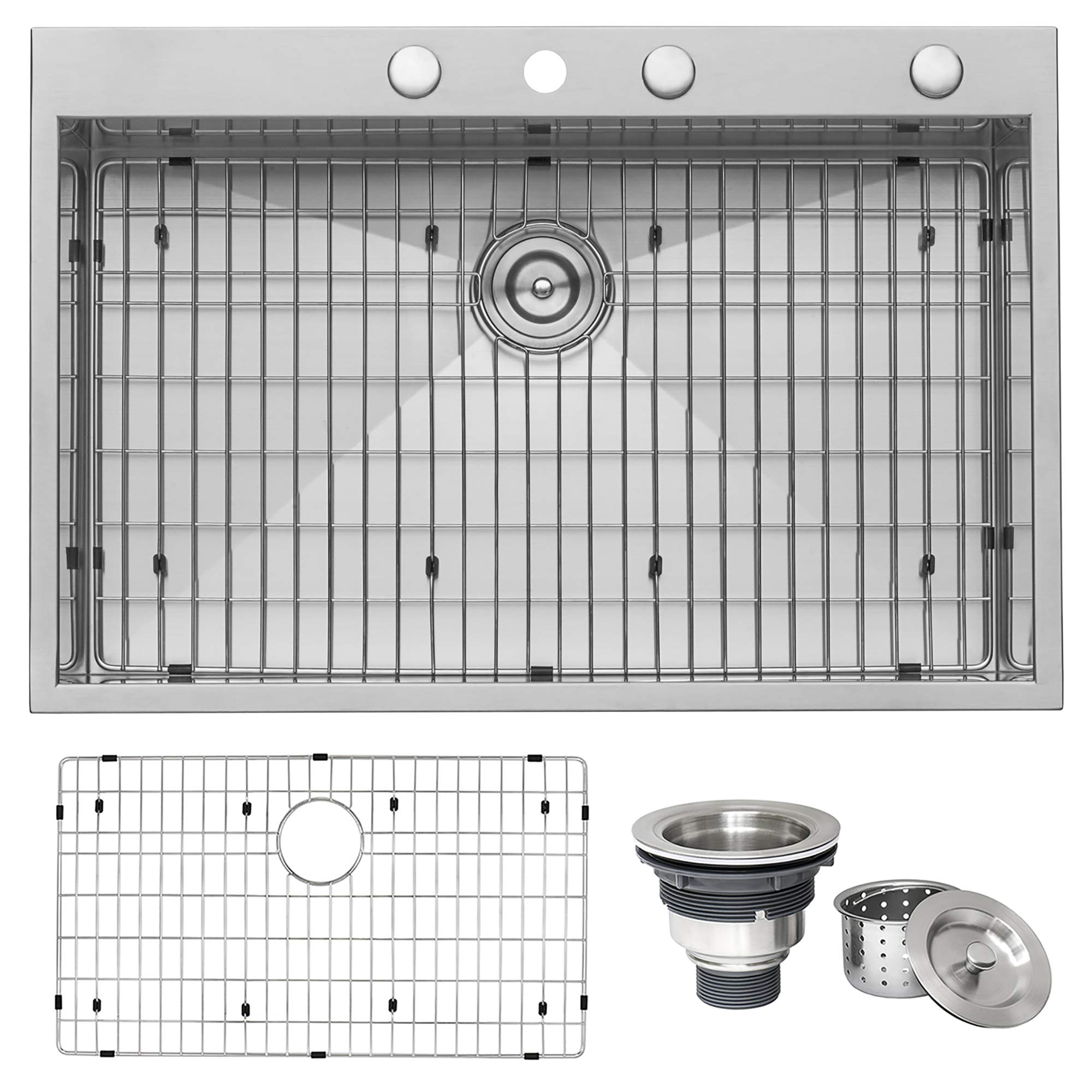
16-gauge T304 topmount with zero-radius inside corners, heavy soundproofing, pre-drilled faucet holes, and protective bottom grid included.
Why I picked it: I picked this when I wanted a large, modern topmount with a dramatic zero-radius look.
Best for: Kitchens that favor a bold, contemporary topmount sink with a huge work area.
A larger topmount that feels like a premium upgrade.
Pros
- Huge interior work area
- 16-gauge stainless steel
- Modern zero-radius corners
- Includes protective bottom grid
- Sound-proofed to reduce noise
Cons
- Pre-drilled hole configuration is limited
- Hole plugs can need careful sealing
My take
I chose the Ruvati topmount when I wanted a large, statement sink that still matched stainless appliances. The zero-radius corners give a modern, geometric look that photographs well and reads as high-end in person.
Because it’s 16-gauge steel with thick padding, the sink stays quieter than thinner topmounts, and the bottom grid protects the finish during heavy use. The 10-inch depth creates a very usable basin.
A couple of practical notes: the sink comes with pre-drilled holes in a specific layout, so check that layout against your faucet plan, and take care sealing the hole plugs to avoid moisture under the countertop.
5. Kraus Quarza 31in Undermount Granite Composite – Best Composite
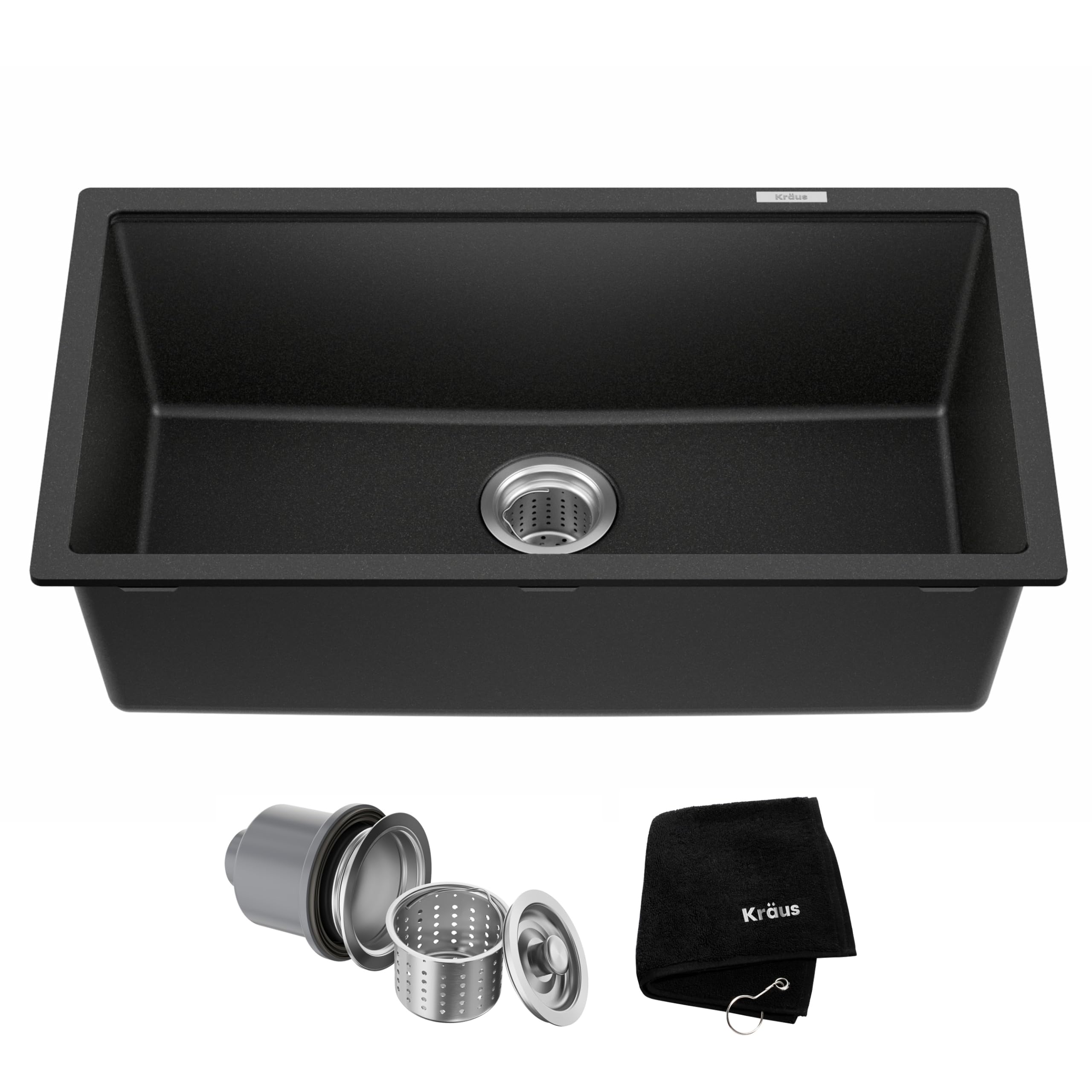
Quartz composite sink made from natural quartz and resin, non-porous surface, deep bowl, metallic particles for a subtle shimmer, and includes drain assembly and towel.
Why I picked it: I picked this when I wanted a stone-like, low-luster sink that resists chips and stains.
Best for: Kitchens seeking a warm, granite-look undermount that hides wear.
An affordable alternative to natural stone sinks.
Pros
- Durable quartz composite construction
- Matte finish resists visible wear
- Deep bowl contains splatter
- Non-porous and easy to clean
- Color goes through the material
Cons
- Narrower internal width than some stainless sinks
- Heavier than thin stainless requiring careful install
My take
I like the Quarza when I want a softer, warmer look than stainless. The matte, low-luster finish handles cast-iron and heavy pots without feeling too clinical.
The composite is resistant to stains and chips, and the non-porous surface wipes clean easily. Because color runs through the material, minor surface wear doesn’t show the way it can on painted finishes.
If you’re used to the maximum interior width of stainless single bowls, note that this design trades some internal width for its sculpted look. I still find it ideal for kitchens where style and durability matter equally.
6. Zuhne 32in Undermount Single Bowl Offset Drain – Best with Offset Drain
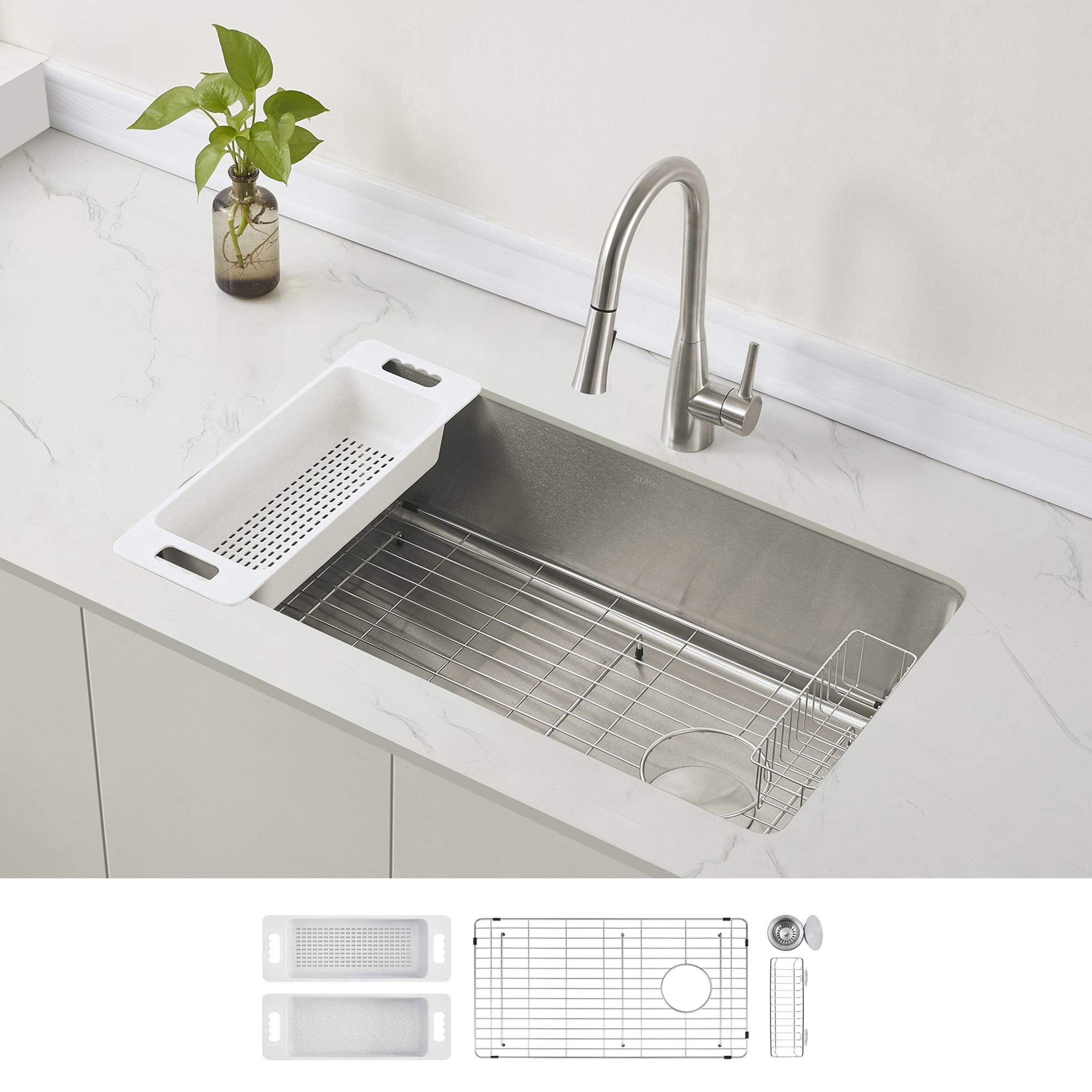
16-gauge 18/10 T304 stainless, reversible offset drain, superior insulation to prevent condensation, and compatible with garbage disposals.
Why I picked it: I relied on this for plumbing flexibility and exceptional cabinet protection.
Best for: Kitchens needing left/right drain options and excellent under-cabinet insulation.
Strong value for a feature-rich 16-gauge sink.
Pros
- Reversible offset drain for plumbing flexibility
- 16-gauge 18/10 T304 steel inside and out
- Superior insulation prevents condensation
- Compatible with garbage disposals
- Brushed finish and easy maintenance
Cons
- Protective rack may ship missing rubber feet
- Long-term aging depends on care
My take
The offset drain on this Zuhne made installation simpler in a kitchen where plumbing wasn’t centered. Being able to choose left or right saved me from re-routing drain lines.
It’s 16-gauge and insulated well; I noticed less cabinet sweat during heavy use and the sink felt quieter than cheaper options. The protective rack is useful, but I did need to track down replacement feet to keep it stable.
Overall it’s a practical, well-built sink that updates the look of a kitchen without requiring a custom plumbing setup.
How I Choose a Modern Kitchen Sink
Material and Gauge
I start by choosing the right material for how I use the sink. Stainless steel and granite composite are the most common modern choices.
Gauge tells me how sturdy the steel will be: lower gauge numbers (16ga) mean thicker metal and better noise control and durability; 18ga is lighter but still serviceable.
- Stainless steel: durable, matches appliances, shows water spots.
- Quartz/composite: warmer look, non-porous, resists chips and stains.
- Prefer 16-gauge for heavy daily use; 18-gauge is fine for lighter use.
Bowl Size and Depth
I measure the interior bowl dimensions, not just the exterior, to know what fits inside. Depth matters if you routinely wash roasting pans or tall pots.
Also check minimum cabinet size—some deep single bowls need a 36" base.
- 10-inch depth: ideal for large cookware.
- Shallow bowls: easier to load, less splash.
- Confirm cabinet opening and under-sink clearance before buying.
Installation Type
Undermount sinks create a seamless wipe-to-counter experience; topmounts are easier to swap or install on certain countertops.
Pick the type that matches your countertop and how much edge you want to show.
- Undermount: cleaner look, requires solid countertop edge.
- Topmount: simpler install, works with laminate.
- Check for pre-drilled faucet holes if you need a specific faucet setup.
Noise and Insulation
Sound-dampening pads, bonded insulation, and thicker steel all reduce noise and prevent cabinet condensation.
I prioritize insulated sinks in busy households or when a quiet kitchen matters.
- Look for NoiseDefend or heavy rubber padding.
- Insulation reduces condensation damage to cabinets.
- Thicker steel keeps water noise down.
Accessories and Practical Details
I value included accessories: protective bottom grids, strainer drains, and templates save time and money.
Also check drain placement and whether a grate or rack will impede routing debris to the drain.
- Bottom grids protect finish and improve longevity.
- Strainers and high-capacity drains help with composting or disposals.
- Offset drains help when plumbing is off-center.
Frequently Asked Questions
How do I keep stainless steel sinks from showing water spots?
I dry the sink after heavy use or quick-rinse with a soft towel; a light polish with a non-abrasive cleaner brings back the luster. Brushed finishes hide spots better than polished finishes, so I treat them less frequently.
When should I choose an undermount vs. a topmount sink?
I choose undermount for a seamless countertop wipe and a cleaner modern look when the countertop material supports it. I pick topmount when I need an easier install, work with laminate, or want a dramatic rim to frame the sink.
Are composite granite sinks heat and scratch resistant?
From my experience, quartz composite handles hot pans and day-to-day knocks better than painted finishes. It’s not indestructible—use trivets for very hot cookware—but it resists staining and chips better than many alternatives.
Final Take
I’ve highlighted sinks that cover the most common kitchen needs: overall balance, value, deep capacity, topmount style, composite finish, and offset-drain flexibility.
If you want my short recommendation: pick a 16-gauge stainless for long-term durability and quiet performance, or go composite if you prefer a stone look with low-luster wear resistance.
Whichever you choose, check bowl dimensions, installation type, and included accessories so the sink performs exactly the way you need it in daily use.
