
I tested canopies, pop-up tents, crib covers, and camping nets so you can pick the mosquito net that actually fits your bed, needs, and style.
I spent time setting up and sleeping under a range of bed nets — from dreamy princess canopies to rugged camping nets — so I could separate pretty decorations from seriously protective barriers.
In the roundup that follows I show what each net does best, how easy it is to install, and the one practical drawback I ran into while using it.
If you want a decorative canopy that also blocks small insects, go for a high-mesh dome. If you need a secure, fully enclosed sleep space (for travel, shared rooms, or a climbing toddler), choose a pop-up tent or rectangular net with a full seal.
1. South to East Starry Bed Canopy – Best for Starry Kids’ Rooms
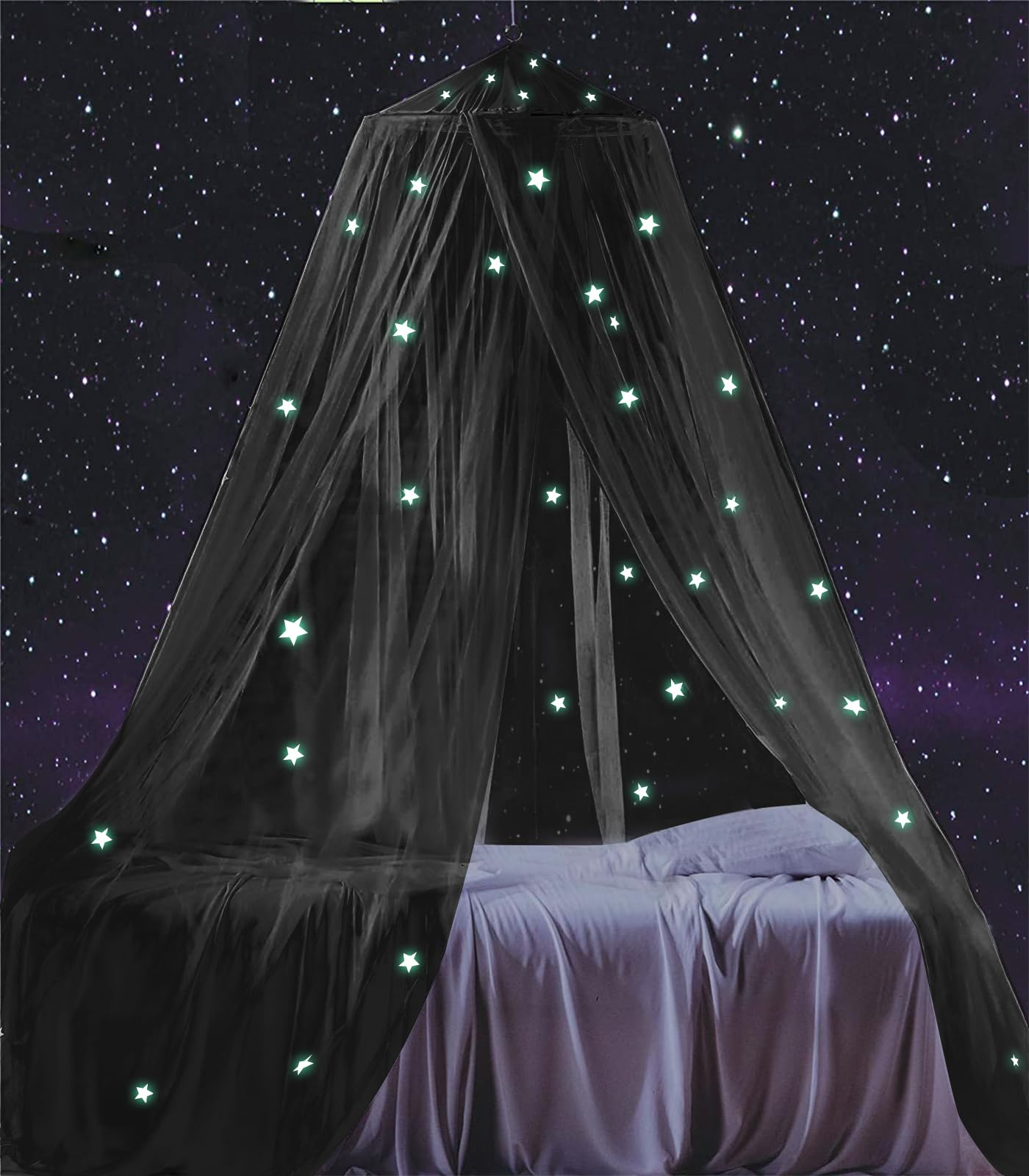
I used this glowing-star canopy over a child’s bed to add atmosphere while keeping tiny bugs and dust at bay. The fluorescent stars really charge under regular room light and glow at night.
Why I picked it: Charming glow-in-the-dark stars plus a fine 380-mesh fabric for light dust protection.
Best for: Kids’ rooms, nursery décor, and anyone who wants a dreamy canopy.
An affordable decorative option with functional mesh.
Pros
- Glowing stars create a cozy nightlight
- Fine 380-mesh offers good dust protection
- Adjustable hanging rope for height control
- Lightweight and easy to drape
Cons
- Can tug loose if pulled
- Not a fully sealed insect tent
- Minimal written instructions included
My take
I loved how this canopy transformed a child’s room into a little starry nook. The printed stars absorb light and produce a soft glow that my daughter enjoyed falling asleep to.
The mesh is polyester with a high mesh count (listed as 380 per square inch), so it keeps out small debris and makes the inside feel a bit cleaner compared with an open bed. It’s lightweight, and the adjustable rope made it simple to get the drop I wanted.
Installation took me minutes once I located a ceiling point — the hook and rope are included. I did find that if someone tugs the fabric it can detach from the hook, so I anchored the attachment more securely for peace of mind.
This is not a heavy-duty mosquito seal for tropical field conditions, but for everyday bedroom use and the visual effect of the glow-in-the-dark stars, it’s exactly what I expected.
2. Alvantor Pop-Up Bed Tent – Best Pop-Up Full Bed Tent
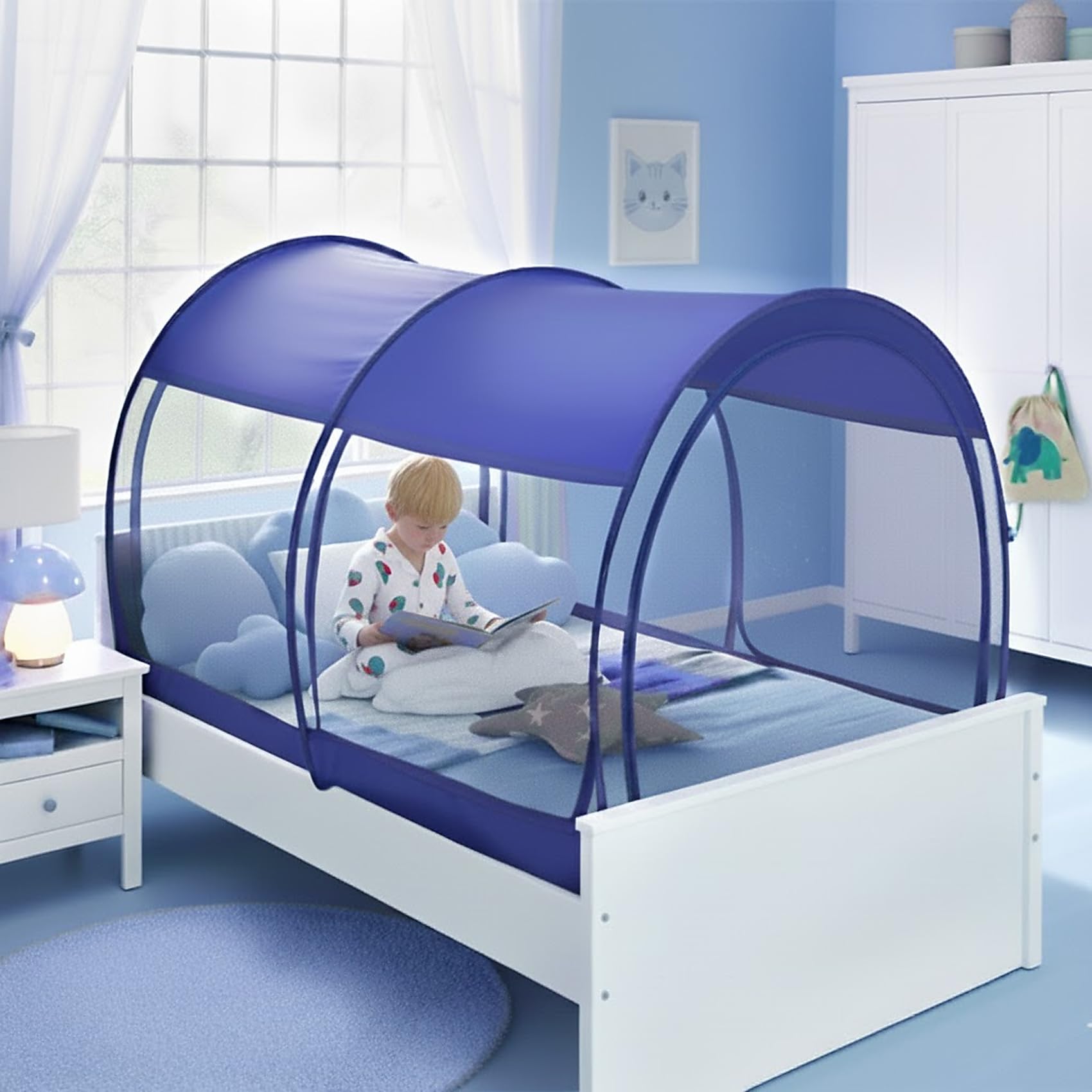
I set up the Alvantor twin-size bed tent on a regular mattress and appreciated the instant privacy, full enclosure, and multiple zippered openings for air and access.
Why I picked it: A true full-bed enclosure with a pop-up frame and zippered doors for privacy and insect protection.
Best for: Dorm rooms, shared spaces, camping on beds, and anyone needing a sealed sleep area.
A more expensive, full-enclosure option worth it if you need complete coverage.
Pros
- Tool-free, one-minute pop-up setup
- Full enclosure with zippered doors
- Multiple windows for airflow
- Portable and packs into a tote
Cons
- Bulky to move with a heavy mattress
- Takes storage space when not in use
- Higher-cost option compared with simple canopies
My take
This tent popped up in seconds and immediately created a private, darker sleeping area. I used it for naps and overnight and noticed it kept the mattress area warmer and shielded from stray insects.
The zippered doors and multiple mesh windows let me control airflow while keeping a complete seal along the base when needed. That sealed floor design is what makes it work for both indoor dorm use and outdoor mattress setups.
I found the tent durable and liked that the poles have shock-absorbing cords for straightforward assembly. The trade-off is size — it’s simple to set up on a lighter mattress but moving a heavy memory-foam bed in and out would be awkward.
If you want an easy, reliable, fully enclosed bed space, this Alvantor tent is the most practical pick in that category.
3. OldPAPA Kids Canopy with Pom Poms – Most Whimsical
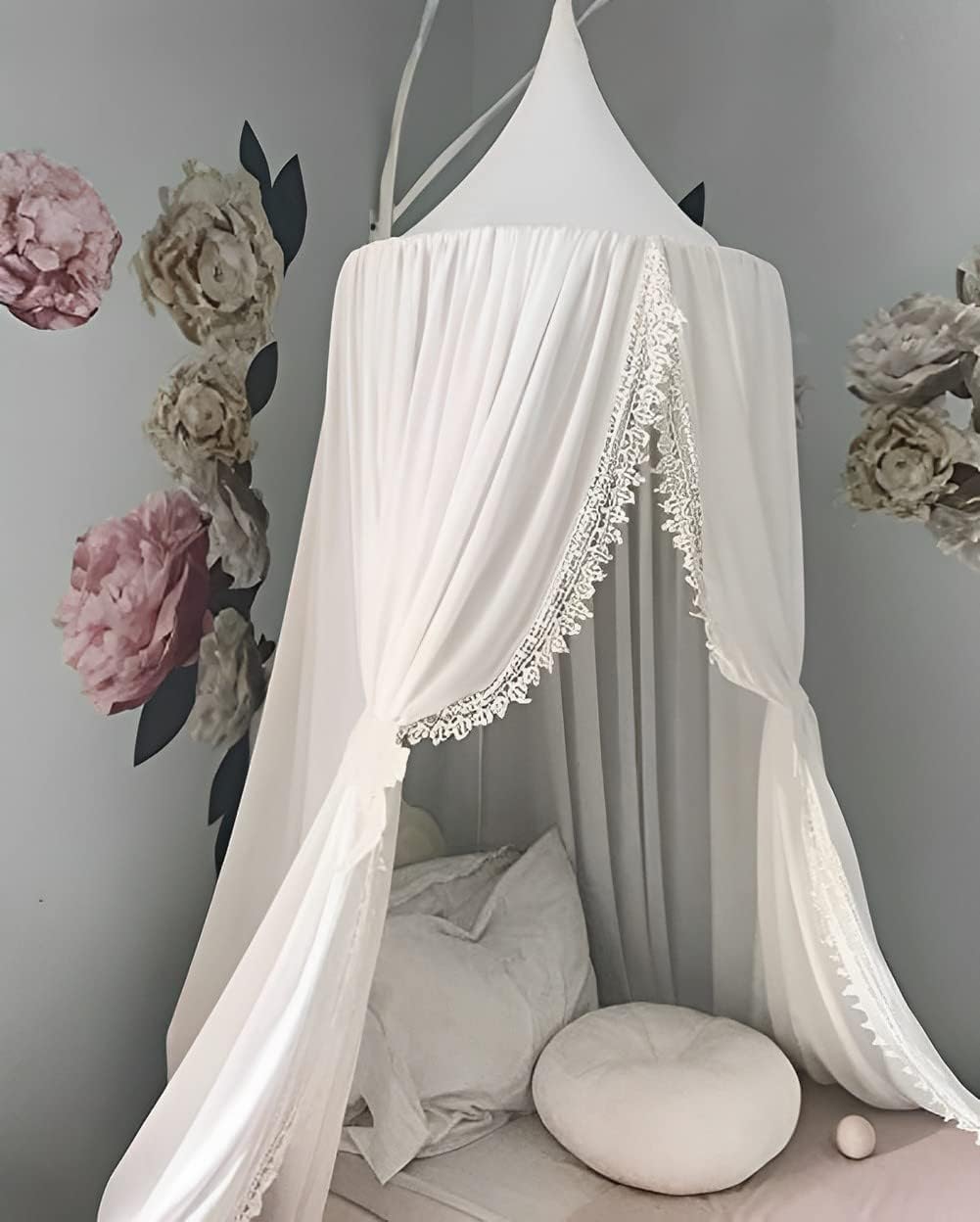
I used this lace-trimmed, pom-pom canopy to create a delicate reading nook and found the fabric hangs beautifully and adds a whimsical touch while still offering pest protection.
Why I picked it: Boho-lace styling, roomy height, and soft polyester that drapes well.
Best for: Nurseries, princess-themed rooms, reading nooks, and decorative play spaces.
A midrange decorative canopy with solid fabric quality.
Pros
- Beautiful lace trim and pom-poms
- Generous height and drape
- Soft, slightly stretchy polyester
- Includes hanging hardware
Cons
- Metal ring can spring open if mishandled
- Coverage may not fully enclose a larger bed
- Screw hardware instructions can be unclear
My take
This canopy immediately elevated the room’s look. The lace detail and pom-poms hit the right balance between delicate and durable, and the fabric hangs without too many wrinkles.
I appreciated that the material has a little give, so if kids tug at it it stretches rather than snapping. I skipped the adhesive strip and used a ceiling hook I already had, which gave me extra confidence in the attachment.
A caution: the circular wire ring is springy when released from packaging — I made sure to open it away from anything breakable. Once it was up, the canopy stayed put and created a cozy, semi-private space for play and reading.
4. BCBYou Princess Bed Canopy – Best Budget Princess Canopy
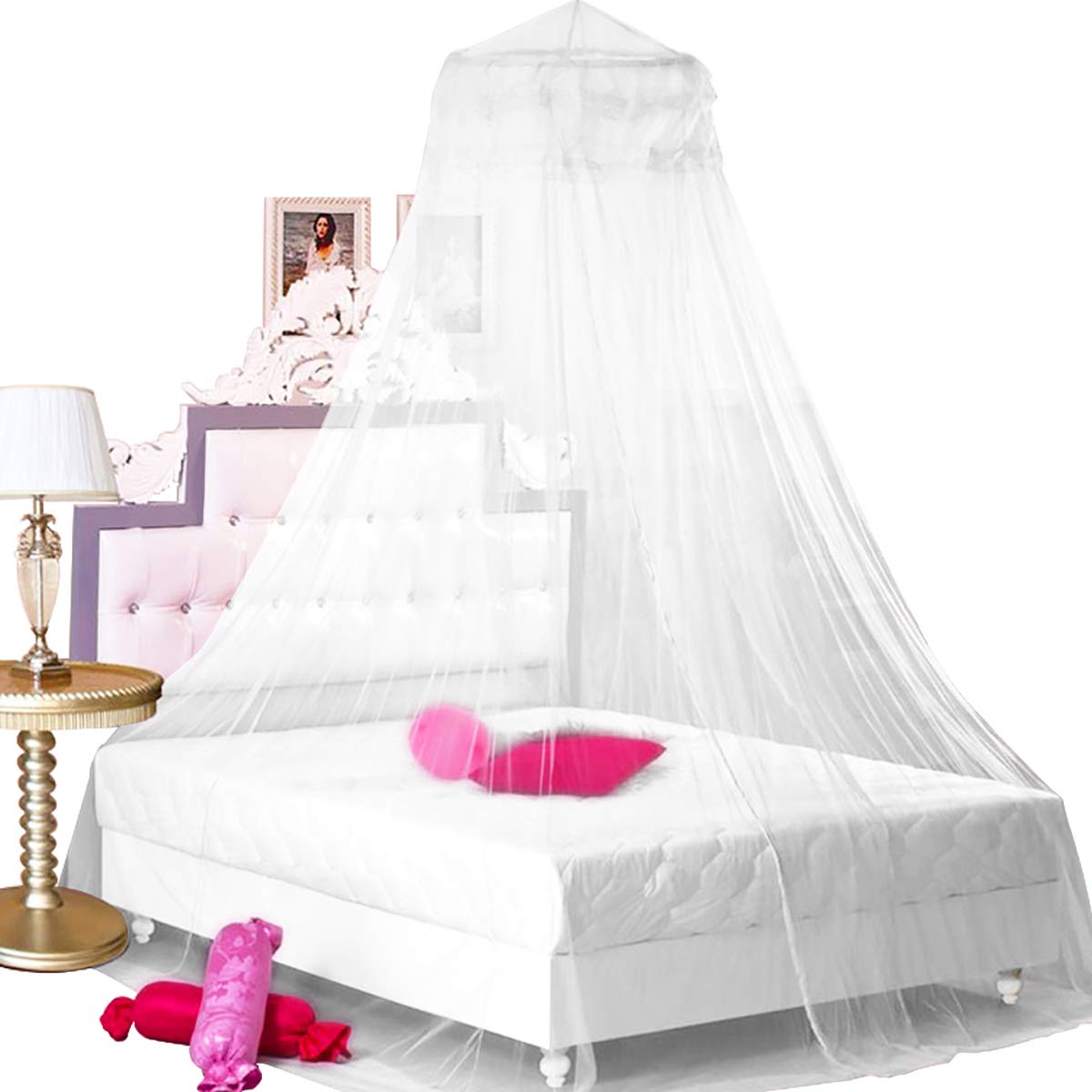
I hung this simple dome canopy and found it to be a very affordable way to give a bed a princess look while blocking flies and mosquitoes in light-to-moderate bug situations.
Why I picked it: Simple, pretty, and effective coverage for a queen through crib-sized beds.
Best for: Budget-conscious décor upgrades and kids who want a princess canopy.
A budget-friendly option that looks more expensive than it is.
Pros
- Very affordable and decorative
- Quick to hang with included hardware
- Soft, breathable polyester
- Fits a range of bed sizes
Cons
- Material pools on the floor for taller beds
- Not a heavy-duty insect barrier
- Limited styling variations
My take
If you want a pretty canopy on a tight budget, this one delivers. I hung it in under five minutes with the supplied hook and it immediately changed the room’s vibe.
The polyester fabric feels lightweight and breathable — comfortable for sleeping in warm weather. It’s not designed to be a sealed, military-grade insect barrier, but it does keep out common bedroom pests and provides a cozy drape.
Overall I found it to be an excellent inexpensive way to get the princess look without fuss.
5. Bed Canopy with Lights – Best with Lights
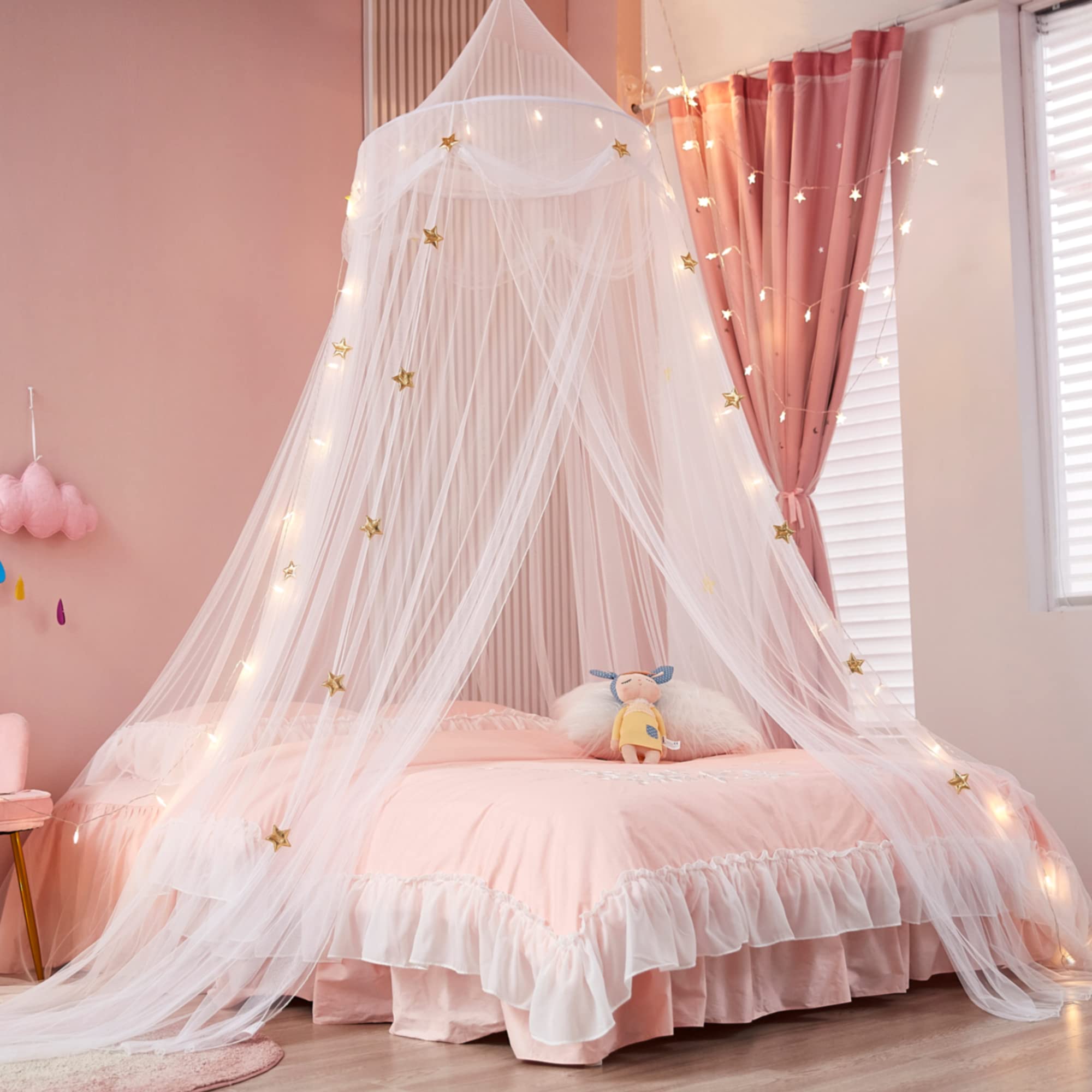
I installed this large hoop canopy with integrated string lights and got a dramatic vaulted effect that doubled as gentle night lighting for a child’s room.
Why I picked it: Hoop canopy plus included lights for a finished, cozy look.
Best for: Kids’ beds and anyone who wants built-in canopy lighting.
Good value for a decorative canopy that includes lights.
Pros
- Includes LEDs and sticky hook
- Large dome covers most beds
- Hoop keeps canopy shape
- Hand-washable material
Cons
- Lights’ battery box can run through batteries
- No clear instructions for light attachment
- Can touch the floor depending on ceiling height
My take
I liked that the package included both the hoop and a string of lights — that saved me extra trips to the hardware store. The hoop retains the dome shape nicely, and the lights add a soft glow that makes bedtime feel special.
The canopy is tall and generous around the bed; depending on ceiling height it may brush the floor, which is great for the look but something to consider if you want it fully off the ground.
The lights offer both USB and battery power. I had to experiment with positioning because the instructions didn’t show the best way to attach them to the fabric, but once I settled on a layout the effect was exactly what I wanted.
6. Coghlan’s Rectangular Mosquito Net – Best for Camping & Travel
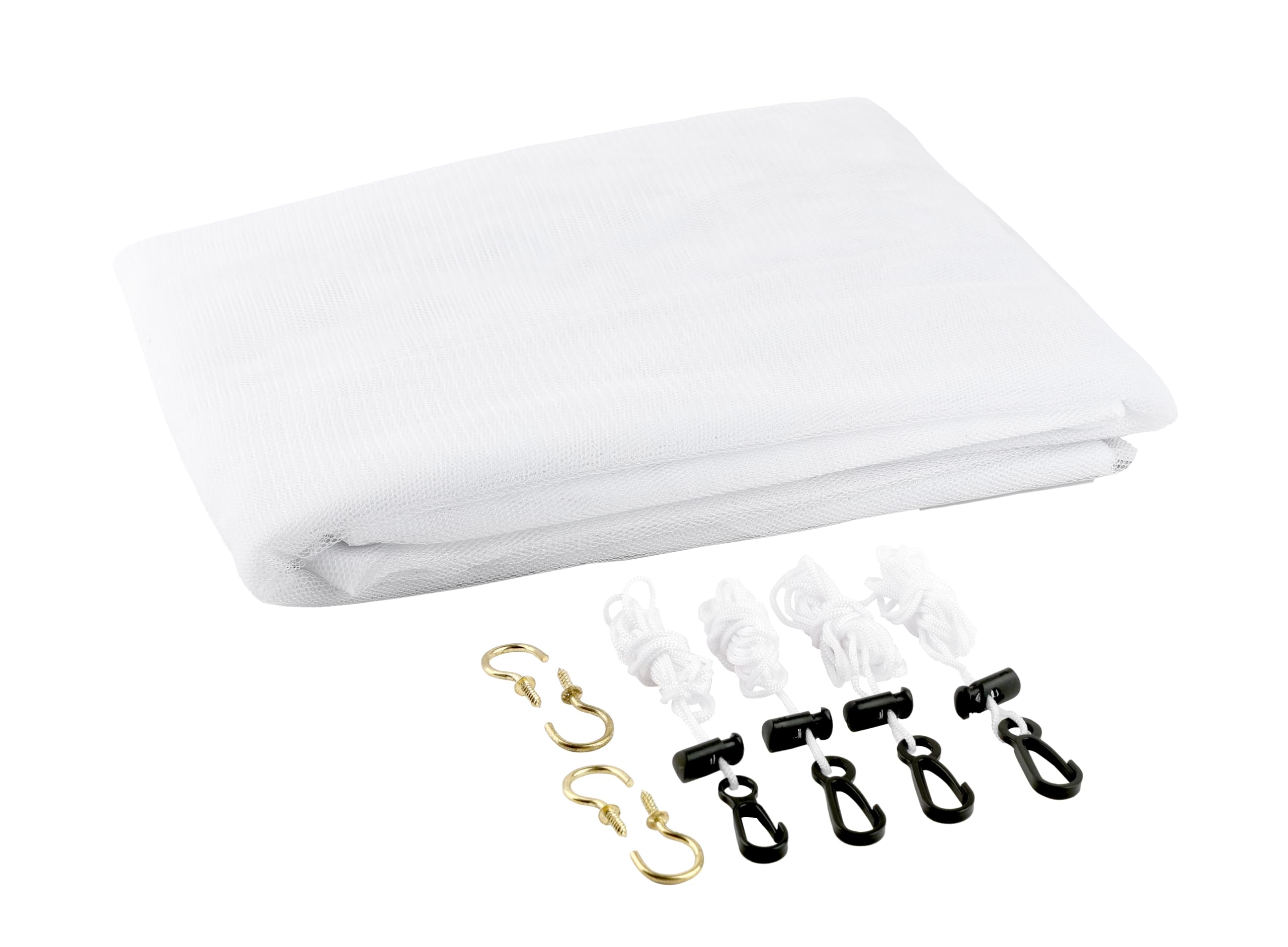
I used this rectangular net on cots and over sleeping bags while camping and appreciated the practical kit: twine, hooks, anchors, and reinforced tie loops made setup stable and repeatable.
Why I picked it: A practical, travel-ready rectangular net with an all-in-one mounting kit.
Best for: Backpacking, backyard sleeping, cots, and emergency use.
A low-cost, no-frills choice that’s ideal for outdoor use.
Pros
- Complete hardware kit included
- 180-holes-per-square-inch mesh for insect protection
- Lightweight and washable
- Spacious rectangular coverage
Cons
- Mesh can snag on rough edges
- Occasional missing hardware in packages
- Minimal decorative appeal
My take
This is the net I reach for when I need practical protection away from home. The rectangular shape fits sleeping bags and cots well and gives full-body coverage.
I liked that Coghlan’s supplies twine, hooks, and anchors — that makes install on a porch, cabin, or tent really straightforward. The 180-mesh fabric kept flies and mosquitoes away while still allowing good airflow.
It’s not a delicate decorative canopy — it’s functional. In some packages I found the hardware kit a little light, so I keep a few extra hooks in my camping bag just in case.
7. RUNNZER Crib Pop-Up Tent – Best for Preventing Escapes
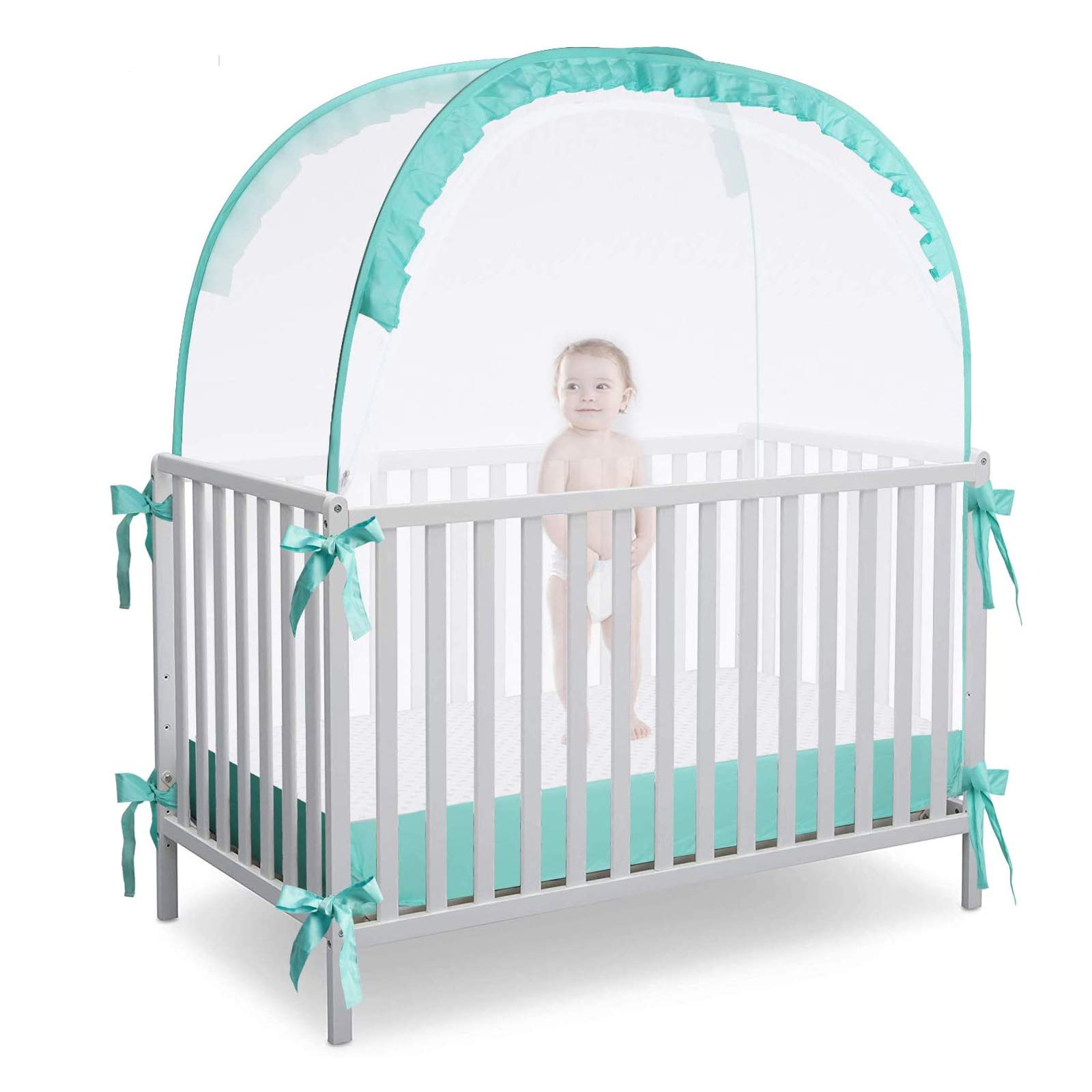
I used this pop-up crib tent when my toddler learned to climb out of the crib, and it kept them safely inside while providing breathable mesh and a sturdy frame.
Why I picked it: A secure pop-up tent designed to stop climbing while maintaining airflow.
Best for: Toddlers who climb out, travel with young children, and parents needing extra containment.
A valuable safety-focused choice rather than a decorative purchase.
Pros
- Instant pop-up setup
- Sturdy frame resists climbing attempts
- Breathable mesh all around
- Zippers allow easy access
Cons
- Obstructs some camera monitors
- Difficult to fold back into storage
- Not decorative
My take
When my toddler started climbing out of the crib, this canopy saved bedtime. It snapped into shape and created a secure space where she couldn’t climb over the rail.
The mesh is breathable but dense enough to feel like a protective barrier. I did notice that the mesh can obscure certain baby monitors, so I mounted my camera inside the tent to keep a view.
One downside: folding it back into the storage shape can be tricky the first few times. Functionally, though, it did exactly what I needed — kept the child safe and gave me back normal sleep routines.
8. VISATOR Dome Bed Canopy – Best Large Dome
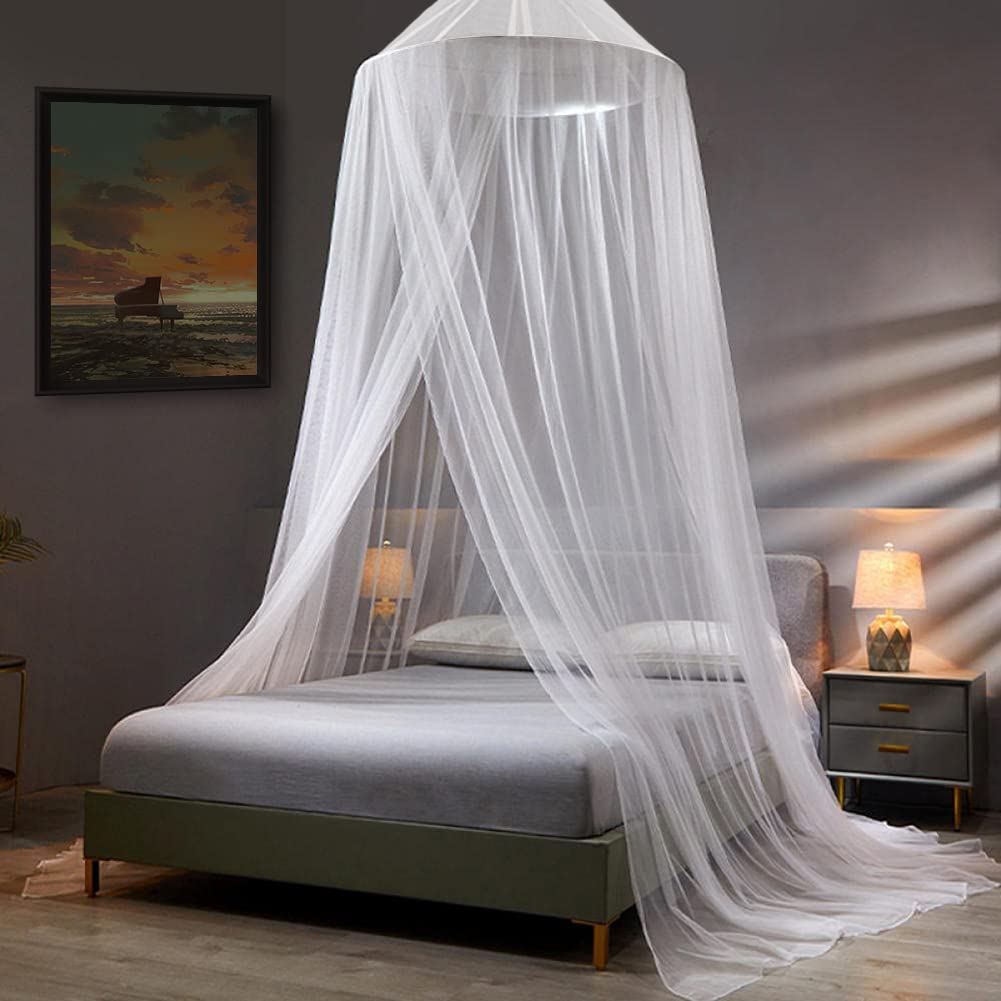
I installed the VISATOR dome over a queen bed and liked the very fine 300-hole-per-inch mesh and stainless steel ring that hold the canopy reliably in place.
Why I picked it: Very fine mesh with a durable stainless-steel ring for long-term use.
Best for: Tropical climates, large beds, and users who want a long-lasting dome.
A practical, economical dome that balances coverage and durability.
Pros
- 300-holes-per-inch fine mesh
- Stainless-steel ring for durability
- Includes hook and tether
- Large circumference for generous coverage
Cons
- Orientation can be confusing at first
- May pool on the floor around tall beds
- Requires a ceiling anchor point
My take
This VISATOR canopy felt substantial and well-made right out of the package. The fine polyester mesh blocks tiny biting mosquitoes while still allowing air to circulate.
The stainless-steel circular ring keeps the dome open and stable — that’s a welcome upgrade over cheaper wire hoops. Setup was straightforward with the provided hook and tether, though I did lay the fabric out once to confirm orientation before hanging.
I also used this canopy while traveling in a tropical area and it kept mosquitoes away without making the room stuffy. For a large dome that will be used regularly, this one strikes a good balance between coverage and durability.
How I Choose a Bed Mosquito Net
Mesh density matters
I always check mesh count because that tells me whether the net blocks tiny biting insects or just larger flies. For bedroom canopies I prefer 300 mesh or higher for fine-mosquito protection; 180 mesh works well for camping and larger pests.
If you’re in a region with very small biting insects, pick a higher mesh count even if airflow is slightly reduced.
- 300+ mesh: best for tropical mosquitoes and small insects
- 180–250 mesh: good for general camping and larger flies
- Lower mesh or decorative fabric: fine for ambiance, not for heavy insect pressure
Installation & fit
I measure my mattress and ceiling height before buying. Dome canopies need a strong ceiling anchor; pop-up tents need a mattress footprint that matches the tent size.
If you plan to use the net for a child’s crib or a high bed, consider one with reinforced hooks or a steel ring to avoid sagging.
- Canopy hoops: quick and decorative, need ceiling hook
- Pop-up tents: enclose the whole mattress, no ceiling required
- Rectangular nets: great for cots and camping, use supplied twine/hooks
Safety & practical features
For toddlers, I choose nets that secure to the mattress frame or that have a rigid frame so a child can’t push it aside. For adults, I focus on airflow, zipper access, and ease of cleaning.
Lights, decorative trims, and hems are nice, but I prioritize zipper quality and attachment points above all for daily use.
- Look for reinforced tie loops and strong zippers
- Battery or USB lights: useful but plan for battery replacement
- Check wash instructions — many polyester nets are hand-washable
Frequently Asked Questions
How do I hang a dome canopy from my ceiling?
I locate a ceiling joist or use an anchor designed for drywall, screw in the supplied or a stronger hook, then hang the canopy’s tether. I adjust the drop with the included rope or by moving the tie point.
Can I use a pop-up bed tent on any mattress?
I use pop-up tents most easily on lighter mattresses—the tent wraps around the mattress footprint. Very heavy or oversized mattresses are harder to remove and replace, so plan accordingly.
What’s the easiest way to clean a canopy?
I follow the manufacturer’s guidance, but generally hand-washing in warm water and air-drying preserves shape. Some pop-up tents and nets have removable poles so the mesh can go through a gentle machine wash.
Final Take
After trying decorative domes, pop-up tents, crib covers, and camping nets, I can say there’s no one-size-fits-all net — pick based on whether you want style, a sealed sleep space, or travel-ready protection.
If I had to summarize: choose a high-mesh dome for delicate mosquito protection and decoration, a pop-up tent for full enclosure and privacy, and a rectangular net for camping practicality.
Whichever option you pick, I focused on real setup, daily use, and what I’d change after a few nights so you know what to expect before you buy.
