
I tested a range of motion-activated and traditional lawn sprinklers so you can pick the right option for watering, pet play, or keeping critters out of your garden.
I spent time using each sprinkler in a variety of yard setups so I could sort practical differences from marketing claims. Some of these are motion-activated deterrents, while others are oscillating or rotary heads that simply water well. I aimed to evaluate coverage, build quality, adjustability, and how they handle real-world hoses and water pressure.
If you want a heavy-duty workhorse, a compact adjustable unit, or a motion-activated animal deterrent, I’ve laid out which models stood out and why, plus what to watch for during installation and everyday use.
I grouped options by what they do best—coverage, compact adjustability, durability, budget, motion-activation, and family-friendly sprinkling—so you can match a sprinkler to your yard and water pressure.
1. Aqua Joe Indestructible Oscillating Sprinkler – Best Overall
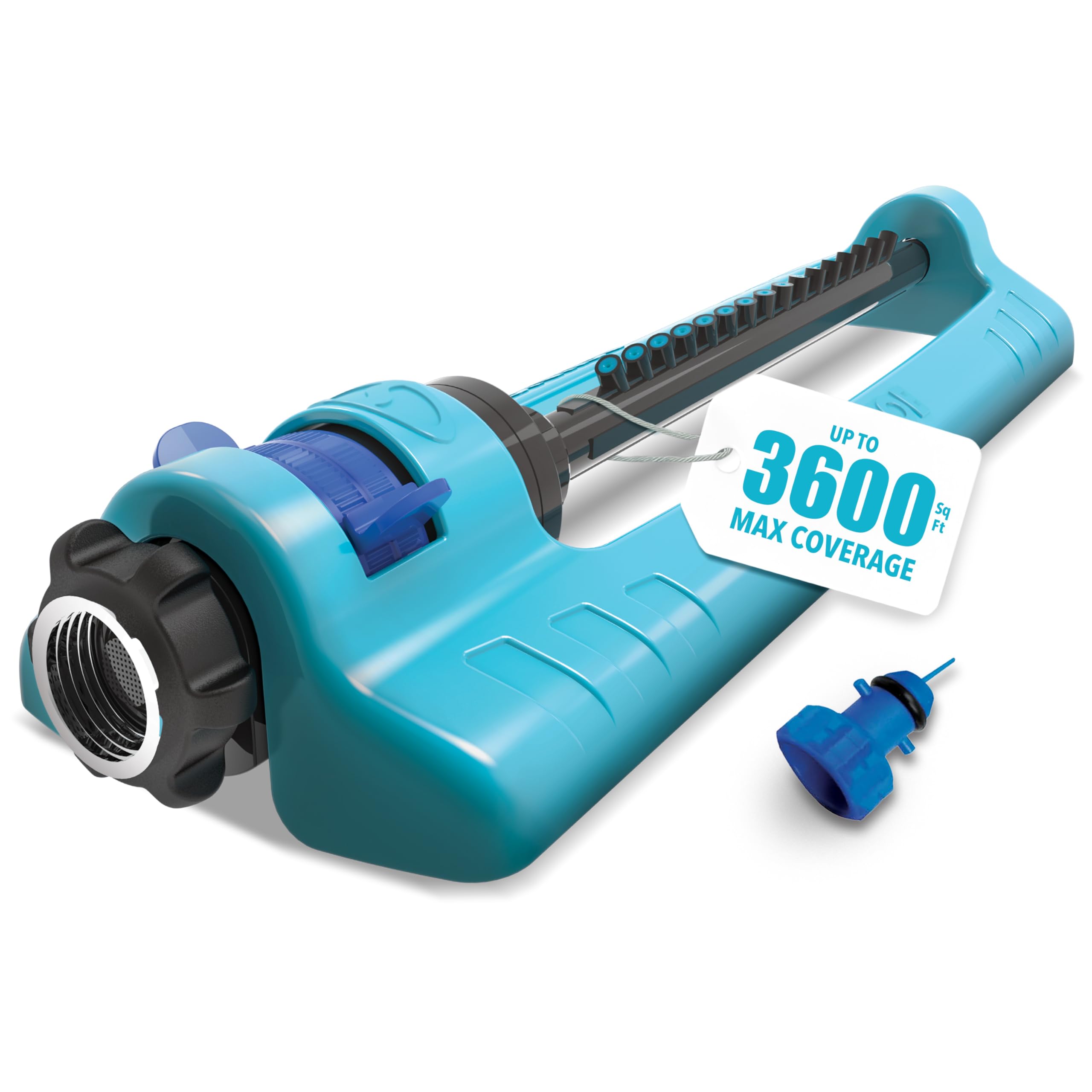
A heavy-duty oscillating sprinkler with a metal base, 16 clog-resistant nozzles, and wide adjustable coverage for large yards.
Why I picked it: Sturdy metal base, sealed turbo-drive gears, and precise pattern control make it the most reliable all-around unit I used.
Best for: Large lawns that need even coverage and a durable, hands-off sprinkler.
Midrange — built for seasons of regular use without frequent replacement.
Pros
- Extra-large metal base for stability
- 16 clog-resistant nozzles
- Sealed turbo-drive for longevity
- Built-in nozzle clean-out tool
Cons
- Performs best with good water pressure
- Large footprint to find a level spot
My take
I relied on this Aqua Joe when I needed broad, even coverage across an irregular backyard, and the solid metal base makes a real difference when wind or dogs are around. The water pattern adjusts smoothly and the 16 nozzles produce an even spray that mimics gentle rainfall when dialed in.
Maintenance is straightforward: the built-in pin cleaner is handy for clearing grit from the jets, and the sealed turbo-drive kept moving without hesitation during my multi-hour tests. At lower household water pressure I noticed the reach drops noticeably, so expect the best performance when your supply pressure is healthy.
If you want a robust, no-nonsense sprinkler that will sit on the lawn and get the job done season after season, this is the one I gravitated toward.
2. Melnor MiniMax Turbo Oscillating Sprinkler – Best Compact Adjustable
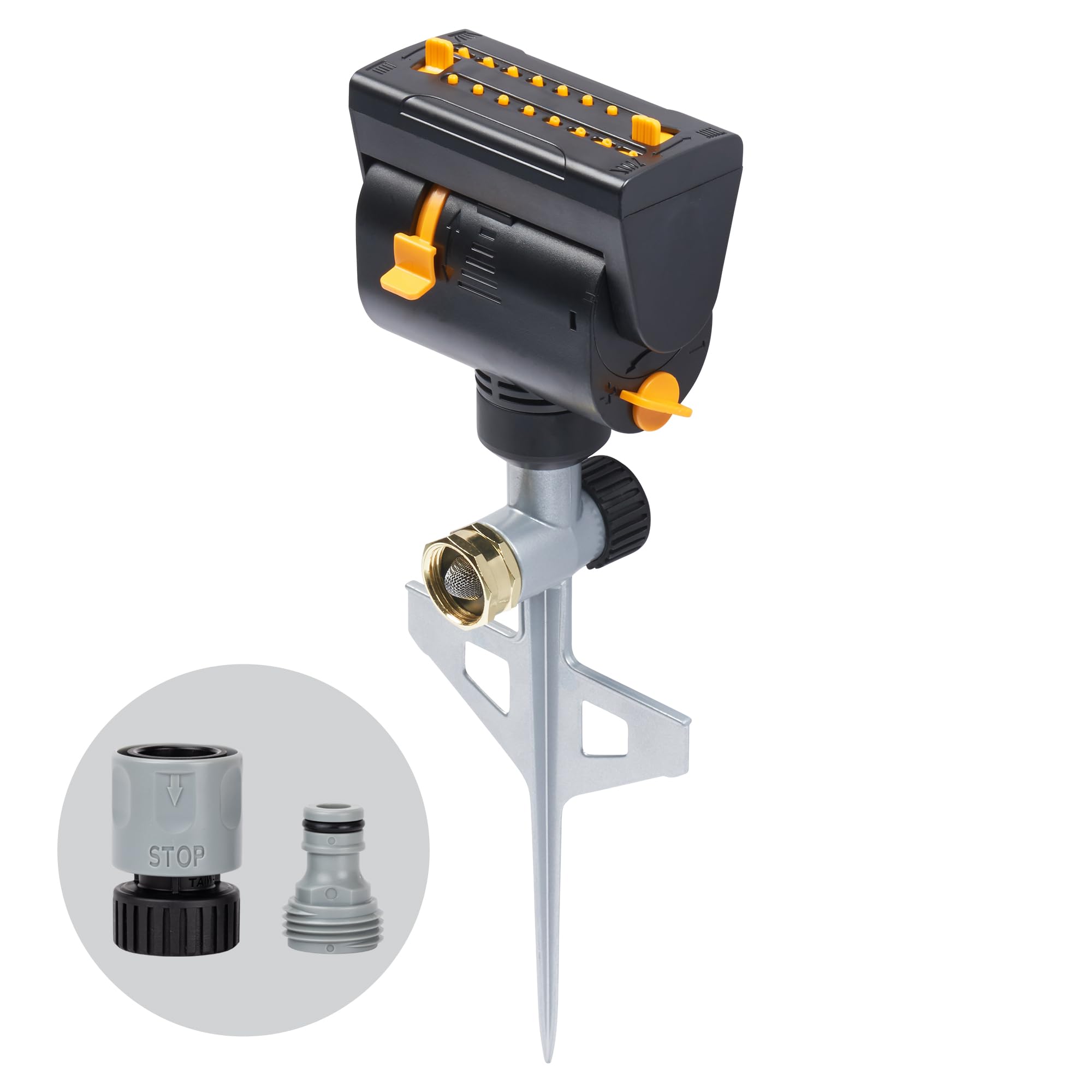
A small but highly adjustable oscillating sprinkler with a dirt-resistant drive and a metal step spike for secure placement.
Why I picked it: Compact footprint with four-way adjustment and a dirt-resistant drive made it the most flexible small sprinkler I tested.
Best for: Narrow strips, flower beds, and yards served by well water or gritty supplies.
Affordable yet feature-rich for homeowners needing precision in tight spaces.
Pros
- Four-way adjustment for precise coverage
- Dirt-resistant drive tolerates grit
- Metal step-spike holds position
- Flo-thru base for linking units
Cons
- Hose collar can leak if bent
- Mostly plastic body
My take
This MiniMax impressed me with how much it covers despite its small size. I could twist the head to aim without moving the unit, and the zoom feature let me focus on a small bed or open it up for maximum reach.
The dirt-resistant drive is a real plus for my well water runs—grit bypassed the gears and the sprinkler kept operating. Do watch the hose connection: in one setup I had a side-loading hose and the collar leaked until I straightened and tightened it.
For a compact sprinkler that flexes to handle odd-shaped lawns, this was my go-to when space was tight.
3. Orbit Brass Impact Sprinkler on Tripod – Best for Long Range
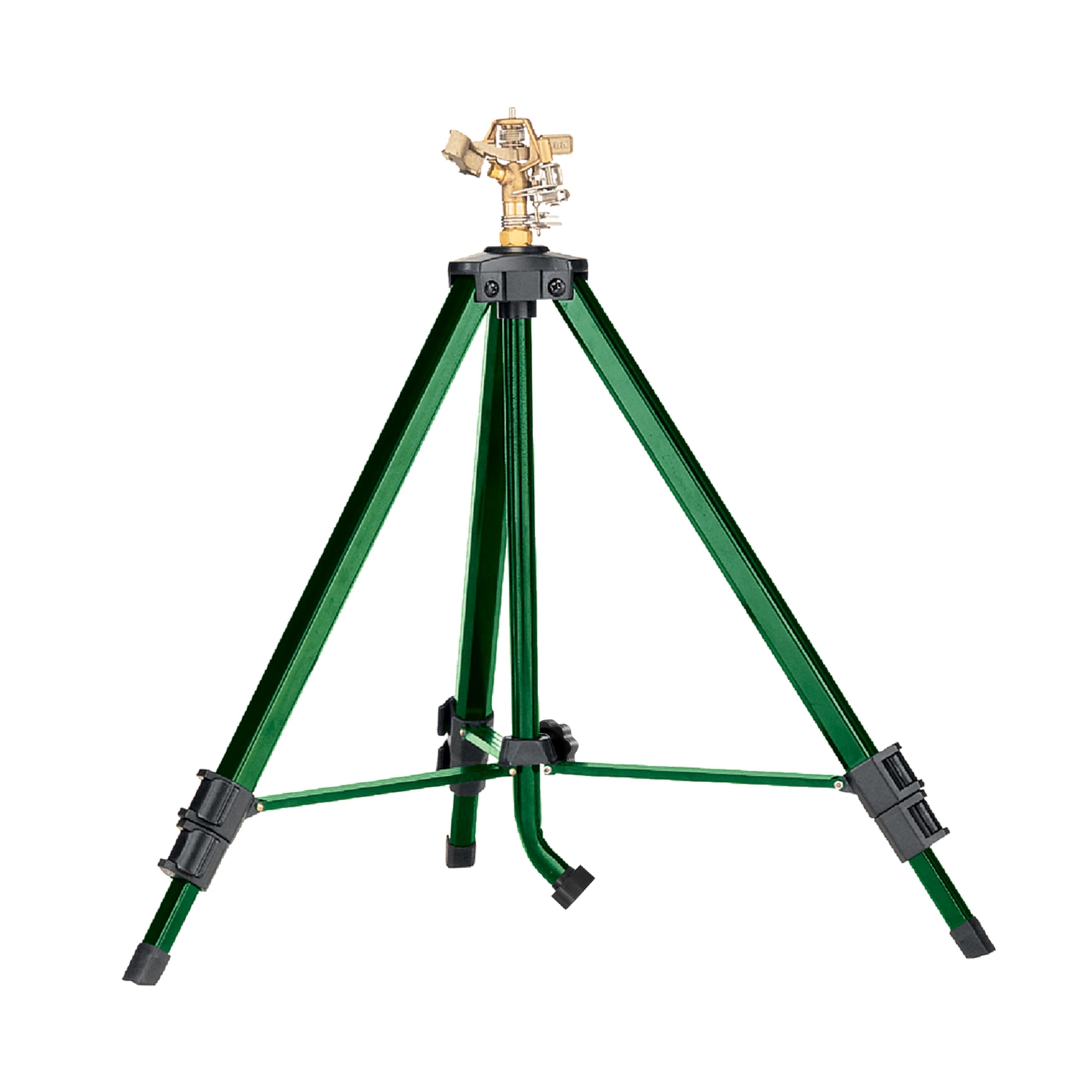
A professional-feeling impact sprinkler with a heavy-duty brass head and adjustable tripod for high-throw coverage.
Why I picked it: Brass impact head and sturdy tripod deliver the distance and durability I needed for large vegetable patches and long-range beds.
Best for: Large gardens and fields that require long-throw coverage and adjustable height.
More expensive but built for heavy-duty, long-term use.
Pros
- Heavy-duty brass impact head
- Adjustable 22–48-inch tripod
- Excellent long-range coverage
- Sturdy construction
Cons
- Takes fiddling to calibrate spray
- May need anchoring initially
My take
I reached far corners of my property with this Orbit tripod sprinkler; the throw distance and adjustable height are what set it apart. The metal construction felt beefy and confident under pressure.
Impact heads take a bit more tuning than simple oscillators—the pins and clips control arc and distribution, and I spent a little time dialing it to my layout. It did tip on first run in a very uneven spot, but once I anchored the tripod it remained stable even under strong flow.
When I needed a workhorse that handles long-range jobs, this was the one I relied on.
4. Kadaon 360° Rotary Lawn Sprinkler – Best Budget
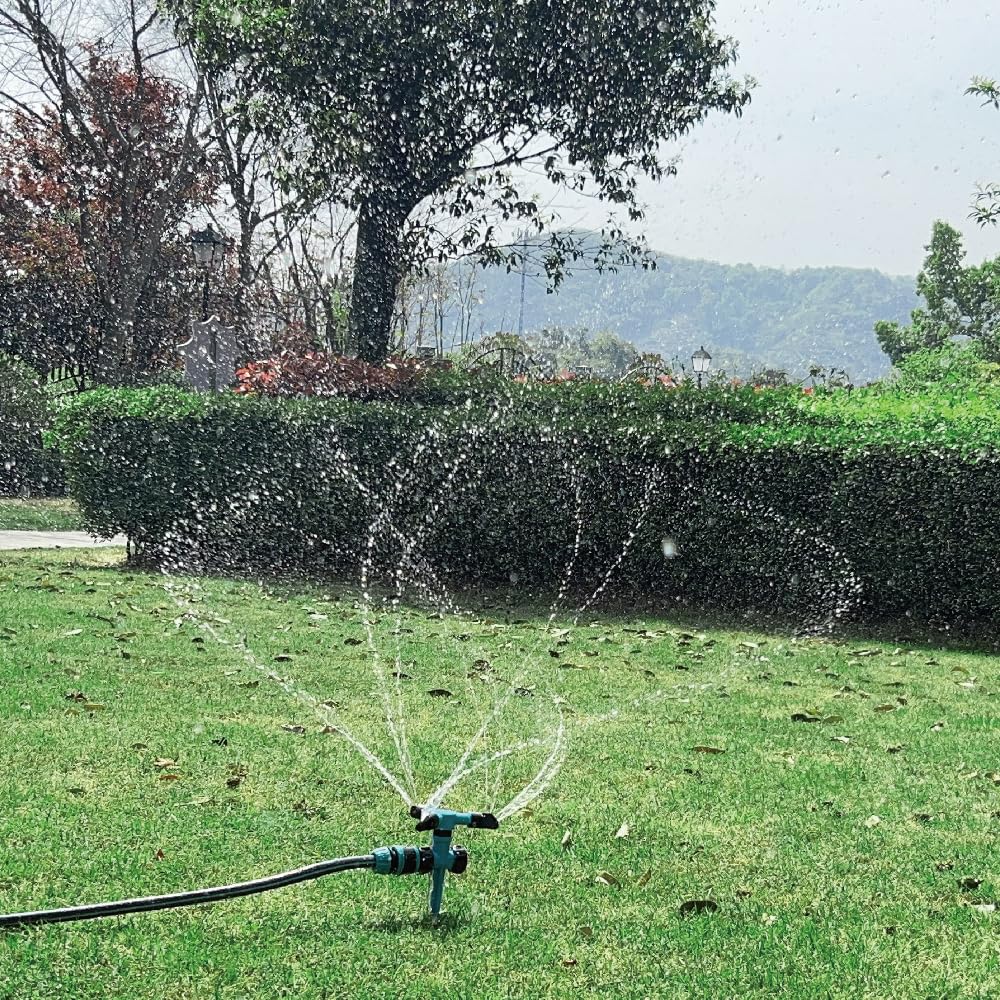
A very affordable three-arm rotary sprinkler made of ABS plastic that offers wide 360-degree coverage and easy hookup.
Why I picked it: Simple, inexpensive, and effective for casual watering and kid play—great when I needed coverage on a budget.
Best for: Small lawns, temporary watering jobs, and families wanting a low-cost sprinkler for kids.
Very budget-friendly; ideal as a secondary or occasional-use sprinkler.
Pros
- Very affordable
- Easy to hook up and use
- Good outer-circle coverage
- Kid-friendly fun
Cons
- Plastic construction feels fragile
- Center area may get less water
My take
I kept a couple of these on hand for areas outside my main irrigation system and for summertime kid play. It spins smoothly and wets a broad outer circle that worked well for cooling off the kids and keeping peripheral grass green.
Don’t expect professional longevity—this is plastic and light—but for the price the performance surprised me. One caveat: the very center beneath the head can see less water, so let it run longer or pair it with a small directed head for full coverage.
If you want an inexpensive, no-fuss sprinkler that doubles as backyard entertainment, this is the practical choice I picked.
5. Orbit Yard Enforcer Motion-Activated Sprinkler – Best Motion-Activated
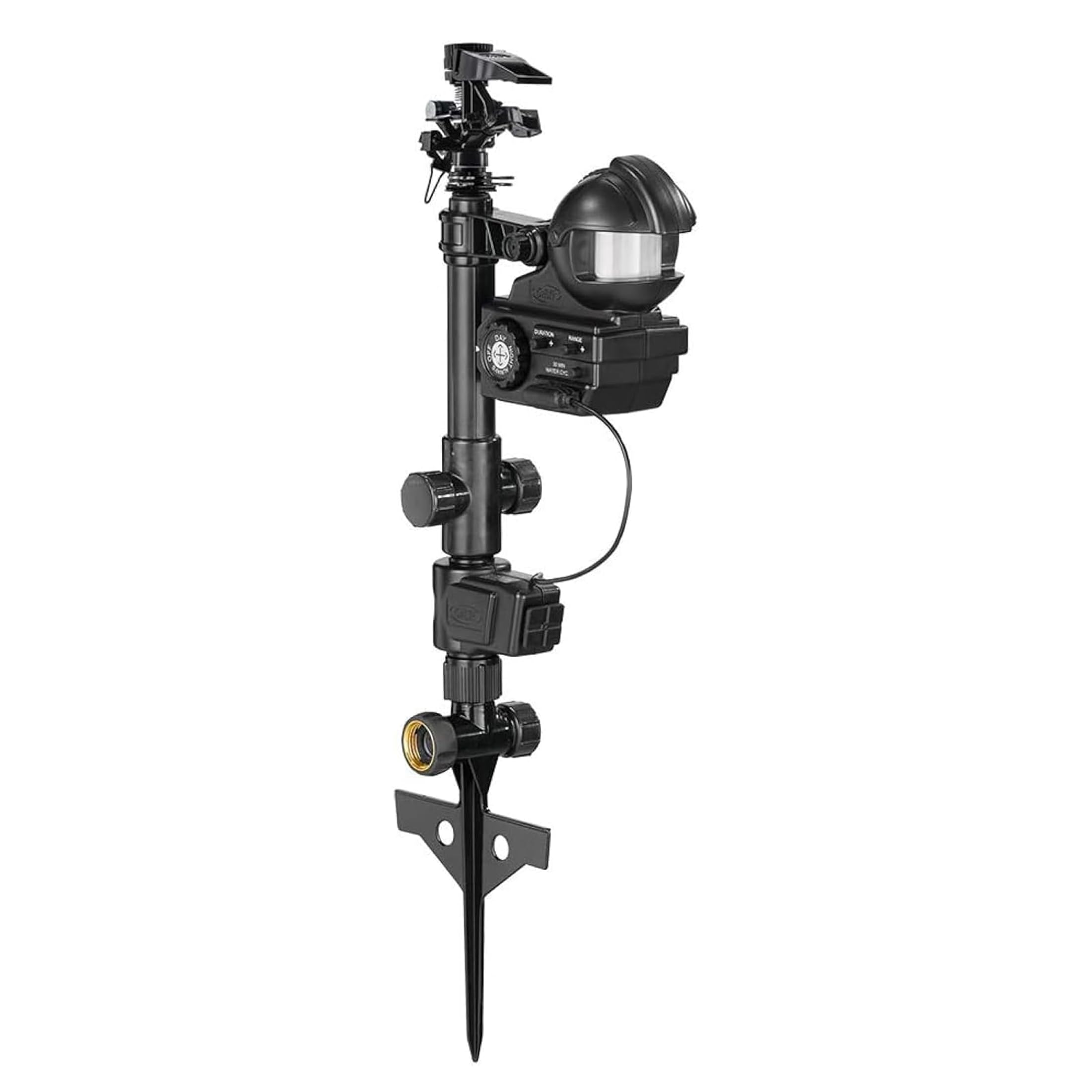
A motion- and heat-activated sprinkler that deters animals with bursts of water and can also operate as a timed garden sprinkler.
Why I picked it: It effectively combines motion-triggered deterrence with a flow-through outlet so I could protect and water larger zones.
Best for: Garden protection from deer, cats, raccoons, and pets; owners who want humane deterrence.
Priced as a dedicated motion-deterrent—worth it if you need both protection and watering features.
Pros
- Heat and motion sensor up to 40 feet
- Flow-through outlet to link sprinklers
- Timed watering option
- Effective humane deterrent
Cons
- Assembly is fiddly with many parts
- Plastics feel lightweight
- May need grease to prevent leaks
My take
I set this up around several beds and used the sensitivity and arc settings to tune coverage; when it detects warm motion it fires a burst that reliably makes critters rethink the area. The ability to link other sprinklers downstream from the flow-through outlet is the feature that let me protect a broader stretch without extra sensors.
Assembly takes a little patience—there are numerous pieces and seals—and I used silicone grease during build to protect the seals. The housing isn’t premium-feeling metal, so I’d park it out of full sun when possible. It’s very sensitive in normal use, but it won’t trigger from waving tree branches if you configure it properly.
For anyone who wants a humane, water-based animal deterrent that can also be pressed into service for timed watering, I found this to be the most capable motion-activated option in my tests.
6. Kadaon Compact 360° Rotary Sprinkler – Best for Kids
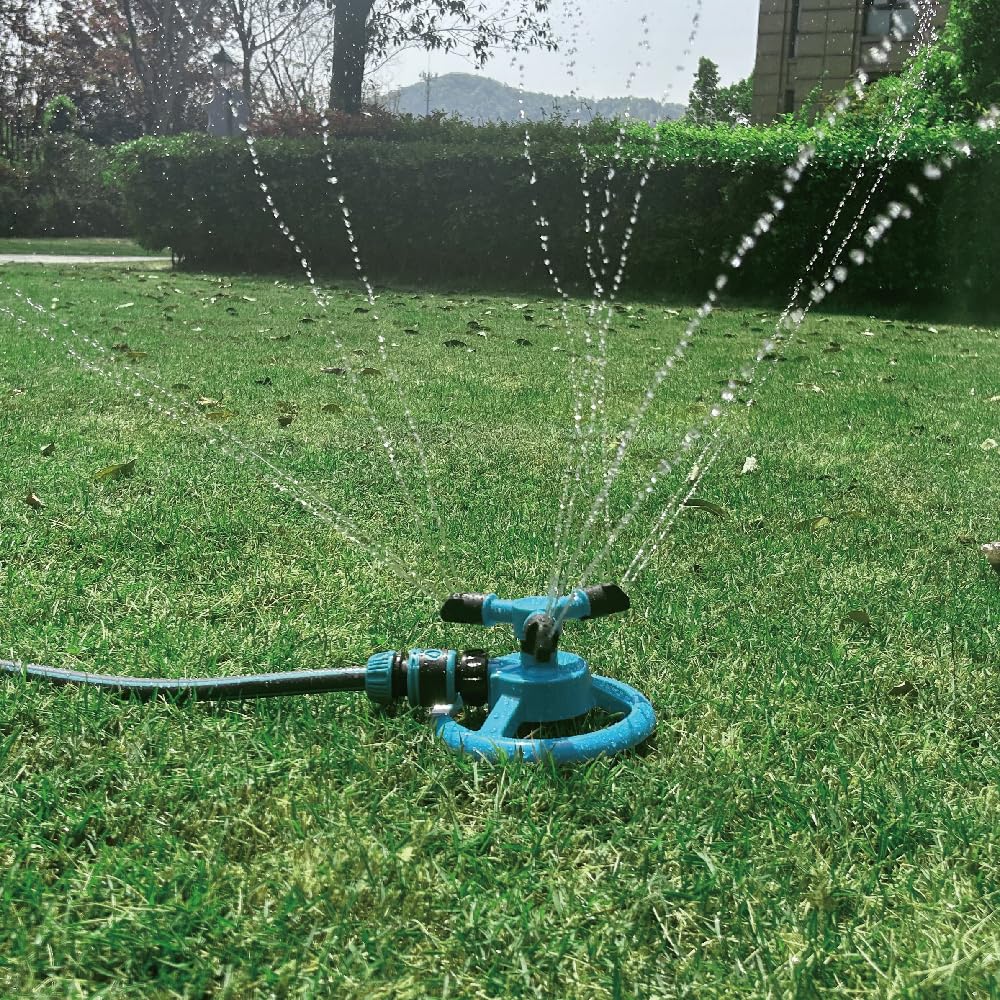
Small, lightweight rotary sprinkler that’s great for kids to play in and for quick, casual watering jobs.
Why I picked it: It’s cheap, playful, and provided the perfect splash-and-play coverage for my kids while also wetting lawn edges.
Best for: Families who want a fun backyard sprinkler that’s easy to set up and inexpensive to replace.
Very low cost — perfect as a seasonal or backup gadget.
Pros
- Perfect for kids' play
- Easy setup and lightweight
- Surprisingly wide spray circle
- Very inexpensive
Cons
- Thin plastic won’t endure rough use
- Tiny size limits long-term irrigation use
My take
I bought this primarily for the kids and it’s become a backyard staple—lightweight, quick to hook up, and it throws a play-friendly circle of water that keeps them happy for hours.
For lawn care it’s a secondary option; the plastic is thin and I wouldn’t rely on it for heavy daily irrigation, but as an inexpensive, replaceable toy that also waters small patches it worked exactly as intended.
If you want a durable sprinkler for long-term irrigation, go with a heavier unit, but for family fun this compact model is hard to beat for value.
How I Choose a Sprinkler
Coverage and Water Pressure
I always match the sprinkler’s advertised coverage to the real pressure at my hose bib. Many oscillating and rotary heads hit their sweet spot with moderate to high pressure; if your supply is low you’ll see shorter reach.
For motion-activated units, sensor range matters—place the detector where it sees approach routes, not where trees or heat sources cause false triggers.
- Measure your water pressure or test spray distance before buying.
- Expect reduced reach on low-pressure supplies; choose dirt-resistant drives if you have well water.
Build Quality and Materials
I prefer metal bases and brass heads for year-round durability, especially if the sprinkler will stay outside. Plastic units can be perfectly fine for seasonal or occasional use, and they’re kinder on the budget.
For motion-activated systems, pay attention to seals and assembly quality—small plastic parts are common points for leaks over time.
- Metal base + sealed gear = longevity for heavy use.
- Cheap plastic is fine for kids or backup sprinklers, not for daily irrigation.
Adjustability and Placement
I look for easy ways to change arc, width, and range without moving the sprinkler itself. Zoom/turn features and step-spikes make repositioning unnecessary in narrow beds.
Tripods add height and reach, but need a stable surface or anchors to avoid tipping when water torque is high.
- Choose flo-thru or linkable bases if you want chained coverage.
- Use step-spikes for firm placement on soft ground; anchor tripods on uneven turf.
Motion-Activated Specifics
I test motion-activated units for sensitivity tuning and false-trigger immunity—ideally they react to moving warm bodies but ignore waving branches and temperature shifts.
If you’ll rely on the unit for animal control, consider models that allow linked sprinklers so a single sensor protects larger areas.
- Place sensors to detect approach paths, not heat sources.
- Grease seals during assembly to reduce leaks over time.
Frequently Asked Questions
Do motion-activated sprinklers work in cold weather?
I avoid leaving motion-activated units outside in freezing temperatures; plastics can become brittle and seals may fail. If I expect freezes, I take the unit in or winterize it.
Can I link multiple sprinklers to one sensor?
Yes—some motion-activated models offer a flow-through outlet so I can connect additional sprinklers downstream and protect a wider area from a single sensor.
How do I prevent leaks at hose connections?
I tighten fittings carefully, use thread tape where appropriate, and apply silicone grease to seals on motion-activated assemblies to keep joints watertight.
Will a plastic sprinkler cover as much as a metal one?
Plastic rotary heads can throw a wide circle at good pressure, but metal and brass impact heads generally maintain performance and durability under heavy or frequent use better than plastic.
Are these safe for pets and kids?
I found all the models safe for kids and pets; motion-activated units deliver short bursts of water that startle but don’t harm animals, and rotary/oscillating heads create gentle, play-friendly sprays.
Final Take
I picked options here to cover the full range of needs: rugged, long-throw workhorses; compact, adjustable heads; budget-friendly toys; and motion-activated deterrents that double as watering tools.
If you want one recommendation to start with, choose according to your water pressure and main goal—durability for heavy daily use, adjustability for odd-shaped beds, or motion activation for humane animal control. I used each of these in real yards and expect they’ll do the same for you when matched to the right task.
