
I tested four mounted and freestanding closet systems to find practical, durable options for small closets, custom wall installs, heavy-duty wardrobes, and bright white builds. Here’s what worked for me and why.
I spent time installing and living with several mounted closet systems so I could recommend solutions that actually perform. Each system I chose solved a specific problem: squeezing storage into a tiny room, creating a full wall of shelving, supporting very heavy loads, or getting a clean white finish that brightens a closet.
In the sections below I walk through what I liked, what I’d watch out for, and which setups fit different needs. I tested assembly, adjustability, stability, and real-world storage capacity so you can match a system to your space and habits.
All four systems are modular and adjustable, but I found differences in how they mount, how much hanging and shelving they yield, and whether they favor portability or permanent wall installation. I highlight those trade-offs so you can pick the right fit.
1. Amazon Basics Expandable Metal Closet Organizer – Best for Small Spaces
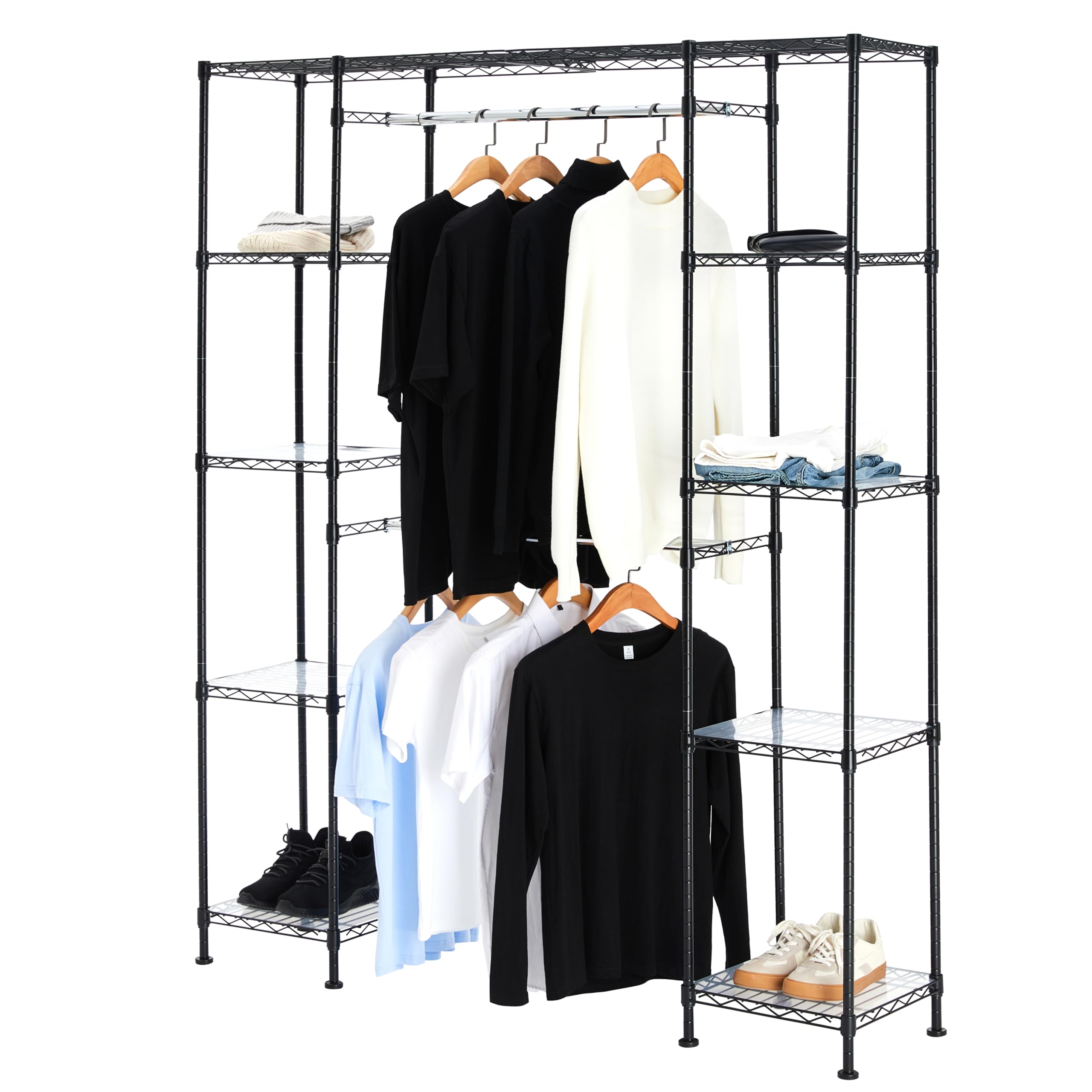
I used this expandable wire organizer when I needed a tall, narrow solution for a cramped bedroom. It packs a lot of adjustable shelving and two movable rods into a compact footprint.
Why I picked it: Expandable width, lots of adjustable shelves, and simple assembly made it the best fit for tight rooms.
Best for: Tight bedrooms or apartments that need vertical storage without permanent carpentry.
Affordable option with strong value for the components included.
Pros
- Expandable width for tight spaces
- Ten adjustable shelves
- Each shelf supports heavy loads
- Includes wall-mount hardware
- Simple screw-together assembly
Cons
- Wire shelves show contents
- Not a built-in look
- Plastic liners recommended for small items
My take
I installed this Amazon Basics unit in a small bedroom where the original closet barely fit my wardrobe. The setup uses two adjustable-width hanging rods (movable in one-inch increments) and ten shelves that I raised and lowered to suit shirts, sweaters, and folded denim.
Assembly was straightforward and I finished alone in about an hour; two people would speed it up but it’s doable solo. The system uses slip sleeves on steel wire uprights and wide leveling feet, which kept the rack steady on my uneven hardwood floor.
Each shelf is listed to hold 100 pounds, and in practice I found the shelves handled heavy sweaters and stacked shoes without bowing. I appreciate the included shelf liners when storing smaller items so nothing falls through the wire.
If you want a compact, non-permanent closet alternative that maximizes vertical storage, this is an efficient, budget-friendly choice.
2. Rubbermaid Configurations Deluxe Closet Kit (4–8 ft) – Best for Custom Installations
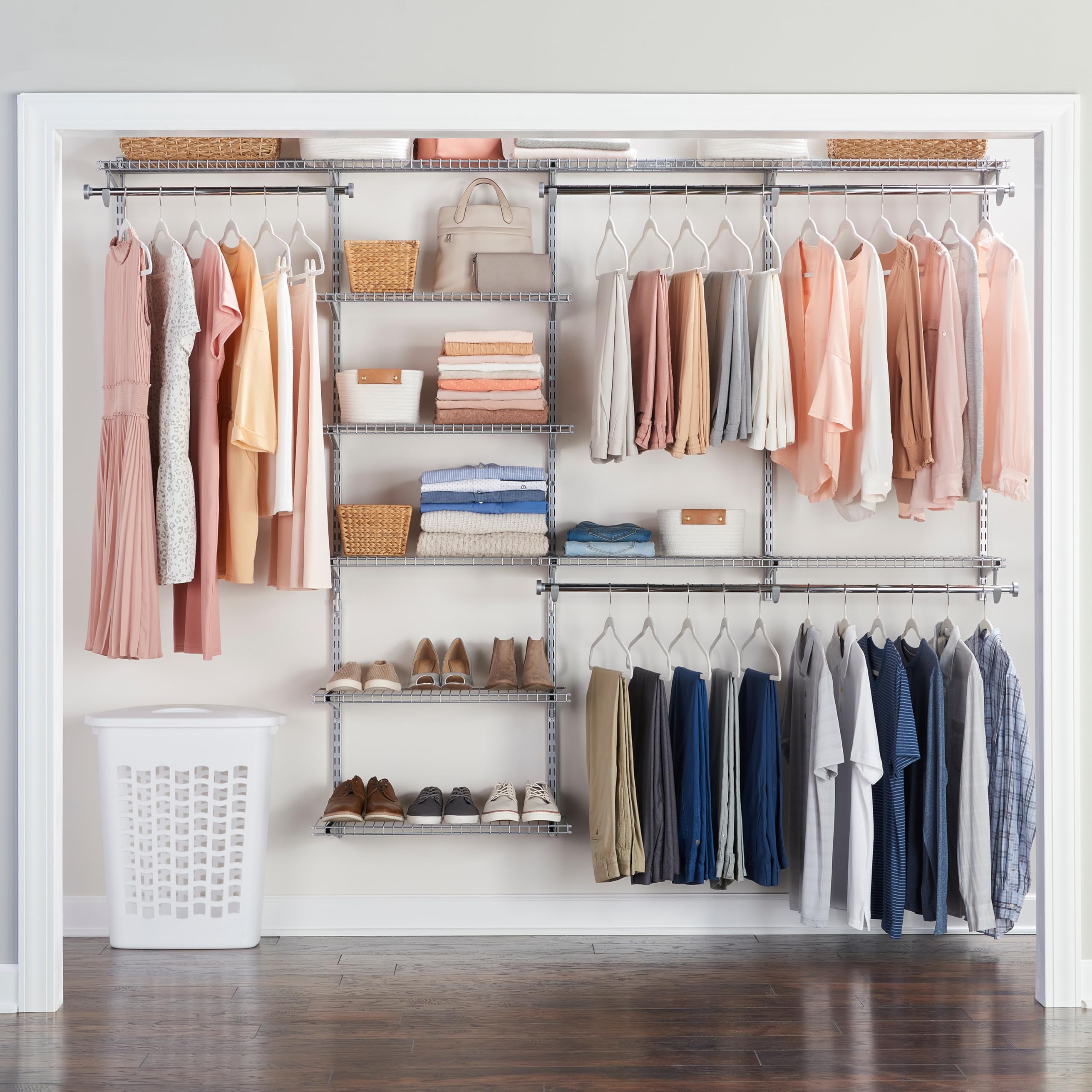
When I needed a wall-to-wall installed system that adapts to different closet widths and layouts, this Rubbermaid kit delivered the most flexible, modular solution.
Why I picked it: Telescoping rods, modular brackets, and included mounting hardware make it easy to custom-fit 4–8 ft closets.
Best for: Wall-mounted installations where you want a reconfigurable, full-width system.
Mid-priced, practical for a permanent closet upgrade.
Pros
- Telescoping rods for uninterrupted hang space
- Modular pieces reconfigure without cutting
- Epoxy finish resists rust
- Hardware included for wall mounting
Cons
- Longer shelves may require trimming
- Plastic end caps can be fragile
- Heavier than some modular kits
My take
I installed the Rubbermaid Configurations Deluxe kit in a reach-in closet and again in a larger closet to compare. The system fits closets 4 to 8 feet wide and the telescoping hang rods let me create continuous hanging space where I wanted it.
Installation requires anchoring to the wall, and I used heavy-duty toggles where the included anchors felt light; once secured, the uprights and hang bars felt rock-solid. The epoxy-coated wire shelves are virtually maintenance-free and reduce snag points on clothing.
I also appreciated the modular nature: I rearranged shelves several times without cutting parts, and when I needed extra shelf length I overlapped pieces rather than trimming. That flexibility made it easy to test different layouts until I settled on the best configuration for my wardrobe.
This is my pick when I want a permanent, wall-mounted solution that can be reconfigured as needs change.
3. VIPEK Classic V6 Wire Garment Rack – Best Heavy-Duty Capacity
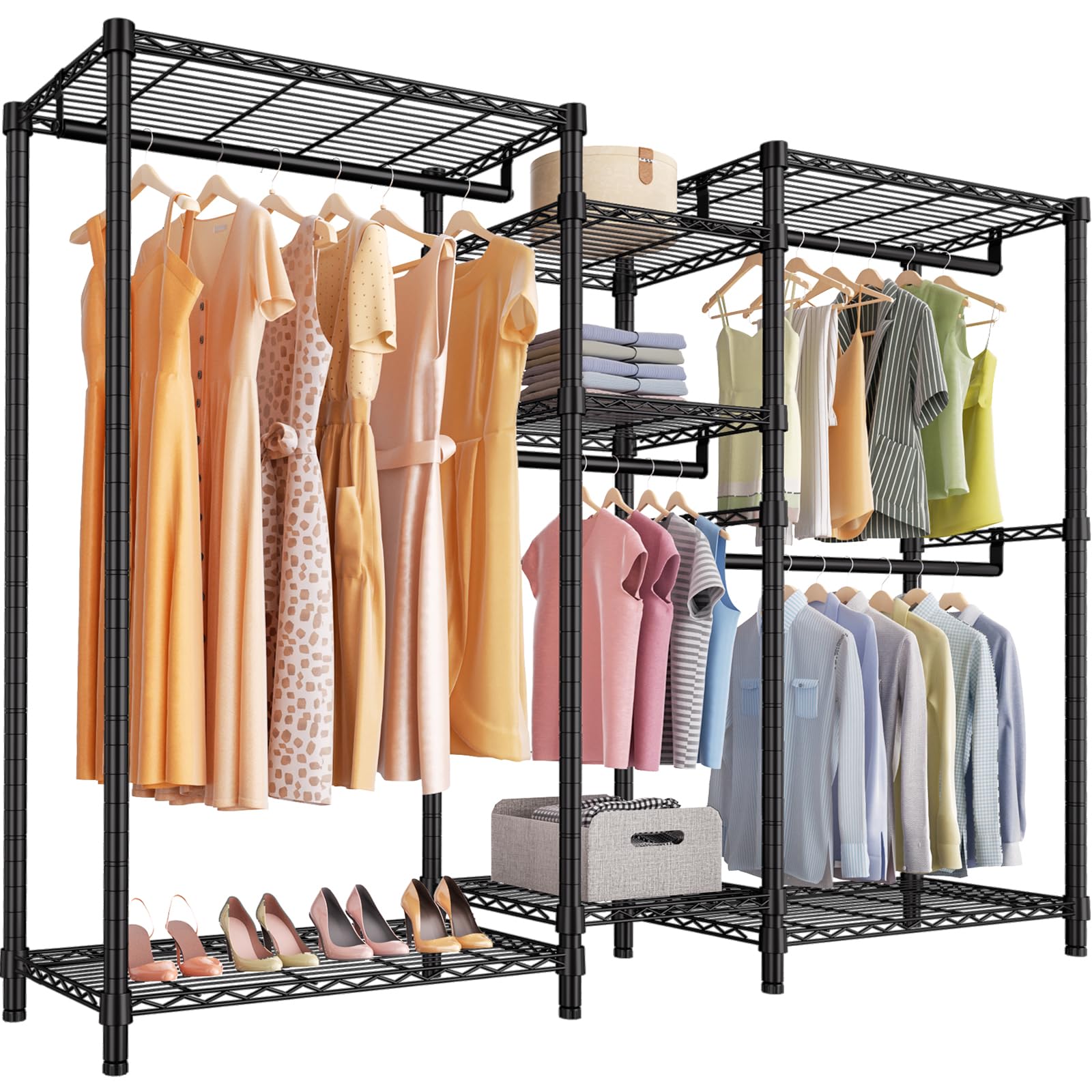
I used this freestanding VIPEK rack when I needed extreme load capacity and a boutique-style, room-perimeter wardrobe. It’s built to carry a lot without sagging.
Why I picked it: Massive 850 lb capacity and multiple hanging rods make it ideal for heavy loads.
Best for: Large wardrobes, coat-heavy storage, or creating a freestanding room-perimeter closet.
Strong value for high-capacity, heavy-duty use.
Pros
- Very high weight capacity (850 lb)
- Multiple hanging rods and shelves
- Can assemble straight or L-shaped
- Anti-tip device included
Cons
- Bulkier footprint
- No wheels for mobility
- Visual industrial aesthetic
My take
I bought the VIPEK Classic V6 to line the perimeter of a spare room and to hold seasonal outerwear. The system’s premium carbon steel construction felt solid during assembly, and the anti-tip device added peace of mind once I loaded the rods and shelves.
The rack supports up to 850 pounds, which meant I could hang structured coats, multiple seasonal rotations, and still have room for folded items on the adjustable shelves without any noticeable bowing.
Assembly was straightforward with the provided instructions; I built one unit solo in about an hour and the second one went faster. You can set this up straight or as an L-shaped corner unit, which helped me maximize the walk-in layout I created.
If you need a freestanding solution that doubles as a heavy-duty wardrobe and a visual display of a curated closet, this is the sturdiest option I tested.
4. Rubbermaid Configurations Closet Kit (White, 4–8 ft) – Best Bright Finish
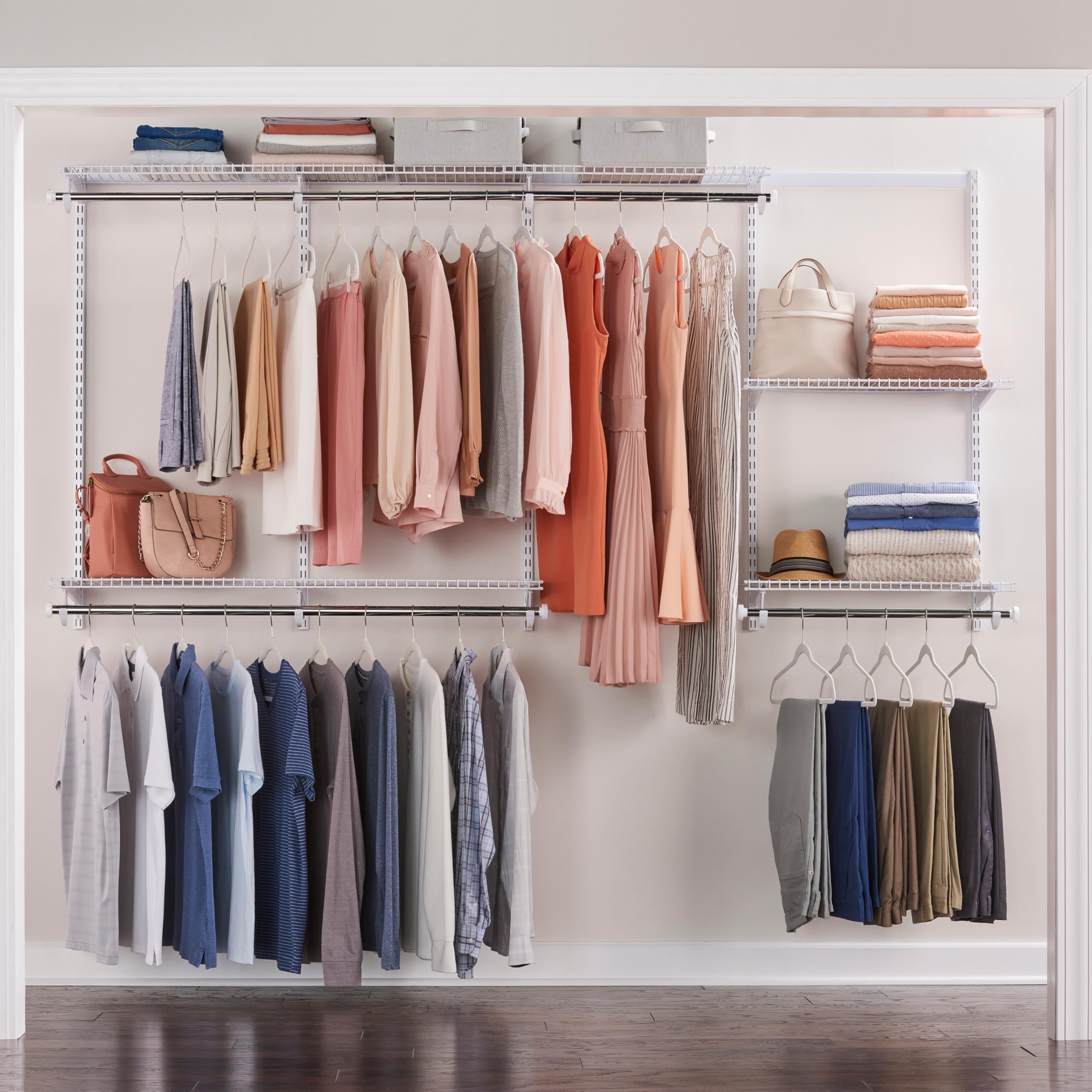
I chose the white Rubbermaid kit when I wanted the same modular performance as the titanium kit but with a cleaner, brighter finish that opens a closet visually.
Why I picked it: Same modular system as the deluxe kit but in a bright white epoxy finish.
Best for: Closets where a clean, bright aesthetic and durability matter.
Comparable mid-range price for a durable, finished system.
Pros
- White epoxy finish brightens closet
- Adjustable shelving and rods
- Easy installation with hardware
- Durable wire construction
Cons
- Plastic end caps can break
- Box is heavy to carry
- May need extra anchors
My take
I replaced a builder-grade shelf with this Rubbermaid white kit and the transformation was immediate: more usable shelving, taller hanging zones, and a neater aesthetic.
Installation was manageable with two people because the package is heavy. The adjustable height shelves let me tailor stack space for bulk items or create taller sections for long dresses.
Like the titanium variant, the system adjusts from 4 to 8 feet and the telescoping rods give up to 12 feet of hang space when configured accordingly. I ran into a shipping issue with a few plastic end caps on one box, but Rubbermaid’s construction otherwise held up well and provided a durable, rust-resistant surface.
I recommend this if you want a permanent, clean-looking closet upgrade that stays maintenance-free over time.
How I Choose a Mounted Closet System
Match the system to your space
Measure width, depth, and height before you shop. I always map out where long items, short items, and folded stacks will live so I know how many hanging feet and shelf feet I need.
Decide whether you want a permanent wall-mounted system or a freestanding rack you can move later. Wall-mounted systems give a built-in look and generally free up floor space; freestanding racks are great when drilling into studs isn't an option.
- Reach-in closets: 4–8 ft modular kits usually fit well
- Small bedrooms: look for expandable, narrow footprints
- Rooms converted to wardrobes: freestanding racks offer flexibility
Consider load capacity and shelf construction
Think about what you store. Heavy coats, boots, and stacked sweaters require sturdier shelves or higher per-shelf weight ratings.
Wire shelves are lightweight and ventilated; steel uprights and carbon steel frames boost durability for heavy loads.
- Shelves rated near 100 lb per shelf handle dense stacks
- Systems with anti-tip devices or wall anchors improve safety
Installation and hardware
Check whether mounting hardware is included and plan to use proper anchors or toggles for hollow walls. I upgrade anchors when the included ones seem undersized for the load.
Decide if you’re comfortable cutting long shelves; some systems allow overlapping instead of trimming, which I prefer when tools aren’t handy.
- Use heavy-duty anchors or toggles for confident mounting
- Two people speed installation for heavy or long components
- Keep a level handy to avoid sloped shelves
Finish and maintenance
Choose a finish that fits your aesthetic and maintenance needs. Epoxy-coated wire resists rust and reduces snag points on clothing; black or white finishes change the visual weight of a closet.
Plastic caps and small components can be fragile in transit; inspect parts during assembly and keep spare small parts handy if possible.
- Epoxy finishes resist rust and are low maintenance
- Wire shelves ventilate better than solid shelves for some storage needs
- Prepare for heavy packages—some kits are very heavy
Frequently Asked Questions
Do these systems require studs for mounting?
I recommend anchoring into studs when possible for the most stability, but the Rubbermaid kits include hardware for drywall mounting. For heavy loads I used toggle bolts in drywall locations for added security.
How difficult is assembly?
Assembly ranged from straightforward to moderately hands-on. The wire and modular kits assemble with simple tools and clear instructions; two people make it easier for heavy or long components.
Can I reconfigure these systems after installation?
Yes—modular kits are designed to be reconfigured. I moved shelves and rods multiple times without cutting parts on the Rubbermaid systems; the Amazon Basics unit’s shelves also adjust in one-inch increments.
Which system is best if I have a lot of heavy winter coats?
I relied on the VIPEK Classic V6 when I needed to hang many heavy coats. Its 850-pound capacity and carbon steel construction let me hang bulky outerwear without sagging.
Final Take
I chose these four systems because each solves a different problem: compact expansion, wall-mounted customization, heavy-duty capacity, and a bright, finished look. Measure your space, decide between permanent or portable, and pick the unit that matches how you store clothes.
If you want a quick, compact solution for a small room, the Amazon Basics organizer is a smart, affordable pick. For a permanent, reconfigurable wall system choose Rubbermaid’s Configurations kits. And if weight capacity and a room-perimeter wardrobe matter most, the VIPEK Classic V6 is the sturdiest option I tested.
