
I tested mulching blades across 21- to 54-inch decks and picked the most reliable options for fit, durability, and mulching performance.
I replace mower blades regularly, and I’ve spent seasons testing mulching blades on push mowers and riding decks. In this roundup I focused on fit, shred quality, balance, and how easy each blade is to install and maintain.
You’ll find blades that cover common deck sizes and center-hole patterns, plus notes on which ones I reach for when I need tougher steel or the finest clippings for composting.
Across these picks I prioritized blades that match OEM patterns, stay balanced after installation, and produce fine clippings. If you want the finest mulch I favor high-lift, multi-curve designs; for durability I go with thicker, heavy-duty steel.
1. MaxPower 331528B Mulching Blade – Best Overall
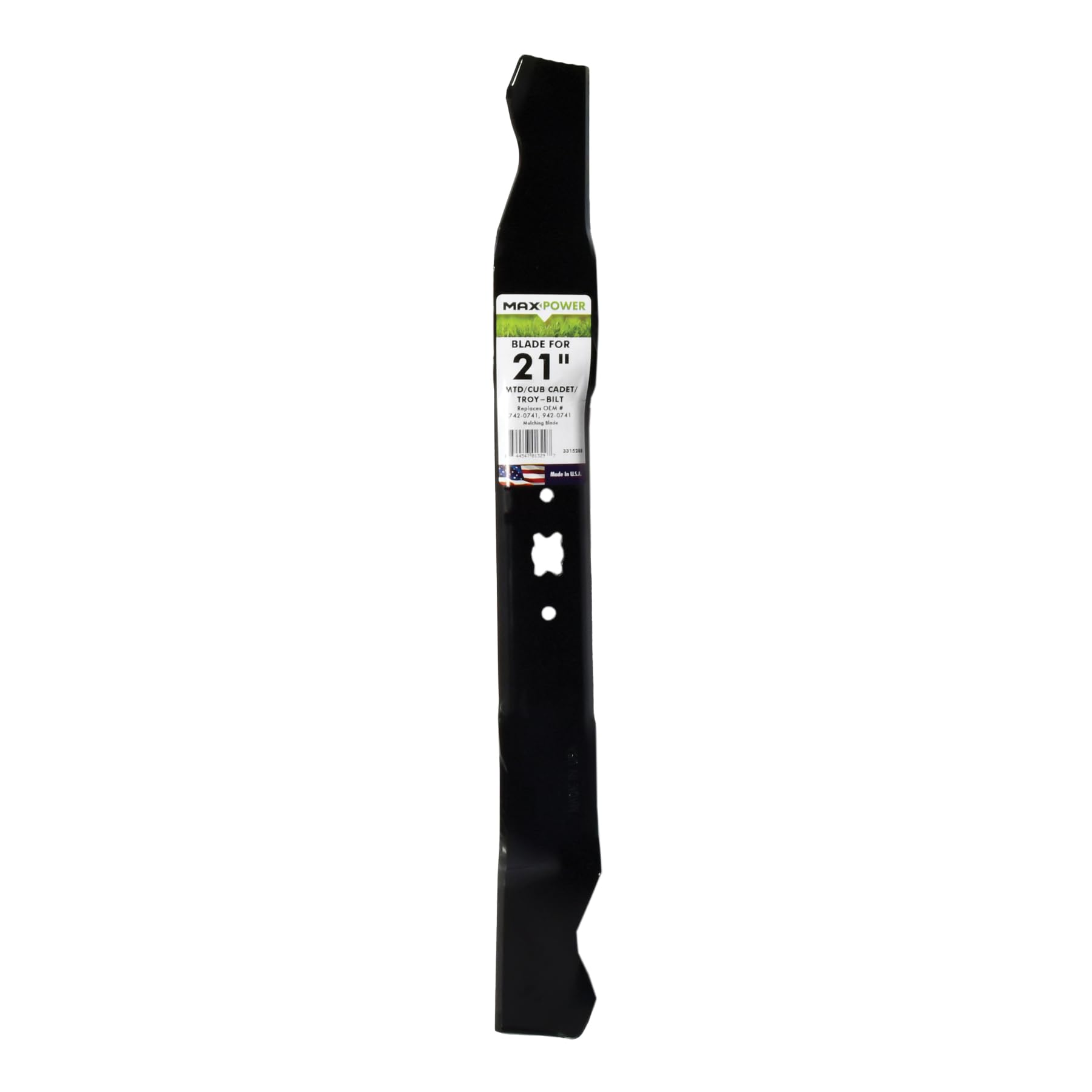
I trust this MaxPower blade for dependable mulching on common 21-inch MTD, Cub Cadet, Troy-Bilt, and Craftsman decks.
Why I picked it: Good balance of fit, sharpness out of the box, and solid construction for 21-inch decks.
Best for: Owners of 21-inch walk-behind mowers needing a direct OEM-style replacement.
A budget-friendly OEM alternative.
Pros
- Made in the USA
- Sharp from the factory
- Powder-coated for transport
- Wide OEM fit list
Cons
- Single blade — replaces one at a time
- Coating wears off after first cut
- Must verify OEM number for exact fit
My take
I installed the MaxPower 331528B on a 21-inch push mower and appreciated the fit right away — the bow-tie center hole matched the spindle without fuss. The blade arrived with a protective powder coat that rubbed off during the first cut and revealed a nicely sharpened edge.
On the lawn it mulched cleanly and produced fine clippings that settle into the turf instead of clumping. Balance felt good; I didn’t detect vibration that sometimes accompanies aftermarket blades.
If you need a straightforward OEM-style replacement for common 21-inch decks, this is the blade I reach for because it combines sharpness, correct hole pattern, and reasonable durability.
2. MaxPower 561532B 2-Blade Mulching Set – Best for 42-Inch Decks
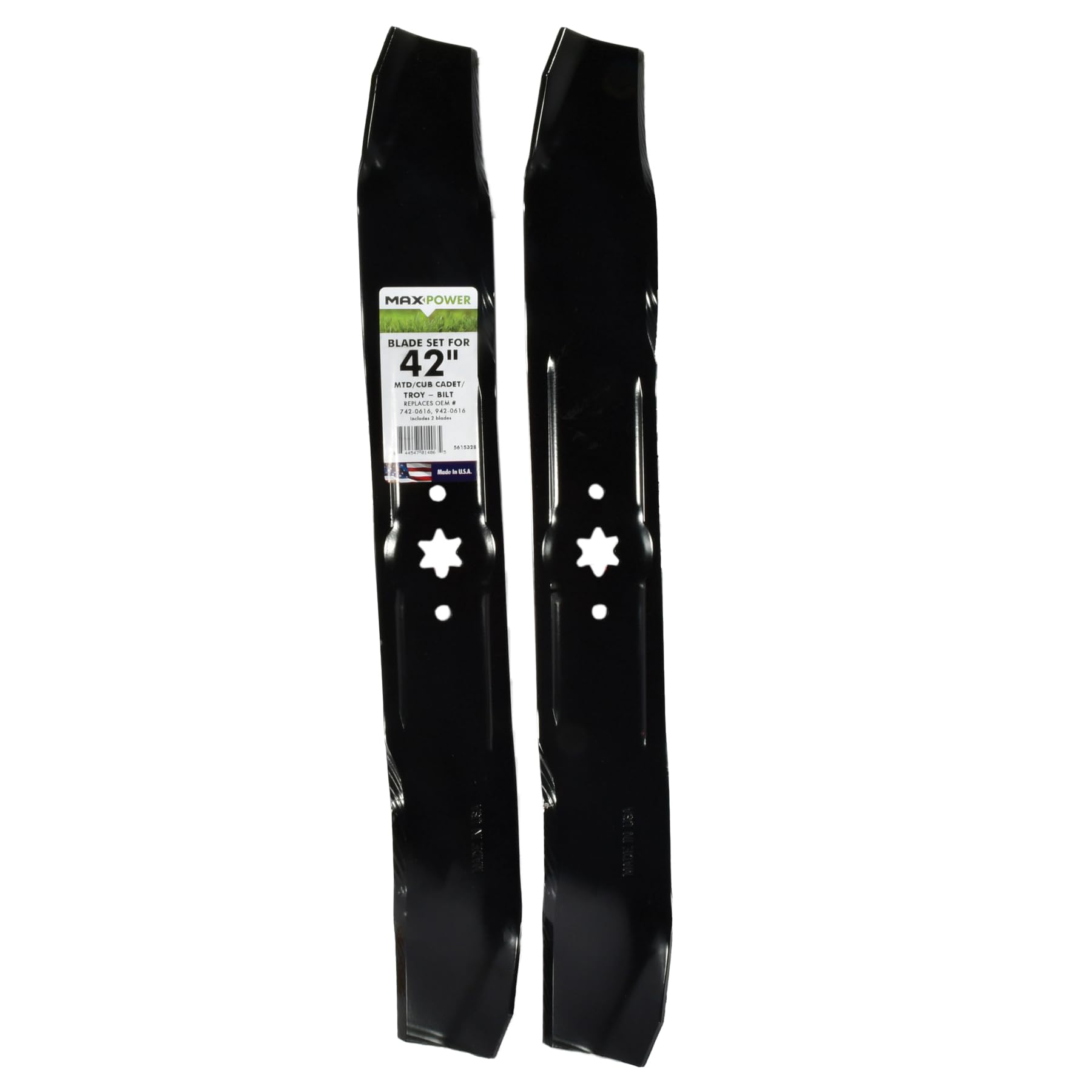
I recommend this two-blade set when you want wider, heavier mulching blades for many 42-inch decks.
Why I picked it: Extra-wide 3-inch blades with heavier steel that mulch finely and maintain lift.
Best for: 42-inch MTD, Cub Cadet, and Troy-Bilt decks needing beefier mulchers.
A solid midrange value for larger decks.
Pros
- Includes two heavy-duty blades
- 3-inch cutting width for better mulching
- 6-point star center hole
- Durable, heavier steel
Cons
- Longer blades can require careful torqueing
- May need deck clearance check
- Slightly heavier than some OEM blades
My take
I put the 561532B set on a 42-inch tractor and noticed the extra width immediately — the 3-inch blades give more surface to recut clippings, and the mulching was notably finer than standard blades.
Installation requires proper torque and a quick clearance check; these blades are a hair longer than some originals, so I rotated and inspected the deck before finishing. Once installed, they delivered good lift and didn’t clog when I switched between mulching and side discharge.
For bigger decks where I want robust mulching without switching to a dedicated high-lift bagging blade, this two-pack is what I use.
3. Oregon Gator G3 Mulching Blades (3-Pack) – Best for Tough Conditions
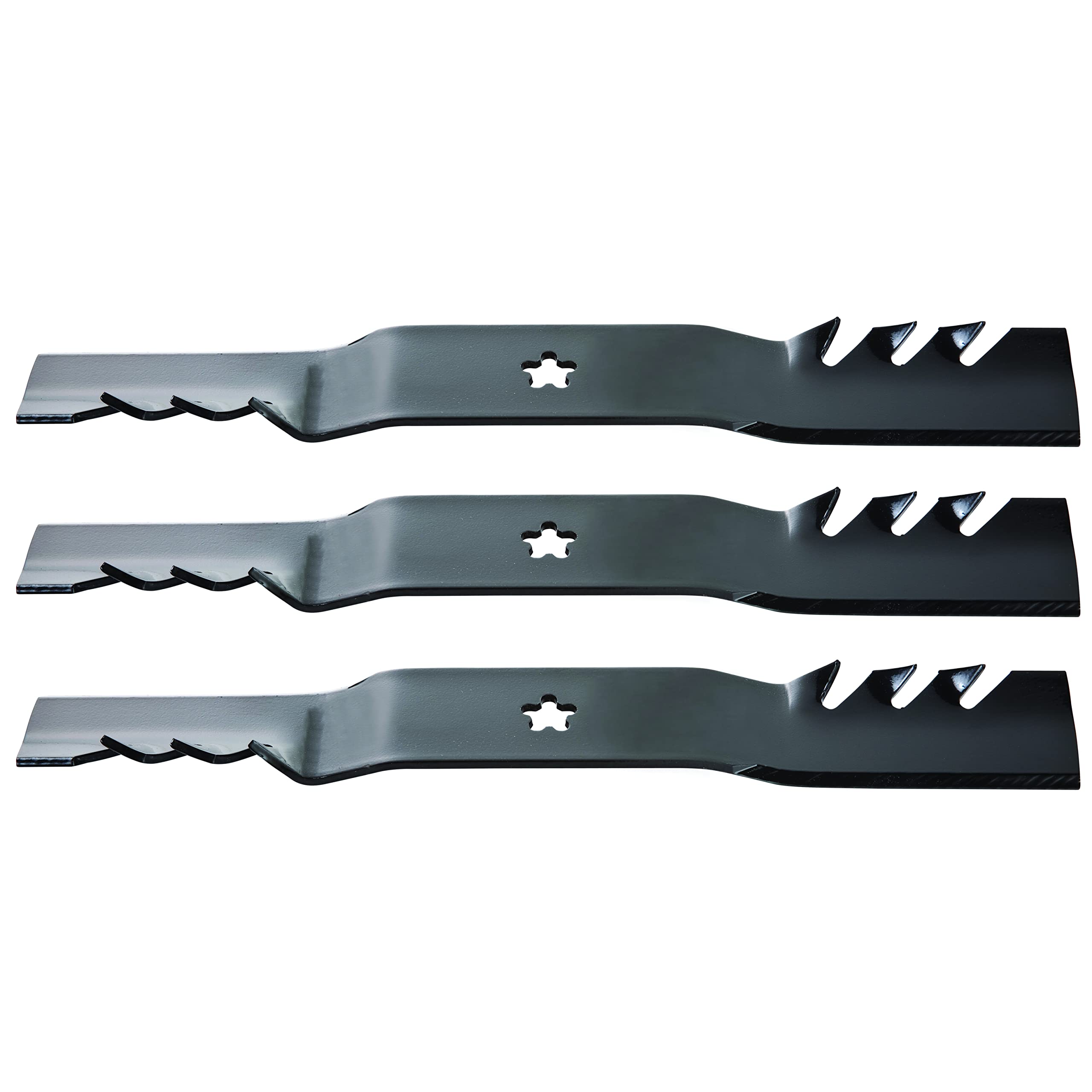
I choose the Oregon Gator G3 when I need blades that hold up to abrasive, sandy, or debris-filled turf.
Why I picked it: Exceptional toughness and a proven Gator mulcher profile for consistent performance.
Best for: Lawns with grit, tree debris, or heavier mowing conditions.
A durable option worth the premium for longevity.
Pros
- Heavy-duty steel construction
- Gator mulcher profile for fine clippings
- Set of three blades
- Designed and engineered in the USA
Cons
- Painted coating hides the edge initially
- Heavier blades may need deck checks
- May be overkill for small, well-kept lawns
My take
I swapped Oregon Gator G3 blades into a 54-inch deck and put them through wet grass, sandy spots, and a few hidden pieces of debris. They stayed true — the steel is thicker and resistant to bending, and the edge held up longer than standard blades I’ve used.
They come coated, so I remove or expect the paint to wear off during the first runs; under the coating I found a sharp cutting edge that handled tough conditions without chipping.
When I want durability and consistent mulch even in abrasive settings, these are my go-to blades.
4. Grasscool TB110 21-inch Mulching Blade – Best Budget Troy-Bilt Fit
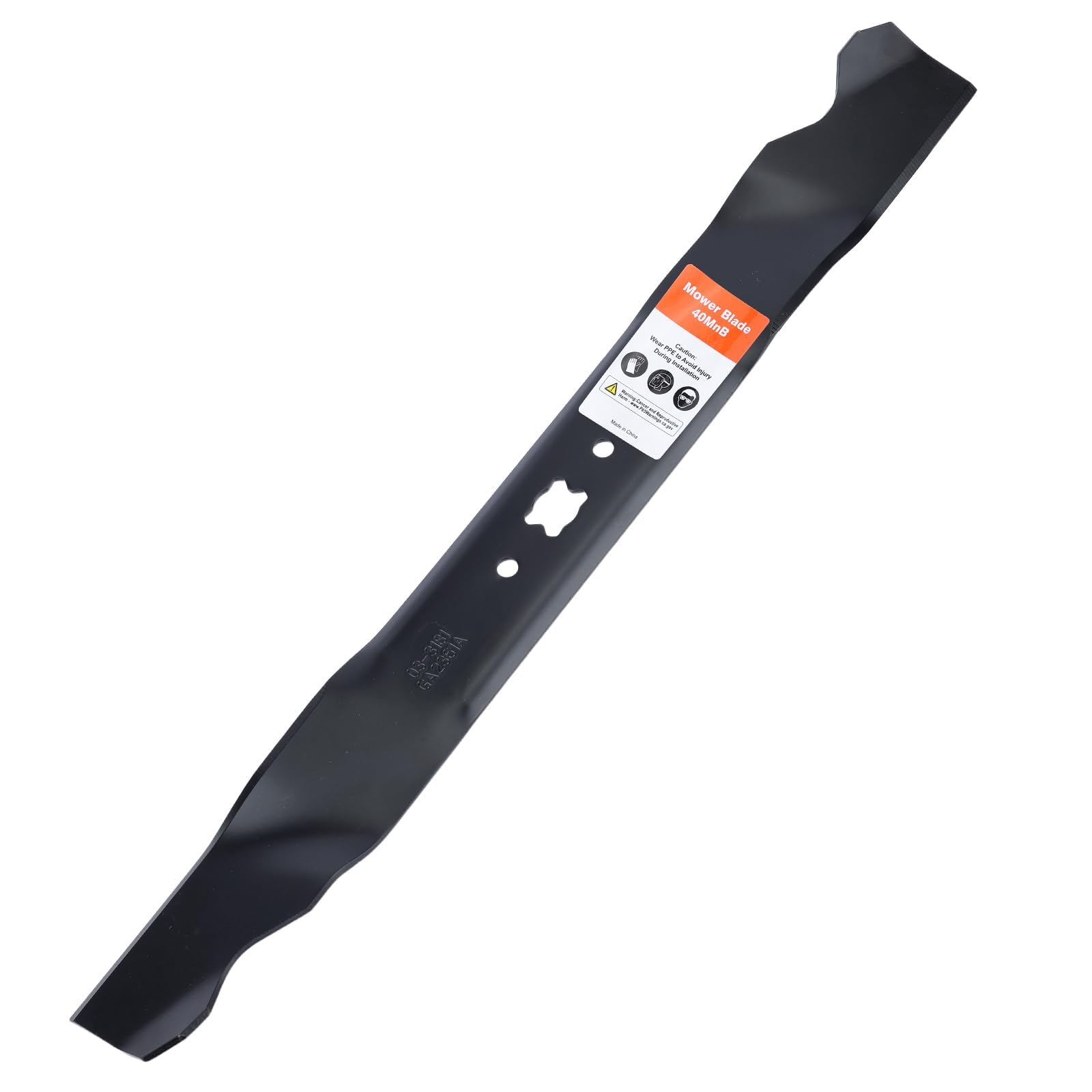
I turn to this blade for an affordable, direct-fit mulcher for Troy‑Bilt 21-inch decks.
Why I picked it: Straightforward fit for Troy‑Bilt MTD patterns with three-in-one functionality.
Best for: Troy‑Bilt owners who need a budget-friendly OEM-pattern replacement.
An economical alternative to dealer parts.
Pros
- 3-in-1: mulch, bag, side discharge
- Designed for Troy‑Bilt bolt pattern
- High-lift improves bagging
- Painted edge for handling
Cons
- Edge paint wears on first cuts
- Marketing copy can be overenthusiastic
- May need sharpening for precision cuts
My take
I installed the Grasscool TB110 on a Troy‑Bilt push mower and found the bow-tie center hole matched the spindle without modification. Its multi-curve 3-in-1 profile mulched well and also increased bagging capacity when I swapped to a catcher.
The blade ships with painted edges that protect during handling; the paint wears off quickly and the blade performs as a true mulcher. It’s not the fanciest blade I’ve used, but for the price it’s a reliable direct-fit option.
If you want a no-frills replacement that handles mulching, side discharge, and bagging on Troy‑Bilt decks, this one covers all three functions.
5. MaxPower 561540B 3-Blade Mulching Set – Best 46-Inch Set
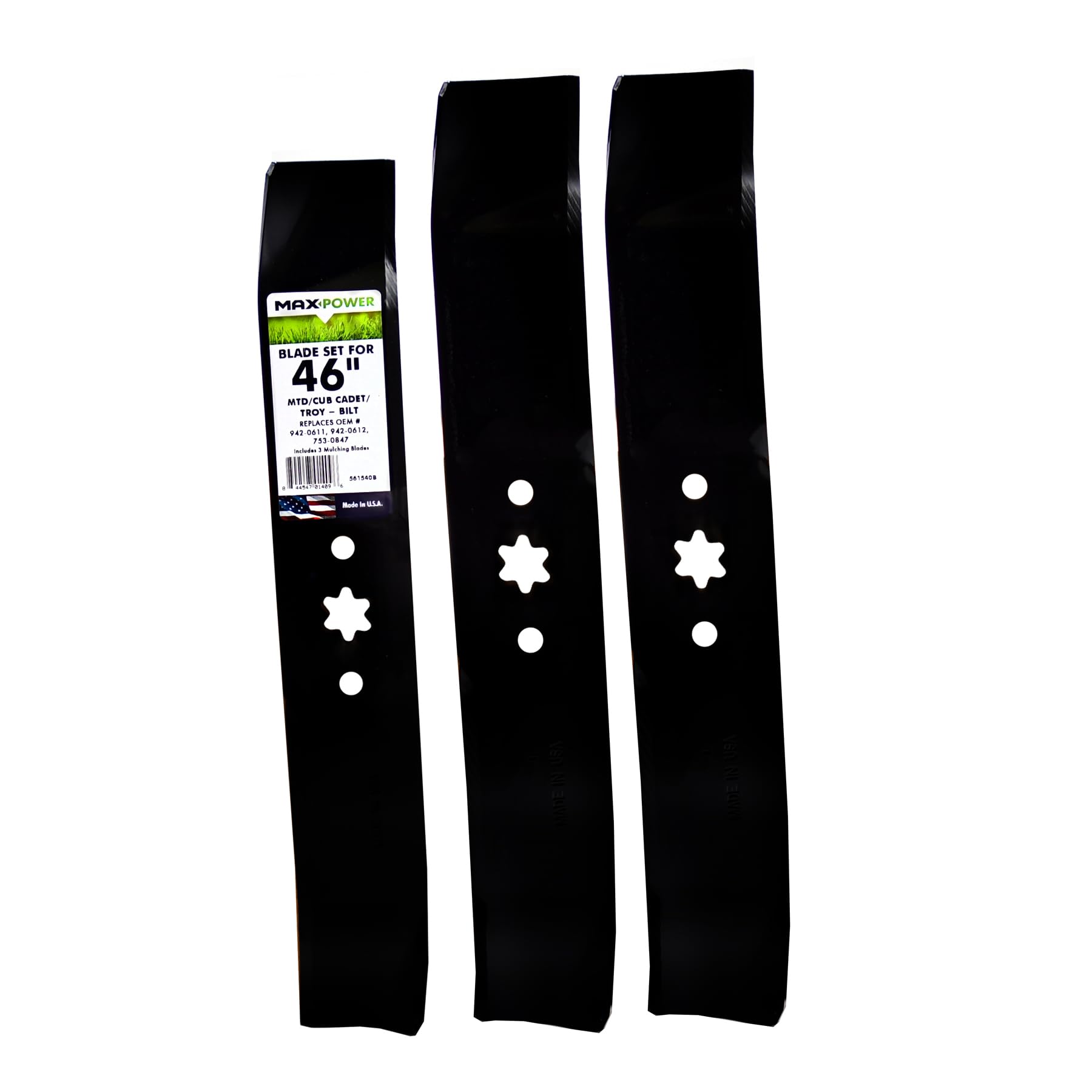
I use this three-blade set when I need the correct mix of long and short blades for many 46-inch decks.
Why I picked it: Three-blade kit includes multiple lengths and 6-point star holes for broad compatibility.
Best for: Owners of 46-inch MTD, Cub Cadet, and Troy‑Bilt decks needing a full replacement set.
A practical value set for 46-inch mowing decks.
Pros
- Three-blade kit with mixed lengths
- Thicker steel than some alternatives
- 6-point star center holes
- Good packaging and fit
Cons
- Edge may be only moderately sharp out of box
- One shorter blade may wear faster
- Requires correct blade placement
My take
I installed the MaxPower 561540B set on a 46-inch deck and liked having the correct mix of blade lengths — it simplified replacement and kept cutting geometry correct.
The blades feel beefier than many economy options and went on easily. The cutting edges were acceptable but I touched them up with a grinder for the cleanest finish; after that they mulched and discharged reliably.
For a full replacement kit that balances durability and value on wide decks, this is the set I keep on hand.
6. Honda 08720-VH7-000 Mulching Blade Set – Best OEM Honda Fit
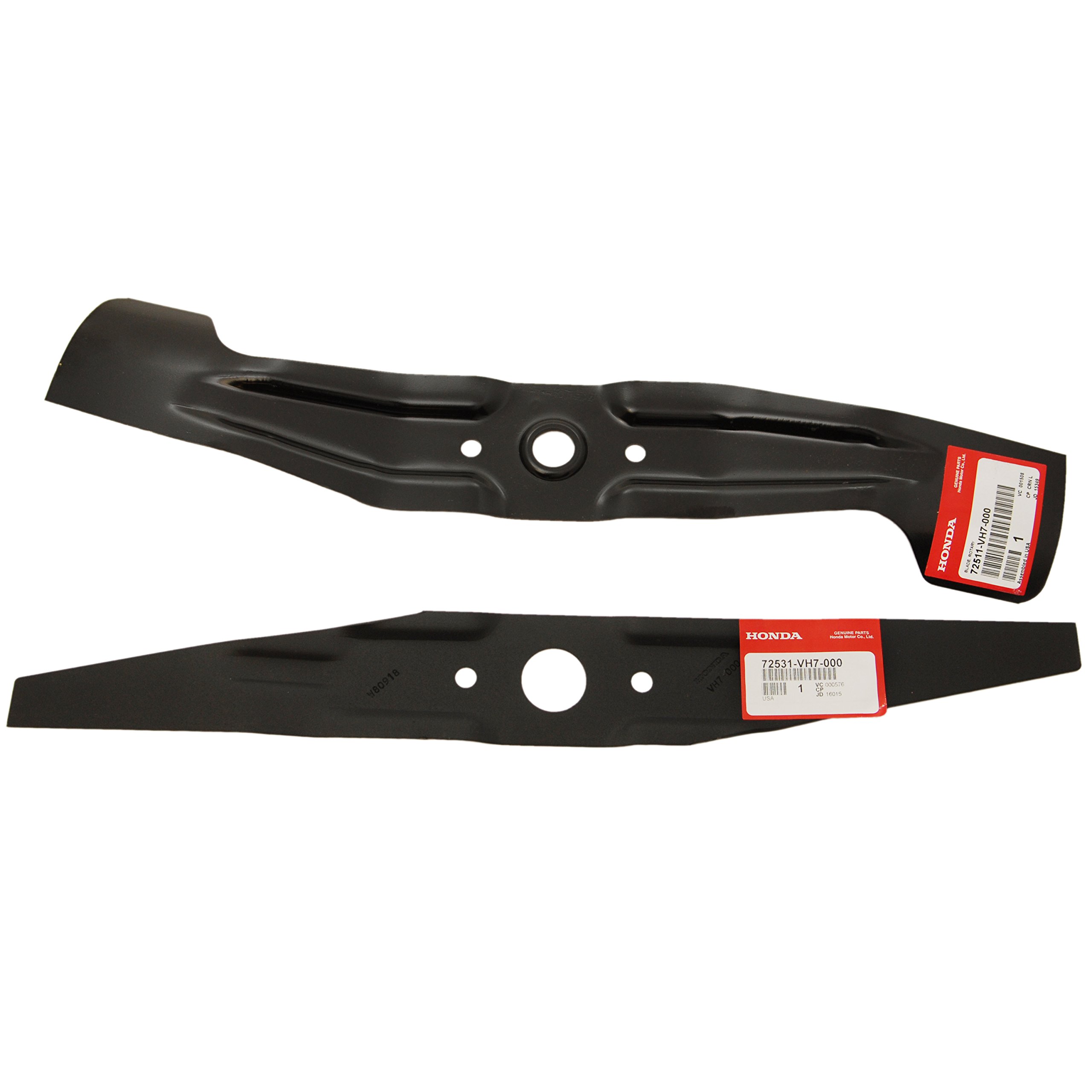
When I need true OEM compatibility for Honda mowers, I reach for this Honda mulching blade set.
Why I picked it: Exact-fit Honda parts that match original geometry and material quality.
Best for: Owners of Honda mulching mowers who want factory-spec replacements.
An OEM-matching choice for long-term reliability.
Pros
- Exact OEM fit for Honda decks
- Solid steel construction
- Durable and well-formed
- Consistent cutting geometry
Cons
- Sometimes arrive unsharpened
- May need pre-use sharpening
- Limited to Honda-compatible decks
My take
I fitted the Honda set to a Honda mulching mower and found the blades matched the originals perfectly. The steel felt robust and the fitment preserved deck geometry, which is important for balanced operation.
One thing to note from my experience: some sets arrived without a razor edge, so I sharpen them before first use for the crispest cut. After that prep they chop grass into very fine clippings and perform exactly like factory parts.
If you want OEM-level confidence for a Honda mower, these are the blades I choose.
How I Choose Mulching Blades
Fit and OEM Number
I always verify the OEM part number or the exact center-hole pattern before buying. A correct center hole (bow-tie, 5-point star, 6-point star) ensures the blade seats properly and stays balanced.
Measure blade length and width if the OEM number isn’t available; a few millimeters off can cause clearance or contact issues.
- Match center-hole shape to your spindle
- Confirm blade length and deck clearance
- Check lift type (mulch vs high-lift) for intended use
Material, Thickness, and Durability
I prefer thicker, heavy-duty steel when I mow abrasive yards or hit tough spots. Oregon Gator-style blades are my pick for durability.
Thin, cheap blades will dull and bend faster; heavier blades keep edge life longer and resist nicking from hidden debris.
- Choose heavier steel for rough turf
- Expect longer edge life from thicker blades
- Durability matters on sandy or debris-prone lawns
Mulching Profile and Lift
Blades designed specifically for mulching have curves and re-cutting surfaces that create finer clippings. If I want compost-ready clippings, I pick a true mulcher profile over generic replacements.
High-lift blades move grass more aggressively into the chute — I use those when bagging is a priority.
- Mulcher profile = finer clippings
- High-lift = better bagging, more discharge
- 3-in-1 blades offer versatility for mixed tasks
Edge Sharpness and Prep
I inspect and, if necessary, sharpen blades before first use. Some blades ship with protective coatings that hide the edge; a light sharpening or paint removal gives the best initial cut.
Balance after sharpening is critical — I always check blade balance before final reinstallation.
- Remove protective paint if present
- Sharpen edges for cleaner cutting
- Check balance after any sharpening
Installation and Safety
I torque blade bolts to the manufacturer’s spec and always verify clearance between blades and the deck. Rotating the deck by hand after installation helps confirm there’s no contact.
Wear gloves and follow mower safety steps when changing blades.
- Follow OEM torque specs
- Check deck clearance and rotate by hand
- Disconnect spark plug before changing blades
Frequently Asked Questions
How do I know which center hole pattern I have?
I remove the old blade and compare the hole shape directly to the replacement listing or take a clear photo; bow-tie and star patterns are visually distinct and must match the spindle.
Should I sharpen a new blade before using it?
I often sharpen or at least inspect new blades — some arrive with protective paint that hides the true edge. A quick sharpening ensures the cleanest first cut and reduces tearing.
Can I use a mulching blade for bagging?
Yes. I use 3-in-1 and certain mulching blades for both mulching and bagging; high-lift sections of the blade help when I want to collect clippings.
How often should I replace mower blades?
I replace or professionally sharpen blades once I notice ragged cuts, increased engine strain, or after several seasons of use. Tough yards may need more frequent replacement.
Final Take
I keep specific blades on hand for different jobs: OEM-matching sets for exact fit, heavy-duty Gator-style blades for abrasive conditions, and wider mulchers for larger decks.
Measure, match the center hole, and check balance after installation — those steps make the biggest difference in performance. With the right blade installed, mowing becomes cleaner, faster, and the clippings break down into the lawn instead of creating a mess.
