
I tested a range of portable and full-size music stands to find the ones that balance stability, portability, and useful extras like lights and folders. Here are the stands I reach for depending on whether I need a kid‑s
I spent time assembling and using each stand in my practice room, rehearsals, and a couple of small gigs so I could judge real-world stability, portability, and how well they hold thick books or tablets.
Across these picks I focused on: tray depth and page‑holding, height range and angle adjustment, tripod footprint and stability, and included extras like carrying bags, clips, and lights.
If you want a simple practice stand, a heavy‑book solution, or something with a built‑in light, I’ve included clear picks and why I prefer each one for different situations.
I compared these stands on stability under load, tray depth, tilt range, height flexibility, portability (how they pack into the carry bag), and useful extras like lights, folders, or tablet compatibility.
1. K KASONIC 2-in-1 Folding Music Stand – Best for Kids
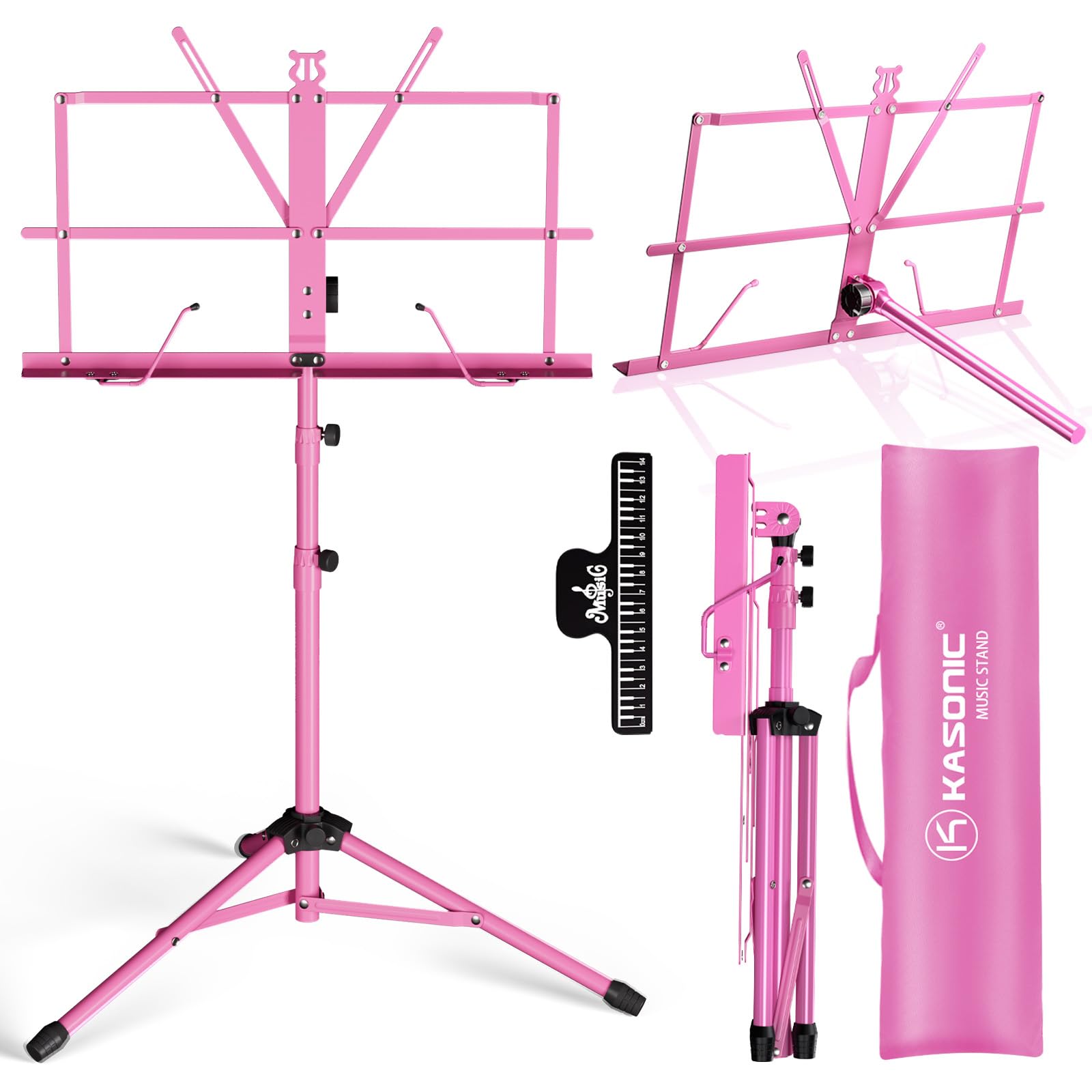
A lightweight, colorful dual‑use stand that converts between floor and desktop setups—great for young players and home practice.
Why I picked it: I picked this because it's lightweight, easy to use, and the 2‑in‑1 design makes it versatile for children.
Best for: Young learners, home practice, lessons where portability matters.
An affordable, entry‑level option that prioritizes portability over road‑ready durability.
Pros
- Dual floor and desktop use
- Lightweight and very portable
- Comes with a carrying bag
- Simple height and tilt adjustments
Cons
- Not built for heavy touring
- Some small parts feel flimsy
My take
I bought the pink K KASONIC for my daughter and it immediately made practice more fun—she liked the color and I liked how quickly it sets up.
The vented tray is tall and deep enough for her lesson books and the height range covers both sitting and standing positions without fuss.
Assembly was tool‑free and the tripod folds down compactly into the included bag, which I appreciated when moving between home and lessons.
Be realistic about expectations: it's not a heavy‑duty stand for constant travel or very thick reference books, but it’s excellent for practice rooms and young players.
2. CAHAYA Portable Dual‑Use Music Stand – Best for Students
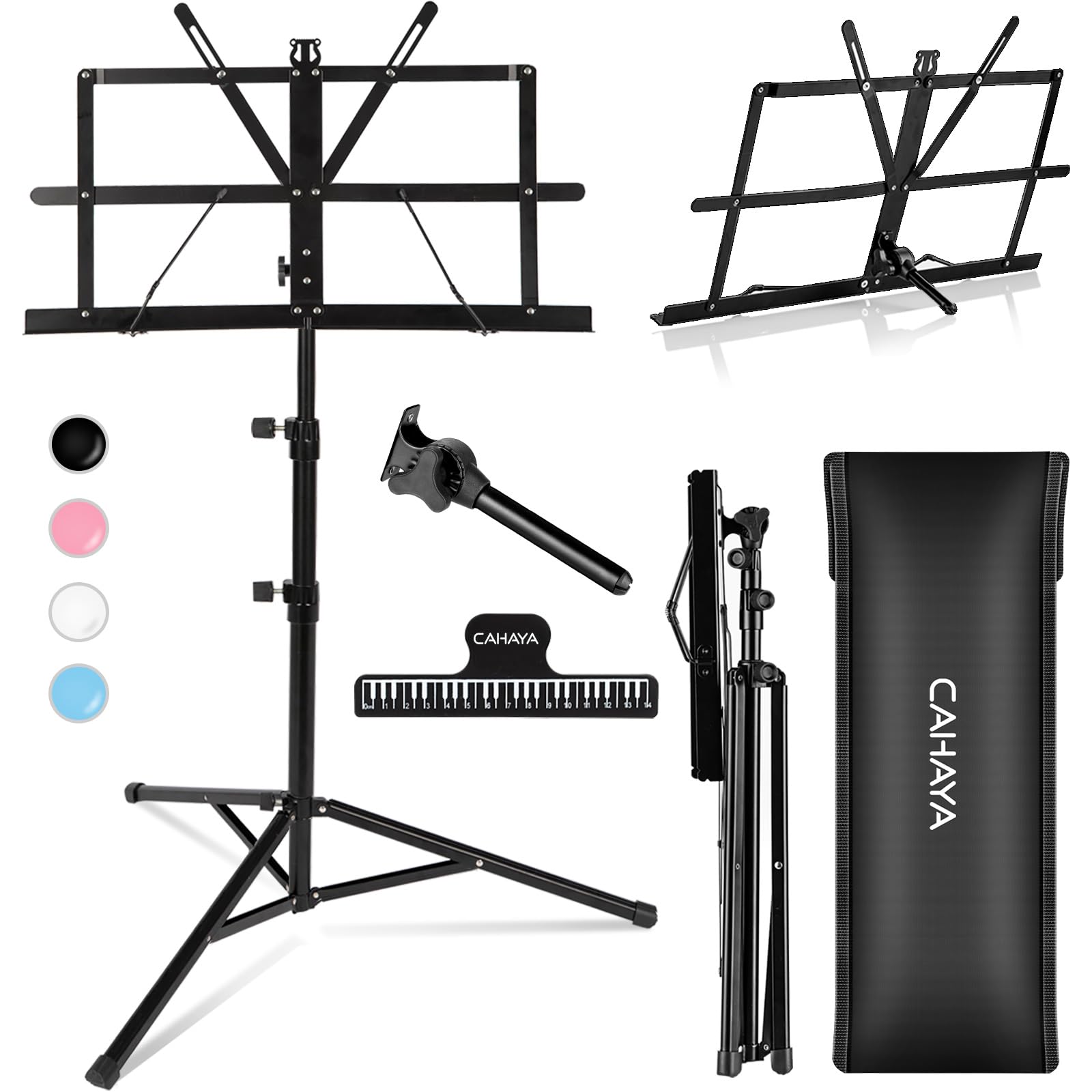
A reliable, lightweight stand with thicker tripod legs and a convenient carrying bag—designed for students who need stability on a budget.
Why I picked it: I picked this because the reinforced tripod and included extras make it a solid, low‑effort choice for lessons and rehearsals.
Best for: Students, school ensembles, anyone who needs quick setup and a stable tabletop option.
A budget friendly option that doesn't feel cheap in hand.
Pros
- Thickened metal tripod legs
- Fast setup, folds without disassembly
- Includes carrying bag and clip
- Good height range for most players
Cons
- Carrying bag material can rip
- Thin construction on some tubes
My take
I used the CAHAYA stand for clarinet practice and for taking to lessons; it folded up quickly and fit back into the bag without me taking parts apart.
The tripod legs feel sturdier than many economy stands—I've trusted it to hold a handful of heavy pages during practice without wobble.
When I used it as a tabletop stand I put felt under the feet to protect my desk; that detail kept the stand quiet and scratch‑free.
The stand isn't indestructible: the carry bag showed wear on one unit I inspected, so I treat the bag as convenience storage rather than heavy‑duty protection.
3. GLEAM Full Metal Sheet Music Stand – Best for Thick Books & Tablets
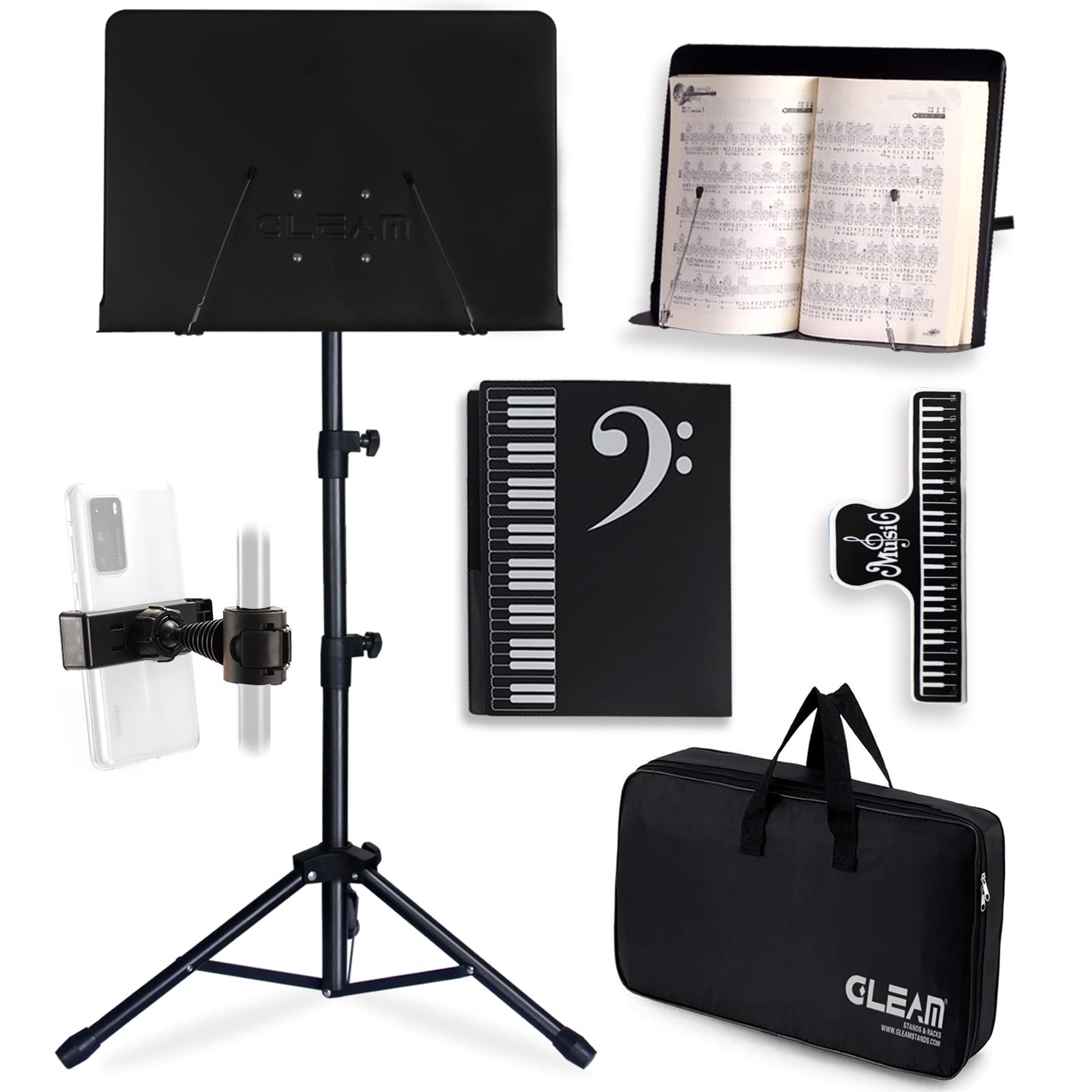
A full‑metal stand with a deep tray and spring arms that hold binders, tablets, and thicker books securely—useful for soloists and home performers.
Why I picked it: I picked this because the 2‑inch deep tray and spring arms comfortably accommodate heavy books and tablets without constant re‑adjustment.
Best for: Players who use binders, thick scores, or tablets and need secure page holding.
A mid‑range pick that includes a useful accessory kit for practice and gigging.
Pros
- Deep 2-inch tray for thick books
- High‑tension spring arms secure pages
- Smooth, precise tilt knobs
- Includes folder, clip, and desktop adapter
Cons
- Heavier than basic stands
- Not for the heaviest reference volumes
My take
I typically reach for the GLEAM when I have large binders or a tablet on stage—the tray is deep enough that I don't worry about pages slipping off.
The spring arms clamp down firmly, so I can turn pages without the music moving around mid‑phrase.
Adjusting the angle is smooth thanks to the solid knobs, which is helpful when I tweak the tilt between pieces during rehearsal.
The accessory kit—folder with many pockets, clip, and desktop adapter—made this my go‑to for home practice and small gigs when I need to carry music and gear.
4. CAHAYA Heavy‑Duty Dual‑Use Music Stand – Best Heavy‑Duty Portable
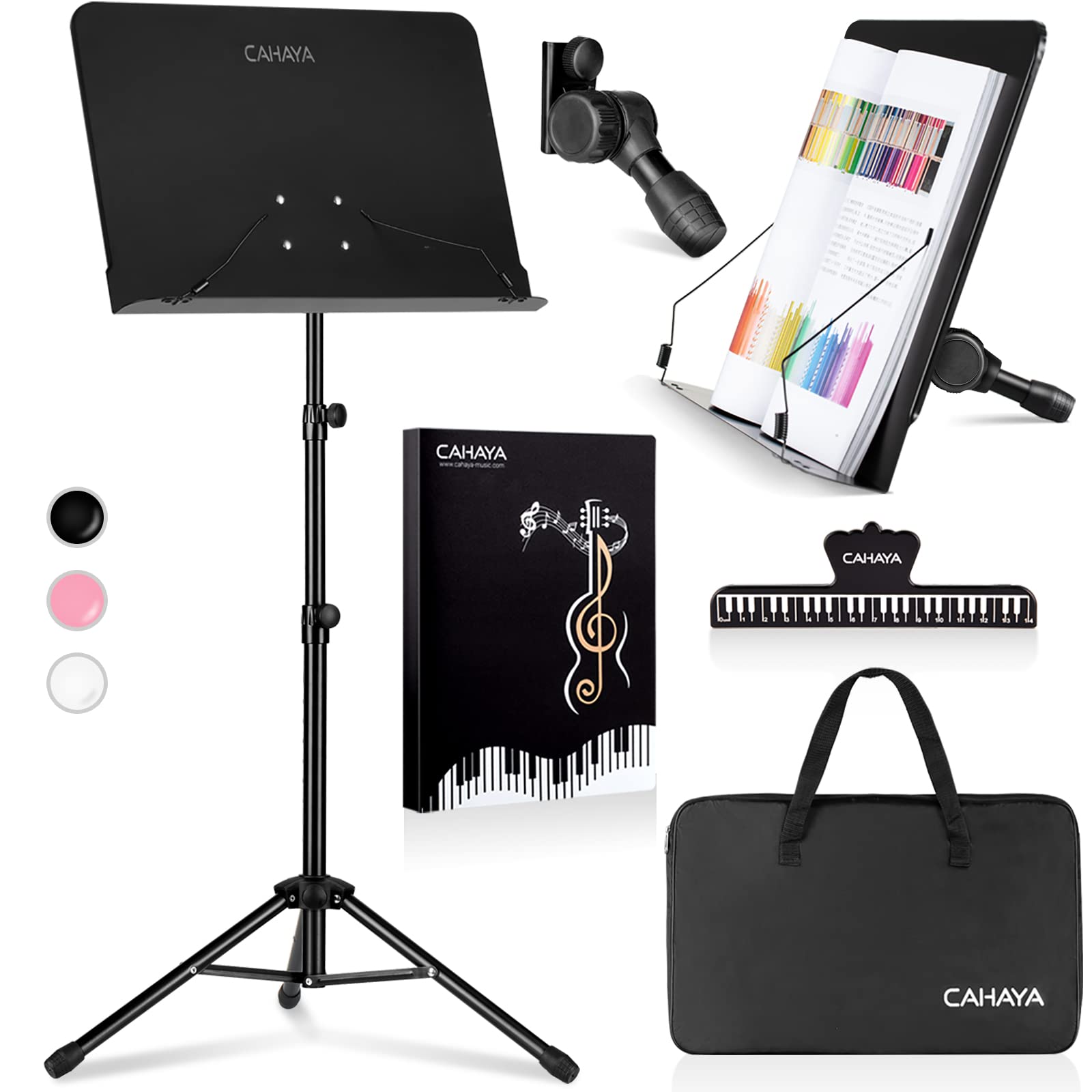
A rugged, thicker‑steel stand that supports very large books and heavier setups while still packing down for transport.
Why I picked it: I picked this because its 0.9 mm steel construction and widened base make it the most stable portable stand in this roster.
Best for: Orchestra players, those who use very thick scores, and musicians who need a sturdy travel‑friendly option.
A sturdier, slightly higher‑investment portable stand for demanding usage.
Pros
- Stronger 0.9 mm steel construction
- Holds very large books with confidence
- Wide tripod base for stability
- Roomy carrying case for extra gear
Cons
- Tightening knobs are plastic
- Carrying case feels lightweight
My take
I replaced an older stand with this CAHAYA and immediately noticed how much less it tipped when I leaned into my scores—350‑page books feel secure.
The tray's lip and spring arms let me mark up music and keep pages open, which is essential during rehearsals.
It collapses and fits into the included bag, and the bag has enough room for a few extras, so I use that when I ferry music to rehearsals.
A couple of the non‑structural knobs are plastic, but the main posts and tray are metal and feel built to last for regular use.
5. Donner DMS‑1 Music Stand with LED Light – Best with Light
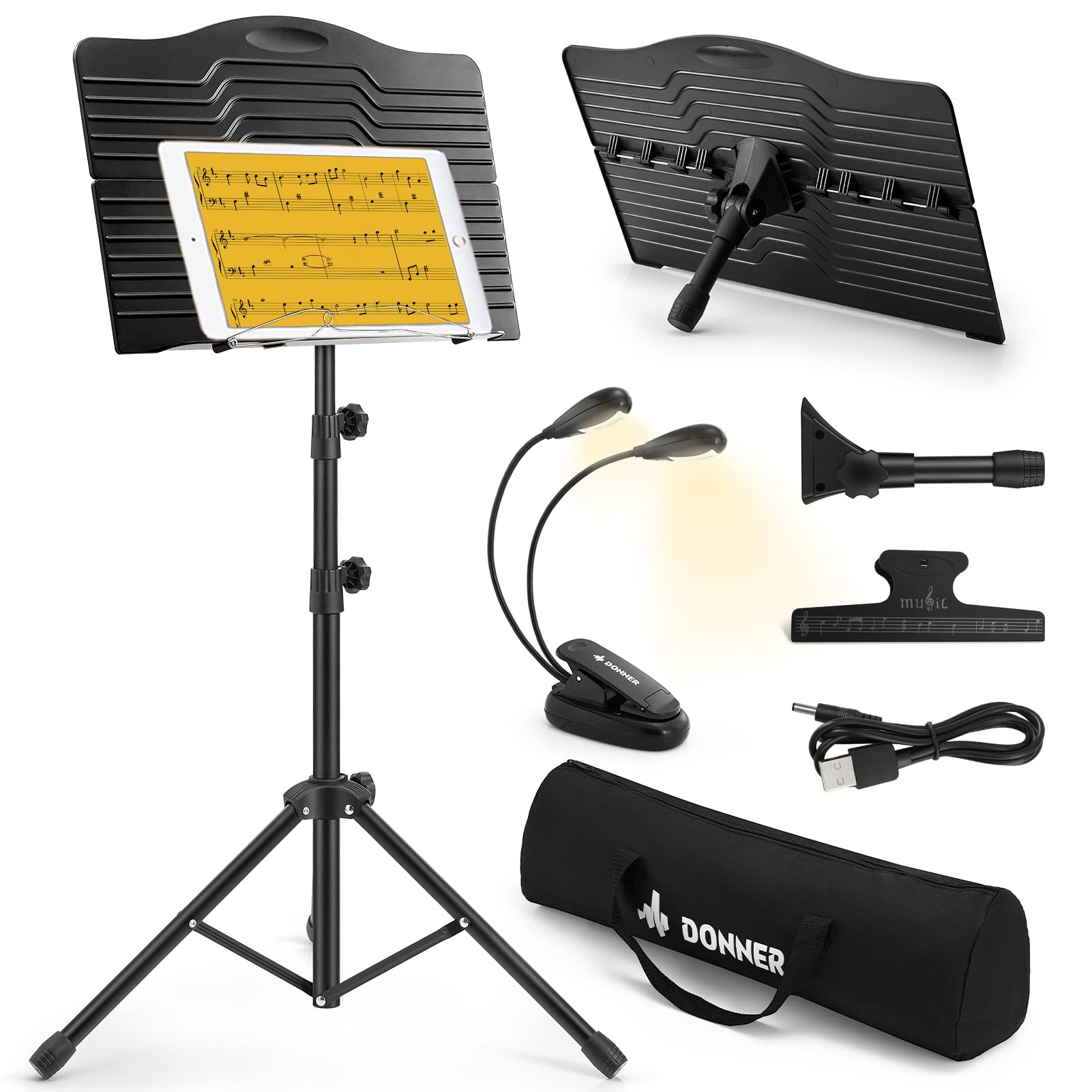
A versatile stand that includes a clip‑on LED light and a sturdy base—handy for dim rehearsal spaces and tabletop work.
Why I picked it: I picked this for its built‑in light and robust base, which make dim rehearsal spaces and late‑night practice much easier.
Best for: Players who practice in low light or need an all‑in‑one tabletop and floor solution.
A practical option that bundles a rechargeable light and sturdy base.
Pros
- Includes clip‑on dual‑neck LED light
- USB or battery power for the light
- Large base with rubber feet
- Solid ABS bookplate supports heavy loads
Cons
- Very heavy books can overload it
- Light components can be fragile
My take
I appreciated that the Donner arrived with a dual‑neck LED light—I used it for evening rehearsals and it made reading small notation simple.
The base is wide and stable on a tabletop, and the ABS bookplate handled my thicker books up to a point (very thick coffee‑table volumes were too much).
The light runs from USB or AAA batteries, which is handy when I’m moving between venues without reliable power.
Setup and breakdown are straightforward and the carry bag keeps everything together when I transport the stand to lessons.
6. K KASONIC Dual‑Use Music Stand (Black) – Best Value Dual‑Use
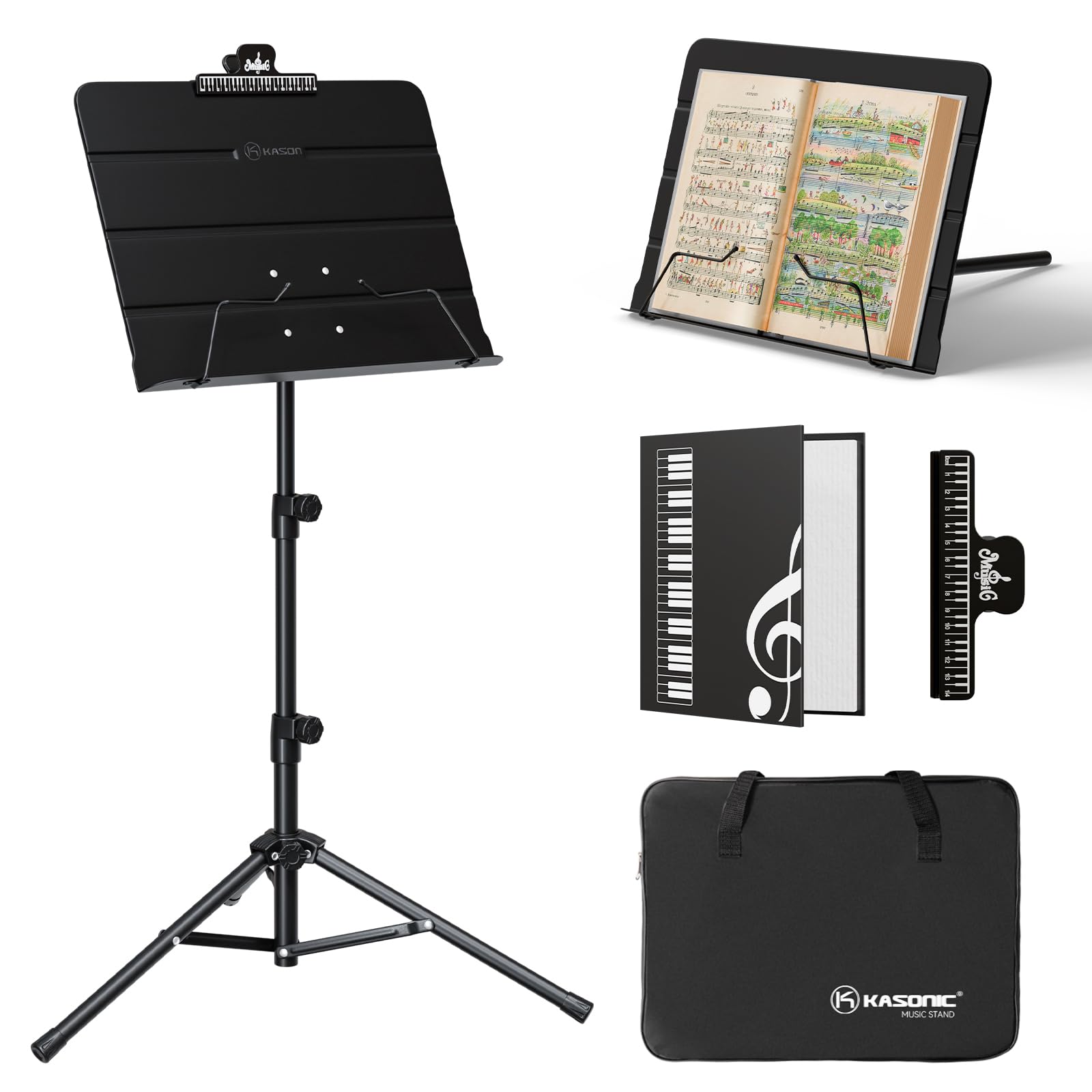
A dependable dual‑use stand that balances stability and portability, with a 1‑year warranty and plenty of useful extras.
Why I picked it: I picked this because it delivers the core features I need—height range, tilt, and portability—at a very practical value point.
Best for: Home studios, occasional gigging, and players who want a reliable everyday stand.
A strong value pick that feels more expensive than it is.
Pros
- Good height and tilt range
- Metal tripod with non‑slip caps
- Includes folder and clip
- 1‑year warranty
Cons
- Not ideal for heavy road use
- Carry bag is lightweight
My take
I keep this K KASONIC in my studio for daily practice because it sets up in seconds and holds my standard lesson books securely.
The removable bookplate converts it to a desktop stand when I need it for piano or tablet work, which is a nice convenience.
It’s light enough to carry to small gigs but I avoid heavy road use—this is a great studio or class stand rather than a flight‑case main.
Overall it gives me the features I need without overcomplicating setup or transport.
7. CAHAYA Notes‑Pattern Portable Music Stand – Best Design & Versatility
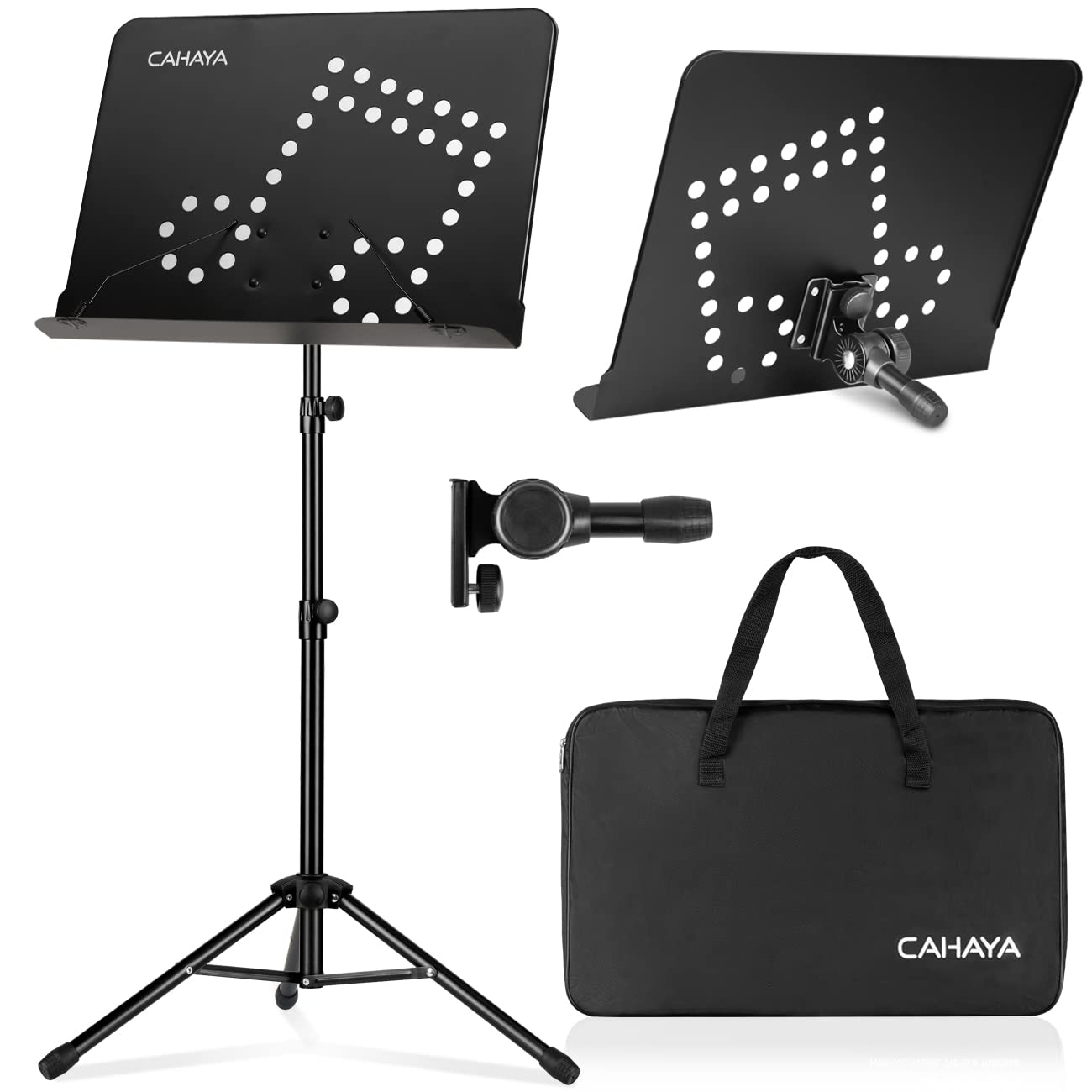
A visually distinct, stable stand with a wide footprint and a tray that fits projectors, laptops, and books up to about 11 lbs.
Why I picked it: I picked this because it marries style with function and can handle heavier devices like small projectors or laptops.
Best for: Guitarists, presenters, and musicians who want a stable tray for devices and music.
A mid‑range option that stands out both visually and functionally.
Pros
- Unique notes design
- Holds up to 11 lbs
- Wide, stable tripod footprint
- Removable desktop support
Cons
- Heavier than minimalist stands
- May be overkill for very light usage
My take
I was drawn to the notes cutout design, but the stand performs beyond aesthetics: the tray size and 11‑lb capacity let me put a small laptop or projector on it when needed.
The tripod's wider legs that CAHAYA uses give real stability on stage and in practice rooms—I've used this at a rehearsal where floor stands tended to tip, and it stayed put.
Assembly and height adjustments are straightforward, and the optional desktop adapter makes it flexible for sitting sessions.
If you want something that looks good and can also handle heavier gear, this is the one I reach for.
How I Choose a Music Stand
Key features I prioritize
I focus on stability, tray depth, and how the stand packs down for transport. If your music is in thick books or binders, tray depth and a lip or spring arms matter more than a slim profile.
Portability is about more than weight—I check how the stand fits into its carrying bag and whether it collapses without breaking into many tiny pieces.
- Stability: wide tripod base and non‑slip feet reduce tipping.
- Tray depth and grip: 1–2 inches of tray and spring arms keep heavy scores in place.
- Height and tilt range: ensure it covers both seated and standing positions.
- Accessories: carrying bag, clips, folder, and lights add real value.
- Materials: thicker steel or reinforced trays handle heavier loads.
Choosing by use case
For students and lesson use I prefer lightweight stands that fold quickly and include a bag.
For orchestral players or anyone using large scores, I choose stands with wider feet, deeper trays, and higher load ratings.
For gigs where lighting is poor, a stand with a built‑in or included clip light saves me from juggling a lamp.
- Home practice: light, cheap, and easy to store stands work well.
- Frequent travel: prioritize durable materials and a rugged bag.
- Heavy scores/tablets: pick deeper trays and higher load ratings.
- Performers: precise tilt knobs and stable feet are essential.
Frequently Asked Questions
Can these stands hold a tablet or small laptop?
Yes—several stands here (GLEAM, CAHAYA models) explicitly handle tablets and small laptops. I comfortably placed a tablet on the GLEAM and a small projector/laptop on the CAHAYA notes model, but for heavier laptops check the listed load capacity before relying on a model.
Are the included carrying bags protective enough?
I treat the bags as convenient transport rather than hard protection. They keep the stand together and make carrying easy, but most of the bags are lightweight and won't protect against heavy impacts.
Do any stands include a light?
The Donner DMS‑1 includes a clip‑on dual‑neck LED light that runs from USB or AAA batteries; I found it useful for dim venues where external lighting was limited.
Which stand is best for very thick orchestral scores?
I prefer the CAHAYA heavy‑duty model here—the thicker steel and widened base handle large, heavy scores with minimal flex and tipping during rehearsal.
Final Take
I keep at least two kinds of stands in my gear: a lightweight, quick‑fold stand for lessons and travel, and a heavier tray stand for large scores and gigs.
Pick the stand that matches your primary use—students and home players will love the portable picks, while orchestral players and gigging musicians should prioritize tray depth and base stability.
