
I tested a mix of pneumatic and cordless nailers so I could recommend tools I’d reach for when framing, trim work, or finishing. These are the ones I used enough to form a clear opinion.
I spent time firing brads and framing nails with both cordless and pneumatic guns to find tools that balance power, reliability, and ease of use.
My goal was to highlight tools that let me work faster with fewer interruptions—whether I was installing trim, building framing, or knocking out shop projects.
I kept ergonomics, jam clearance, depth control, and real-world durability at the top of my checklist when testing each nailer.
I compared cordless convenience against pneumatic consistency and picked tools that performed best for specific tasks rather than trying to crown a single universal winner.
1. WEN 18-Gauge Pneumatic Brad Nailer (61721) – Best Budget Brad Nailer
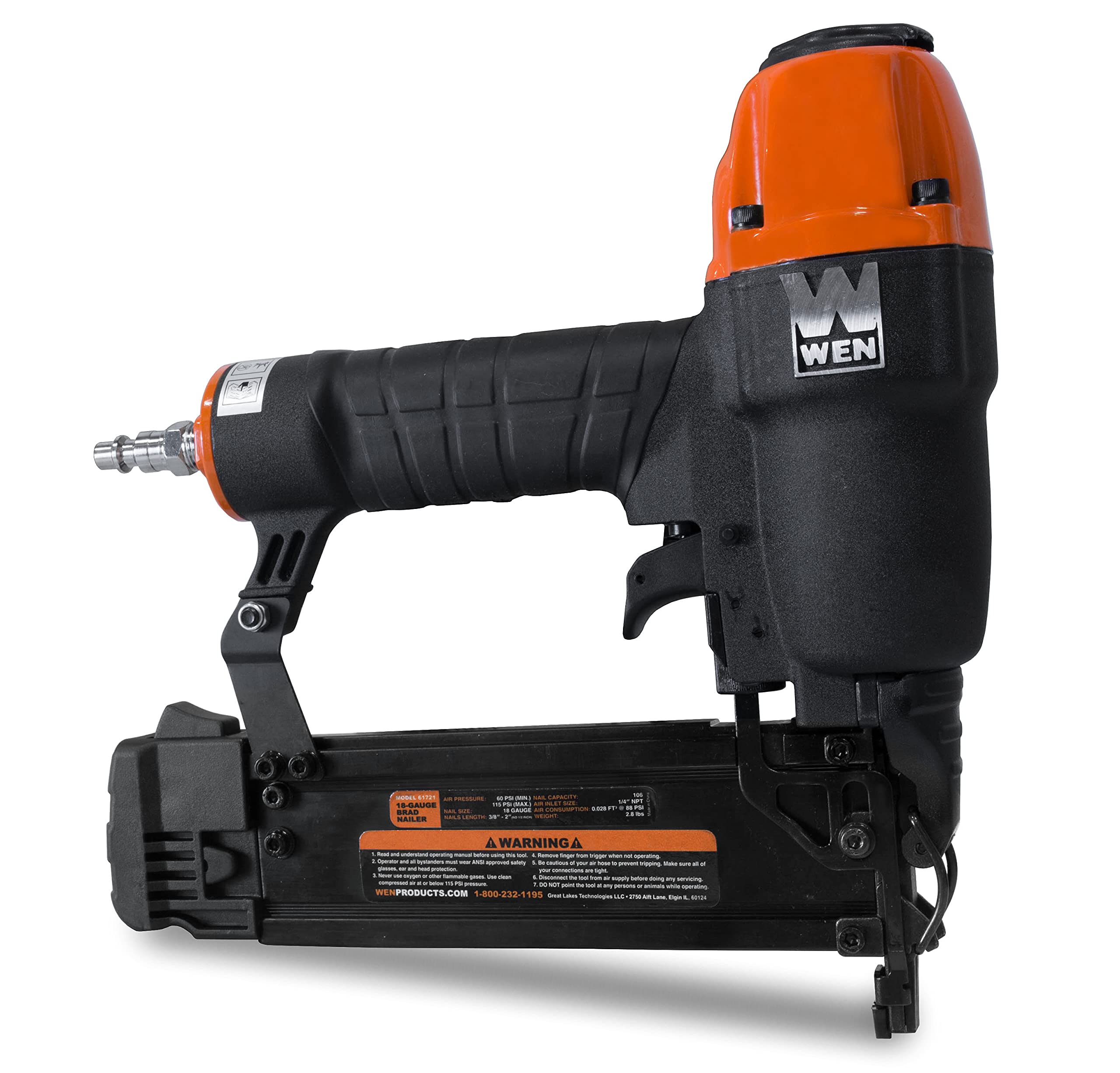
I relied on this lightweight pneumatic brad nailer for everyday trim and shop work where I had compressor access and wanted a low-fatigue tool.
Why I picked it: Big magazine, light weight, reliable performance in my shop tests.
Best for: DIY trim, cabinet touch-ups, and repetitive shop tasks.
Very affordable option for hobbyists and light pros.
Pros
- Large 106-nail magazine
- Very lightweight and easy to handle
- Quick jam release
- Comfortable rubber-lined grip
Cons
- Depth knob can be bumped
- Brad remaining window is hard to read
- Requires air compressor
My take
I put this WEN brad nailer on my compressor, added the recommended oil, and ran 1" stainless brads at 60 PSI. It drove cleanly and consistently without fuss, and the soft grip kept my hand comfortable during long runs.
The spring-loaded 106-nail magazine saved me from constant reloads on long trim runs, and the rotatable exhaust let me direct air away from my face on tight jobs.
Two small annoyances surfaced: the depth adjustment wheel is easy to nudge out of position, and the nail-count window could be brighter. Neither problem stopped work, but I paid attention to depth settings more than usual.
2. NuMax SFR2190 Pneumatic 21 Degree 3-1/2″ Framing Nailer (Tool Only) – Best Framing Nailer for Value
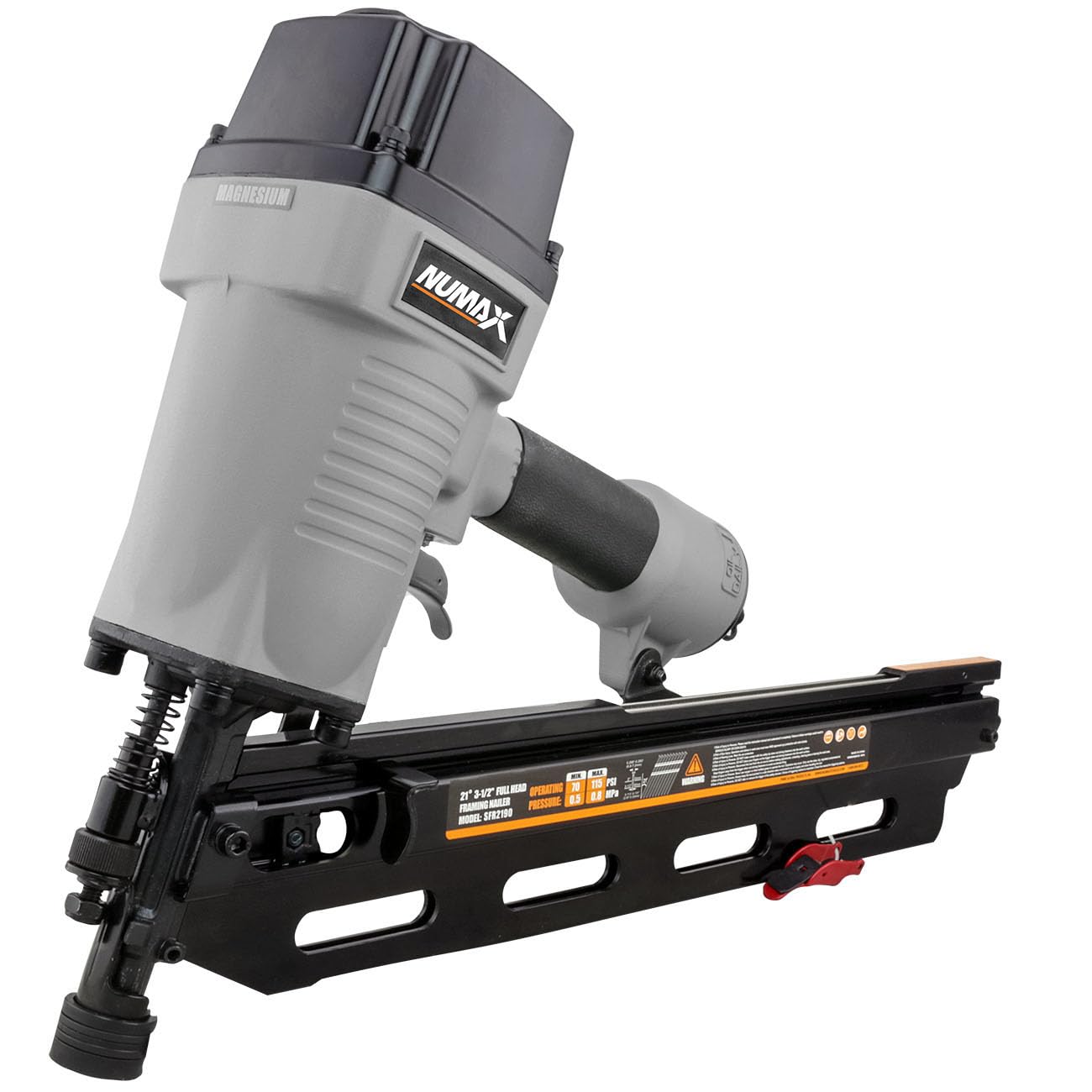
When I needed a straightforward framing gun that would finish whole rooms without drama, this NuMax stayed in service and performed exactly as expected.
Why I picked it: Simple, durable drive blade and useful firing modes for framing jobs.
Best for: Framing walls, subfloors, roof decking, and fencing.
Budget-friendly framing tool that keeps going.
Pros
- Hardened steel one-piece drive blade
- Dual-mode trigger for speed or precision
- Anti-dry-fire protection
- Tool-free depth adjustment
Cons
- Heavier than some competing models
- No included carrying case
My take
I used the NuMax to frame an 18×20 room and it handled the job without misfires or hangups, even when I pushed through long sessions.
The dual-mode trigger let me switch between sequential shots for accuracy and bump firing for rapid layout work, and the anti-dry-fire saved me from damaging the nose when I ran low on nails.
Expect a solid, slightly bulky tool that does what a framing nailer needs to do: drive collated nails quickly and reliably.
3. PORTER-CABLE 20V MAX Cordless Brad Nailer (PCC790LA) with Battery and Charger – Best Cordless Brad Nailer Kit
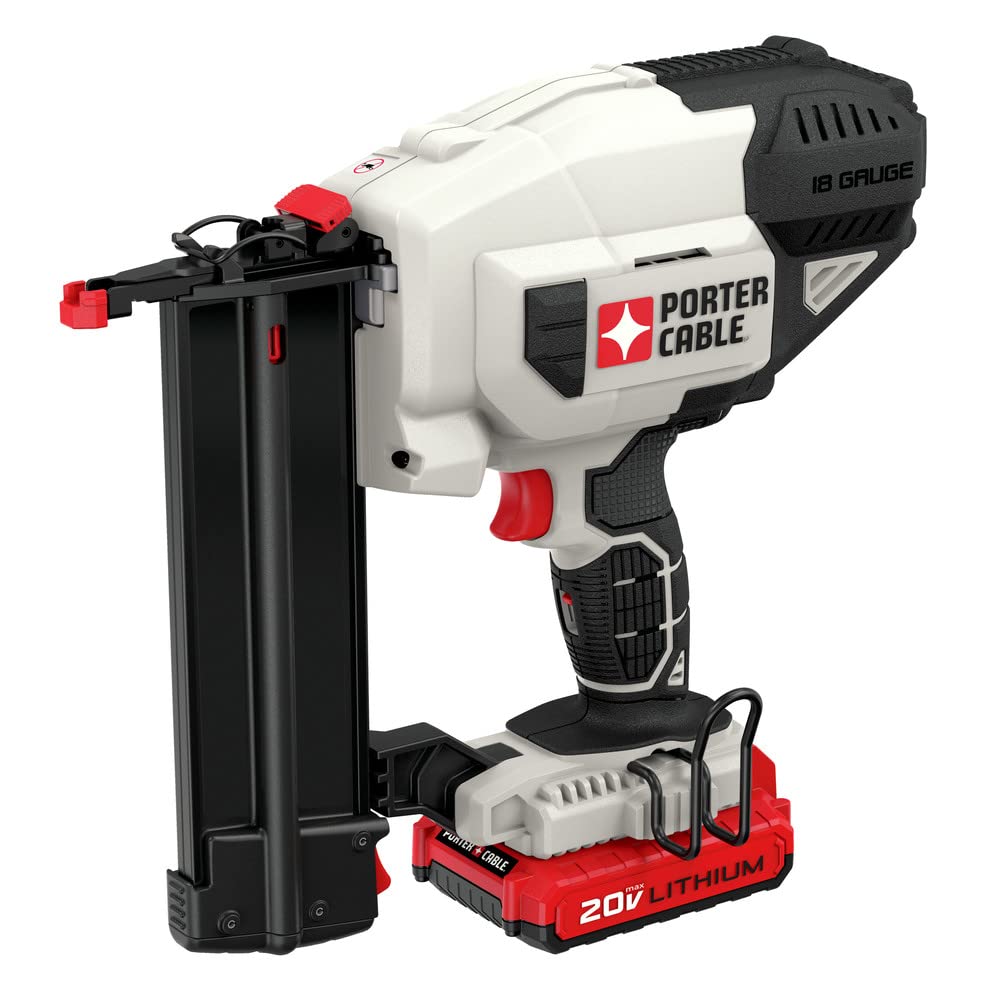
I grabbed this Porter-Cable when I wanted cordless convenience for trim work and small installs without dragging a compressor.
Why I picked it: Cordless freedom plus included battery and charger for immediate use.
Best for: Trim, baseboard, cabinet assembly, and light shop tasks.
A convenient midrange cordless choice with battery included.
Pros
- Cordless convenience—no hose needed
- Included battery and charger
- Balanced and comfortable in hand
- Dual LEDs for dim areas
Cons
- Shorter brads can jam occasionally
- Mostly plastic construction
My take
I used the Porter‑Cable extensively on baseboard installs and small cabinet jobs and appreciated the lack of a hose—setup time dropped dramatically.
Its high‑output motor delivered consistent drive across different woods, and the tool’s balance made long sessions less fatiguing.
I did run into occasional jams with very short brads; clearing them was straightforward, but I factored that into how I stocked nails for a job.
4. DEWALT 18GA Pneumatic Brad Nailer (DWFP12231) – Best Reliable Pneumatic Brad Nailer
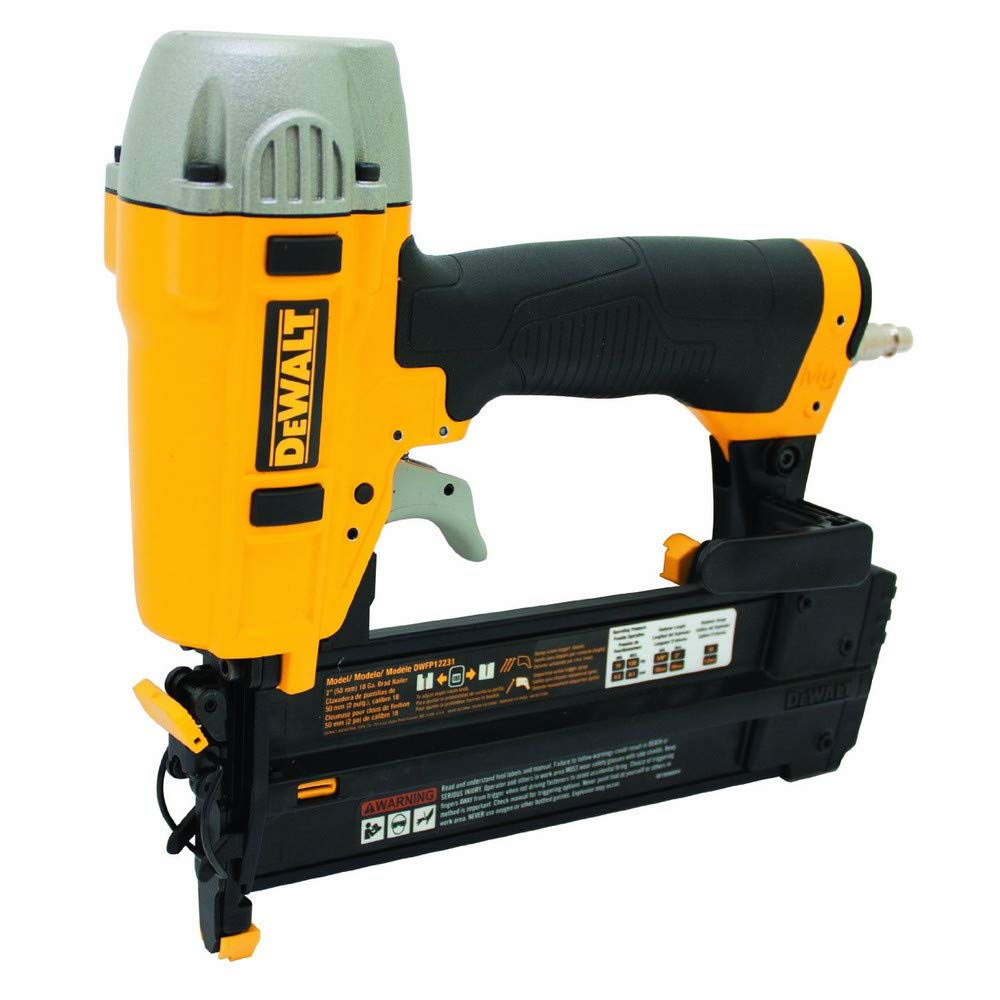
I reached for this DEWALT when I wanted a no-nonsense pneumatic brad gun that handled heavy trim workloads without extra maintenance fuss.
Why I picked it: Maintenance-free motor and precise depth control with detents.
Best for: Extended trim jobs, molding, and professional finish work.
Dependable option that feels like a workshop staple.
Pros
- Maintenance-free motor
- Depth adjustment with detents
- Tool-free jam release
- Rear exhaust keeps debris away
Cons
- Requires compressor and hose
- No hard case included
My take
I drove a hundred-plus nails with this DEWALT without a single jam, and the detented depth control made consistent countersinking nearly effortless.
The narrow nose fit into tight corners that other guns struggled with, and the jam release is genuinely simple when I needed it.
If you prefer a low-maintenance pneumatic tool for long sessions, this one earned a permanent spot on my belt.
5. DEWALT DCN680B 20V MAX XR Cordless Brad Nailer (Tool Only) – Best Premium Cordless Brad Nailer
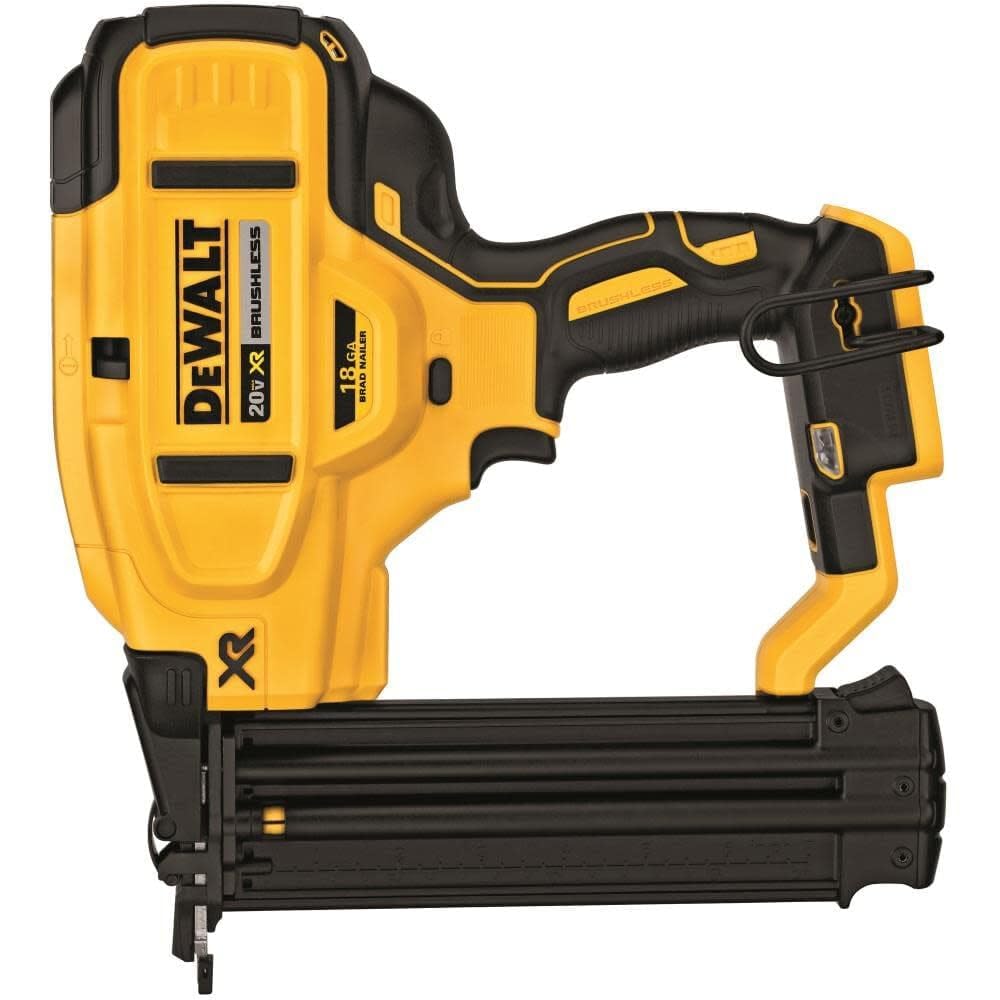
I treated this DEWALT as a premium cordless option when I needed brushless efficiency and a micro nose for tight, accurate nailing.
Why I picked it: Brushless power and micro nose for accuracy during precise finish work.
Best for: High-volume finish work where cordless freedom matters.
Premium-tier cordless tool; battery required separately.
Pros
- Brushless motor for runtime and durability
- Micro nose improves accuracy
- Tool-free jam release
- LED lights for diagnostics and work
Cons
- Higher-end, more costly option
- Tool-only—battery not included
My take
I swapped this DEWALT into several trim jobs where I didn’t want hoses and it consistently drove nails without the jamming I saw on cheaper cordless guns.
The brushless motor kept run-time high and gave an immediate, confident drive into both hardwoods and softwoods.
Because this is a tool-only kit, I paired it with my existing 20V batteries and immediately appreciated how much time I saved without setup or hoses.
6. Makita AF506 18 Gauge 2″ Brad Nailer – Best Narrow-Nose Brad Nailer
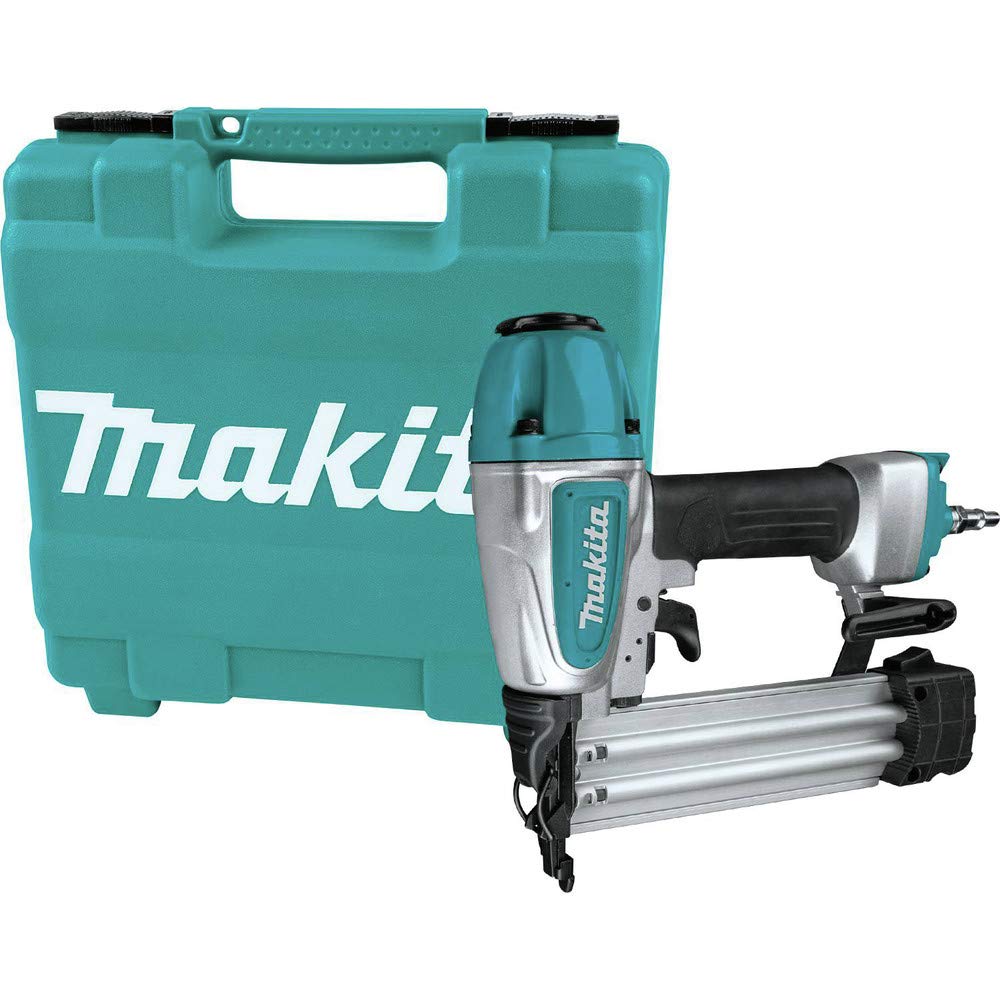
I picked the Makita when I needed a compact, narrow-nose gun for tight trim and confined spaces where access is limited.
Why I picked it: Ultra-narrow nose and aluminum build for durability in tight spaces.
Best for: Trim in confined areas, flooring edges, and delicate finish work.
Solid midrange pneumatic pick with Makita build quality.
Pros
- Ultra-narrow nose for tight access
- Lightweight aluminum body
- Tool-less depth dial
- Built-in air duster
Cons
- Not my top overall pick
- Requires compressor setup
My take
I used the Makita for trim in cramped corners and appreciated how its narrow nose reached places other guns couldn't without forcing the workpiece.
At around 2.9 pounds it stayed light in my hand all day, and the cast nose piece felt precise when I needed exact placement.
The tool‑less depth adjustment dial made changing materials quick, and the rotating exhaust was handy when working on ladders.
How I Choose Nail Guns for Framing and Finish Work
Power Source: Pneumatic versus Cordless
I decide between pneumatic and cordless based on the job. If I’m on a large framing or trim run with easy compressor access, a pneumatic gun gives consistent, long-term power.
For jobs where mobility or quick setup matters—like multi‑unit remodels, on-ladder trim, or small shop projects—I reach for cordless models.
- Pneumatic: consistent power, lighter tool weight, needs compressor and hose.
- Cordless: instant mobility, no hoses, battery management required.
What I Test For
I evaluate ergonomics, jam-clearing speed, depth adjust reliability, and how well the nose lets me place nails in tight spots.
Durability matters: I look for hardened drive blades and solid construction that survive repeated cycles.
- Ergonomics: does the tool stay comfortable during long runs?
- Jam clearance: can I clear a jam fast and without tools?
- Depth control: are settings positive and repeatable?
Nail Compatibility and Magazine Capacity
I match the gun to the nails I plan to use. Framing guns require collated framing nails at the specified angle; brad nailers need 18-gauge brads in the stated length range.
A larger magazine saves reload time on long runs, which matters for production work.
- Confirm nail length and gauge before buying.
- Check magazine capacity if you hate frequent reloads.
Maintenance and Extras I Appreciate
I favor tools with tool-free jam release and detented depth adjustments so I can keep momentum on the job.
Rotating exhausts, safety tips that won’t mar work, and LED work lights are small features that make a real difference in daily use.
- Tool-free jam release speeds up troubleshooting.
- Detents on depth knobs prevent accidental shifts.
- Rotating exhausts direct air away from eyes and dust.
Frequently Asked Questions
Do I need a compressor for a brad nailer?
If you choose a pneumatic brad nailer, I will use a compressor. Cordless brad nailers remove the compressor requirement, but they need charged batteries.
Which nailer type is best for framing?
I use a pneumatic 21° or 30° framing nailer for structural work because it delivers the drive power and capacity framing demands.
How do I prevent jams?
I keep the magazine clean, use the correct nail length and collation, and follow the tool’s lubrication and maintenance guidelines—those steps eliminate most jams.
Final Take
I chose each tool here for a specific role: budget pneumatic brads for shop work, value framing nailers for structure, and premium cordless guns when mobility and finish precision matter.
Think about whether you prioritize cordless freedom or the steady power of a compressor, then pick the tool that matches how you work.
After using these tools in real jobs, I’m confident the options above will save time and reduce frustration on the kinds of framing and trim tasks I routinely face.
