
I tested six rug pads across hardwood, tile, and high-traffic rooms so you can pick the right combination of grip, cushion, and floor protection.
I spend a lot of time swapping rugs and pads around my house to get the right feel and grip for each room. Rug pads change how a rug performs underfoot: some add padding and warmth, others lock a rug to a slick floor.
In this roundup I focused on pads that protect floors, keep rugs put, and are straightforward to trim and install. I tested felt-only pads, felt-plus-rubber, silicone-backed options, and thin grippers for low-clearance areas.
Below I share which pad I reach for in different situations and why—so you can pick the one that fits your rug, floor, and how you live.
If you need cushion and floor protection, go felt; if you need a secure hold on hardwood or tile, choose a felt-plus-rubber or silicone-backed pad.
1. RUGPADUSA Basics 100% Felt Rug Pad – Best Plush Felt
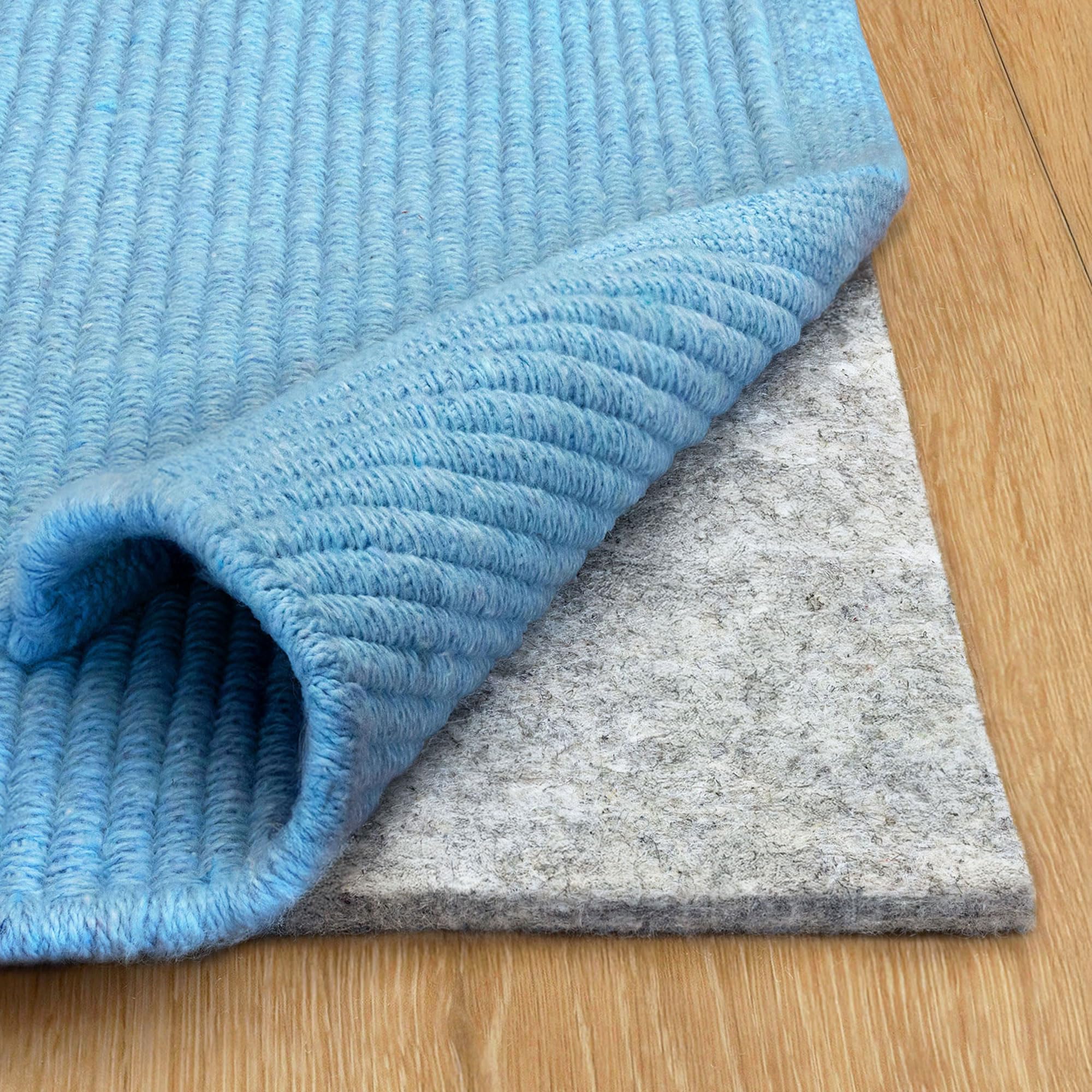
A dense, glue‑free felt pad that adds noticeable cushion and protects floors; not intended to stop slipping on its own.
Why I picked it: I picked this for its dense 100% felt construction, eco-friendly materials, and genuine underfoot plushness.
Best for: Heavy rugs anchored by furniture and rooms where cushion and floor protection matter more than slip resistance.
An affordable felt-first option; step up to thicker versions for more cushion.
Pros
- Very plush underfoot
- Protects floors from dents and abrasion
- No glue, PVC, or latex
- Adds noise reduction and warmth
Cons
- Not designed to prevent sliding
- Will shift if rug not anchored
- Thickness can vary slightly
My take
I used the Basics felt pad under an 8×10 rug and liked how it transformed a thin rug into something noticeably cushier. The pad’s density gives a solid, warm feel when I sit or play on the floor.
Because it’s 100% felt and glue‑free, I didn’t worry about marks on my hardwood. It’s easy to trim with scissors so it fits just under my rug edges, and the thicker 3/8" or 1/2" options are great if you want even more give.
One thing I pay attention to: this pad won’t stop a lightweight rug from sliding. I only use it on rugs that are anchored by furniture or are heavy enough to stay put.
2. Rug Gripper Non Slip Pad – Best Budget Gripper
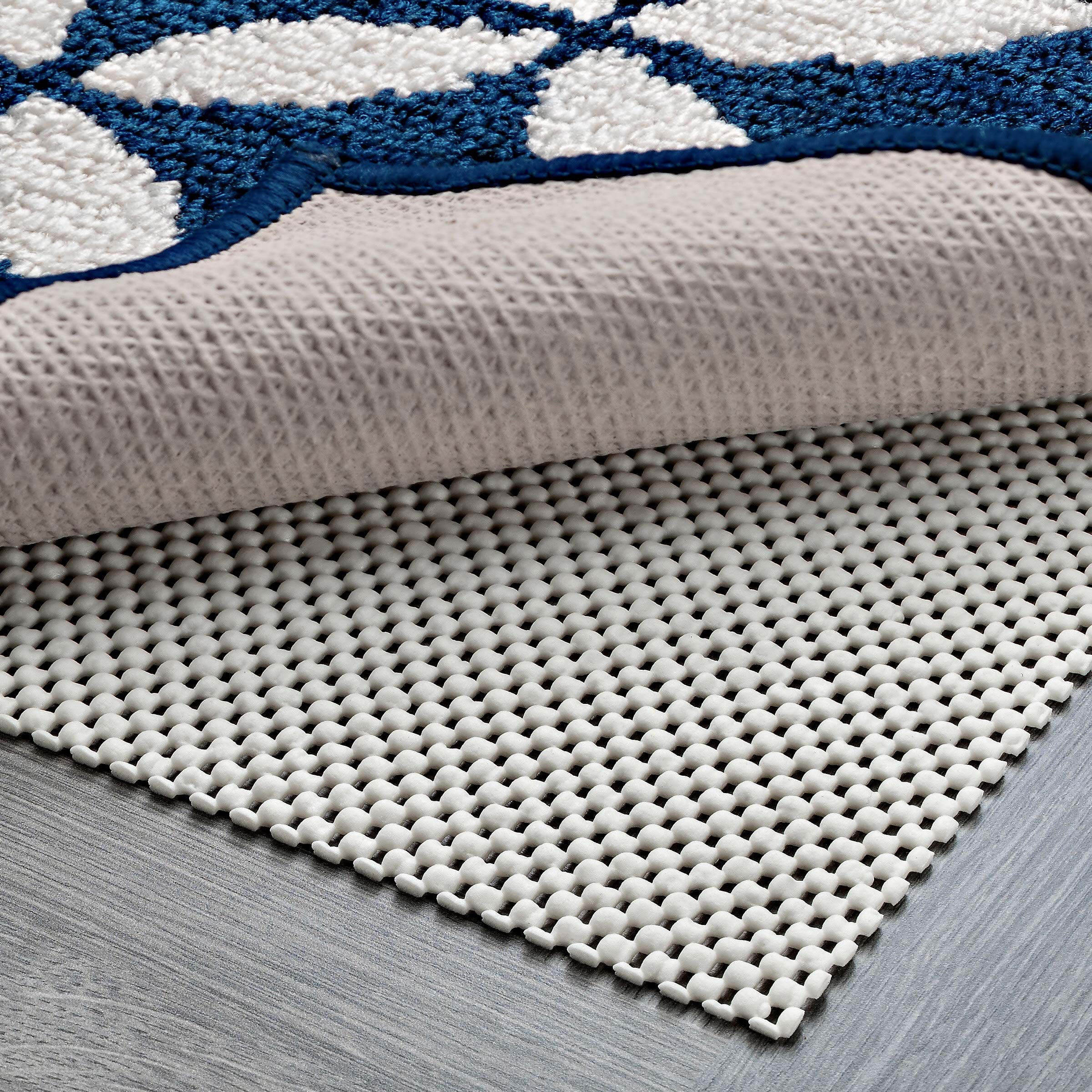
A thin, tacky gripper that holds small rugs in place and fits low‑clearance spots like foyers and entryways.
Why I picked it: I picked this when I needed a thin pad with aggressive traction and minimal lift at the door.
Best for: Small rugs, entryways, and spaces with tight clearances where trip risk matters.
A very budget-friendly gripper that delivers solid performance for small rugs.
Pros
- Very grippy for its thickness
- Low profile avoids trip hazards
- Easy to trim to fit
- Washable and light
Cons
- Initial chemical odor fades
- Sparse cushioning
- Tacky feel to the touch
My take
I put this thin gripper under a 3×5 rug at my front door where clearance is tight; it solved the slipping problem without raising the rug edge. Ordinary scissors trimmed it down easily.
It has a slightly tacky surface that clings well to tile and hardwood. The pad is thin enough that door clearance isn’t an issue, which is exactly why I use it in foyers.
Expect minimal cushion—this one’s about grip and low profile more than plush comfort. The initial factory smell went away within an hour in my house.
3. Epica Super‑Grip Open‑Square Rug Pad – Best Suction Grip
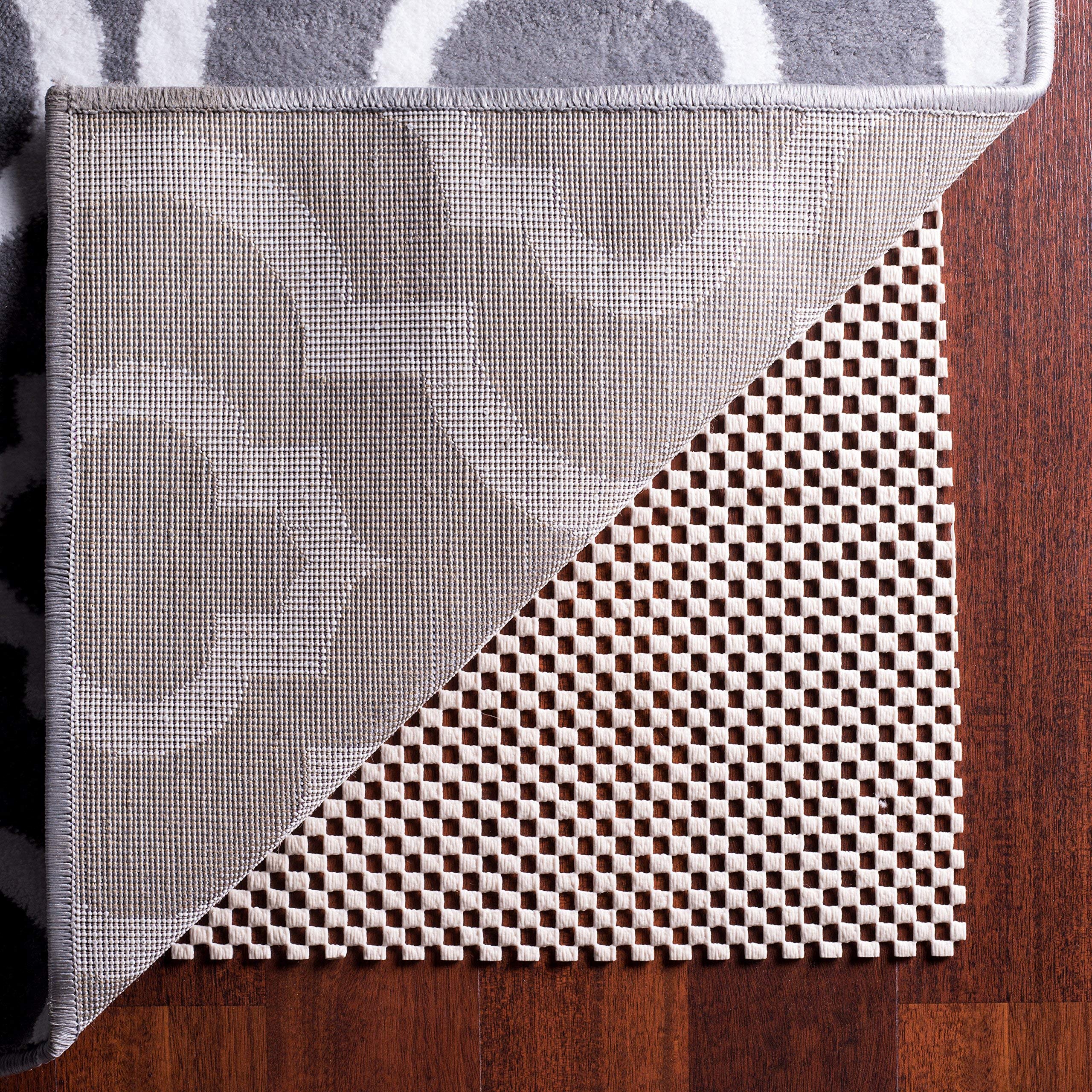
An engineered open‑square pad that uses suction‑style contact for strong hold and a reversible, low‑profile design.
Why I picked it: I picked Epica for its open‑square construction that increases floor contact and bite, especially on slick surfaces.
Best for: High‑traffic areas where slippage creates safety concerns and for rugs that need a firm hold on hard floors.
A mid-priced option that prioritizes grip over cushion.
Pros
- Excellent suction-like grip
- Reversible and vacuum-friendly
- Pre-cut sizes, easy to trim
- Sturdy, low-profile construction
Cons
- Provides little padding
- Not meant to replace thicker cushioning
- Limited insulation underfoot
My take
I used the Epica pad under a 5×8 runner and noticed how well the open-square pattern resists sudden shifts when someone steps hard. It feels like the pad actively grabs the floor.
Installation was painless: the pad lay flat right away and I trimmed excess with scissors. Because it’s low-profile it won’t raise rug edges, which I appreciate in narrow hallways.
If you want cushion as well as grip, pair this with a thin felt layer or choose a felt-and-rubber option. For pure non‑slip performance on hardwood or tile, this is one I reach for.
4. Veken Felt Rug Pad with Silicone Backing – Best Felt + Silicone
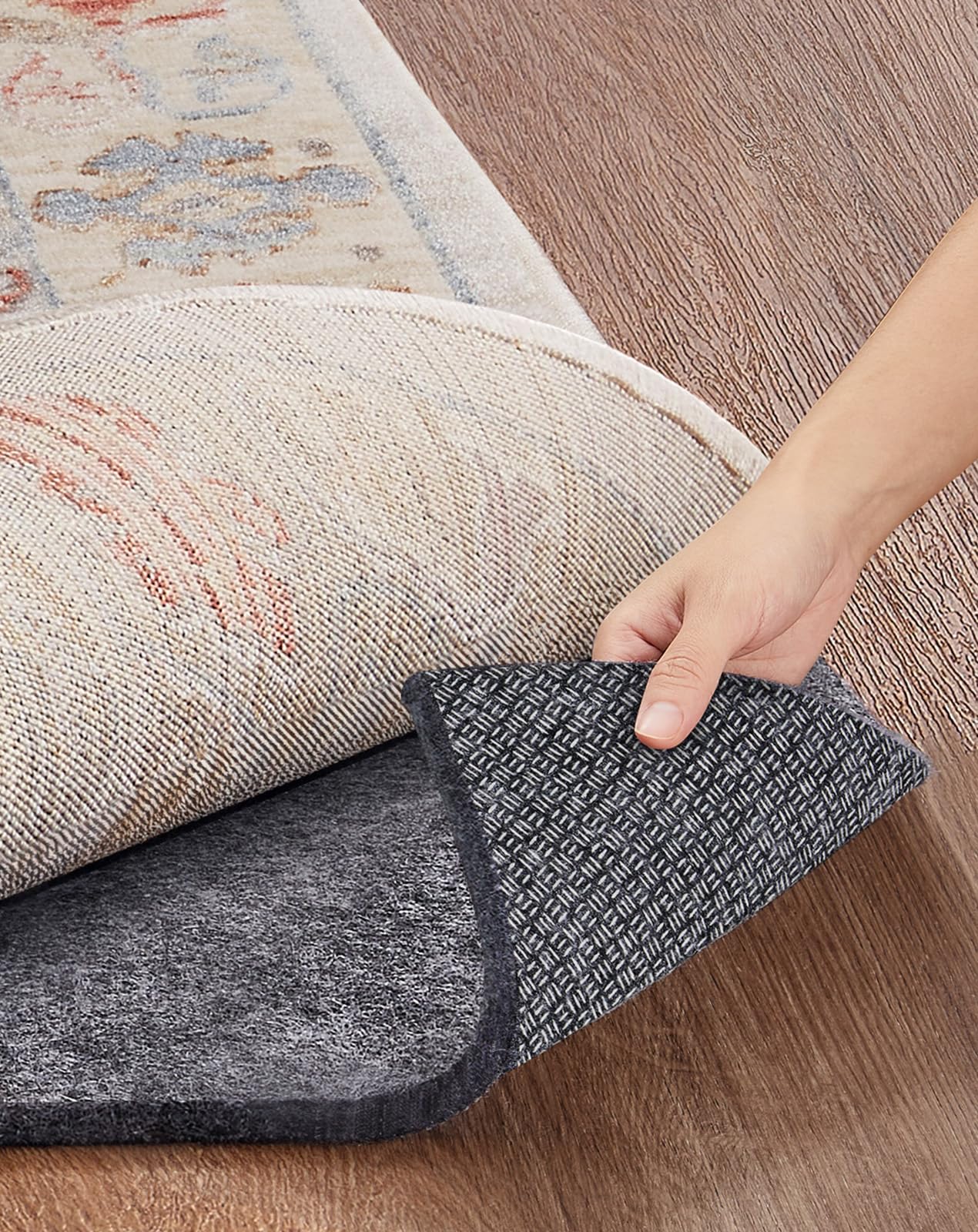
A needle‑punched felt pad with silicone backing that balances comfort and anti‑slip performance for everyday use.
Why I picked it: I picked this because the silicone back gives reliable grip while the felt face keeps the rug cushioned and protected.
Best for: Rooms that need a little padding but still require a secure hold on hardwood or vinyl floors.
A practical mid-range option that blends cushion and traction.
Pros
- Strong silicone anti‑slip grip
- Comfortable felt surface
- Easy to trim and lay flat
- Odorless, eco-conscious materials
Cons
- Slightly thicker than rubber mesh pads
- May require trimming for perfect fit
My take
I placed this pad under an 8×10 rug and it made a big difference: the rug stopped sliding and felt softer underfoot. The silicone underside grips my hardwood without leaving marks.
The pad unrolled with minimal wrinkles and was simple to trim for a tidy edge. It also adds a touch of insulation and sound dampening, which I noticed in my upstairs hallway.
Overall it’s the balance I look for when I want traction and comfort without the heavy feel of a full rubber backing.
5. RUGPADUSA Felt & Rubber Non‑Slip Rug Pad – Best Non‑Slip
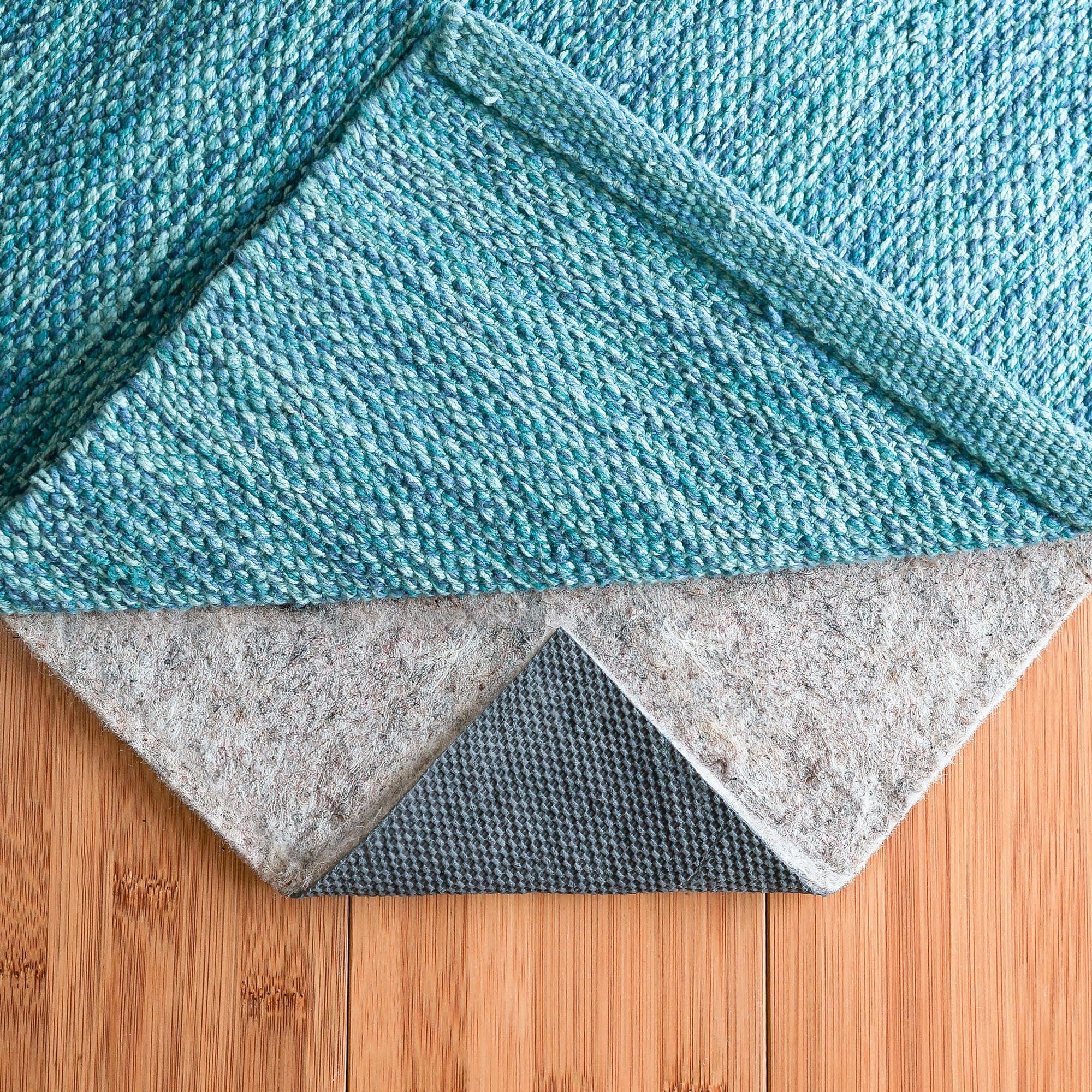
A felt-and-rubber pad with textured rubber backing that locks rugs in place while protecting floors and adding cushion.
Why I picked it: I chose this as my go-to non‑slip because the felt holds the rug while the rubber backing prevents sliding on hardwood.
Best for: Large area rugs, family rooms, and spaces where a secure hold is essential.
A more premium non‑slip choice that’s worth it for larger or high-traffic rugs.
Pros
- Reliable non‑slip grip
- Dense cushion underfoot
- Made in the USA with low‑VOC materials
- Backed by a warranty
Cons
- Heavy and awkward to position
- Rug can move on top of the pad
- Heavier pads require more effort to trim
My take
I’ve used these non‑slip felt-and-rubber pads under several large rugs and I appreciate how well the rubber underside anchors the whole assembly to hardwood floors.
The felt side improves cushion and warmth while still holding rug backing in place. I did find the pads are heavy to move into position, so I set them in place before laying down furniture.
If you want a secure, long-term solution for a big rug in a living room or dining area, this combination of felt and rubber is the one I reach for.
6. RUGPADUSA 100% Felt Rug Pad (8'x11') – Best for Playrooms
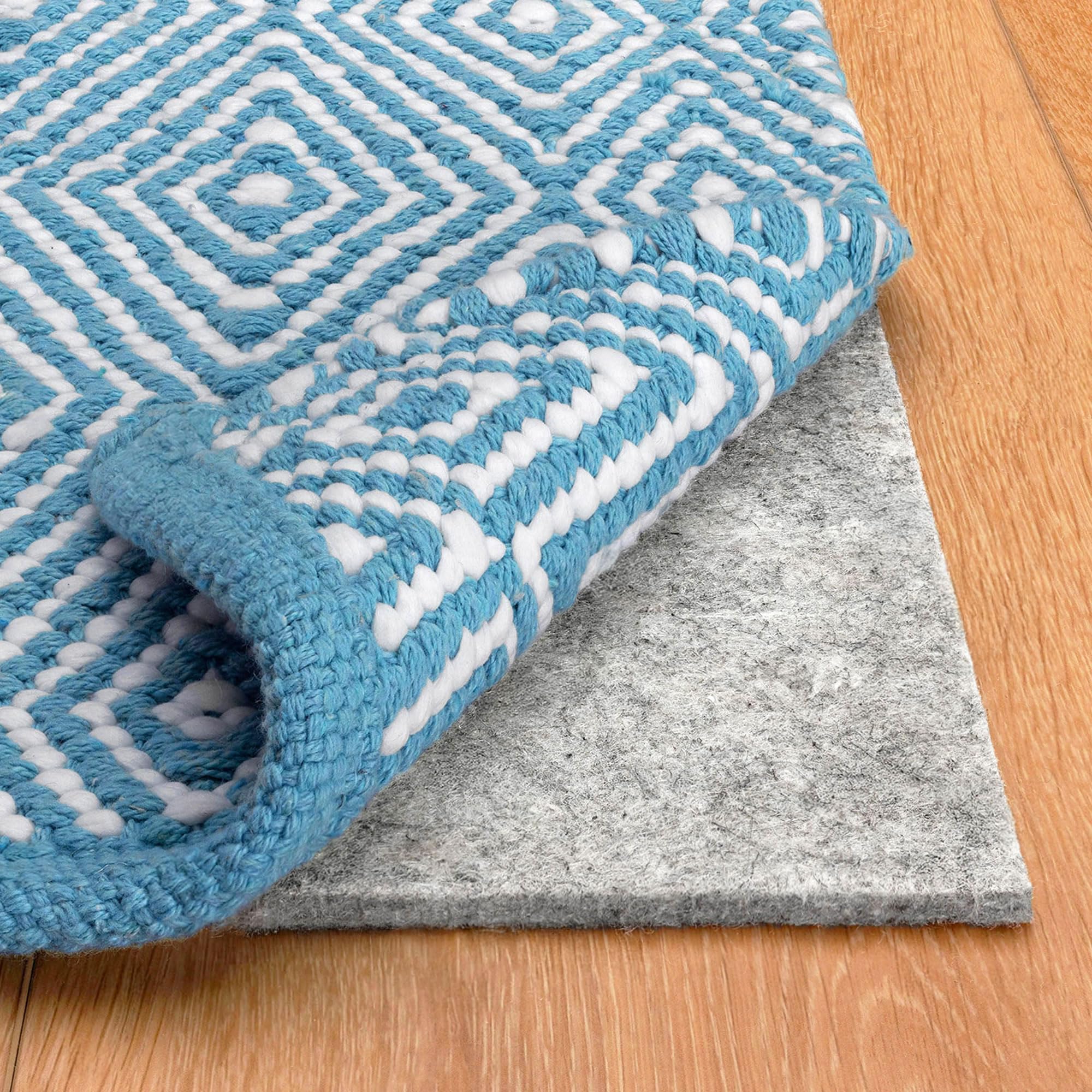
A plush recycled felt pad built for comfort and floor protection; ideal for play areas where softness matters.
Why I picked it: I picked this because it’s plush enough for play and crawling without being so thick it becomes a trip hazard.
Best for: Playrooms, nurseries, and any space where softness and insulation are priorities.
A mid-range felt pad that emphasizes comfort and durability.
Pros
- Plush and comfortable for kids
- Protects floors from dents
- Made in the USA from recycled materials
- Two-year warranty
Cons
- Not non‑slip by itself
- Very durable material can be hard to cut
- May shift on slick floors if unanchored
My take
I put this 100% felt pad under a play rug where my child spends a lot of time. The extra cushion made floor play far more comfortable and even kept the room warmer in winter.
Cutting proved tougher than expected because the pad is dense and durable—plan on a sharp utility knife or stronger tool for larger trims. Once in place the pad lay flat and felt substantial.
This is the pad I choose when comfort and floor protection are the priority; if you need non‑slip performance, add a thin gripper or use a felt-and-rubber alternative.
How I Choose a Rug Pad
Match material to your priority
I decide between three main types: felt for cushion and floor protection, rubber or silicone-backed pads for grip, and thin grippers for low-clearance areas.
If I want softness and insulation I go felt. When slip prevention is the main concern I choose a felt-and-rubber or silicone-backed pad.
- Felt — best for cushioning, insulation, and protecting floors
- Felt + rubber/silicone — best balance of cushion and non‑slip hold
- Thin rubber/gripper — best for entryways and low clearance spots
Pick thickness with use in mind
I select thicker pads for living rooms and play areas where comfort matters. For doorways or under thin runners I pick low-profile pads to avoid tripping.
When in doubt, slightly smaller pad than rug dimensions prevents edge cupping and tripping.
- 1/4" — standard cushion and protection
- 3/8"–1/2" — extra plush for playrooms and living areas
- Thin (~1/8") — low profile for doors and tight clearances
Floor compatibility and safety
I always check that the pad material is safe for my floor type. Glue-free felt and low‑VOC products are my preference on hardwood.
I avoid pads that can dry‑rot on-floor surfaces if I know I’ll be moving the rug often.
- Hardwood: use felt or felt+rubber labeled safe for hardwood
- Tile/vinyl: rubber or silicone backings work well
- Basements: consider moisture and pick appropriate materials
Installation and trimming tips
I unroll the pad a day before laying the rug so any creases relax. I always cut the pad a bit smaller than the rug—about 1/2"–1" on each side.
For dense pads I use a utility knife or heavy-duty scissors; durable felt sometimes requires a sharper blade and patience.
- Trim pad slightly smaller than rug edges
- Allow pad to lay flat before positioning rug
- Set heavy furniture over edges to help anchor large rugs
Frequently Asked Questions
Will a felt pad stop a rug from slipping?
I use felt pads mainly for cushion and protection. Felt by itself won’t reliably stop slipping unless the rug is anchored by furniture or is very heavy; for non‑slip performance I choose a felt‑and‑rubber or silicone-backed pad.
How much smaller should I cut the pad than my rug?
I trim rug pads about 1/2" to 1" smaller on all sides so the rug edge sits slightly over the pad and avoids tripping or visible pad edges.
Can I use these pads on all floor types?
I use felt and felt‑and‑rubber pads on hardwood, laminate, tile, and vinyl—just confirm the product notes say they’re safe for your floor type. Avoid rubber pads that may dry‑stick if you plan to move rugs frequently.
How do I cut dense felt pads?
I use a sharp utility knife on a protected surface for large cuts. Heavy scissors work for smaller trims, but very dense pads may require a better blade and steady pressure.
Final Take
I choose a rug pad based on whether I want cushion or grip: pure felt for comfort, felt+rubber or silicone for reliable non‑slip performance.
For hallways and doors I prefer a thin gripper to avoid trip hazards; for living rooms and play areas I opt for denser felt or felt+rubber for both comfort and protection.
Use the notes above to match the pad to your rug and floor, and trim slightly smaller than the rug for the best results.
