
I tested six very different nonstick skillets — iron, ceramic, and clad — to find pans that actually perform day to day. Here are the ones I keep using and why.
I cooked my way through six skillets so you don’t have to. Each pan here earned a spot in my kitchen for different reasons: some for immediate out-of-the-box release, some for long-term heat control, and some because they’re workhorse iron pans that improve with time.
I’ll tell you what each pan does best, who it suits, and the practical trade-offs I ran into while using them.
Across these pans I weighed three things most heavily: how reliably food releases, how the pan handles heat, and what upkeep it demands. If you want effortless eggs and pancakes, I steer you toward the ceramic and coated pans; if you want searing power and longevity, the nitrided or embossed iron pieces are my picks.
1. Endoshoji TKG Embossed Iron Frying Pan — 7.9 in (20 cm) – Best Textured Iron
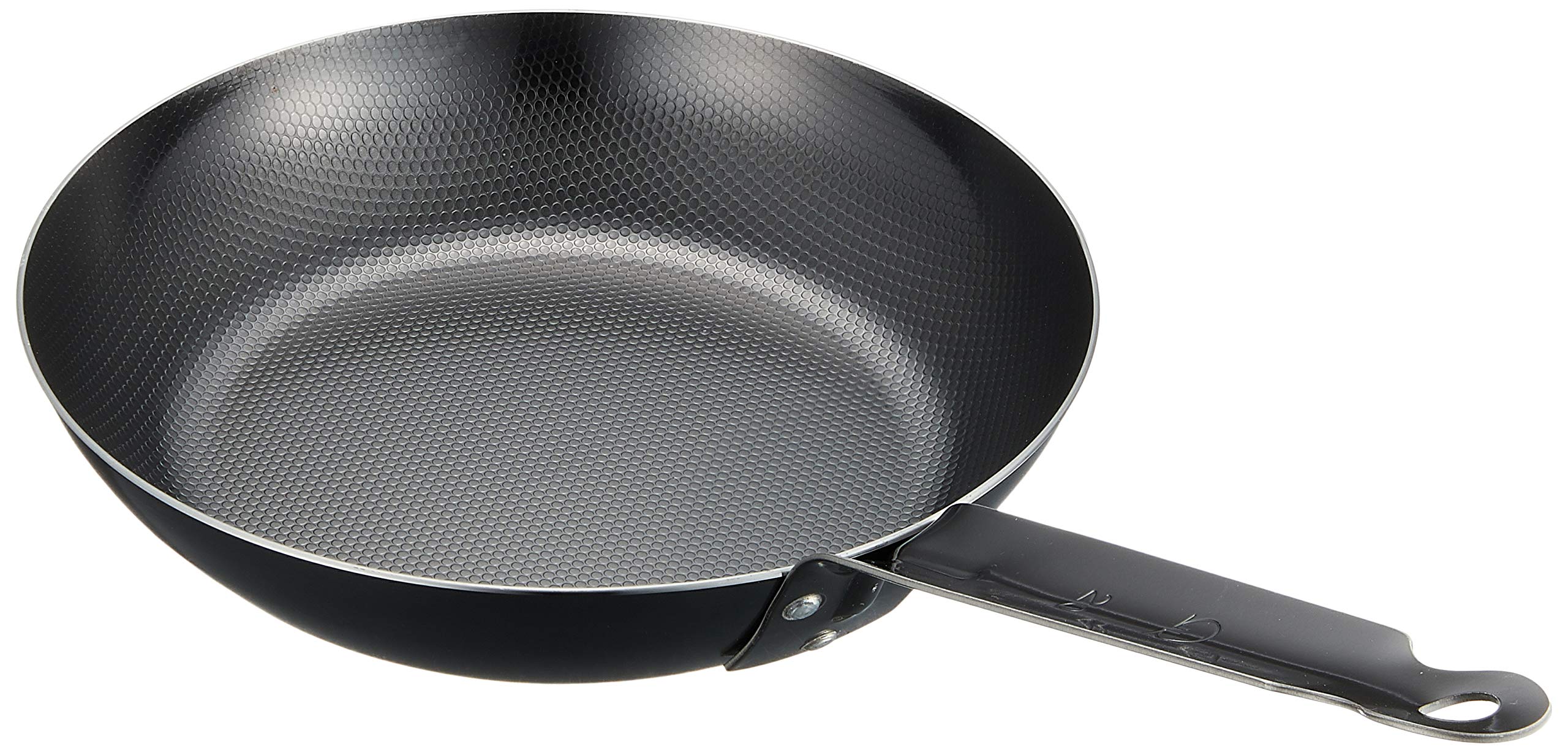
A textured Japanese iron skillet that arrives with strong out-of-the-box release and excellent heat retention.
Why I picked it: Embossed surface that reduces contact area and gives surprising non-stick performance straight away.
Best for: High-heat searing and single-serving sautés where heat retention matters.
A budget-friendly iron option from Japan.
Pros
- Excellent heat retention
- Factory seasoning provides immediate release
- Induction compatible
- Very durable construction
Cons
- Heavier than typical coated pans
- Requires initial high-heat prep
- Needs regular care to avoid rust
My take
I keep this little Japanese iron pan in rotation when I want a fast sear and steady heat. The embossed surface actually makes a measurable difference: food releases better than you’d expect for untreated iron, and the pan holds heat so a chicken thigh browns deeply without losing temperature when I add more food.
The factory seasoning is unusually effective out of the box — I fried an egg and it slid with very little oil — but this is still iron. I followed the recommended initial high-heat burn and oiling steps, and that prep is worth the effort if you want the longevity benefits of an iron skillet.
It’s heavier, and I noticed the familiar iron quirks: if I leave acidic food in the pan it can darken, and you should dry and oil it after use to prevent rust. Still, for the price and performance I’ve gotten a durable little workhorse that outperforms many entry-level pans.
2. Redchef 3-Piece Ceramic Nonstick Frying Pan Set — 8″, 9.5″, 11″ – Best Ceramic Set
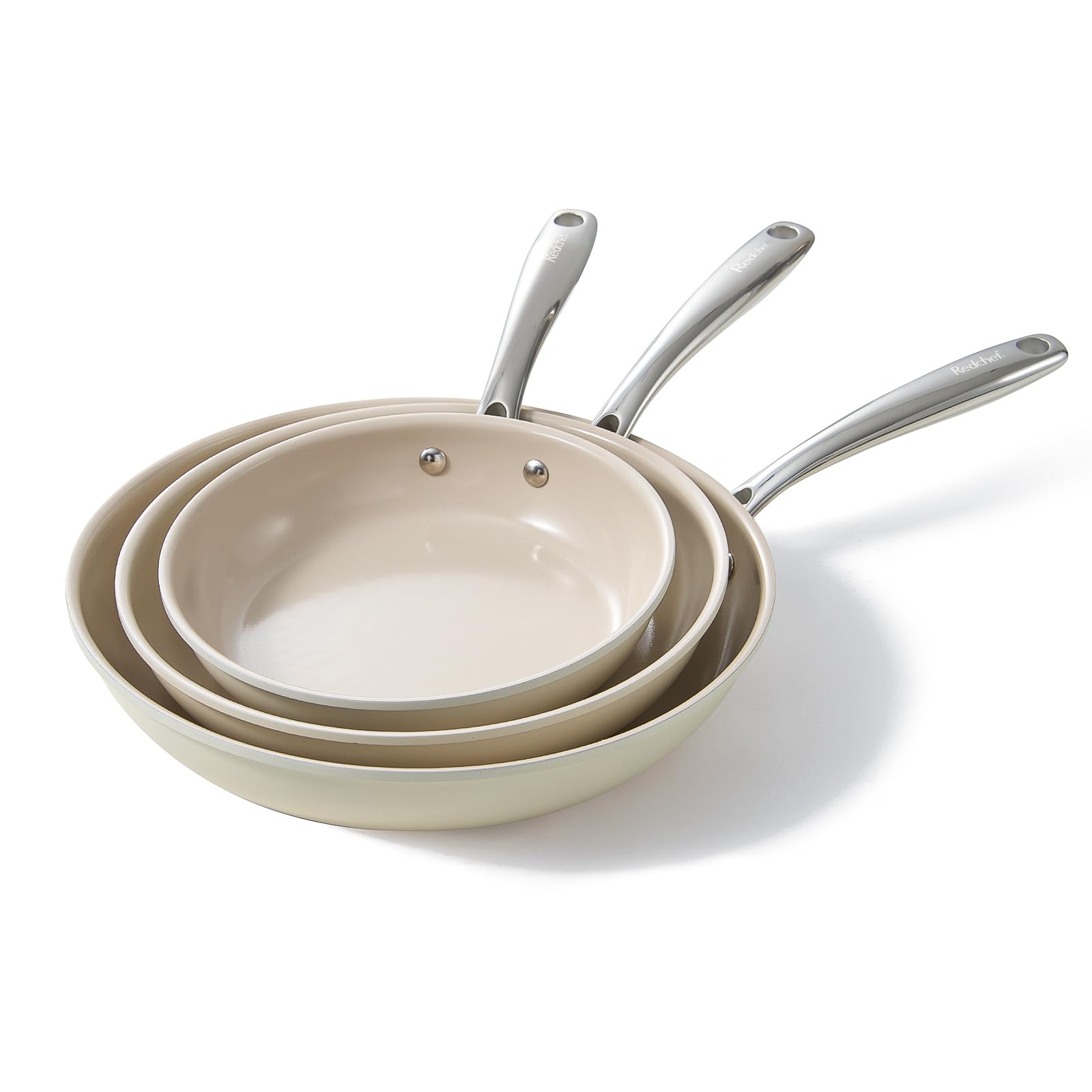
A triple-layer ceramic coating on forged aluminum that heats fast, cleans easily, and is PFAS/PTFE/PFOA-free.
Why I picked it: Triple-layer ceramic finish that delivers strong release and quick, even heating.
Best for: Everyday low-fat cooking — eggs, pancakes, vegetables, and quick sears.
A practical multi-size set at a mid-range value.
Pros
- Truly PFAS/PTFE/PFOA-free surface
- Heats up quickly and evenly
- Easy to clean
- Versatile three-size set
Cons
- Ceramic coating can wear with heavy use
- Hand washing prolongs life
My take
This set became my go-to for breakfasts and quick weeknight meals. The forged aluminum base heats very quickly and distributes heat evenly, so pancakes and eggs cook uniformly without constant fiddling.
The triple-layer ceramic coating gives me the kind of slip that lets me use almost no oil for eggs, and cleanup is usually a warm-soapy wipe. I treat the pans gently — I hand wash when I can — and that keeps the surface looking new longer than a dishwasher habit would.
I appreciate that the pans are free of PFAS, PTFE, and PFOA. If you want an easy, safer-feeling nonstick for everyday use, this set fits that role without being finicky.
3. Vita Craft Super Iron Deep Fry Pan — 11.0 in (28 cm) – Best Nitrided Iron
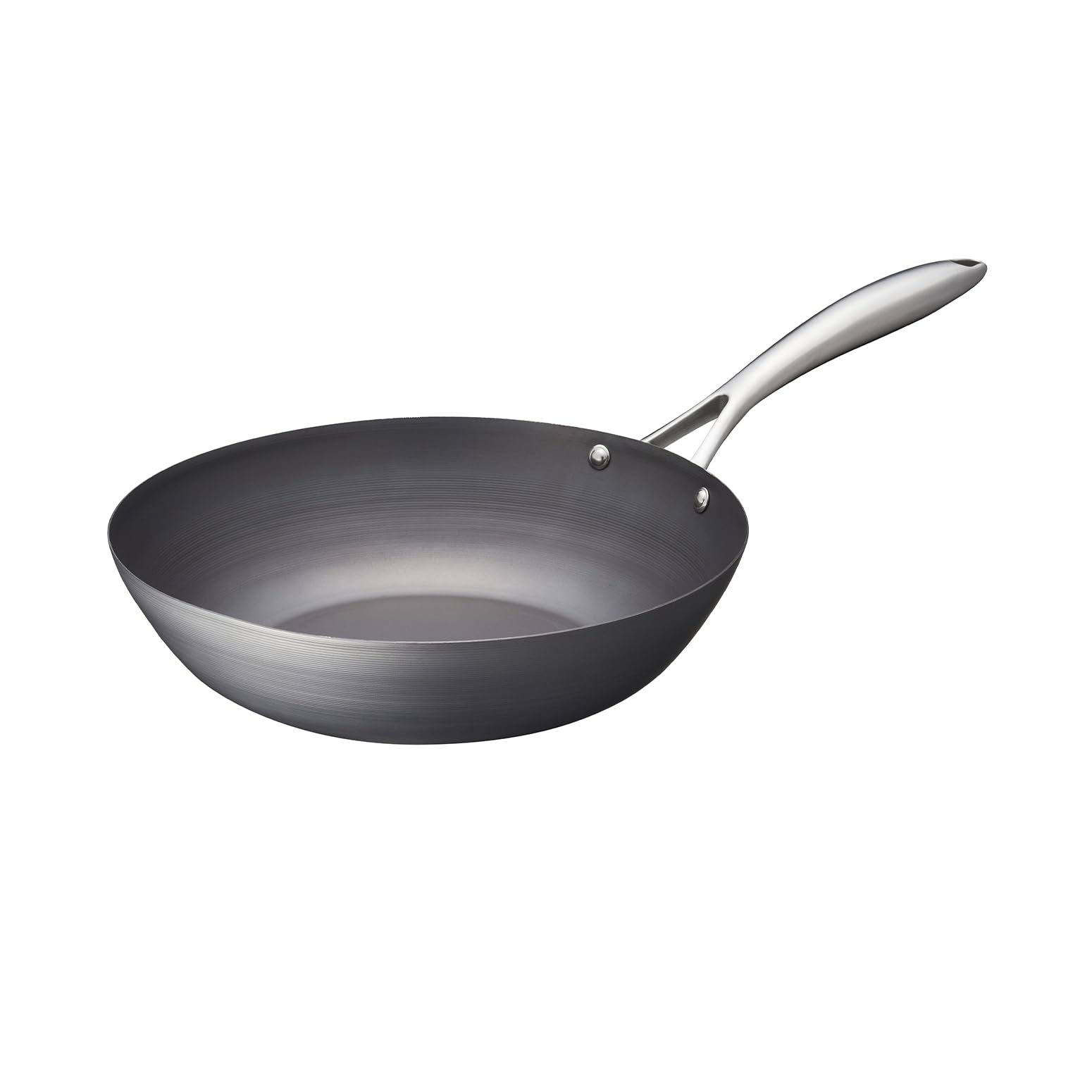
A nitrided iron skillet from Japan that resists rust, accepts metal utensils, and develops flavor with use.
Why I picked it: Nitrided surface cuts maintenance while keeping iron’s searing power.
Best for: High-heat stir-fries, large sautés, and cooks who want iron performance with less fuss.
A durable, no-nonsense iron pan at a mid-to-premium level.
Pros
- Rust-resistant nitrided finish
- Handles metal utensils
- Robust searing performance
- Made in Japan craftsmanship
Cons
- Heavy to maneuver
- May release dark iron residue initially
- Takes time to build a patina
My take
I reach for this 28 cm nitrided iron when I need real searing and a pan that won’t demand meticulous oiling. The nitride process makes it far less fussy than raw carbon steel — I can wash it with soap when needed and it’s still fine — but it still behaves like iron when it comes to heat and timing.
You’ll see some darkening and a bit of iron transfer early on; that’s normal with this material and it settles as a patina develops. Vegetables and stir-fries cook with a bright, crisp texture because the pan takes and holds high heat so well.
If you want the strength and longevity of iron without constant maintenance, this Vita Craft piece hits the sweet spot for me.
4. Made In 8″ Ceramic Nonstick Frying Pan — 5-Ply Stainless-Clad – Best Premium Clad
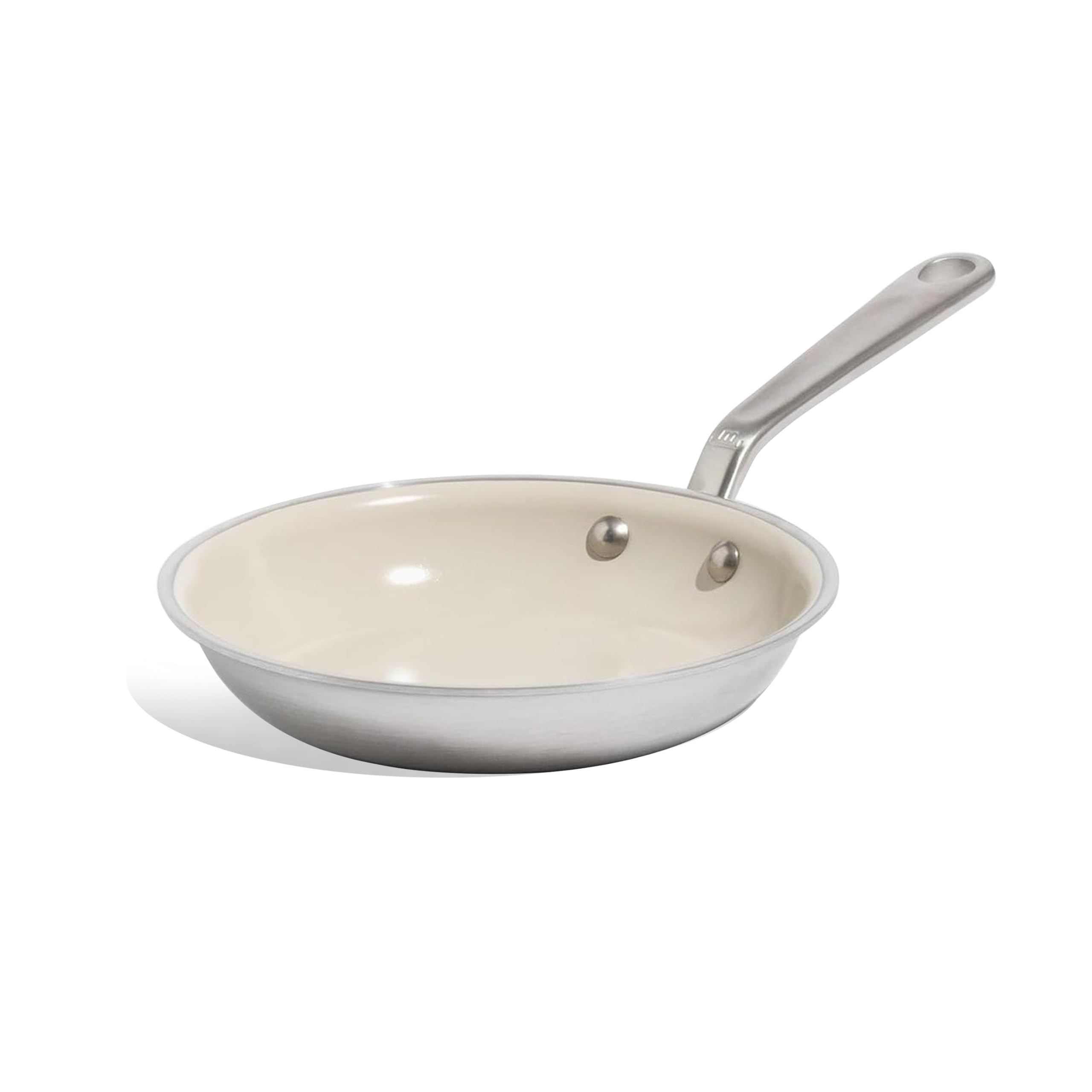
A professional 5-ply clad skillet with a hard ceramic coating that offers impressive heat control and oven versatility.
Why I picked it: Five-ply construction for precise heat control and a pro feel.
Best for: Cooks who want a responsive, oven-safe skillet with a slick ceramic surface.
A premium, pro-grade option with a higher-end price point.
Pros
- Excellent heat responsiveness
- Professional 5-ply construction
- Oven safe to a useful temperature
- Made in USA with premium metals
Cons
- Ceramic surface can chip or delaminate
- Best handled with some care
My take
This 5-ply skillet feels like professional cookware: it heats and responds exactly how I expect, and the ceramic surface is silky for eggs and delicate fish.
I did treat the ceramic as a delicate finish — hand washing and wooden tools — because ceramic coatings can be prone to chipping if abused. When I treated it well the pan rewarded me with even browning and reliable oven-to-stovetop performance.
If you want a premium, responsive pan that behaves like restaurant gear, this Made In piece delivers — just be prepared to protect the coating to get long service.
5. Lacor-63712 Blinis Black Iron Pan — 12 cm – Best for Blinis
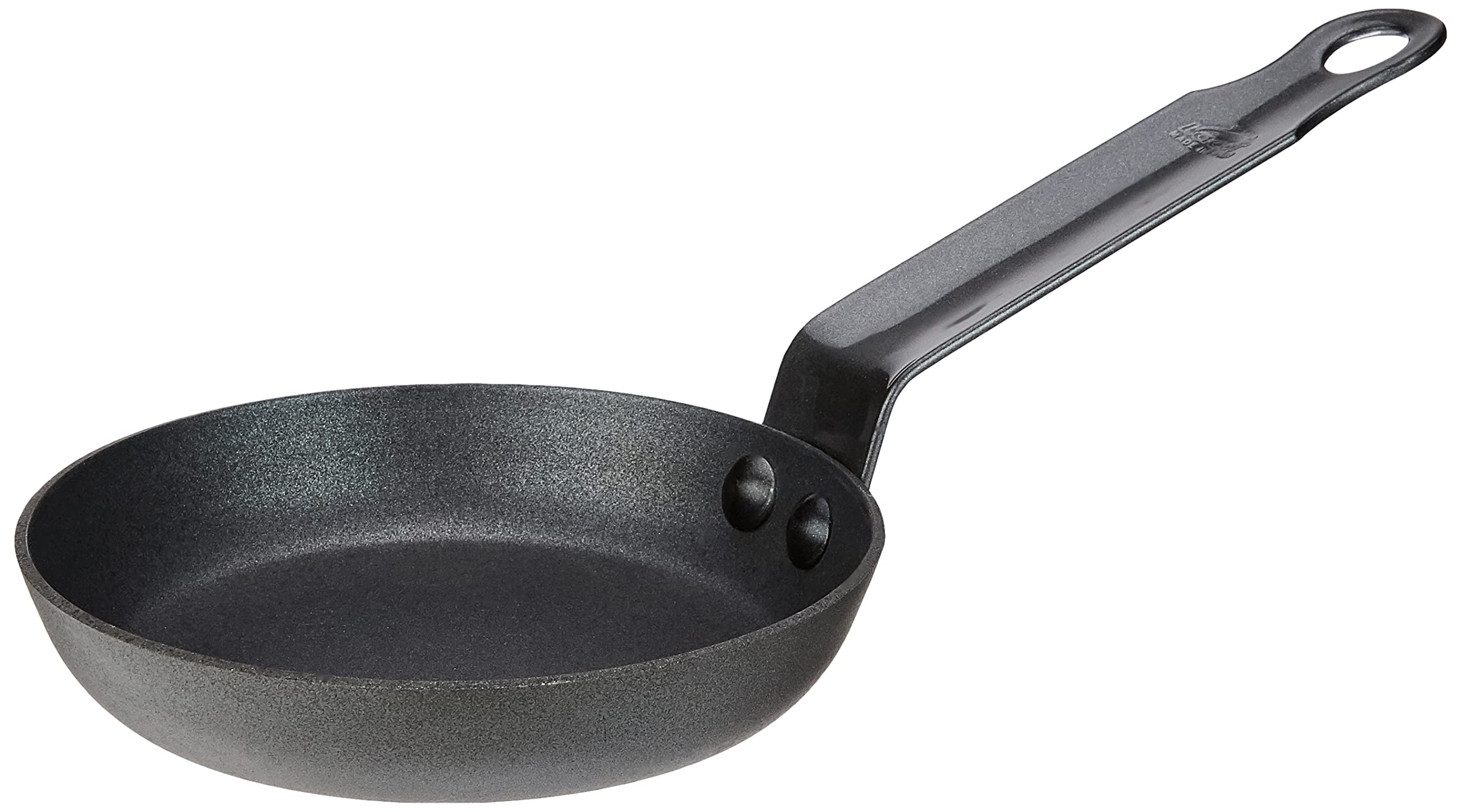
A small, professional-style iron pan built specifically for pancakes, blinis, and other single-portion tasks.
Why I picked it: Specialty small size tailored for blinis and pancakes.
Best for: Blinis, small pancakes, and single-portion frying.
An affordable professional-style specialty pan.
Pros
- Perfect size for blinis
- Sturdy iron construction
- Professional feel
Cons
- Handle gets hot
- Some reports of coating issues
- Very small cooking surface
My take
I use this small iron pan specifically when I want uniform, restaurant-style blinis. The size is ideal — you get a controlled surface area that browns evenly and produces consistent pancakes every time.
It’s a straightforward iron tool: heavy, responsive, and built for repeated use. I do keep a close eye on the handle because it’s not insulated and will heat up on a strong burner.
For tiny pancakes and blinis this pan is exactly what I reach for; just be mindful of the potential coating or surface issues people mention and treat it like a seasoned iron piece.
6. THE ROCK SOHO 11″ Nonstick Frying Pan — Black Granite – Best Lightweight Nonstick
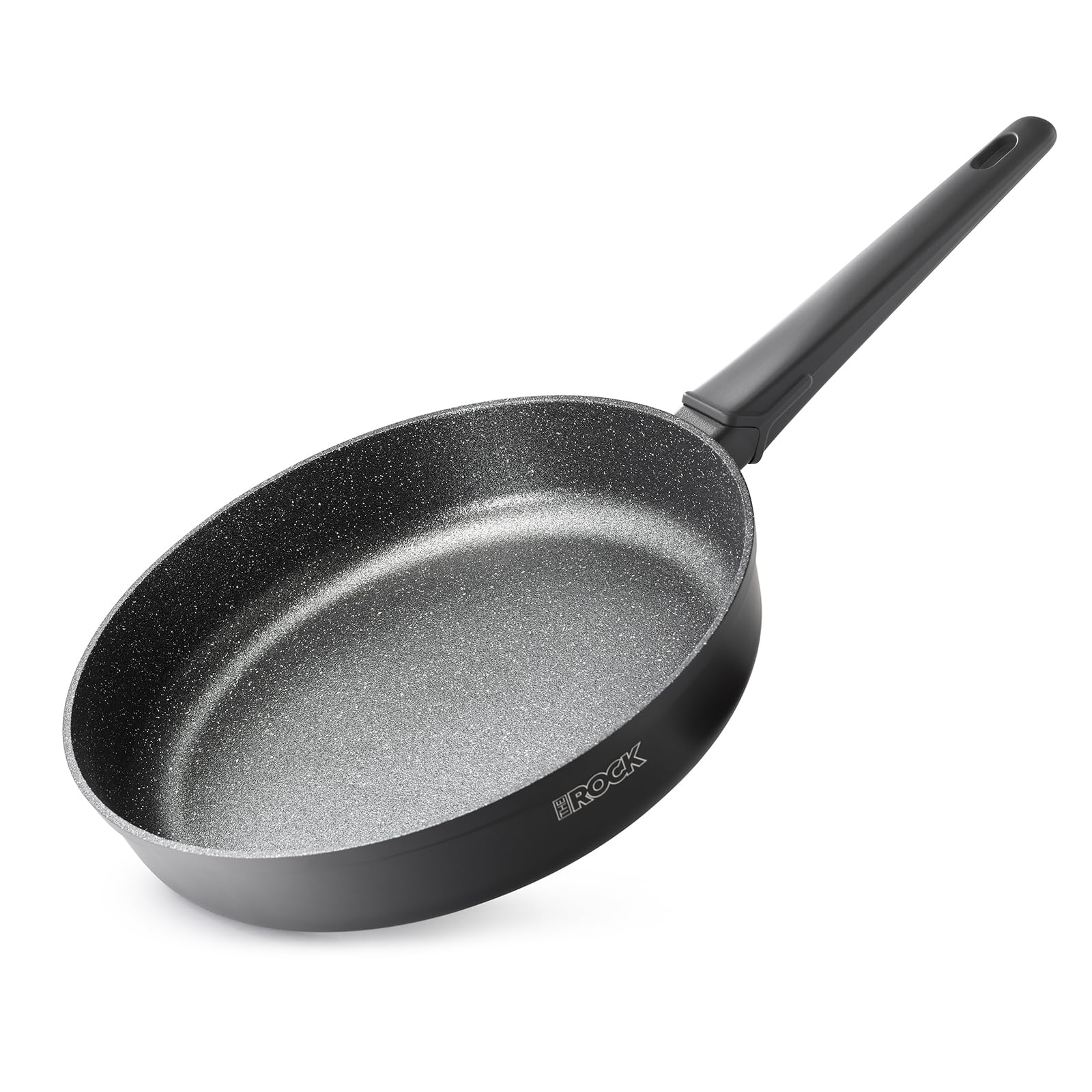
A lightweight, reinforced 3-layer coated pan that resists warping and delivers true nonstick performance for everyday cooking.
Why I picked it: Quantum2 3-layer coating that actually keeps food from sticking and resists warping.
Best for: Everyday meals — grilled cheese, eggs, and quick sautés.
A budget-friendly, high-performance nonstick.
Pros
- Truly nonstick release
- Lightweight and easy to handle
- Warp-resistant construction
- Comfortable cool-touch handle
Cons
- Oven-safe only to moderate temperatures
- Coating longevity varies by use
My take
This is the pan I grab when I want effortless cooking and fast cleanup. The Quantum2 coating lives up to the promise: grilled cheese, eggs, and sticky sauces slide right out and cleaning is almost always a quick rinse.
It’s noticeably lighter than many same-size pans, which makes it easy to flip and maneuver for everyday cooking. The cool-touch silicone handle stays comfortable even during longer jobs.
I treat it as a daily nonstick: great for quick meals, but I avoid very high oven temperatures and rough treatment if I want the coating to last.
How I Choose a Nonstick Skillet
Match the pan to how you cook
I pick iron when I want searing power and heat retention, ceramic or PTFE-free coatings when I want effortless release, and multi-ply clad when responsiveness and oven finishing matter.
- For eggs/pancakes: choose ceramic or reinforced coated pans.
- For searing and stir-fry: choose nitrided or embossed iron.
- For a do-it-all pan: look for multi-ply clad construction.
Think about maintenance
I accept more upkeep for iron because it lasts and improves with use. Ceramic and coated pans require gentler handling to prolong the surface.
- Iron: initial high-heat prep, occasional oiling, hand dry.
- Ceramic/coated: avoid metal utensils, hand wash for longevity.
- Check oven-temperature limits for coated pans before finishing dishes.
Size and weight considerations
I choose size based on portions I cook regularly and prefer lighter pans if I flip a lot; heavier pans win when heat retention is important.
- Single-serve breakfasts: 8–10 inches.
- Family meals and searing: 11–12 inches or larger.
- If you struggle with heavy pans, favor reinforced coated aluminum.
Safety and materials
I look for PFAS/PTFE/PFOA-free coatings if chemical concerns matter to me, and for iron/nitrided finishes if I want metal utensil compatibility.
- Ceramic: often PFA-free and marketed as non-toxic.
- Nitrided iron: rust-resistant and dishwasher-tolerant in many cases.
- Read manufacturer guidance for induction compatibility and oven limits.
Frequently Asked Questions
Can I use metal utensils on these pans?
I use metal utensils safely on nitrided and raw iron skillets (they’re built for it). For ceramic and reinforced nonstick coatings I avoid metal and stick to wood or silicone to protect the surface.
Which of these pans work on induction?
I checked the product details: the embossed Endoshoji, the Redchef ceramic set, the Vita Craft nitrided iron, the Made In 5-ply, and the Rock Soho list compatibility with induction. For the Lacor blinis pan you should confirm the specific model listing before using on induction.
How do I season an iron pan properly?
I do a short high-heat burn to remove factory coatings, then apply a thin layer of oil and heat until it polymerizes. I repeat light cooking of vegetables or fatty foods a few times to build a durable patina, and after each wash I dry and rub a little oil on the surface to protect it.
Final Take
I keep at least two of these pans on my stove: a lightweight coated pan for daily eggs and a nitrided or embossed iron for tasks that need heat and durability.
If you want effortless release and low fuss, choose the Redchef set or the Rock Soho. If you prioritize searing, longevity, and an iron pan that improves with use, the Endoshoji or Vita Craft are the tools I reach for.
Whatever you pick, match care and cooking style to the pan’s material and you’ll get the best results.
